Skip to content
Start My 3 Free Days $0 today · cancel anytime

3rd Grade Plants Worksheets

11 3rd grade plants worksheets. Teacher favorites: Flower Parts of a Plant Worksheet and Plant Vocabulary Worksheet. How teachers use these

3rd Grade Plants Worksheets

11 3rd grade plants worksheets. Teacher favorites: Flower Parts of a Plant Worksheet and Plant Vocabulary Worksheet. How teachers use these

Worksheet
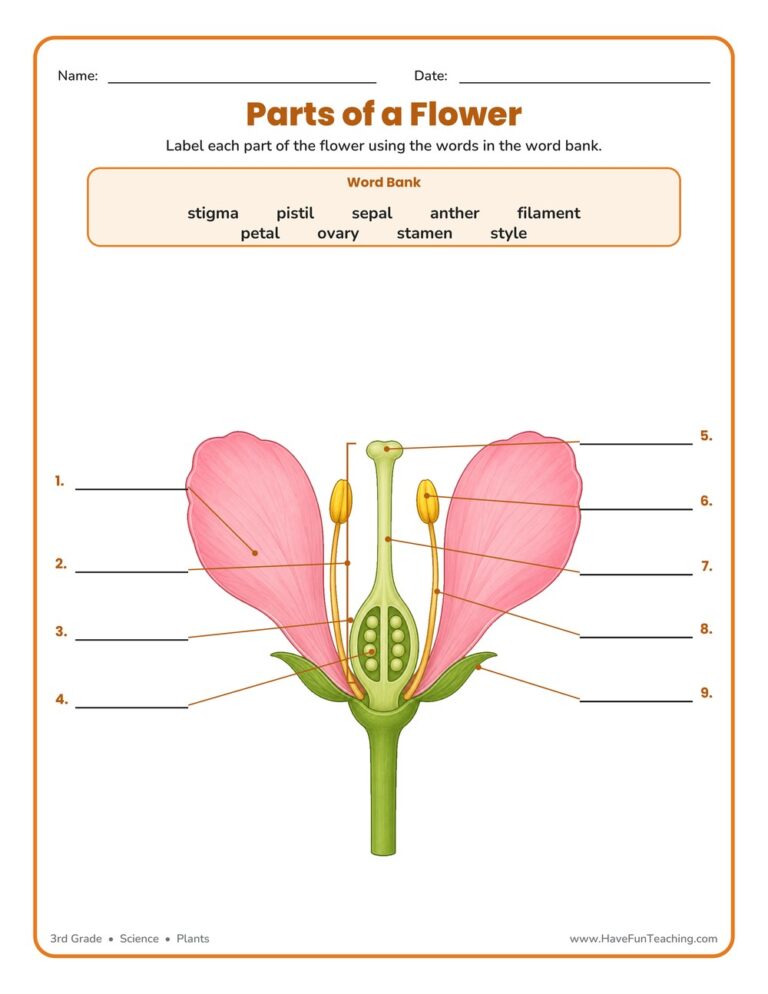
Worksheet3rd GradeFlower Parts of a Plant Worksheet

A third grade flower parts of a plant worksheet where students label the nine parts of a flower — petal, sepal, stamen, pistil, and more — using a word bank. Includes a complete answer key for quick, no-prep life science practice.

Worksheet
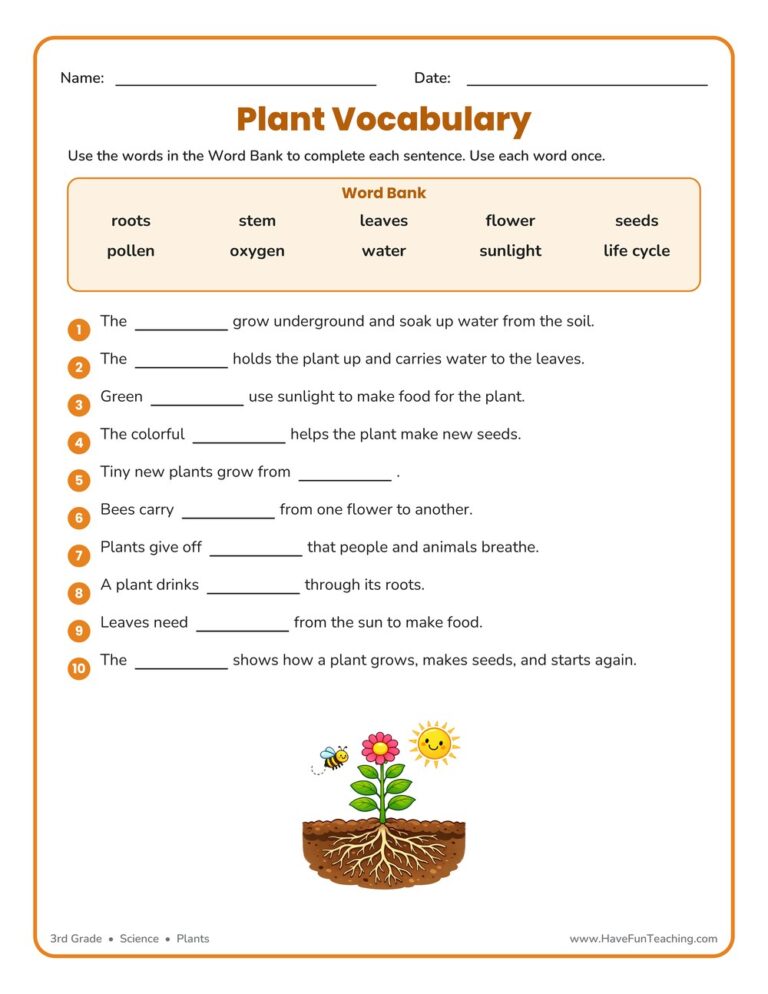
Worksheet3rd GradePlant Vocabulary Worksheet

This plant vocabulary worksheet gives 3rd graders a word bank of ten plant terms to complete ten science sentences about how plants grow. Answer key included for easy, no-prep practice.

Worksheet
Worksheet3rd GradeLife Cycle of Plants Matching Worksheet

This life cycle of plants matching worksheet has 3rd grade students match four pictures to the seed, sprout, seedling, and adult plant stages, then answer three questions in writing. Answer key included.

Worksheet
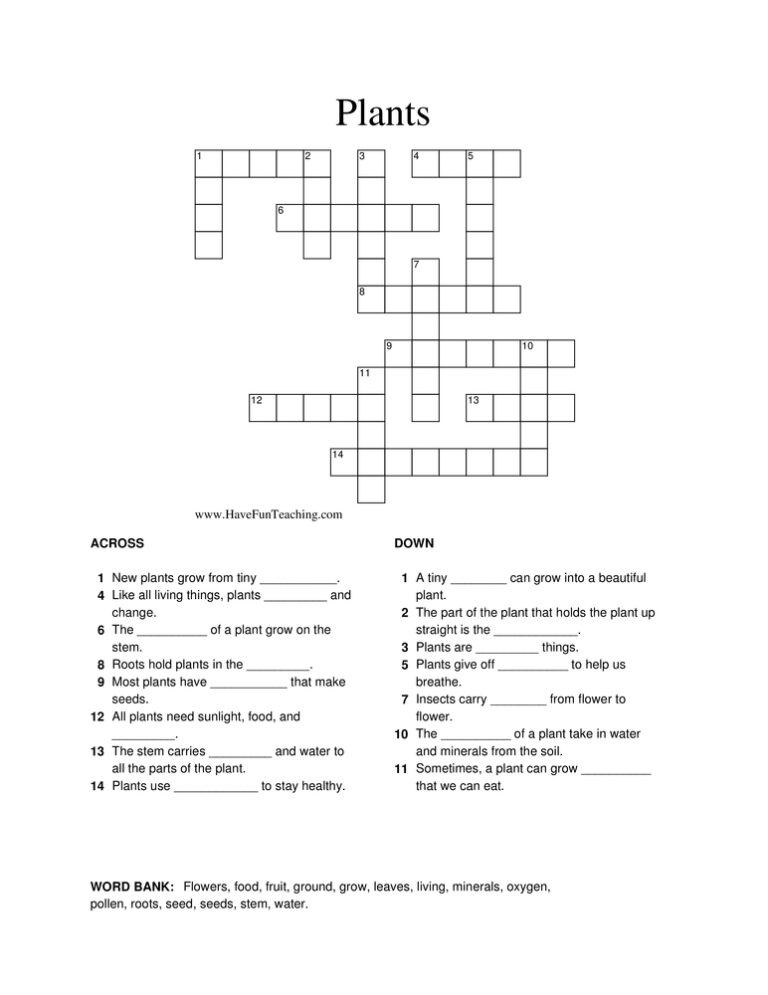
Worksheet3rd GradePlants Crossword Puzzle

A plants crossword puzzle worksheet that has 3rd graders match eight science clues to the parts a plant needs to live and grow. An answer key is included, so it is ready for quick, no-prep science review.

Worksheet
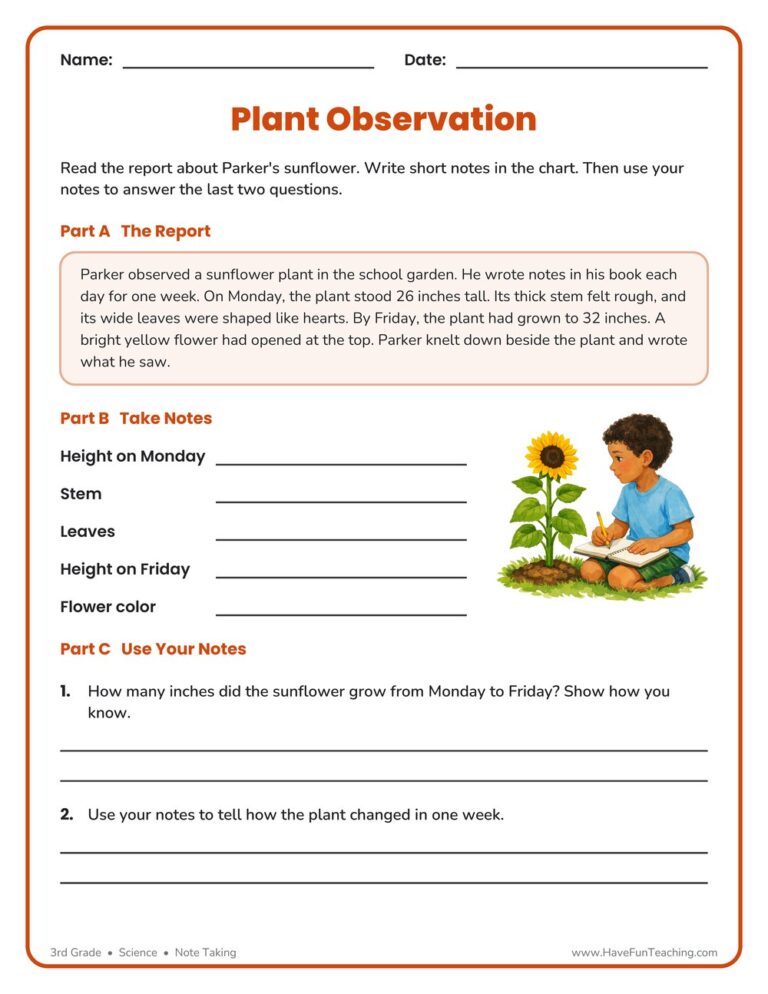
Worksheet3rd GradePlant Observation Worksheet

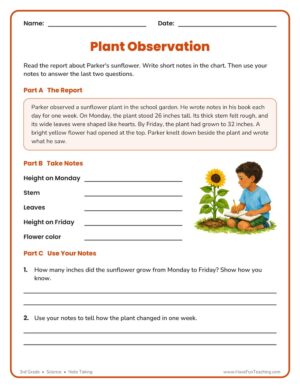
This plant observation worksheet gives 3rd graders a short sunflower report to read and a chart for taking clear, useful notes. An answer key is included, so checking work takes seconds.

Worksheet
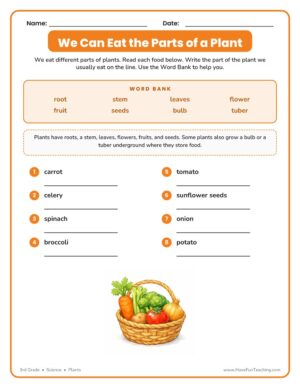
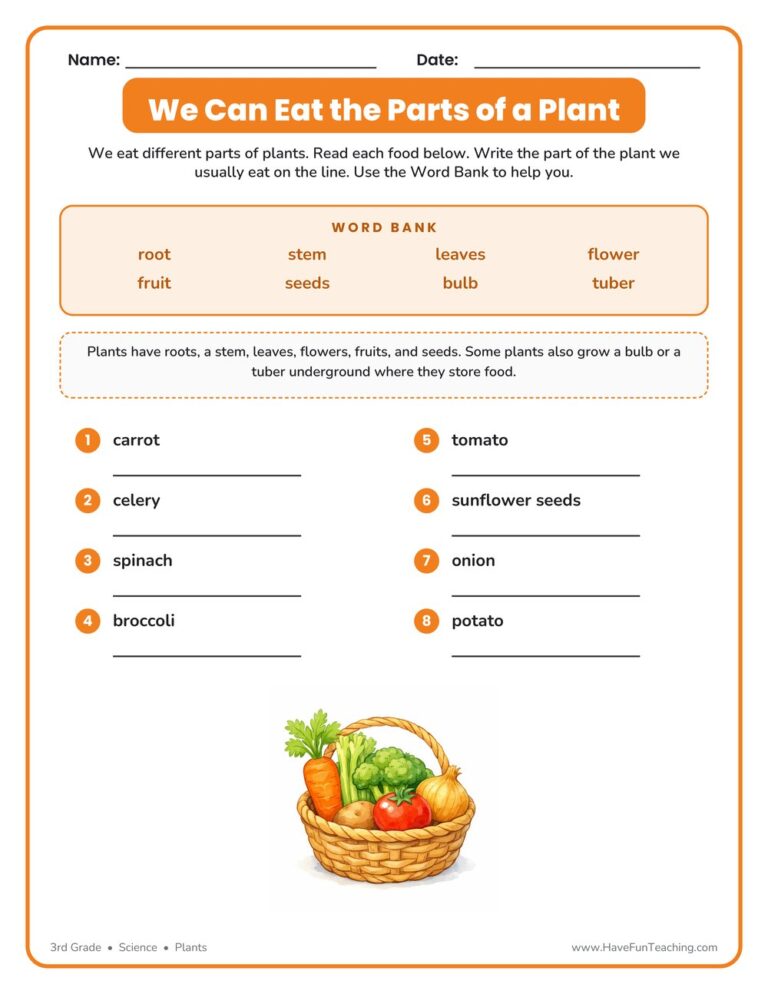
Worksheet3rd GradeEdible Parts of a Plant Worksheet

This edible parts of a plant worksheet asks 3rd graders to name which plant part we eat — root, stem, leaf, flower, fruit, seed, bulb, or tuber — for eight common foods. Includes an answer key for no-prep plant science practice.

Worksheet
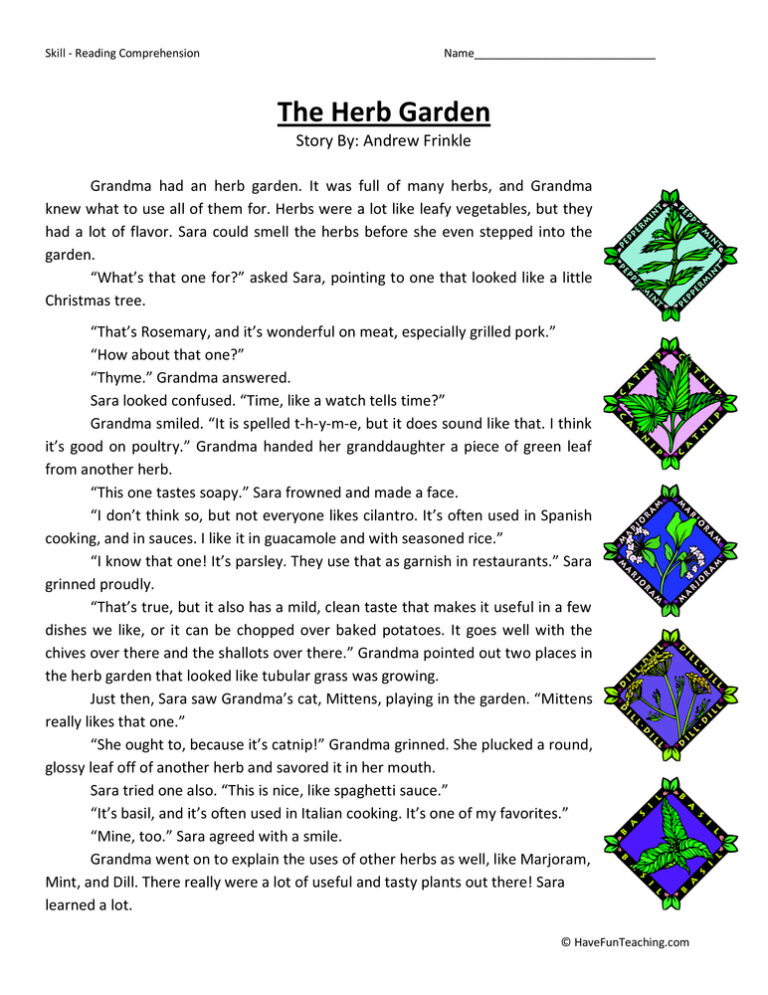
Worksheet3rd GradeHerb Garden Reading Comprehension Worksheet

This Herb Garden Reading Comprehension Worksheet gives 3rd graders a short passage about growing basil, rosemary, parsley and mint, then six questions and a written response. Answer key included.

Worksheet
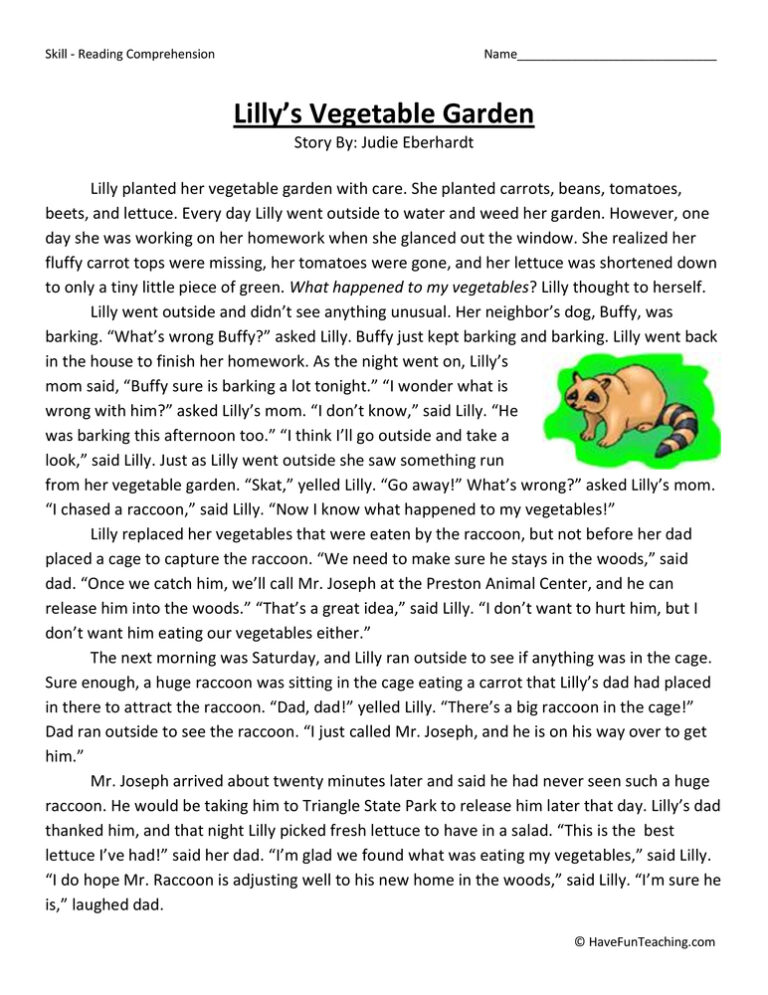
Worksheet3rd GradeLilly's Vegetable Garden Reading Comprehension Worksheet

In this Lilly's Vegetable Garden reading comprehension worksheet, third graders read a story about a tomato plant that will not grow, then answer four questions and cite two details in writing. Answer key included.

Worksheet
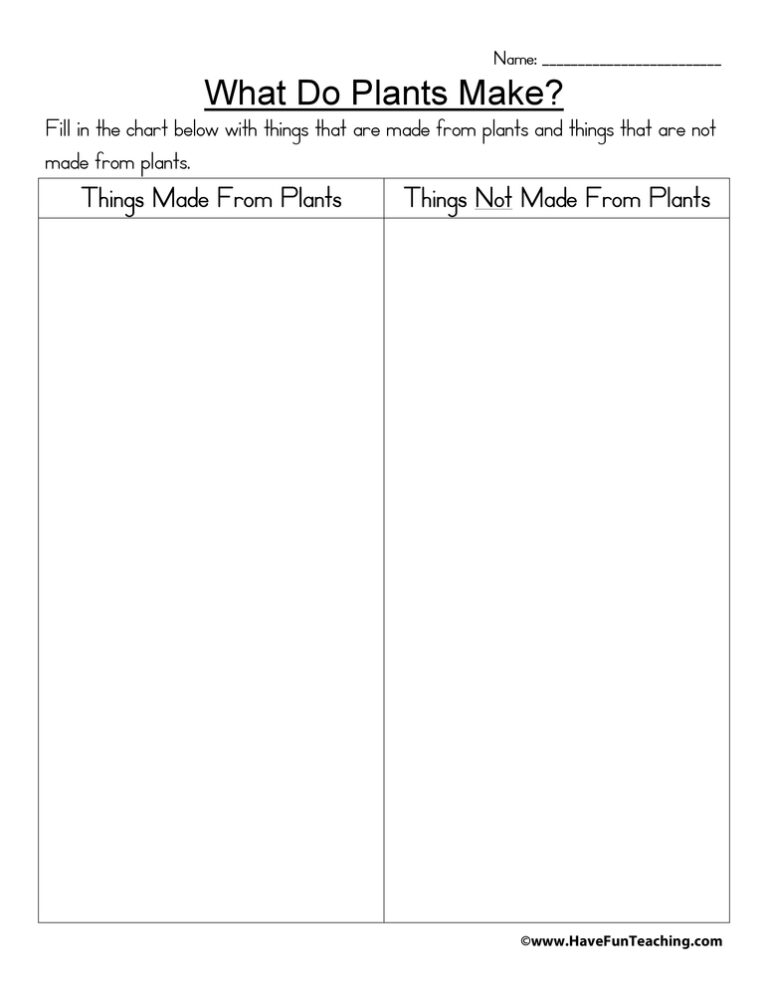
Worksheet3rd GradeWhat Do Plants Make Worksheet

This What Do Plants Make Worksheet has 3rd graders sort everyday items by whether they come from plants, then use clues to name four useful plants. Answer key included.

Worksheet
Worksheet3rd GradePlants Alphabetical Order Worksheet

This plants alphabetical order worksheet has 3rd grade students sort plant words into ABC order and name the letter that decides each pair. An answer key is included for quick checking.

Worksheet
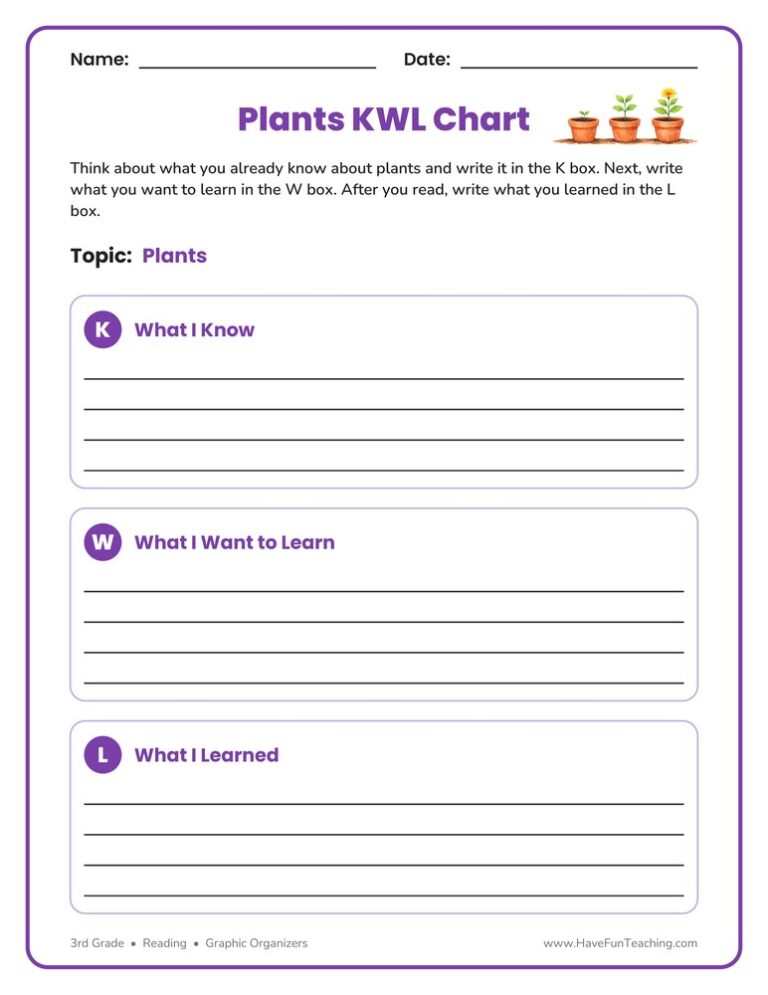
Worksheet3rd GradePlants KWL Graphic Organizer

This plants KWL graphic organizer helps 3rd grade students record what they know, what they want to learn, and what they learned about plants, building strong reading and science habits.

From our teachers' playbook

From seed to flower and back again

What do 3rd graders learn about plants?

Third graders study how plants grow, survive and reproduce. They learn the plant life cycle (seed → sprout → plant → flower → fruit → seed), the parts of a flower, and how bees and wind help with pollination. They learn that plants make their own food from sunlight, water and air, and that different plants are adapted to their environments. They even sort which plant parts we eat: carrots are roots, celery is a stem, broccoli is a flower! The click comes when kids realize every fruit holds the start of a new plant.

Our favorite ways to teach plants

Plants are slow, so the best moves let kids look closely and track change.

Dissect a real flower

Give groups a real flower to gently take apart and match to a labeled diagram: petals, stamen, pistil. Seeing the actual parts makes the vocabulary meaningful and helps kids understand pollination.

Why it works: pairing a picture with each word gives kids two ways to remember it, a well-tested principle of how people learn (Mayer, 2009).
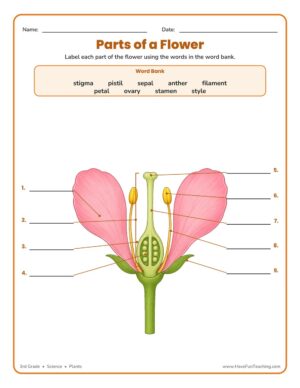
Flower Parts of a Plant WorksheetTry it withFlower Parts of a Plant WorksheetWorksheetsOpen it →
Grow it and record it

Plant beans in clear cups and have kids observe and draw them every few days, noting changes and measuring height. Tracking real growth over weeks teaches the life cycle and data collection.

Why it works: kids understand an idea best when they touch it, then draw it, then write it, the order the U.S. Department of Education recommends for elementary math.

Plant Observation WorksheetTry it withPlant Observation WorksheetWorksheetsOpen it →

Life cycle match-up

Mix up life cycle picture cards and have kids put them in order and explain each stage. Quick review rounds across the unit keep the order fresh.

Why it works: researchers who compared ten study methods found practice testing is one of the two that work best (Dunlosky and colleagues, 2013).

Life Cycle of Plants Matching WorksheetTry it withLife Cycle of Plants Matching WorksheetWorksheetsOpen it →

Plant questions parents and teachers ask

What do 3rd graders learn about plants?

They learn the plant life cycle, parts of a flower, how pollination works, what plants need to make food, and how plants are adapted to their environments.

What is the life cycle of a plant?

A seed sprouts, grows into a plant, makes flowers, and the flowers are pollinated to make fruit with new seeds inside. Those seeds start the cycle again.

What are the parts of a flower?

The main parts are petals, which attract pollinators, the stamen, which makes pollen, and the pistil, which receives pollen and grows into fruit and seeds. Sepals protect the bud.

What are easy plant experiments for kids?

Grow beans in a clear cup to see roots form, put a celery stalk in colored water to see it travel up, or grow two plants with and without sunlight and compare.