Skip to content
Start My 3 Free Days $0 today · cancel anytime

Ending Sounds Worksheets

51 ending sounds worksheets. Teacher favorites: CVC Word Sounds Worksheet and Beginning, Middle, and Ending Sounds Worksheet. How teachers use these

Ending Sounds Worksheets

51 ending sounds worksheets. Teacher favorites: CVC Word Sounds Worksheet and Beginning, Middle, and Ending Sounds Worksheet. How teachers use these

Worksheet
WorksheetKindergartenCVC Word Sounds Worksheet

This CVC Word Sounds Worksheet has Kindergarten readers say six pictures and fill in the bubble beside the CVC word with the matching sounds. Answer key included for quick, no-prep phonics practice.

Worksheet
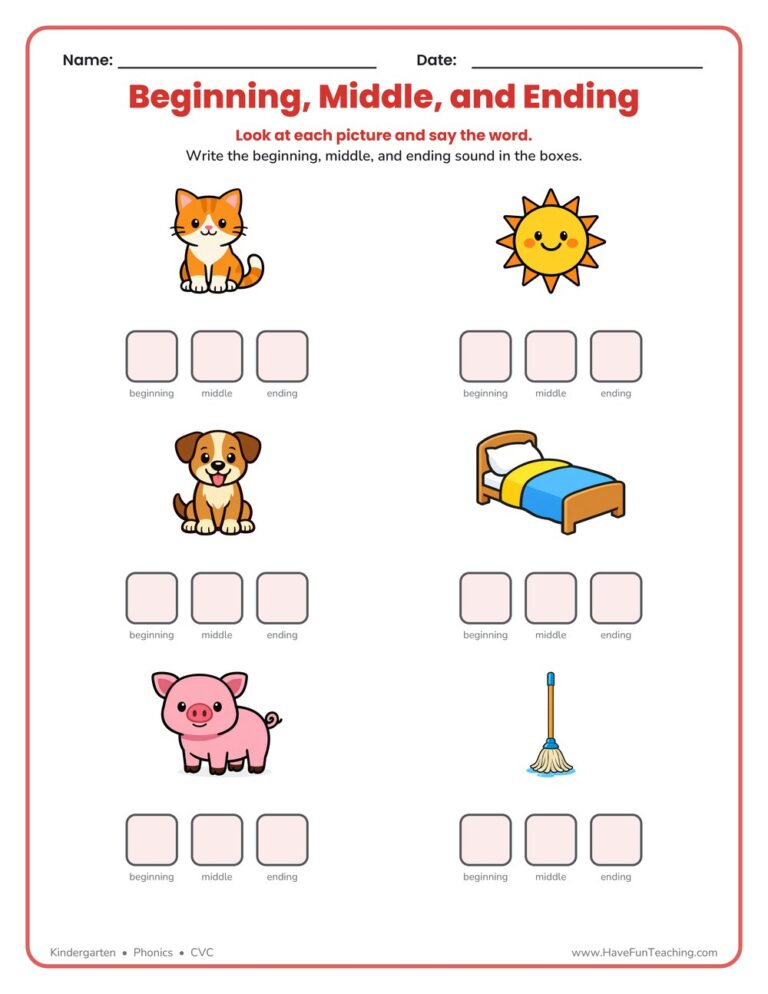
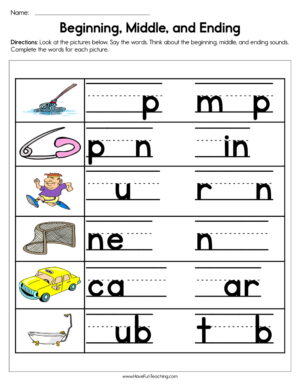
WorksheetKindergartenBeginning, Middle, and Ending Sounds Worksheet

This Beginning, Middle, and Ending Sounds Worksheet helps kindergarten learners break six CVC picture words into their beginning, middle, and ending sounds. Answer key included—great no-prep phonics practice.

Worksheet
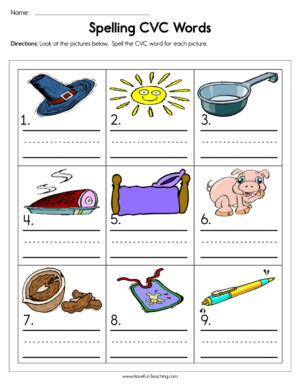
WorksheetKindergartenSpelling CVC Words Worksheet

A picture-clue Spelling CVC Words Worksheet that helps kindergarten students hear and write the beginning, middle, and ending sounds in simple three-letter words. Answer key included for quick, no-prep phonics practice.

Worksheet
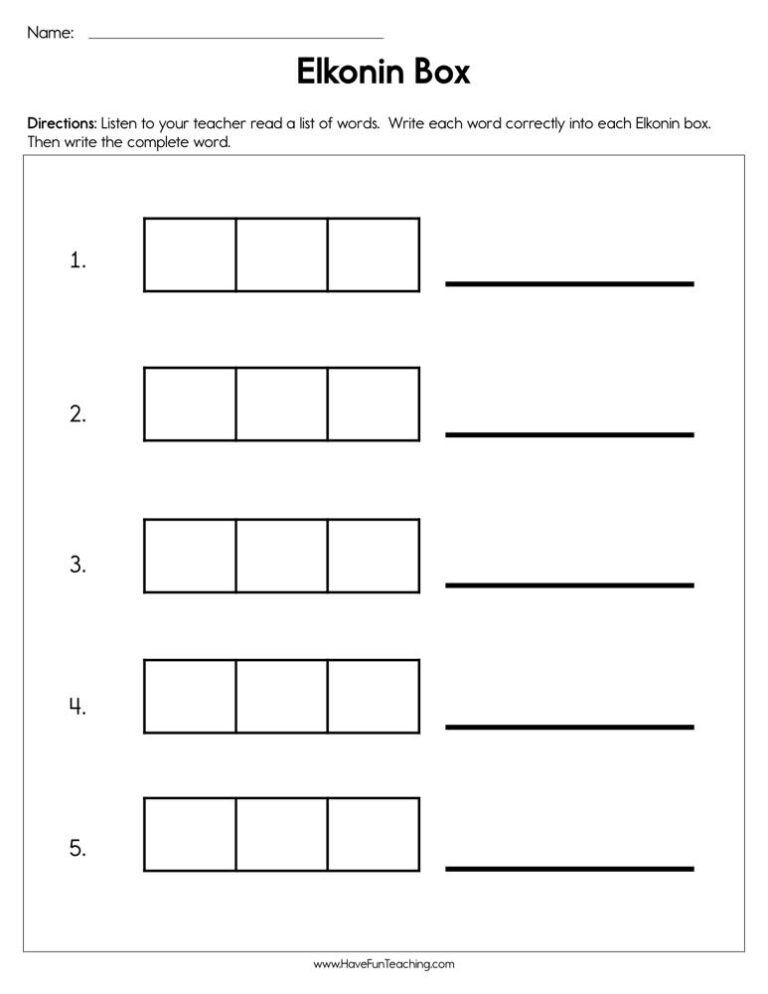
WorksheetKindergartenElkonin Box Worksheet

This Elkonin Box Worksheet gives Kindergarten students seven picture prompts and three-cell sound boxes for segmenting CVC words into beginning, middle, and ending sounds. Answer key included, so practice takes no prep.

Worksheet
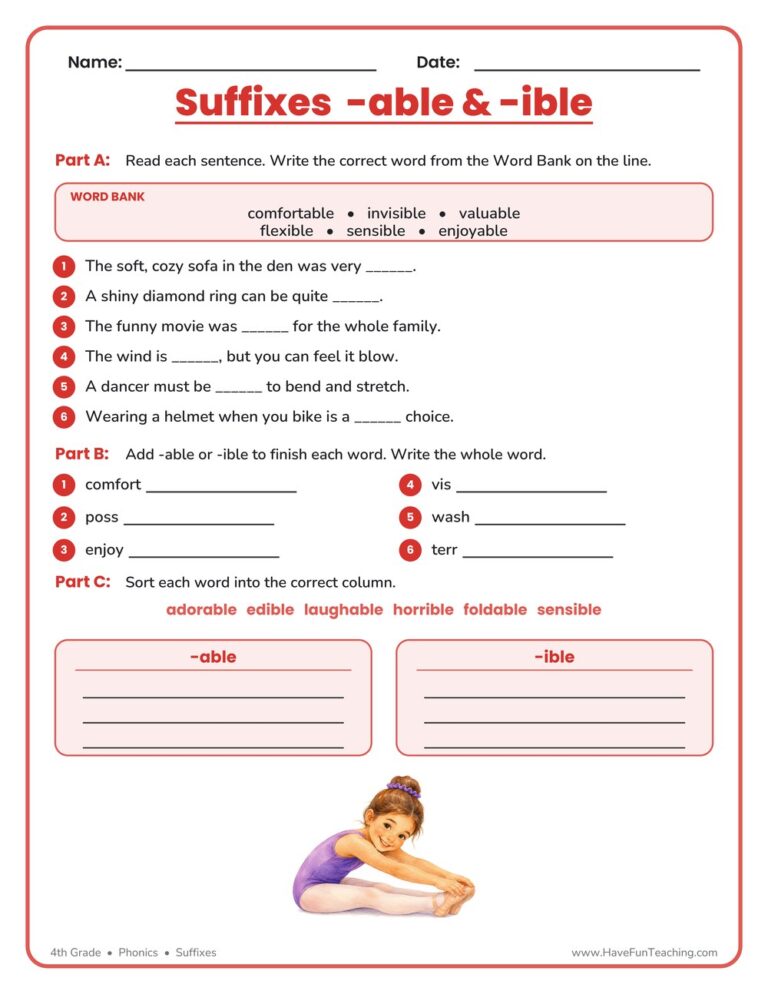
Worksheet4th GradeSuffix ABLE and IBLE Worksheet

This Suffix ABLE and IBLE Worksheet helps 4th graders add -able or -ible and sort words by their ending across three quick activities. Answer key included — perfect for no-prep phonics and spelling practice.

Worksheet
WorksheetKindergartenCVC Practice Worksheet

This CVC practice worksheet asks Kindergarten students to say each picture, stretch out its three sounds, and write a letter in every box to spell the word. An answer key is included, so checking phonics practice takes seconds.

Worksheet
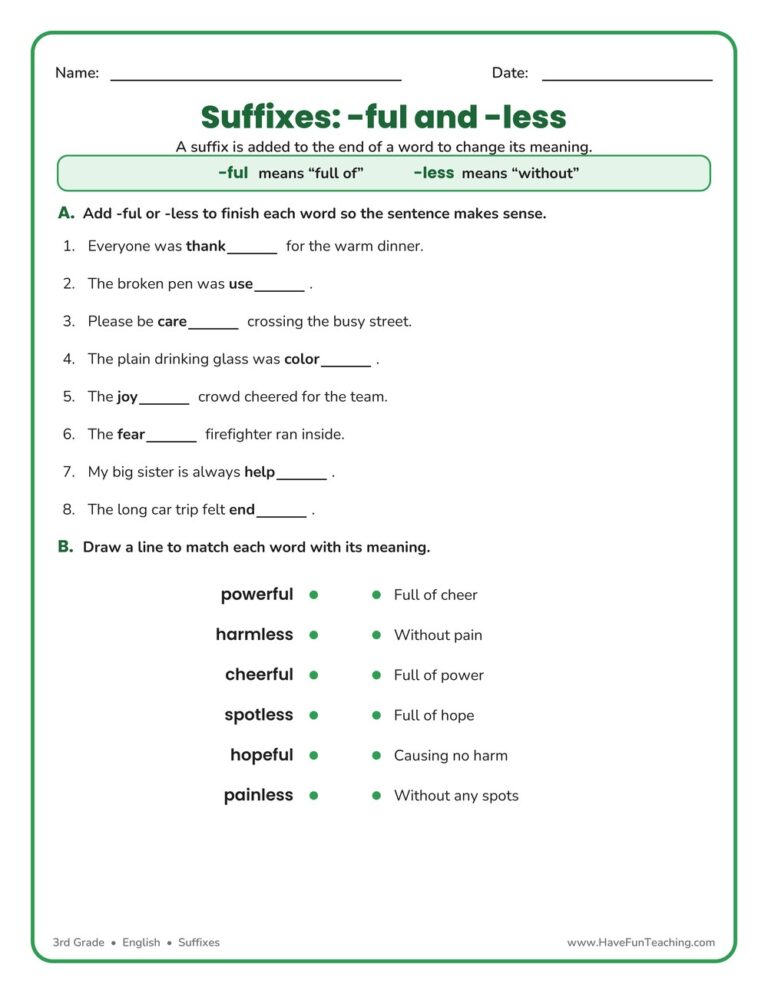
Worksheet3rd GradeSuffix FUL and LESS Worksheet

A suffix ful and less worksheet for 3rd grade where students add -ful or -less to complete sentences, then match words to their meanings. Answer key included for quick, no-prep suffix practice.

Worksheet
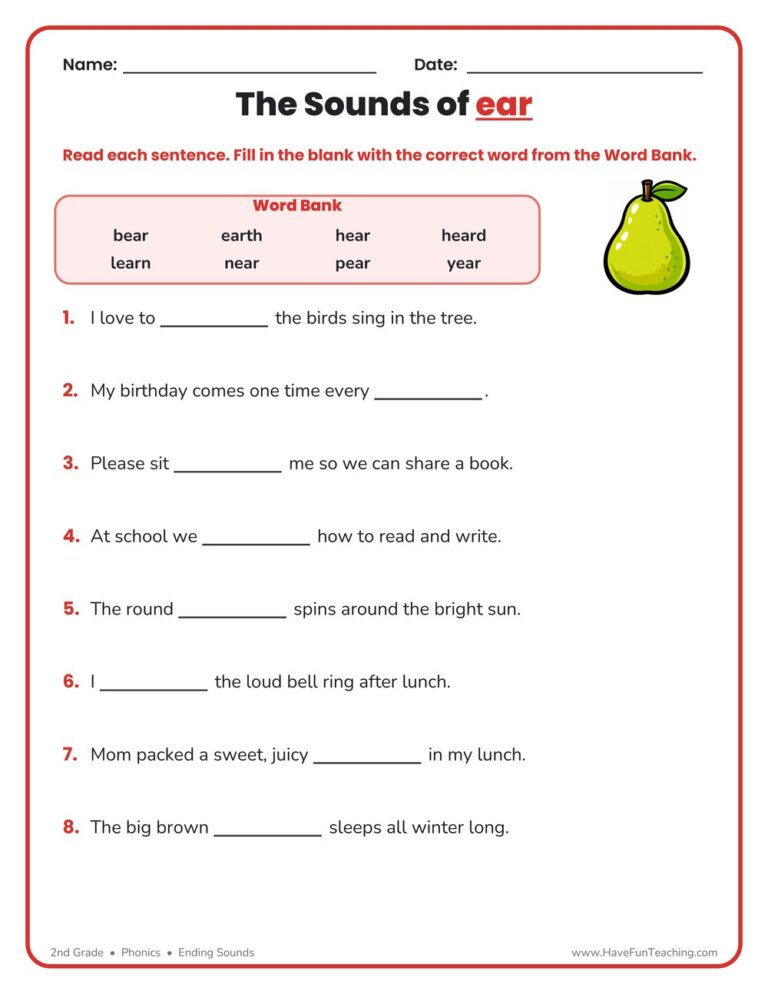
Worksheet2nd GradeEAR Worksheet

A 2nd grade ear worksheet where students use a word bank to complete eight sentences with words from the tricky ear family. Answer key included — perfect for no-prep phonics practice at home or school.

Worksheet
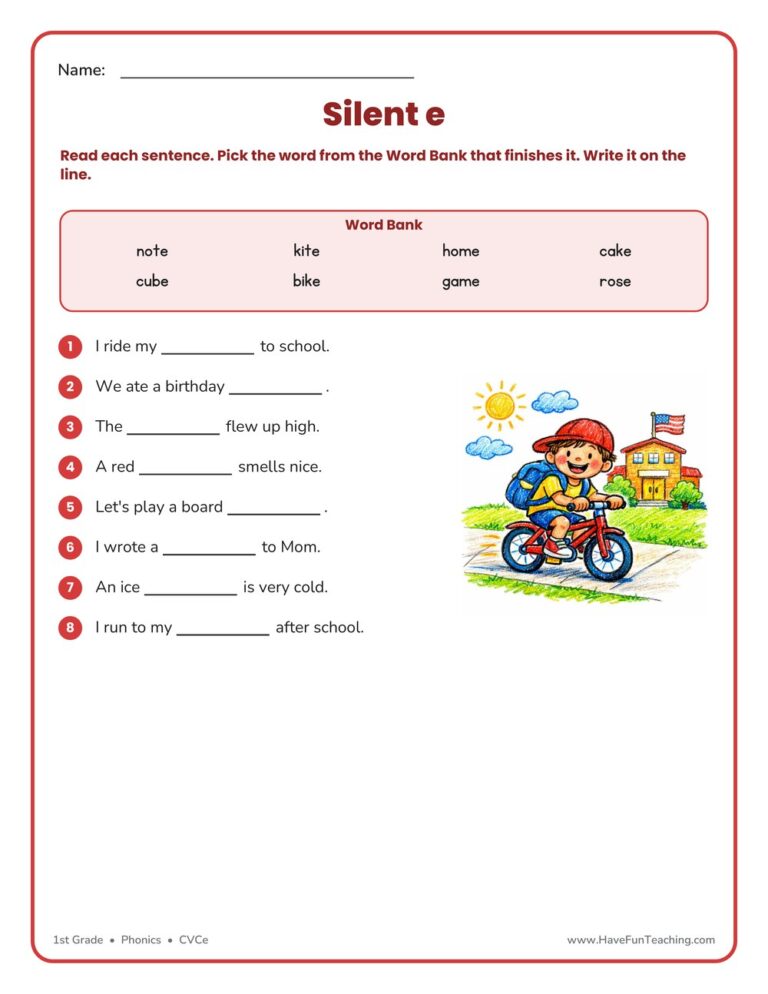
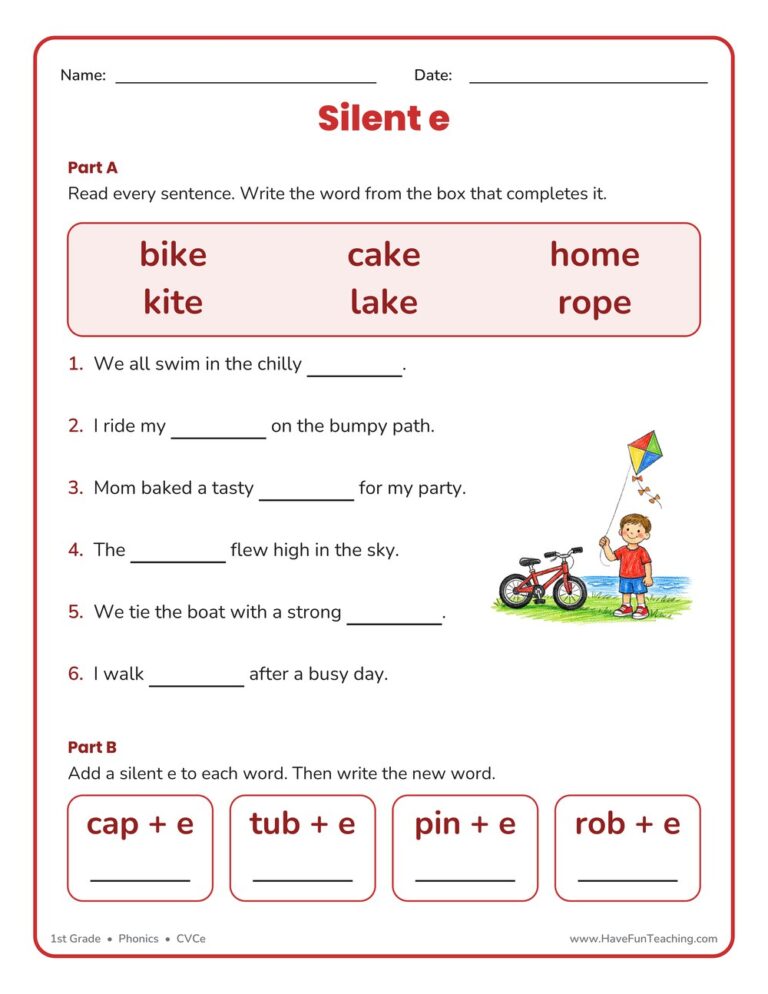
Worksheet1st GradeSilent E Fill in the Blanks Worksheet

Practice the silent e (CVCe) pattern with this silent e fill in the blanks worksheet for 1st grade. Students complete eight sentences using long-vowel words from a word bank. Answer key included.

Worksheet
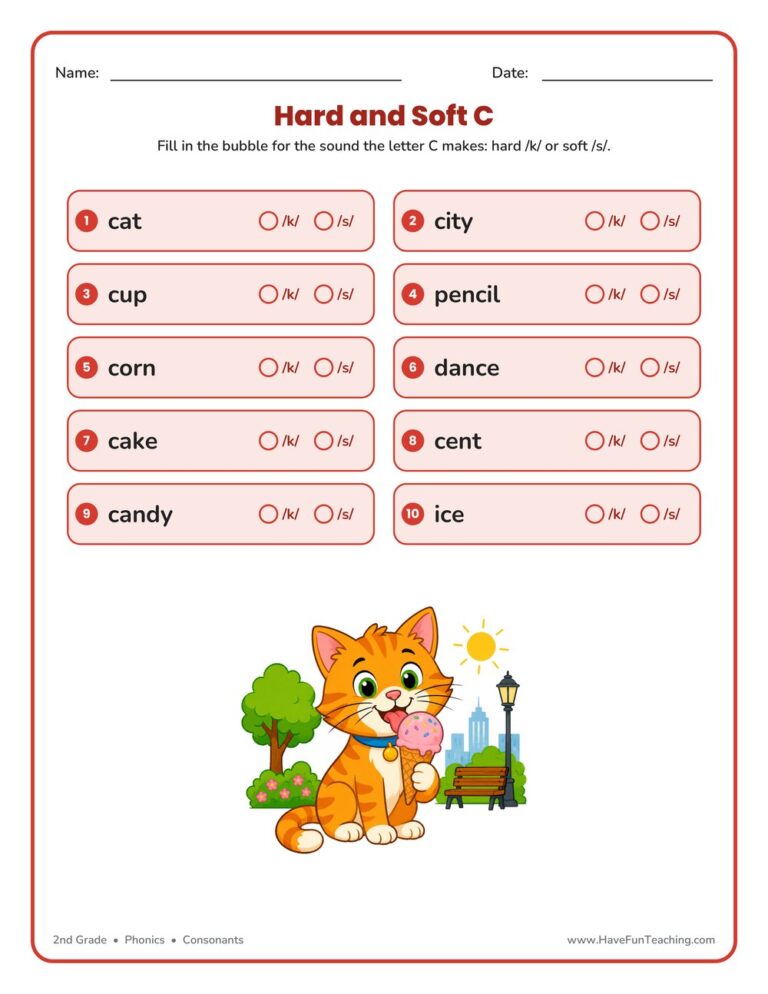
Worksheet2nd GradeCircle Hard Soft C Words Worksheet

The Circle Hard Soft C Words Worksheet gives 2nd graders ten words to read and sort by the hard /k/ or soft /s/ sound of the letter C. Answer key included — perfect for quick, no-prep phonics practice.

Worksheet
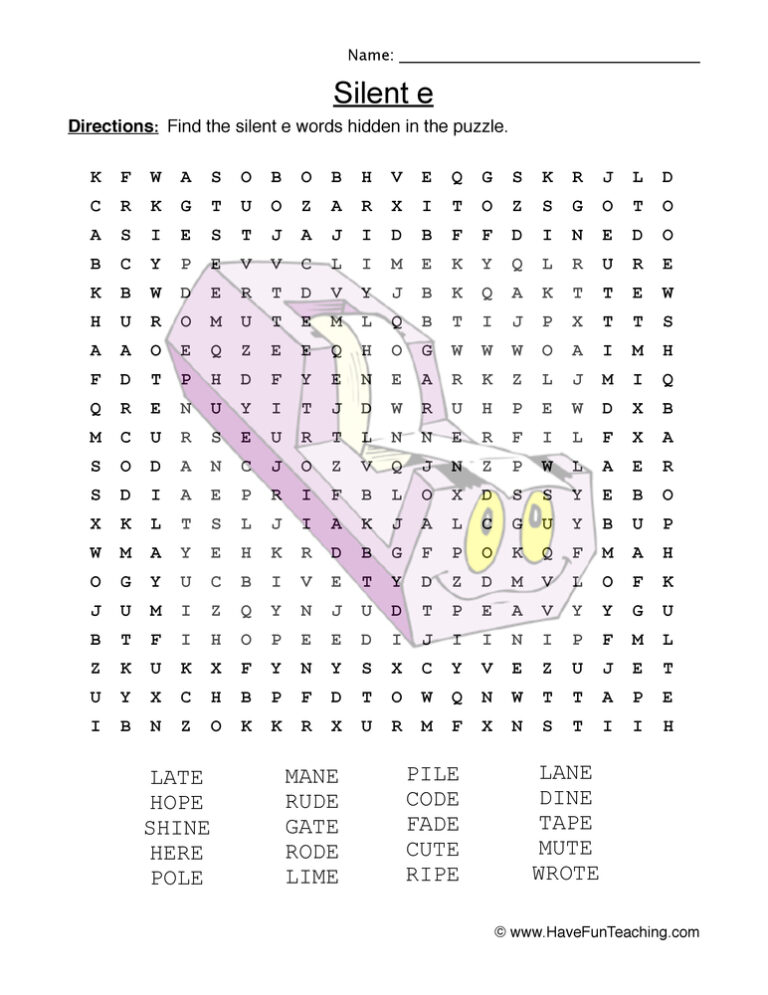
Worksheet1st GradeSilent E Word Search Worksheet

This silent e word search worksheet has 1st graders hunt for five hidden silent e words and then use them to finish four sentences. An answer key is included, so phonics practice is ready with no prep.

Worksheet
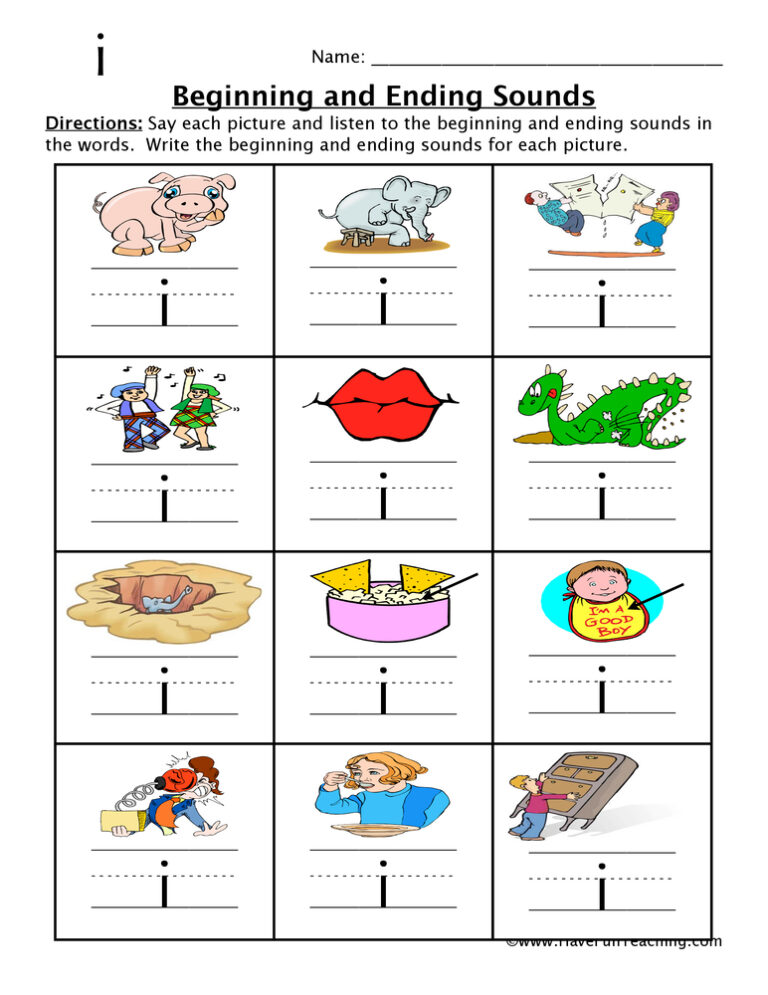
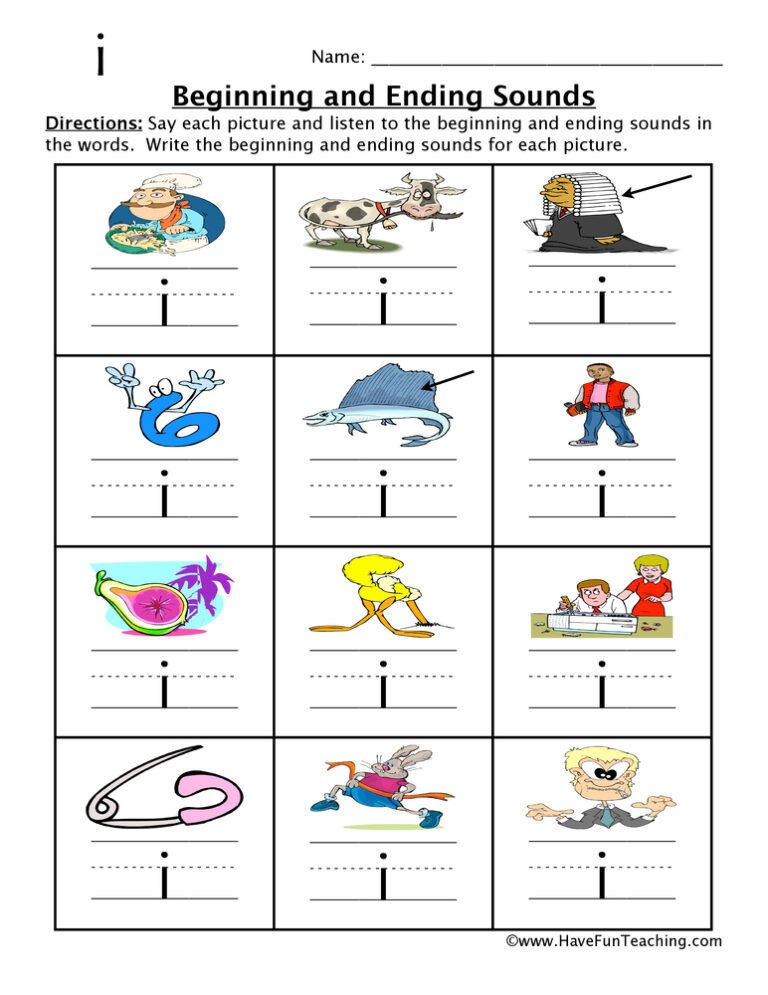
WorksheetKindergartenShort I Beginning and Ending Sounds Worksheet

This short i beginning and ending sounds worksheet has Kindergarten readers name six pictures and write the first and last letter of each CVC word. Answer key included for fast, no-prep phonics practice.

Worksheet
WorksheetKindergartenEnding Sounds Worksheet

This ending sounds worksheet gives kindergarten students six picture cards and one writing line each, so they say the word, hear the last sound, and print the letter. An answer key is included for fast checking.

Worksheet
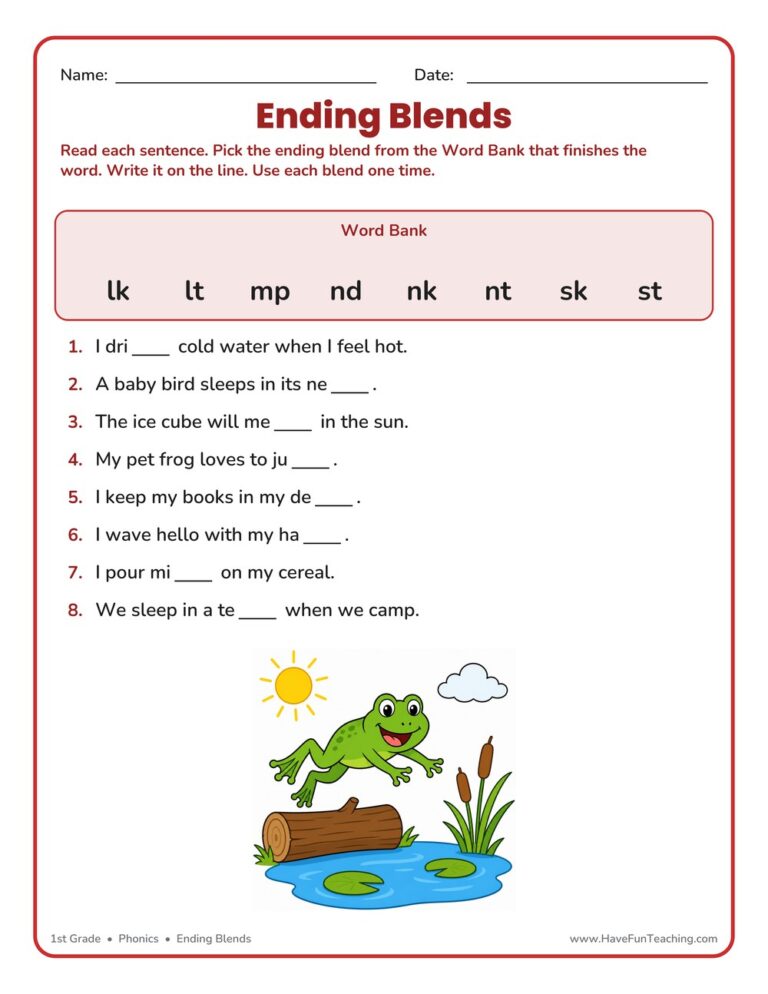
Worksheet1st GradeFill in the Blank Ending Blends Worksheet

The Fill in the Blank Ending Blends Worksheet gives 1st graders eight sentences to complete by choosing the right ending blend from a word bank. Answer key included — a no-prep way to build phonics and spelling confidence.

Worksheet
Worksheet1st GradeEnding Blends Pictures Worksheet

The Ending Blends Pictures Worksheet has first graders say six picture names and write the ending blend they hear, then finish three sentences. An answer key is included, so ending sounds stop slipping away.

Worksheet
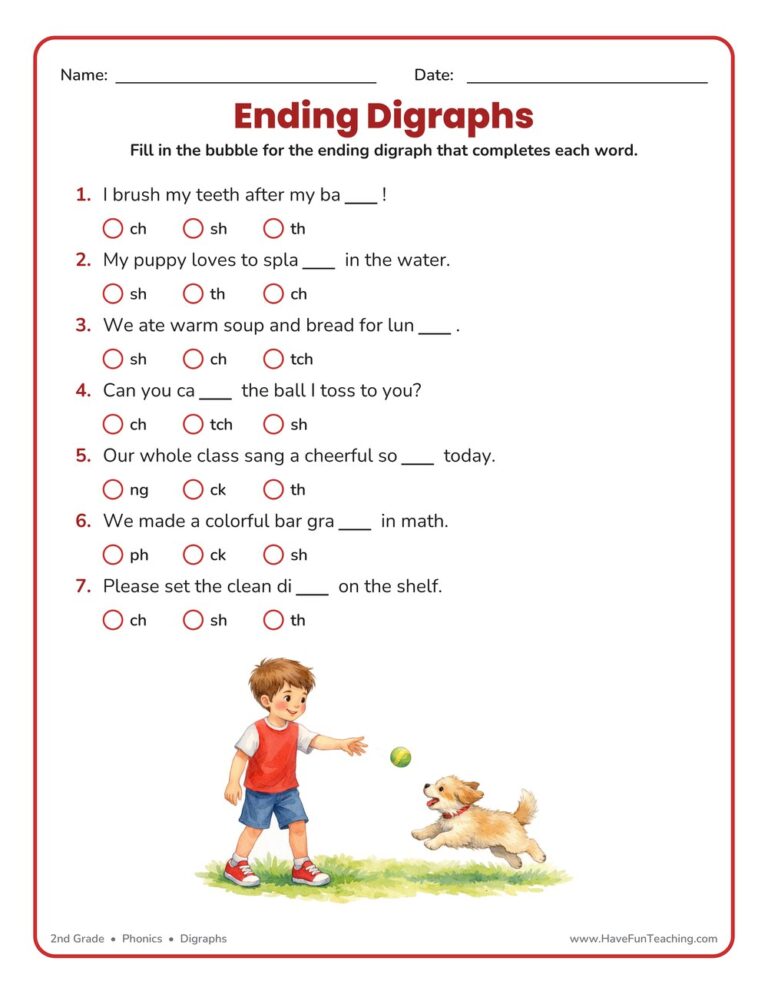
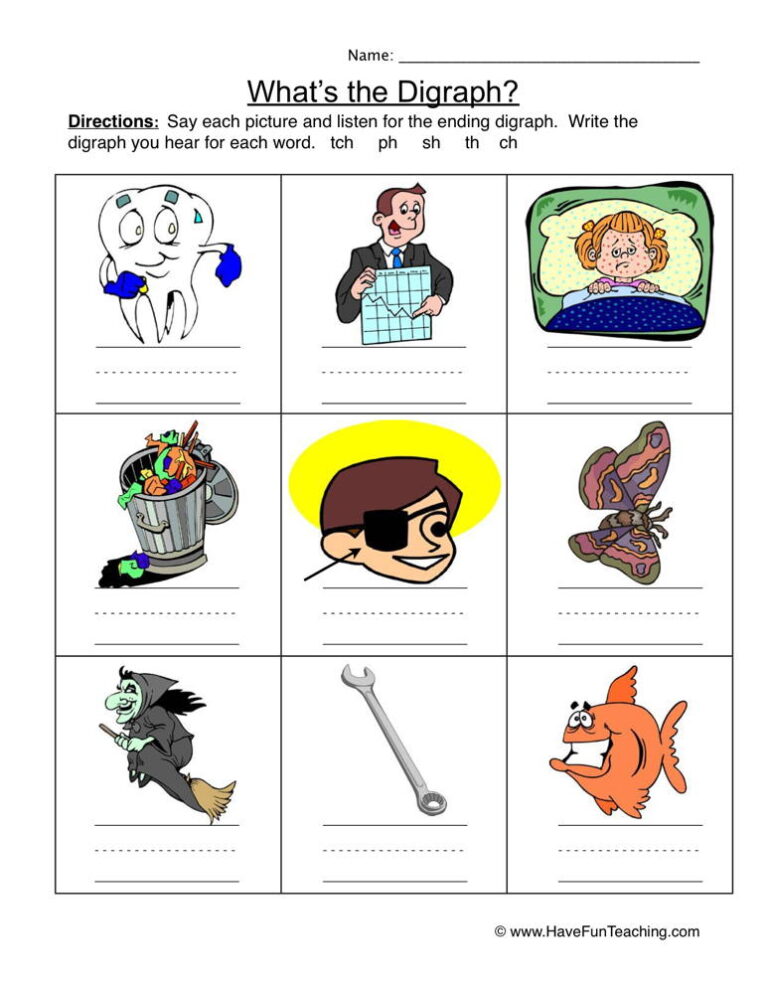
Worksheet2nd GradeEnding Digraphs Sentences Worksheet

The Ending Digraphs Sentences Worksheet helps 2nd graders choose the digraph — ch, sh, th, tch, ng, or ph — that completes each word in a sentence. Includes a complete answer key for quick, no-prep phonics practice.

Worksheet
WorksheetKindergartenShort I Words Beginning and Ending Sounds Worksheet

This Short I Words Beginning and Ending Sounds Worksheet has kindergarten students name six pictures and write the first and last letter of each short i word. An answer key is included for fast, no-prep phonics practice.

Worksheet
Worksheet1st GradeEnding Digraphs Pictures Worksheet

This ending digraphs pictures worksheet has 1st grade students say each picture, listen for the last sound, and write ch, sh or th to finish the word. An answer key is included for fast checking.

Worksheet
Worksheet1st GradeSilent E Fill in the Blank Worksheet

This Silent E Fill in the Blank Worksheet gives 1st Grade students a six word bank, six sentences, and four add-an-e cards, with an answer key included, so the silent e rule finally clicks.

Worksheet
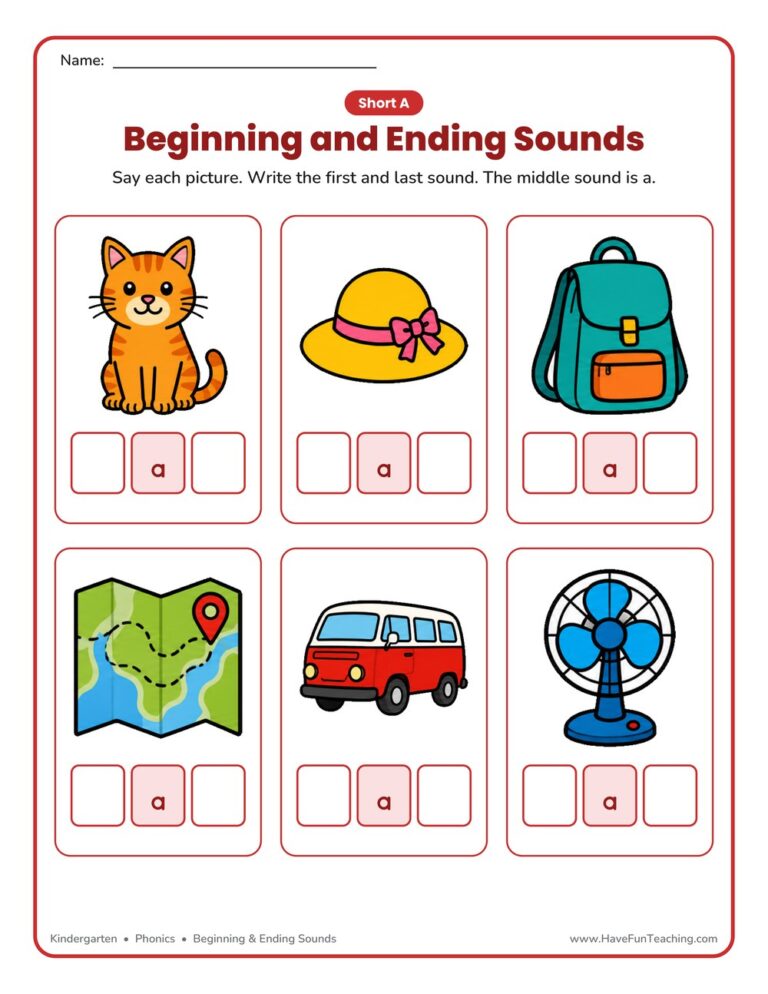
WorksheetKindergartenShort A Beginning and Ending Sounds Worksheet

This Short A Beginning and Ending Sounds Worksheet gives kindergarten students picture-based practice writing the first and last sounds in short a words. An answer key is included for quick and easy checking.

From our teachers' playbook

Listen all the way to the end!

What do kids learn about ending sounds?

After kids can hear the first sound in a word, the next step is listening to the end. They learn that cat ends with /t/ and bus ends with /s/. Once they can hear ending sounds, they can spell whole CVC words. Later they tackle ending blends like -st and -nd and digraphs like -sh and -ck: fish, duck, nest. The click comes when kids stop writing just the first letter and spell the whole word all by themselves.

How we teach ending sounds

Ending sounds are harder to hear than beginning ones. These moves slow things down so kids can catch them.

Stretch it like a rubber band

Pretend to stretch a rubber band as you say a word slowly: "mmmaaap." Kids listen for the last sound when the band snaps back. Stretching makes the ending sound easy to hear.

Why it works: teaching letter sounds directly and in order is one of the best-supported findings in reading research (National Reading Panel, 2000).

Ending Sounds WorksheetTry it withEnding Sounds WorksheetWorksheetsOpen it →

Push the sounds into boxes

Use Elkonin boxes: kids push a counter into a box for each sound they hear. The last box is the ending sound. It turns listening into something they can see and touch.

Why it works: pairing a picture with each word gives kids two ways to remember it, a well-tested principle of how people learn (Mayer, 2009).

Elkonin Box WorksheetTry it withElkonin Box WorksheetWorksheetsOpen it →

Beginning, middle or end?

Once kids can hear endings, mix it up. Say a sound and ask if it's at the beginning, middle or end of the word. Switching makes them listen to the whole word every time.

Why it works: mixing different kinds of problems in one practice set helped students do far better on a later test (Rohrer and Taylor, 2007).

Beginning, Middle, and Ending Sounds WorksheetTry it withBeginning, Middle, and Ending Sounds WorksheetWorksheetsOpen it →
Ending sounds questions

What are ending sounds in phonics?

Ending sounds are the last sounds kids hear in a word. In dog, the ending sound is /g/. Hearing ending sounds helps kids read and spell whole words.

When should kids learn ending sounds?

Most kids work on ending sounds in kindergarten, after they're comfortable with beginning sounds. Ending blends and digraphs often come in 1st grade.

Why are ending sounds harder than beginning sounds?

The ending of a word is quieter and goes by faster. Kids often focus on the first sound they hear. Stretching words slowly helps them notice the end.

How can I practice ending sounds at home?

Play I Spy with endings: "I spy something that ends with /t/." Or say a word and have your child clap when they hear the last sound. Short, playful practice works best.