
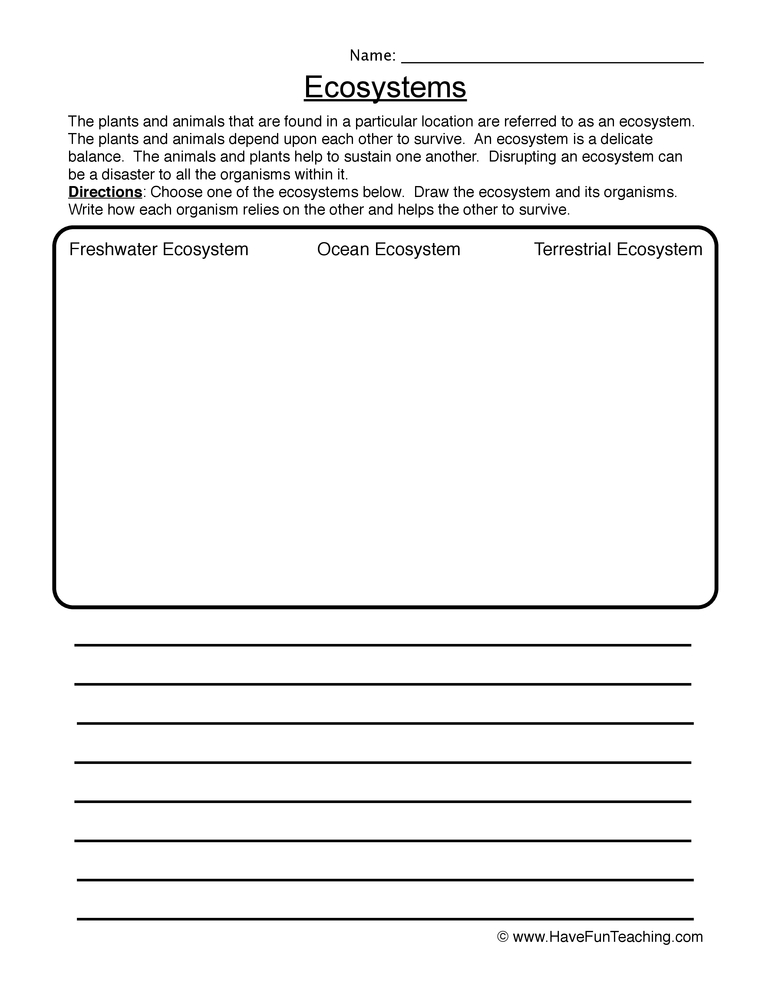
Drawing Ecosystems Worksheet
The Drawing Ecosystems Worksheet asks 4th grade students to name the freshwater, ocean and terrestrial ecosystems behind six clues, then explain one animal partnership. An answer key is included, so checking takes a minute.
$6.97
Or free with a membership — members pay $3.33/mo for all 10,000+ resources. See plans
Want this one free?
Tell us where to send it and it’s yours — no card, no catch.
One free resource per teacher. We’ll also send free teaching ideas each week — unsubscribe anytime.
Teaching is easier with a membership
Unlimited printables, games & videos for PreK–6th — for your classroom or homeschool. Cancel anytime.
Start your 3-day free trial$0 today · cancel anytime · Instant access to 10,000+ resources
About this resource
Description
An ecosystem is every living thing in one place, together with the air, the water and the soil around them. A pond, a coral reef and a shady forest are all ecosystems, and the plants and animals in each one depend on one another to stay alive. The Drawing Ecosystems Worksheet helps students sort living things into the freshwater, ocean and terrestrial ecosystems where they belong, and then explain in their own words how two of those living things help each other survive.
This Drawing Ecosystems Worksheet opens with a short reference box that names the three ecosystems and gives a plain-language definition of each one. Six clues follow. Every clue describes a small scene — a cactus shading a lizard, a bullfrog floating in a quiet pond, kelp swaying in salty water — and students decide which ecosystem the scene belongs to and write its name on the line. A written response then asks them to look again at the clownfish and the sea anemone and explain how each one helps the other. Read the reference box together first, work the first clue as a class, and then let students finish the page on their own or with a partner.
What’s Included
- A reference box defining the freshwater, ocean and terrestrial ecosystems
- Six clue-and-answer items that ask students to name the right ecosystem
- A written response about how a clownfish and a sea anemone depend on each other
- Watercolor artwork of a clownfish sheltering in a sea anemone
- A complete answer key with a model written response
Why This Helps Kids
- Students apply a definition to a brand-new example instead of copying one back, which is how science standards actually ask them to think.
- Sorting living things by where they live builds the vocabulary — habitat, ecosystem, freshwater, terrestrial — that later life science lessons lean on.
- The written response gives students practice explaining a cause-and-effect relationship in full sentences, a skill their writing and reading work needs too.
Teacher and Parent Ideas
- Use this 4th grade ecosystems worksheet as a warm-up before a unit on habitats, food chains or biomes.
- Ask students to add a seventh clue of their own and trade papers with a partner to answer it.
- Hang three labeled charts in the room and have students sort magazine pictures of plants and animals onto the right one.
- Send the page home so families can name the ecosystems they can find in their own neighborhood.
Related Resources
What teachers say
Reviews
You must be logged in to post a review.
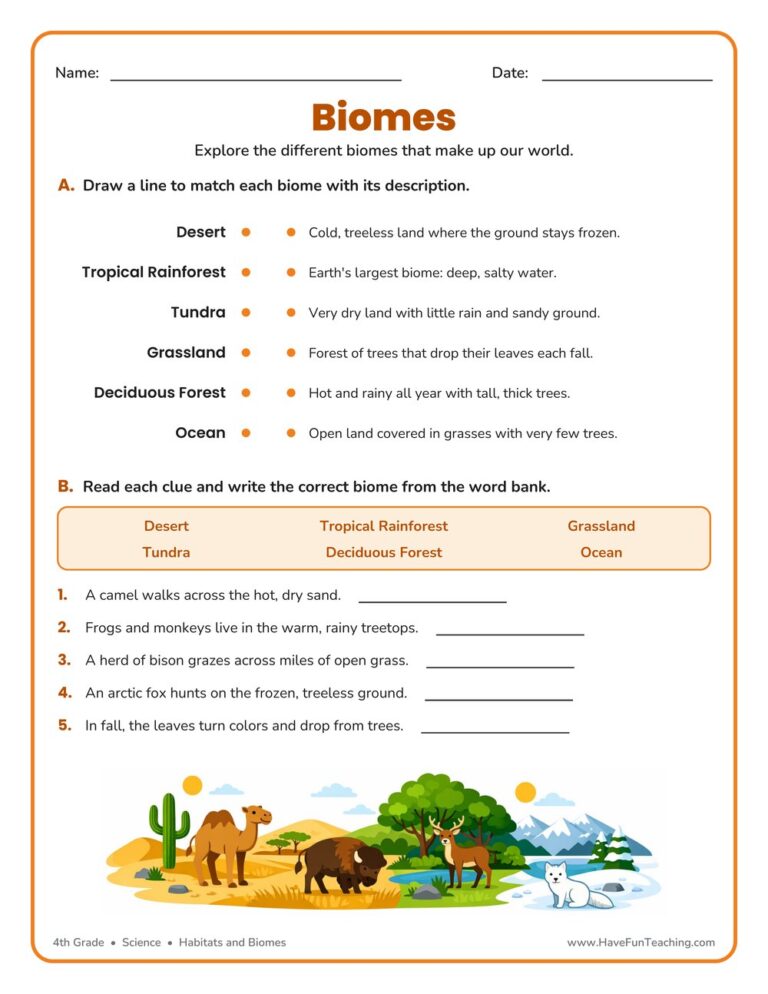
This Biomes Worksheet helps 4th grade students match major biomes to their climates and identify each one from real-world clues. Includes an answer key for fast, no-prep science practice at home or school.
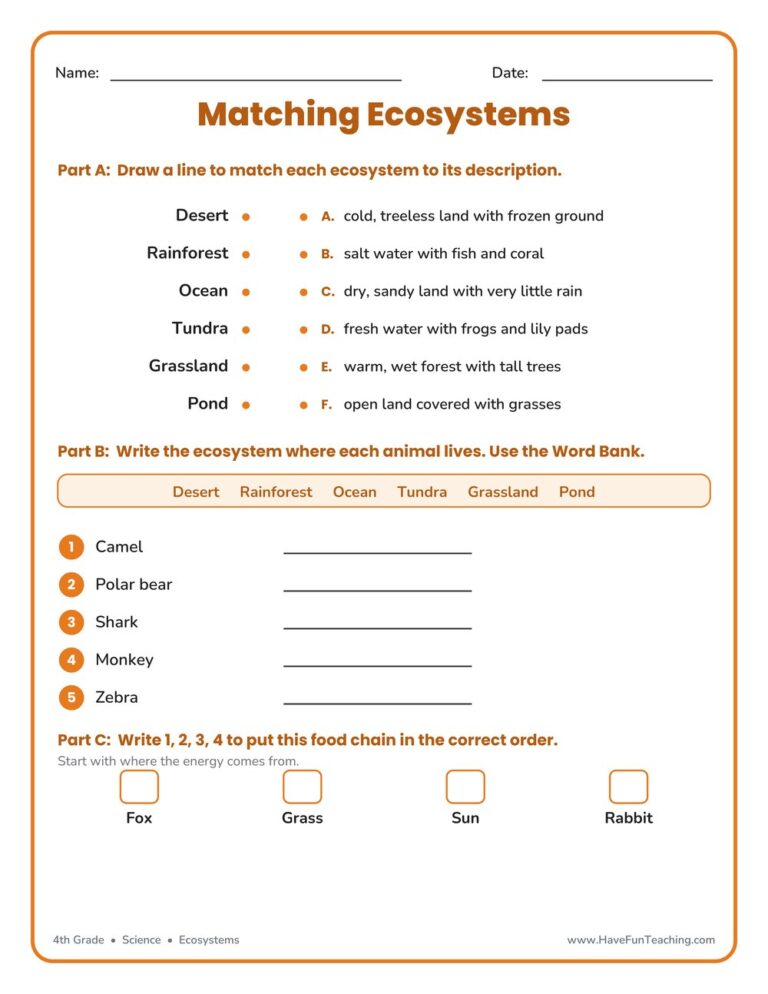
This matching ecosystems worksheet helps 4th grade students match ecosystems to descriptions, sort animals into habitats, and order a food chain. Includes an answer key for easy, no-prep science practice.

Our Natural Resources Worksheet asks 4th graders to sort eight resources into renewable and nonrenewable columns, then explain the difference in writing. Answer key included — easy no-prep Earth Science practice.

The Natural Resources Sorting Worksheet has 4th graders sort a word bank of twelve resources into renewable and non-renewable columns, then write a sentence. Answer key included for easy Earth Science practice.

This landform matching worksheet helps 4th grade students match eight landforms to their meanings, then draw and describe two of them. An answer key is included to make checking quick and easy.

This Desert Map Worksheet asks 4th Grade students to read four clues, name each United States desert, and mark it on the map. An answer key is included, so checking work takes seconds.

This environmental health worksheet asks 4th graders to sort real clues into air, water, soil, and noise pollution, then plan two ways their class can help. Answer key included for quick, no-prep science practice.

This Resources Worksheet lets 4th Grade students choose a natural resource from the land, list how people use it, and share ideas for protecting it for the future.

This Natural Resources Writing Worksheet asks 4th graders four written questions on renewable and nonrenewable resources and how to conserve them. An answer key is included, so it is ready to print and teach.

Using this The Arctic Worksheet, students record facts about the arctic climate and the region's animals.
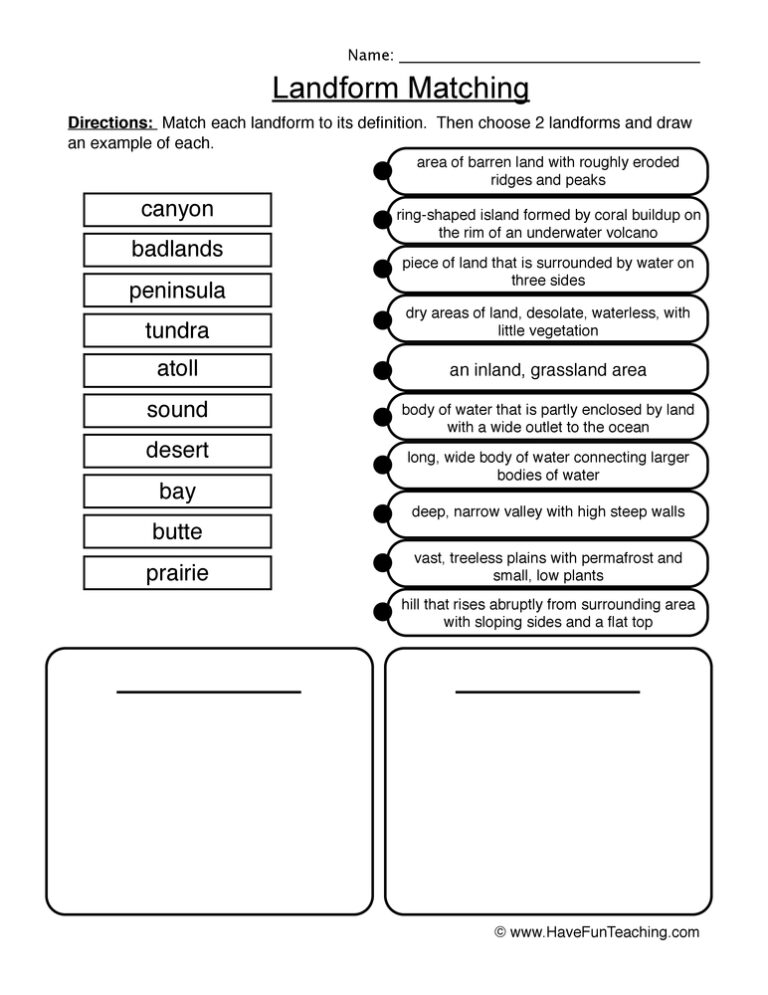
This landform definition matching worksheet has 4th grade students match clues to canyons, buttes, atolls, and more, then name two landforms on their own. An answer key is included.
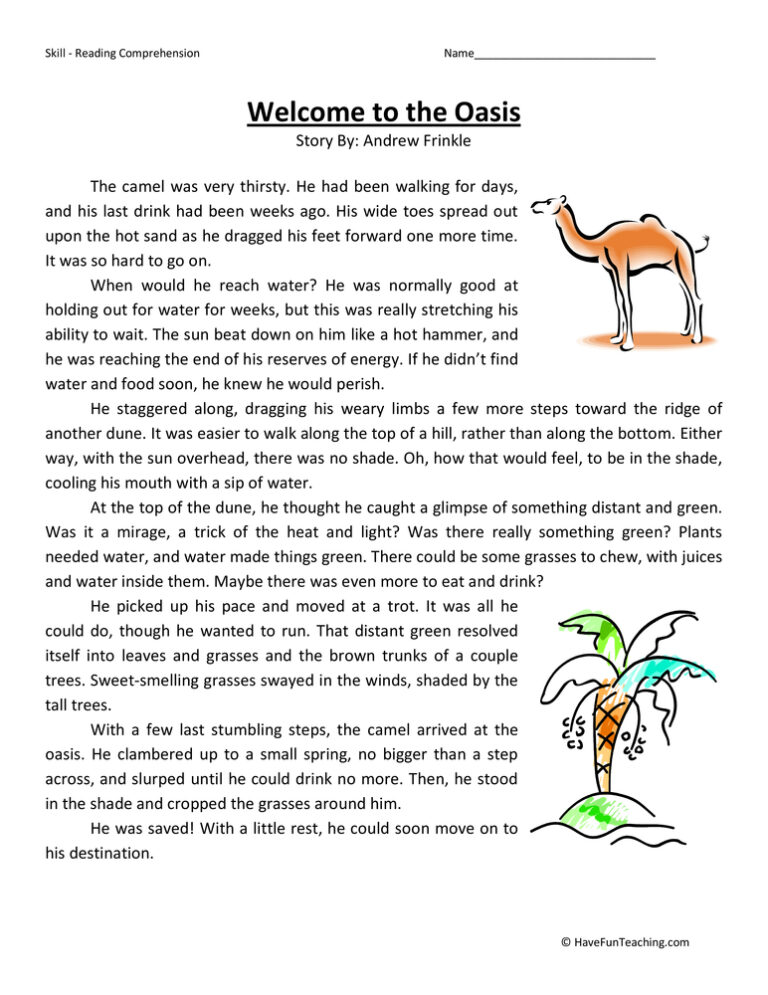
This Welcome to the Oasis reading comprehension worksheet gives 4th grade students a two-page passage about desert oases, four multiple-choice questions and a written response. An answer key is included.
Reviews
There are no reviews yet