Skip to content
Start My 3 Free Days $0 today · cancel anytime

Habitats and Biomes Resources

54 habitats and biomes resources: 45 worksheets, 9 activities, 8 assessments and more. How teachers use these

Habitats and Biomes Resources

54 habitats and biomes resources: 45 worksheets, 9 activities, 8 assessments and more. How teachers use these

Worksheet
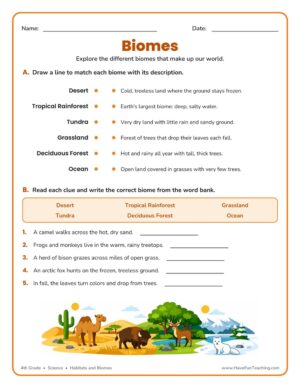
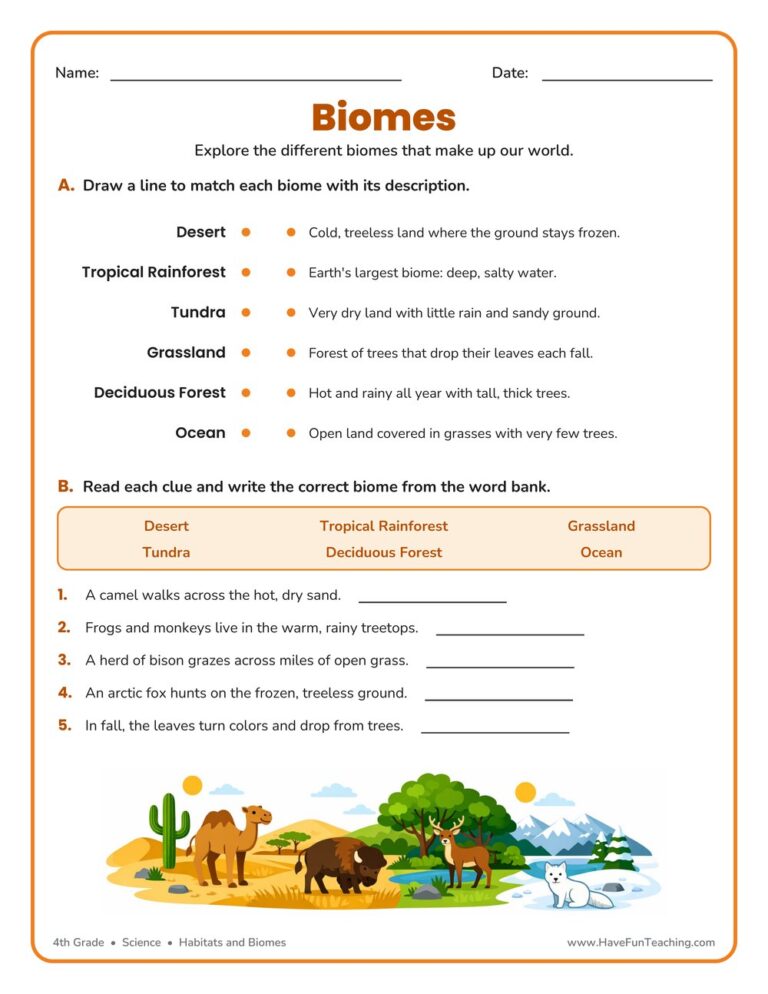
Worksheet4th GradeBiomes Worksheet

This Biomes Worksheet helps 4th grade students match major biomes to their climates and identify each one from real-world clues. Includes an answer key for fast, no-prep science practice at home or school.

Worksheet
Worksheet2nd GradeMatching Animal Habitats Worksheet

This matching animal habitats worksheet has 2nd Grade students connect five animals to the ocean, pond, desert, forest, and grassland, then finish three sentences. An answer key is included for fast, no-prep science practice.

Worksheet
Worksheet3rd GradeWater Pollution Worksheet

This Water Pollution Worksheet has 3rd Grade students sort pictures, finish sentences from a word box, and write about one way to keep rivers clean. Answer key included.

Worksheet
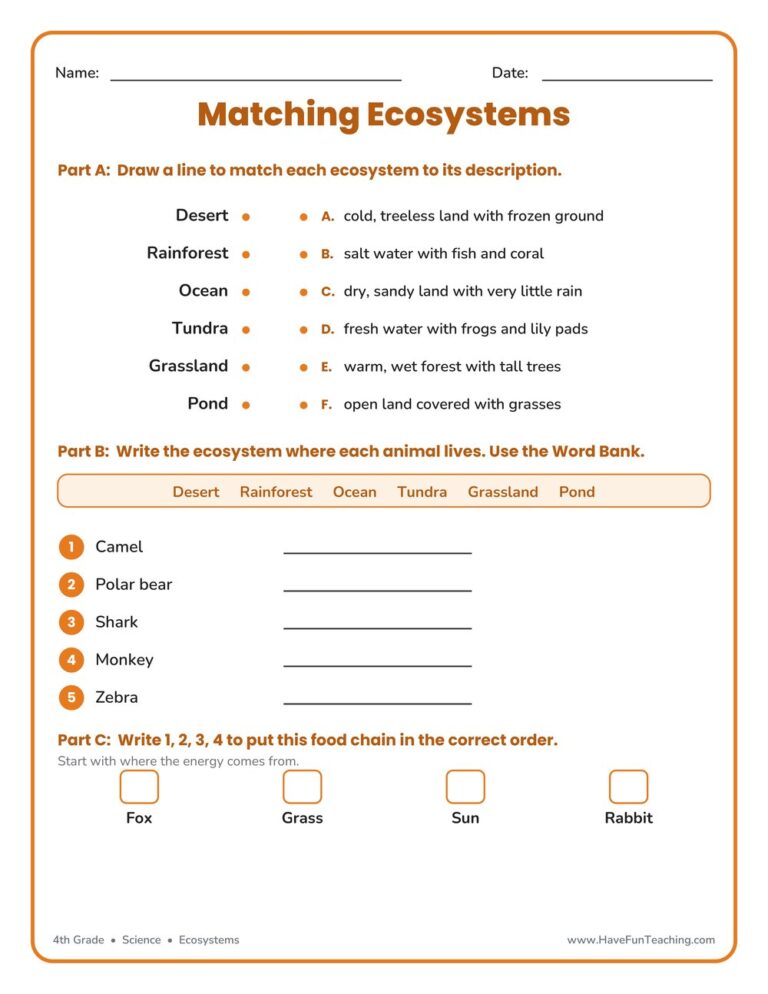
Worksheet4th GradeMatching Ecosystems Worksheet

This matching ecosystems worksheet helps 4th grade students match ecosystems to descriptions, sort animals into habitats, and order a food chain. Includes an answer key for easy, no-prep science practice.

Worksheet
Worksheet4th GradeOur Natural Resources Worksheet

Our Natural Resources Worksheet asks 4th graders to sort eight resources into renewable and nonrenewable columns, then explain the difference in writing. Answer key included — easy no-prep Earth Science practice.

Worksheet
Worksheet3rd GradeMatching Habitats Worksheet

This matching habitats worksheet has 3rd graders link five animals to the habitats they live in, then explain two animal adaptations in writing. Answer key included for fast, no-prep science practice.

Worksheet
Worksheet3rd GradeAnimal Habitats Worksheet

This animal habitats worksheet asks 3rd Grade students to match animals to their habitats, sort six animals into two environments, and explain one desert adaptation. An answer key is included for fast, no-prep science practice.

Worksheet
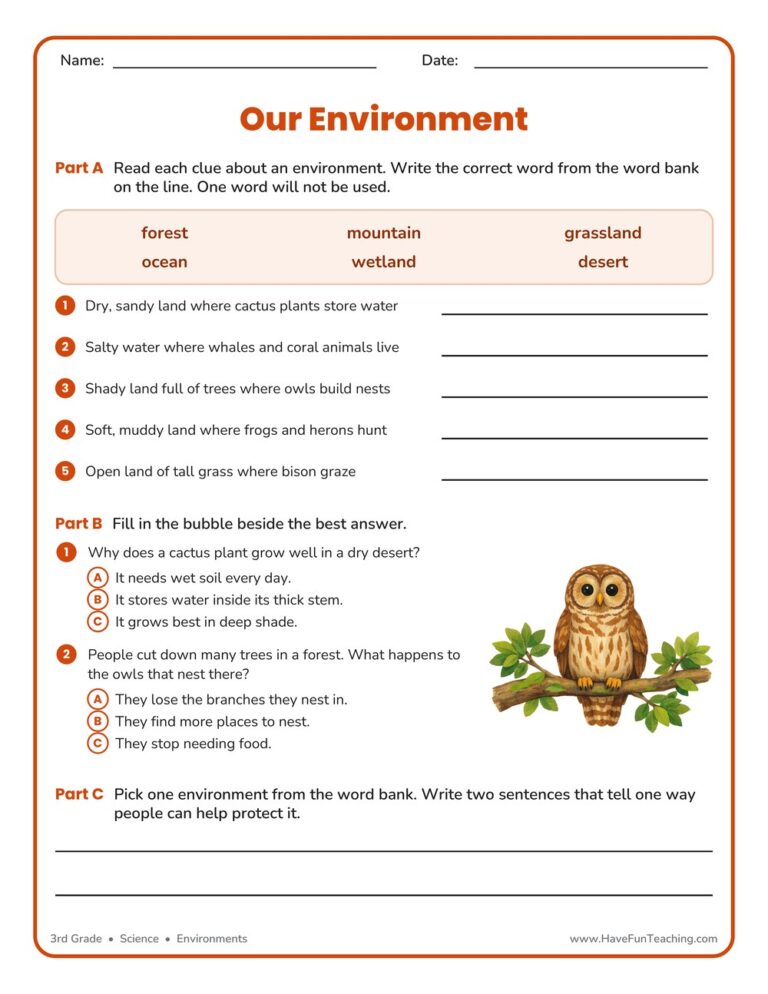
Worksheet3rd GradeOur Environment Worksheet

This Our Environment Worksheet asks 3rd graders to name five environments, answer two habitat questions, and write about protecting nature. An answer key is included for fast, no-prep science practice.

Worksheet
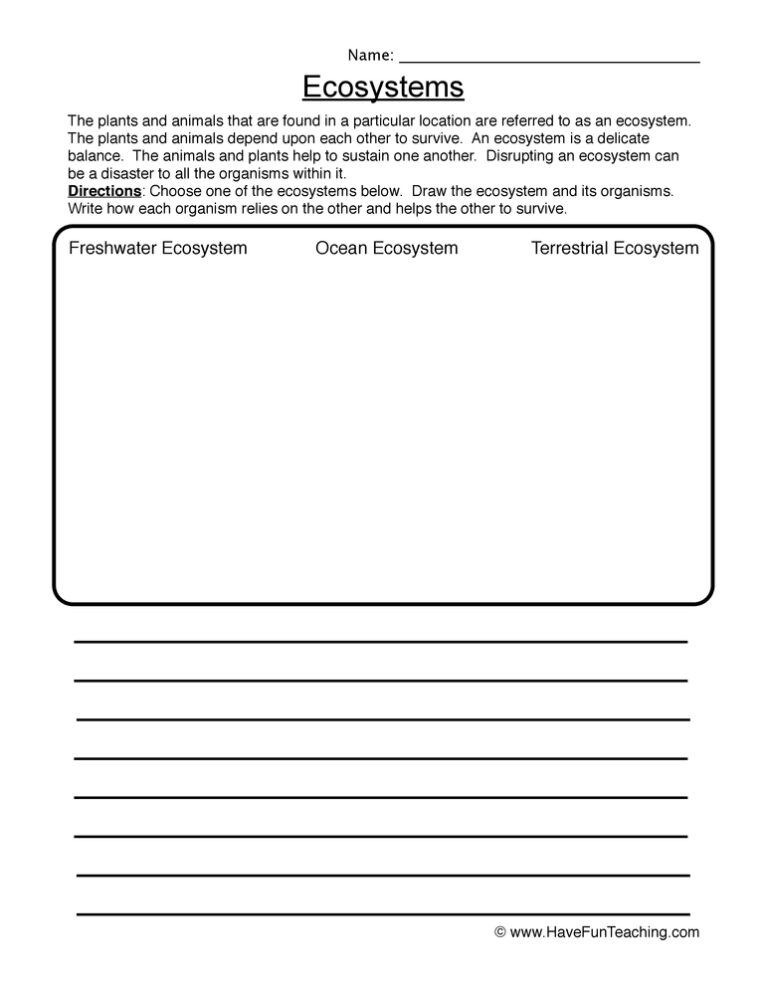
Worksheet4th GradeDrawing Ecosystems Worksheet

The Drawing Ecosystems Worksheet asks 4th grade students to name the freshwater, ocean and terrestrial ecosystems behind six clues, then explain one animal partnership. An answer key is included, so checking takes a minute.

Worksheet
Worksheet4th GradeLandform Matching Worksheet

This landform matching worksheet helps 4th grade students match eight landforms to their meanings, then draw and describe two of them. An answer key is included to make checking quick and easy.

Worksheet
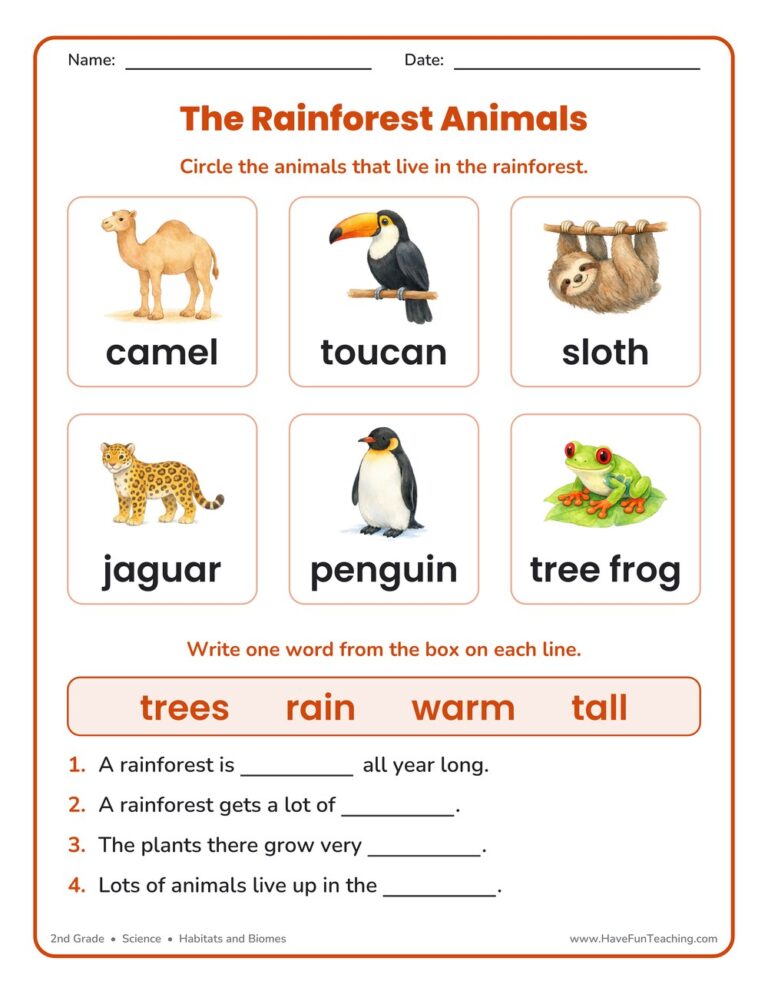
Worksheet2nd GradeRainforest Animals Worksheet

This rainforest animals worksheet asks 2nd Grade students to circle four rainforest animals and finish sentences about their habitat. Answer key included, so habitat practice takes only minutes to assign and check.

Assessment
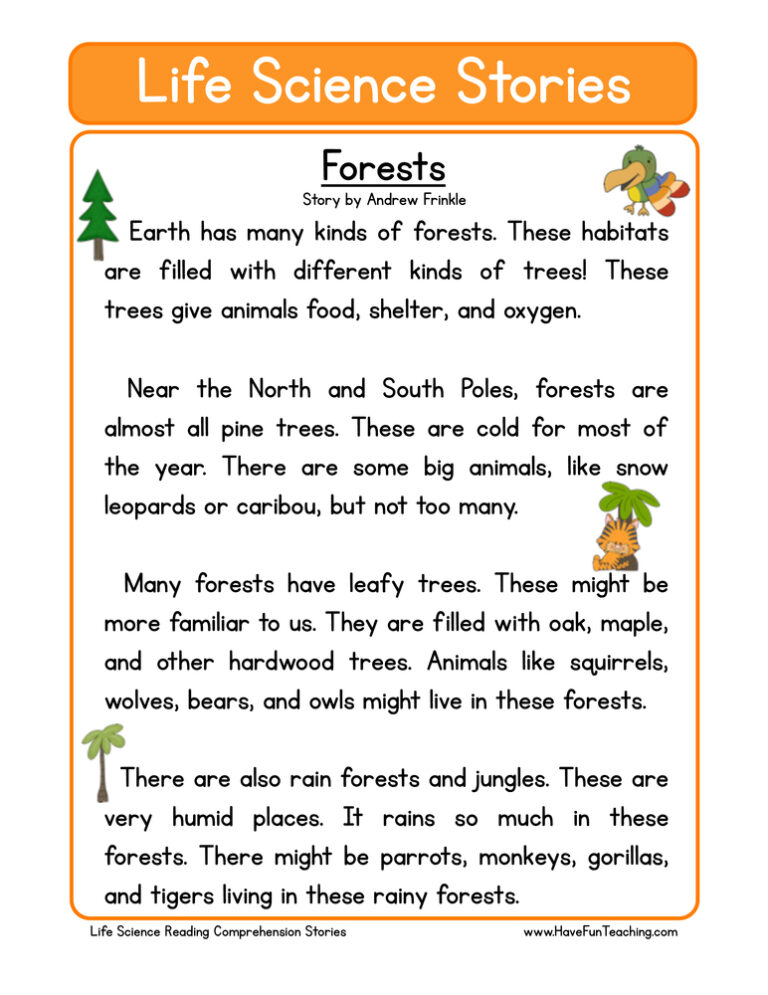
Assessment2nd GradeForests Life Science Reading Comprehension Worksheet

This Forests Life Science Reading Comprehension Worksheet gives 2nd graders a short non-fiction passage about pine, leafy, and rain forests, plus questions and an answer key. Great no-prep practice for main idea and key details.

Worksheet
Worksheet3rd GradeDesert True or False Worksheet

This desert true or false worksheet asks 3rd graders to judge eight statements about desert weather, plants and animals, then rewrite a false one correctly. Answer key included for fast, no-prep science practice.

Assessment
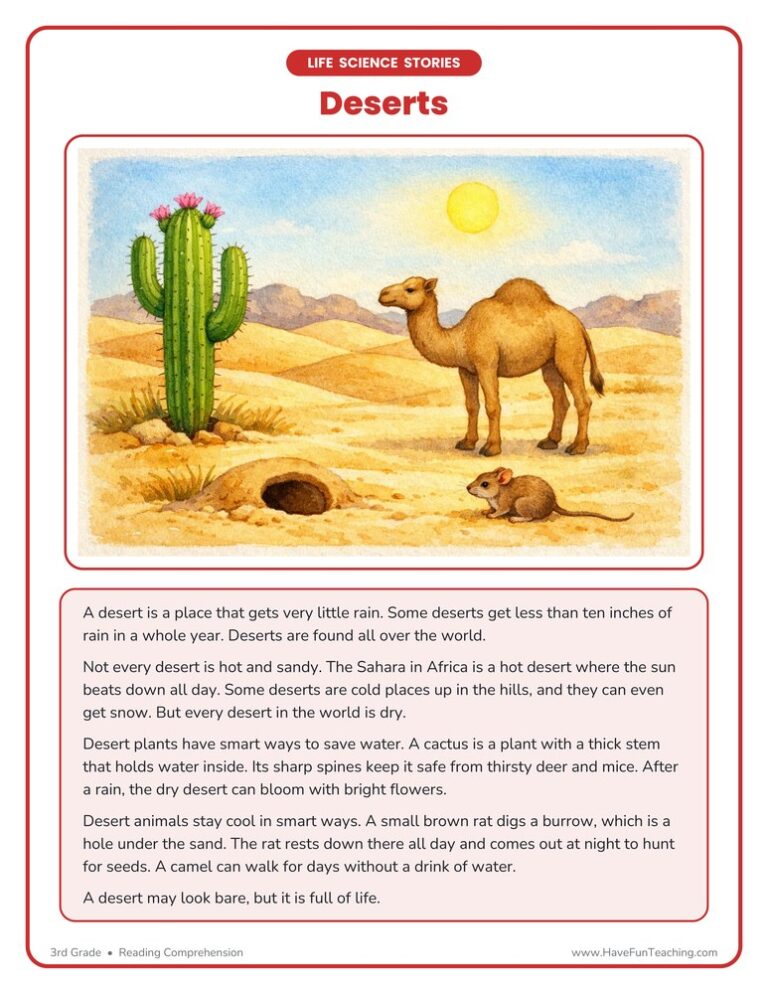
Assessment3rd GradeDeserts Life Science Reading Comprehension Worksheet

This Deserts Life Science Reading Comprehension Worksheet gives 3rd Grade readers a short nonfiction passage about hot and cold deserts, with comprehension questions and an answer key included, so science reading practice takes minutes to prep.

Assessment
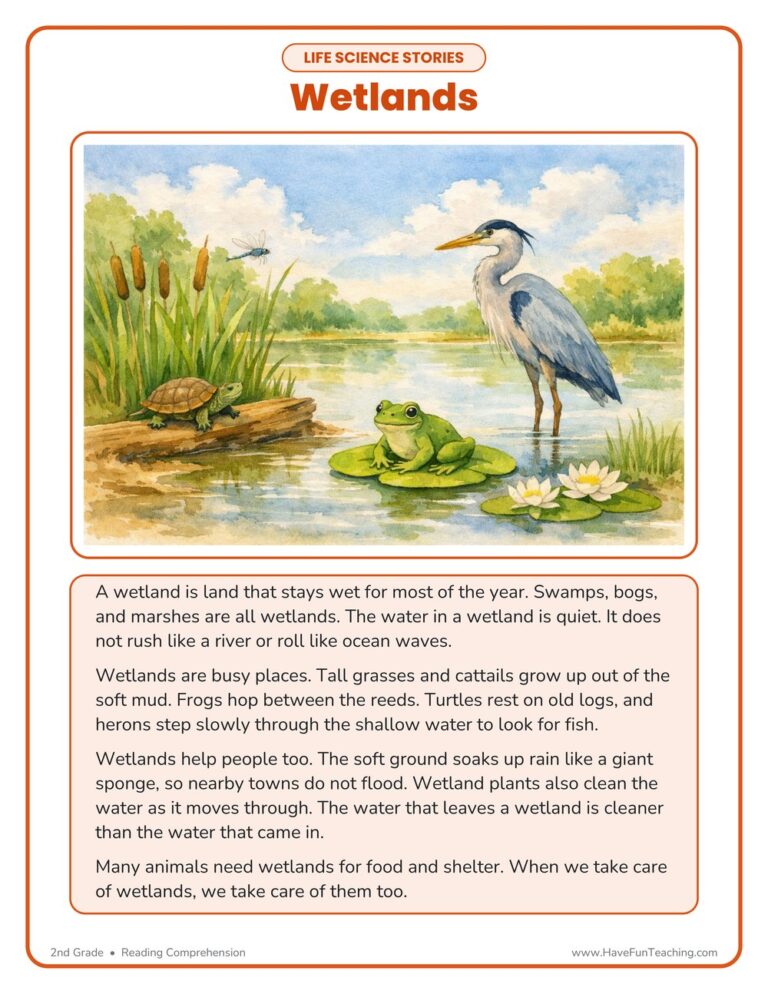
Assessment2nd GradeWetlands Life Science Reading Comprehension Worksheet

Explore swamps, bogs, and marshes with this wetlands life science reading comprehension worksheet. Second graders read a short nonfiction passage and answer six questions, and an answer key is included, so learning about habitats stays easy and fun.

Assessment
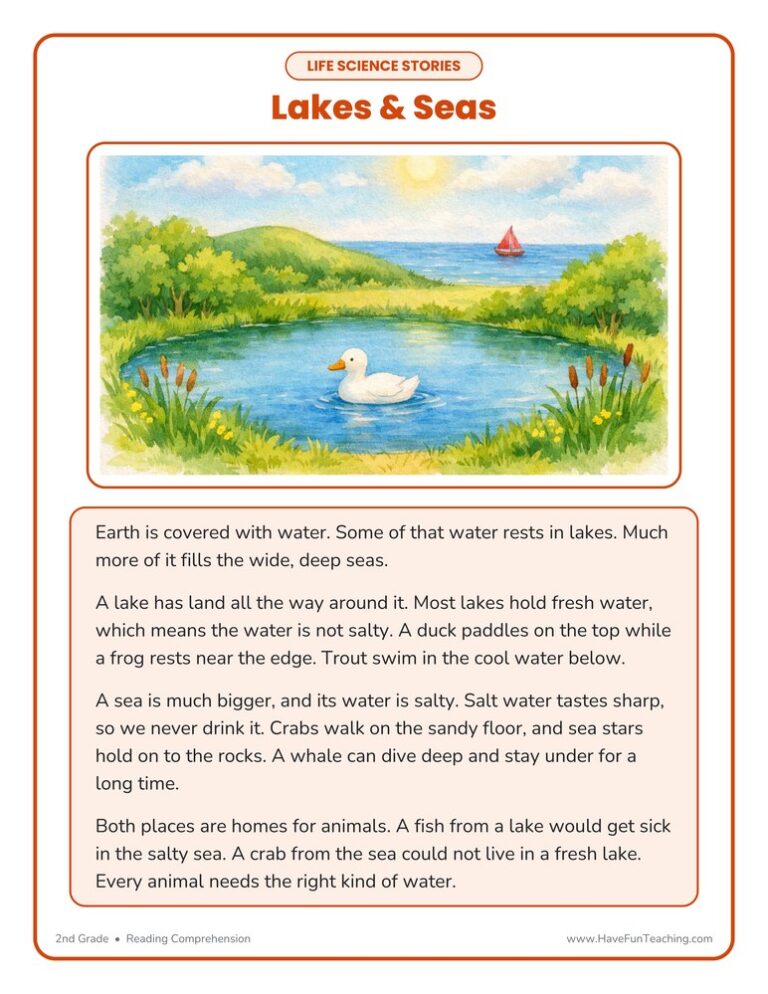
Assessment2nd GradeLakes and Seas Life Science Reading Comprehension Worksheet

This Lakes and Seas Life Science Reading Comprehension Worksheet gives 2nd Grade students an original passage about fresh water and salt water habitats, with bubble, fill-in, and writing questions. Answer key included.

Worksheet
Worksheet4th GradeEnvironmental Health Worksheet

This environmental health worksheet asks 4th graders to sort real clues into air, water, soil, and noise pollution, then plan two ways their class can help. Answer key included for quick, no-prep science practice.

Worksheet
Worksheet3rd GradeDesert Plants Worksheet

This desert plants worksheet asks 3rd graders to sort eight desert words into plants and animals, then find the plant and animal named in each sentence. An answer key is included for quick checking.

Worksheet
Worksheet3rd GradeHabitats Research Worksheet

This habitats research worksheet helps 3rd grade students pick an animal, take notes on its habitat, draw it, and explain how that home helps the animal survive.

Worksheet
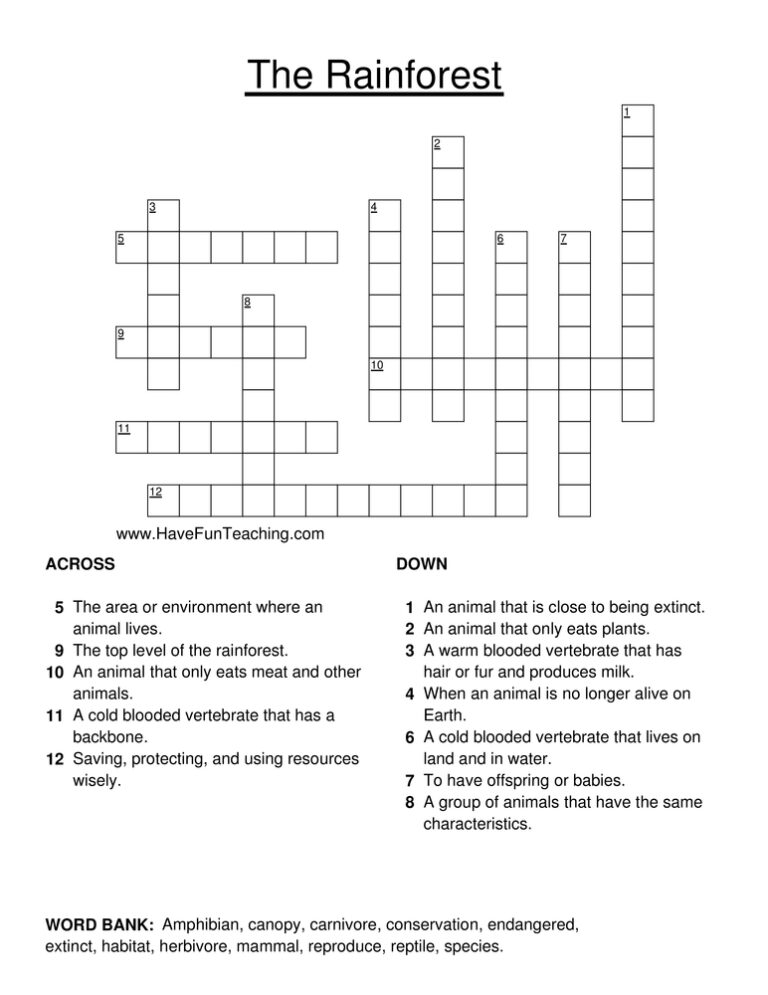
Worksheet3rd GradeRainforest Crossword Puzzle

This rainforest crossword puzzle worksheet gives 3rd grade students eight habitat vocabulary words to solve from short science clues, plus one written question. An answer key is included.

From our teachers' playbook

Deserts, oceans, forests and everyone who lives there.

What do kids learn about habitats and biomes?

A habitat is the home where a plant or animal finds the food, water and shelter it needs. A biome is a big region of Earth with a similar climate, like the desert, rainforest, tundra, grassland or ocean. Young kids match animals to their homes and notice that fish need water and camels can handle heat. Older kids learn how plants and animals are adapted to their biome, how living things depend on each other in an ecosystem, and how pollution and habitat loss affect them. The click moment is when kids realize an animal lives where it does because its body is built for that place.

Our favorite ways to teach habitats and biomes

These moves help kids see how every place on Earth fits the creatures that live there.

Draw an ecosystem

Have kids draw a habitat and add at least three living and three nonliving things, then draw arrows showing who needs what. A drawing makes the connections in an ecosystem visible and easy to talk about.

Why it works: children learn more from words and pictures together than from words alone (Mayer, 2009).

Drawing Ecosystems WorksheetTry it withDrawing Ecosystems WorksheetWorksheetsOpen it →

Match the home

Show an animal and ask kids to name its habitat and one reason it fits there. Keep a quick round going at the start of class for a week. Matching practice builds the base for deeper adaptation work.

Why it works: researchers who compared ten study methods found practice testing is one of the two that work best (Dunlosky and colleagues, 2013).

Matching Animal Habitats WorksheetTry it withMatching Animal Habitats WorksheetWorksheetsOpen it →

Compare the biomes

Once kids know a few biomes, mix them up. Give a set of clues like "cold, few trees, frozen ground" and have kids name the biome and explain how they knew. Comparing biomes side by side helps kids remember what makes each one different.

Why it works: shuffled practice teaches kids to choose the right strategy, not just repeat one, and it improved test scores in research (Rohrer and Taylor, 2007).

Biomes WorksheetTry it withBiomes WorksheetWorksheetsOpen it →

Questions parents and teachers ask us

What is the difference between a habitat and a biome?

A habitat is the specific home of a plant or animal, like a pond or a hollow tree. A biome is a large region with a similar climate, like a desert or rainforest, that contains many habitats.

What are the main biomes for kids to learn?

The main biomes usually taught are the desert, rainforest, tundra, grassland, deciduous forest, taiga and ocean or freshwater. Each has its own climate, plants and animals.

What does an animal need from its habitat?

Every animal needs food, water, shelter and space. A habitat provides all four, which is why animals live in places that fit their needs.

How can kids learn about habitats at home?

Go on a backyard or park habitat hunt. Look under rocks, in trees and near water, and talk about what each creature needs from that spot.

Keep exploring