

Fact Family Worksheet
This fact family worksheet gives 2nd graders three number bonds and twelve addition and subtraction facts to write. An answer key is included, so it is ready for no-prep math practice.
$6.97
Or free with a membership — members pay $3.33/mo for all 10,000+ resources. See plans
Want this one free?
Tell us where to send it and it’s yours — no card, no catch.
One free resource per teacher. We’ll also send free teaching ideas each week — unsubscribe anytime.
Teaching is easier with a membership
Unlimited printables, games & videos for PreK–6th — for your classroom or homeschool. Cancel anytime.
Start your 3-day free trial$0 today · cancel anytime · Instant access to 10,000+ resources
About this resource
Description
A fact family is three numbers that belong together, and the four addition and subtraction facts they make. Once a second grader sees that 24, 38 and 62 are one family, she stops treating 62 − 38 as a brand-new problem and starts reading it off the family she already knows. This fact family worksheet builds that habit with number bonds: a whole on top, its two parts underneath, and room to write all four facts the trio can make.
Each of the three boxes on this page holds one number bond and four answer boxes. Every number is already given, so the child is not hunting for a missing addend — the work is seeing that the same three numbers rearrange into two addition facts and two subtraction facts, and writing each answer in its box. The numbers run to 62, 72 and 46 and two of the three families regroup, which is what makes this 2nd grade fact families practice rather than a first-grade review. Use it for morning work, in a math center, as homework, or as a quick check before a unit test. Page two is a complete answer key.
What’s Included
- 1 print-ready PDF worksheet
- Answer key
- 3 number bonds with 12 facts to complete
Three reasons this page earns its place in a second-grade math block. First, the number bond shows the part-part-whole relationship as a picture, so a child who is still counting on fingers has something to look at while the idea settles. Second, writing the commuted pair (24 + 38 and 38 + 24) right next to each other makes the commutative property visible instead of abstract. Third, the two subtraction facts sit in the same box as the addition facts, which is exactly how a child learns to use a known sum to solve a difference — the heart of subtraction fluency within 100. A fact family worksheet like this one also gives you a fast, honest read on which children still need counters.
Away from the page, build the same families with objects. Give your child a handful of counters, split the pile two ways, and say all four facts out loud before writing anything. Draw a bond on a whiteboard, cover one circle with your thumb, and ask what is hiding. Roll two dice, add them, and name the family the three numbers make. Play a quick round of “I say the whole, you say the parts” in the car. And keep a family your child finds tricky on the fridge for a week — repetition in small doses beats one long drill.
Related Resources
What teachers say
Reviews
You must be logged in to post a review.
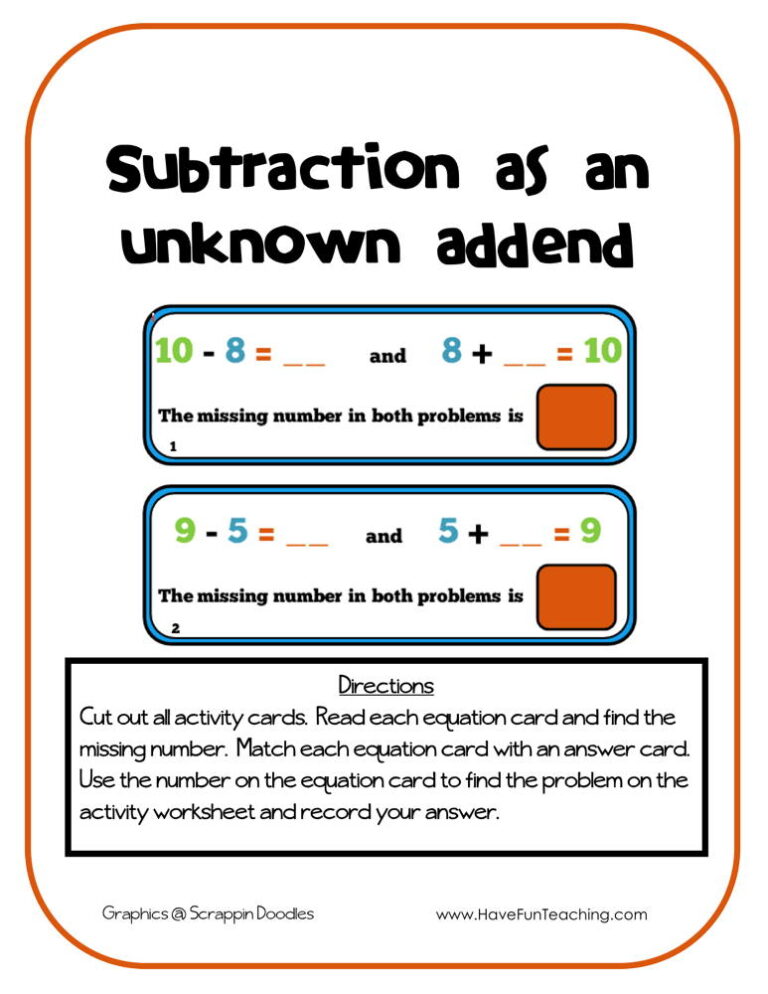
In this Subtraction as an Unknown Addend Activity, students find the unknown whole number in addition and subtraction equations up to 20.

In this Adding and Subtracting Unknown Numbers Activity, students find the unknown whole number in addition and subtraction equations up to 20.

The Valentine's Day Fact Families Worksheet gives 2nd grade students three number triangles with a missing number and four facts to finish, building addition and subtraction fluency together. Answer key included.

In this Adding Two Digit Numbers Activity, students add up to four two-digit numbers using strategies based on place value and properties of operations.
A printable, ready-to-use blank calendar with a landscape monthly grid and labeled day columns. Great for Kindergarten through 5th grade classrooms to map out lessons, holidays, and daily routines—just add the month and the dates.
Using the Counting Songs (Classic Video Collection), students practice skip counting by all of the numbers by singing and counting along to these thirteen videos.
This printable 20 by 20 Blank Graph Paper Worksheet gives 2nd graders a clean 20 by 20 grid for bar graphs, plotting points, and organizing data. A versatile, no-prep template for any math lesson.
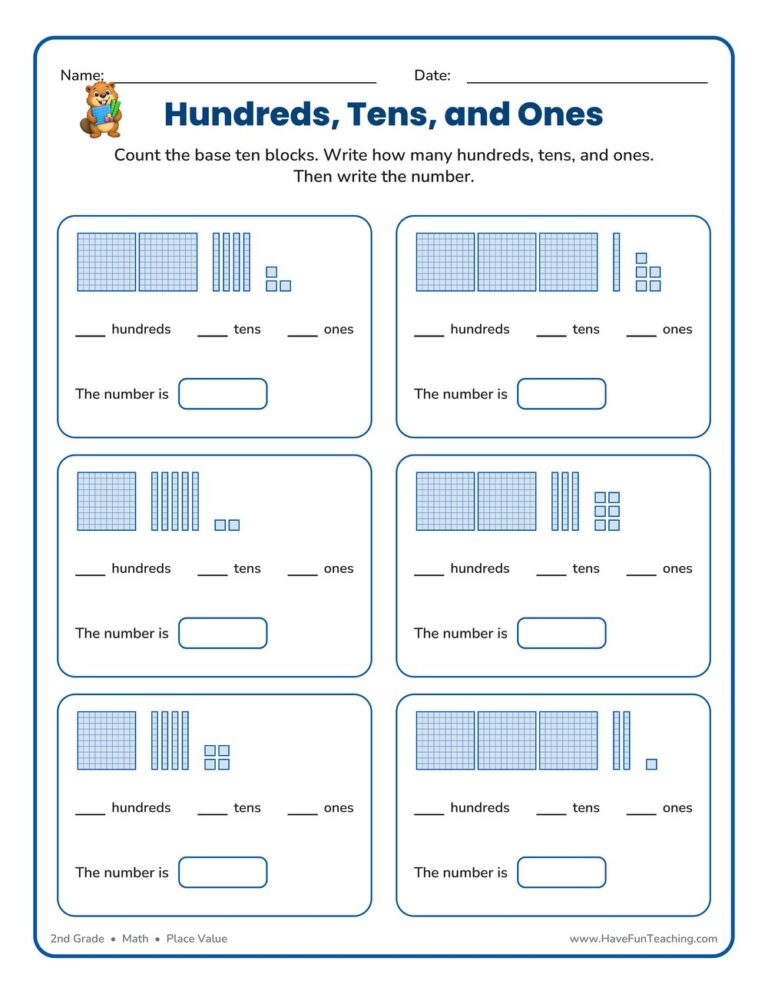
This Base 10 Blocks Place Value Worksheet helps 2nd graders count the hundreds, tens, and ones shown with base ten blocks and write each three-digit number. Answer key included for quick, no-prep place value practice.

A kangaroo-themed Counting to 1000 by Tens and Hundreds Worksheet that helps 2nd graders complete skip-counting patterns by filling in the missing numbers. Answer key included for quick, no-prep math practice.

Using the Shape Songs (Classic Video Collection), students learn all about shapes, including Shape Names and Shape Recognition through a catchy song!

This addition and subtraction word problems worksheet gives 2nd graders four real-world number stories to solve within 100. It includes a complete answer key, making it perfect for no-prep math practice at home or in the classroom.
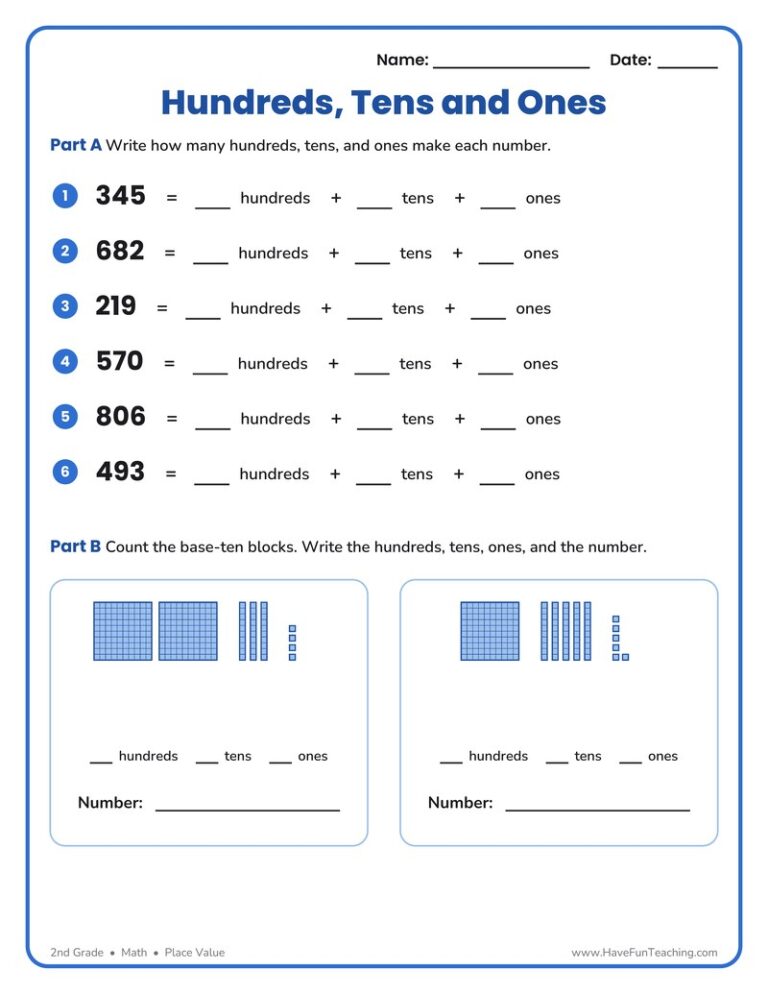
This hundreds tens ones worksheet helps 2nd graders break three-digit numbers into hundreds, tens, and ones and count base-ten blocks. Includes a complete answer key for quick, no-prep place value practice at home or school.




Reviews
There are no reviews yet