
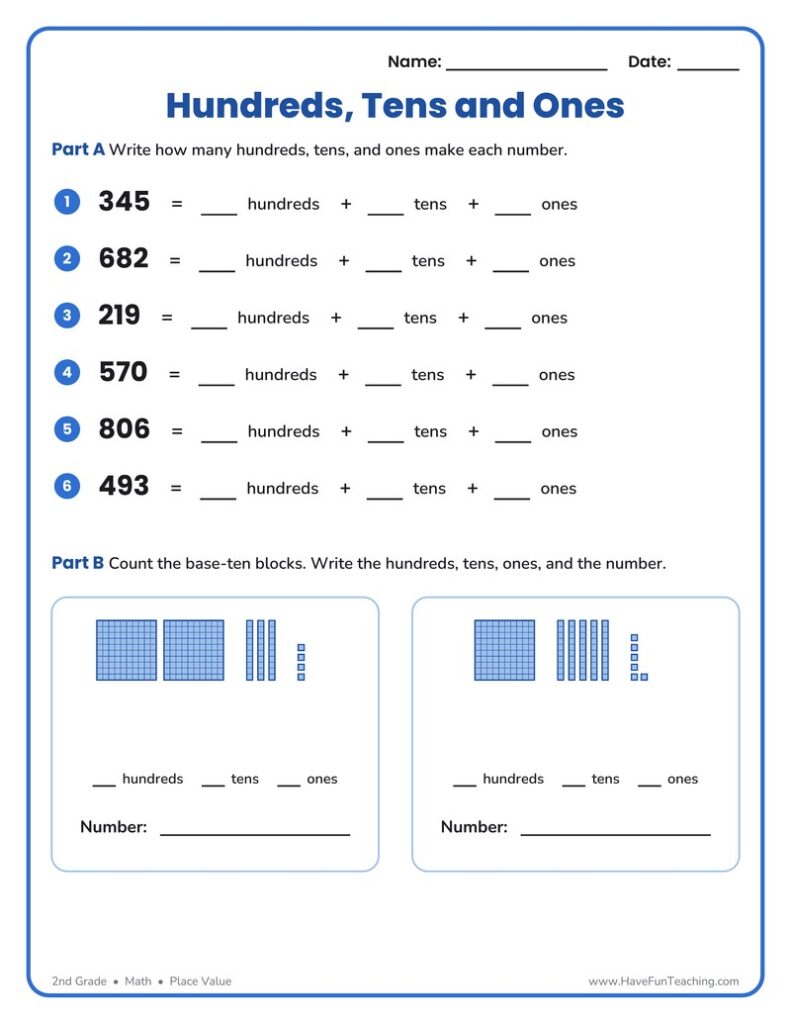
Hundreds Tens Ones Worksheet
This hundreds tens ones worksheet helps 2nd graders break three-digit numbers into hundreds, tens, and ones and count base-ten blocks. Includes a complete answer key for quick, no-prep place value practice at home or school.
$6.97
Or free with a membership — members pay $3.33/mo for all 10,000+ resources. See plans
Want this one free?
Tell us where to send it and it’s yours — no card, no catch.
One free resource per teacher. We’ll also send free teaching ideas each week — unsubscribe anytime.
Teaching is easier with a membership
Unlimited printables, games & videos for PreK–6th — for your classroom or homeschool. Cancel anytime.
Start your 3-day free trial$0 today · cancel anytime · Instant access to 10,000+ resources
About this resource
Description
Understanding place value is one of the biggest steps a young learner takes in early math, and this hundreds tens ones worksheet gives second graders a clear, hands-on way to master it. When children can look at a three-digit number and see exactly how many hundreds, tens, and ones it holds, they build the number sense they will rely on for adding, subtracting, and comparing larger numbers. This page keeps that foundational skill simple, focused, and friendly.
This printable place value worksheet is split into two easy parts. In Part A, students break down six different three-digit numbers by writing how many hundreds, tens, and ones make up each one. In Part B, they count colorful base-ten blocks — hundreds flats, tens rods, and ones cubes — and write the matching number. Just print the page and hand it out; the included answer key makes checking work quick for busy teachers and parents.
What’s Included
- 1 print-ready PDF worksheet
- Answer key
- 8 place value problems (6 number break-downs and 2 base-ten block counts)
There are three big reasons this hundreds tens ones worksheet helps kids learn place value. First, breaking numbers apart into hundreds, tens, and ones shows students that each digit’s position gives it a different value. Second, the base-ten block activity connects the abstract digits to something children can see and count, which deepens real understanding. Third, mixing number problems with picture problems keeps practice varied and engaging, so learners stay focused while the concept sinks in.
Teachers and parents can extend this skill in many playful ways. Build numbers with real base-ten blocks, straws bundled in tens, or snap cubes so children can physically trade ten ones for a ten. Call out a three-digit number and race to write its hundreds, tens, and ones. Play a card game where each player draws digits and builds the largest number. Point out place value in everyday life, like reading house numbers or counting pages in a book, to make math feel real and fun.
Related Resources
What teachers say
Reviews
You must be logged in to post a review.
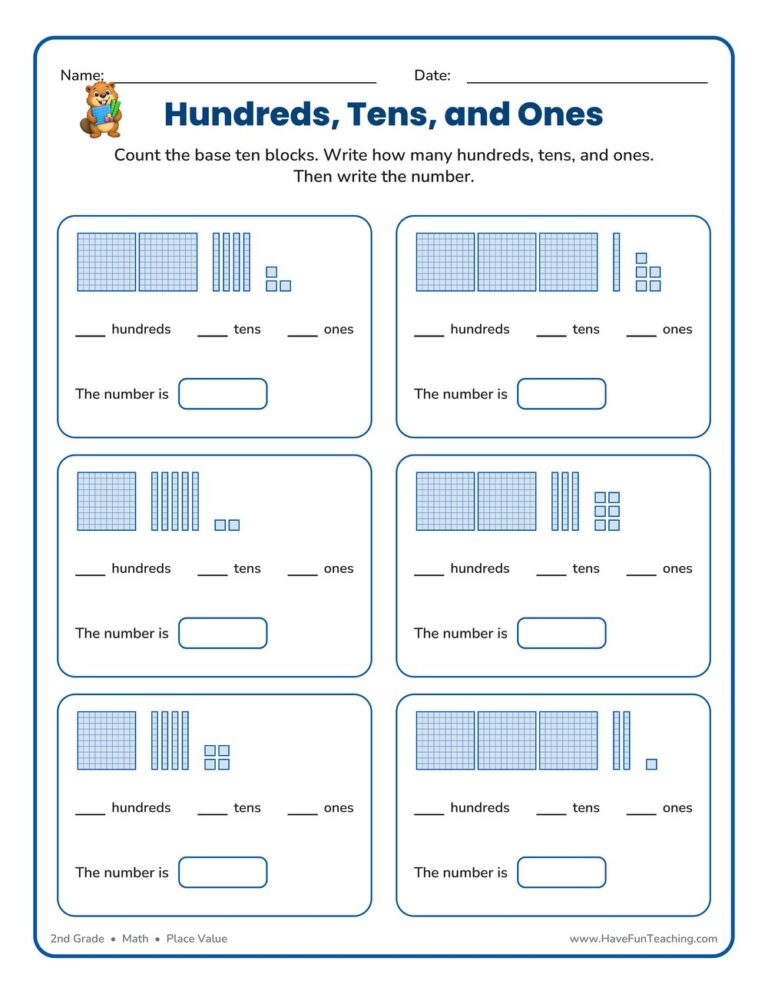
This Base 10 Blocks Place Value Worksheet helps 2nd graders count the hundreds, tens, and ones shown with base ten blocks and write each three-digit number. Answer key included for quick, no-prep place value practice.

This Printable Base 10 Blocks worksheet gives 2nd graders cut-out hundreds, tens, and ones blocks to build numbers by hand — a no-prep, hands-on way to make place value, counting, and addition click.
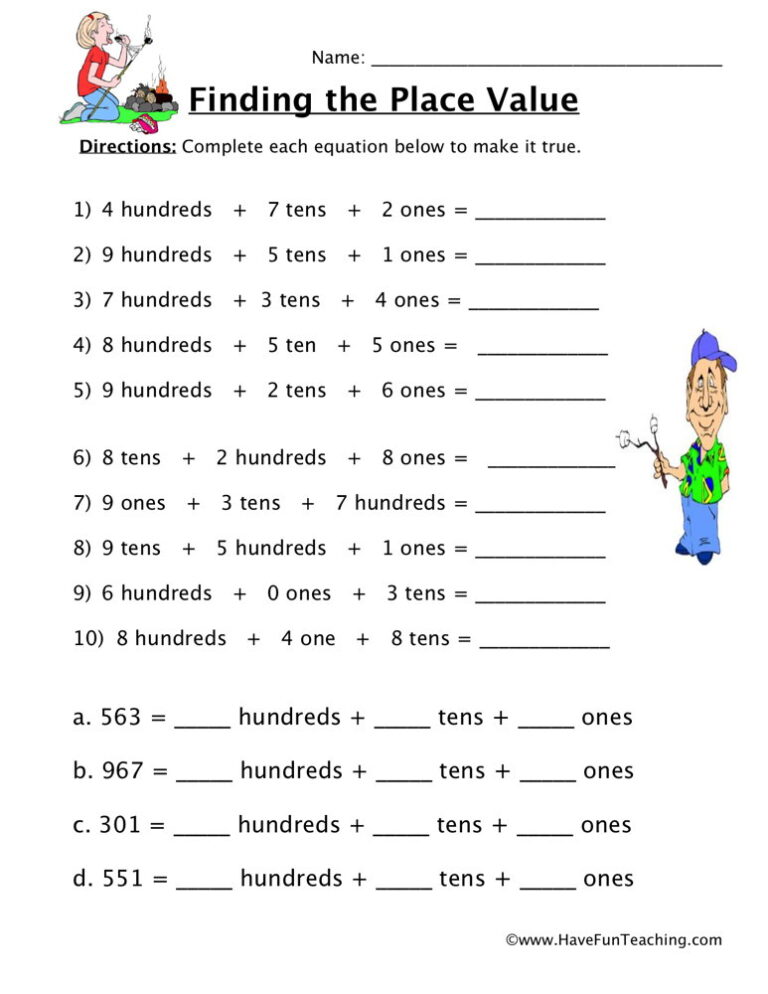
This Finding the Place Value Worksheet helps 2nd graders build three-digit numbers from hundreds, tens, and ones, then break numbers back apart. An answer key is included, so checking work takes seconds.

The Identify Place Value Worksheet gives 2nd Grade students base ten block models, three-digit numbers, and a word problem to break apart into hundreds, tens, and ones. Answer key included, so practice checks itself.

A determining place value worksheet where 2nd graders read three-digit numbers and write the hundreds, tens, and ones in each. Includes a complete answer key — great for quick, no-prep place value practice.
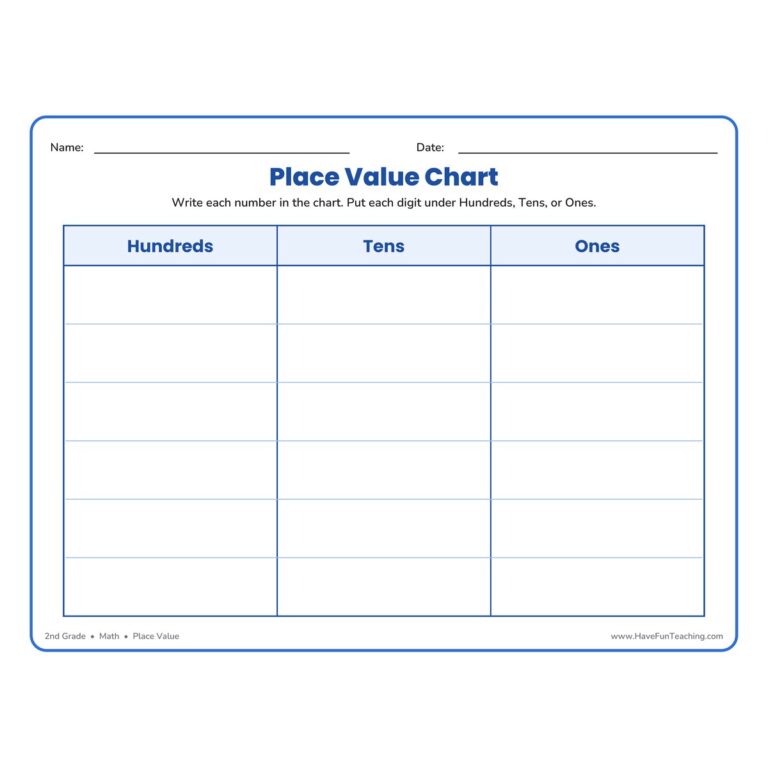
A reusable Hundreds, Tens, Ones place value chart worksheet for 2nd grade. Students write the digits of each number in the hundreds, tens, and ones columns to build place value skills.
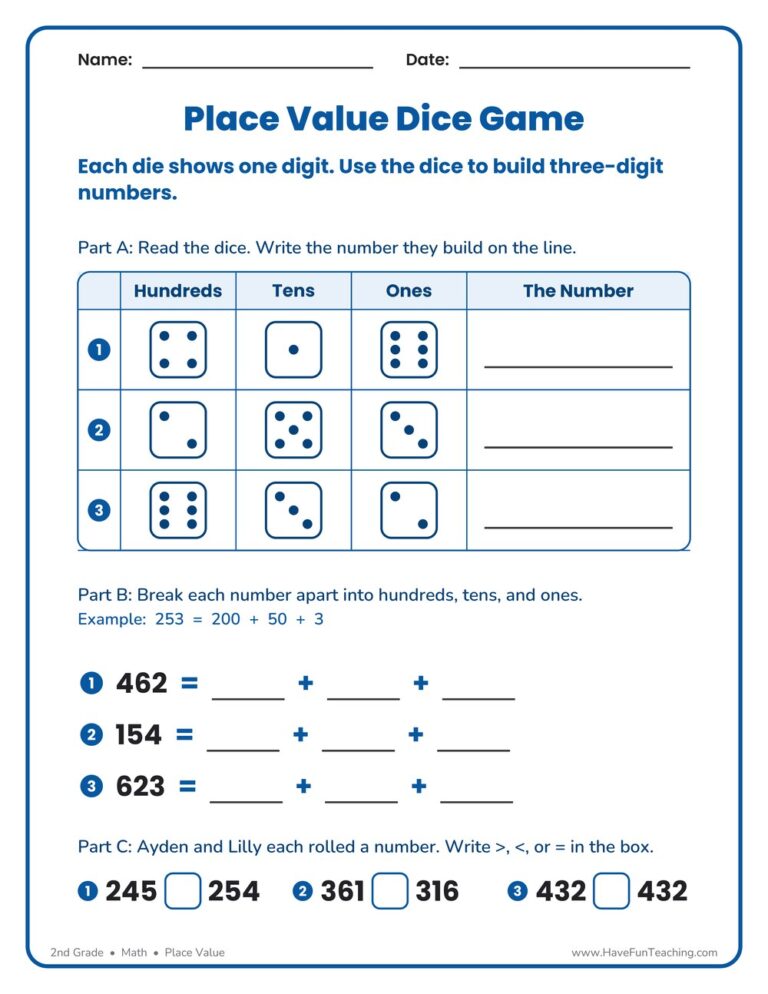
Roll, build, and compare three-digit numbers with this place value dice game worksheet. Second graders read dice in a hundreds, tens, and ones chart, write expanded form, and compare two numbers. Answer key included for fast, no-prep practice.
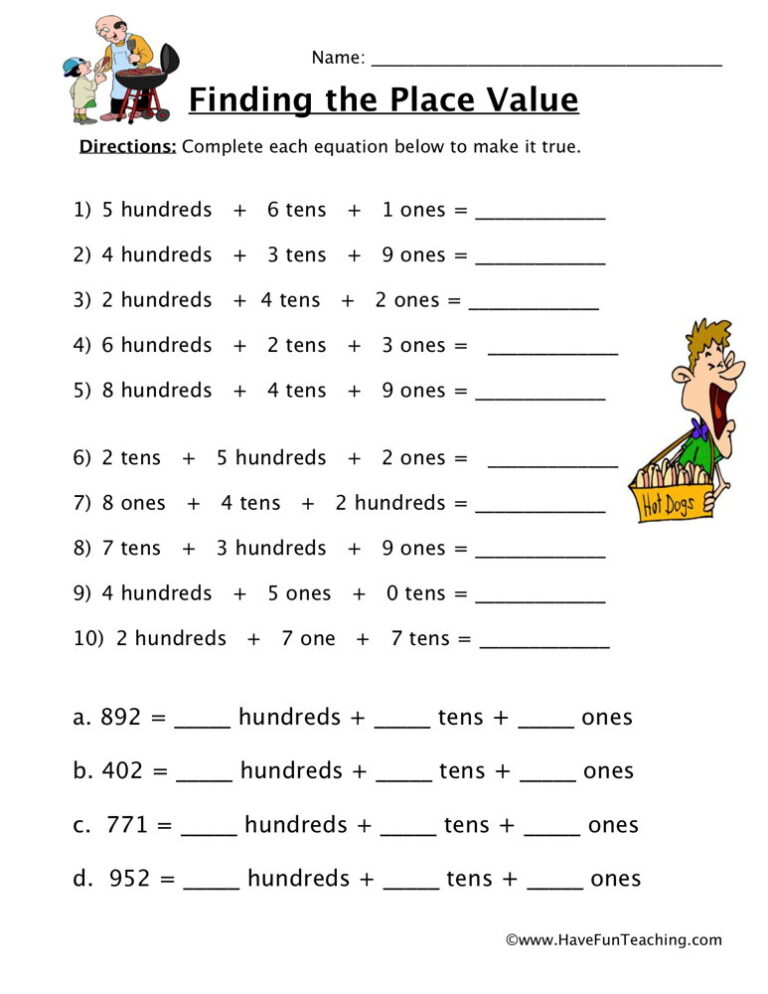
This converting place value forms worksheet gives 2nd grade students five form conversions, three number break-aparts, and a walking word problem, with an answer key included so practice checks itself in seconds.
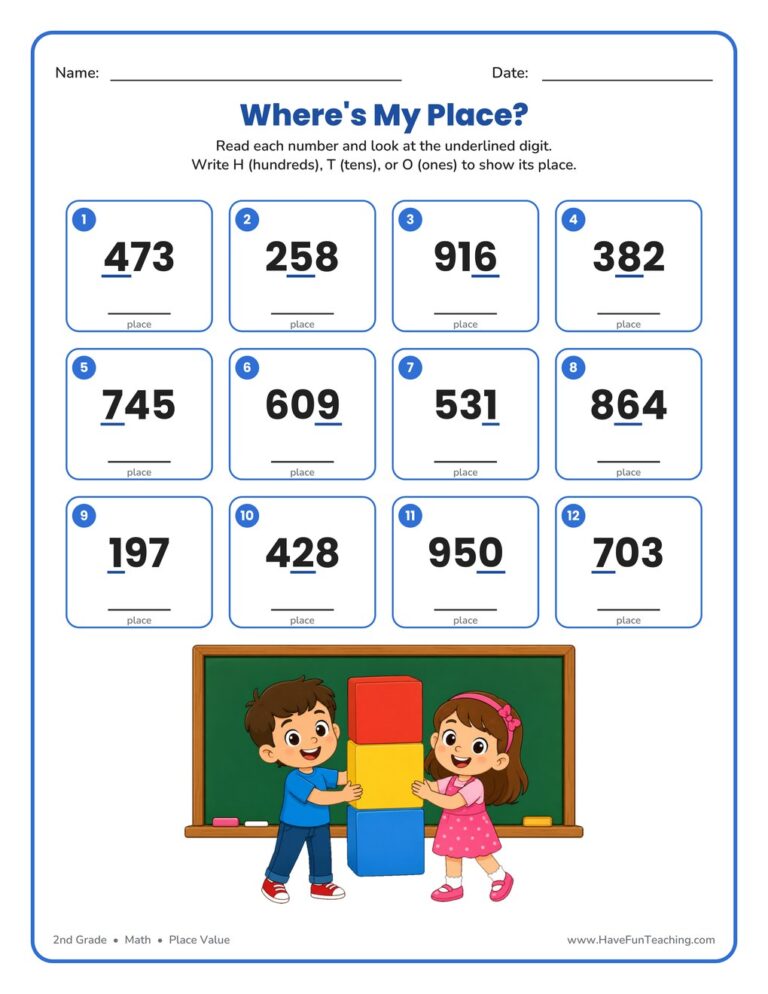
A 2nd grade place value worksheet where students read three-digit numbers and name the underlined digit as hundreds, tens, or ones. Includes a complete answer key—perfect for quick, no-prep place value practice at home or school.
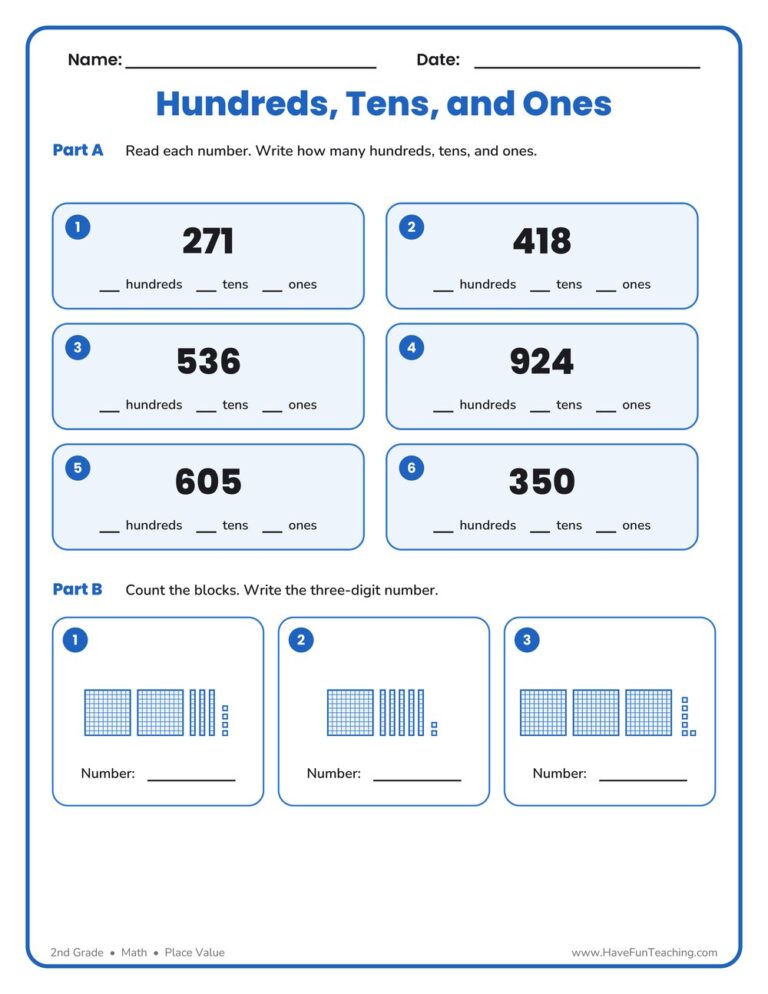
A hundreds tens and ones worksheet where 2nd graders read three-digit numbers and count base-ten blocks to name each digit’s value. Includes an answer key for fast, no-prep place value practice.
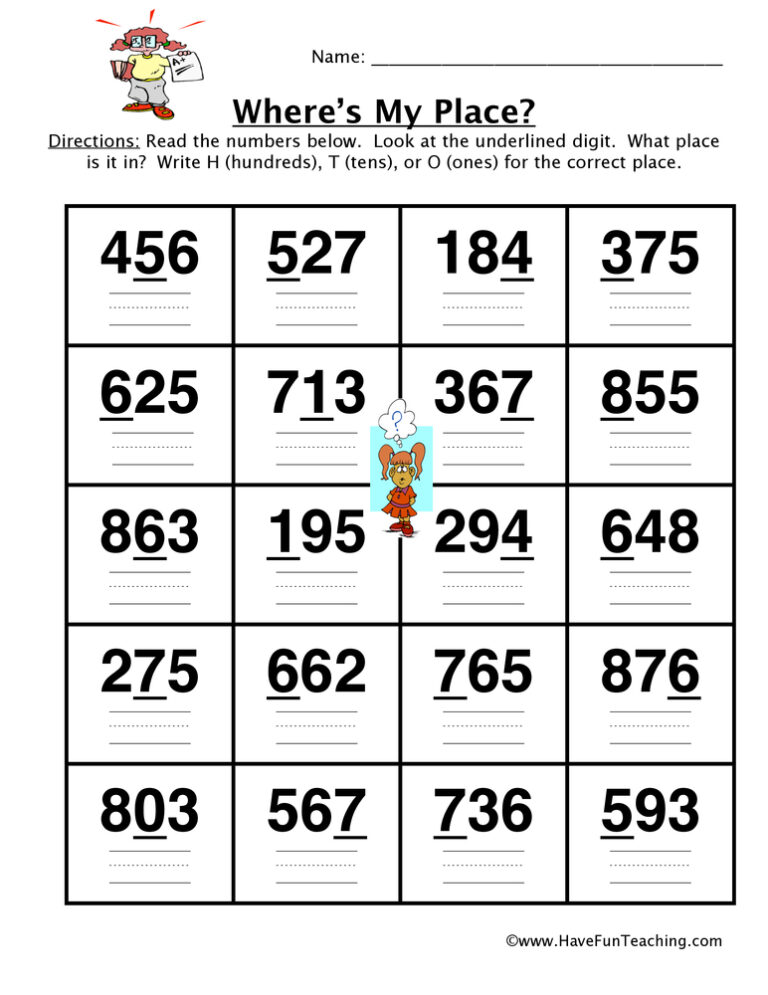
This labeling place value worksheet gives 2nd grade students practice naming the ones, tens, and hundreds places and building numbers from their parts. An answer key is included, so checking work takes seconds.
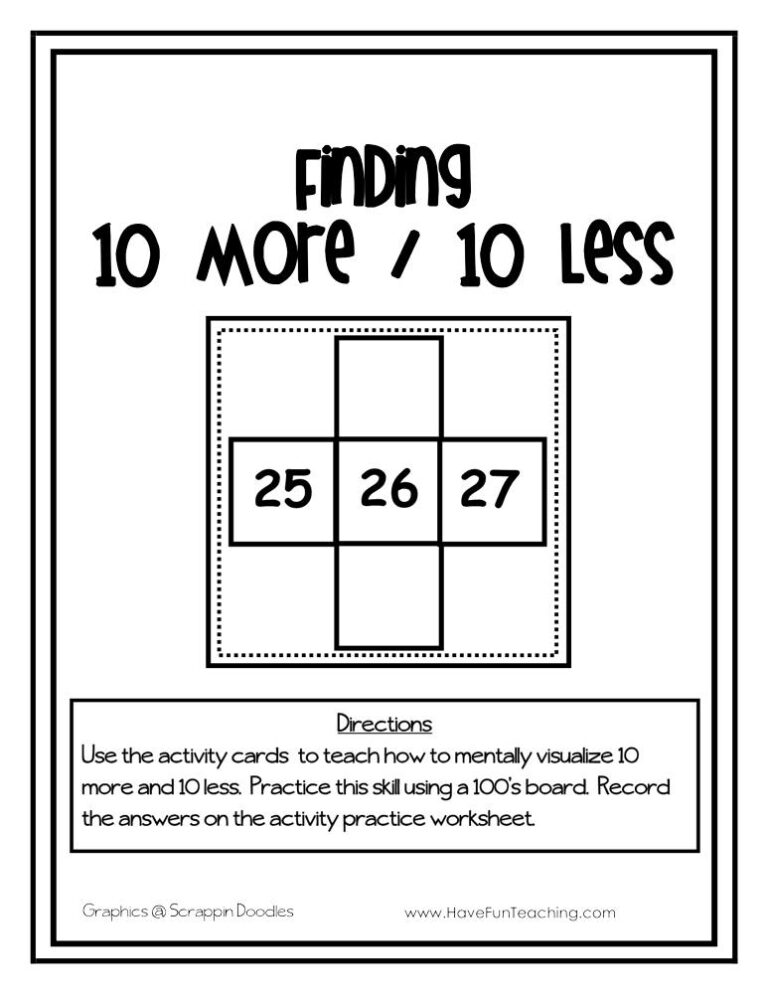
In this Finding 10 More 10 Less Activity, students practice finding 10 more and less than a given number to build skip counting and base ten skills.




Reviews
There are no reviews yet