

Finding Information Using Text and Photos Worksheet
A beaver-themed Finding Information Using Text and Photos Worksheet that has 1st graders decide whether each answer came from the words, the picture, or both. Answer key included for fast, no-prep nonfiction reading practice.
$6.97
Or free with a membership — members pay $3.33/mo for all 10,000+ resources. See plans
Want this one free?
Tell us where to send it and it’s yours — no card, no catch.
One free resource per teacher. We’ll also send free teaching ideas each week — unsubscribe anytime.
Teaching is easier with a membership
Unlimited printables, games & videos for PreK–6th — for your classroom or homeschool. Cancel anytime.
Start your 3-day free trial$0 today · cancel anytime · Instant access to 10,000+ resources
About this resource
Description
Nonfiction readers find facts in two different places at once: the words on the page and the pictures beside them. Learning to notice which one gave them an answer is how first graders begin to read informational text on purpose instead of by accident. This Finding Information Using Text and Photos Worksheet asks students to do exactly that, one question at a time, with a short article about beavers that pairs a simple paragraph with a clear photo-style illustration of a beaver beside its stick lodge.
Students begin by reading the short article and studying the picture next to it. Then they work through six questions and fill in a bubble to show where the answer came from: the text, the picture, or both. Some answers are only in the words, such as what a baby beaver is called. Some are only in the picture, such as the color of a beaver’s fur and the wide, flat shape of its tail. Others, such as where beavers live and what they build, appear in both places. This 1st grade text features worksheet works beautifully as guided practice, as an independent center, or as a quick check before a nonfiction reading unit.
What’s Included
- 1 print-ready PDF worksheet
- Answer key
- 1 short nonfiction article with a heading and an illustration
- 6 fill-in-the-bubble questions with text, picture, and both choices
There are three reasons this resource helps children learn the skill. First, it slows readers down: instead of racing to an answer, students have to stop and ask themselves where they found it, which is the habit that carries them into headings, captions, labels, and diagrams later on. Second, every question on this Finding Information Using Text and Photos Worksheet has exactly one defensible answer, so the activity can be discussed as a class without arguments about what counts. Third, the fill-in-the-bubble format gives young students practice with the answer style they will meet on real reading assessments, while the reading load stays comfortably at a first grade level.
Teachers and parents can stretch this skill in a few easy ways. Read a nonfiction picture book aloud, cover the illustrations, and ask children what they still know and what they now cannot tell. Give students a magazine photo with no caption and have them write one sentence the picture tells them and one sentence it cannot. Try a sorting game with cards labeled text, picture, and both, using facts pulled from a science article. You can also flip the task and let children draw a picture that adds one new fact to a sentence you have written together, then trade papers and see whether a partner can spot what the drawing added.
Related Resources
What teachers say
Reviews
You must be logged in to post a review.

With this picture matching sentences worksheet, first graders read six short sentences and label the picture each one describes. Answer key included, so checking work takes seconds.
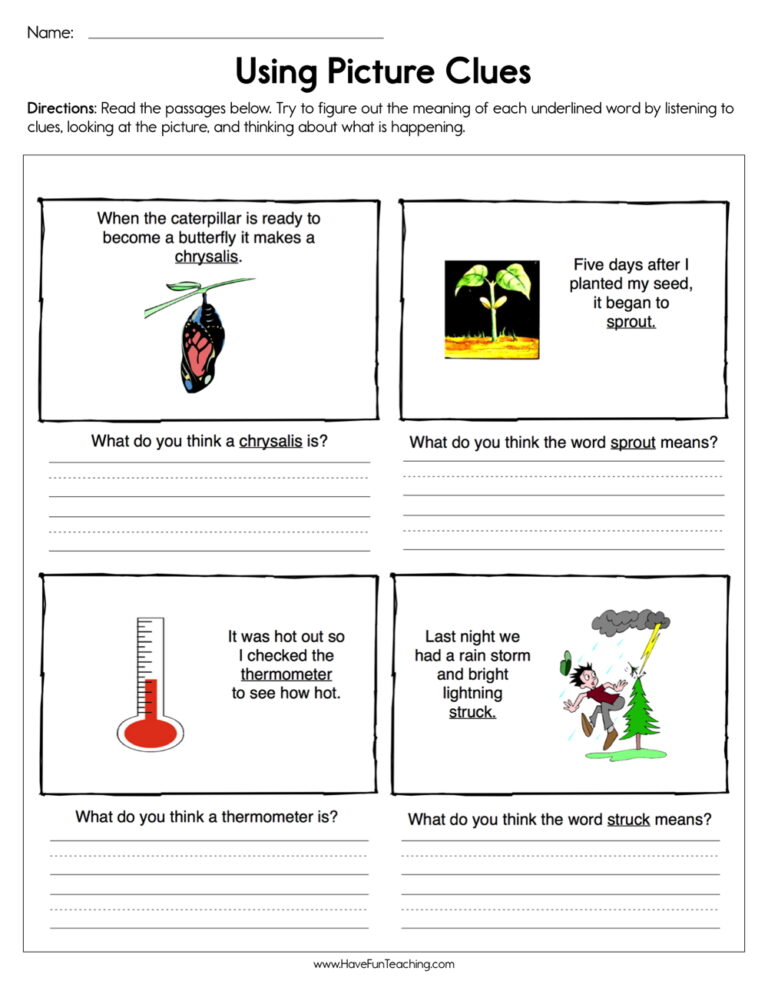
This Using Picture Clues Worksheet gives first graders four illustrated sentences and asks them to figure out what each bold word means. An answer key is included, so it is ready for quick, no-prep reading practice.
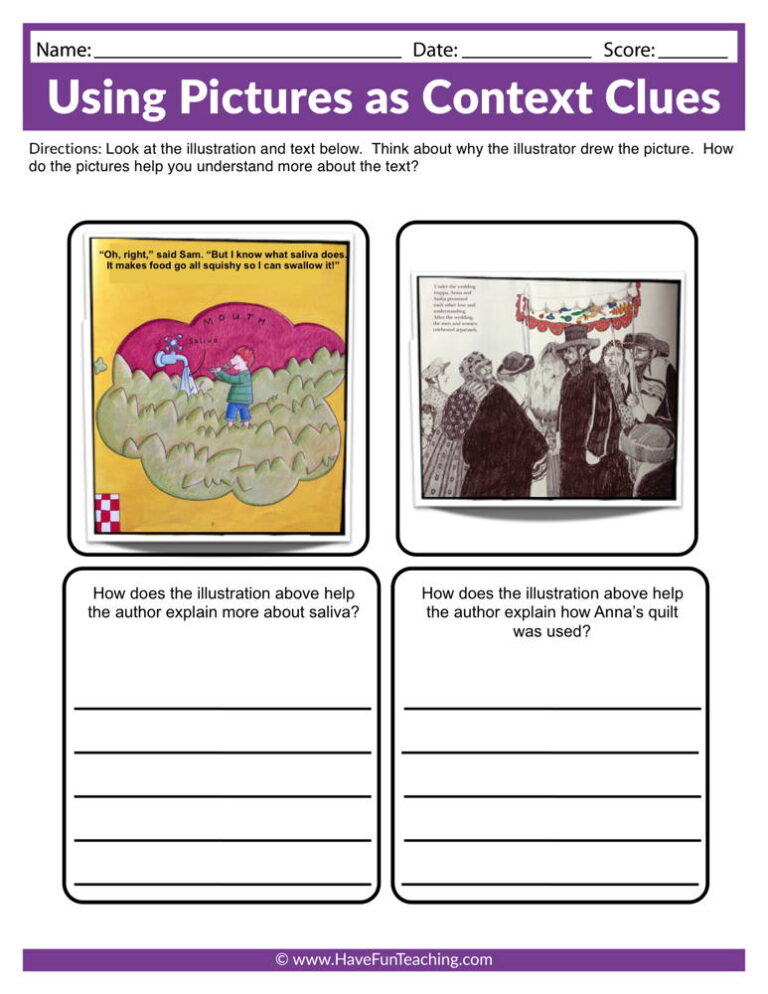
This Using Pictures as Context Clues Worksheet helps 1st Grade readers use an illustration and the words around a new word to find its meaning, with five questions and an answer key included.
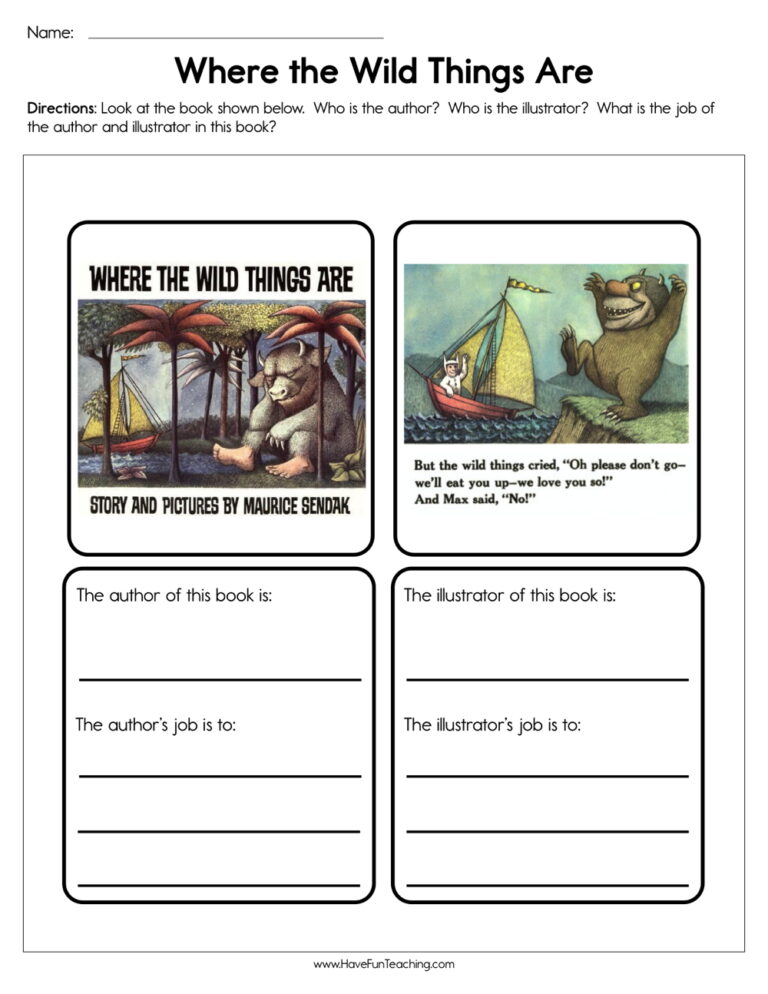
Using this Where the Wild Things Are Worksheet, students describe the title, author, and illustrator of Where the Wild Things Are.

This Using Text or Pictures to Find Information Worksheet asks 2nd graders to decide whether each fact came from the words or the picture. An answer key is included, so nonfiction practice takes no prep.

The Understanding Meaning The Venus Fly Trap Worksheet gives 1st graders a short non-fiction passage and five context clue questions. An answer key is included, so students can check their thinking and point to the sentence that proves it.
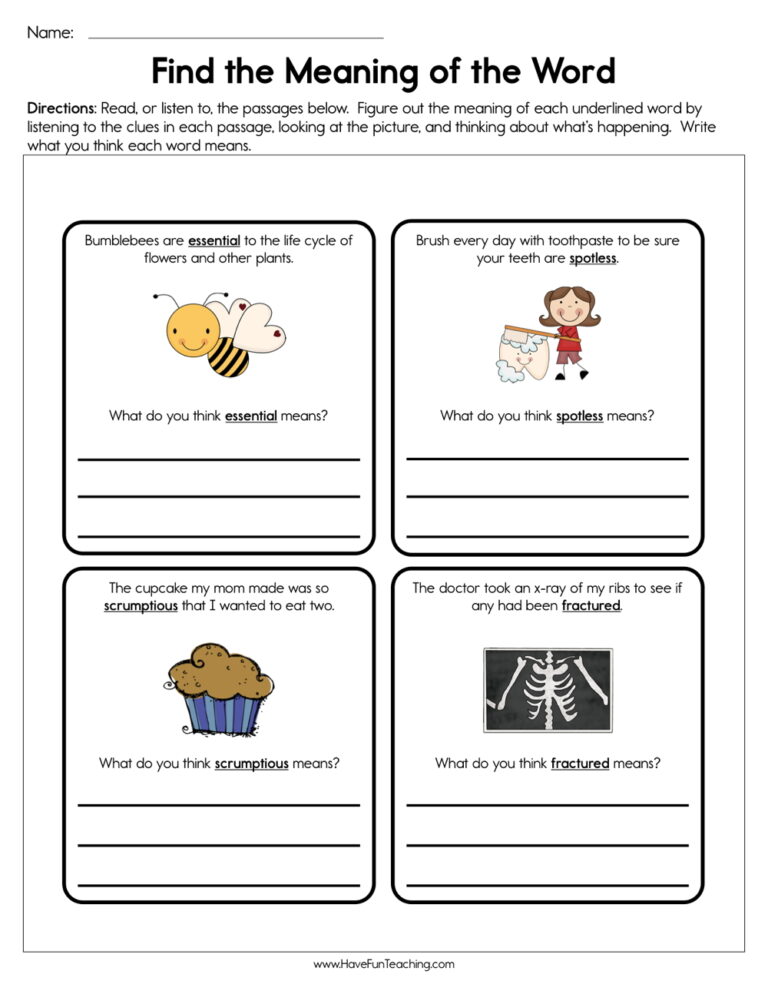
The Find the Meaning of the Word Worksheet gives 1st graders a short non-fiction passage and five context clue questions. An answer key is included, so children can check their thinking and point to the sentence that proves it.
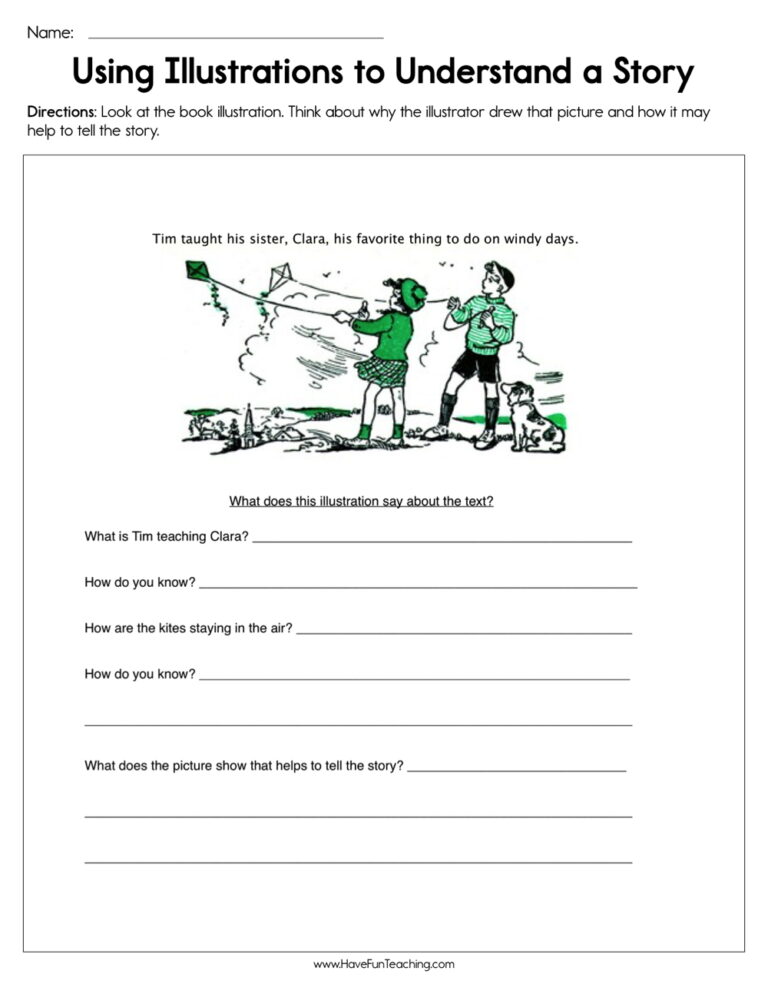
The Using Illustrations to Understand a Story Worksheet gives 1st graders a short story and a picture that fills in what the words leave out. Five questions and an answer key are included.
Using The Magic School Bus Lost in the Solar System Worksheet, students read The Magic School Bus Lost in the Solar System to determine the meanings of these words and phrases.

Using Rocking Word Meanings Worksheet, students read Let's Go Rock Collecting by Roma Gans to determine the meanings of these words and phrases.

Using What Does This Word Mean Activity, students read independently or with a partner to collect unknown words and phrases to build their vocabulary and reading comprehension.

Using Text Features Scavenger Hunt Activity, studentsidentify text features in the books they are reading to gather information about what they will read.
Reviews
There are no reviews yet