

Using Text or Pictures to Find Information Worksheet
This Using Text or Pictures to Find Information Worksheet asks 2nd graders to decide whether each fact came from the words or the picture. An answer key is included, so nonfiction practice takes no prep.
$6.97
Or free with a membership — members pay $3.33/mo for all 10,000+ resources. See plans
Want this one free?
Tell us where to send it and it’s yours — no card, no catch.
One free resource per teacher. We’ll also send free teaching ideas each week — unsubscribe anytime.
Teaching is easier with a membership
Unlimited printables, games & videos for PreK–6th — for your classroom or homeschool. Cancel anytime.
Start your 3-day free trial$0 today · cancel anytime · Instant access to 10,000+ resources
About this resource
Description
Young readers meet two kinds of information on almost every nonfiction page: the information carried by the words, and the information carried by the picture beside them. Second graders are expected to tell those two sources apart and to explain what the illustration adds that the sentences do not say. This Using Text or Pictures to Find Information Worksheet makes that difference visible. Students read a short passage about sunflowers, study a garden picture, and then decide, statement by statement, whether they learned each fact from the text or from the picture.
This 2nd grade text features worksheet keeps the passage and the picture side by side so a child can look back and forth while working. Seven statements follow, each with a T bubble and a P bubble. Students fill in T when the words told them and P when the picture showed them — three of the seven are picture facts that never appear in the text, so guessing does not work. Use it after a nonfiction read-aloud, as a text features station, or as homework; the answer key on page two makes checking immediate.
What’s Included
- 1 print-ready PDF worksheet
- Answer key
- 1 short informational passage with a matching garden picture
- 7 fill-in-the-bubble statements sorted to text or picture
This Using Text or Pictures to Find Information Worksheet helps in three ways. First, it makes an invisible reading habit visible: children learn to ask where a fact came from instead of blending everything together. Second, it builds close-looking skills, because the picture facts — the yellow petals, the fence, the watering can — can only be found by studying the illustration carefully. Third, it gives every answer a reason, so a teacher can hear a child defend a choice out loud, which is exactly the kind of evidence talk that nonfiction reading standards ask for.
Teachers and parents can keep the skill going all week. Open any nonfiction library book, cover the photograph, and read the caption alone — then uncover it and list what the picture adds. Ask your child to draw a picture that shows something a paragraph never says. Sort classroom facts into a two-column chart headed Words and Picture. On a walk, name three things you can learn just by looking, then find a sign that tells you something your eyes could not.
Related Resources
What teachers say
Reviews
You must be logged in to post a review.

With this picture matching sentences worksheet, first graders read six short sentences and label the picture each one describes. Answer key included, so checking work takes seconds.
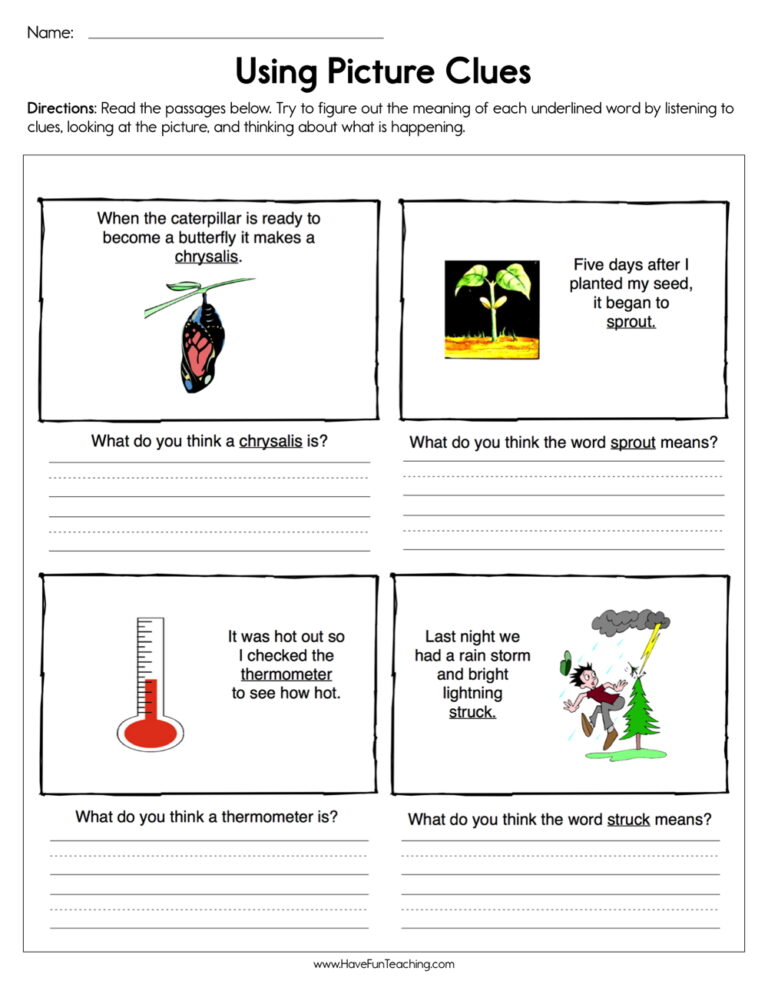
This Using Picture Clues Worksheet gives first graders four illustrated sentences and asks them to figure out what each bold word means. An answer key is included, so it is ready for quick, no-prep reading practice.
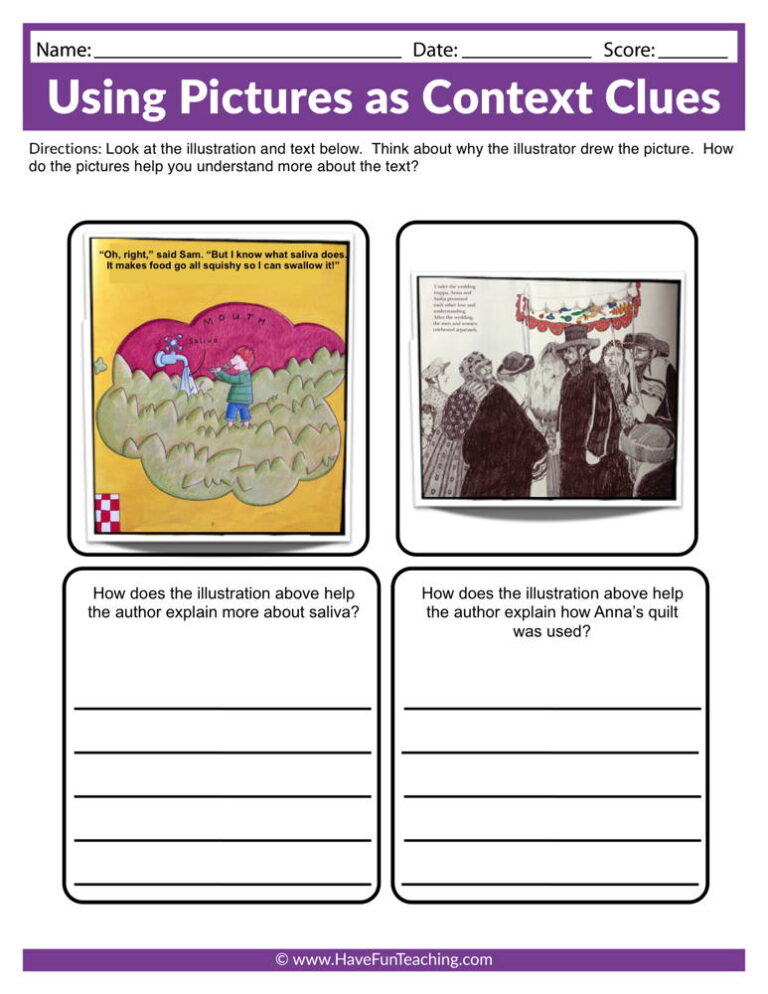
This Using Pictures as Context Clues Worksheet helps 1st Grade readers use an illustration and the words around a new word to find its meaning, with five questions and an answer key included.
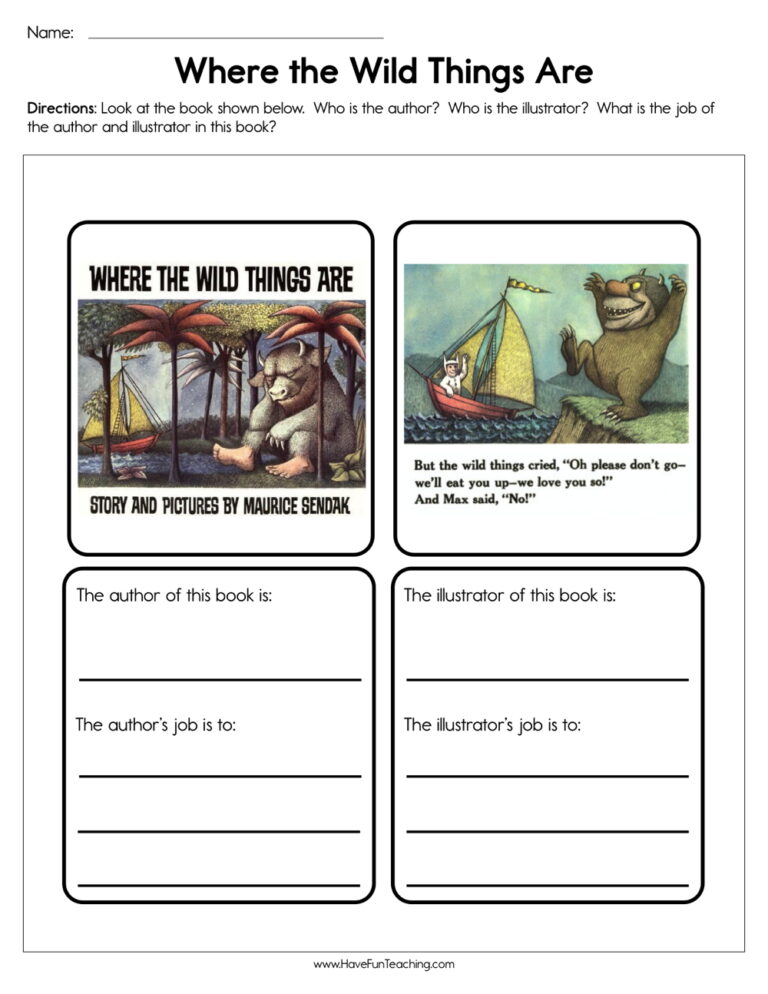
Using this Where the Wild Things Are Worksheet, students describe the title, author, and illustrator of Where the Wild Things Are.

The Understanding Meaning The Venus Fly Trap Worksheet gives 1st graders a short non-fiction passage and five context clue questions. An answer key is included, so students can check their thinking and point to the sentence that proves it.
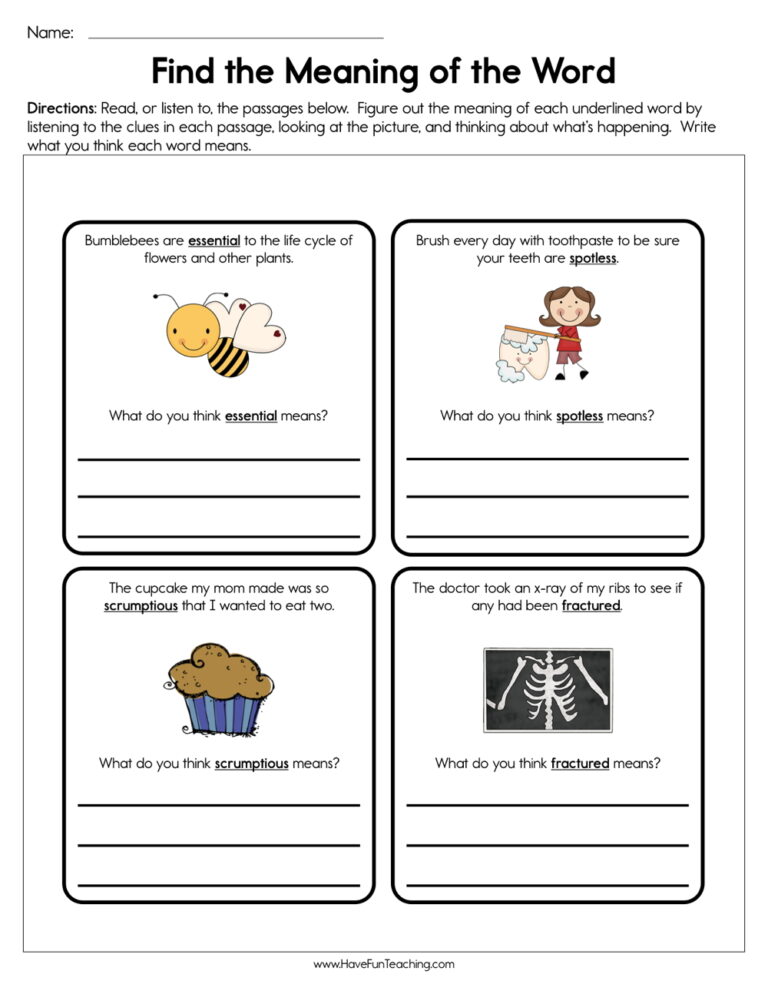
The Find the Meaning of the Word Worksheet gives 1st graders a short non-fiction passage and five context clue questions. An answer key is included, so children can check their thinking and point to the sentence that proves it.
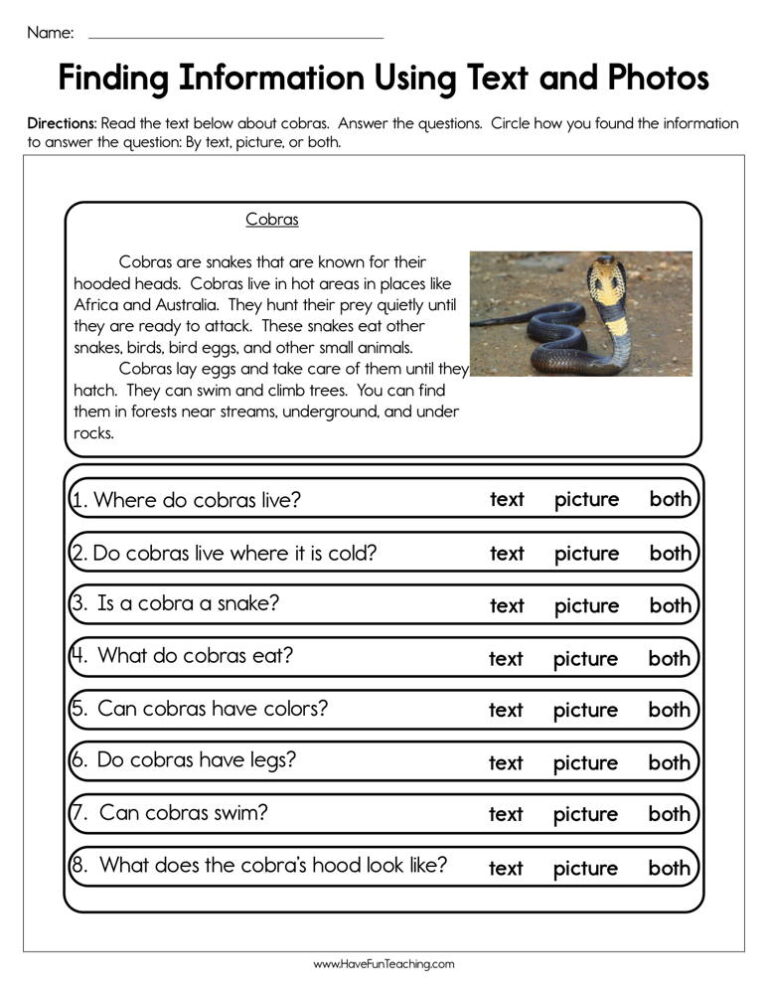
A beaver-themed Finding Information Using Text and Photos Worksheet that has 1st graders decide whether each answer came from the words, the picture, or both. Answer key included for fast, no-prep nonfiction reading practice.
Using The Magic School Bus Lost in the Solar System Worksheet, students read The Magic School Bus Lost in the Solar System to determine the meanings of these words and phrases.
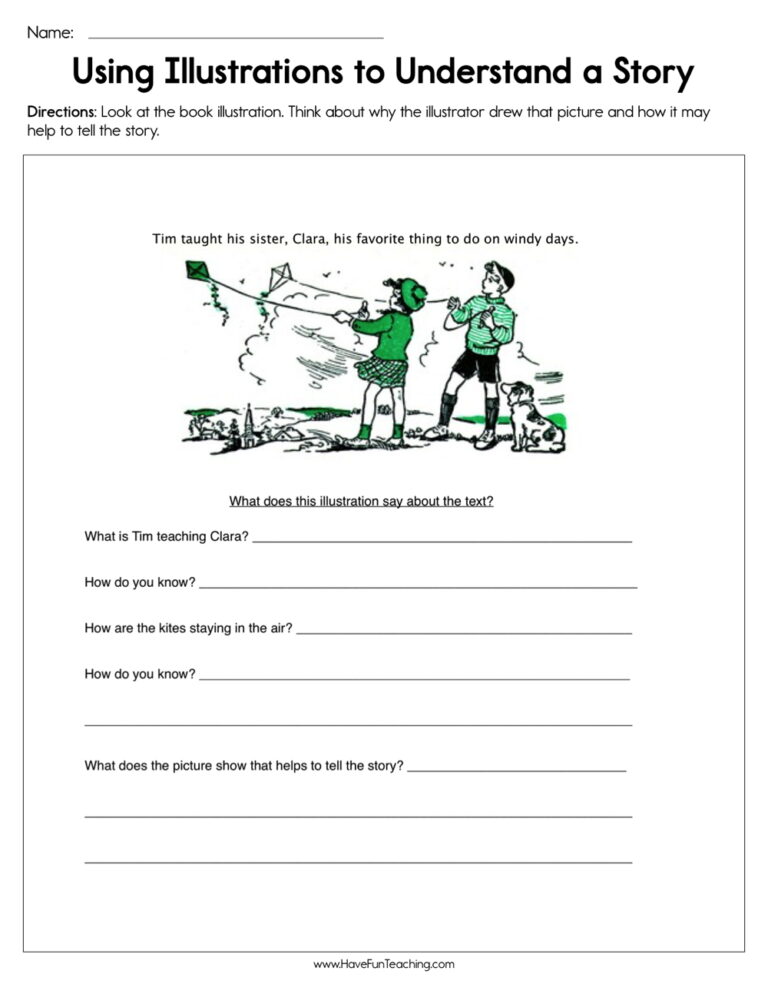
The Using Illustrations to Understand a Story Worksheet gives 1st graders a short story and a picture that fills in what the words leave out. Five questions and an answer key are included.

Using Rocking Word Meanings Worksheet, students read Let's Go Rock Collecting by Roma Gans to determine the meanings of these words and phrases.

Using What Does This Word Mean Activity, students read independently or with a partner to collect unknown words and phrases to build their vocabulary and reading comprehension.

Using Text Features Scavenger Hunt Activity, studentsidentify text features in the books they are reading to gather information about what they will read.
Reviews
There are no reviews yet