Skip to content
Start My 3 Free Days $0 today · cancel anytime

1st Grade Sentences Resources (Reading)

21 1st grade sentences resources: 11 activities, 9 worksheets and 2 Common Core Lessons. How teachers use these

1st Grade Sentences Resources (Reading)

21 1st grade sentences resources: 11 activities, 9 worksheets and 2 Common Core Lessons. How teachers use these

Worksheet
Worksheet1st GradePicture Matching Sentences Worksheet

With this picture matching sentences worksheet, first graders read six short sentences and label the picture each one describes. Answer key included, so checking work takes seconds.

Worksheet
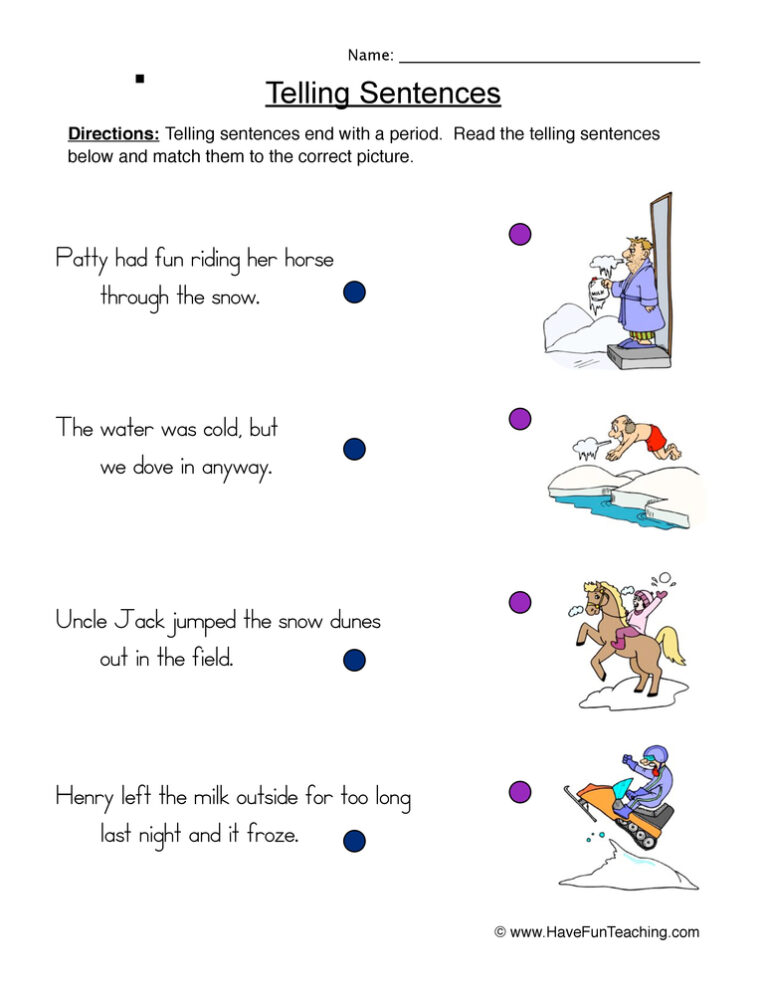
Worksheet1st GradeTelling Sentences Matching Worksheet

Students match four telling sentences to the pictures they describe, then write a telling sentence of their own. This 1st grade telling sentences matching worksheet includes an answer key for quick, no-prep sentence practice.

Worksheet
Worksheet1st GradePeriod Worksheet

This period worksheet asks 1st graders to unscramble words, write four telling sentences, and end each one with a period. Answer key included for quick, no-prep punctuation practice at home or school.

Worksheet
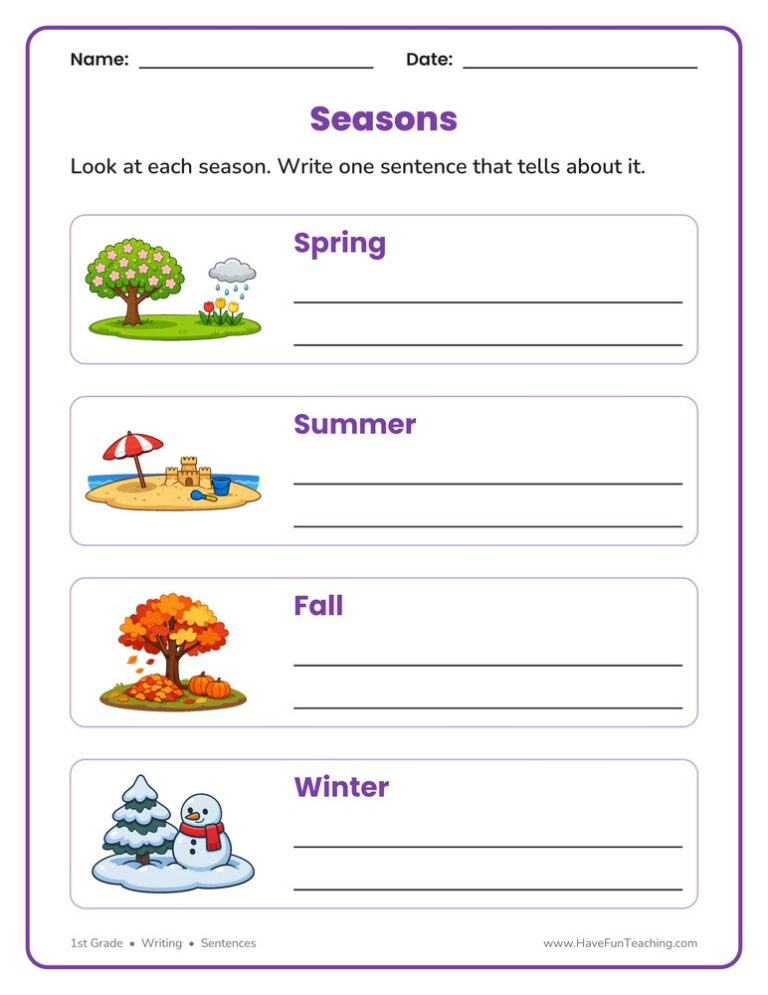
Worksheet1st GradeSeasons of the Year Sentences Worksheet

This seasons of the year sentences worksheet invites 1st Grade writers to study a picture of spring, summer, fall and winter and write one complete sentence about each season.

Activity
Activity1st GradeCool Cat Sentences Activity

This cool cat sentences activity has K-2nd Grade children sort telling, asking and exciting sentence cards by their end marks. Answer key included, so practicing punctuation feels like a game.

Worksheet
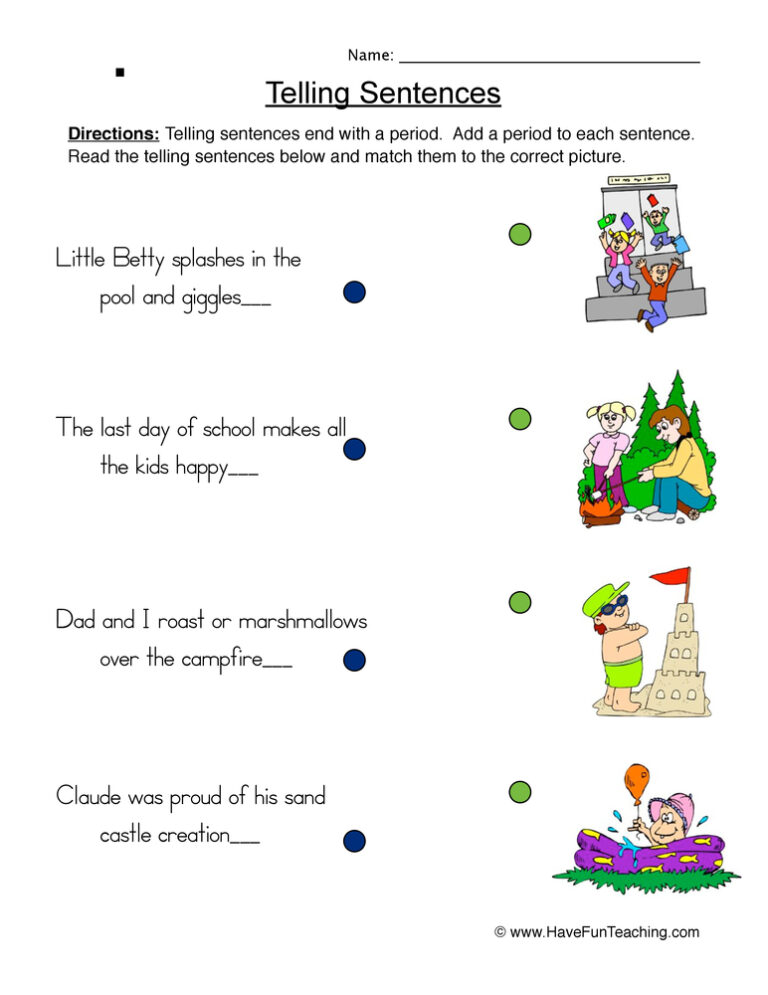
Worksheet1st GradeMatching Telling Sentences Worksheet

This matching telling sentences worksheet has 1st Grade students match five telling sentences to the right word, then finish five more by writing the missing word and the period. An answer key is included.

Worksheet
Worksheet1st GradeThanksgiving Sentence Writing Worksheet

This Thanksgiving Sentence Writing Worksheet gives 1st Grade students three autumn pictures to write about on their own lines, building confident sentence writing from the first day of November.

Activity
Activity1st GradeComplete Sentences with Subject and Predicate Activity

This complete sentences with subject and predicate activity has 1st to 3rd grade students match picture subject cards to predicate cards, then practice on a worksheet. Answer key included.

Activity
Activity1st GradeSentence Structure Activity

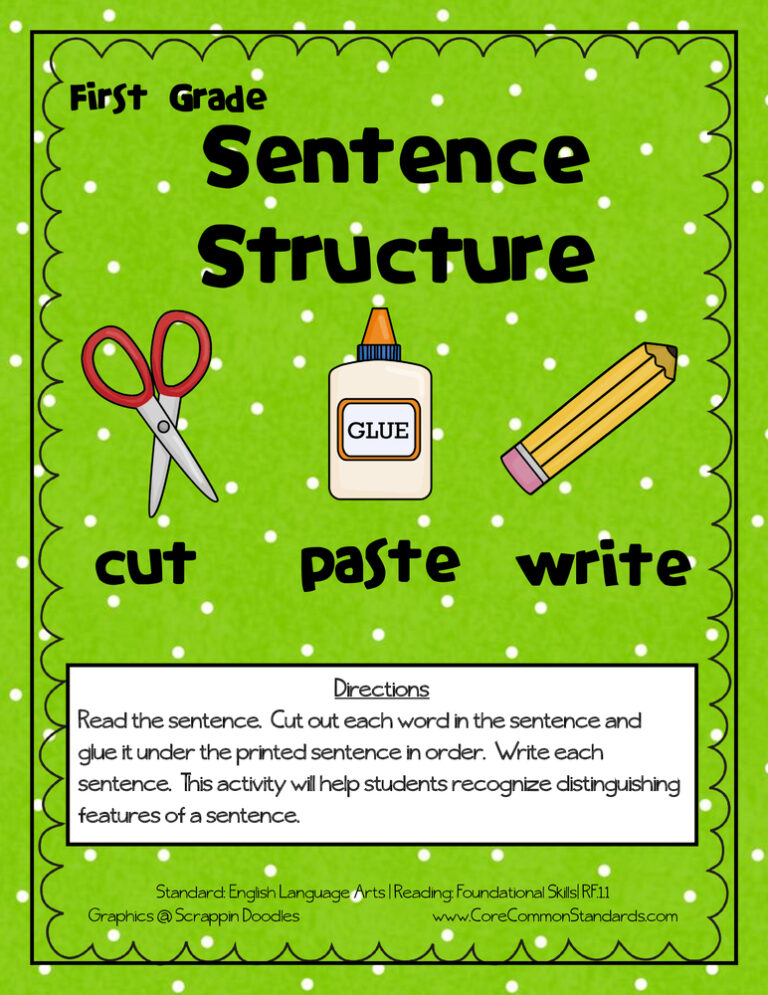
Build real sentences with this sentence structure activity for Kindergarten to 2nd Grade: 24 picture-coded word cards, a recording sheet and a practice page, with an answer key included.

Worksheet
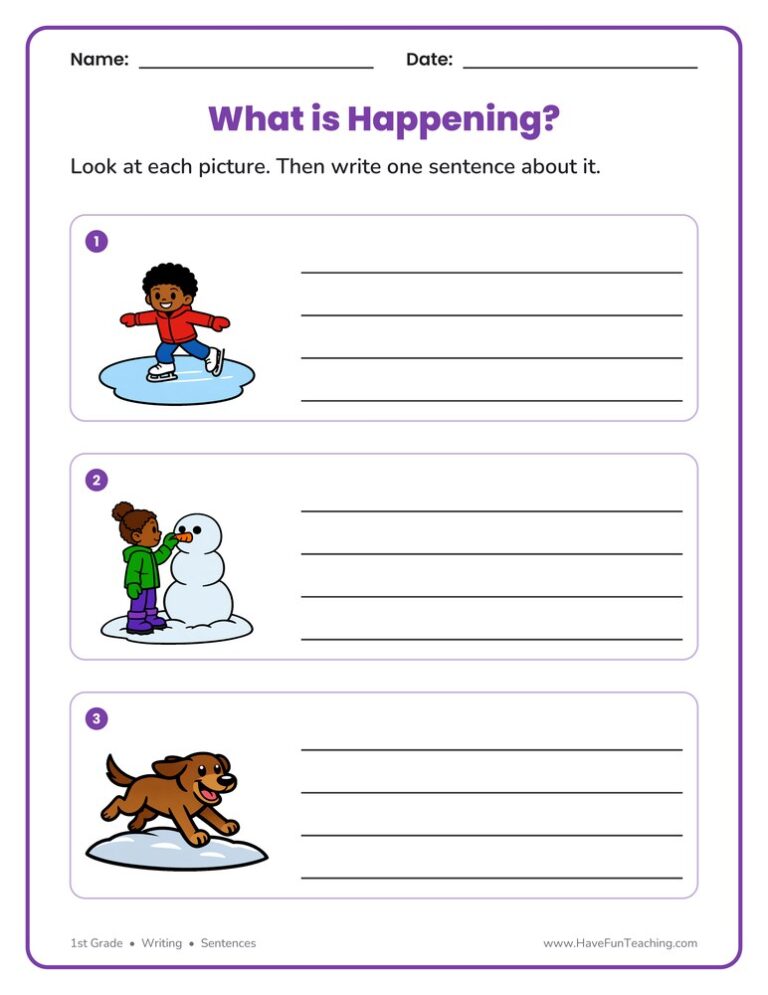
Worksheet1st GradeWinter Sentence Worksheet

This Winter Sentence Worksheet gives 1st Grade students three winter pictures and four writing lines each, so every child writes a sentence that tells what is happening in the scene.

Activity
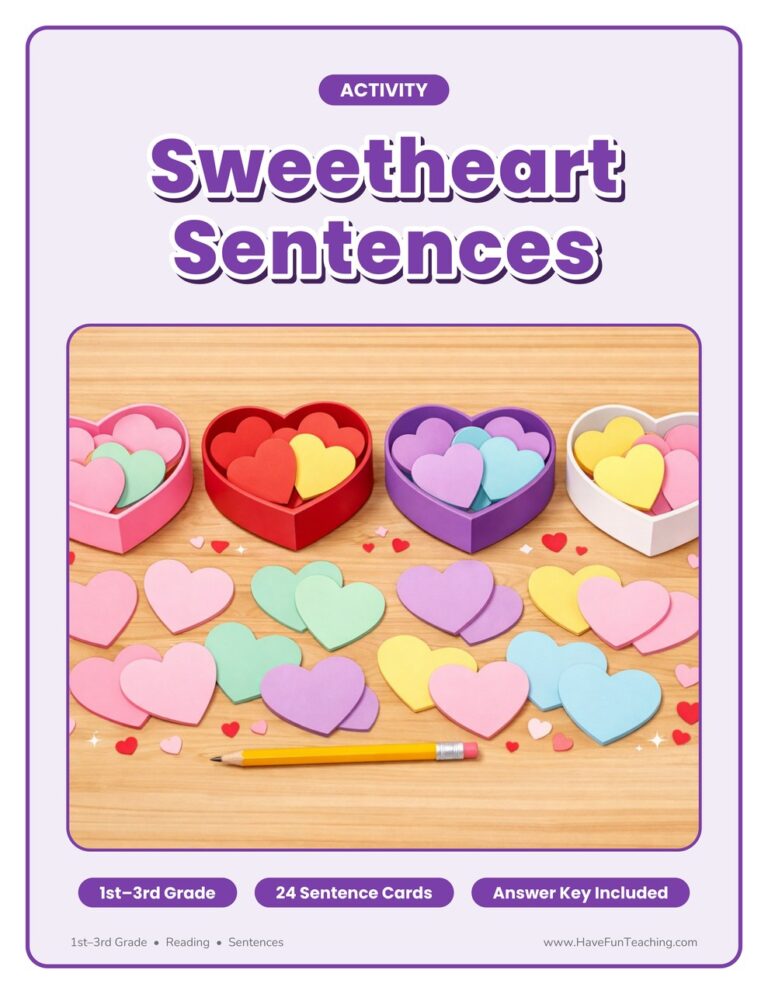
Activity1st GradeSweetheart Sentences Activity

This sweetheart sentences activity lets 1st to 3rd grade children sort Valentine heart cards into statements, questions, exclamations and commands while building strong grammar skills. Answer key included.

Activity
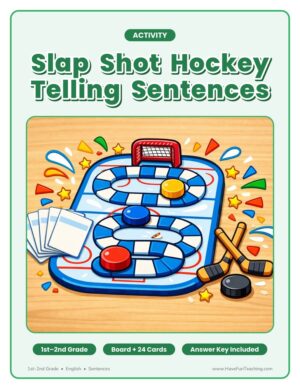
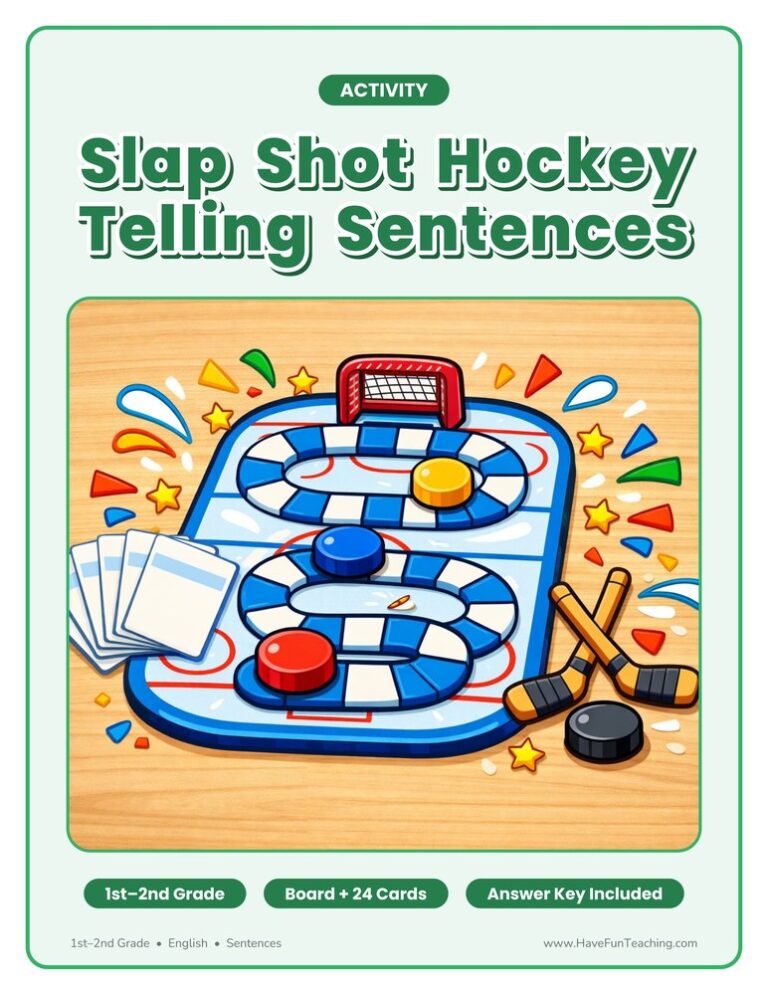
Activity1st GradeSlap Shot Hockey Telling Sentences Activity

This slap shot hockey telling sentences activity for 1st and 2nd Grade has kids race pucks on a rink board by sorting telling and asking sentences. Answer key included.

Activity
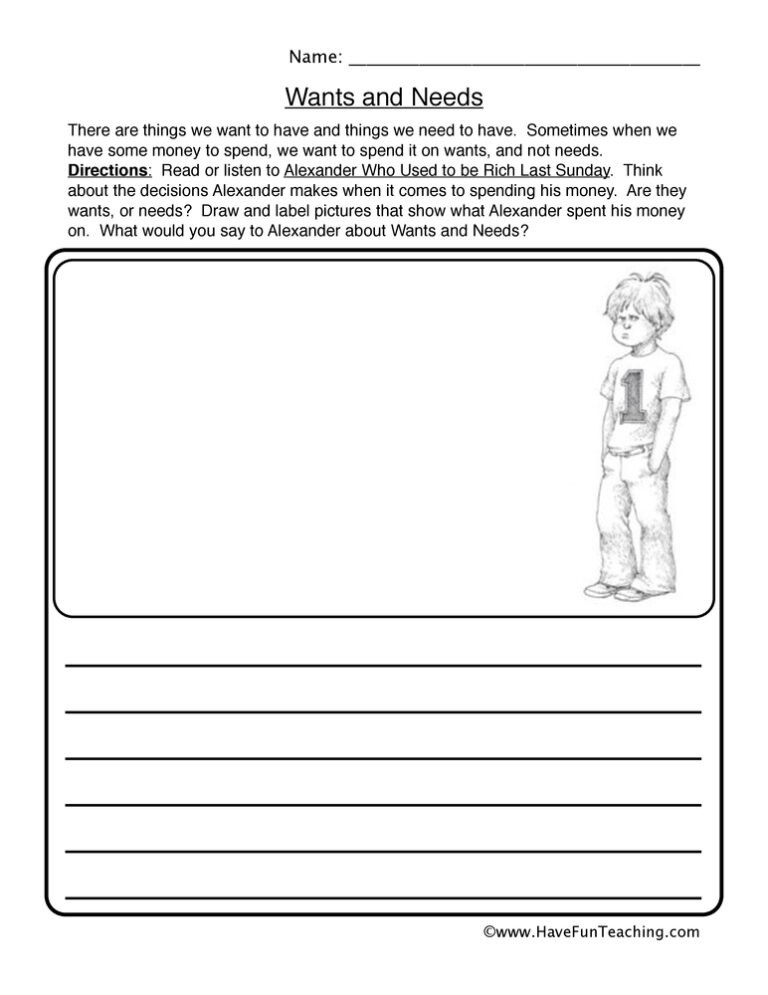
Activity1st GradeWants Needs Reading Response Worksheet

Using this Wants Needs Reading Response Worksheet, students readAlexander Who Used to be Rich Last Sunday to build their understanding of wants and needs.

Activity
Activity1st GradeReading Simple Sentences Activity Board Game

This reading simple sentences activity board game helps K-1st grade readers read short sentences word by word and match them to pictures. Game board, cards and practice page, with an answer key included.

Worksheet
Worksheet1st GradeRainforest Sentences Worksheet

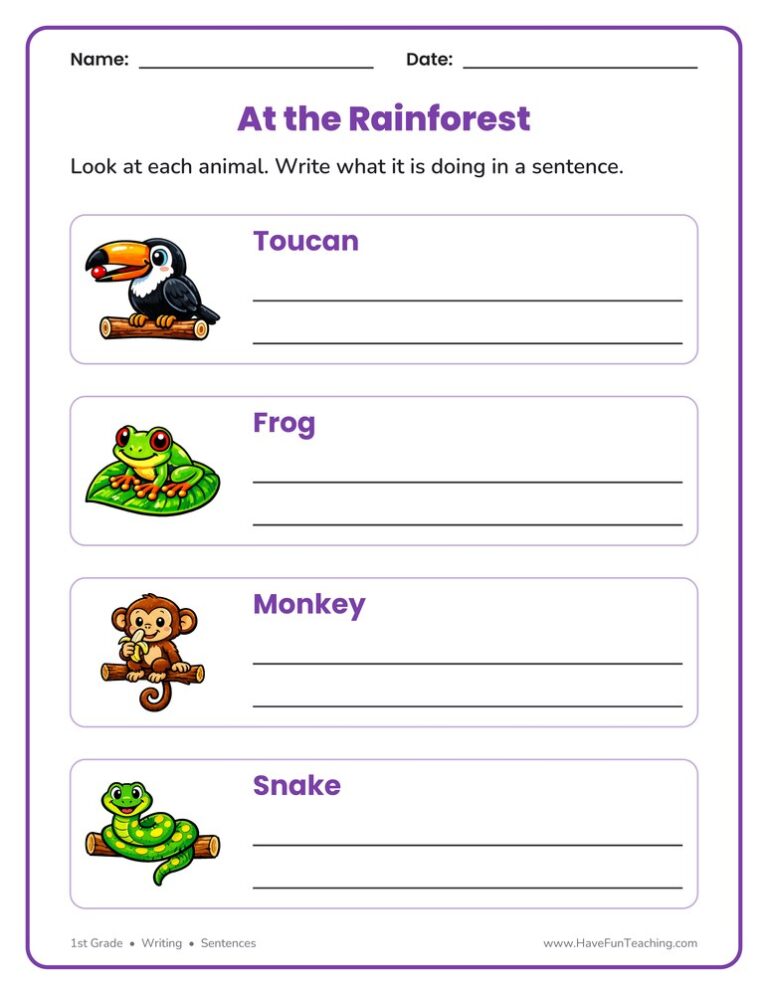
This rainforest sentences worksheet invites 1st Grade writers to look at a toucan, frog, monkey and snake and write one complete sentence telling what each animal is doing.

Activity
Activity1st GradeRF.1.1 Common Core Activity

UsingRF.1.1 Common Core Activity, studentsrecognize distinguishing features of a sentence by putting a words in order to create a complete thought.

Activity
Activity1st GradeA Frog and a Log Position Words Activity

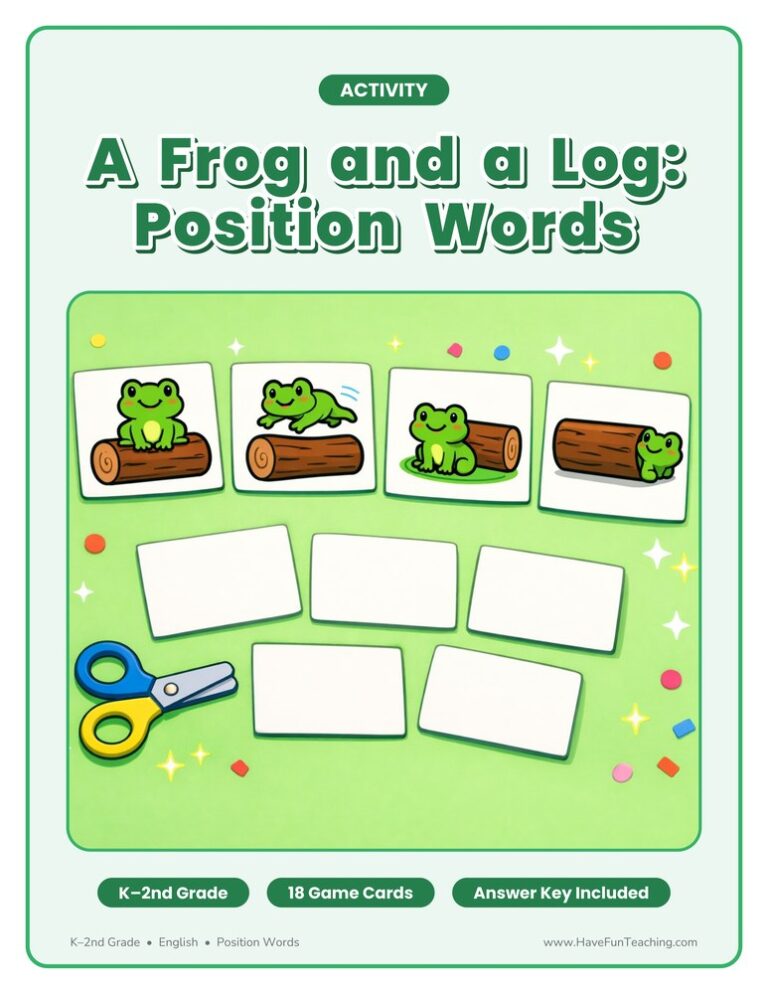
This frog and a log position words activity helps K-2nd Grade children match picture cards to on, under, above, next to, in front of and behind, with practice and an answer key included.

Common Core Lesson
Common Core Lesson1st GradeL.1.6 First Grade Common Core Lesson

Using L.1.6 First Grade Common Core Lesson, students Use words and phrases acquired through conversations, reading, and begin read to, andresponding to texts, including frequently occurring conjunctions to signal simple relationships.

Common Core Lesson
Common Core Lesson1st GradeRF.1.1 First Grade Common Core Lesson

Using RF.1.1 First Grade Common Core Lesson, students recognize distinguishing features of a sentence by putting a words in order to create a complete thought.

Activity
Activity1st GradePopcorn Sentence Mix-Up Activity

UsingPopcorn Sentence Mix-Up Activity, students unscramble sentences in order to build their understanding of sentence structure.

From our teachers' playbook

Who did what? That's a sentence!

What do 1st graders learn about sentences?

First graders learn that a sentence is a complete thought. It tells who or what and what they did: The cat naps. Every sentence starts with a capital letter and ends with a punctuation mark. Kids learn telling sentences end with a period, asking sentences end with a question mark and excited sentences end with an exclamation point. They also discover that word order matters: "naps cat The" doesn't make sense! The click moment is when a child reads a scrambled sentence, fixes it and reads it proudly.

Our favorite ways to teach sentences

Sentences click when kids can build them, move them around and hear them. Here's how we do it.

Unscramble the sentence

Write each word of a sentence on its own card and mix them up. Kids put them in order, check the capital is first and the period is last, then read it aloud. Moving the words shows how order creates meaning.

Why it works: kids understand an idea best when they touch it, then draw it, then write it, the order the U.S. Department of Education recommends for elementary math.

Popcorn Sentence Mix-Up ActivityTry it withPopcorn Sentence Mix-Up ActivityActivitiesOpen it →

Match the picture

Show a picture and three sentences. Kids find the one that tells about the picture and explain why. Pictures give early readers a way to check their reading.

Why it works: children learn more from words and pictures together than from words alone (Mayer, 2009).

Picture Matching Sentences WorksheetTry it withPicture Matching Sentences WorksheetWorksheetsOpen it →

Who and what doing

Draw two boxes on the board: "Who?" and "Did what?" Fill them together, like "My dog" and "ran fast," then put them together into one sentence. Kids then make their own with the same two boxes.

Why it works: showing first, practicing together, then letting kids try alone is the "gradual release" model teachers have relied on for decades (Pearson and Gallagher, 1983).

Complete Sentences with Subject and Predicate ActivityTry it withComplete Sentences with Subject and Predicate ActivityActivitiesOpen it →

Questions teachers and parents ask about 1st grade sentences

What is a complete sentence for 1st grade?

It has a naming part (who or what) and a telling part (what they did), starts with a capital letter and ends with punctuation. "The frog jumps." is a complete sentence.

How do I teach telling and asking sentences?

Telling sentences share information and end with a period. Asking sentences ask something and end with a question mark. Have kids change "The dog is big." into "Is the dog big?"

How long should a 1st grader's sentences be?

Most first graders write simple sentences of four to eight words. As they grow, encourage them to add a describing word or a "where" or "when."

How can I help my child write better sentences?

Ask "Who?" and "What did they do?" before they write. Then read the sentence back together and check for a capital and a period.