

How Many Wheels Classifying Transportation Worksheet
This How Many Wheels Classifying Transportation Worksheet has 2nd Grade students sort nine vehicle words into two, four and no wheel groups, with an answer key, so classifying becomes a clear rule.
$6.97
Want this one free?
Tell us where to send it and it’s yours — no card, no catch.
One free resource per teacher. We’ll also send free teaching ideas each week — unsubscribe anytime.
Free teacher account · no credit card
Membership
Get every game, song, & printable
- Every game, on any device
- 6,500+ resources
- Assign online with HFT Classroom
Then $39.97/year · cancel anytime · See plans
- Instant digital download
- Printable PDF + answer key
- Made by real teachers
Teacher / Family membership
Teaching is easier with every resource
One membership for your whole year: 6,500+ worksheets, games, songs and videos for Preschool–6th, for your classroom or homeschool.
- Unlimited printables & downloads
- Every game, on any device
- Assign online with HFT Classroom
- Cancel anytime
Teacher / Family membership · 3 days free
Yearly
Monthly would be $119.64 a year
$3.33/month
Billed $39.97 once a year
You save $79.67 every year
Start My 3 Free Days$0 today · cancel anytime
Monthly
$9.97/month
Flexible, month to month
Yearly is just $3.33/mo. Switch and save $79.67
Start My 3 Free Days$0 today · cancel anytime
About this resource
Description
Classifying is the first real science skill a young student practices: look closely at a thing, pick one attribute, and decide which group it belongs to. This how many wheels classifying transportation worksheet takes an attribute second graders can check for themselves, the number of wheels, and turns it into a clean, keyable sort. Nine everyday vehicles go into three groups, and every word belongs to exactly one of them, so students learn that a good category has a clear rule rather than a fuzzy feeling. Sorting by one attribute at a time is also the habit that makes later science work possible, when the groups are living and nonliving, solid and liquid, or vertebrate and invertebrate.
The page opens with a nine-word bank and three labelled boxes: Two Wheels, Four Wheels and No Wheels. Under each box sits a picture of a vehicle that already belongs there, named underneath it, so the group is modelled without giving away any of the words a child must place. Students read a word, picture the real vehicle, count its wheels, and write it on a line in the matching box. Read the bank aloud together first if your class is still building vocabulary, then let students work on their own. This 2nd grade classification worksheet prints cleanly for a science center, morning work, a partner activity or homework.
What’s Included
- One printable page with a nine-word transportation word bank
- Three labelled sorting boxes with roomy handwriting lines
- A captioned example picture under each group
- A complete answer key on the final page
- Original artwork and a clean, uncluttered layout
Three Reasons This Helps Kids
- It teaches a real category rule. Wheels are countable, so a student can defend every placement instead of guessing which box feels right.
- It builds picture thinking. To sort a word a child has to call up the actual object in their mind, which links vocabulary to the world it names.
- It transfers. Sorting by one attribute is the same move students will use on living and nonliving things, states of matter, and animal groups.
Teachers and parents can push this page further in a few minutes. Ask students to add one vehicle of their own to each box and explain the wheel count. Try a second sort with the same nine words, this time by land, water or snow, and talk about why the same set can be grouped in more than one way. Hunt for wheels around the room or on the drive home and tally what you find. For a challenge, ask which word was hardest and why. Working through this how many wheels classifying transportation worksheet out loud with a partner turns a quiet sort into the kind of reasoning conversation science lessons are built on.
Related Resources
What teachers say
Reviews
Write a review, earn store credit
Get 25¢ in credit for every approved review of a resource you’ve downloaded, played or purchased — up to 15 a month. Credit applies automatically to your membership payments, so your reviews can help pay for your membership.
Honest reviews only — any star rating earns the same. Program rules
Log in to write a review and earn store credit.
The Mammal Song by Have Fun Teaching is perfect for teaching and learning all about mammals. This animated music video teaches that mammals breathe air with lungs, are warm-blooded, have fur or hair, give birth to live young and feed their babies milk. While watching the Mammal Song, students learn…
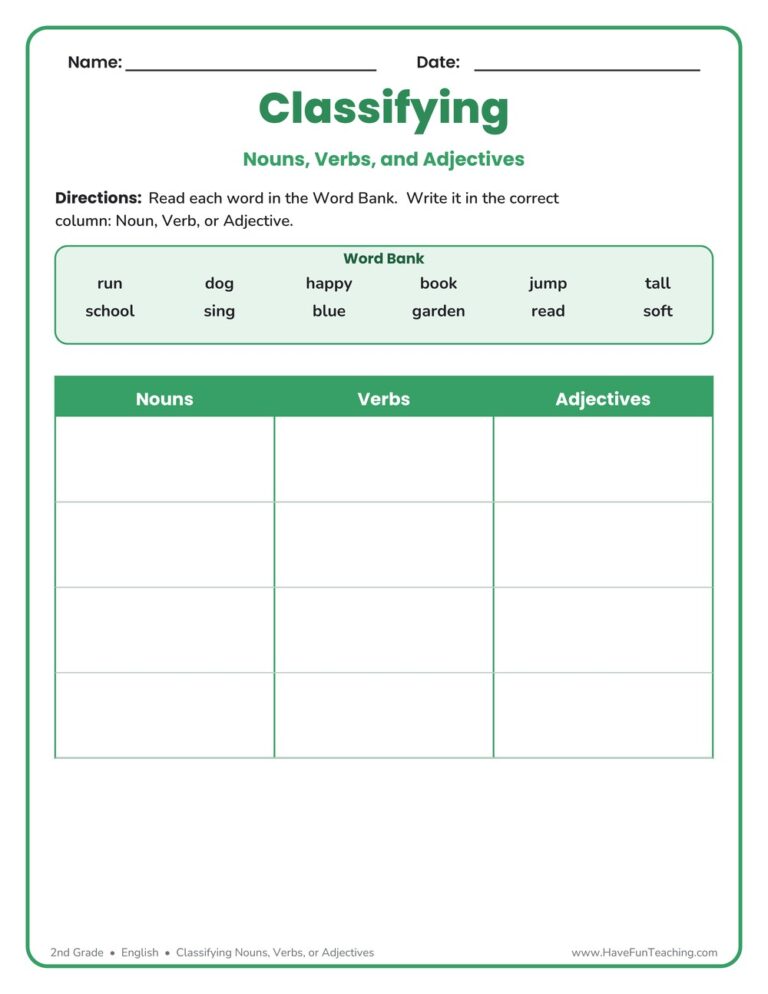
Sort twelve everyday words into nouns, verbs, and adjectives with this Classifying Nouns, Verbs, or Adjectives Worksheet for 2nd grade. Includes a complete answer key for quick, no-prep grammar practice.
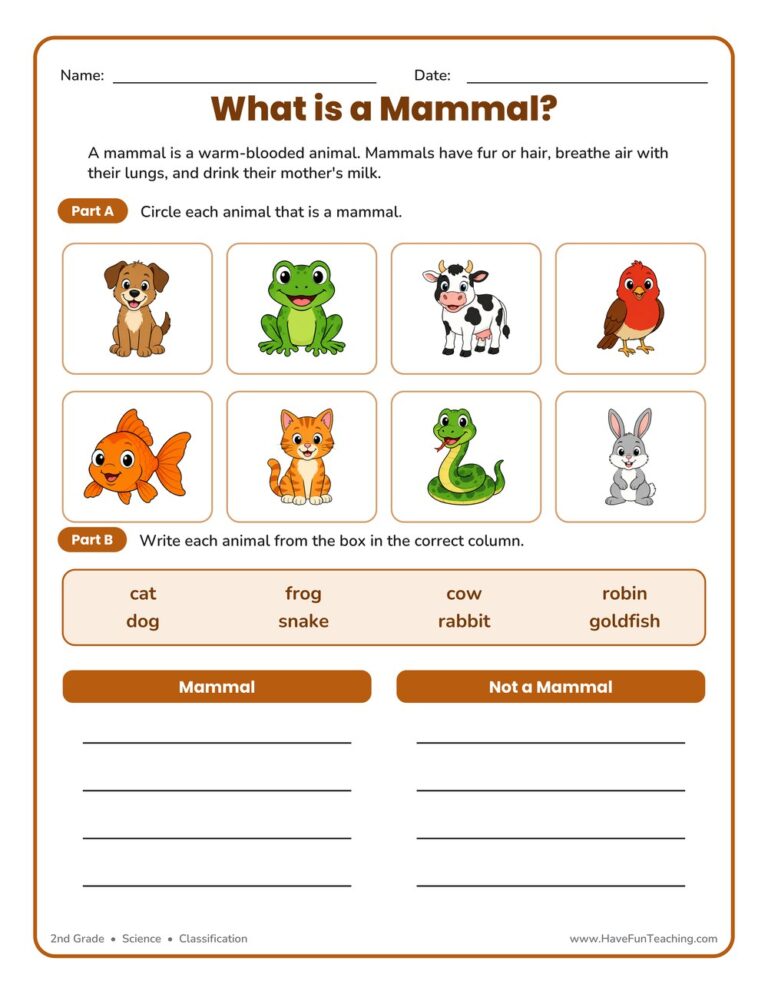
This mammal classification worksheet helps 2nd graders spot mammals and sort animals into mammal and not-a-mammal groups. It includes a complete answer key, making it perfect for no-prep science practice at home or in the classroom.

Using this Animal Song (Animated Music Video), your students learn about different types of animals and their sounds by watching this fun, catchy video.

This animal classification worksheet lets 2nd graders sort twelve animals into mammals, birds, fish, and reptiles using a picture-clued word box. An answer key is included — great for no-prep science practice at home or in class.
The Amphibian Song by Have Fun Teaching is perfect for teaching and learning all about amphibians. This animated music video teaches that amphibians live on land and in water, start life with gills, go through metamorphosis and have moist skin without scales. While watching the Amphibian Song, students learn the…
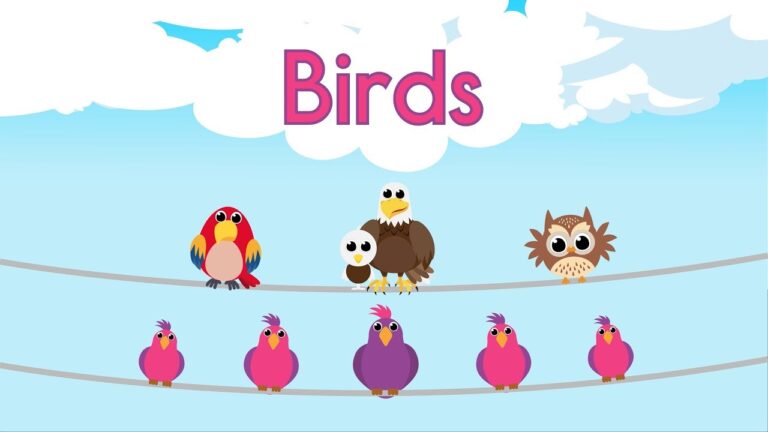
The Bird Song by Have Fun Teaching is perfect for teaching and learning all about birds. This animated music video teaches that birds have beaks but no teeth, walk on two feet, lay eggs, are warm-blooded, have backbones and are covered with feathers. While watching the Bird Song, students learn…

The Classifying Proteins, Grains, Fruits and Veggies Worksheet asks 2nd grade students to sort fifteen everyday foods into three labeled food groups. An answer key is included, so classifying practice checks itself.
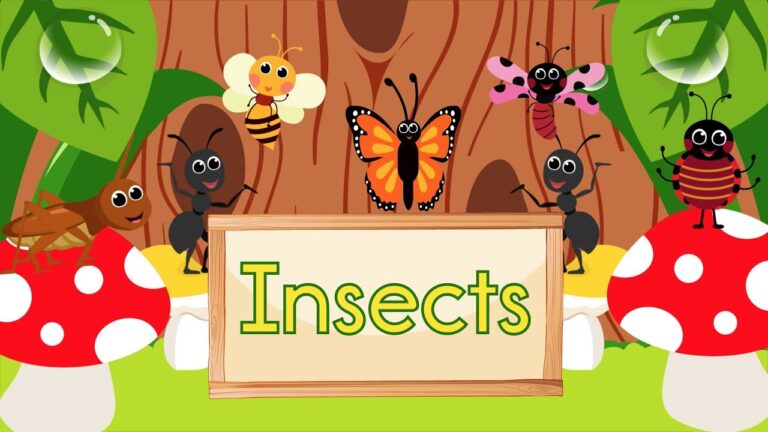
The Insect Song by Have Fun Teaching is perfect for teaching and learning all about insects. This animated music video teaches what makes an insect an insect: an exoskeleton, three body parts (head, thorax and abdomen), six legs and two antennae. While watching the Insect Song, students learn the traits…
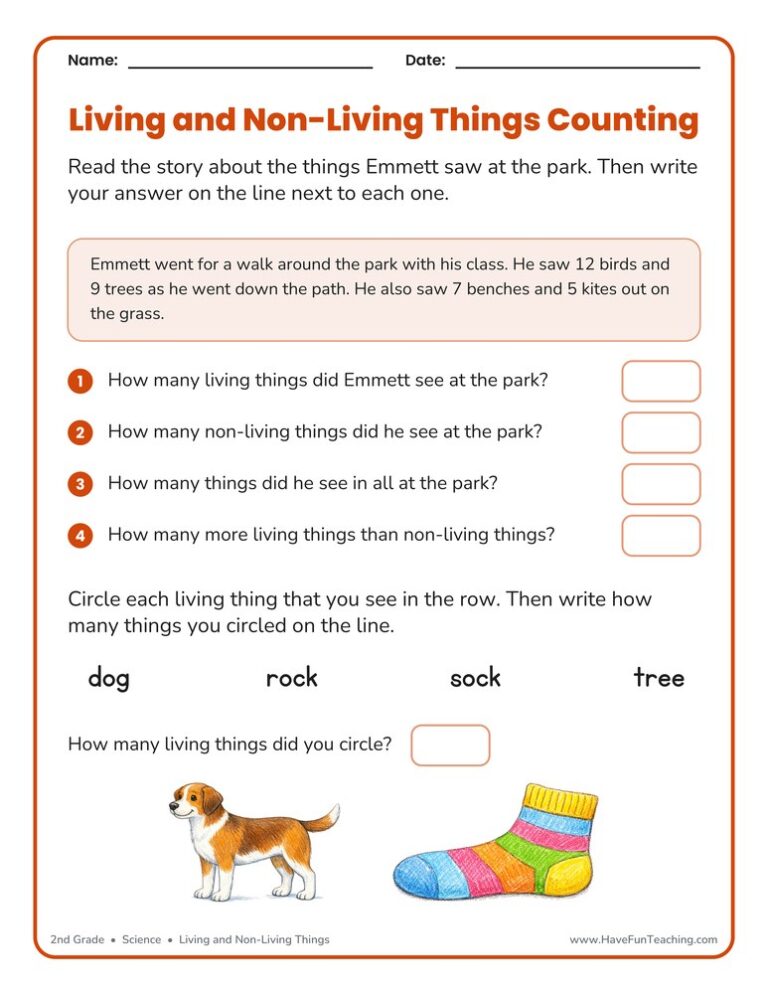
This Living Things and Non Living Things Counting Worksheet gives 2nd grade students a park number story to count, classify and compare, with an answer key included so checking the whole page takes seconds.
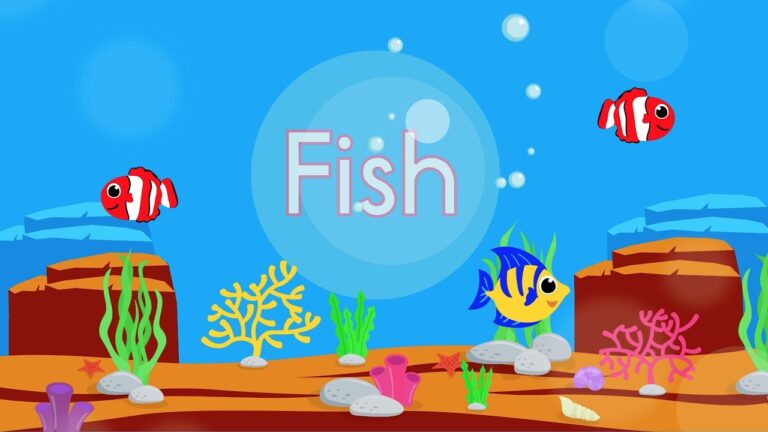
The Fish Song by Have Fun Teaching is perfect for teaching and learning all about fish. This animated music video teaches that fish have fins and scales, swim in water, breathe with gills, have skeletons of cartilage or bone, and live in freshwater and saltwater. While watching the Fish Song,…
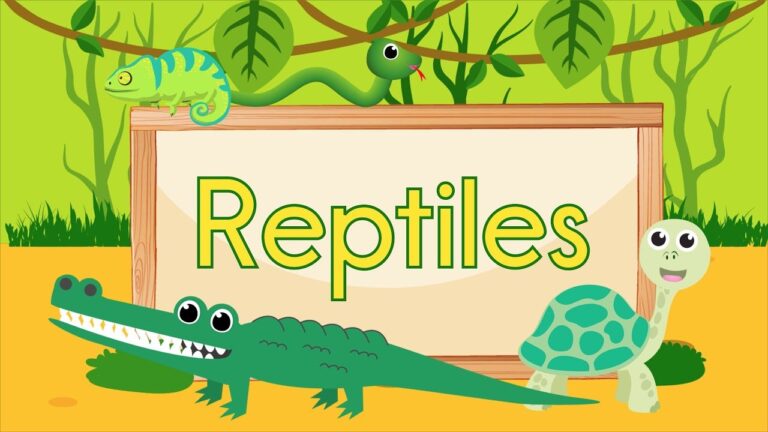
The Reptile Song by Have Fun Teaching is perfect for teaching and learning all about reptiles. This animated music video teaches that reptiles breathe with lungs, have claws and scales, lay eggs on land, use the sun for heat and are cold-blooded. While watching the Reptile Song, students learn the…




Reviews
There are no reviews yet