

Keeping Your Teeth Healthy Worksheet
This Keeping Your Teeth Healthy Worksheet has 1st graders judge four everyday pictures and write dental-care words from a word box. Answer key included, so healthy-smile practice takes no prep.
$6.97
Or free with a membership — members pay $3.33/mo for all 10,000+ resources. See plans
Want this one free?
Tell us where to send it and it’s yours — no card, no catch.
One free resource per teacher. We’ll also send free teaching ideas each week — unsubscribe anytime.
Teaching is easier with a membership
Unlimited printables, games & videos for PreK–6th — for your classroom or homeschool. Cancel anytime.
Start your 3-day free trial$0 today · cancel anytime · Instant access to 10,000+ resources
About this resource
Description
Strong, healthy teeth start with a few simple daily habits, and first graders are exactly the right age to learn them. This Keeping Your Teeth Healthy Worksheet asks children to think about the foods they eat and the tools they use, then decide which ones actually help their smile. Sugary treats, crunchy fruit, a toothbrush and a container of floss all appear side by side, so children have to stop, look, and reason about each one instead of guessing.
This first grade health and nutrition worksheet is ready to print and use with no preparation. In Part A, children study four pictures and fill in the bubble for Yes or No to show whether each item is healthy for their teeth. In Part B, they read three short sentences about brushing, flossing and visiting the dentist, then choose the right word from the word box and write it on the line. Use it during a health unit, as morning work, as a quick review before a dental-health assembly, or as homework families can talk about together at the sink.
What’s Included
- 1 print-ready PDF worksheet
- Answer key
- 4 picture Yes-or-No items and 3 word-box sentences
There are three reasons this Keeping Your Teeth Healthy Worksheet helps children learn the skill. First, the pictures let children judge real, familiar items, which is how dental choices actually happen at snack time. Second, the word box builds the vocabulary a child needs to talk about dental care, so floss, toothbrush and dentist become words they can read and write. Third, the two-part format moves children from recognizing to explaining, giving teachers a quick check of who understands and who needs another conversation.
Teachers and parents can stretch the lesson in a few easy ways. Bring in a real toothbrush and a two-minute timer and practice brushing motions together. Sort snack pictures from grocery ads into a good-for-teeth pile and a sometimes-treat pile. Ask children to draw a poster showing their own morning and bedtime routine, or keep a week-long brushing chart on the refrigerator. A quick call-and-response song makes the two-minute rule stick better than a reminder ever will.
Related Resources
What teachers say
Reviews
You must be logged in to post a review.
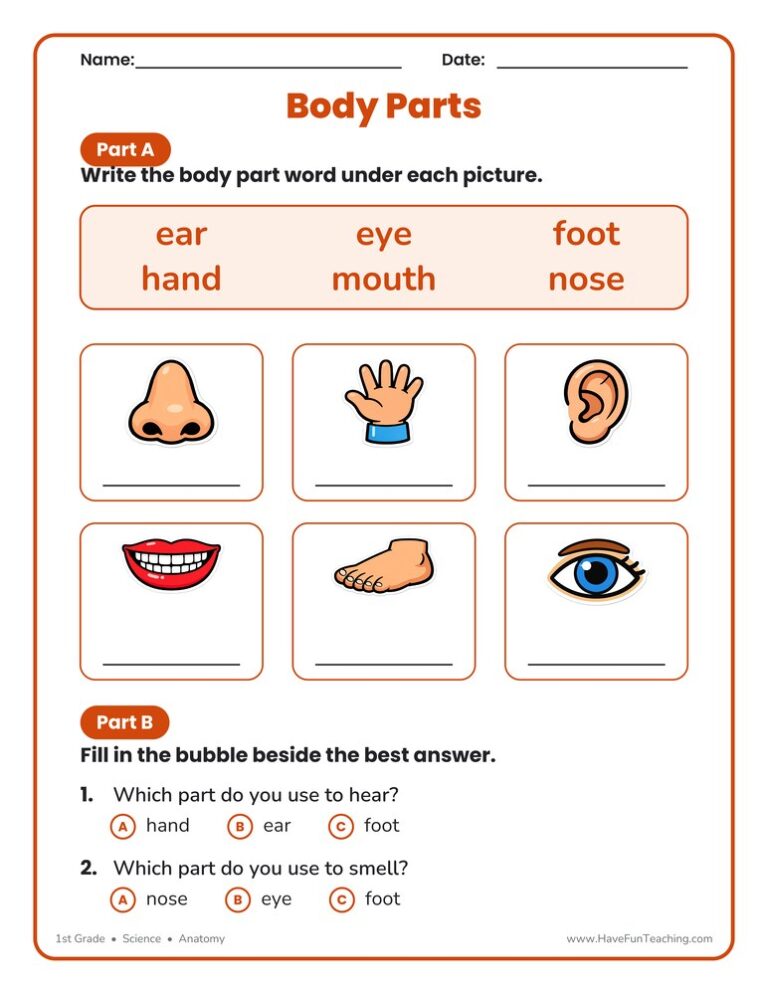
This Body Parts Worksheet helps 1st Grade students name the nose, hand, ear, mouth, foot, and eye with a picture word bank, then show what each part does. Answer key included.
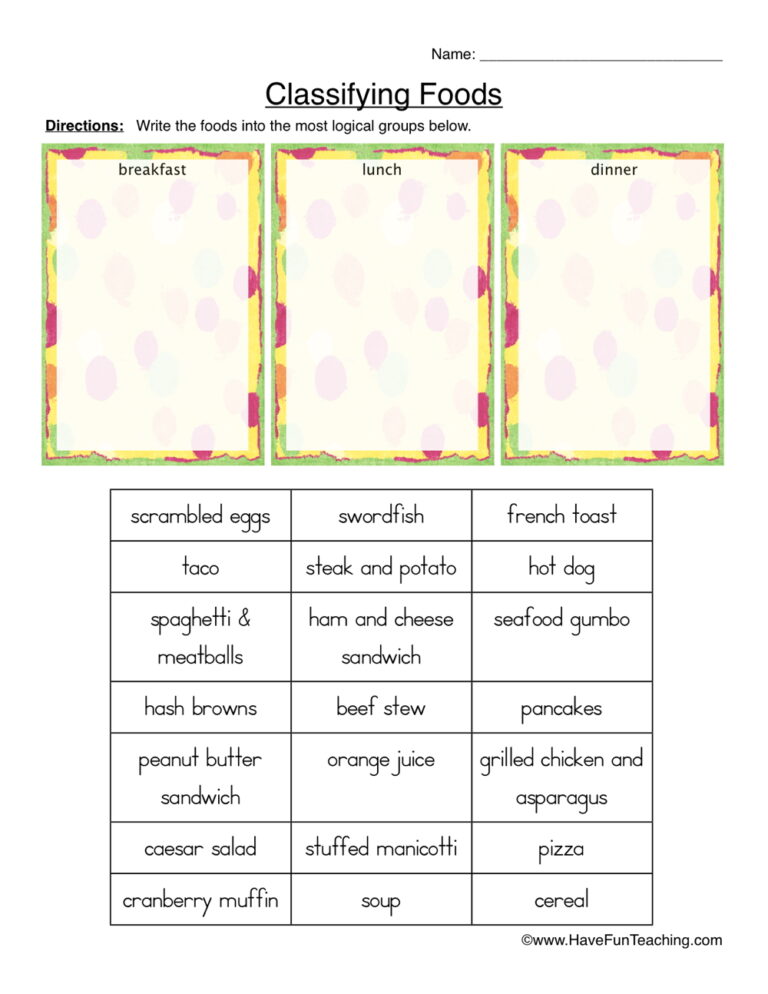
This Breakfast, Lunch, or Dinner Classifying Food Worksheet has 1st Grade students sort nine familiar foods into three meal columns. Answer key included, so sorting practice checks itself in minutes.

This brushing your teeth sequencing worksheet asks 1st graders to number four pictures and four sentences to rebuild a familiar routine. An answer key is included, so checking sequencing practice takes only a moment.
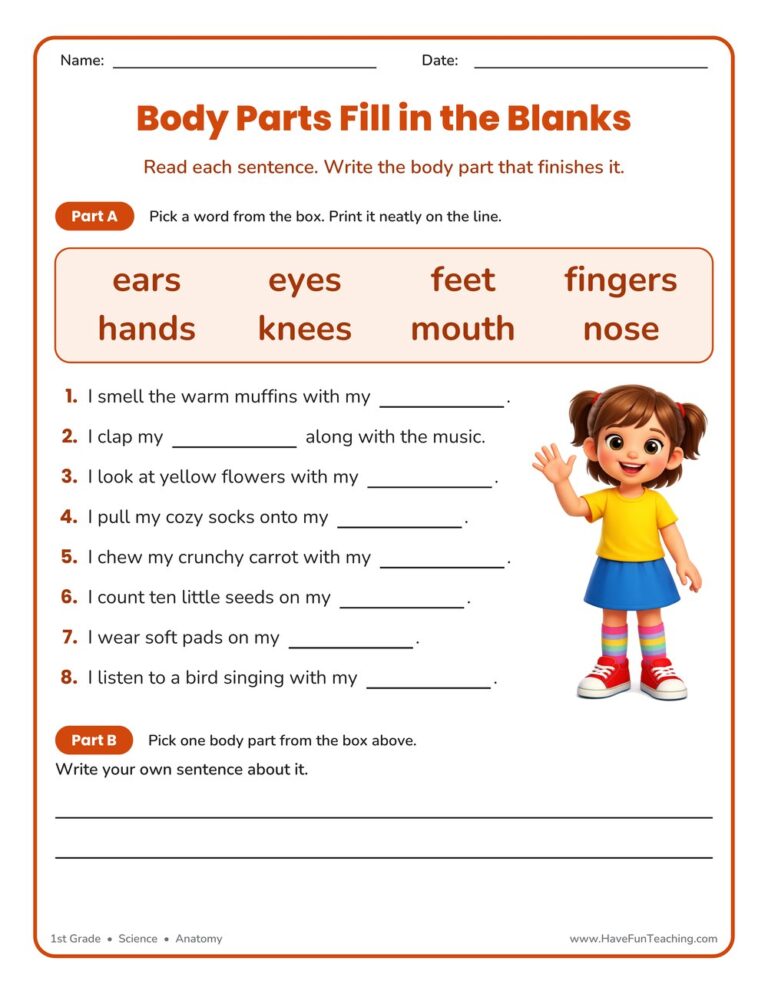
Students use a word box to complete eight sentences with the body parts fill in the blanks worksheet, then write one of their own. Built for 1st Grade with an answer key included, it makes naming body parts simple.


This Plant Parts We Eat Worksheet helps 1st graders match eight foods to the plant part we eat, using a helpful word box. Includes an answer key for easy, no-prep plant science practice.
This Fitness Package Download provides you and your students with all of the Have Fun Teaching Fitness DVDs, CDs, and Reading Comprehension Workbook.
The Brain Break Song (MP3) is perfect for classroom brain breaks, transitions, indoor recess, and physical activities.

These Donut Cut Outs quickly give you templates that can be easily cut and applied for classroom decoration or student activities


Using this Walking Song (Original Music Video), your students will be working up a sweat as they walk along with the catchy beat.
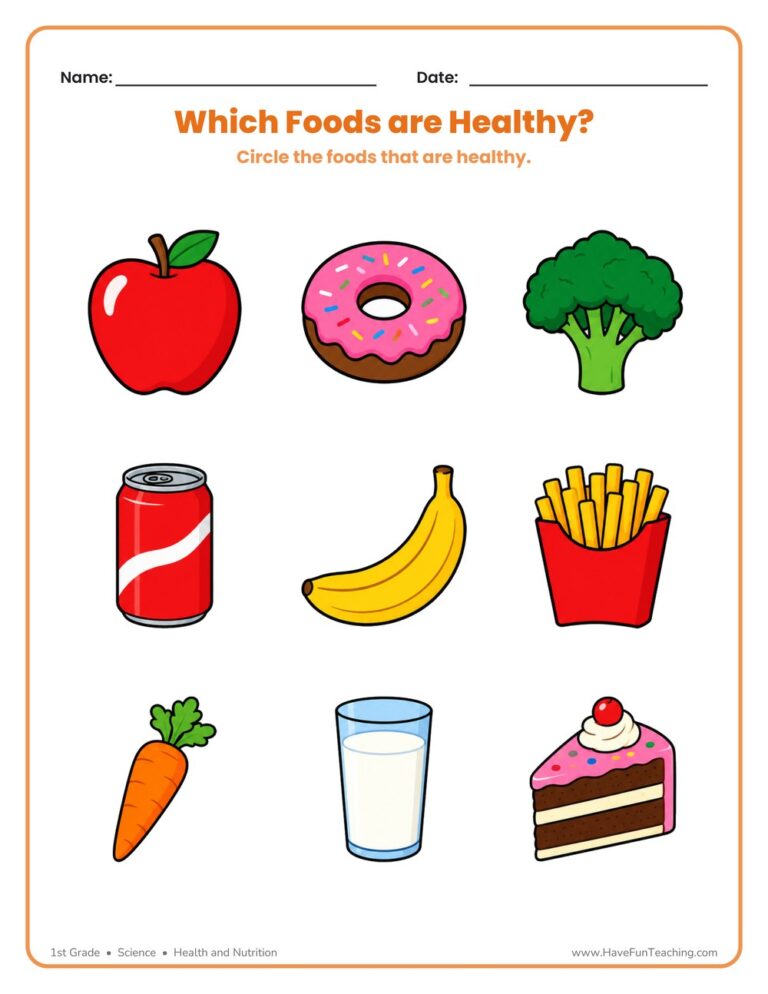
A colorful Which Foods are Healthy Worksheet where 1st graders circle nourishing foods like apples, broccoli, and milk among treats such as soda and cake. Answer key included for quick, no-prep nutrition practice.
Reviews
There are no reviews yet