

Living Non-Living Venn Diagram Worksheet
This living non-living venn diagram worksheet has 2nd grade students sort six facts about a polar bear and a teddy bear into a Venn diagram. An answer key is included for quick, easy checking.
$6.97
Or free with a membership — members pay $3.33/mo for all 10,000+ resources. See plans
Want this one free?
Tell us where to send it and it’s yours — no card, no catch.
One free resource per teacher. We’ll also send free teaching ideas each week — unsubscribe anytime.
Teaching is easier with a membership
Unlimited printables, games & videos for PreK–6th — for your classroom or homeschool. Cancel anytime.
Start your 3-day free trial$0 today · cancel anytime · Instant access to 10,000+ resources
About this resource
Description
Sorting living and nonliving things is one of the first big ideas in life science. Living things need food and water, they grow, and they change over time. Nonliving things do not. This living non-living venn diagram worksheet helps second graders compare a real polar bear with a toy teddy bear, so they can see which traits belong to a living thing, which belong to an object, and which traits the two share.
Students read six short facts in a lettered box. Then they write each letter in the correct part of a two-circle Venn diagram: the Polar Bear side, the Teddy Bear side, or the middle for facts that are true about both. It works well as a 2nd grade classification worksheet for a science center, a quick check after a lesson on living things, or homework.
What’s Included
- One printable Venn diagram page comparing a polar bear and a teddy bear
- Six fact sentences to read and sort
- Clear, kid-friendly art of both bears
- An answer key
Here are three reasons this living non-living venn diagram worksheet helps kids learn. First, it turns an abstract rule into a concrete comparison that children can picture. Second, it builds careful reading, because every sentence must be read before it can be placed. Third, the middle of the diagram shows that a living thing and a nonliving thing can still share some features, which deepens their thinking about classification.
Teachers and parents can extend the lesson by having students add their own facts to each part of the diagram, or by choosing a new pair to compare, such as a real dog and a toy dog. Ask students to explain aloud how they know each fact belongs where they placed it.
Related Resources
What teachers say
Reviews
You must be logged in to post a review.
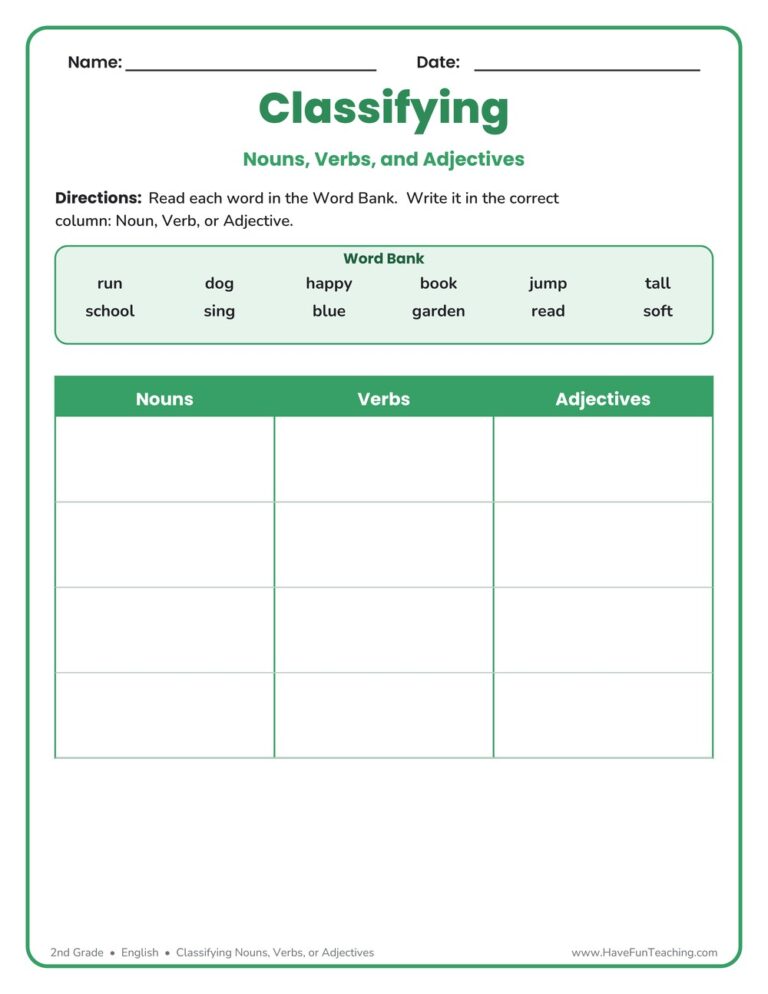
Sort twelve everyday words into nouns, verbs, and adjectives with this Classifying Nouns, Verbs, or Adjectives Worksheet for 2nd grade. Includes a complete answer key for quick, no-prep grammar practice.
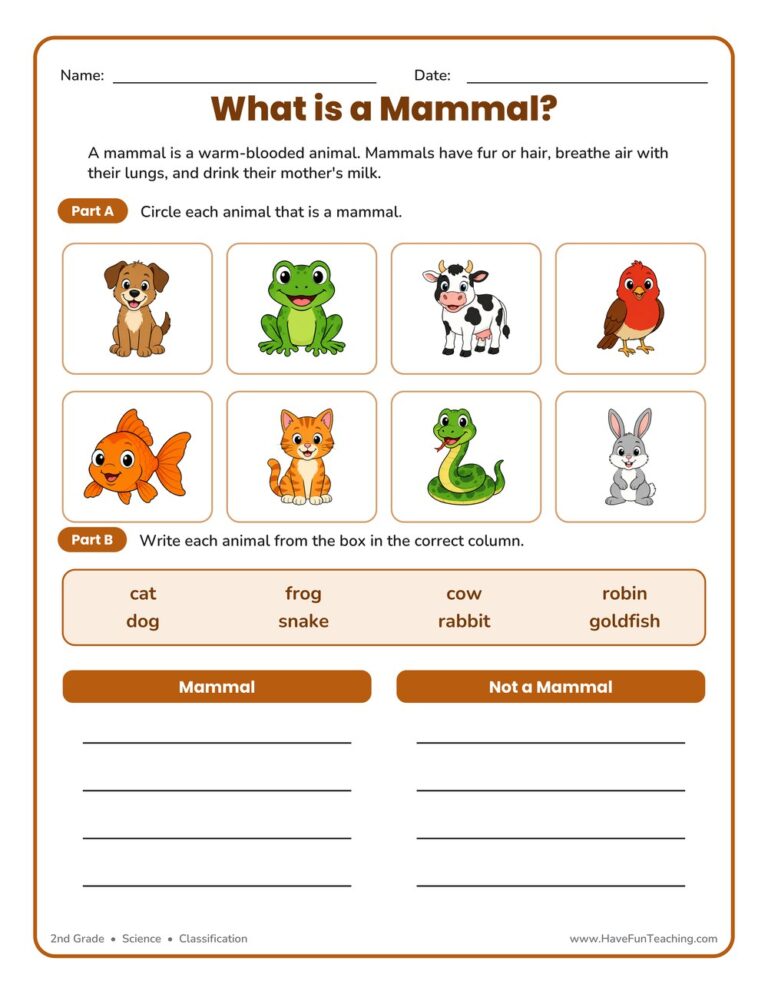
This mammal classification worksheet helps 2nd graders spot mammals and sort animals into mammal and not-a-mammal groups. It includes a complete answer key, making it perfect for no-prep science practice at home or in the classroom.
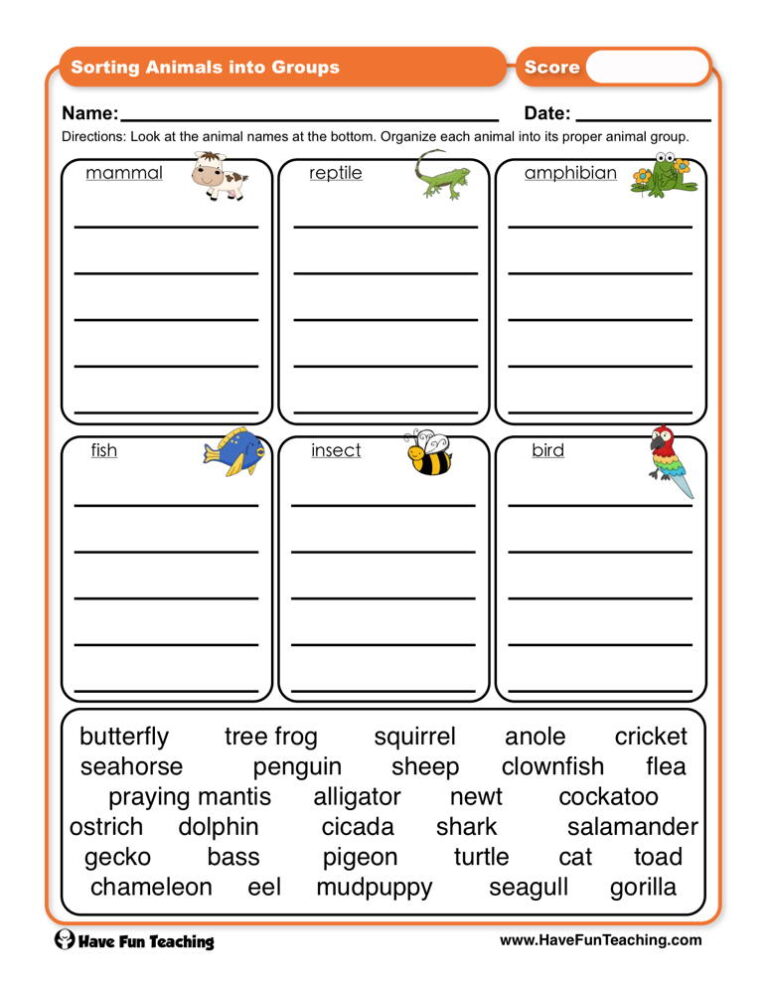
Practice animal classification with this Sorting Animals into Groups Worksheet for 2nd grade. Students sort twelve animals into six groups, with an answer key included for easy checking.

Using this Animal Song (Animated Music Video), your students learn about different types of animals and their sounds by watching this fun, catchy video.

This mammal fish bird worksheet asks 2nd graders to name the animal group for six pictures and four trait clues. An answer key is included, so checking the work takes only a minute.

This animal classification worksheet lets 2nd graders sort twelve animals into mammals, birds, fish, and reptiles using a picture-clued word box. An answer key is included — great for no-prep science practice at home or in class.

The Classifying Proteins, Grains, Fruits and Veggies Worksheet asks 2nd grade students to sort fifteen everyday foods into three labeled food groups. An answer key is included, so classifying practice checks itself.
The Life Science Stories Reading Comprehension Digital Worksheet Collection has online digital worksheets for Google Classroom & online distance learning.
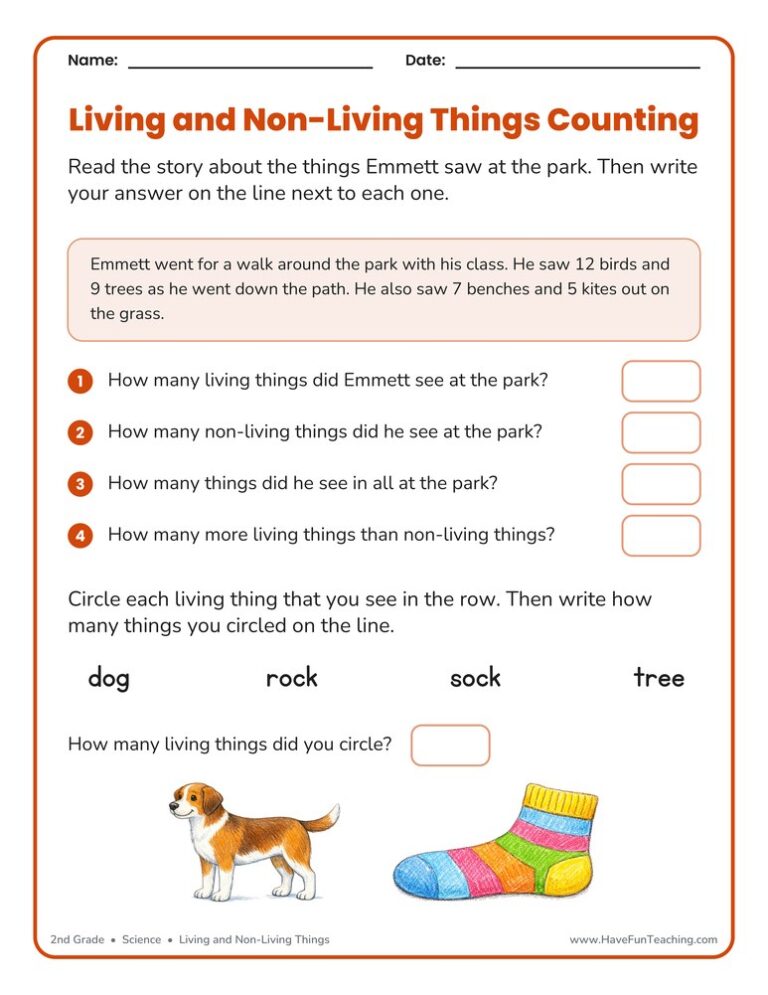
This Living Things and Non Living Things Counting Worksheet gives 2nd grade students a park number story to count, classify and compare, with an answer key included so checking the whole page takes seconds.

This How Many Wheels Classifying Transportation Worksheet has 2nd Grade students sort nine vehicle words into two, four and no wheel groups, with an answer key, so classifying becomes a clear rule.
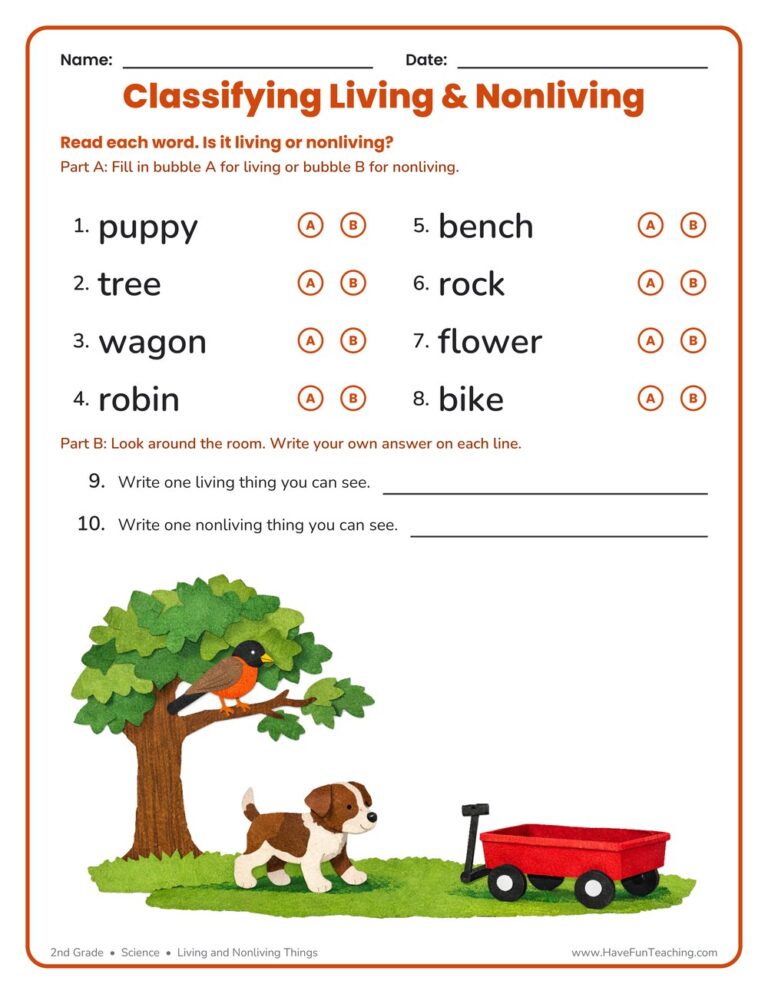
This Classifying Living and Nonliving Things Worksheet has 2nd Grade students sort eight everyday things into living or nonliving, then find one of each in the room. An answer key is included for quick checking.

This Mammal VS Reptile Pictures Worksheet has 2nd graders sort six animals by fur or scales, then classify four more by name. Answer key included, so a quick science check takes minutes.




Reviews
There are no reviews yet