

Making Inferences Graphic Organizer Worksheet
This making inferences graphic organizer worksheet gives 5th grade readers three short stories to find clues, add what they know, and write an inference. An answer key is included for easy checking.
$6.97
Or free with a membership — members pay $3.33/mo for all 10,000+ resources. See plans
Want this one free?
Tell us where to send it and it’s yours — no card, no catch.
One free resource per teacher. We’ll also send free teaching ideas each week — unsubscribe anytime.
Teaching is easier with a membership
Unlimited printables, games & videos for PreK–6th — for your classroom or homeschool. Cancel anytime.
Start your 3-day free trial$0 today · cancel anytime · Instant access to 10,000+ resources
About this resource
Description
Making inferences is one of the most important reading skills a student can build. This making inferences graphic organizer worksheet helps upper-elementary readers combine the clues an author gives with what they already know, so they can figure out what the story never says out loud. Good readers make inferences all the time, and practice with short, clear stories makes the process visible.
This 5th grade inference worksheet gives students three short stories. After reading each one, students fill in a three-part organizer: the clues they found in the story, what they already know from their own experience, and the inference they can make by putting the two together. The plus and equals signs on the page show that clues plus background knowledge equal an inference. Students can work on their own, with a partner, or as part of a guided reading group.
What’s Included
- One printable making inferences graphic organizer worksheet with three short stories
- A clues + what I know = what I infer organizer for every story
- An answer key with model answers for each part
Why This Worksheet Helps Kids
- It breaks inferring into three clear steps that students can repeat with any text.
- It trains readers to point to exact details from the story as evidence.
- It connects reading to real life by asking students to use what they already know.
Ideas for Teachers and Parents
Model the first story aloud, thinking through each clue before students try the next two on their own. Afterward, ask students to share their “What I Know” answers, since these may differ even when the inference is the same. For extra practice, have students write their own short clue story for a classmate to solve.
Related Resources
What teachers say
Reviews
You must be logged in to post a review.

Using Hurricanes Reading Comprehension Activity, students refer to details to explain what the text says explicitly and when drawing inferences. This is perfect for making inferences and drawing conclusions.

Using Making Inferences Graphic Organizer, students record their schema and textual evidences while reading and making inferences.

Using Inference Chains Activity, students refer to details in a text when explaining what the text says explicitly and when drawing inferences. This is perfect for making inferences and drawing conclusions.

This Making Inferences Math Operations Activity is a great lesson in helping your students understand inferencing and basic math operations. This is perfect for making inferences and drawing conclusions.
Using this RL.5.1 Fifth Grade Common Core Lesson, students Refer to details and examples in a text when explaining what the text says explicitly and when drawing inferences from the text.

Using RI.5.1 Fifth Grade Common Core Lesson, students quote accurately from a text when explaining what the text says explicitly and when drawing inferences from the text.

Using Inferences Chart Worksheet, students determine inferences in the text by thinking about your prior background knowledge and the clues that are in the text.

Using Making Inferences Record Worksheet, students record their schema and textual evidences while reading and making inferences.

Using Making Inferences Recording Worksheet, students record their schema and textual evidences while reading and making inferences.
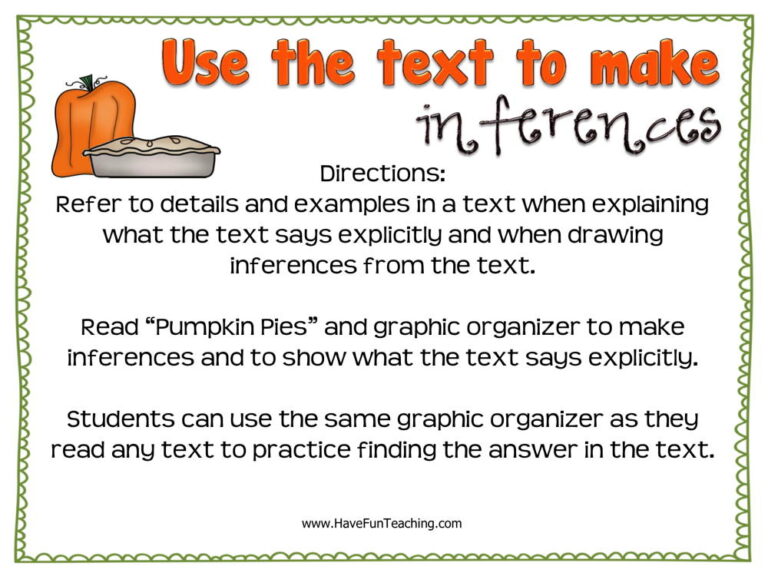
This Use the Text to Make Inferences Activity can be a great way to help them explore how to infer based on the text and what they already know. This is perfect for making inferences and drawing conclusions.

This Team Sports Health and Fitness Reading Comprehension Worksheet gives 5th graders a lively non-fiction passage about staying active, plus main-idea, detail, and inference questions. An answer key is included for fast, no-prep reading practice.
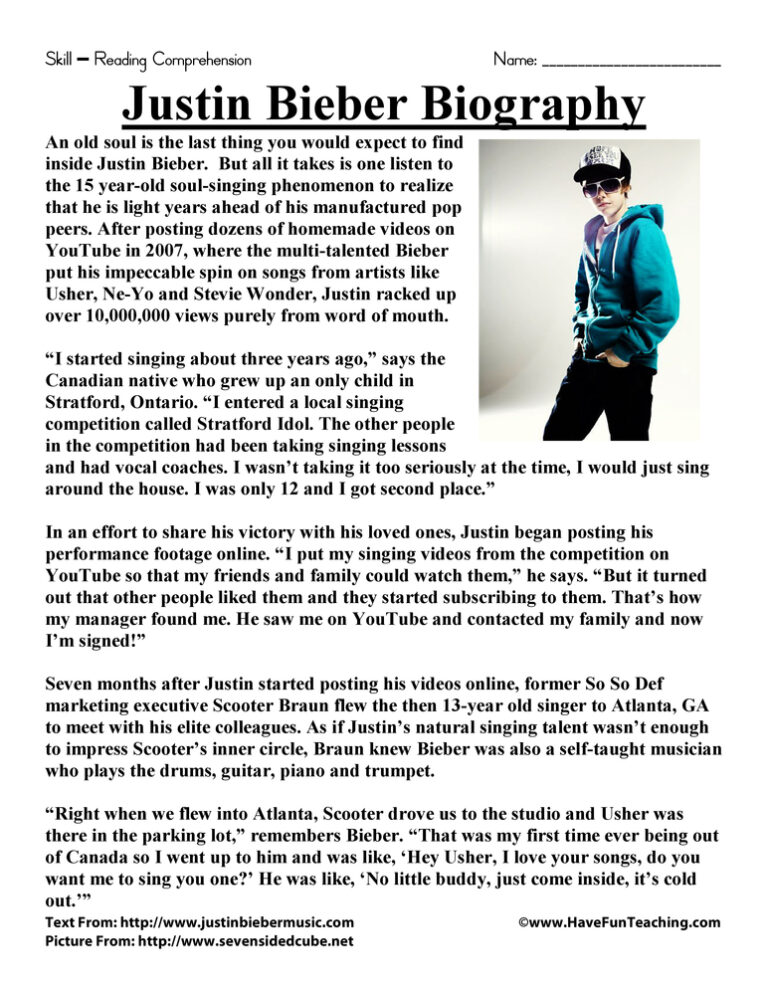
This Justin Bieber Biography Reading Comprehension Worksheet will help your students build their reading comprehension skills while reading a biography about Justin Bieber.




Reviews
There are no reviews yet