
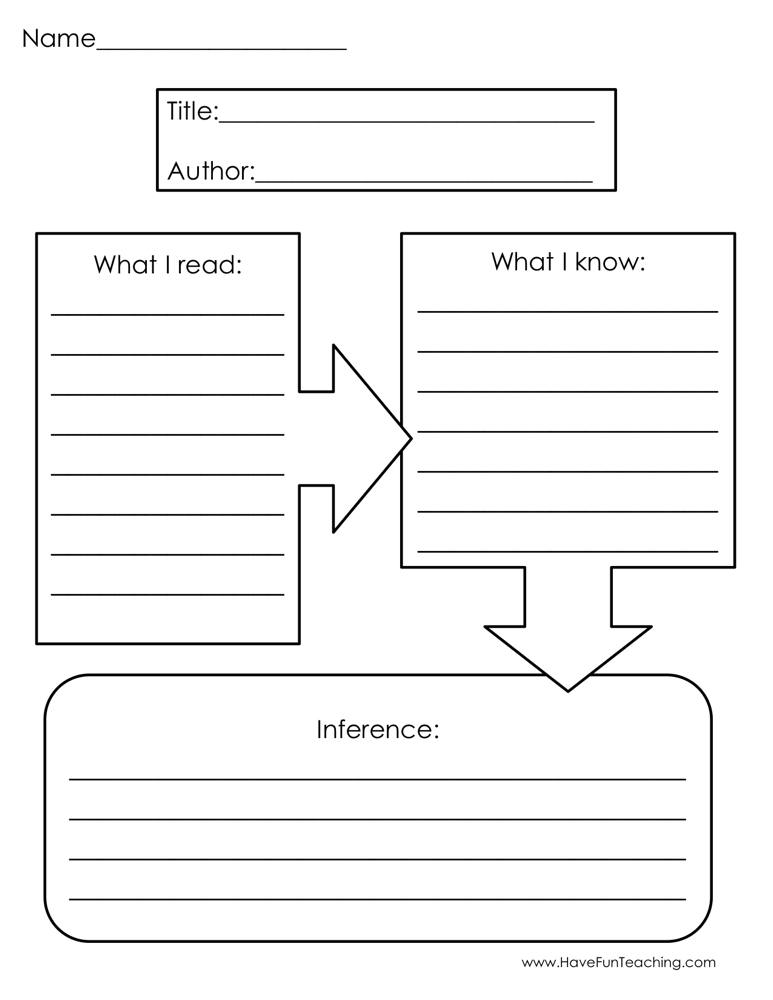
What I Read What I Know Inference Graphic Organizer Worksheet
A reusable What I Read What I Know Inference Graphic Organizer Worksheet that walks 3rd grade readers from text clues to background knowledge to a written inference. Use it with any book, all year long.
$6.97
Or free with a membership — members pay $3.33/mo for all 10,000+ resources. See plans
Want this one free?
Tell us where to send it and it’s yours — no card, no catch.
One free resource per teacher. We’ll also send free teaching ideas each week — unsubscribe anytime.
Teaching is easier with a membership
Unlimited printables, games & videos for PreK–6th — for your classroom or homeschool. Cancel anytime.
Start your 3-day free trial$0 today · cancel anytime · Instant access to 10,000+ resources
About this resource
Description
Inference is the reading skill of putting text clues together with what you already know to figure out something the author never says out loud. It is the move behind almost every “how do you know?” question on a reading test, and it is the hardest one for young readers to see, because the answer is never sitting on the page waiting to be copied. The What I Read What I Know Inference Graphic Organizer Worksheet slows that thinking down and gives 3rd grade readers a place to put each half of it, so the leap from clue to conclusion stops feeling like a guess and starts feeling like something they can do on purpose.
This printable is a reusable frame rather than a one-time exercise, so it works with whatever your students are already reading. Children fill in the book title and author, write the clues the text actually gave them in the What I Read box, list what they already know about those clues in the What I Know box, then follow the arrows down to the Inference box and write the conclusion the two boxes support together. Because the 3rd grade inference graphic organizer is not tied to one passage, the same sheet can be used with a chapter book on Monday, a nonfiction article on Wednesday, and a read-aloud on Friday, which is exactly what makes the routine stick.
What’s Included
- 1 print-ready PDF worksheet
- A full-width Book Title and Author line so the organizer stays with the text it came from
- A “What I Read” box with nine writing lines for text evidence
- A “What I Know” box with nine writing lines for background knowledge
- An “Inference” box with five wide lines for the conclusion
- Arrows that show the order of the thinking, from clues to knowledge to inference
- Works with any fiction or nonfiction text, at any point in the year
How This Helps Kids Learn
First, it separates the two ingredients. Readers who struggle with inferring usually collapse the whole process into one step and answer from memory alone; giving evidence and background knowledge their own boxes forces both to show up. Second, it makes thinking visible, so a teacher can look at a finished sheet and see instantly whether a shaky inference came from a missed clue or from a gap in background knowledge. Third, it builds a habit that transfers. After a few rounds, students start asking “what did the text say, and what do I already know?” without the paper in front of them, which is the whole point of a graphic organizer.
Teaching Ideas
Model it first with a read-aloud, thinking out loud as you fill each box on a projected copy. Try it with pictures before text by showing a photograph and asking what clues you can see and what you already know about them. Pair students and have them compare inferences drawn from the same chapter, then talk about why two reasonable readers landed in different places. Use the What I Read What I Know Inference Graphic Organizer Worksheet as an exit ticket after independent reading, or slip a stack into a literacy center so children reach for one whenever a story leaves something unsaid.
Related Resources
What teachers say
Reviews
You must be logged in to post a review.
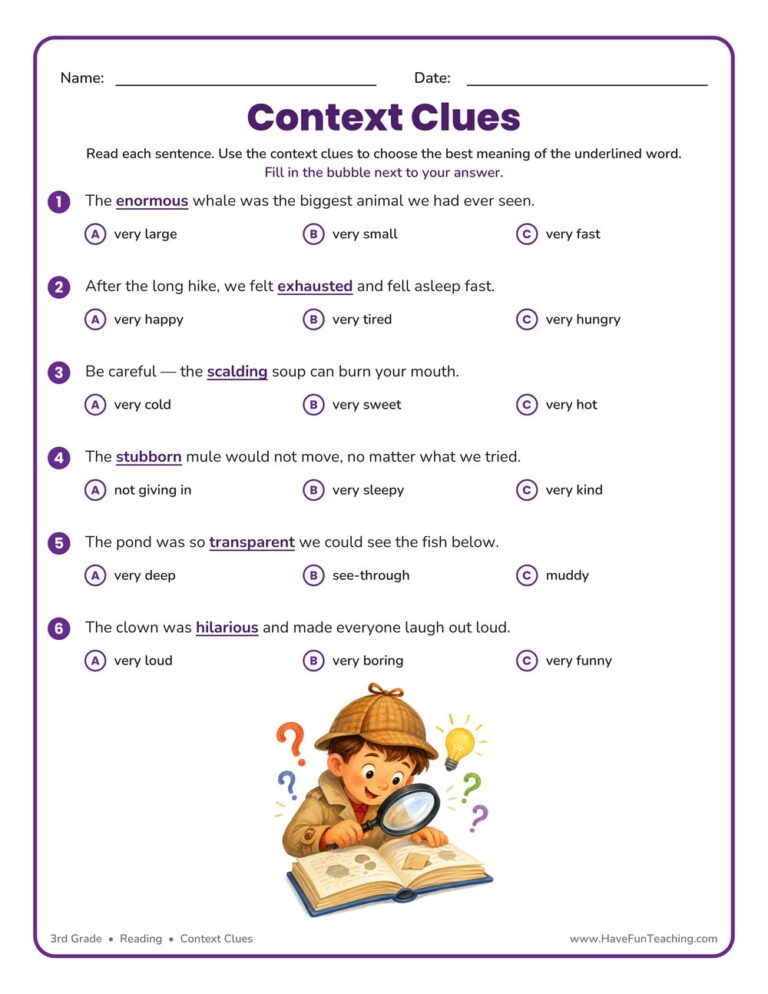
A 3rd grade Context Clues Worksheet with six multiple-choice sentences where students use the surrounding words to find the meaning of each underlined word. Answer key included for fast, no-prep vocabulary practice.
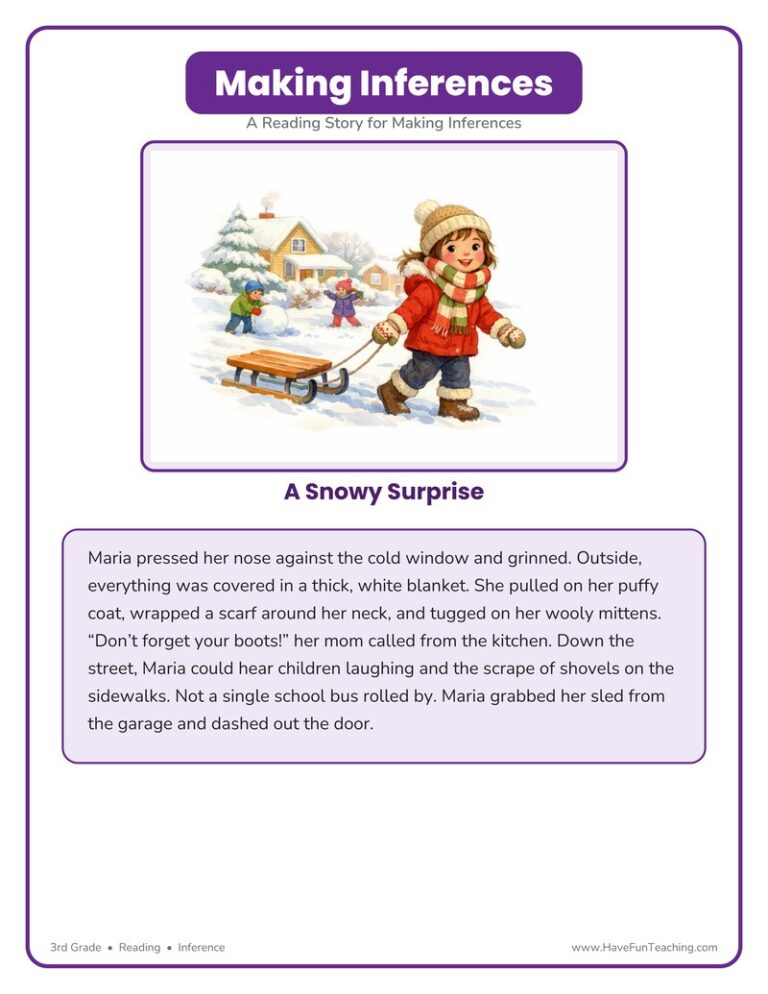
This reading inferences worksheet gives 3rd graders a short snow-day story and five clue-based questions that build evidence-driven thinking. Includes a complete answer key — perfect for no-prep reading comprehension practice at home or in class.
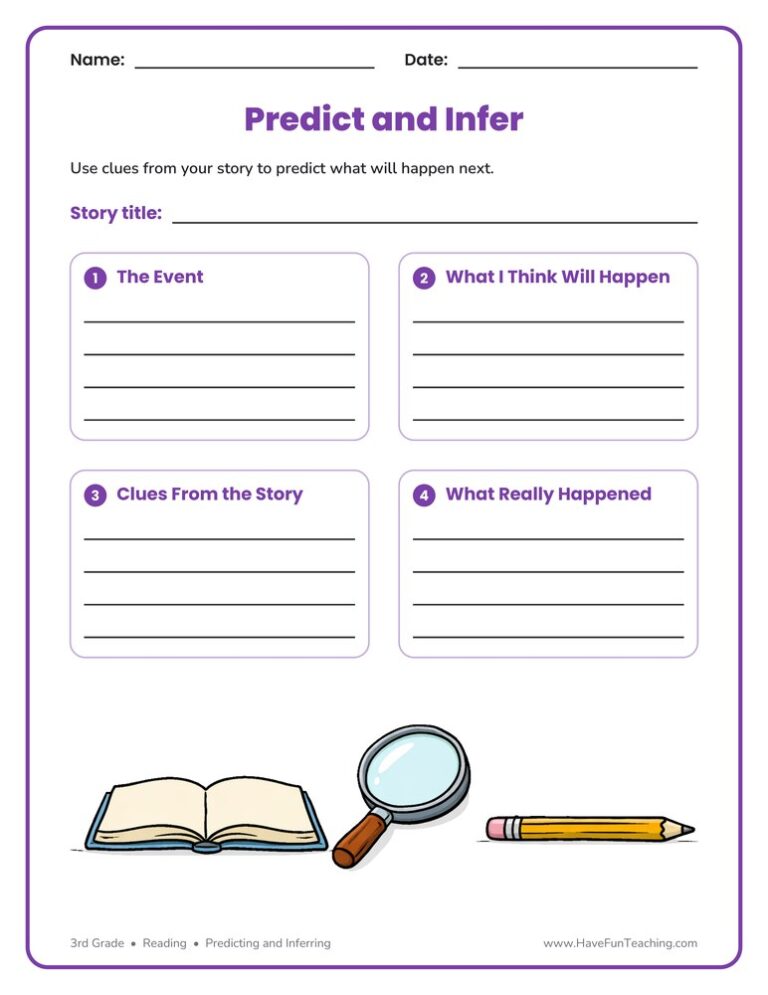
This predict and infer graphic organizer worksheet gives 3rd grade readers one page to name an event, predict what happens next, list the clues behind the guess, and then check it against the real ending.

This What I Know About the Text Inference Graphic Organizer Worksheet gives 3rd Grade readers three story clues to turn into inferences using what they already know. An answer key is included for quick, no-prep practice.

Using Making Inferences Activity, students look at pictures and make inferences based on what they see to match descriptions. This is perfect for making inferences and drawing conclusions.
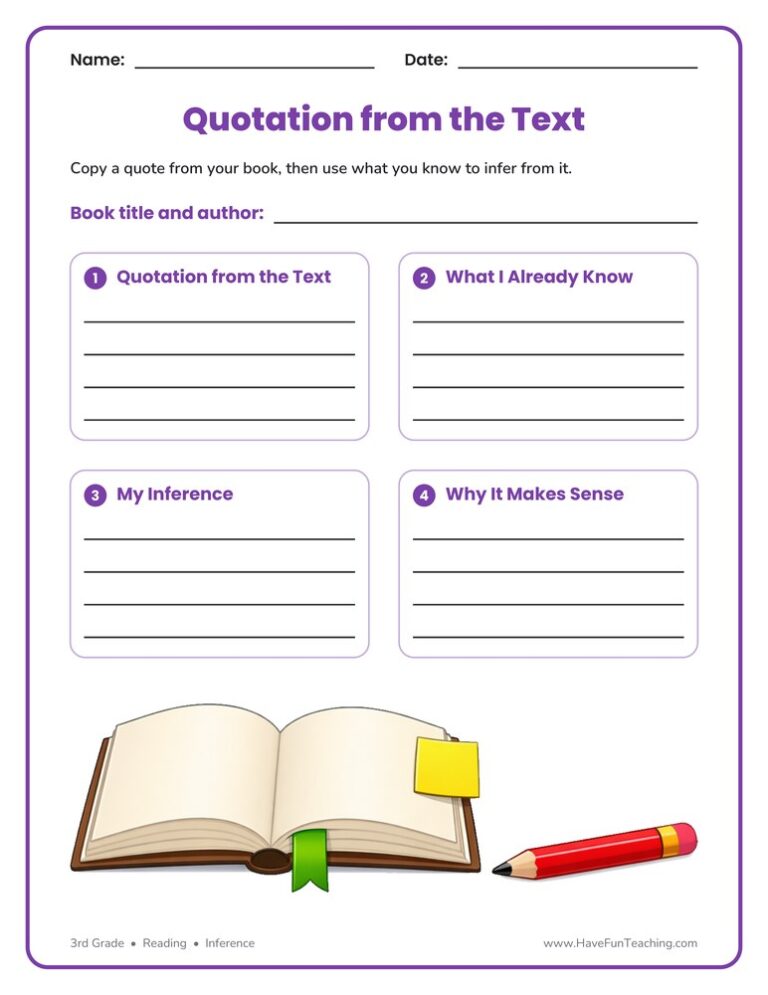
Use this Quotation from the Text Graphic Organizer Worksheet to help 3rd graders copy a quote from any book, connect it to what they know, and write a strong inference with a reason.

Using Hurricanes Reading Comprehension Activity, students refer to details to explain what the text says explicitly and when drawing inferences. This is perfect for making inferences and drawing conclusions.

Using Making Inferences Graphic Organizer, students record their schema and textual evidences while reading and making inferences.

Using Inference Chains Activity, students refer to details in a text when explaining what the text says explicitly and when drawing inferences. This is perfect for making inferences and drawing conclusions.
Using Making Inferences Pictures Activity, students look at pictures and make inferences based on what they see to match descriptions. This is perfect for making inferences and drawing conclusions.

Using thisWhat the Author Said Graphic Organizer Worksheet, your students will summarize what the author said in the story they are reading. This is perfect for making inferences and drawing conclusions.
Using Reading Between The Lines Inference Activity, students match the Statement Card to the Emotion Card to build their inference skills. This is perfect for making inferences and drawing conclusions.
Reviews
There are no reviews yet