
Middle Sounds E or A Worksheet
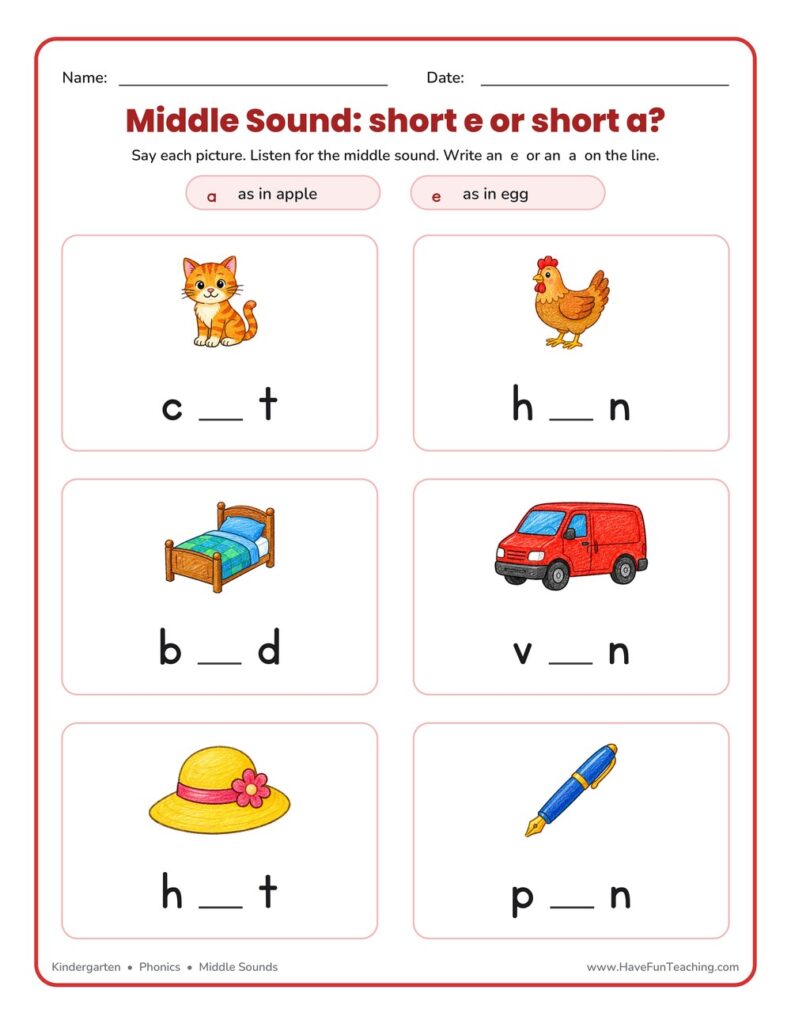
This Middle Sounds E or A Worksheet gives kindergarten readers six picture cards to say, hear the short vowel, and write e or a. Includes an answer key for quick, no-prep phonics practice.
$6.97
Or free with a membership — members pay $3.33/mo for all 10,000+ resources. See plans
Want this one free?
Tell us where to send it and it’s yours — no card, no catch.
One free resource per teacher. We’ll also send free teaching ideas each week — unsubscribe anytime.
Teaching is easier with a membership
Unlimited printables, games & videos for PreK–6th — for your classroom or homeschool. Cancel anytime.
Start your 3-day free trial$0 today · cancel anytime · Instant access to 10,000+ resources
About this resource
Description
Middle sounds are the vowel sounds that live in the very center of short, three-letter words, and hearing them clearly is one of the most important early reading skills. This Middle Sounds E or A Worksheet helps young learners tune their ears to the difference between the short e sound, as in egg, and the short a sound, as in apple. When children can isolate the middle vowel in a word like cat or hen, they are well on their way to blending, reading, and spelling simple CVC words on their own.
This kindergarten middle sounds worksheet keeps the activity playful and clear. Students look at six friendly picture cards, say the name of each picture out loud, and listen carefully for the vowel sound hiding in the middle. Then they write an e or an a on the line to finish the word. A handy reminder at the top of the page pairs a with apple and e with egg, so children always have a sound to compare against. It works beautifully for independent practice, small reading groups, or a quick one-on-one check.
What’s Included
- 1 print-ready PDF worksheet
- Answer key
- 6 picture-and-letter middle-sound activities
There are three big reasons this Middle Sounds E or A Worksheet helps children learn. First, it focuses on just two vowel sounds at a time, so beginners are not overwhelmed and can really concentrate on telling e and a apart. Second, the bright pictures give every child a built-in clue, connecting a spoken sound to a real object they recognize. Third, writing the missing letter turns listening into doing, strengthening the link between sounds and the letters that spell them. Together these steps build the confident phonemic awareness that early readers need.
Teachers and parents can stretch the learning in simple, fun ways. Say a short word aloud and have your child jump for a as in apple or clap for e as in egg. Hunt around the house or classroom for objects with a short a or short e in the middle, like a bag, a pen, or a net. Use letter tiles or magnets to swap the middle vowel and discover how a word changes, or line up the picture cards and sort them into an a pile and an e pile before writing.
Related Resources
What teachers say
Reviews
You must be logged in to post a review.

This CVC Word Sounds Worksheet has Kindergarten readers say six pictures and fill in the bubble beside the CVC word with the matching sounds. Answer key included for quick, no-prep phonics practice.
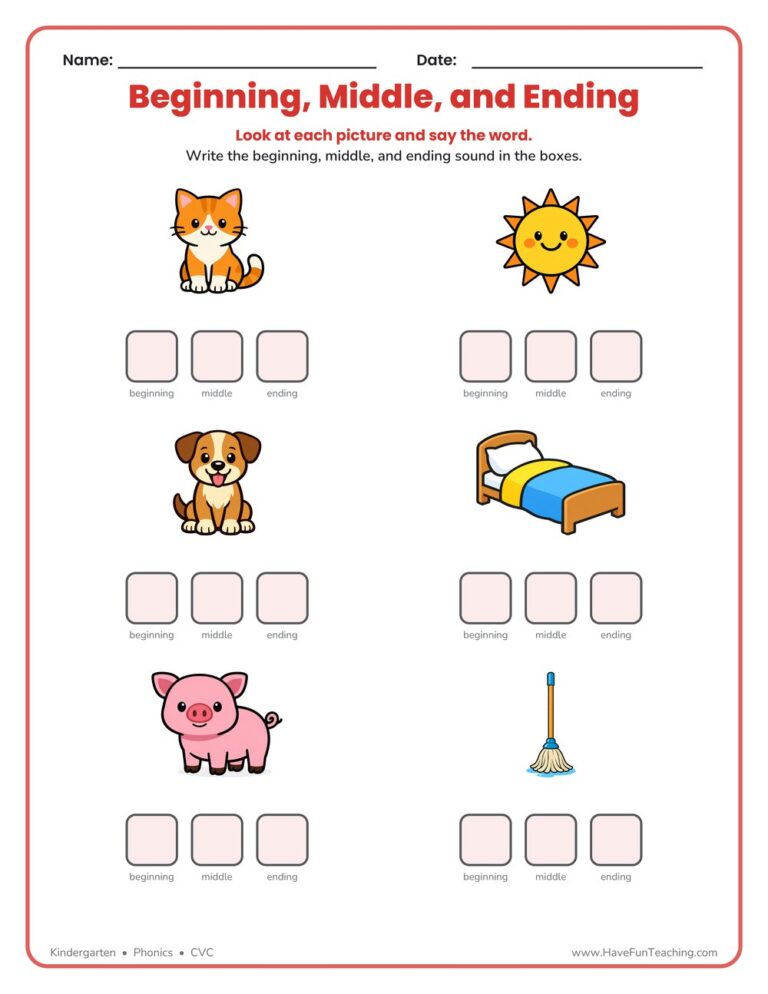
This Beginning, Middle, and Ending Sounds Worksheet helps kindergarten learners break six CVC picture words into their beginning, middle, and ending sounds. Answer key included—great no-prep phonics practice.

A picture-clue Spelling CVC Words Worksheet that helps kindergarten students hear and write the beginning, middle, and ending sounds in simple three-letter words. Answer key included for quick, no-prep phonics practice.
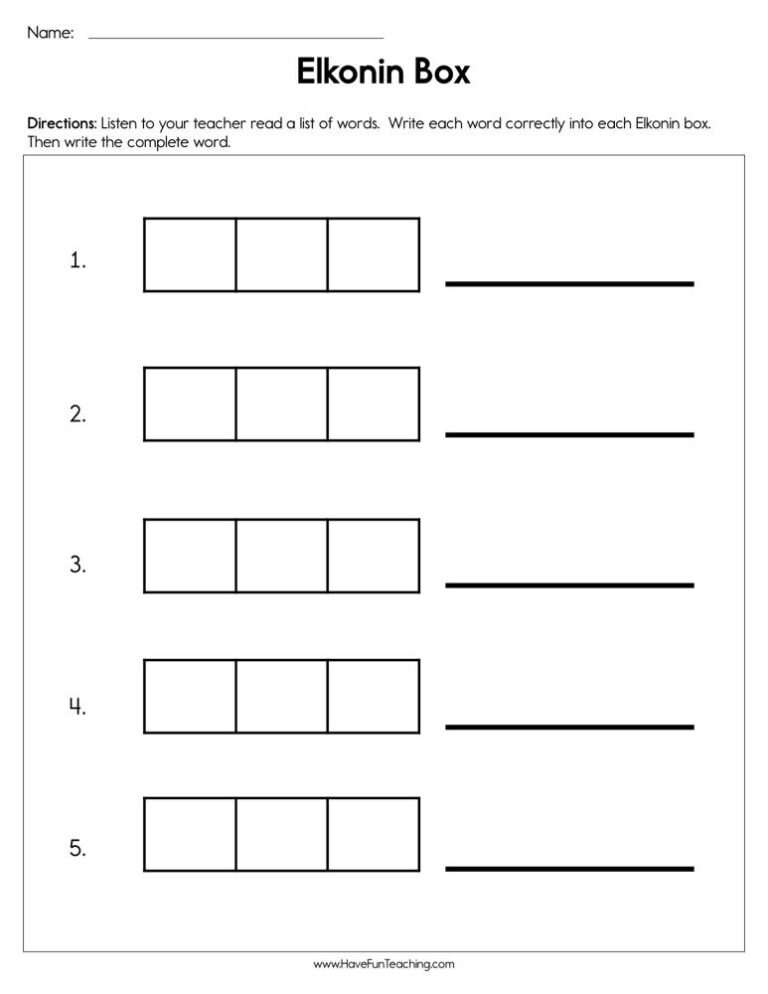
This Elkonin Box Worksheet gives Kindergarten students seven picture prompts and three-cell sound boxes for segmenting CVC words into beginning, middle, and ending sounds. Answer key included, so practice takes no prep.
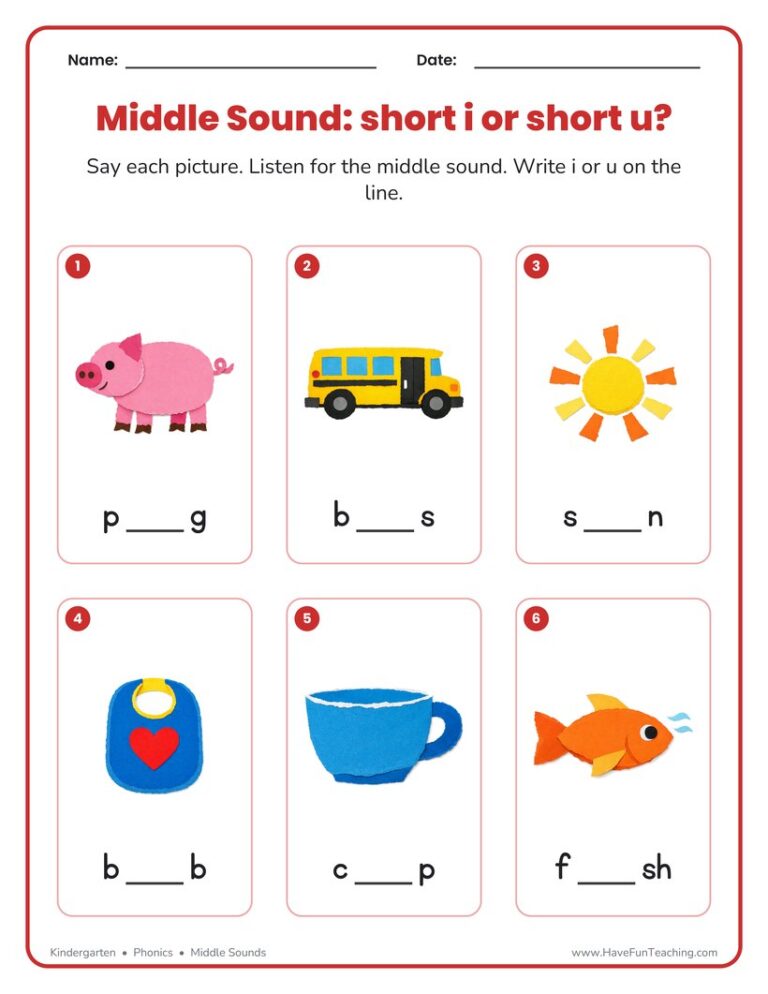
This middle sounds i or u worksheet asks kindergarten readers to name six pictures and write the missing short vowel. Answer key included for easy, no-prep phonics practice.

This CVC practice worksheet asks Kindergarten students to say each picture, stretch out its three sounds, and write a letter in every box to spell the word. An answer key is included, so checking phonics practice takes seconds.
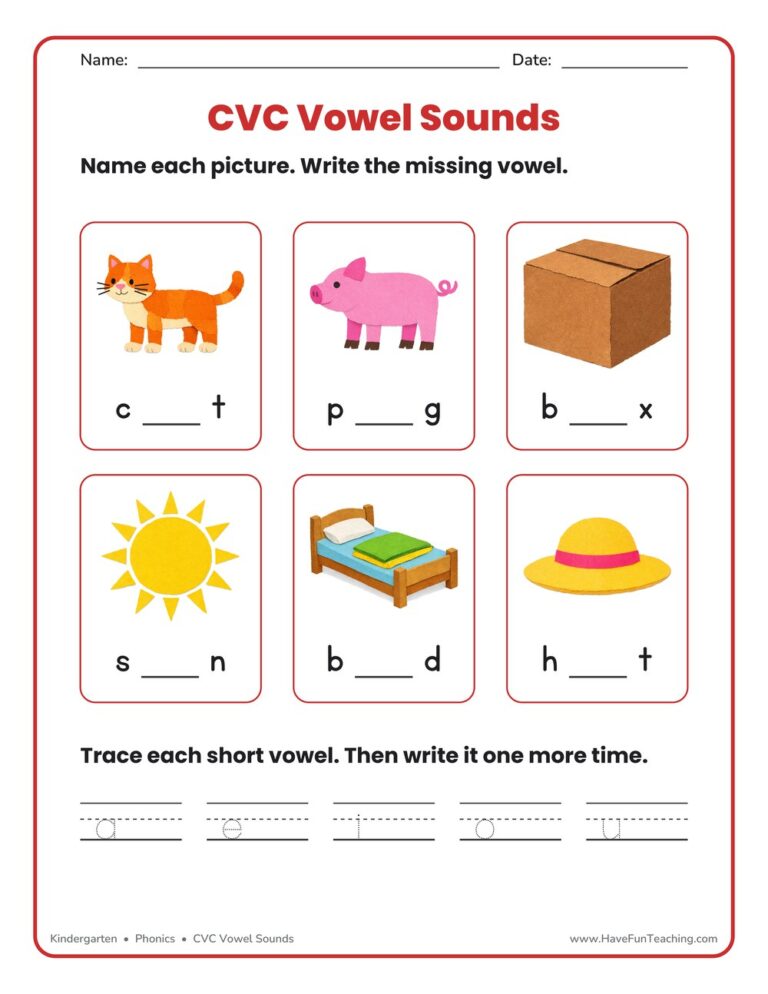
This CVC vowel sounds worksheet asks Kindergarten students to name six pictures and write the short vowel they hear in the middle. Answer key included, so beginning readers get quick, no-prep practice hearing every short vowel.

This Middle Sounds A or O Worksheet gives Kindergarten readers six picture words and four printed words for practicing the vowel sound in the middle. An answer key is included, so checking work takes seconds.

Using Hard and Soft C G Sounds Activity, students read words and sort them under the hard or soft G and C category to build their pronunciation skills.
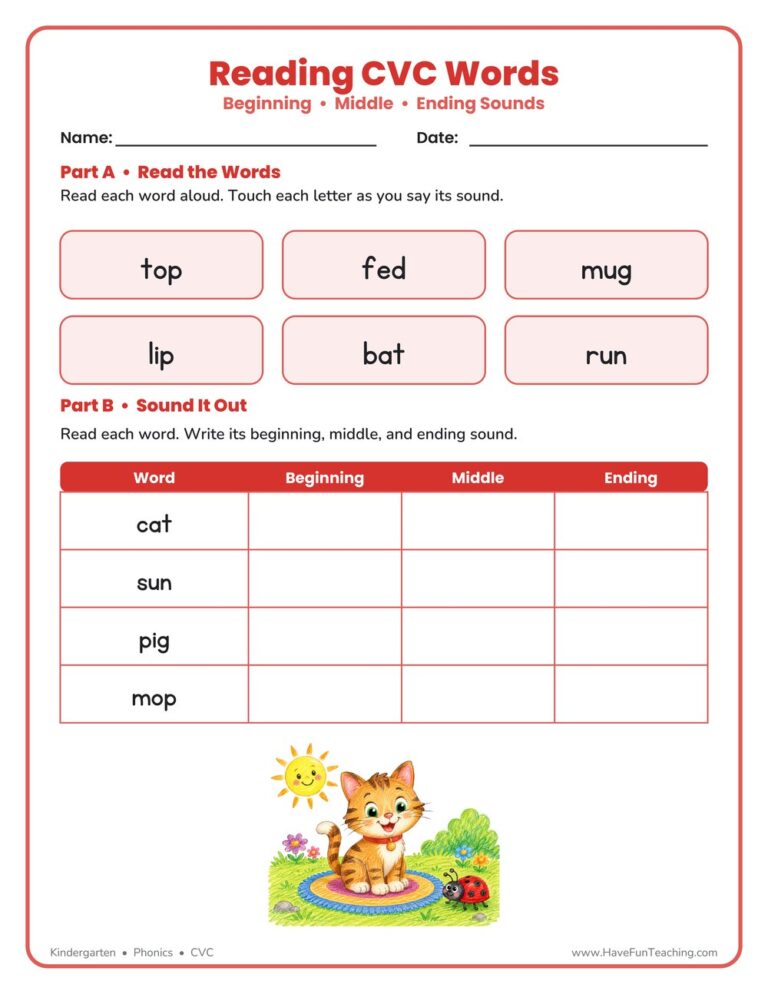
A reading CVC words worksheet that helps kindergartners blend beginning, middle, and ending sounds in simple words like cat, sun, and mop. Includes an answer key for quick, no-prep phonics practice.

UsingHard and Soft C and G Activity, students read words and sort them under the hard or soft G and C category to build their pronunciation skills.
Using this Memorial Day Middle Sounds Activity, studentspractice stretching out words and identifying the middle vowel sound.
Reviews
There are no reviews yet