

OI OY Worksheet
Second graders sort eight oi and oy words into two boxes, then finish four more words with the right letters. This oi oy worksheet includes an answer key for fast, no-prep phonics practice.
$6.97
Or free with a membership — members pay $3.33/mo for all 10,000+ resources. See plans
Want this one free?
Tell us where to send it and it’s yours — no card, no catch.
One free resource per teacher. We’ll also send free teaching ideas each week — unsubscribe anytime.
Teaching is easier with a membership
Unlimited printables, games & videos for PreK–6th — for your classroom or homeschool. Cancel anytime.
Start your 3-day free trial$0 today · cancel anytime · Instant access to 10,000+ resources
About this resource
Description
The oi oy worksheet gives second graders focused practice with the two spellings that share one vowel sound. In English, the letters oi and oy both stand for the sound a reader hears in the middle of coin and at the end of toy. Because one sound has two spellings, students often guess, and guessing slows down reading and writing at the same time. There is a helpful pattern behind the choice: oi almost always sits inside a word, while oy usually finishes a word or a syllable. Once children notice that pattern, words like point, soil, enjoy, and royal stop feeling tricky.
This 2nd grade vowel diphthong worksheet opens with a word bank of eight real words printed in mixed order. Students read each word, listen for the vowel sound, decide which spelling they see, and write the word on a line inside the correct box. A second activity asks them to fill in the missing letters in four more words, so they move from sorting words someone else spelled to spelling words on their own. Use it during a small-group phonics lesson, as morning work, as homework, or as a quick check before a spelling test.
What’s Included
- 1 print-ready PDF worksheet
- Answer key
- 1 eight-word oi and oy sorting activity
- 4 write-the-missing-letters words
Three things make this oi oy worksheet effective. First, sorting forces a real decision about every single word, so students cannot coast on a rule they have not actually absorbed. Second, writing each word by hand builds the motor memory that spelling depends on, which a circle-the-answer page never does. Third, the two picture examples anchor each column to a word children already know, so an abstract pair of letters gets something concrete attached to it and the pattern sticks past the lesson.
Keep the practice going away from the page. Send children on a word hunt through a favorite book and have them tally every oi and oy word they find. Say a word out loud and ask them to point to the correct spelling on a card. Build a class chart with a column for each spelling and add a new word every day. Play a quick sorting race with word cards, or have students write a silly sentence that uses three words from the same column.
Related Resources
What teachers say
Reviews
You must be logged in to post a review.
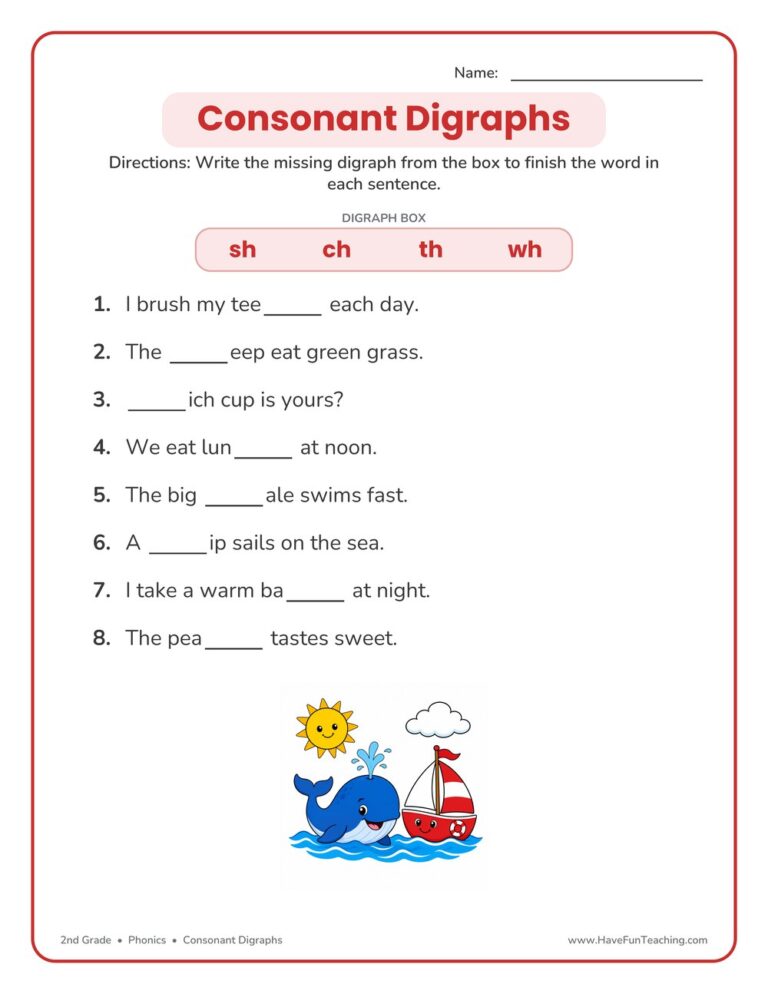
This consonant digraphs worksheet gives 2nd graders hands-on practice spelling sh, ch, th, and wh words in fun sentences. An answer key is included, making it perfect for quick, no-prep phonics practice at home or school.

Students use this spelling words worksheet to add onsets to the -ock, -est, and -ool rimes, then sort nine words by family. Built for 2nd Grade with an answer key included, so spelling patterns finally stick.
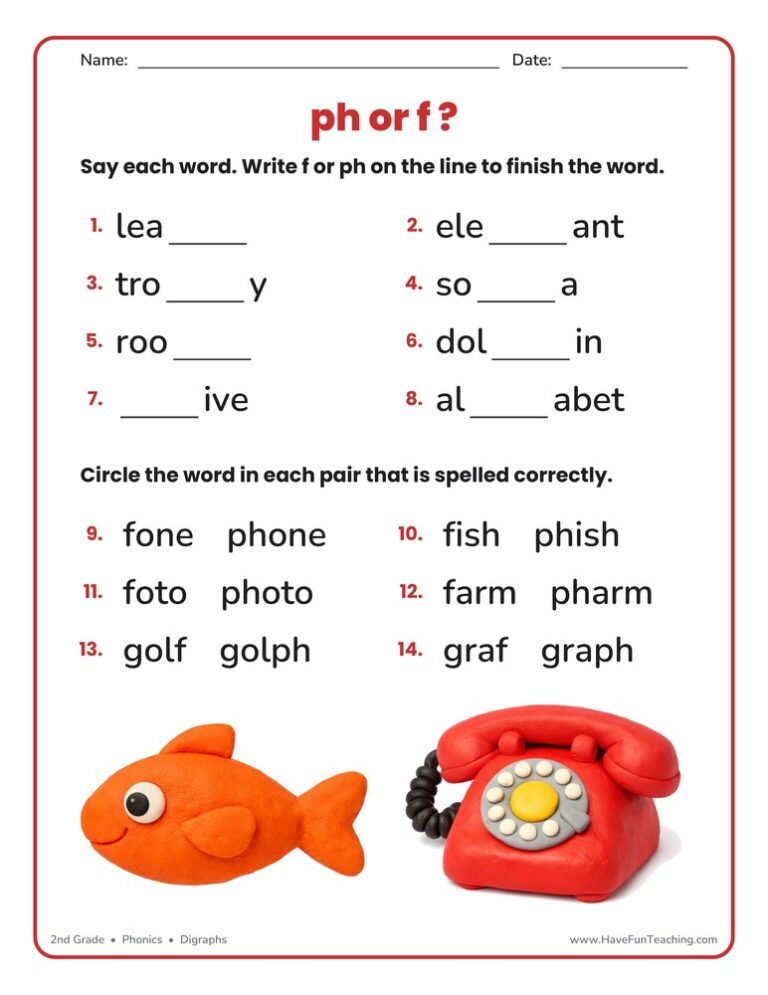
The F or PH Worksheet gives 2nd graders hands-on practice choosing between the f and ph spellings of the /f/ sound. Answer key included, so students can check their own work and build confident spelling habits.
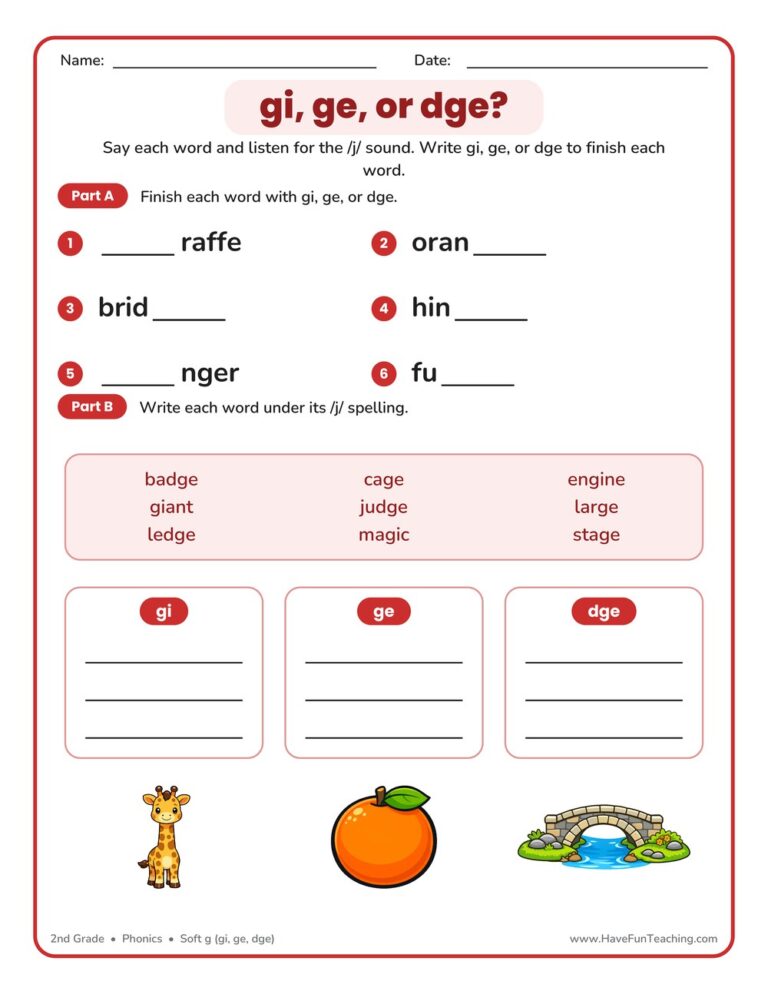
This gi ge dge worksheet gives 2nd Grade students fun practice spelling the soft g /j/ sound with gi, ge, and dge. An answer key is included to make review quick and easy.

Students read eight tricky ea words and sort them by sound on this ea worksheet, built for 2nd grade phonics practice. An answer key is included, so checking the sort takes only seconds.
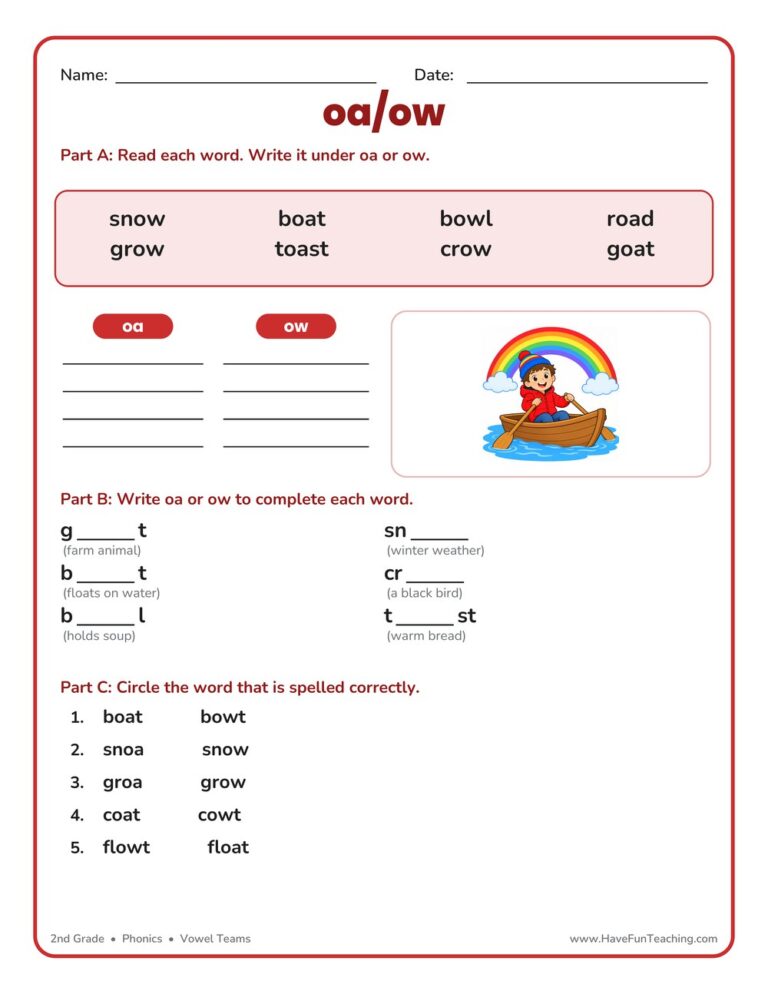
This oa ow worksheet helps 2nd graders sort, complete, and spell long-o words using the oa and ow vowel teams. Answer key included for quick, no-prep phonics practice.
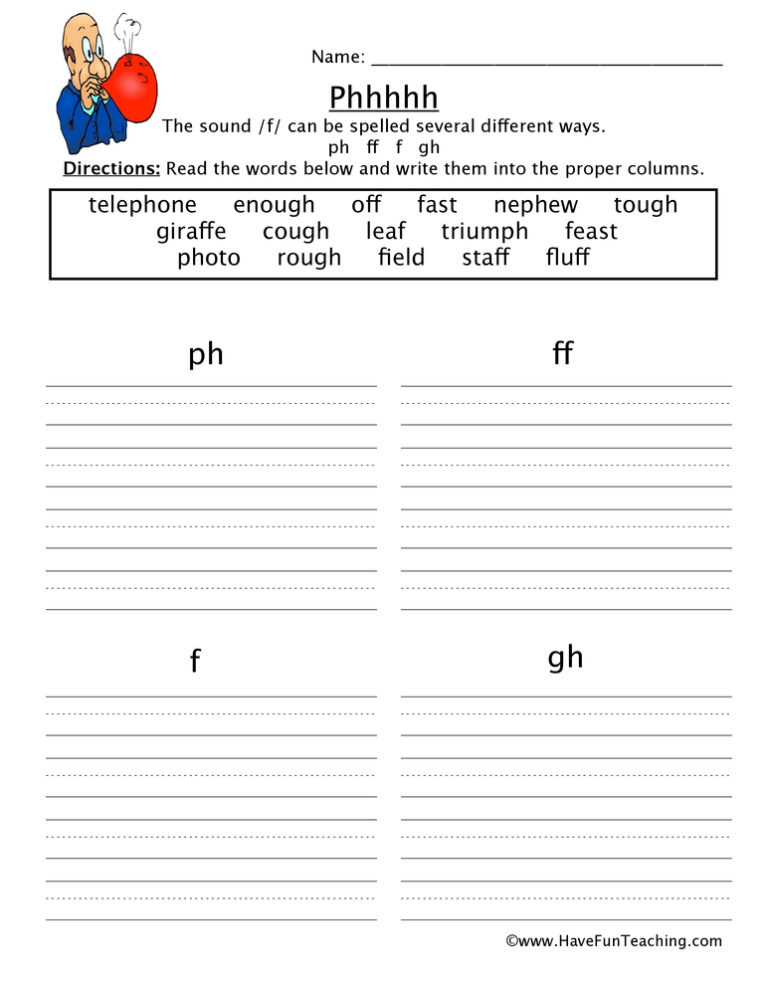
This PH FF F GH worksheet asks 2nd graders to sort sixteen words by the letters that spell the /f/ sound. An answer key is included for fast, no-prep phonics practice at home or in class.
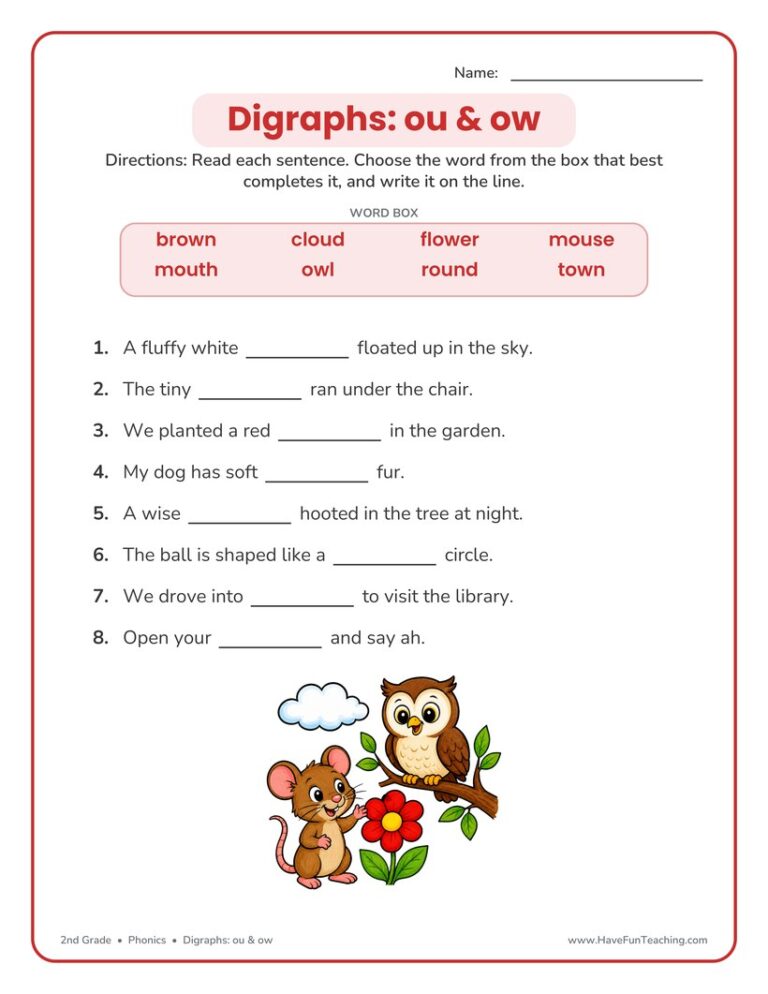
This ou ow digraphs worksheet gives 2nd graders hands-on practice reading and spelling words that use the ou and ow vowel teams. An answer key is included, making it perfect for quick, no-prep phonics practice at home or school.
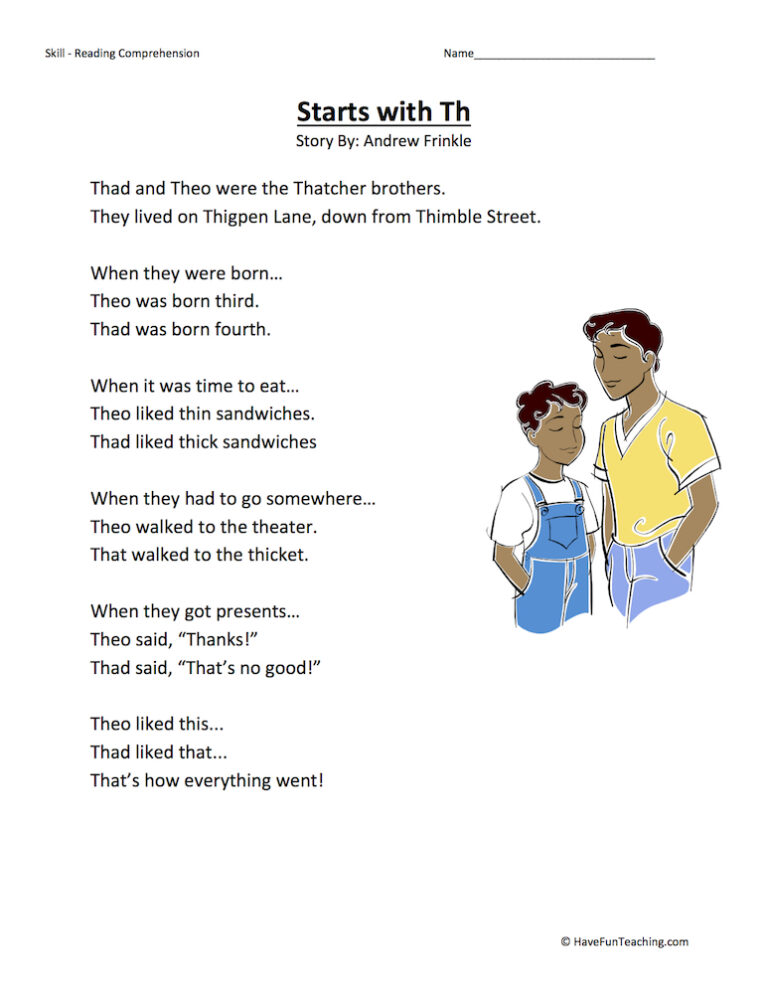
A second grade Starts with Th reading comprehension worksheet where kids read a fun Th-digraph story about two brothers, then answer questions. Includes an answer key — perfect for no-prep phonics and reading practice.
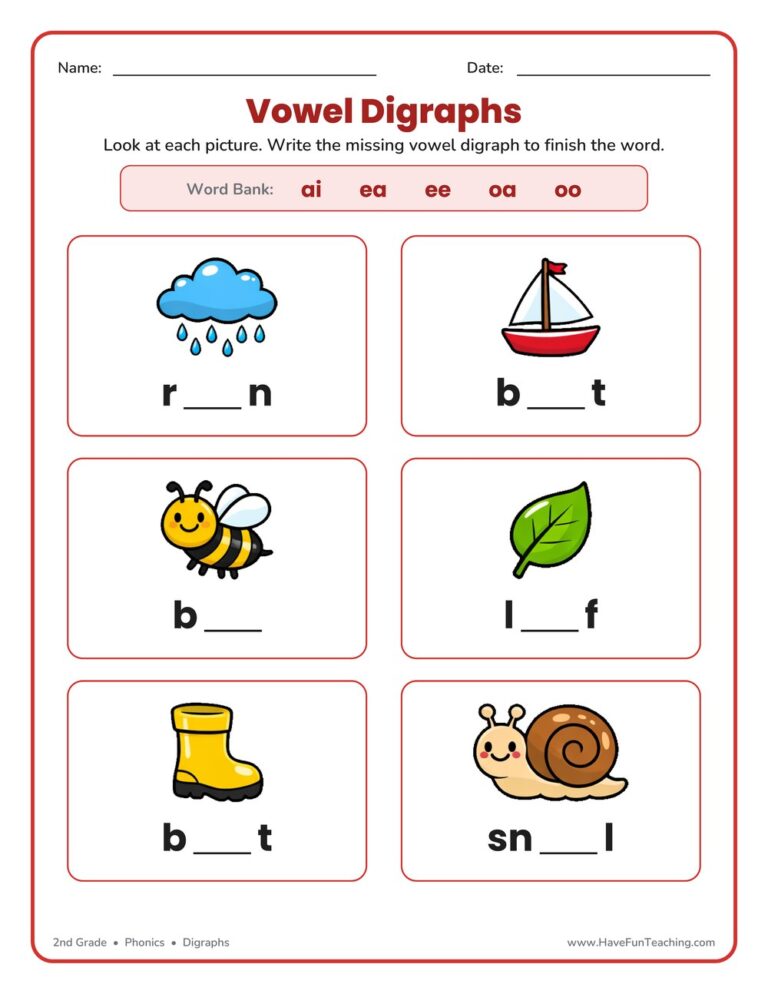
This Vowel Digraphs Worksheet gives 2nd grade students picture-clue practice with the vowel teams ai, ea, ee, oa, and oo. An answer key is included, perfect for quick, no-prep phonics practice at home or school.

Using the Blends, Digraphs, and Trigraphs Activity, students create lists of words that have beginning and ending blends, digraphs, or trigraphs.

This digraph lists worksheet gives 2nd grade students six picture cards and four sentences for practicing sh, ch, th, wh, ph, and tch. An answer key is included, so checking work takes seconds.




Reviews
There are no reviews yet