

EA Worksheet
Students read eight tricky ea words and sort them by sound on this ea worksheet, built for 2nd grade phonics practice. An answer key is included, so checking the sort takes only seconds.
$6.97
Or free with a membership — members pay $3.33/mo for all 10,000+ resources. See plans
Want this one free?
Tell us where to send it and it’s yours — no card, no catch.
One free resource per teacher. We’ll also send free teaching ideas each week — unsubscribe anytime.
Teaching is easier with a membership
Unlimited printables, games & videos for PreK–6th — for your classroom or homeschool. Cancel anytime.
Start your 3-day free trial$0 today · cancel anytime · Instant access to 10,000+ resources
About this resource
Description
The letters ea are a vowel team, and they are tricky because the same two letters do not always make the same sound. In some words ea says the long e sound, the way it does in eat, seal, and leaf. In other words those very same letters say the short e sound, the way they do in bread, head, and ready. Second graders who can hear that difference read unfamiliar words far more confidently, and this ea worksheet gives them a focused way to practice both sounds side by side.
This printable ea worksheet gives students eight words to read and sort. Students read every word in the word bank, say it out loud, and listen for the sound the vowel team is making. Then they write each word on a line under the matching heading — “ea like eat” for the long e sound, or “ea like bread” for the short e sound. Because the words in the box are mixed together instead of grouped, students have to decode each one rather than copy a pattern. This vowel team ea worksheet works well as morning work, as a phonics center, or as a quick check after a lesson on vowel teams.
What’s Included
- 1 print-ready PDF worksheet
- A word bank of eight long e and short e words spelled with ea
- A two-column sound sort with solid writing lines
- A complete answer key
There are three reasons this resource helps children learn the sounds of ea. First, sorting forces a decision about every single word, so students cannot guess their way down the page the way they can with a matching activity. Second, seeing both sounds together builds the flexibility strong readers use when a word does not sound right on the first try — they simply switch to the other sound and check it again. Third, writing each word on the line means students spell the pattern as well as read it, which is what moves a vowel team from a lesson into long-term memory.
Teachers and parents can stretch the practice in simple ways. Read the word bank aloud together before anyone picks up a pencil, and have children give a thumbs up for long e and a thumbs down for short e. Hunt for ea words in a favorite storybook and add them to a class chart through the week. Write the words on cards and sort them on the floor as a fast partner game. At home, ask your child to use two of the words in one silly sentence at dinner — saying the words out loud is what makes the pattern stick.
Related Resources
What teachers say
Reviews
You must be logged in to post a review.
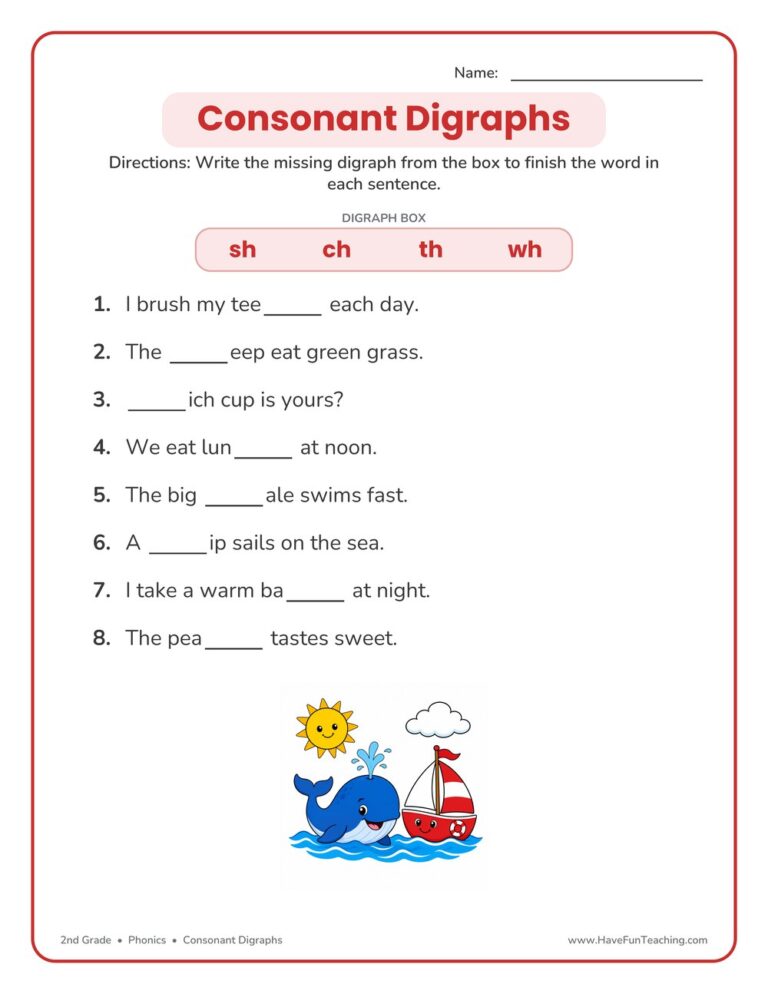
This consonant digraphs worksheet gives 2nd graders hands-on practice spelling sh, ch, th, and wh words in fun sentences. An answer key is included, making it perfect for quick, no-prep phonics practice at home or school.

Students use this spelling words worksheet to add onsets to the -ock, -est, and -ool rimes, then sort nine words by family. Built for 2nd Grade with an answer key included, so spelling patterns finally stick.
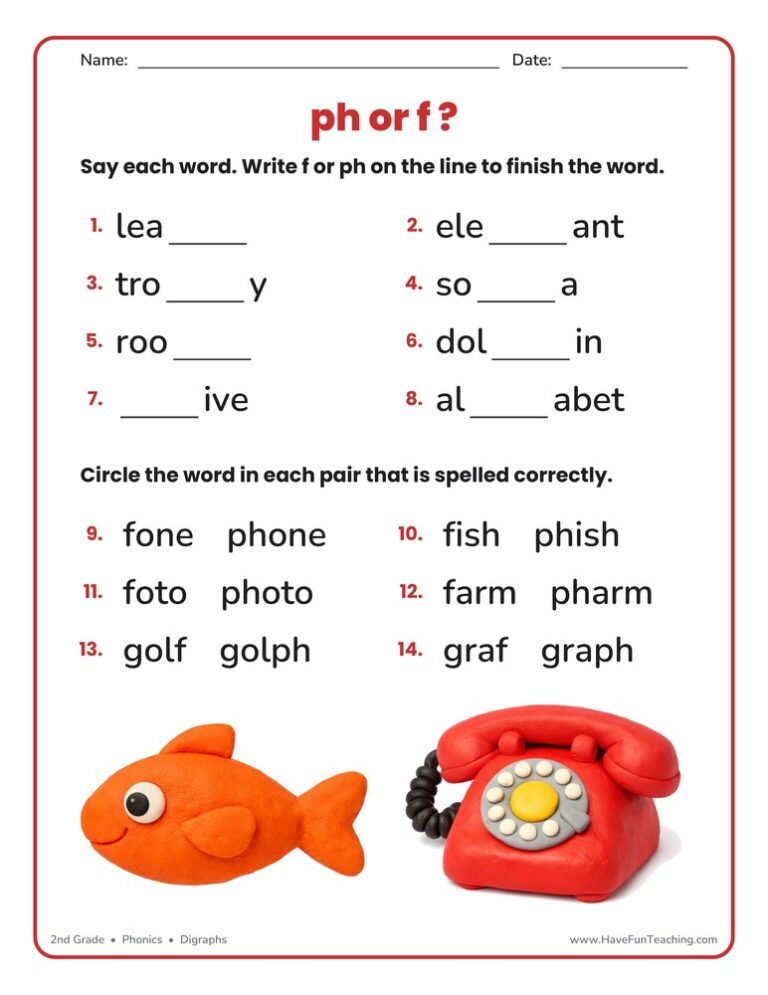
The F or PH Worksheet gives 2nd graders hands-on practice choosing between the f and ph spellings of the /f/ sound. Answer key included, so students can check their own work and build confident spelling habits.
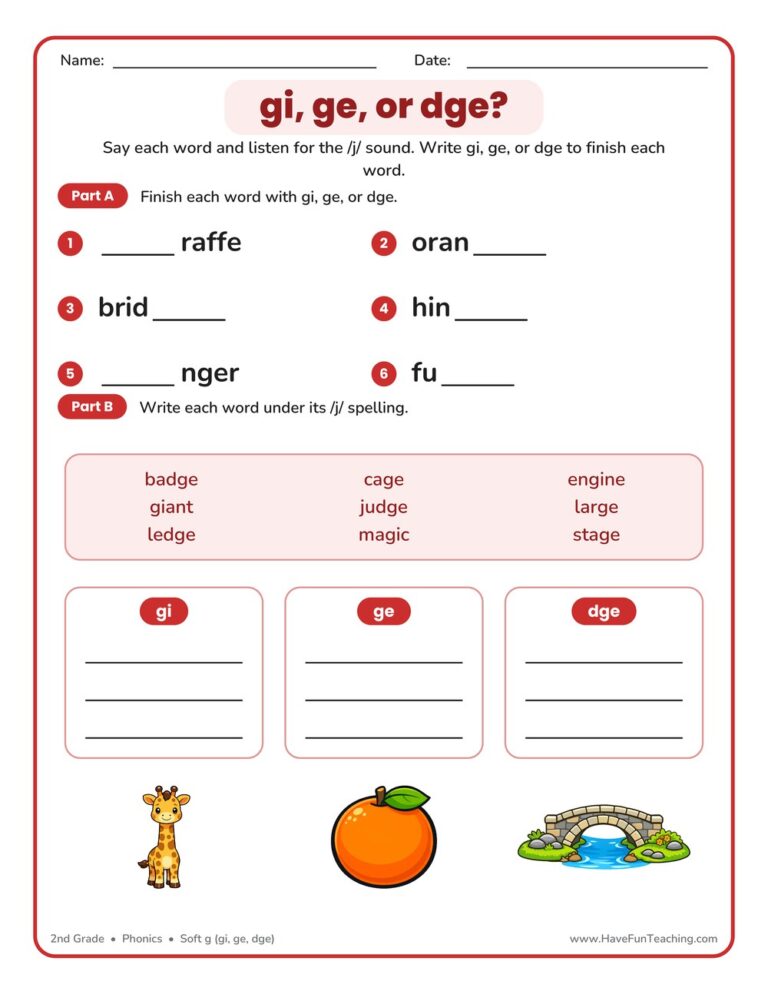
This gi ge dge worksheet gives 2nd Grade students fun practice spelling the soft g /j/ sound with gi, ge, and dge. An answer key is included to make review quick and easy.
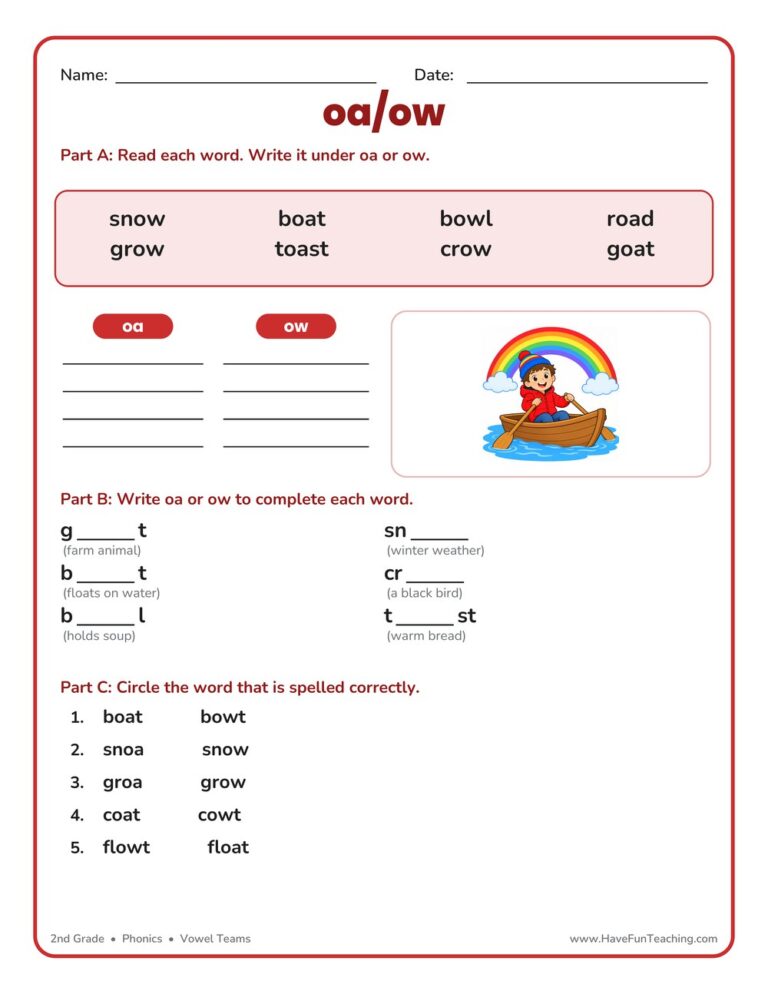
This oa ow worksheet helps 2nd graders sort, complete, and spell long-o words using the oa and ow vowel teams. Answer key included for quick, no-prep phonics practice.
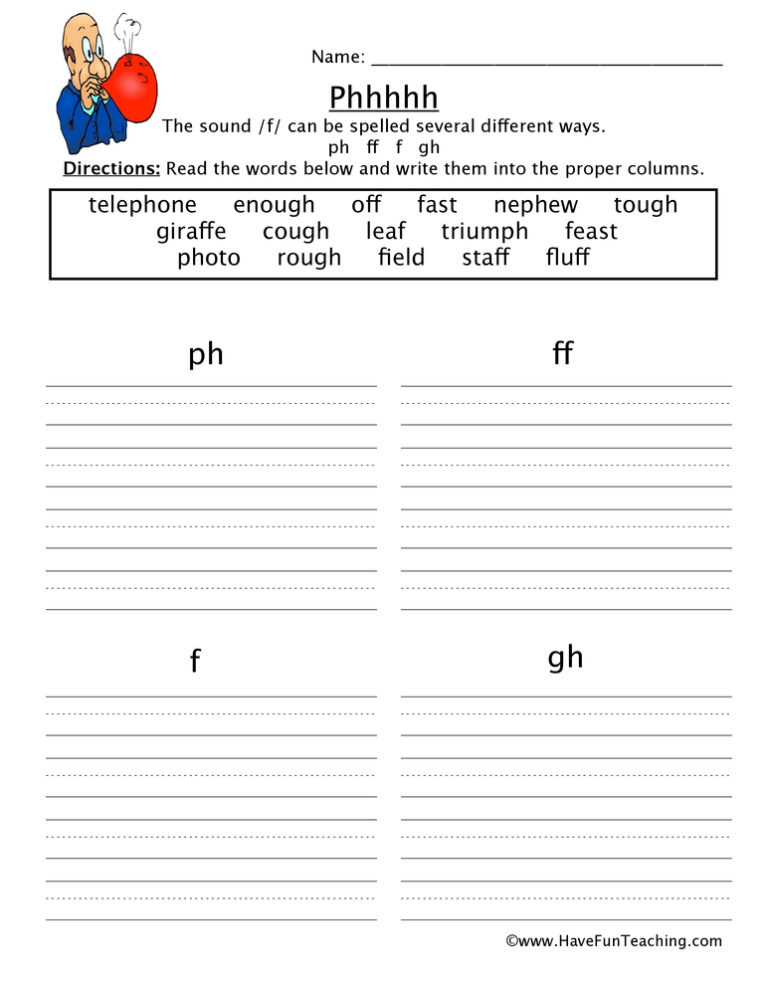
This PH FF F GH worksheet asks 2nd graders to sort sixteen words by the letters that spell the /f/ sound. An answer key is included for fast, no-prep phonics practice at home or in class.

Second graders sort eight oi and oy words into two boxes, then finish four more words with the right letters. This oi oy worksheet includes an answer key for fast, no-prep phonics practice.
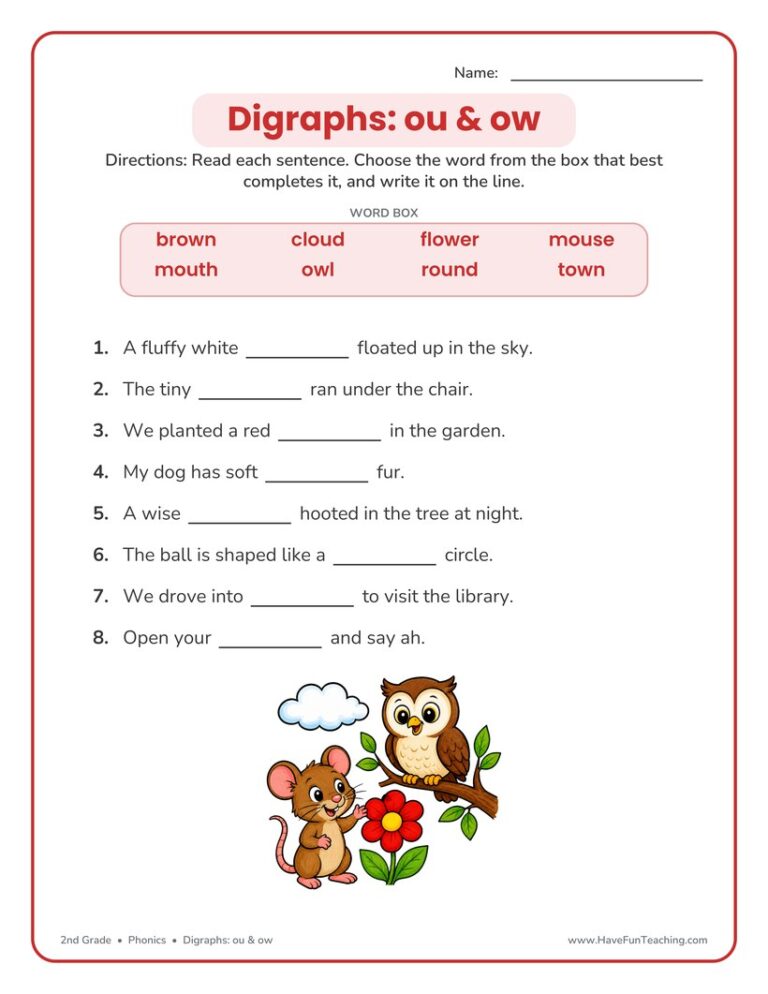
This ou ow digraphs worksheet gives 2nd graders hands-on practice reading and spelling words that use the ou and ow vowel teams. An answer key is included, making it perfect for quick, no-prep phonics practice at home or school.
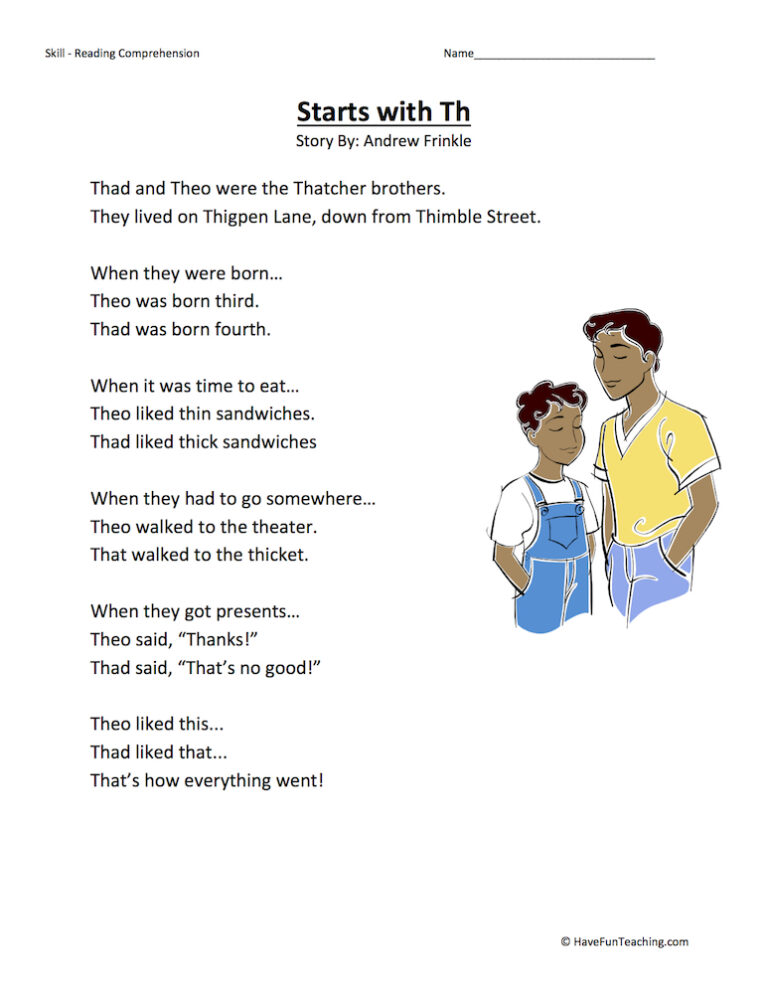
A second grade Starts with Th reading comprehension worksheet where kids read a fun Th-digraph story about two brothers, then answer questions. Includes an answer key — perfect for no-prep phonics and reading practice.
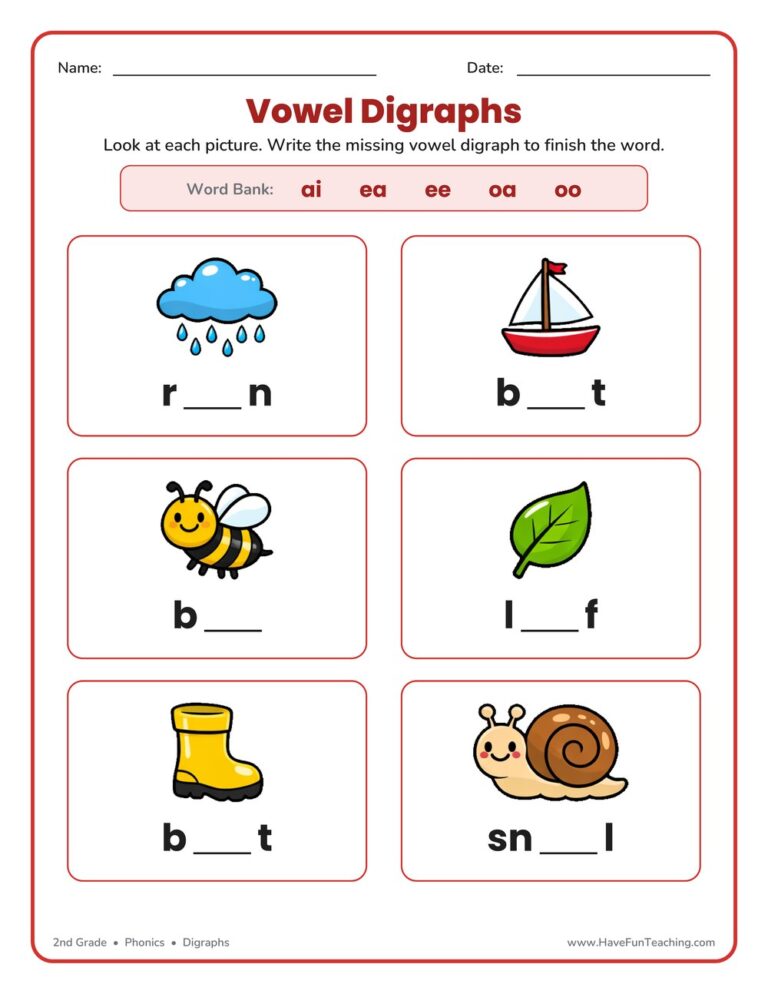
This Vowel Digraphs Worksheet gives 2nd grade students picture-clue practice with the vowel teams ai, ea, ee, oa, and oo. An answer key is included, perfect for quick, no-prep phonics practice at home or school.

Using the Blends, Digraphs, and Trigraphs Activity, students create lists of words that have beginning and ending blends, digraphs, or trigraphs.

This digraph lists worksheet gives 2nd grade students six picture cards and four sentences for practicing sh, ch, th, wh, ph, and tch. An answer key is included, so checking work takes seconds.




Reviews
There are no reviews yet