

Recognizing Numbers Worksheet
This Recognizing Numbers Worksheet asks 1st Grade students to count tens and ones, match each base-ten picture to its number, and write two more, with an answer key included.
$6.97
Or free with a membership — members pay $3.33/mo for all 10,000+ resources. See plans
Want this one free?
Tell us where to send it and it’s yours — no card, no catch.
One free resource per teacher. We’ll also send free teaching ideas each week — unsubscribe anytime.
Teaching is easier with a membership
Unlimited printables, games & videos for PreK–6th — for your classroom or homeschool. Cancel anytime.
Start your 3-day free trial$0 today · cancel anytime · Instant access to 10,000+ resources
About this resource
Description
Before a child can add or subtract with confidence, they have to know what a two-digit number actually means, and this Recognizing Numbers Worksheet makes that meaning visible. Ten ones bundled into a rod, a few loose cubes beside it — that picture is the whole idea of place value. When a student counts four rods and no cubes and writes 40, they are not reciting a number name; they are reading a quantity built out of tens and ones.
This 1st grade place value worksheet is ready to print and use straight away. The top of the page shows five groups of base-ten blocks, each beside a connect dot, with five numbers listed down the right. Students count the tens, count the ones, and draw a line to the number that group makes. Underneath, two written prompts turn the same idea around: given the words “6 tens and 2 ones,” the child writes the numeral in the box. A full answer key is included on page two, so a teacher can check a whole class in under a minute.
What’s Included
- 1 print-ready PDF worksheet
- Answer key
- 5 base-ten matching pairs and 2 write-the-number problems
Three reasons this Recognizing Numbers Worksheet helps kids learn place value: first, the blocks are drawn to scale, so every rod really is ten unit cells and a child who counts them gets the right answer every time — the picture rewards careful counting instead of guessing. Second, the five numbers are deliberately scrambled against the pictures, so the page cannot be finished by pairing the first picture with the first number; the student has to read each group. Third, one of the groups has zero ones, which is the case that trips learners up most and is worth meeting early in a friendly, low-pressure format.
Teachers and parents can extend the page in simple ways. Hand out real base-ten blocks or linking cubes and ask students to build each number before they write it. Say a number aloud and have the class show it with their fingers as tens and ones. Turn the sheet over and ask students to draw their own block picture for a number a partner chooses. For a quick morning warm-up, write a number on the board and ask three children to name the tens, the ones, and the total. Small repeated practice like this is what makes two-digit numbers feel obvious by the end of the year.
Related Resources
What teachers say
Reviews
You must be logged in to post a review.
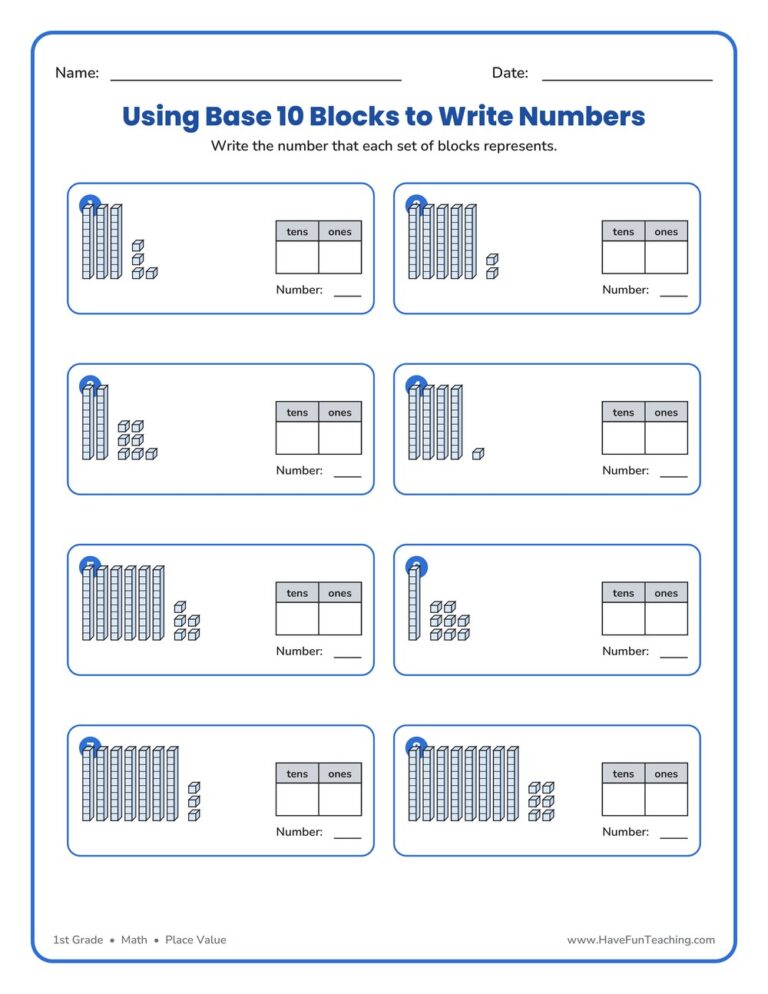
This Using Base 10 Blocks to Write Numbers Worksheet helps 1st graders count tens rods and ones cubes, then record each two-digit number in a place value chart. Includes an answer key for quick, no-prep practice.
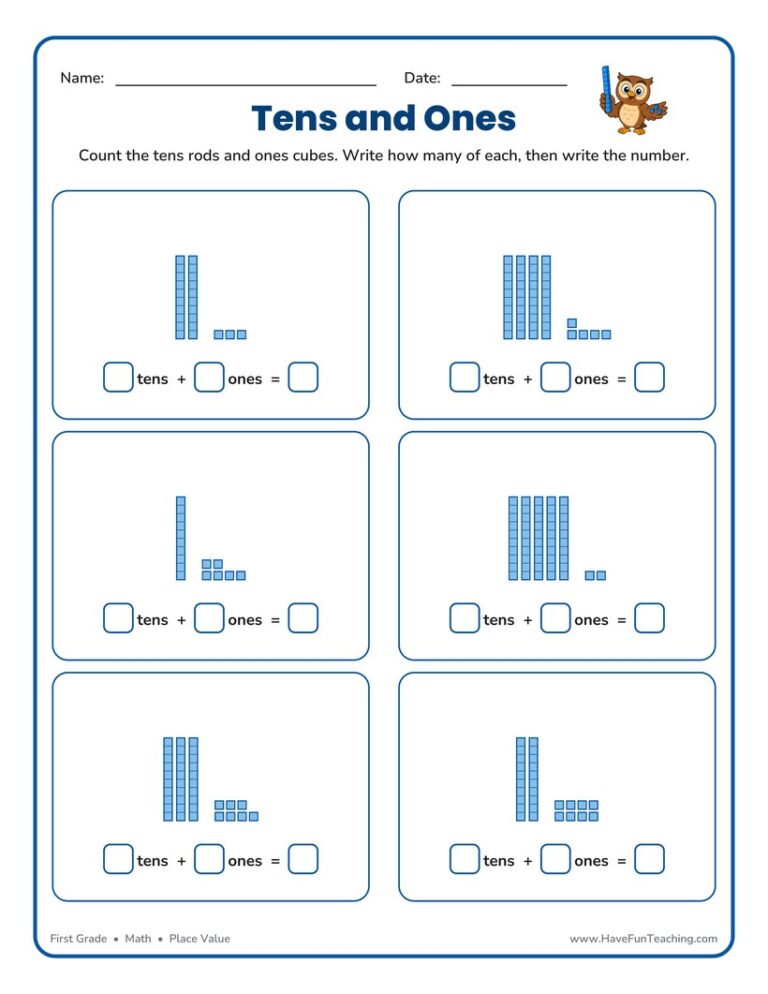
Count the tens and ones with this tens ones worksheet made for first grade. Students use base-ten blocks to write the tens, ones, and the two-digit number, and an answer key is included to make practice simple.
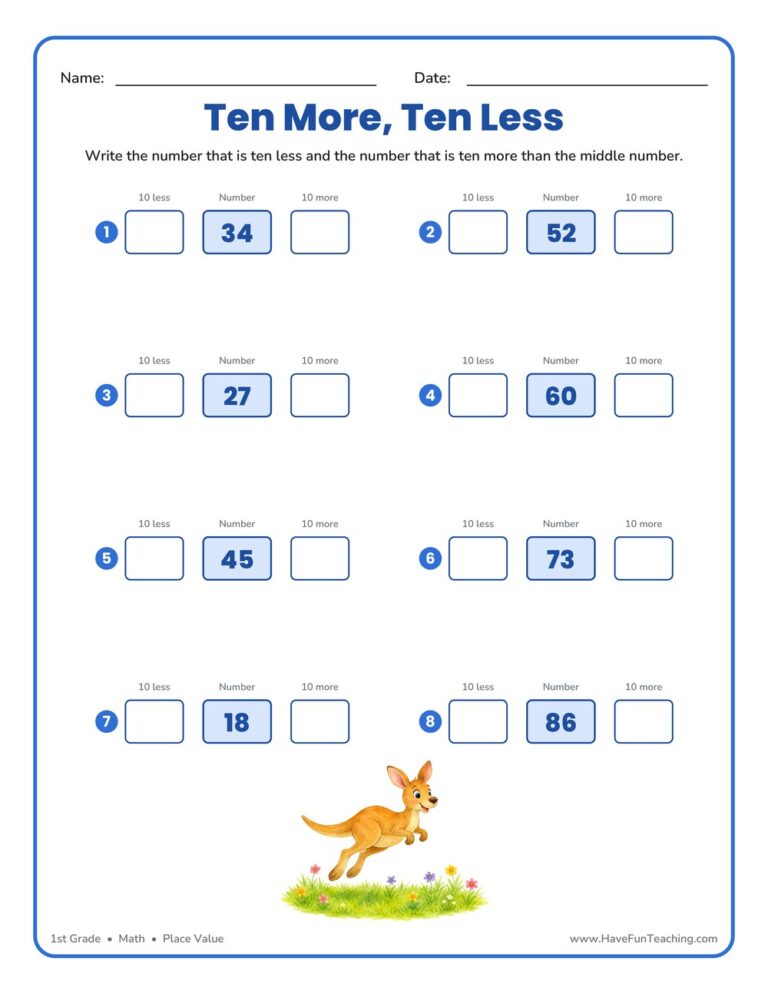
This Ten More Ten Less Worksheet gives 1st graders eight quick problems to find ten more and ten less than a two-digit number. Includes an answer key for fast, no-prep place value practice.

The Drawing Tens and Ones Worksheet gives first graders hands-on practice representing two-digit numbers as tens and ones on a place value mat. Includes a complete answer key for quick, no-prep place value practice.
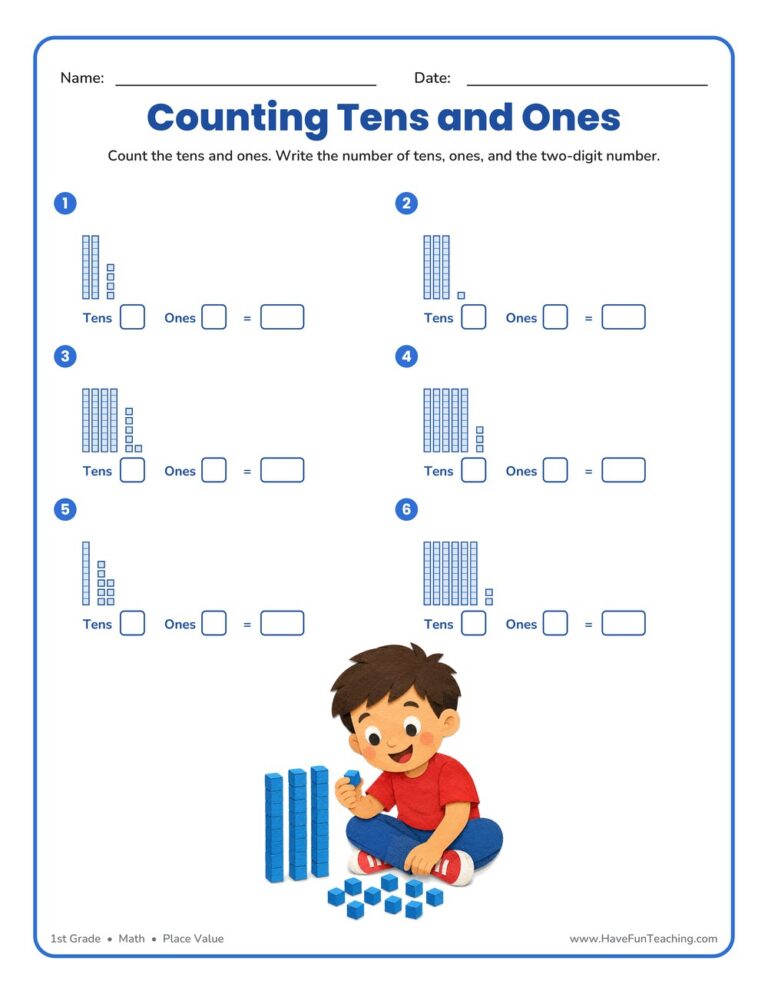
A first grade Counting Tens and Ones Worksheet where students count base ten blocks and write each two-digit number. Includes a complete answer key for easy, no-prep place value practice at home or school.
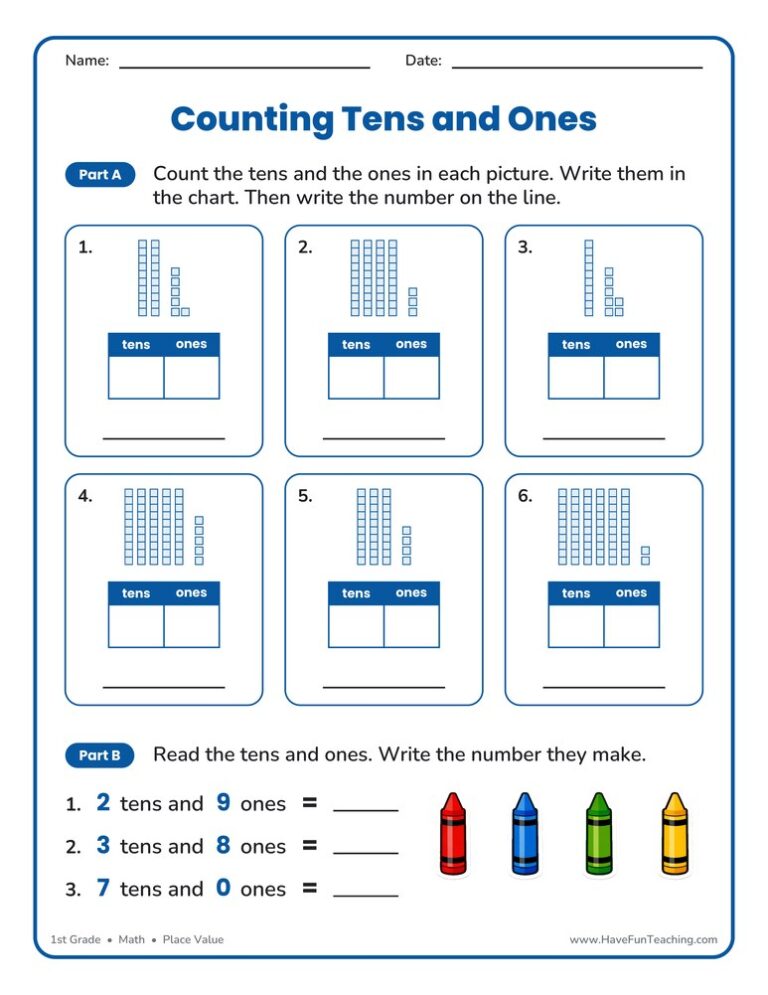
This count tens and ones worksheet gives 1st grade students base ten block pictures to count, chart, and write as numbers. An answer key is included, so place value practice is ready to print and go.
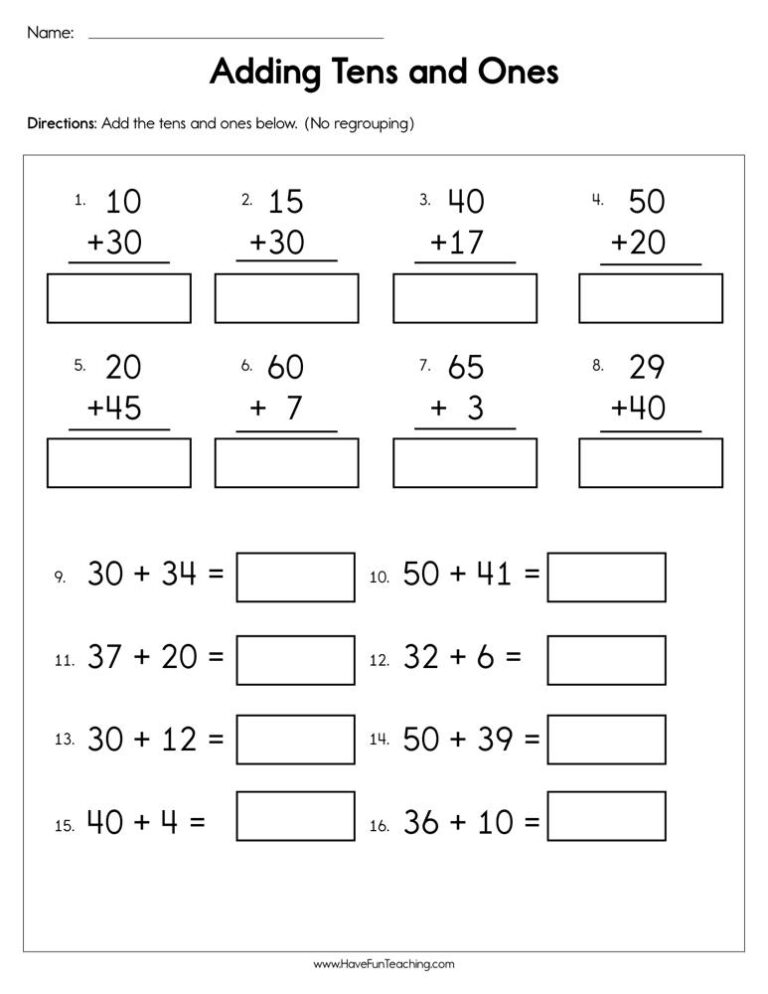
This adding tens and ones worksheet helps 1st graders build two-digit numbers with base ten blocks and column addition. Includes an answer key for quick, no-prep place value practice at home or school.
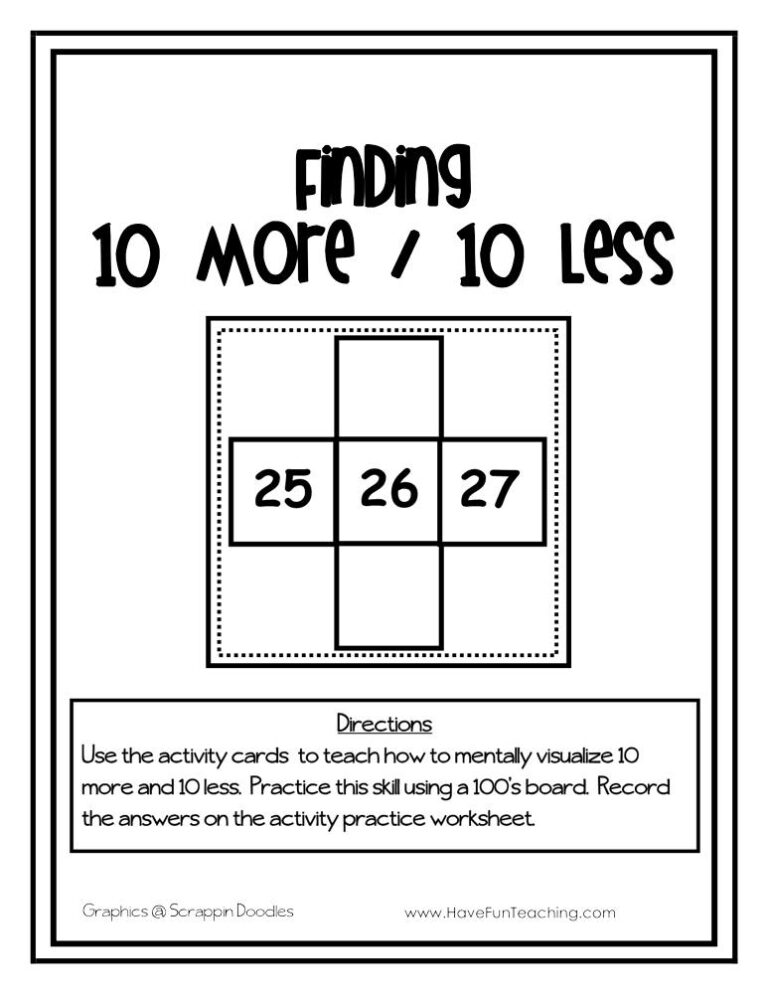
In this Finding 10 More 10 Less Activity, students practice finding 10 more and less than a given number to build skip counting and base ten skills.

This ten more and ten less worksheet gives 1st Grade students eight number-chart problems and two story problems for mental math with tens. An answer key is included, so checking work takes seconds.
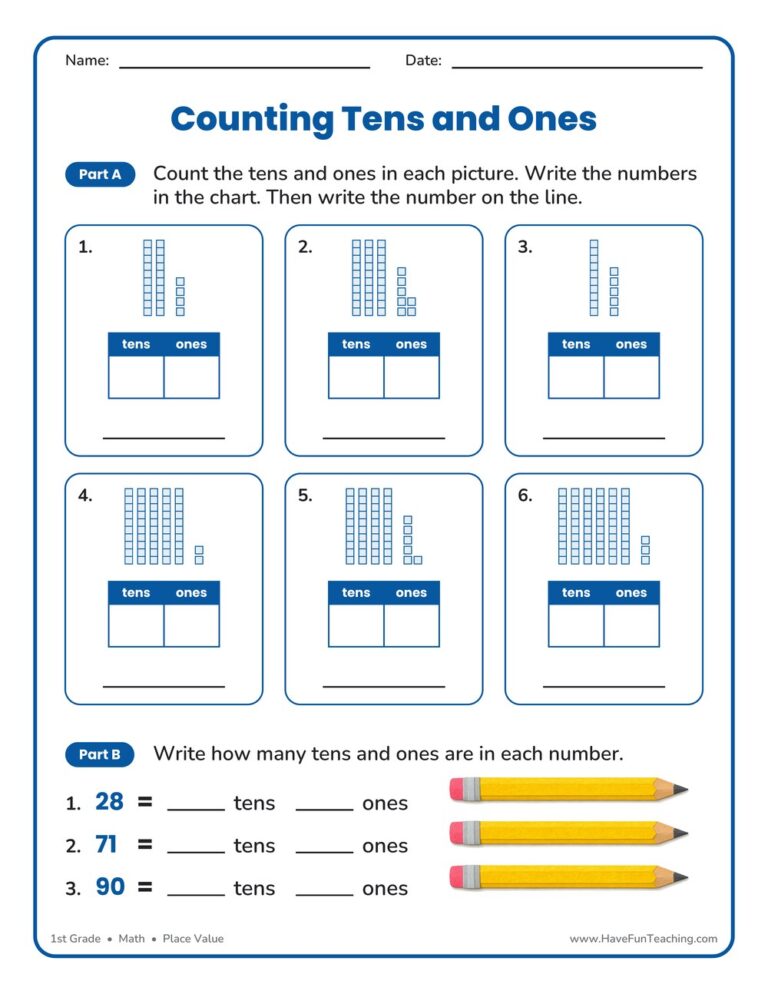
Count the tens and ones in six base-ten pictures, fill in the chart, and write the number. This Break it Apart Counting Tens Ones Worksheet builds 1st grade place value confidence, and an answer key is included.
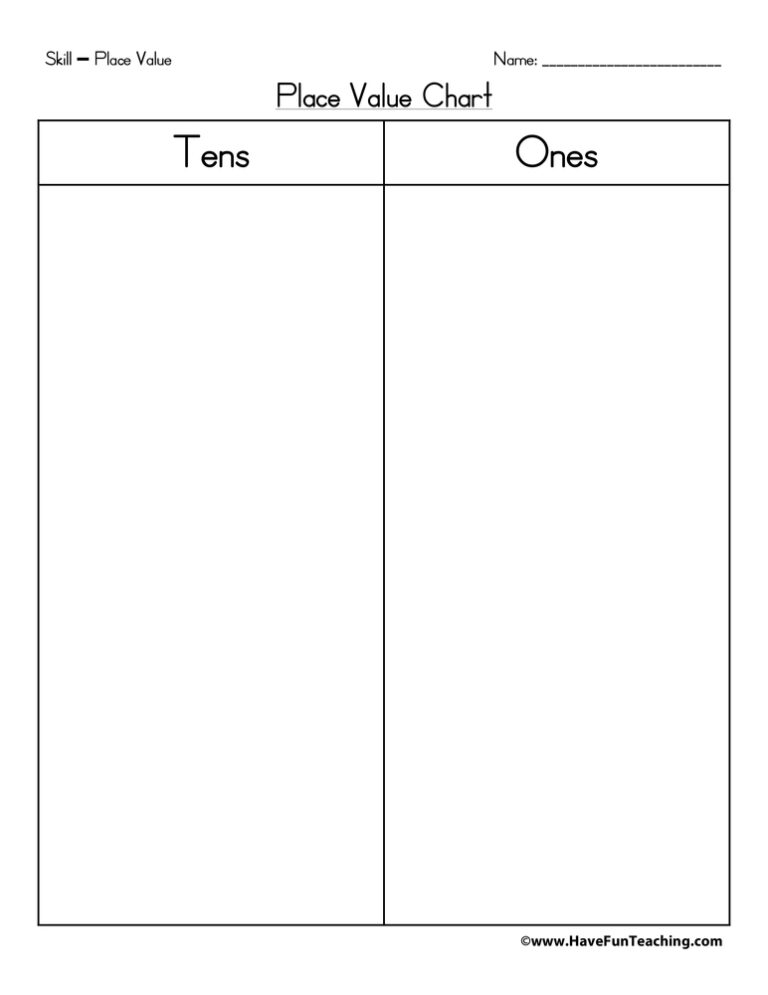
This place value chart worksheet helps 1st graders break two-digit numbers into tens and ones with base ten blocks, a fill-in chart, and a word problem. An answer key is included, so practice is quick to check.


Reviews
There are no reviews yet