

Rhyming Sounds Test Practice
A rhyming sounds test practice worksheet for 1st grade, with six picture cards and fill-in-the-bubble word choices. An answer key is included, so students get real test practice and quick feedback.
$6.97
Or free with a membership — members pay $3.33/mo for all 10,000+ resources. See plans
Want this one free?
Tell us where to send it and it’s yours — no card, no catch.
One free resource per teacher. We’ll also send free teaching ideas each week — unsubscribe anytime.
Teaching is easier with a membership
Unlimited printables, games & videos for PreK–6th — for your classroom or homeschool. Cancel anytime.
Start your 3-day free trial$0 today · cancel anytime · Instant access to 10,000+ resources
About this resource
Description
Rhyming is one of the first phonemic awareness skills young readers build, and it is also one of the first skills a reading test will ask about. This rhyming sounds test practice worksheet gives first graders a calm, low-pressure way to show what they hear. When a child can tell that sock and rock end with the same sound, they are already listening for word families, and that same ear helps them decode and spell new words all year long.
This first grade rhyming worksheet is built in a familiar fill-in-the-bubble test format, so the page doubles as rhyming practice and as gentle test preparation. Six picture cards fill the page. The child names the picture, reads the three short words beside it, and fills in the bubble next to the one word that rhymes. Read the directions aloud the first time through, then let students work independently while you listen in. The answer key on page two makes checking quick, whether students mark their own page or you collect the set.
What’s Included
- 1 print-ready PDF worksheet
- Answer key
- 6 picture cards with three fill-in-the-bubble word choices each
There are three reasons this rhyming sounds test practice worksheet helps children learn. First, every item pairs a picture with printed words, so a child who is still building sight vocabulary can lean on the picture and still succeed. Second, the six rhyme families on the page are all different, so students practice listening for a new ending each time instead of repeating one pattern. Third, the bubble format teaches the mechanics of a test in a friendly setting, so the layout itself is not a surprise on assessment day.
Away from the page, rhyming practice fits into small moments. Play a quick rhyme chain in line at the door, where each child adds a word that rhymes with the one before it. Read a poem or a rhyming picture book and pause before the rhyming word so the class can supply it. Sort picture cards into rhyme baskets during centers, or clap once when two words rhyme and stay quiet when they do not. At home, families can hunt for rhymes on a walk or during a car ride, which builds the same ear with no materials at all.
Related Resources
What teachers say
Reviews
You must be logged in to post a review.

This Locating Rhyming Pairs Worksheet asks 1st graders to circle the short vowel words that rhyme, then write the one that does not. An answer key is included, so checking takes seconds.

Using Rhyming Words Matching Activity, students match two pictures that rhyme to build their rhyming skills.

The Finding Rhyming Words Worksheet has 1st grade students match five long vowel words to their rhyme families, then write each word in a sentence. An answer key is included.

This Rhyming Words Cut and Paste Worksheet gives first graders six word cards to cut out and sort into the -en, -ot, and -am families. An answer key is included, so students can check their own sorting.

Using this Back to School Rhyming Activity, students practice rhyming skills using this back to school themed activity.

This Memorial Day Word Families Worksheet asks 1st Grade students to read fifteen words and write each one under the -ake, -ell or -ar family it belongs to. An answer key is included.

Using Matching Rhyming Words Worksheet, students read the words and match the words on the right to their rhymes on the left.
Using the Word Work Activity, students practice writing words by color coding consonants and vowels to build their spelling skills.

Using Rhyming Words -ake, -oat, -eet Cut and Paste Worksheet, students sort pictures into categories to build their rhyming skills.
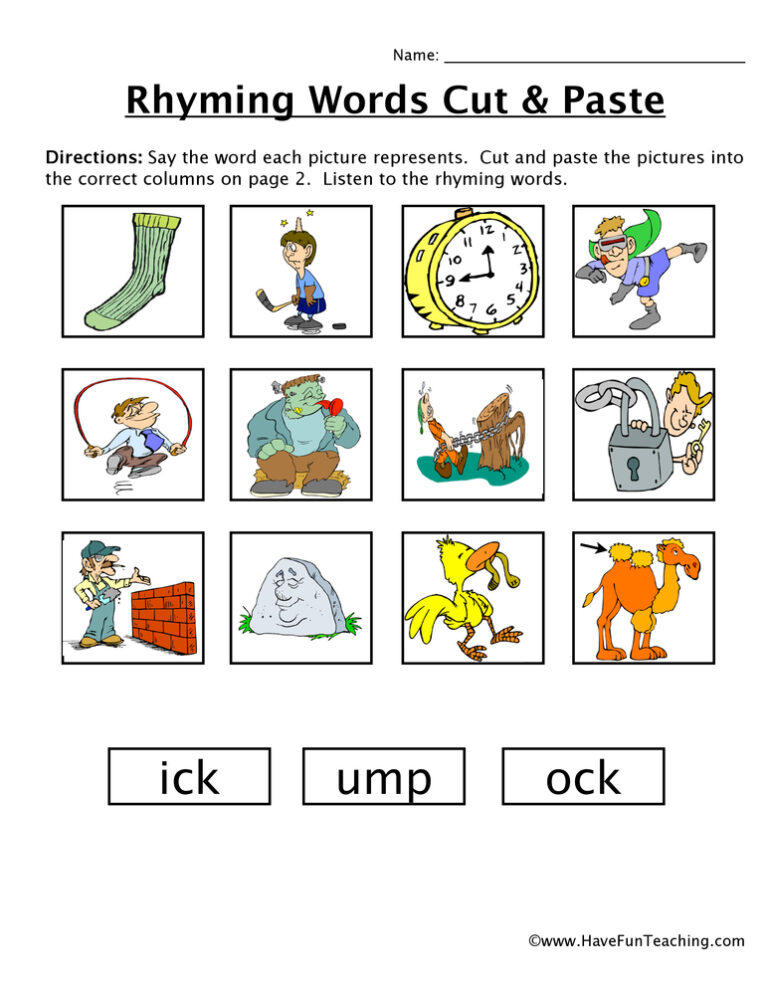
Kids read six word cards and paste each one under -ick, -ock or -ump in this rhyming words cut and paste worksheet. A hands-on 1st grade phonics page with an answer key.
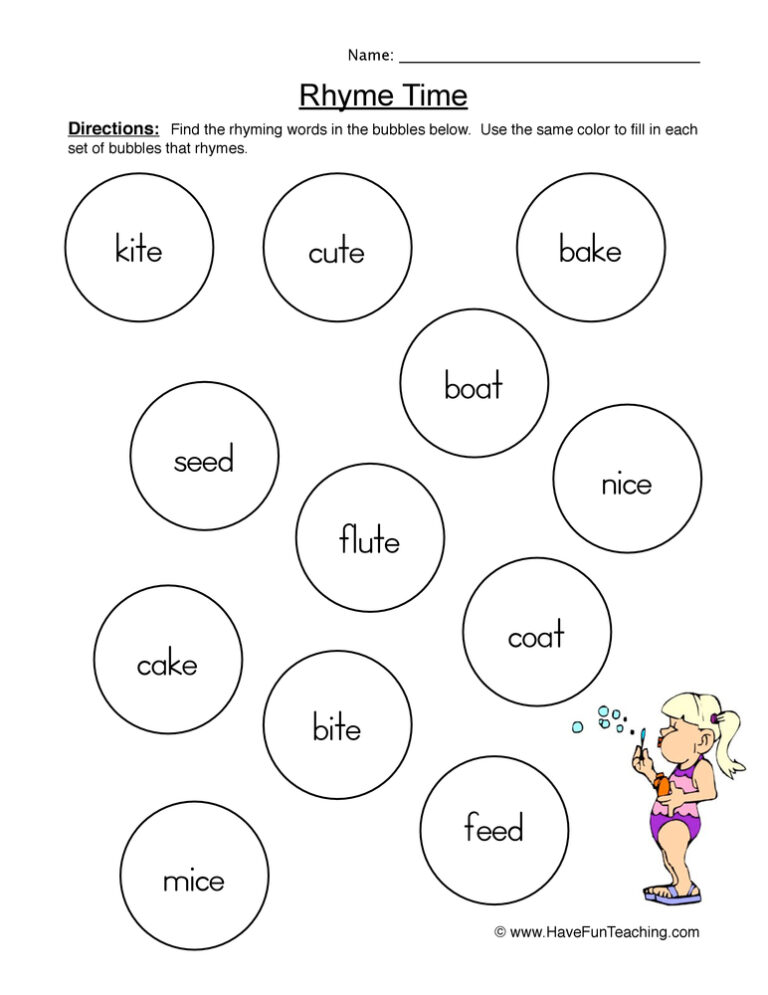
This coloring rhyming words worksheet lets 1st grade students read twelve words and color each one to match its rhyme. An answer key is included for fast, easy checking.
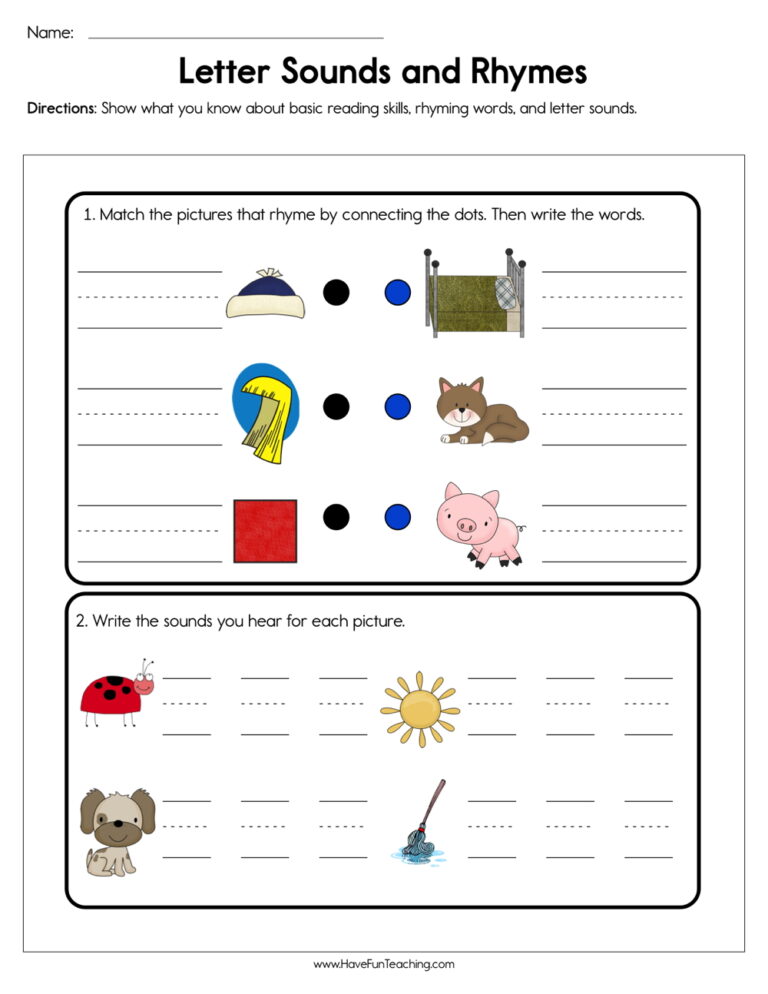
Using Letter Sounds and Rhymes Worksheet, students match the pictures that rhyme by connecting the dots and writing the words.
Reviews
There are no reviews yet