
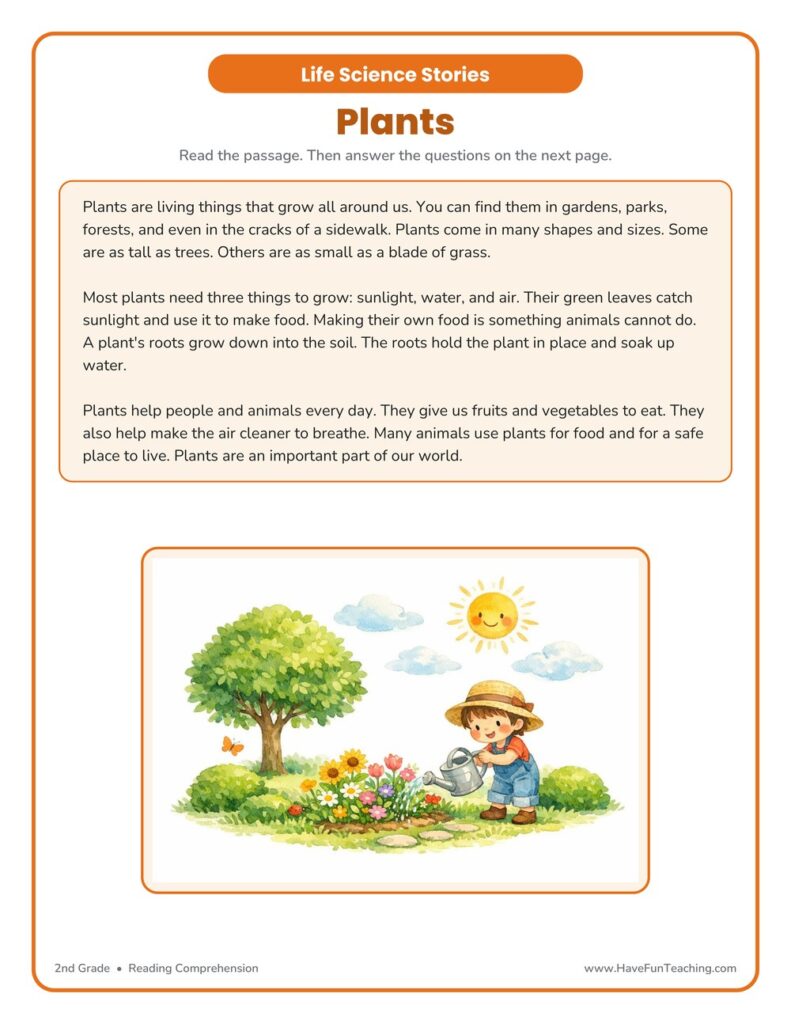
Plants Life Science Reading Comprehension Worksheet
This Plants Life Science Reading Comprehension Worksheet gives 2nd graders a short nonfiction passage about plants plus questions that build reading comprehension. Includes a complete answer key — perfect for no-prep science and reading practice.
$6.97
Or free with a membership — members pay $3.33/mo for all 10,000+ resources. See plans
Want this one free?
Tell us where to send it and it’s yours — no card, no catch.
One free resource per teacher. We’ll also send free teaching ideas each week — unsubscribe anytime.
Teaching is easier with a membership
Unlimited printables, games & videos for PreK–6th — for your classroom or homeschool. Cancel anytime.
Start your 3-day free trial$0 today · cancel anytime · Instant access to 10,000+ resources
About this resource
Description
Understanding a nonfiction passage is one of the most important skills a young reader can build, and the Plants Life Science Reading Comprehension Worksheet makes that practice both fun and meaningful. In this activity, students read a short, on-grade passage about plants — where they grow, what they need, and how they help people and animals — and then answer questions that check how well they understood what they read. Because the passage blends science and reading, children strengthen their comprehension while learning real facts about the living world around them.
This second grade life science worksheet is simple to use at home or in the classroom. Start by having your student read the plant passage on the first page, either independently or aloud with a partner. Then move to the questions page, where they fill in answer bubbles, complete fill-in-the-blank sentences, and write a short response using details from the text. An answer key is included so grading takes just a moment.
What’s Included
- 1 print-ready PDF worksheet
- A nonfiction reading passage about plants
- Multiple-choice, fill-in-the-blank, and short-response questions
- A complete answer key
This Plants Life Science Reading Comprehension Worksheet helps children learn to read for meaning in three key ways. First, it teaches them to find the main idea and key details in a nonfiction text, a foundational reading skill. Second, the mix of question types — multiple choice, fill in the blank, and short response — asks students to show what they know in more than one way, which deepens understanding. Third, pairing reading with a science topic keeps young learners curious and engaged, so they practice comprehension while exploring how plants live and grow.
There are many fun ways to extend this lesson. After finishing the worksheet, take a nature walk and have your child point out the plants they read about, or plant a small seed in a cup and watch it grow over the next few weeks. Encourage students to draw and label the parts of a plant, or to retell the passage in their own words to build fluency and recall. You can also connect the lesson to art, gardening, or a class science journal to keep the learning going.
Related Resources
What teachers say
Reviews
You must be logged in to post a review.
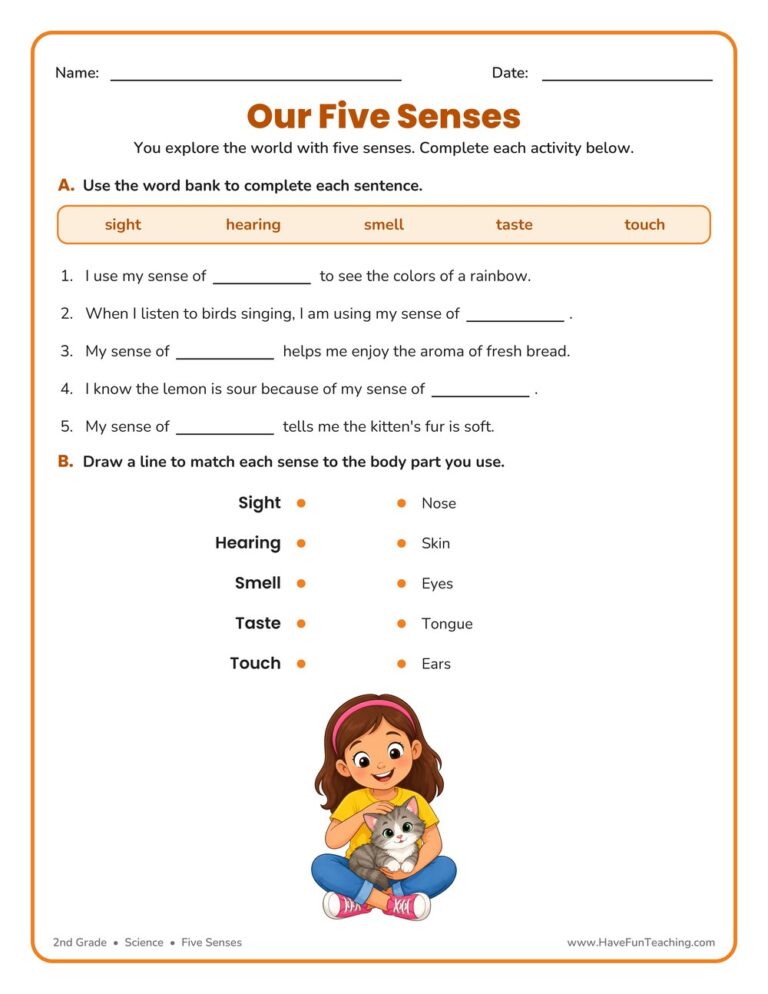
The Senses Fill in the Blanks Worksheet gives 2nd grade students word-bank practice completing sentences about sight, hearing, smell, taste, and touch, plus a sense-to-body-part match. Answer key included for quick, no-prep science review.

The Life Cycle of a Butterfly Worksheet has 2nd graders label the egg, larva, pupa, and adult stages and put them in the correct order. Answer key included for quick, hands-on life science practice.
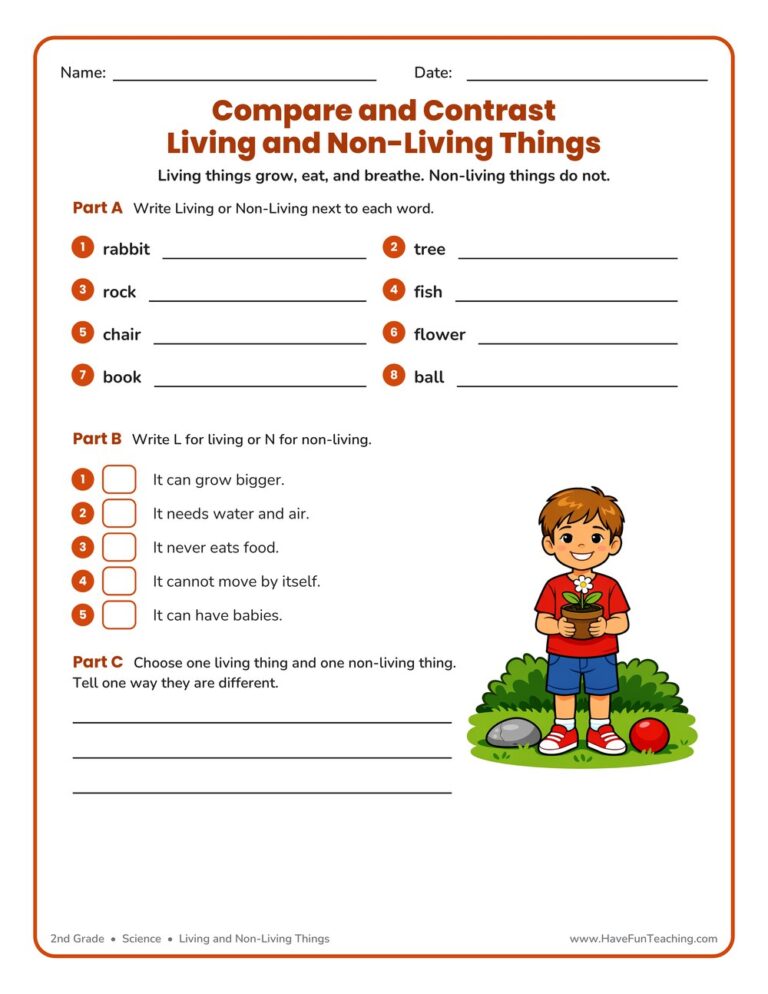
A hands-on characteristics of living and non-living things worksheet for 2nd grade, where students sort words, judge true traits, and compare examples. Includes an answer key for quick, no-prep science practice.

This matching animal habitats worksheet has 2nd Grade students connect five animals to the ocean, pond, desert, forest, and grassland, then finish three sentences. An answer key is included for fast, no-prep science practice.
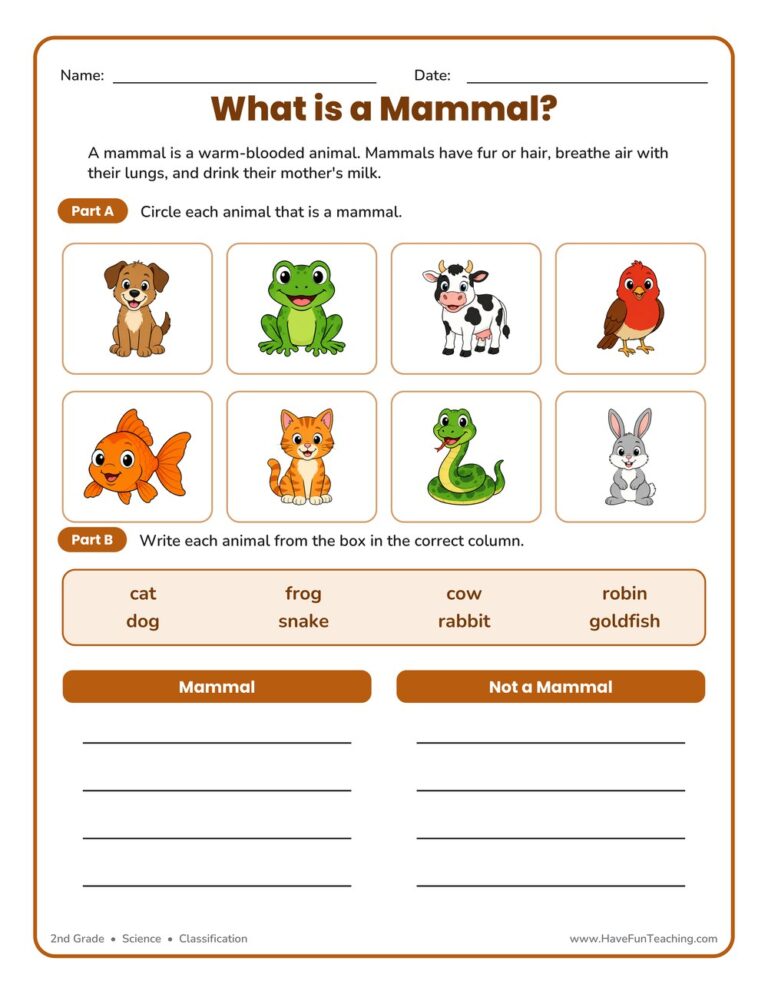
This mammal classification worksheet helps 2nd graders spot mammals and sort animals into mammal and not-a-mammal groups. It includes a complete answer key, making it perfect for no-prep science practice at home or in the classroom.
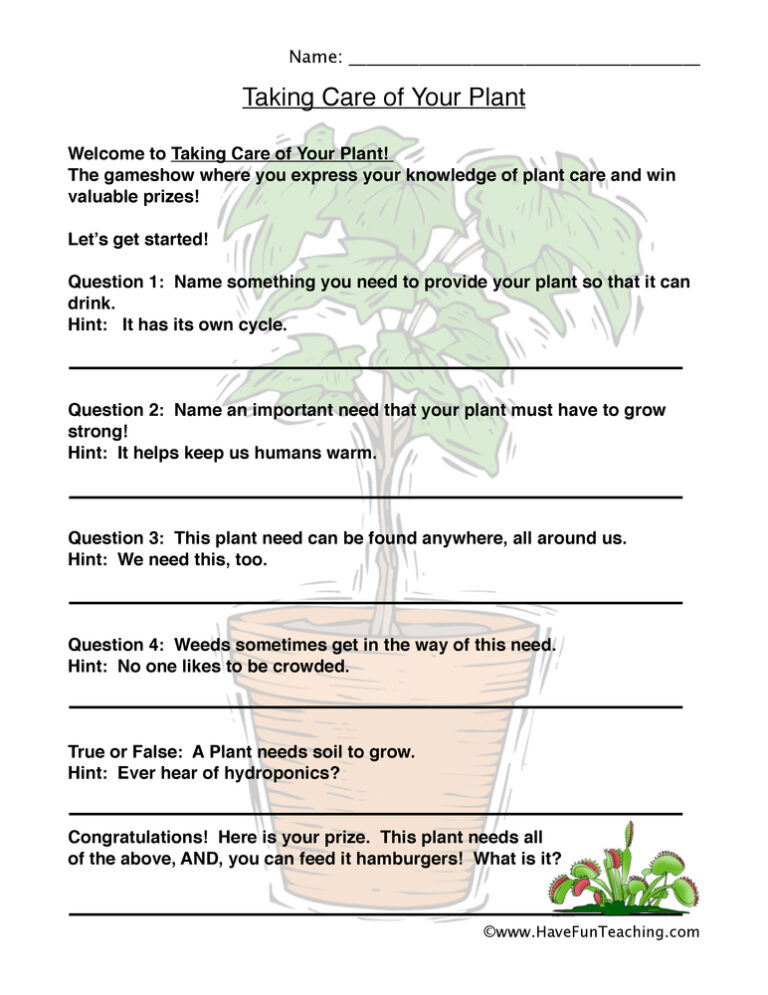
A hands-on plant needs worksheet where 2nd graders name the five things every plant must have, then match three pictures to the needs they show. Answer key included for quick, no-prep science practice.
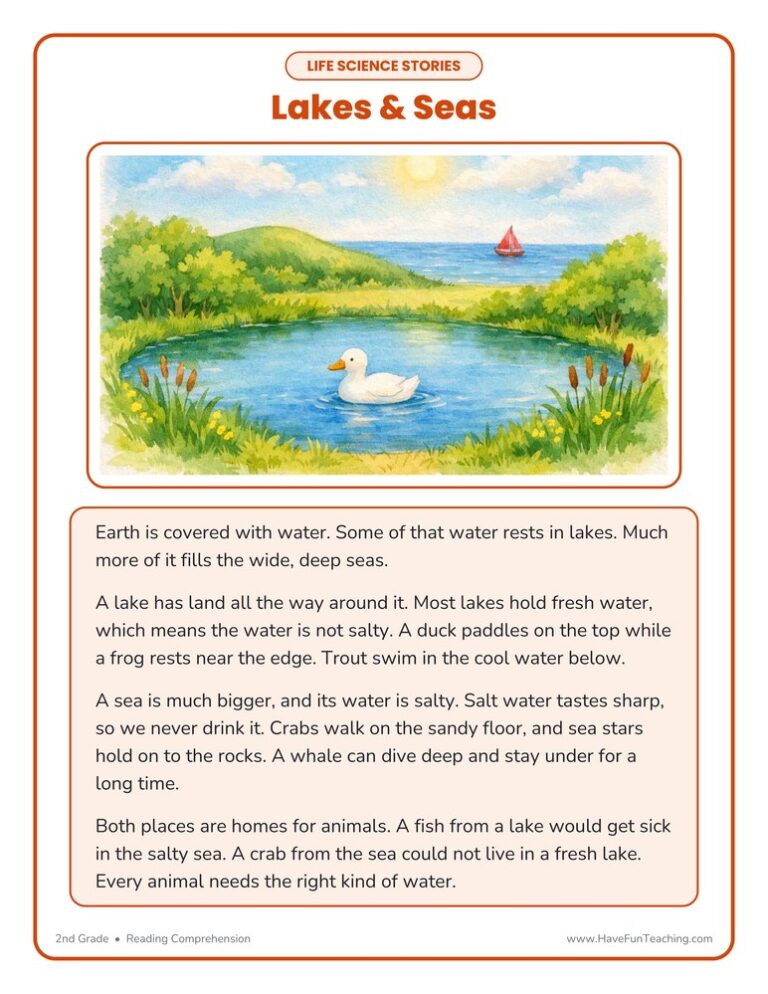
This Lakes and Seas Life Science Reading Comprehension Worksheet gives 2nd Grade students an original passage about fresh water and salt water habitats, with bubble, fill-in, and writing questions. Answer key included.
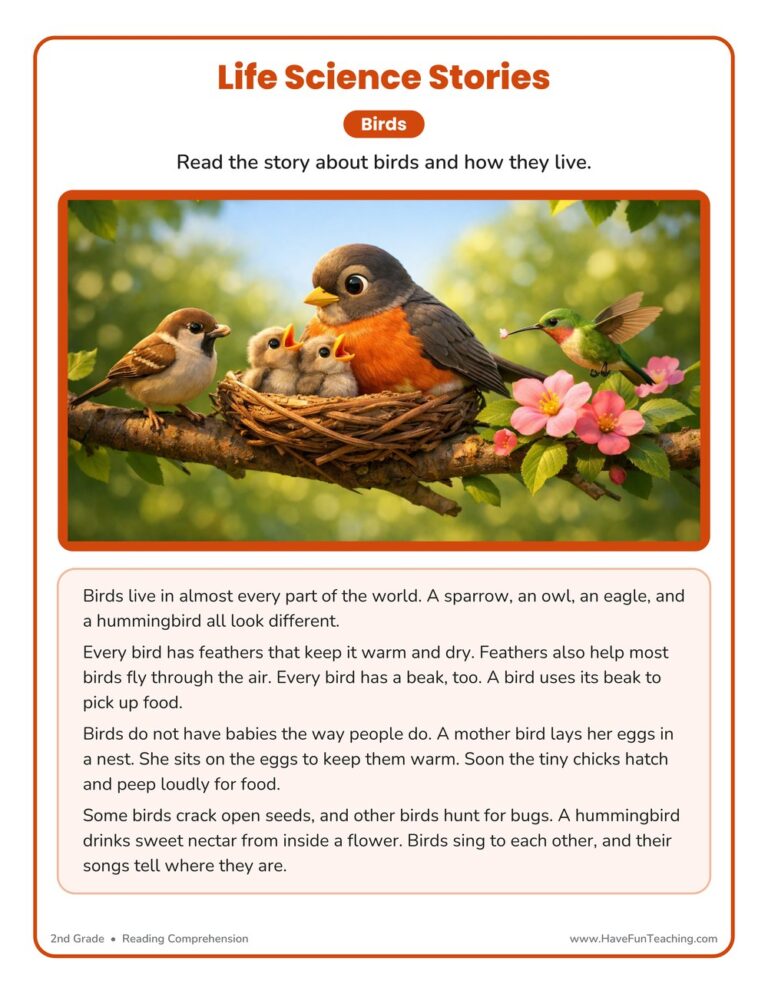
A nonfiction bird passage for 2nd graders, with questions on feathers, nests, and what birds eat. This Birds Life Science Reading Comprehension Worksheet includes an answer key for easy, no-prep science reading practice.
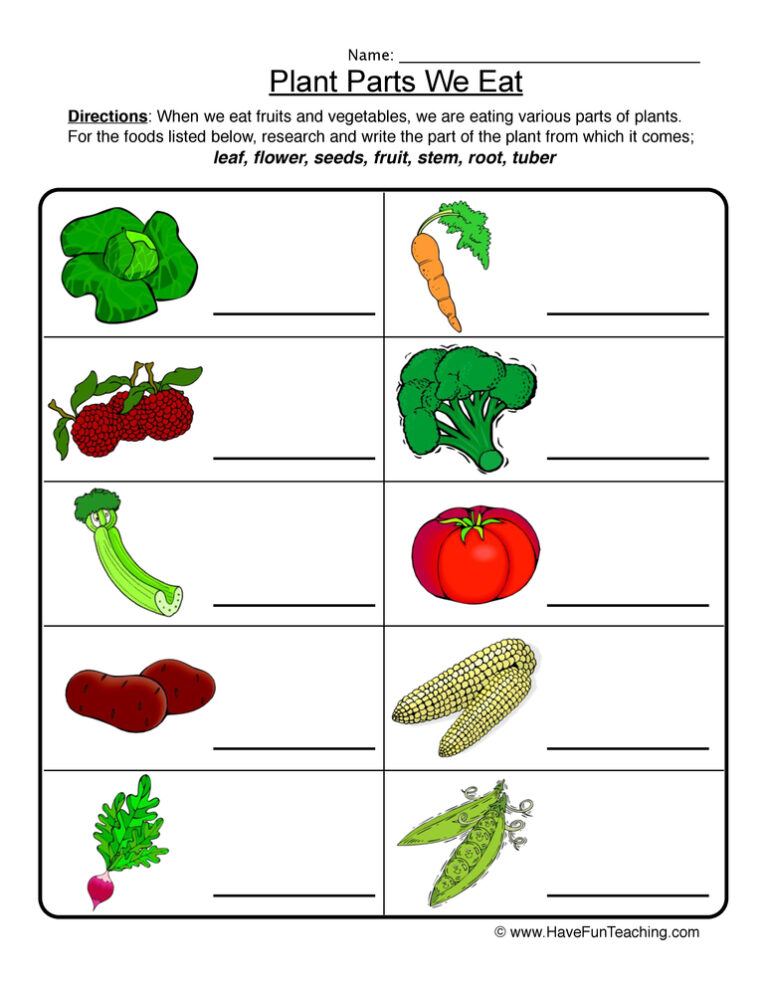
This plant parts worksheet asks 2nd grade students to name the plant part each of six familiar foods comes from, using a word box. An answer key is included, so checking work takes seconds.
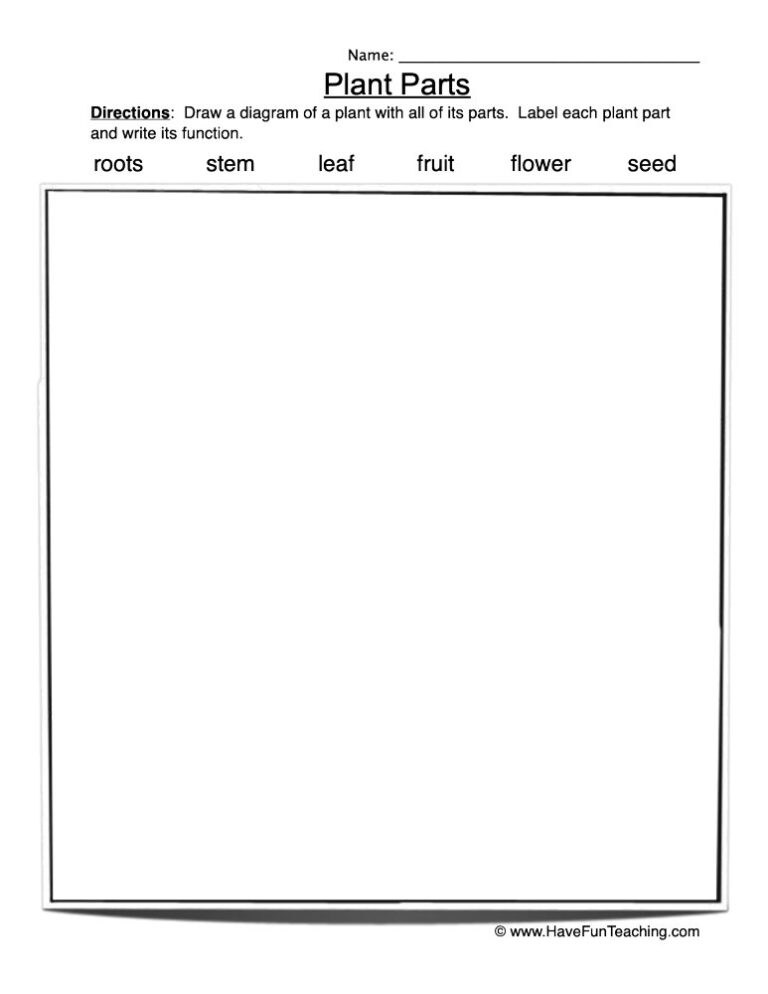
This Plant Parts Drawing Worksheet has 2nd Grade students match each plant part to its job, then draw and label a whole plant. An answer key is included, so checking plant vocabulary is quick and easy.
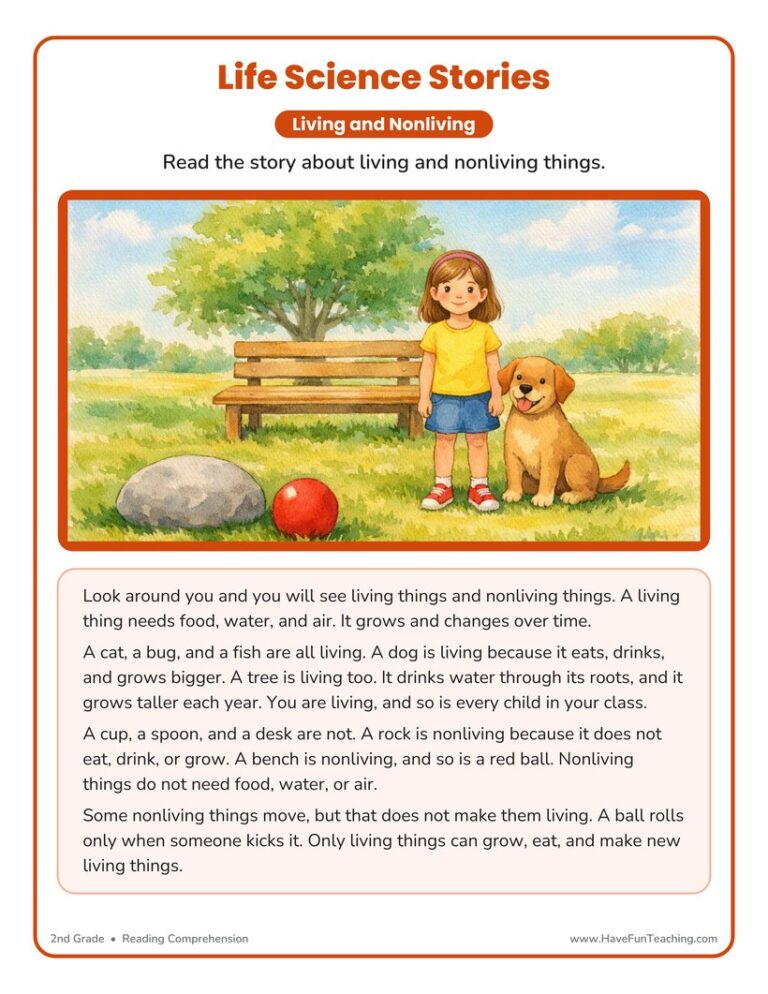
This Living and Nonliving Life Science Reading Comprehension Worksheet gives 2nd Grade students a short science passage, comprehension questions, and word-bank practice. An answer key is included, so it is ready to print and teach.
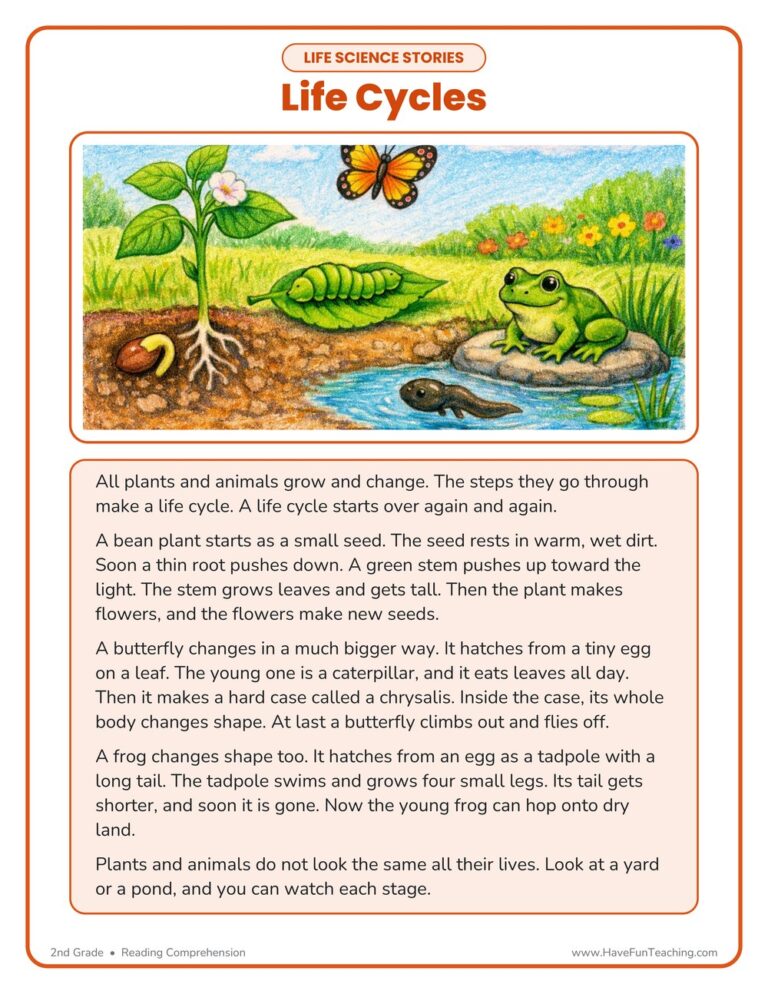
This Life Cycles Life Science Reading Comprehension Worksheet gives 2nd Grade readers a non-fiction story about seeds, caterpillars, and tadpoles, plus bubble, word-bank, and writing questions. Answer key included for fast, no-prep practice.
Reviews
There are no reviews yet