
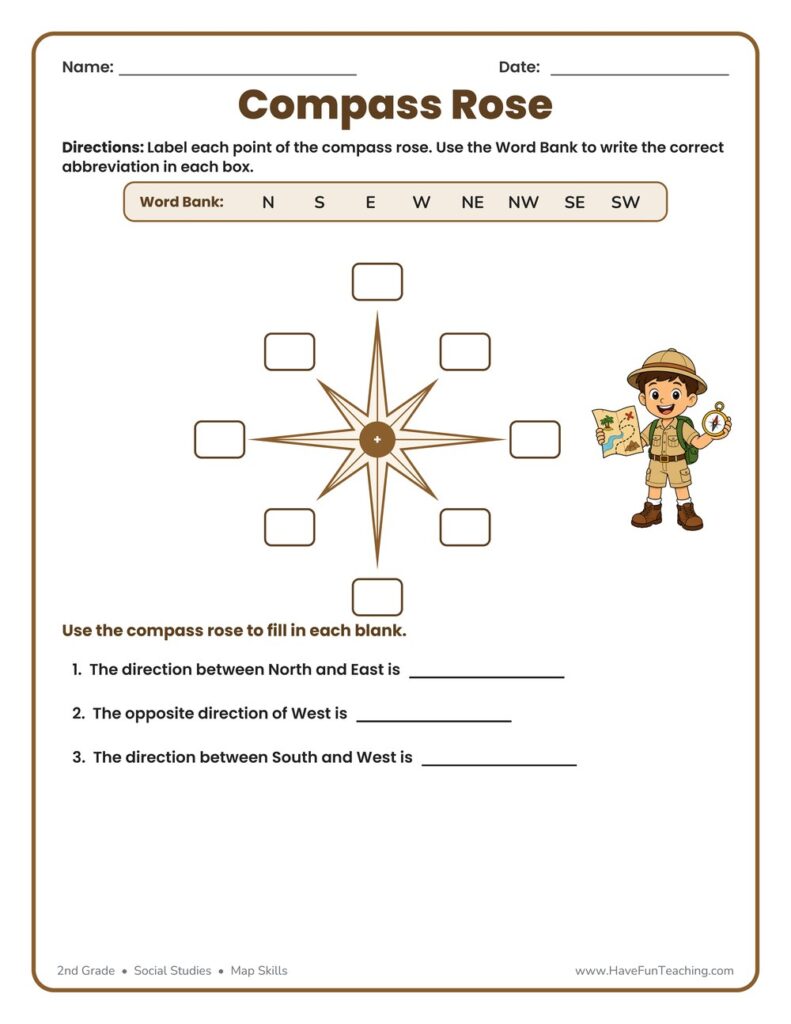
Compass Rose Worksheet
This Compass Rose Worksheet helps 2nd graders label the eight points of a compass rose and practice cardinal and intermediate directions. Includes an answer key for easy, no-prep map skills practice.
$6.97
Want this one free?
Tell us where to send it and it’s yours — no card, no catch.
One free resource per teacher. We’ll also send free teaching ideas each week — unsubscribe anytime.
Free teacher account · no credit card
Membership
Get every game, song, & printable
- Every game, on any device
- 10,000+ printables
- Assign online with HFT Classroom
Then $39.97/year · cancel anytime · See plans
- Instant digital download
- Printable PDF + answer key
- Made by real teachers
Teacher / Family membership
Teaching is easier with every resource
One membership for your whole year: 10,000+ worksheets, games, songs and videos for Preschool–6th, for your classroom or homeschool.
- Unlimited printables & downloads
- Every game, on any device
- Assign online with HFT Classroom
- Cancel anytime
Teacher / Family membership · 3 days free
Yearly
Monthly would be $119.64 a year
$3.33/month
Billed $39.97 once a year
You save $79.67 every year
Start My 3 Free Days$0 today · cancel anytime
Monthly
$9.97/month
Flexible, month to month
Yearly is just $3.33/mo. Switch and save $79.67
Start My 3 Free Days$0 today · cancel anytime
About this resource
Description
Reading a map starts with knowing your directions, and this Compass Rose Worksheet helps 2nd grade students learn the eight points of a compass rose. A compass rose is the small symbol on a map that shows which way is north, south, east, and west, plus the in-between directions like northeast and southwest. Once children can name these directions, they can follow a map, give clear directions, and understand how places relate to one another.
This printable 2nd grade maps worksheet gives students a clear compass rose with eight blank boxes and a handy word bank. Children write the correct abbreviation—N, S, E, W, NE, NW, SE, SW—in each box, then use the compass rose to answer three fill-in-the-blank direction questions. Print it for a social studies lesson, a map skills center, morning work, or homework, and check answers in seconds with the included answer key.
What’s Included
- 1 print-ready PDF worksheet
- Answer key
- A label-the-compass-rose activity and 3 direction questions
This Compass Rose Worksheet helps in three important ways. First, labeling all eight points builds a strong mental picture of how the cardinal and intermediate directions fit together. Second, the word bank scaffolds early learners so they can succeed independently while still recalling each abbreviation. Third, the short direction questions push students to apply what they labeled, turning simple recognition into real understanding they can use on any map.
To extend the lesson, tape a large compass rose to the classroom floor and have children face the direction you call out. Go on a “direction walk” outdoors and name what lies to the north or east. Hide a small classroom treasure and write directions like “take three steps east, then two steps south” for students to follow. At home, point out the compass rose on a real map or GPS app and ask which way you would travel to reach a favorite place. These playful activities make directions stick.
Related Resources
What teachers say
Reviews
You must be logged in to post a review.


Use this Find the Parts of a Map Worksheet to help 2nd Grade students name the title, key, compass rose, and scale on a real map, then read the map to answer questions. Answer key included.
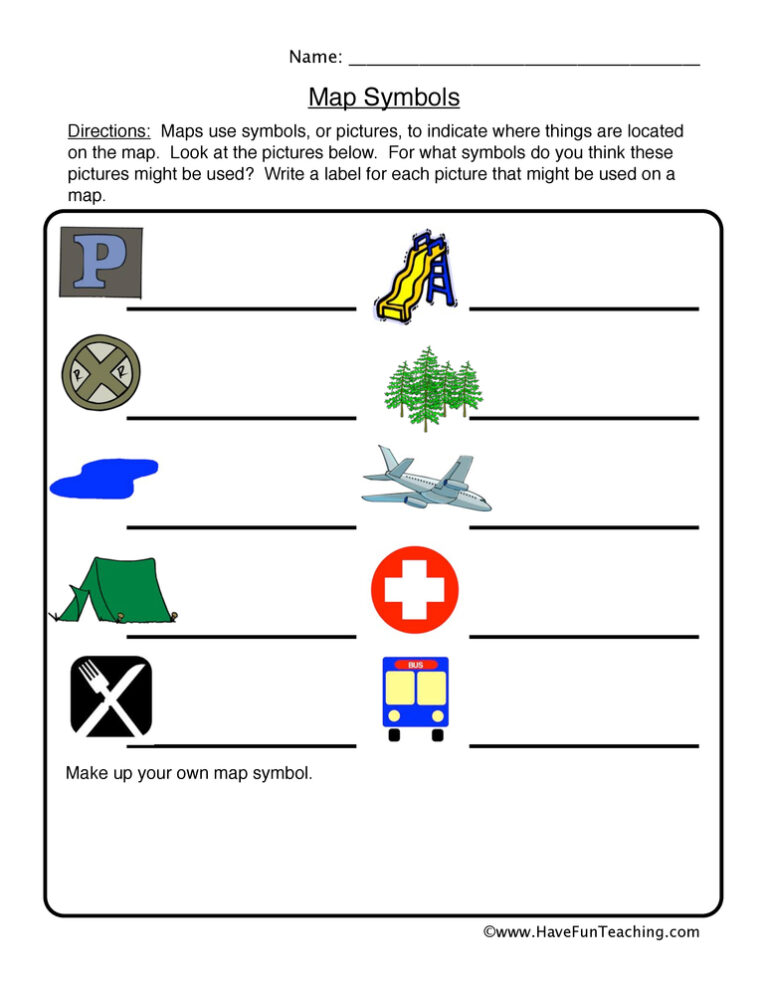
This map symbols worksheet asks 2nd grade students to name six common map pictures using a word box with two extra choices. A full answer key is included, so map key practice takes no prep.

This What Are Maps Worksheet gives 2nd graders a short informational passage about maps plus four questions and a written response on the main idea. An answer key is included, so checking work takes seconds.
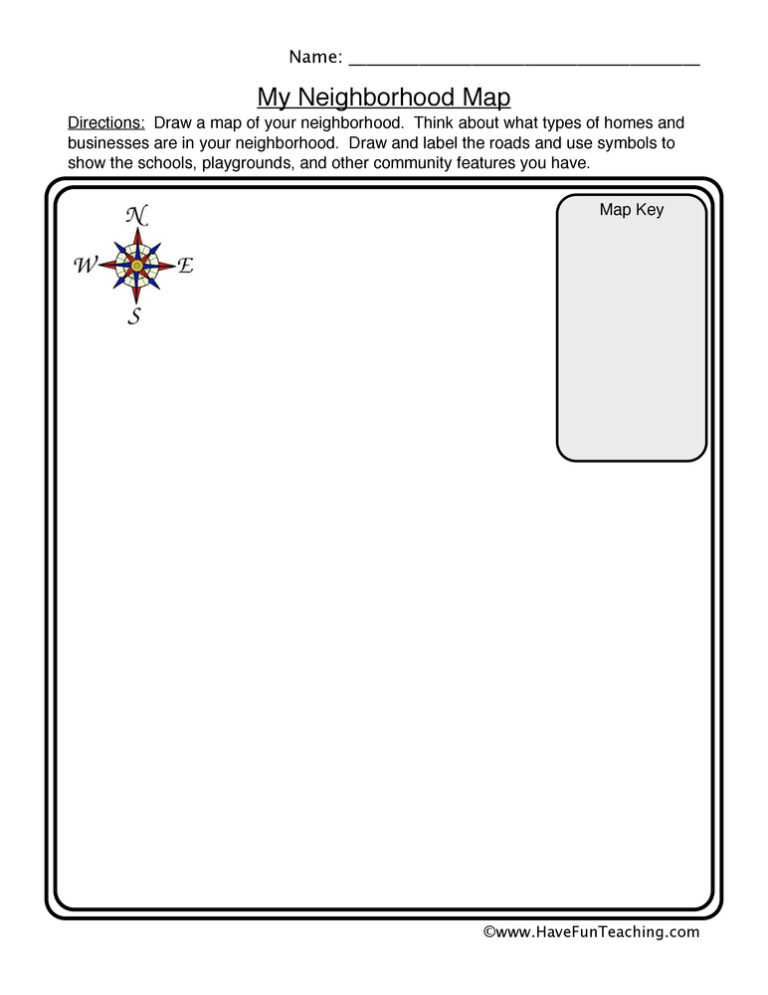
This neighborhood map worksheet has 2nd graders draw their own street from above, then invent symbols and explain them in a map key. An open-ended template that builds real map skills.

This maps worksheet gives 3rd graders a printed town map with a key and a compass rose, then four reading questions and two route questions. An answer key is included, so map skills practice needs no prep.
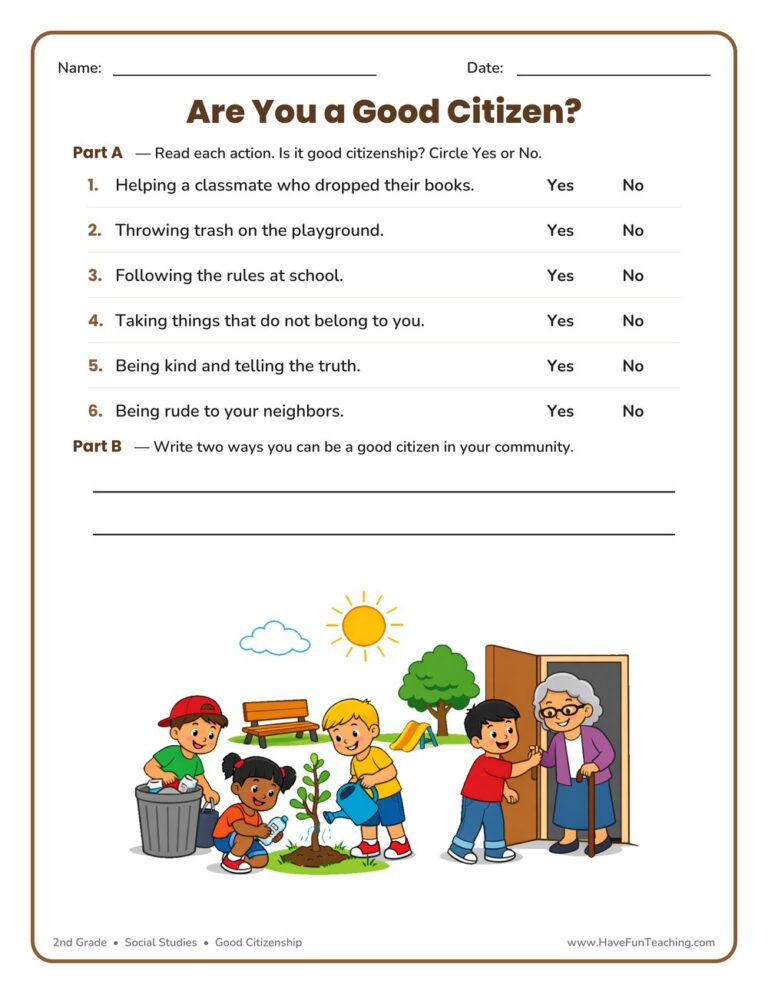
This good citizenship worksheet helps 2nd graders recognize responsible actions and write ways to help their community. An answer key is included for quick, no-prep character education practice.
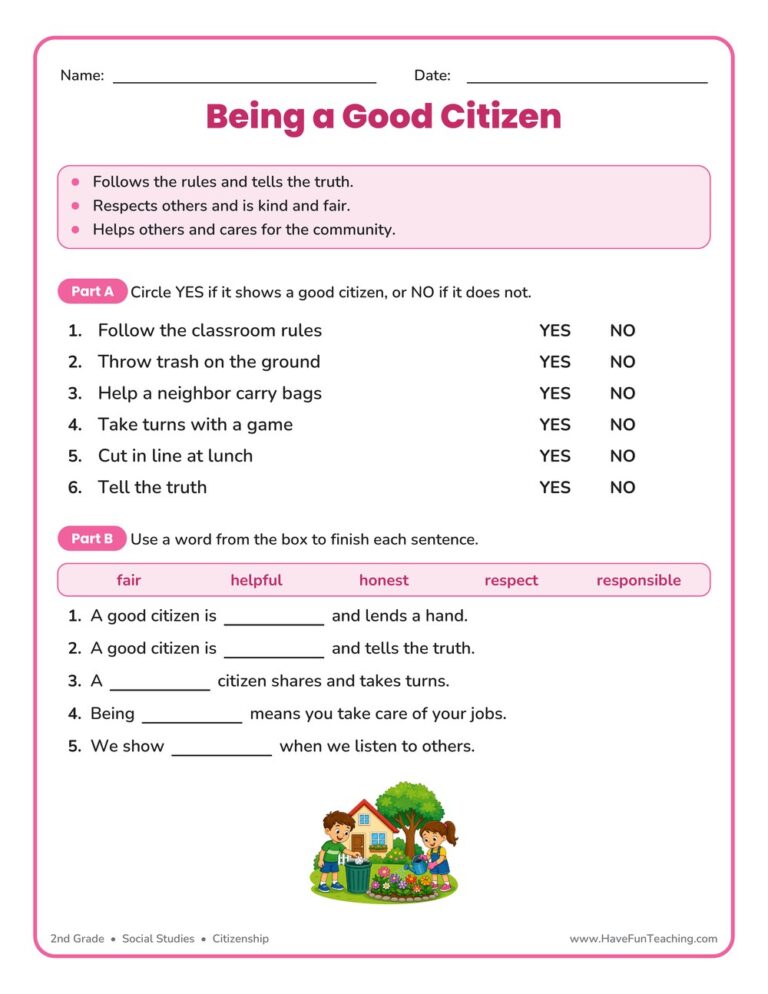
This being a good citizen worksheet helps 2nd graders spot good-citizen actions and build character words like honest, fair, and responsible. Includes an answer key for easy, no-prep social studies practice.
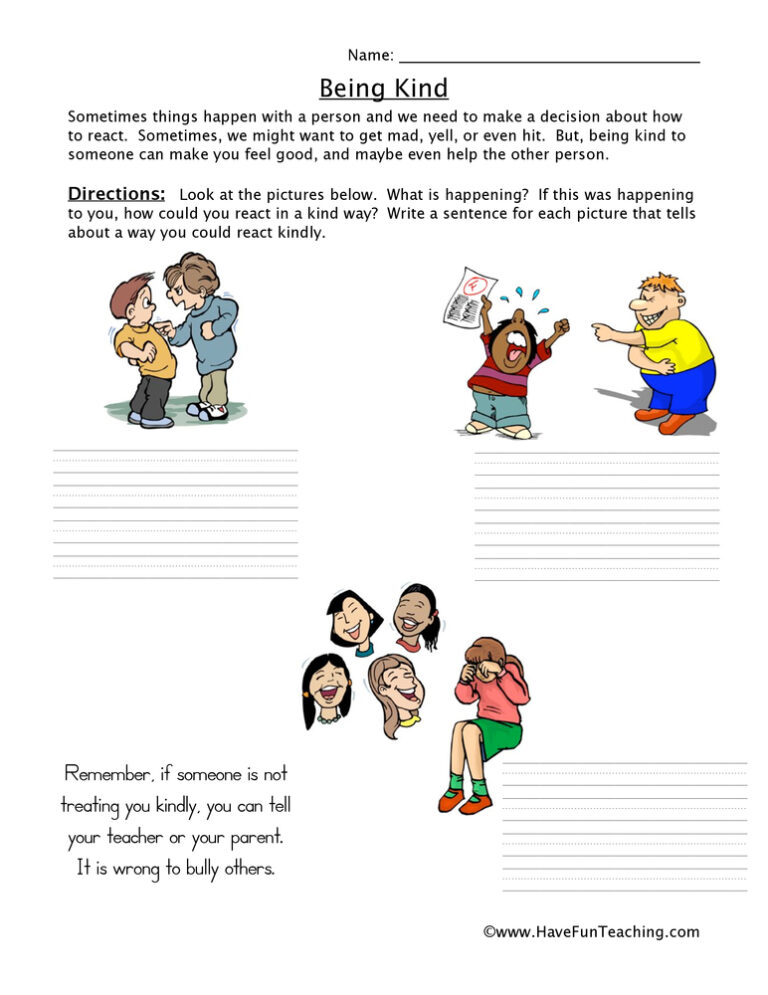
Using this Bullying Worksheet, students write a description explaining how the person could have reacted in a kind way rather than a mean way.
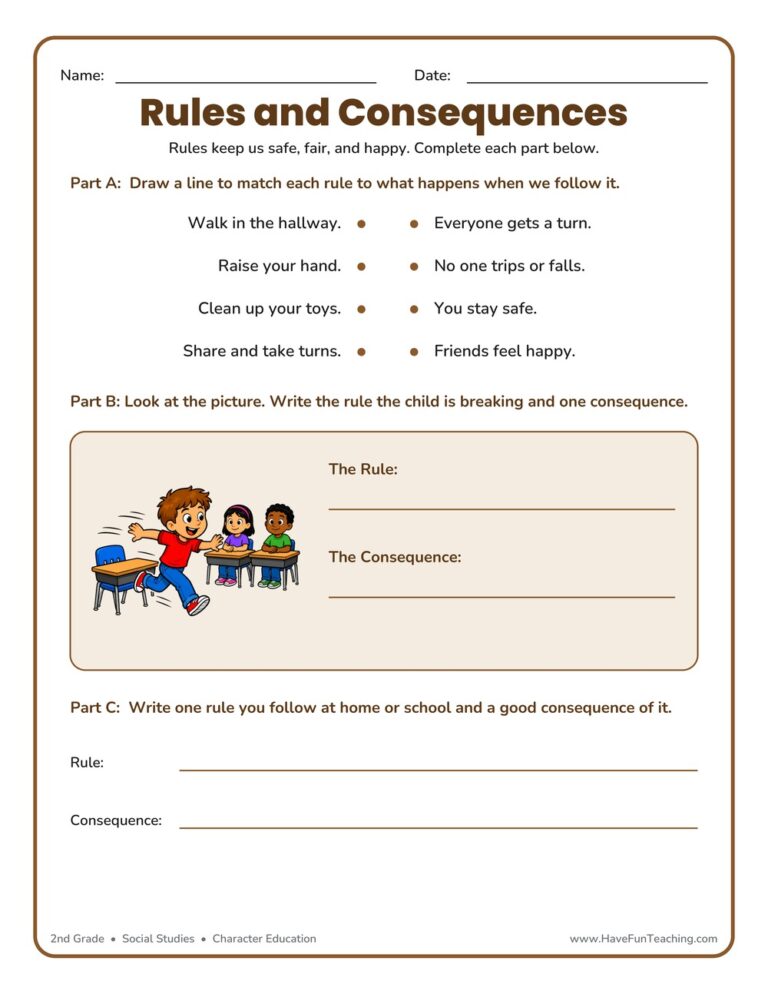
This rules consequences worksheet helps 2nd graders match rules to their results, read a picture to name a rule and consequence, and reflect on a rule of their own. Includes an answer key for quick, no-prep character education practice at home or school.
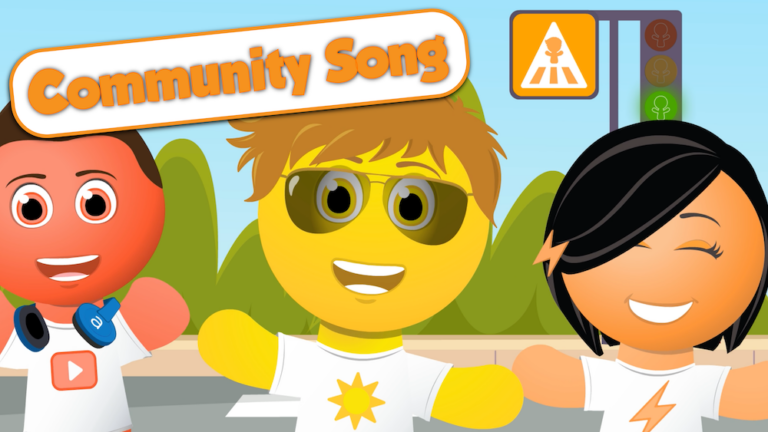
The Community Song teaches kids how to be a good citizen in the community. This is a fun citizenship song that teaches kids about being a citizen and being part of their community.

A hands-on library skills worksheet for 2nd Grade: finish four sentences with the word box, then fill out and decorate your very own library card. Answer key included, so students arrive at their next library visit ready.
Reviews
There are no reviews yet