

Globes Worksheet
This globes worksheet has 3rd graders label the equator, the poles, the hemispheres, and a line of longitude on a clear globe diagram, then answer questions about them. Answer key included for fast, no-prep geography practice.
$6.97
Want this one free?
Tell us where to send it and it’s yours — no card, no catch.
One free resource per teacher. We’ll also send free teaching ideas each week — unsubscribe anytime.
Free teacher account · no credit card
Membership
Get every game, song, & printable
- Every game, on any device
- 10,000+ printables
- Assign online with HFT Classroom
Then $39.97/year · cancel anytime · See plans
- Instant digital download
- Printable PDF + answer key
- Made by real teachers
Teacher / Family membership
Teaching is easier with every resource
One membership for your whole year: 10,000+ worksheets, games, songs and videos for Preschool–6th, for your classroom or homeschool.
- Unlimited printables & downloads
- Every game, on any device
- Assign online with HFT Classroom
- Cancel anytime
Teacher / Family membership · 3 days free
Yearly
Monthly would be $119.64 a year
$3.33/month
Billed $39.97 once a year
You save $79.67 every year
Start My 3 Free Days$0 today · cancel anytime
Monthly
$9.97/month
Flexible, month to month
Yearly is just $3.33/mo. Switch and save $79.67
Start My 3 Free Days$0 today · cancel anytime
About this resource
Description
A globe is a small model of Earth that a child can hold, turn, and study, and learning its parts is where third-grade geography really begins. Before students can compare continents, follow a route, or read a world map, they need the vocabulary that describes the shape of our world: the equator, the North Pole and South Pole, the Northern Hemisphere and Southern Hemisphere, and the lines of longitude that run from the top of the globe to the bottom. This globes worksheet gives students a clear, labeled model to work from so those words stop being abstract terms in a textbook and start being places they can point to.
The sheet opens with a large diagram of a globe with five numbered pointers, each one landing exactly on the part it names. Students use the word bank to write the correct term on the answer line that matches each number, so the activity builds the vocabulary and the visual at the same time. Next comes a short set of fill-in-the-bubble questions that ask students to apply what they just labeled, and the page closes with a written explanation question. Because this 3rd grade globe worksheet moves from labeling to reasoning to writing, it works just as well as a guided lesson, an independent center, a review before a unit test, or a quick homework page.
What’s Included
- 1 print-ready PDF worksheet
- Answer key
- 1 labeled globe diagram with 5 numbered parts to identify
- A word bank, 3 multiple-choice questions, and 1 written-response question
There are three reasons this resource helps children learn the parts of a globe. First, every term in the word bank is anchored to a picture, and picture-plus-word practice is what makes new geography vocabulary stick. Second, the multiple-choice questions are situations rather than definitions, so a student has to reason about where a person is standing instead of repeating a memorized phrase. Third, the closing question asks for a written explanation, which is exactly the kind of short constructed response third graders meet on classroom and state assessments. Together, the three parts of this globes worksheet move students from recognizing a word to using it.
Teachers and parents can stretch the lesson well past the page. Keep a real desk globe nearby and have students find each labeled part with a finger before they write. Wrap a strip of yarn around the middle of a ball to show why the equator divides Earth into two halves, then have students name which half they live in. Play a quick round of “north or south” where you call out a place and students point up or down. Ask children to trace a line of longitude from pole to pole with a dry-erase marker on a laminated map. For a fun finish, let students draw and label their own globe on a paper plate and hang the plates on a classroom world wall.
Related Resources
What teachers say
Reviews
You must be logged in to post a review.
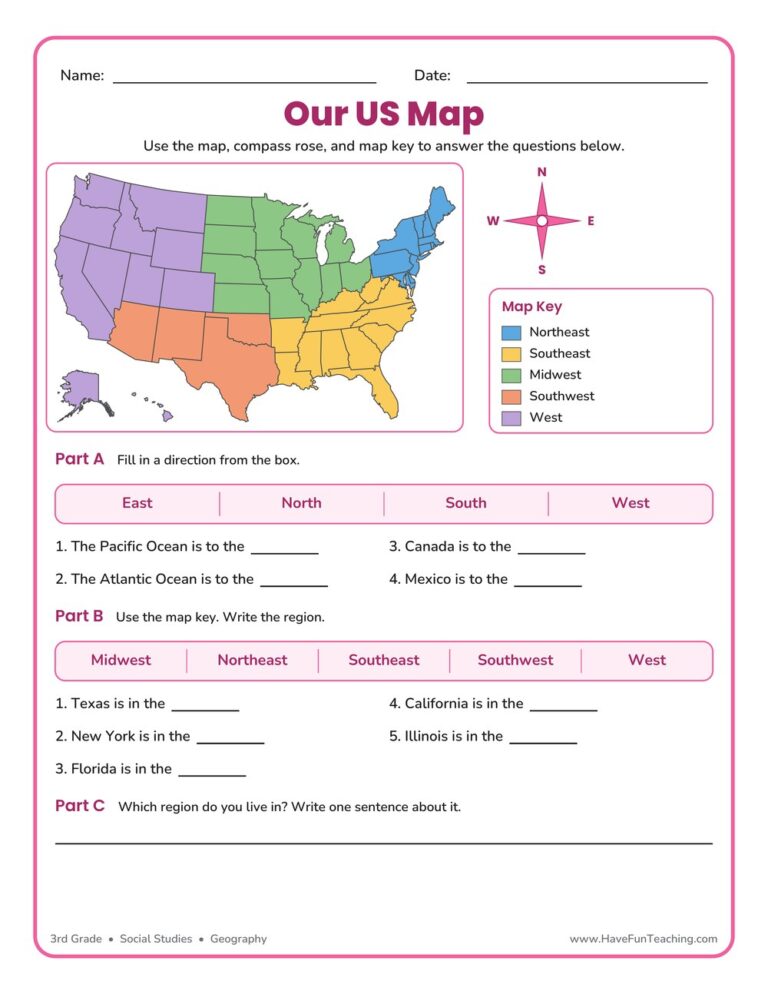
This US Map Worksheet helps 3rd grade students name the five regions of the United States, use a compass rose, and read a map key. An answer key is included, making map skills easy and fun to practice.
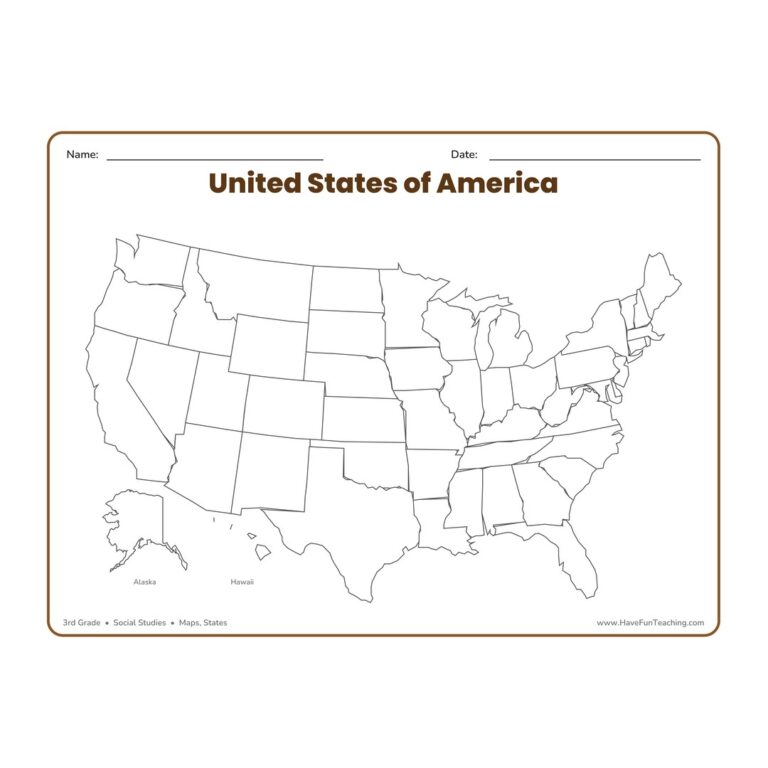
The United States Blank Map Worksheet gives 3rd graders a full, landscape outline map of the USA with all fifty states left blank and ready to label, color, or study for hands-on geography and map-skills practice.
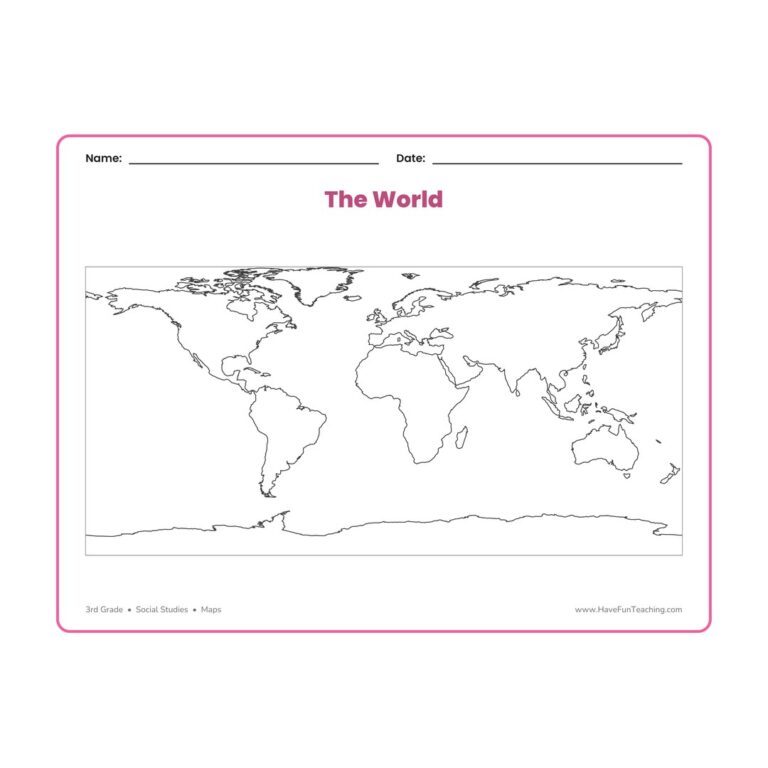
This world blank map worksheet gives 3rd grade students a clean outline map of every continent to label, color, and study, so geography lessons stay hands-on and easy to remember all year.

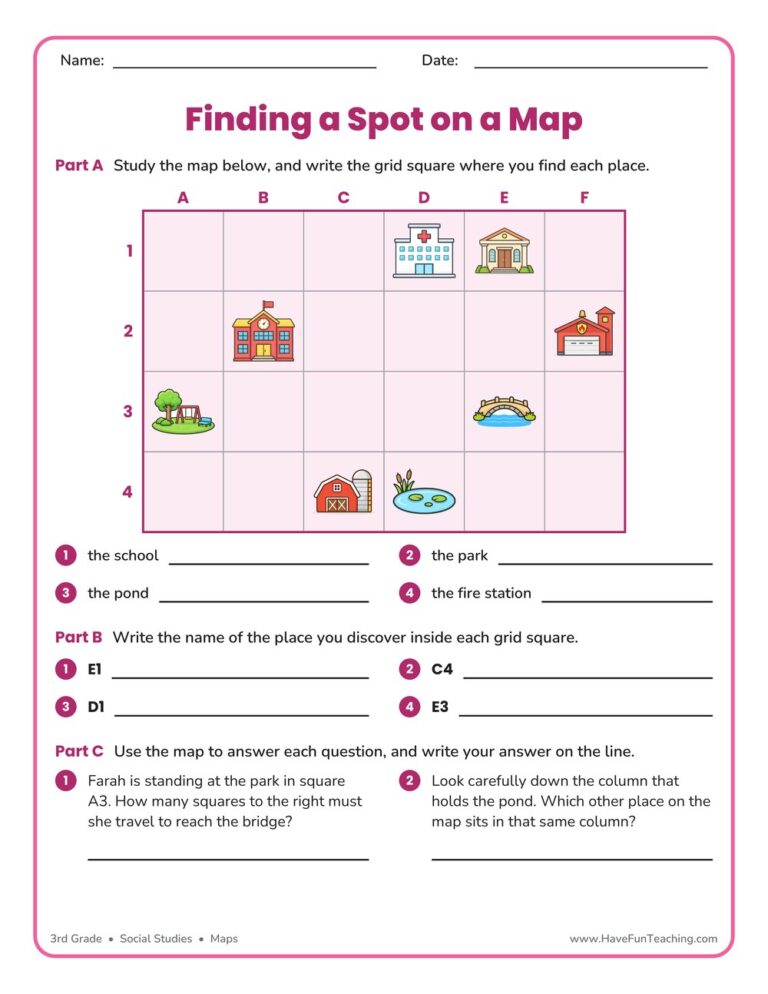
A finding a spot on a map worksheet for 3rd grade, built on one labeled town grid with place-to-square, square-to-place, and reasoning questions. Answer key included for quick no-prep map skills practice.
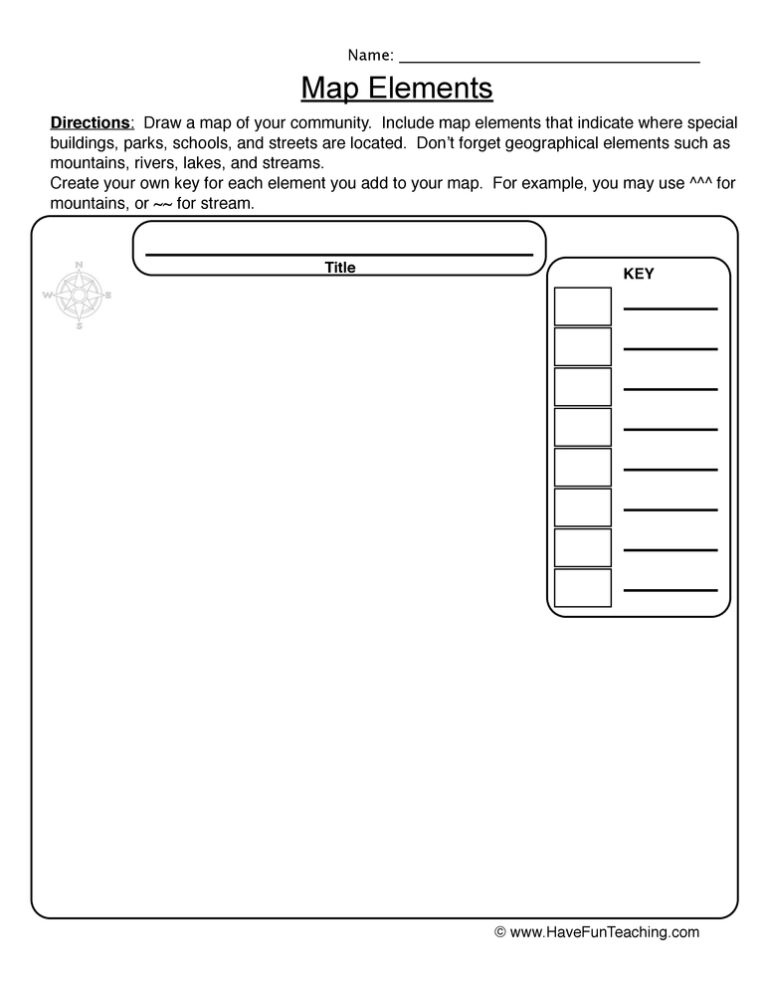
This Make a Map Worksheet gives 3rd graders a real town map to label and read, covering the title, map key, compass rose, and scale bar. Answer key included for fast, no-prep geography practice.
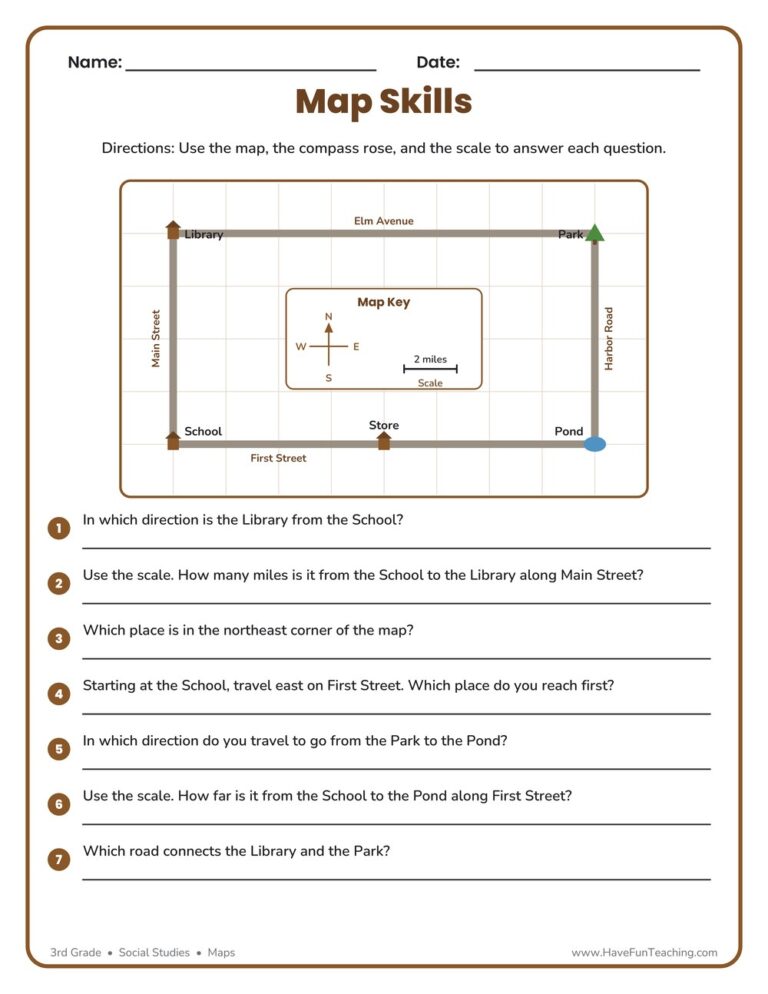
This Map Skills Worksheet gives 3rd graders a friendly town map for practicing the compass rose, legend, and scale to find places and measure distances. Includes a complete answer key for quick, no-prep social studies practice.
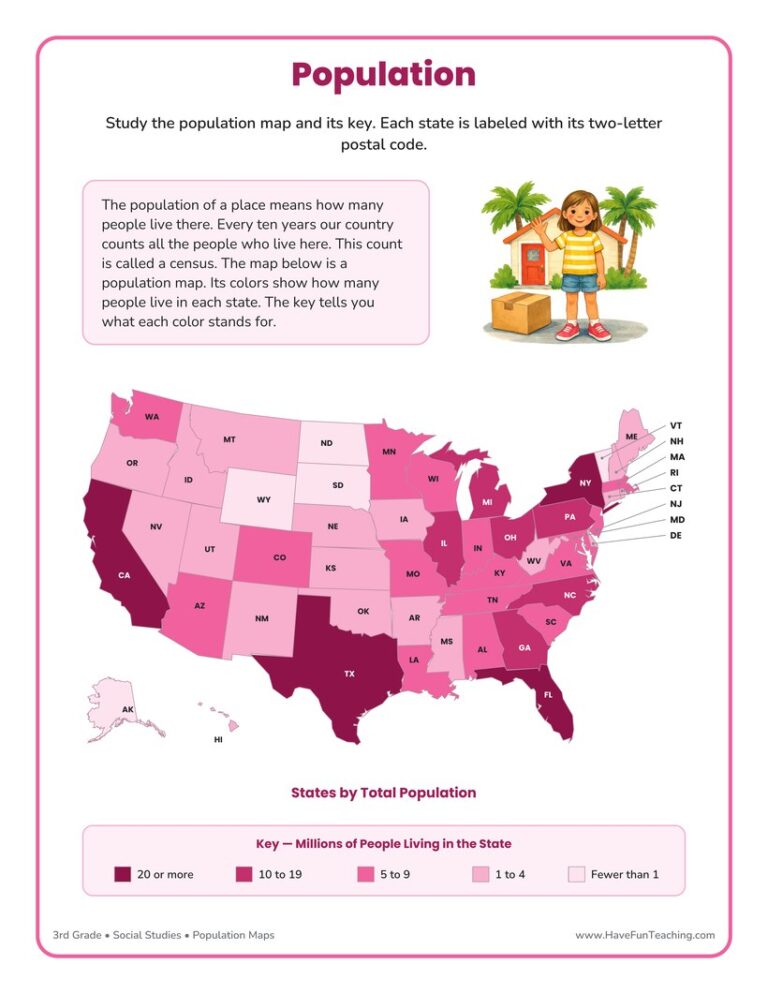
Students read a full-color U.S. population map worksheet, use the map key to compare states, and explain their thinking. Built for 3rd grade with a complete answer key - no-prep geography practice.

This climate map worksheet has 3rd Grade students read a color-coded map of the United States and use its key to name the climate of any state. Answer key included, so checking work takes seconds.
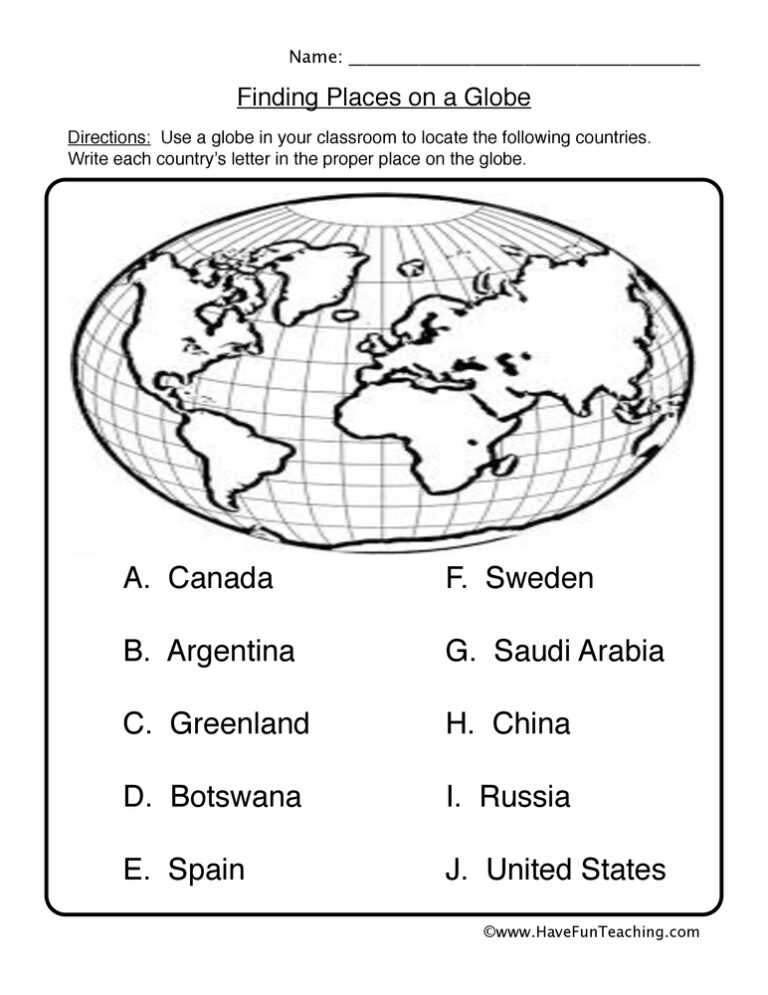
This Finding Places on a Globe Worksheet has 3rd graders label the North Pole, equator, prime meridian, and three continents on a real globe. An answer key is included, so checking work takes seconds.

This maps worksheet gives 3rd graders a printed town map with a key and a compass rose, then four reading questions and two route questions. An answer key is included, so map skills practice needs no prep.
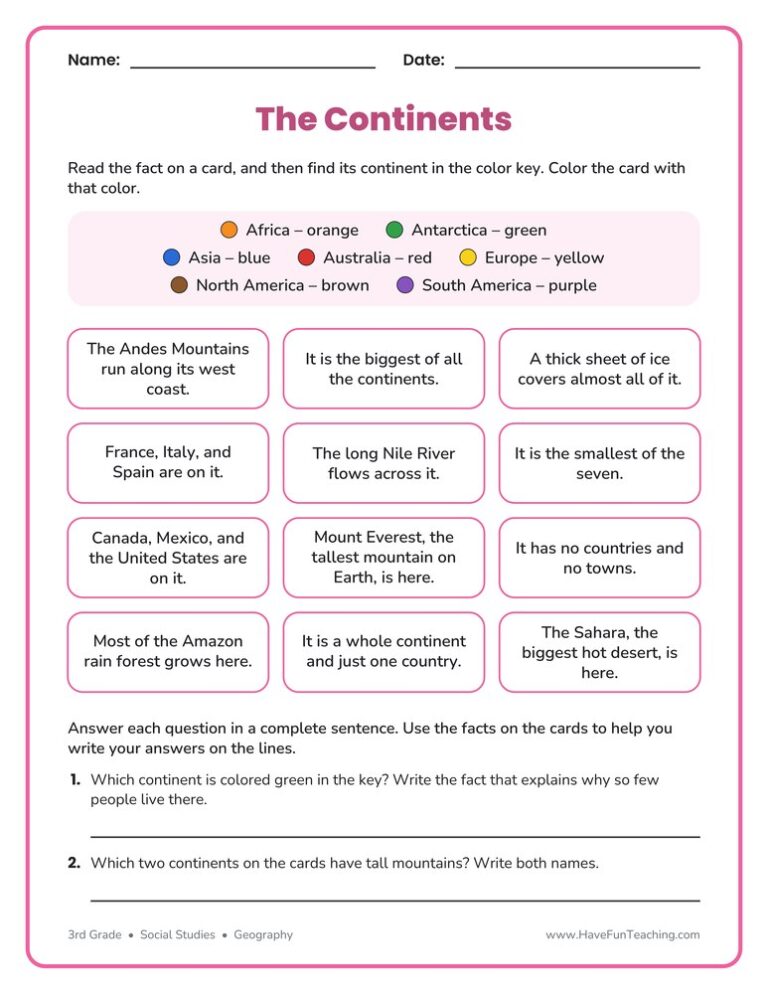
This Coloring Continents Worksheet lets 3rd graders color twelve fact cards by continent and answer two questions using the facts. An answer key is included, so checking the work is quick and easy.




Reviews
There are no reviews yet