

Fish Life Science Reading Comprehension Worksheet
This Fish Life Science Reading Comprehension Worksheet gives 2nd graders a short nonfiction story about how fish live, breathe, and swim, plus questions and an answer key that make independent reading practice easy.
$6.97
Want this one free?
Tell us where to send it and it’s yours — no card, no catch.
One free resource per teacher. We’ll also send free teaching ideas each week — unsubscribe anytime.
Free teacher account · no credit card
Membership
Get every game, song, & printable
- Every game, on any device
- 10,000+ printables
- Assign online with HFT Classroom
Then $39.97/year · cancel anytime · See plans
- Instant digital download
- Printable PDF + answer key
- Made by real teachers
Teacher / Family membership
Teaching is easier with every resource
One membership for your whole year: 10,000+ worksheets, games, songs and videos for Preschool–6th, for your classroom or homeschool.
- Unlimited printables & downloads
- Every game, on any device
- Assign online with HFT Classroom
- Cancel anytime
Teacher / Family membership · 3 days free
Yearly
Monthly would be $119.64 a year
$3.33/month
Billed $39.97 once a year
You save $79.67 every year
Start My 3 Free Days$0 today · cancel anytime
Monthly
$9.97/month
Flexible, month to month
Yearly is just $3.33/mo. Switch and save $79.67
Start My 3 Free Days$0 today · cancel anytime
About this resource
Description
Reading about real animals is one of the best ways to build strong nonfiction reading skills, and this Fish Life Science Reading Comprehension Worksheet gives 2nd grade students an on-level science passage to practice with. Students read a short informational story about fish — where they live, how they breathe, how their fins and scales work, and what they eat — and then answer questions that send them back into the text to find evidence.
This 2nd grade animals worksheet is ready to print and use in a single sitting. Page one holds the illustrated passage, page two holds the questions, and page three is the complete answer key. Students begin with four multiple-choice questions, move to two fill-in-the-blank sentences that use a word box, and finish with a short written response asking them to explain how fins and scales help a fish.
What’s Included
- 1 print-ready PDF worksheet
- Answer key
- An illustrated nonfiction passage about fish
- 4 multiple-choice questions, 2 word-bank sentences, and 1 written response
There are three reasons this Fish Life Science Reading Comprehension Worksheet works so well. First, the passage is written and measured at a second grade reading level, so students spend their energy thinking about the text instead of decoding it. Second, every question can be answered straight from the story, which teaches students to look back and find evidence rather than guess. Third, the science vocabulary — gills, scales, and fry — is defined right inside the sentence that introduces it, so students meet new words in context the same way reading assessments present them.
Teachers and parents can stretch this lesson in plenty of fun ways. Read the passage aloud together first, then let students reread it on their own before answering. Ask students to draw and label a fish, pointing out the tail fin, the side fins, the gills, and the scales. Build a class chart comparing fish to another animal group, or visit a local aquarium, pet store, or pond and have students record what they notice. Pairing the reading with a hands-on observation is what makes the facts stick.
Related Resources
What teachers say
Reviews
You must be logged in to post a review.

The Life Cycle of a Butterfly Worksheet has 2nd graders label the egg, larva, pupa, and adult stages and put them in the correct order. Answer key included for quick, hands-on life science practice.
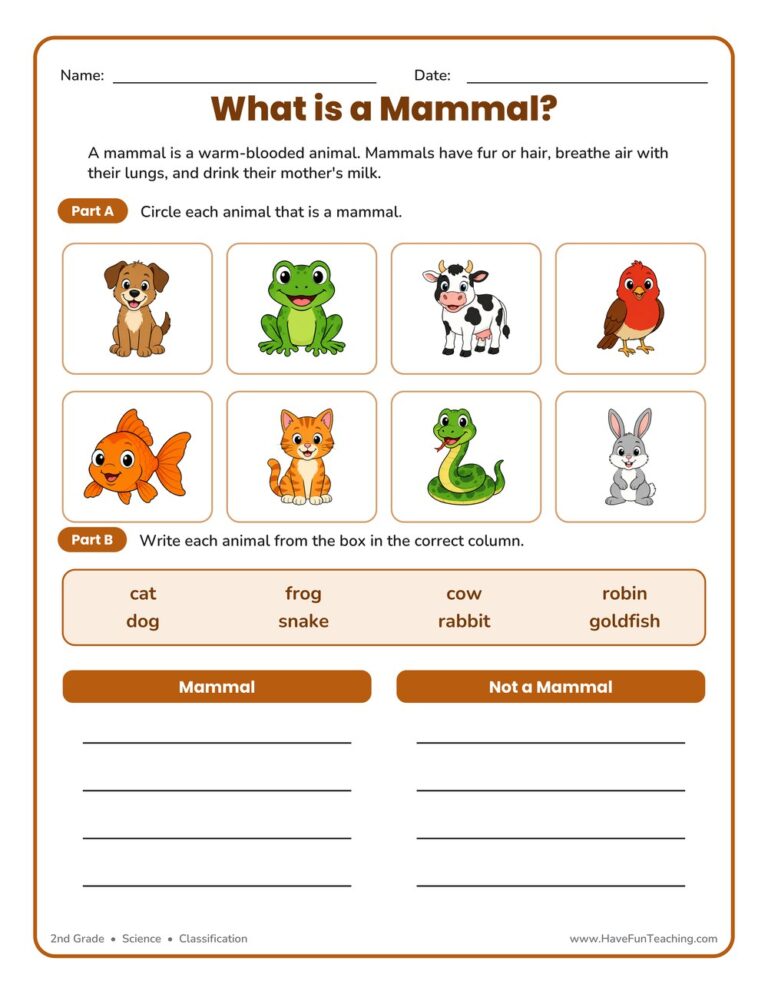
This mammal classification worksheet helps 2nd graders spot mammals and sort animals into mammal and not-a-mammal groups. It includes a complete answer key, making it perfect for no-prep science practice at home or in the classroom.

This matching animal habitats worksheet has 2nd Grade students connect five animals to the ocean, pond, desert, forest, and grassland, then finish three sentences. An answer key is included for fast, no-prep science practice.

Using this Animal Song (Animated Music Video), your students learn about different types of animals and their sounds by watching this fun, catchy video.

An animals bar graph worksheet for 2nd grade: students color one box per animal to build a four-category bar graph, then compare and add using it. Answer key included, so checking data work takes seconds.
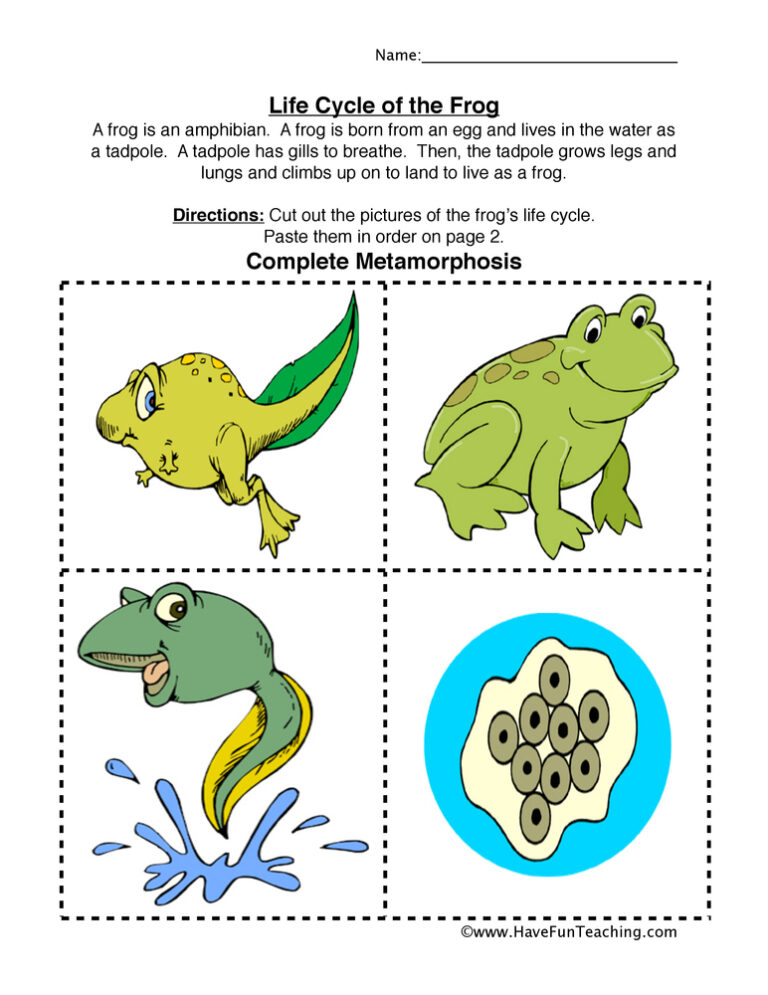
This Frog Life Cycle Worksheet has second graders order and name the four stages of a frog's life: egg, tadpole, froglet, and frog. An answer key is included, so grading takes seconds.

This animal classification worksheet lets 2nd graders sort twelve animals into mammals, birds, fish, and reptiles using a picture-clued word box. An answer key is included — great for no-prep science practice at home or in class.
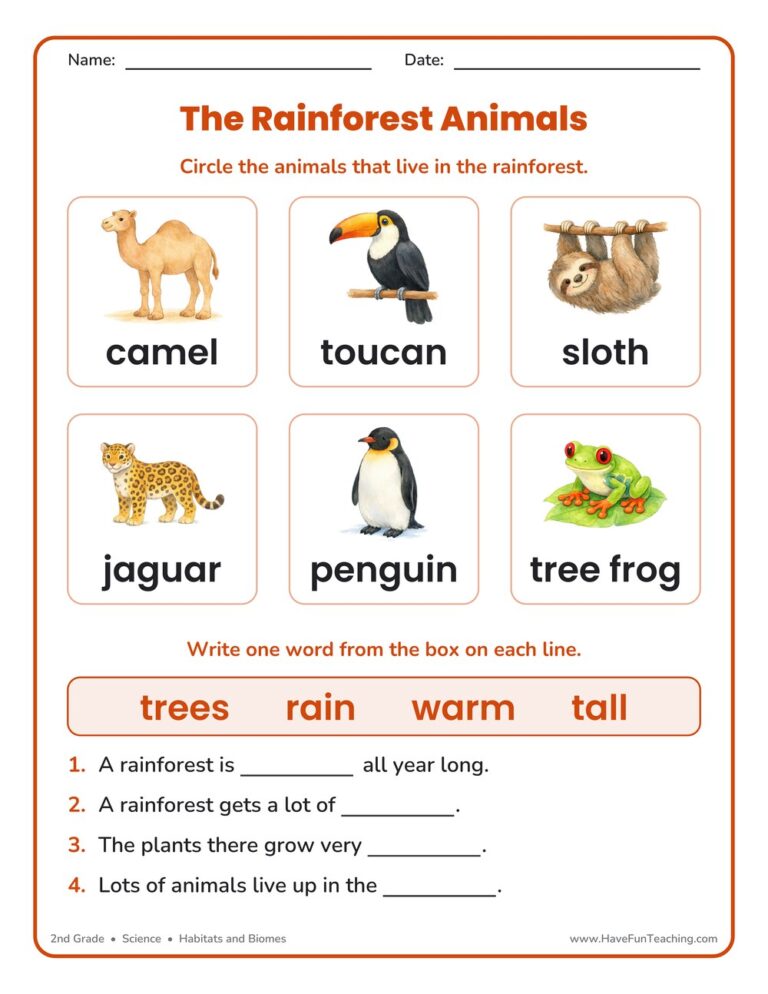
This rainforest animals worksheet asks 2nd Grade students to circle four rainforest animals and finish sentences about their habitat. Answer key included, so habitat practice takes only minutes to assign and check.
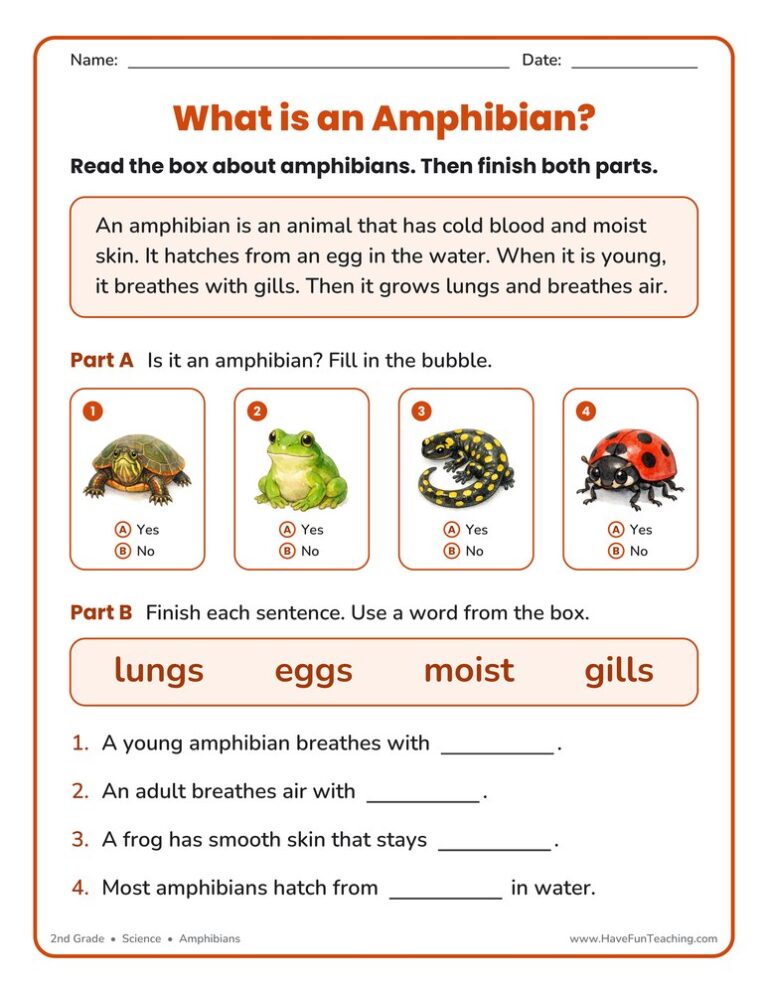
This amphibian classification worksheet asks 2nd graders to decide which animals are amphibians by checking their traits, then finish four sentences from a word bank. Answer key included for quick, no-prep science practice.

This Basic Fish Parts Worksheet asks 1st graders to label six numbered parts on a big, friendly fish using a word box. An answer key is included, so science practice takes no prep at all.
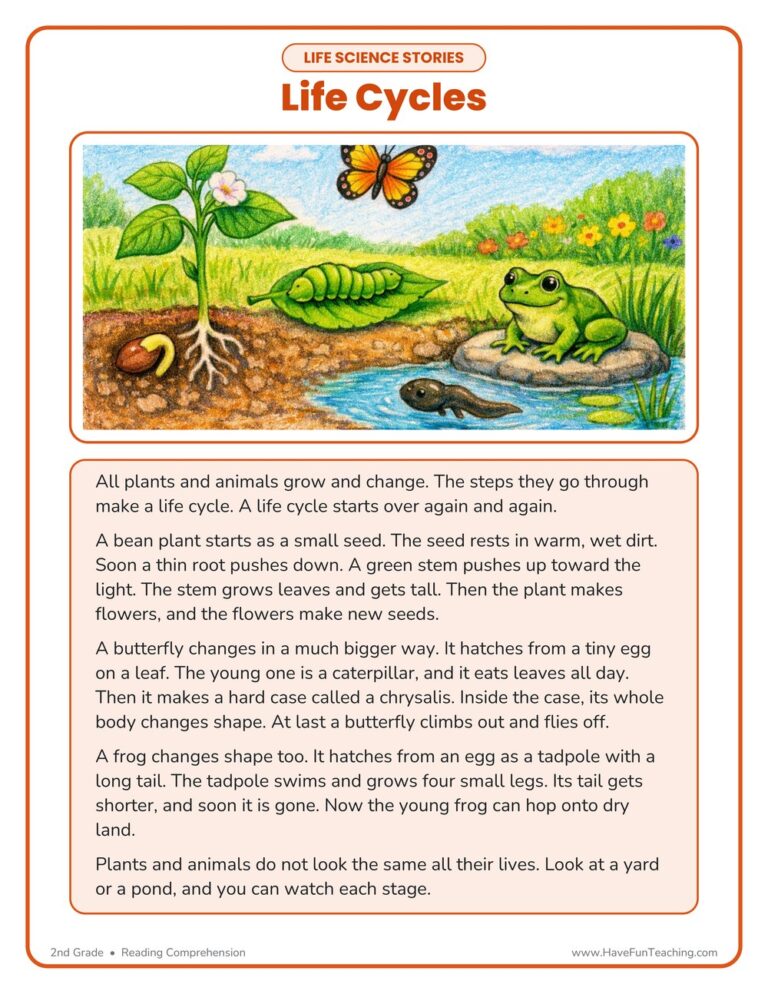
This Life Cycles Life Science Reading Comprehension Worksheet gives 2nd Grade readers a non-fiction story about seeds, caterpillars, and tadpoles, plus bubble, word-bank, and writing questions. Answer key included for fast, no-prep practice.
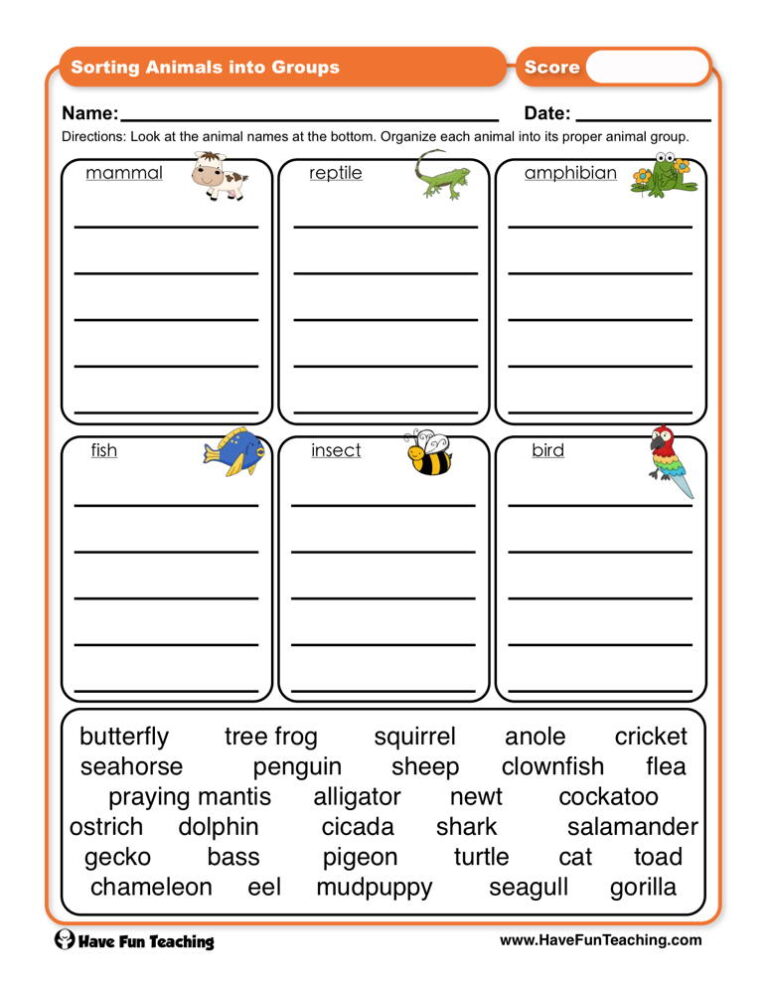
Practice animal classification with this Sorting Animals into Groups Worksheet for 2nd grade. Students sort twelve animals into six groups, with an answer key included for easy checking.




Reviews
There are no reviews yet