Skip to content
Start My 3 Free Days $0 today · cancel anytime

4th Grade Summarizing Resources

12 4th grade summarizing resources: 6 activities, 4 graphic organizers, 4 worksheets and more. How teachers use these

4th Grade Summarizing Resources

12 4th grade summarizing resources: 6 activities, 4 graphic organizers, 4 worksheets and more. How teachers use these

Worksheet
Worksheet4th GradeSummarizing Worksheet

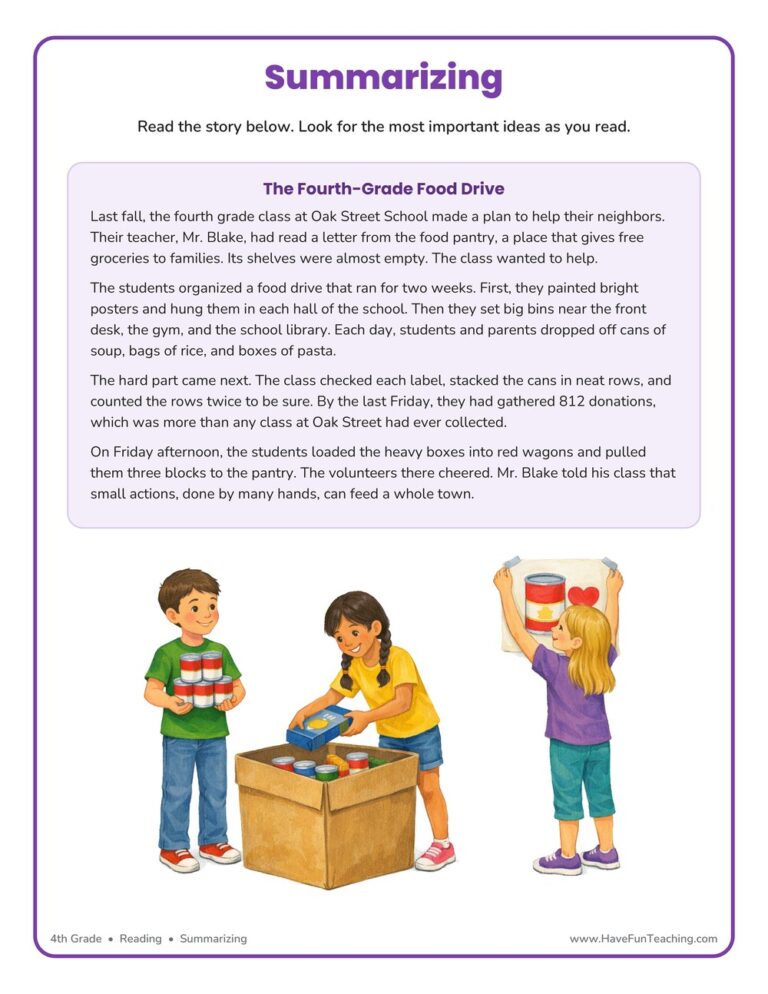
This Summarizing Worksheet asks 4th graders to read an original story, map it on a who, what, where, when, and how organizer, then write a short summary. Answer key included for fast, no-prep practice.

Worksheet
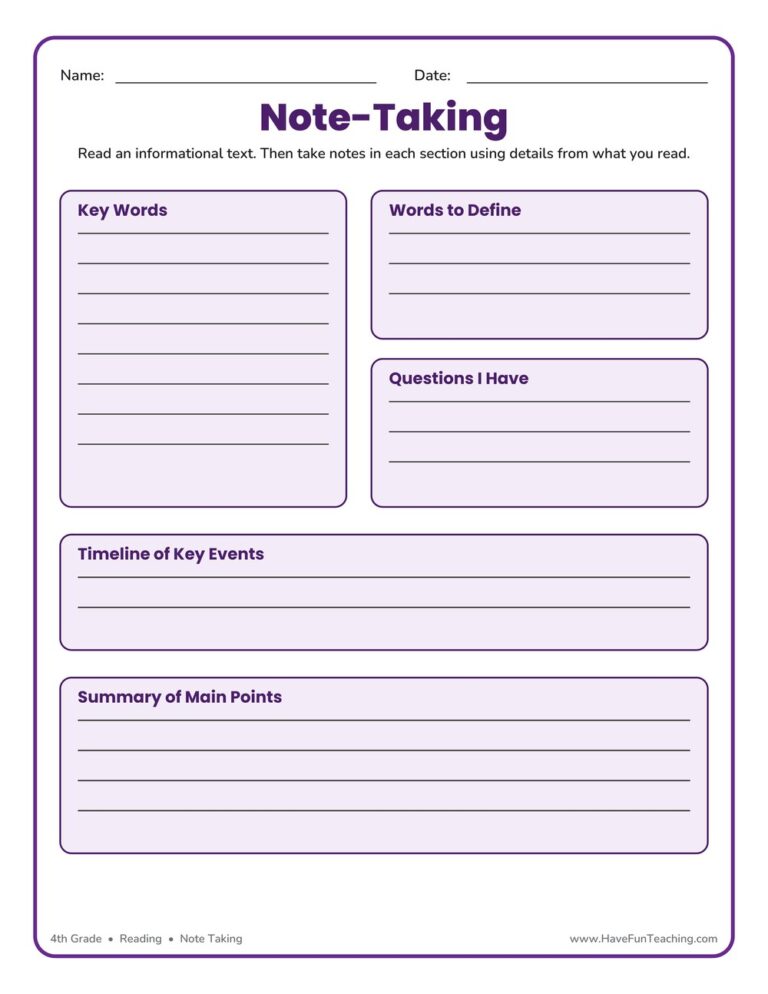
Worksheet4th GradeInformational Text Note-Taking Worksheet

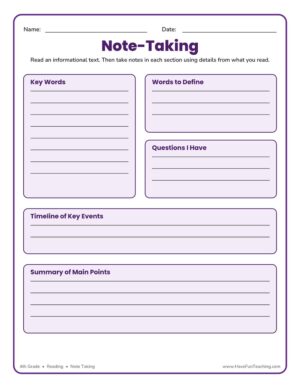
This Informational Text Note-Taking Worksheet gives 4th grade readers a five-section graphic organizer for recording key words, vocabulary, questions, a timeline, and a summary from any nonfiction text — a no-prep tool for building stronger comprehension.

Workbook
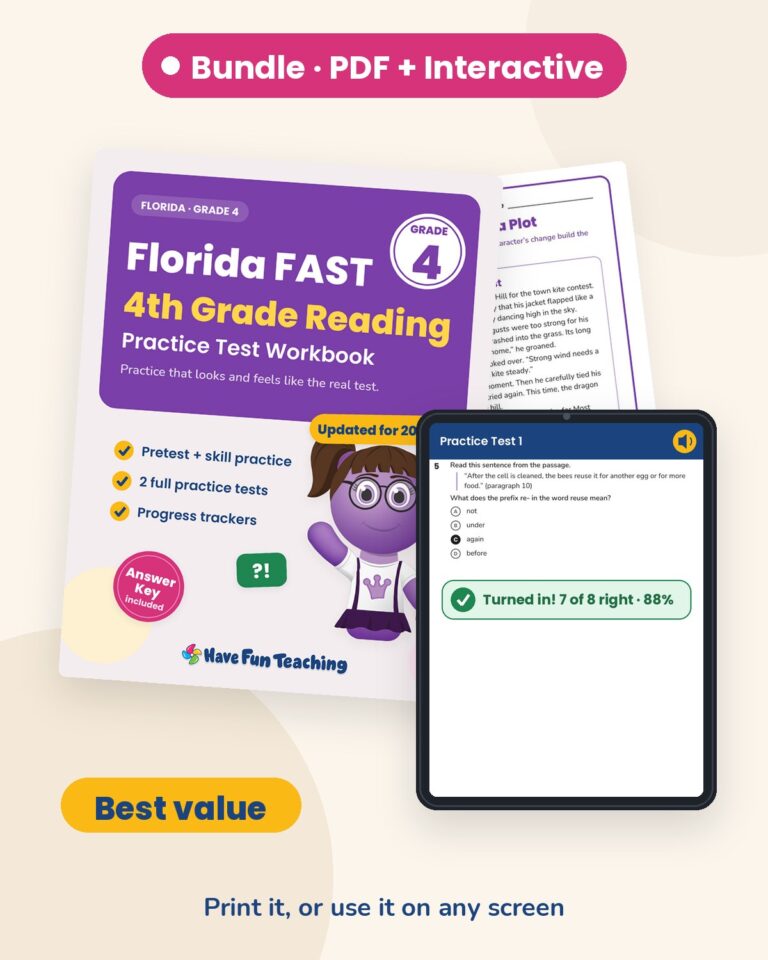
Workbook4th GradeFlorida FAST 4th Grade Reading Practice Test Workbook

A Florida FAST 4th grade reading practice test workbook for teachers, with a pretest, skill practice for all 13 benchmarks, mixed review and 2 full-length practice tests. Answer key included, so test prep is ready to go.

Worksheet
Worksheet4th GradeMain Idea Graphic Organizer

This Main Idea Graphic Organizer helps 4th graders record the main idea of any nonfiction text, add four supporting details, and write a short summary that builds strong reading skills.

Activity
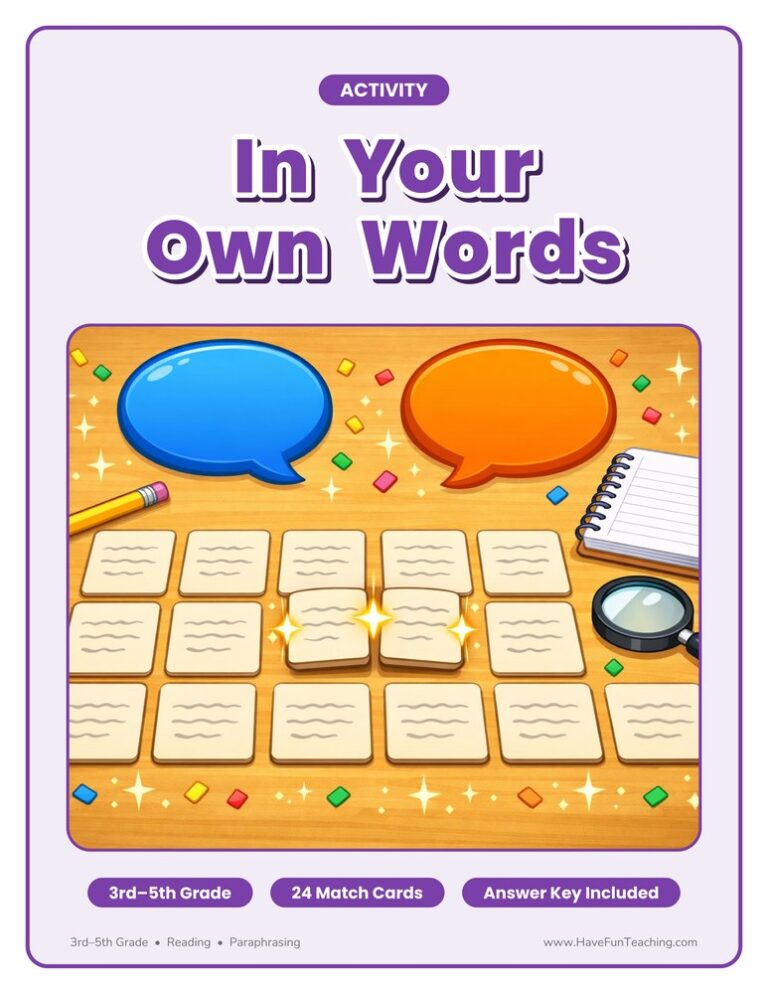
Activity4th GradeIn Your Own Words Paraphrase Activity

This in your own words paraphrase activity has 3rd to 5th grade students match texts to paraphrase cards and write their own. A practice page and an answer key are included.

Activity
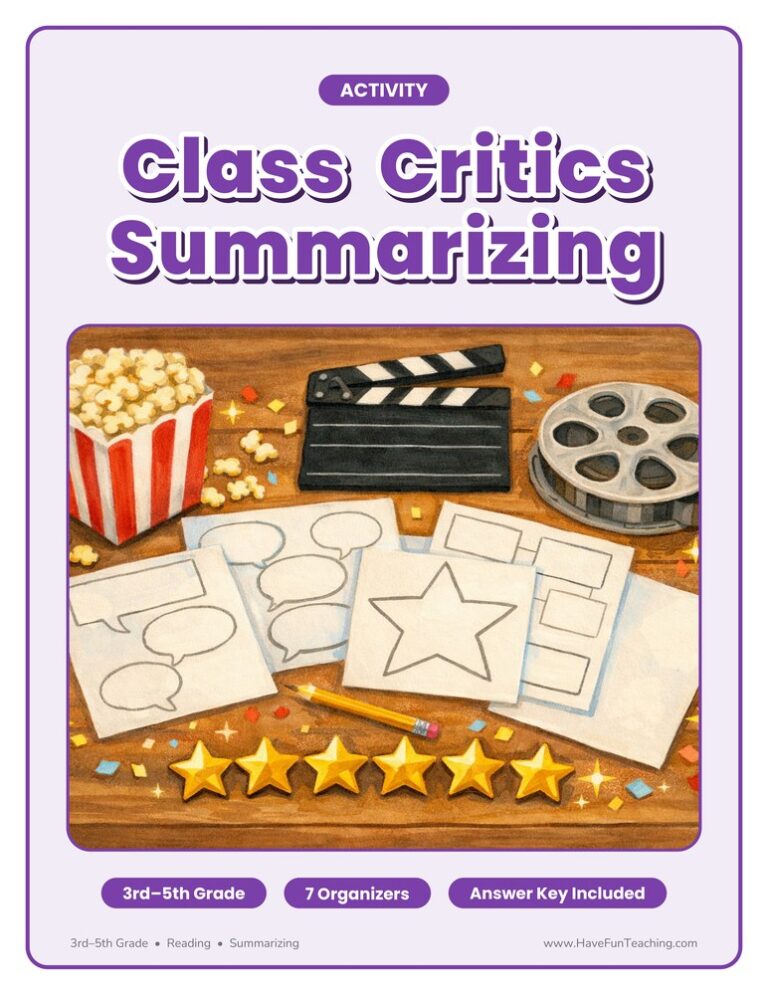
Activity4th GradeClass Critics Summarizing Activity

This class critics summarizing activity gives 3rd to 5th grade students seven organizers to summarize books, videos, and articles. Answer key included for the model and practice.

Worksheet
Worksheet4th GradeSummarizing Organizer Worksheet

This summarizing organizer worksheet walks 4th grade students from the main idea to three key details to a short summary in their own words, using any story or article they choose.

Activity
Activity4th GradeWhat Comes Next Sequencing Activity

Using What Comes Next Sequencing Activity,studentsdescribe the relationship between a series of historical events, scientific ideas or concepts, or steps in technical procedures in a text.

Activity
Activity4th GradeLet's Chat Discussion Starter Activity

This let's chat discussion starter activity gives 3rd to 5th Grade students 24 sentence starter cards, bookmarks and a speaker notes sheet, with a practice page and answer key included.

Activity
Activity4th GradeNow Presenting! Report on a Topic Activity

This Now Presenting - Report on a Topic Activity is a fun way for students to learn about Summarizing and presentations!

Activity
Activity4th GradeDigging for Information Text Structure Activity

Using Digging for Information Text Structure Activity, students describe the relationship between events, scientific concepts, or procedures in a text.

Common Core Lesson
Common Core Lesson4th GradeRI.4.5 Fourth Grade Common Core Lesson

Using RI.4.5 Fourth Grade Common Core Lesson, students describe the overall structureof events, ideas, concepts, or information in a text or part of a text.

From our teachers' playbook

Short, sharp and in your own words

What do 4th graders learn about summarizing?

Fourth graders learn to summarize both stories and nonfiction. For stories, a summary includes the main character, the problem, the key events and the solution. For nonfiction, it states the main idea and the most important details. Either way, a summary is short, in the reader's own words, and leaves out opinions and small details. Kids also learn to paraphrase, saying an idea differently without changing the meaning. The click comes when a student turns a whole chapter into three strong sentences.

Our favorite ways to teach summarizing

Summarizing means deciding what matters. These moves teach that decision-making.

Cross out, then sum up

Project a short article and think aloud as you cross out details that aren't important. Then write a two-sentence summary from what's left. Kids see the thinking, not just the final product.

Why it works: handing over the work step by step, from teacher to student, is one of the most widely used teaching frameworks (Pearson and Gallagher, 1983).
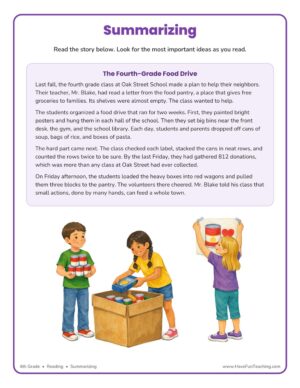
Summarizing WorksheetTry it withSummarizing WorksheetWorksheetsOpen it →

Use an organizer first

Before writing, kids fill a summarizing organizer: main idea or problem, three key points, conclusion. Then they turn it into sentences. The organizer keeps summaries from turning into retellings.

Why it works: going from real objects to pictures to symbols is a core recommendation of the U.S. Department of Education's elementary math guide.

Summarizing Organizer WorksheetTry it withSummarizing Organizer WorksheetWorksheetsOpen it →

In your own words

Read a sentence aloud, then partners race to say it a new way without copying any key words. It builds paraphrasing, which is the backbone of honest summarizing and research.

Why it works: in a well-known study, a few short sessions of a simple number board game measurably boosted young children's number skills (Ramani and Siegler, 2008).

In Your Own Words Paraphrase ActivityTry it withIn Your Own Words Paraphrase ActivityActivitiesOpen it →

Summarizing questions parents and teachers ask

What is summarizing in 4th grade?

It's retelling the most important parts of a text in a few sentences, in your own words. A good summary includes the main idea and key details, but not opinions or small details.

What is the difference between summarizing and retelling?

Retelling includes many details in order. Summarizing is shorter and focuses only on the most important ideas.

What is paraphrasing?

Paraphrasing means restating an idea in your own words without changing its meaning. It's an important part of summarizing and of avoiding copying in research.

How can I help my child summarize at home?

After reading or watching a show, ask your child to explain it in three sentences. Ask: Who was it about? What was the problem? How did it end?