

Units of Measurement Worksheet
A units of measurement worksheet where 3rd graders choose grams, kilograms, milliliters, or liters for everyday objects, then solve two metric number stories. Answer key included for fast, no-prep practice.
$6.97
Or free with a membership — members pay $3.33/mo for all 10,000+ resources. See plans
Want this one free?
Tell us where to send it and it’s yours — no card, no catch.
One free resource per teacher. We’ll also send free teaching ideas each week — unsubscribe anytime.
Teaching is easier with a membership
Unlimited printables, games & videos for PreK–6th — for your classroom or homeschool. Cancel anytime.
Start your 3-day free trial$0 today · cancel anytime · Instant access to 10,000+ resources
About this resource
Description
Choosing the right unit is the first real measurement decision a child makes, and it is the one that makes every later calculation sensible. This units of measurement worksheet gives 3rd graders focused practice deciding whether an object is best measured in grams, kilograms, milliliters, or liters. Students look at a familiar object — a paper clip, a bicycle, a bathtub of water, a spoonful of medicine — and pick the metric unit that matches its size. That single habit, matching the unit to the thing being measured, is exactly what the third-grade standard for measuring liquid volumes and masses asks students to build.
The page opens with six fill-in-the-bubble items, so the choice is quick, clean, and easy to score. Each item offers all four units in the same order, which means students have to read the object and think about its size rather than guess from the layout. The second half of this 3rd grade measurement worksheet turns to two number stories that put the units to work: one adds masses in kilograms, and one subtracts milliliters poured from a full bottle. Both are two-step problems, so students multiply first and then add or subtract. Use it as independent practice after a hands-on lesson with a balance and a measuring cup, as a quick check before a unit test, or as morning work that reviews measurement without any prep.
What’s Included
- 1 print-ready PDF worksheet
- Answer key
- 6 choose-the-best-unit items and 2 two-step metric number stories
There are three reasons this units of measurement worksheet helps kids learn the skill. First, it uses objects children have actually held, so the size of a gram and the size of a kilogram attach to something real instead of staying abstract. Second, every item offers the same four choices, which forces students to compare units against each other and notice that grams and kilograms measure mass while milliliters and liters measure liquid volume. Third, the number stories keep the units in play after the sorting is done, so students practice labeling an answer — the step most often skipped and most often marked wrong.
To extend the lesson, set up a measuring station with a kitchen scale, a set of measuring cups, and a basket of classroom objects, and let partners estimate before they measure. Ask students to hunt at home for one item measured in grams and one measured in liters and bring the labels in to compare. Play a quick sorting game where you call out an object and students hold up a card for the unit they would use. Building a class chart of benchmark amounts — a paper clip is about 1 gram, a water bottle is about 1 liter — gives children a reference they can reach for all year.
Related Resources
What teachers say
Reviews
You must be logged in to post a review.

This Density and Volume in Metric Worksheet asks 3rd graders to choose the best metric unit—grams, kilograms, milliliters, or liters—for ten everyday objects. Answer key included for fast, no-prep measurement practice.
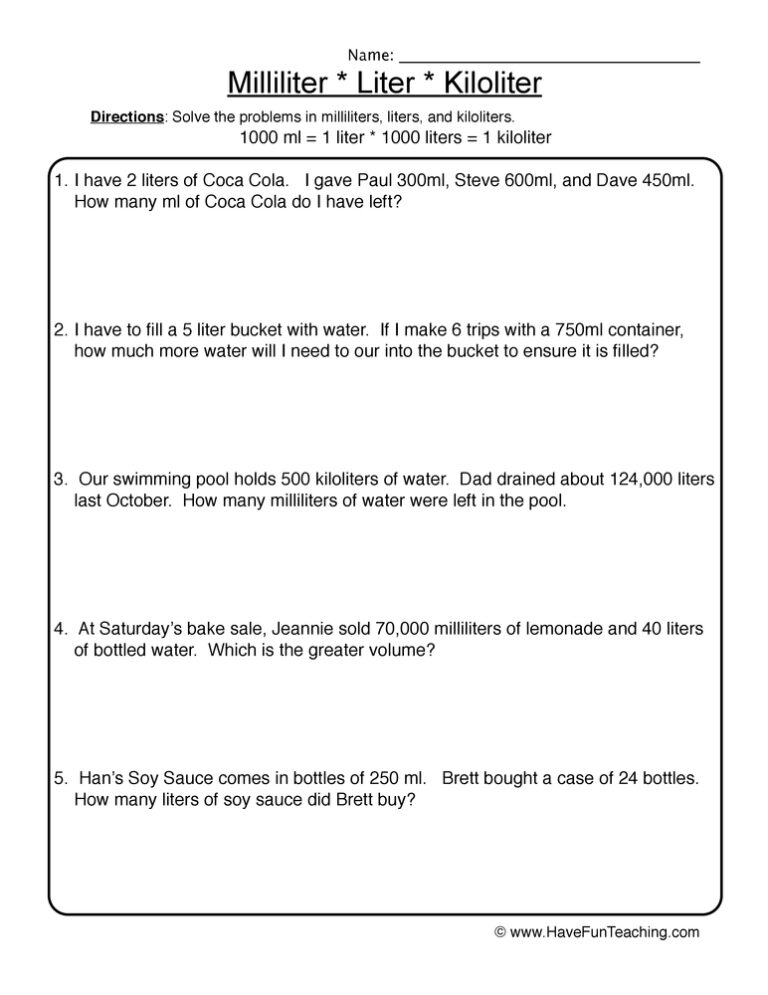
Using Liquid Measurement Scenarios Worksheet, students convert the liquid measures to build their understanding of metric units.

Using Measurement Conversions Worksheet, students convert the liquid and dry measures to build their understanding of capacity.

Using this Measurement Conversion Activity, students demonstrate knowledge of relative sizes of measurement units within one system of units.
A printable, ready-to-use blank calendar with a landscape monthly grid and labeled day columns. Great for Kindergarten through 5th grade classrooms to map out lessons, holidays, and daily routines—just add the month and the dates.
Using the Counting Songs (Classic Video Collection), students practice skip counting by all of the numbers by singing and counting along to these thirteen videos.
This 100 by 100 blank graph paper worksheet gives 3rd graders a ready-made coordinate grid numbered to 100 by tens — perfect for plotting points, building bar graphs, and organizing data with no prep required.
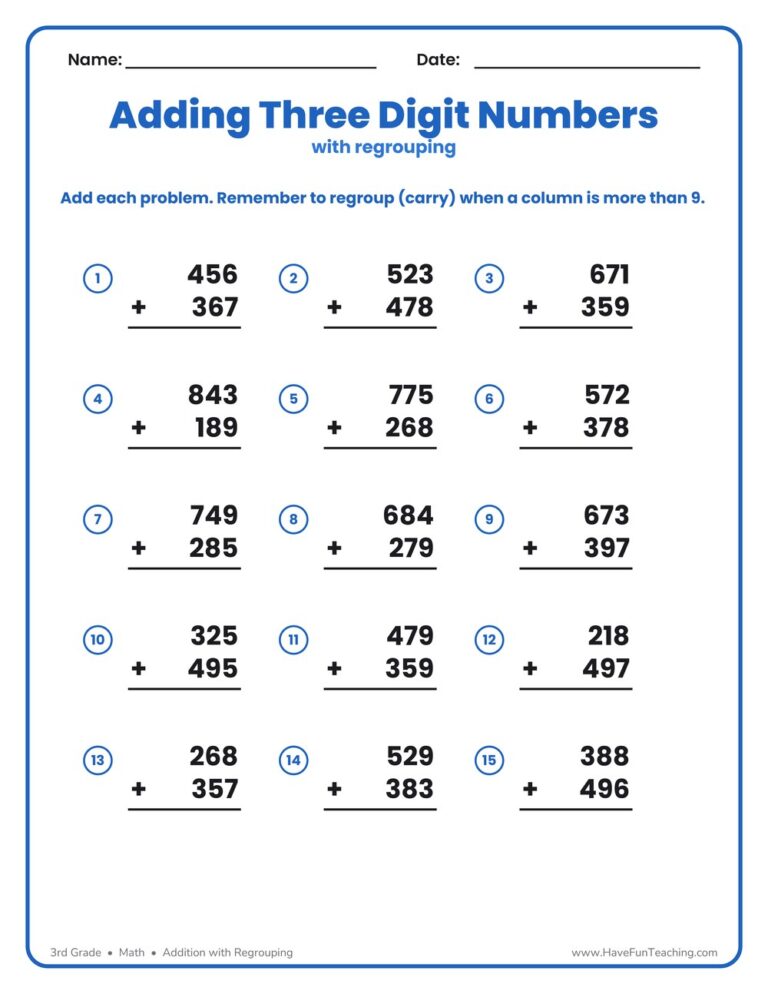
This triple digit addition regrouping worksheet gives 3rd graders fifteen three-digit column addition problems that all practice carrying across places. A complete answer key is included for fast, no-prep math review.

This Third Grade Math Test Practice Worksheet gives students 10 multiple-choice questions on place value, addition, and subtraction, with a complete answer key for fast, no-prep review.
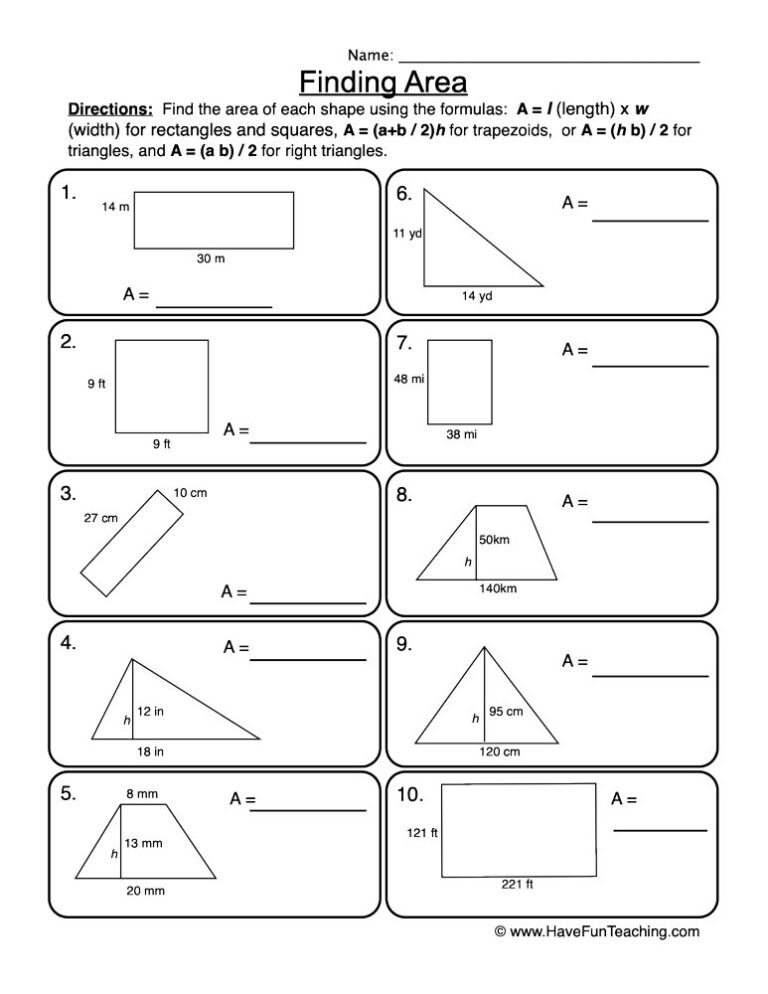
A Finding Different Shapes Area Worksheet where 3rd graders find the area of rectangles, squares, and composite shapes in square units. Answer key included—great for no-prep area practice.

Third graders round three-digit numbers to the nearest hundred to estimate each sum on this Adding and Estimation Worksheet, then add to find the actual total. Includes an answer key—great for quick, no-prep math practice.

Using the Counting By Fives Song (Original Music Video), students practice skip counting by 5s by singing and counting along to this fun and engaging video!

Reviews
There are no reviews yet