
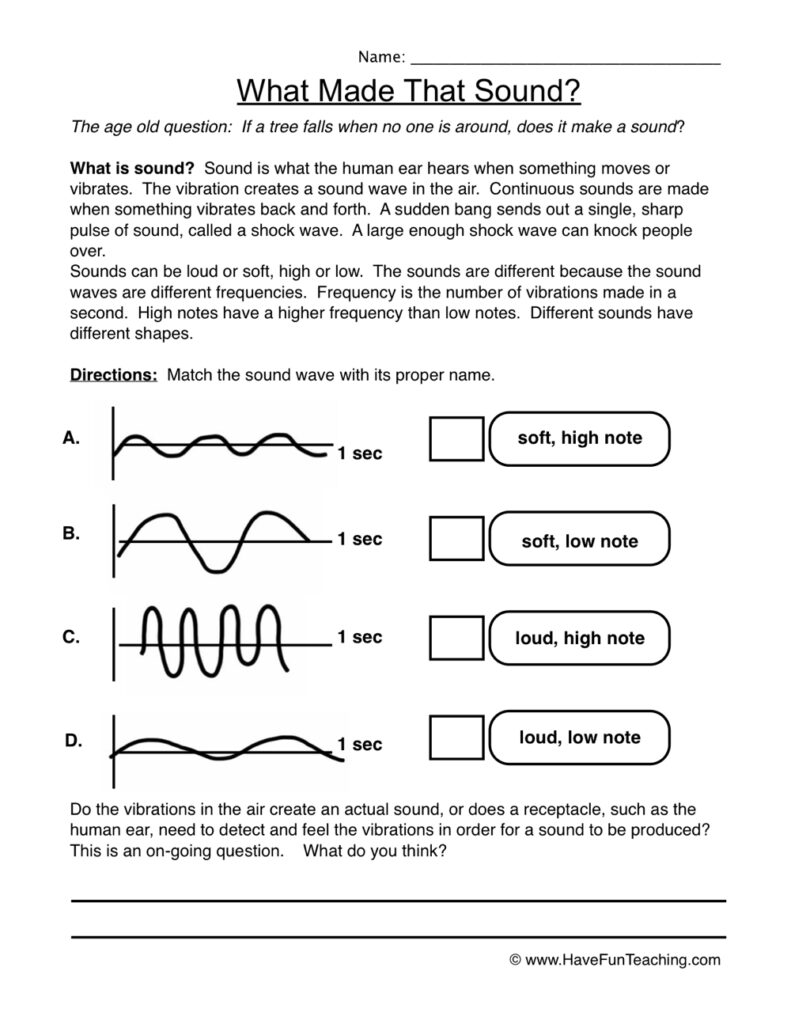
What Made That Sound? Worksheet
The What Made That Sound Worksheet asks 4th graders to read four one-second sound waves and decide whether each note is loud or soft, high or low. Answer key included for fast, confident checking.
$6.97
Or free with a membership — members pay $3.33/mo for all 10,000+ resources. See plans
Want this one free?
Tell us where to send it and it’s yours — no card, no catch.
One free resource per teacher. We’ll also send free teaching ideas each week — unsubscribe anytime.
Teaching is easier with a membership
Unlimited printables, games & videos for PreK–6th — for your classroom or homeschool. Cancel anytime.
Start your 3-day free trial$0 today · cancel anytime · Instant access to 10,000+ resources
About this resource
Description
Sound is energy that travels in waves, and learning to read those waves is one of the biggest ideas in fourth grade physical science. Every sound a student hears — a drum, a guitar string, a voice down the hall — starts with something vibrating, and the shape of the wave that vibration makes tells you two different things about the sound. The height of the wave shows how loud or soft the sound is, and the number of waves that pass by each second shows whether the note is high or low. The What Made That Sound Worksheet gives students a clear, visual way to keep those two ideas apart, so amplitude and frequency stop blurring together.
This 4th grade sound waves worksheet opens with four labeled wave diagrams, each one showing exactly one second of sound. Students study the height and the spacing of each wave, then draw a line to match it with the sound it represents: loud or soft, high or low. Because all four waves share the same one-second window, the only things that change between them are amplitude and frequency, which makes the comparison honest and easy to reason about. Use it as guided practice after a demonstration with a rubber band or a tuning fork, as an independent check for understanding, or as a quick review before a unit assessment.
What’s Included
- 1 print-ready PDF worksheet
- Answer key
- 4 sound-wave matching items and 2 written-response questions
Three things make this resource work in a real classroom. First, the What Made That Sound Worksheet asks students to read a model rather than memorize a definition, which is exactly what the standards expect of fourth graders studying waves. Second, the written-response questions push past recognition: students have to explain why a wave changes when a drum is struck harder, and how they can tell which guitar string plays the higher note. Third, the included answer key gives full sample explanations, so a teacher, a tutor, or a parent can see right away whether a student has connected wave height to volume and wave count to pitch.
Away from the page, sound is one of the easiest topics to make hands-on. Stretch rubber bands of different thicknesses across an open box and let students pluck them, listening for how the thin band makes a higher note. Fill glass jars with different amounts of water and tap them gently with a spoon. Have students hum with their fingers resting on their throats so they can feel the vibration that makes the sound. Then send them back to the wave diagrams and ask which picture matches what they just heard — moving from the real world to the model is where the learning sticks.
Related Resources
What teachers say
Reviews
You must be logged in to post a review.

This Circuits Worksheet helps 4th Grade students label the battery, bulb, switch, and wire, decide whether a circuit is open or closed, and explain how current flows. Answer key included, so checking work is quick.
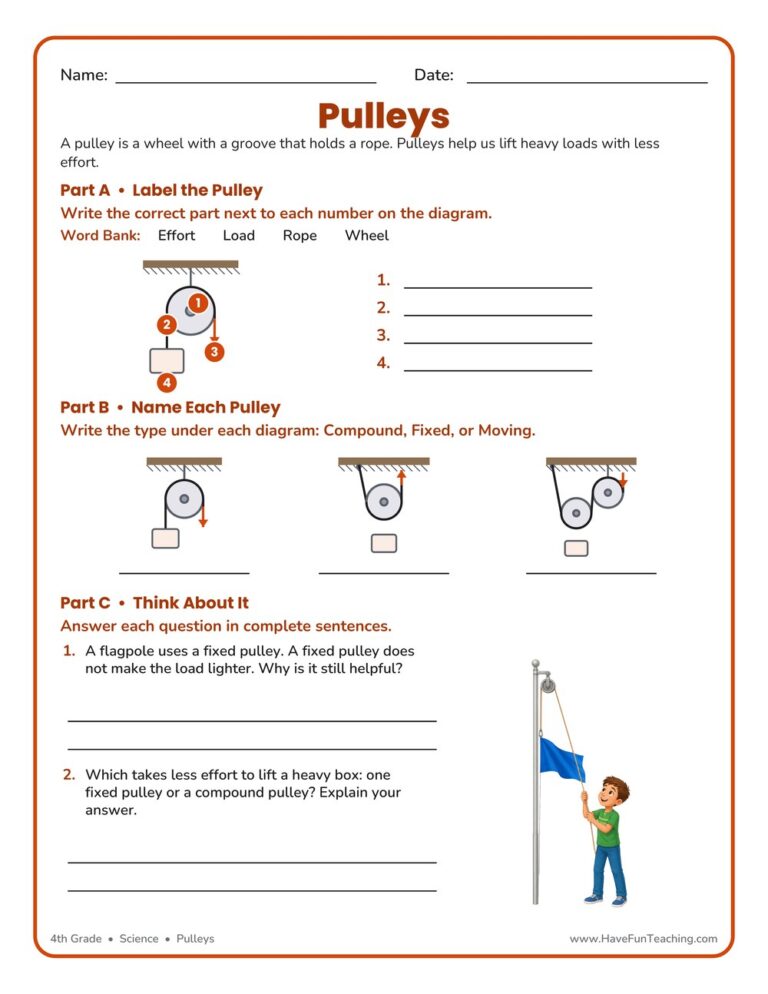
This Pulleys Worksheet helps 4th graders label a pulley, compare fixed, moving, and compound pulleys, and explain how pulleys lift heavy loads. Includes an answer key — a no-prep way to practice simple machines science.
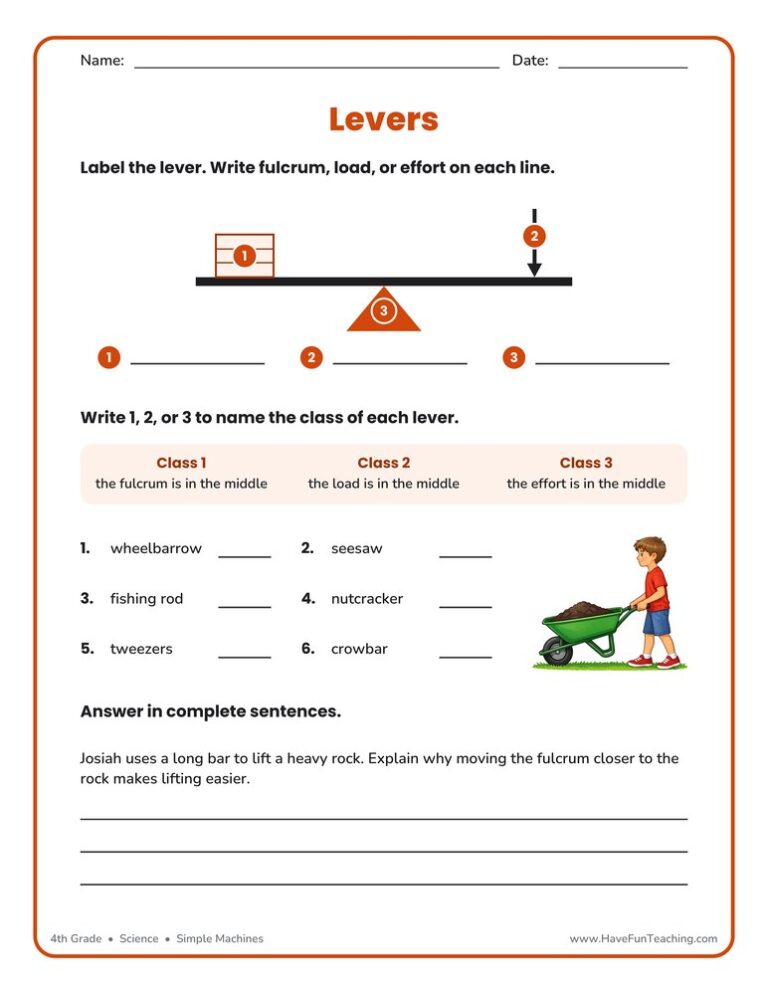
This Levers Worksheet helps 4th grade students label the fulcrum, load, and effort, then name the class of six everyday tools. An answer key is included, so practice checks fast.

This Electricity Worksheet pairs a short reading passage with vocabulary and explanation questions that show 4th graders how current, circuits, conductors, and insulators work. Answer key included for fast, no-prep science practice.

This Simple Machines Match Worksheet gives 4th Grade students six machines to pair with the jobs they do, plus everyday examples to name. An answer key is included, so checking work takes seconds.

This Magnetic Earth Worksheet gives 4th Grade students four magnet words and six real-life clues to match, plus an answer key, so magnetism vocabulary sticks long after the lesson ends.
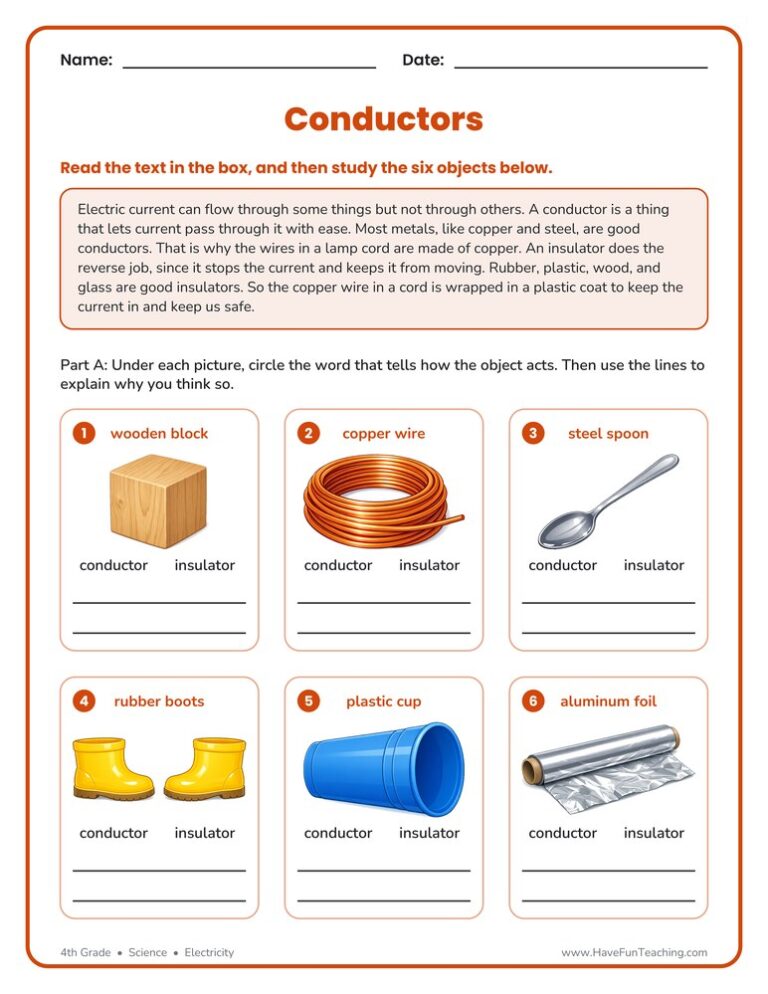
This conductors worksheet has 4th graders read a short passage, sort six objects as conductors or insulators, and explain each choice. An answer key is included for easy checking.

These Light Bulb Cut Outs quickly give you templates that can be easily cut and applied for classroom decoration or student activities about electricity.
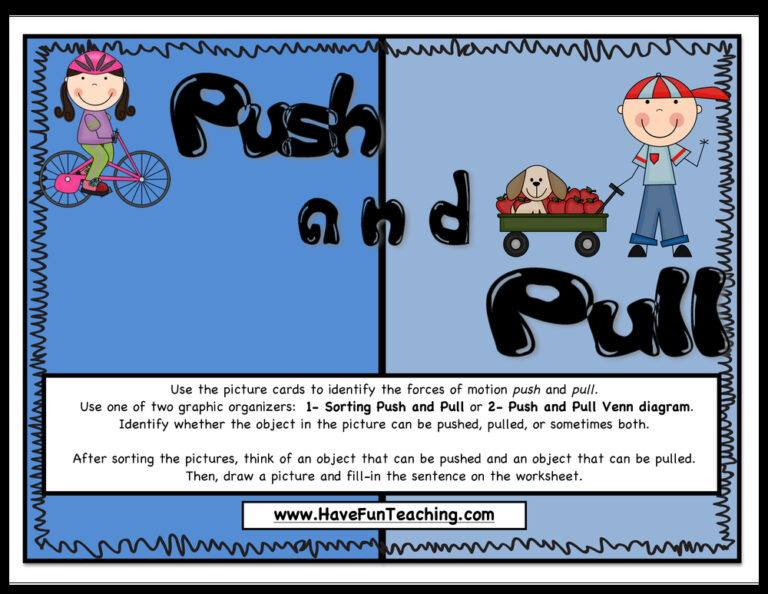
Using Motion Activity, students sort picture cards into categories of push, pull, or both to build their understanding of force.

UsingCircuits Conductors Worksheet. students draw pictures of circuits and conductors to build their understanding of how electricity works.

Using Some Like it Hot Heat Worksheet, students place items in direct sunlight or under a heat lamp after ten minutes record your observations.
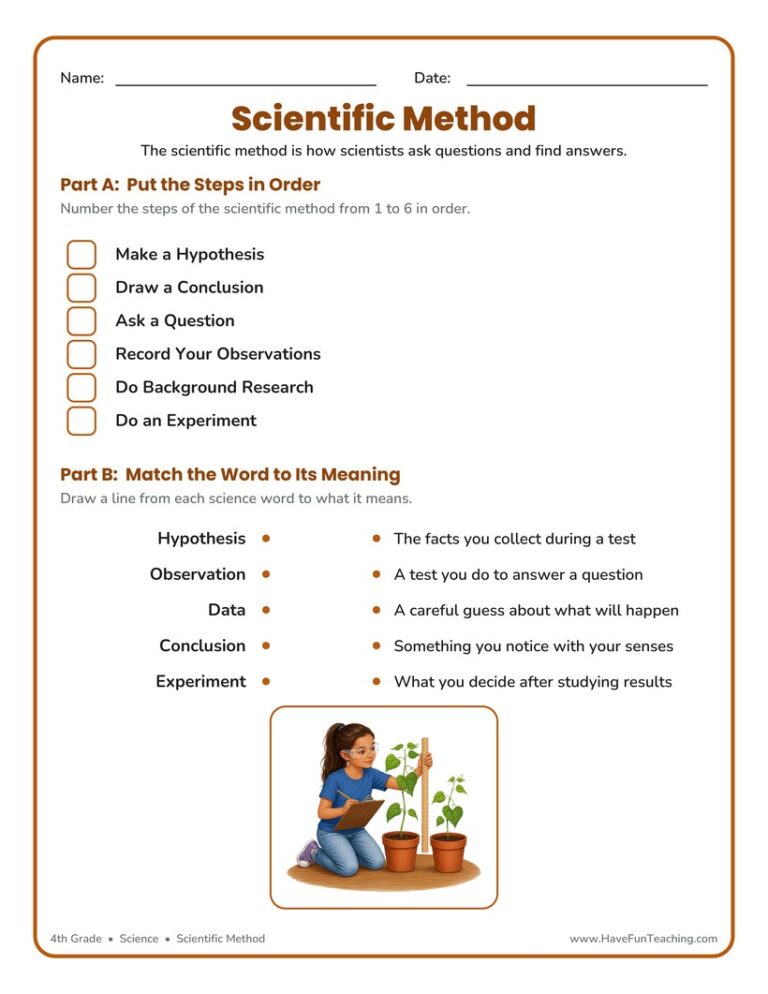
This Scientific Method Worksheet helps 4th graders order the six steps of an investigation, match key science words, and analyze a real bean-plant experiment. Answer key included — a no-prep way to build real science-thinking skills.




Reviews
There are no reviews yet