
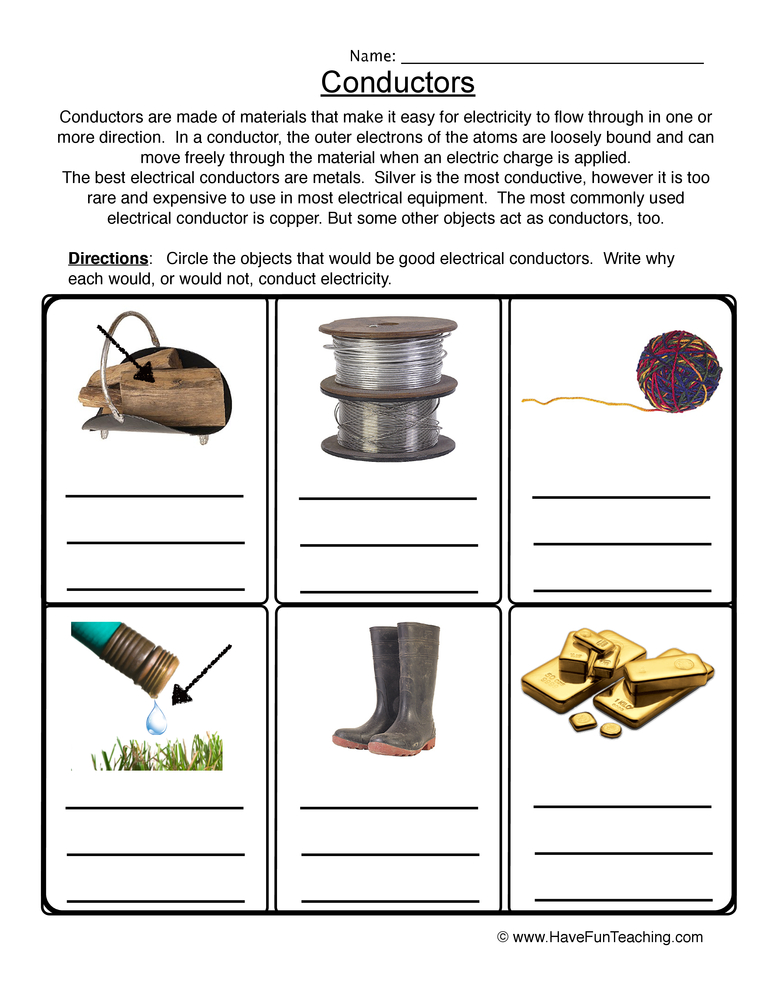
Conductors Worksheet
This conductors worksheet has 4th graders read a short passage, sort six objects as conductors or insulators, and explain each choice. An answer key is included for easy checking.
$6.97
Or free with a membership — members pay $3.33/mo for all 10,000+ resources. See plans
Want this one free?
Tell us where to send it and it’s yours — no card, no catch.
One free resource per teacher. We’ll also send free teaching ideas each week — unsubscribe anytime.
Teaching is easier with a membership
Unlimited printables, games & videos for PreK–6th — for your classroom or homeschool. Cancel anytime.
Start your 3-day free trial$0 today · cancel anytime · Instant access to 10,000+ resources
About this resource
Description
A conductors worksheet helps students learn why electric current flows through some materials and not others. A conductor, such as a copper wire, lets current pass through it with ease, while an insulator, such as rubber or plastic, stops it. Knowing the difference helps children understand how the cords, switches, and tools around them work, and why those tools are built the way they are.
This Conductors Worksheet opens with a short reading passage that explains conductors and insulators in plain, on-level language. Students then study six everyday objects: a wooden block, a copper wire, a steel spoon, rubber boots, a plastic cup, and aluminum foil. Under each picture they circle conductor or insulator, and then they write a short reason for their choice on the lines. Use it after a hands-on circuit lesson, as a science center, or as a quick check before a unit test.
What’s Included
- A short reading passage about conductors and insulators
- Six object cards with a picture, a caption, and a circle choice
- Two writing lines on every card for the reason
- A full answer key with sample reasons
Why This Worksheet Helps Kids
First, reading the passage before sorting the objects builds the habit of using text evidence in science. Second, the six familiar objects connect a new science word to things students already hold and use every day. Third, writing a reason for every choice pushes students past guessing and into explaining, which is exactly what a 4th grade electricity worksheet should ask for.
Ideas for Teachers and Parents
Set up a simple battery, bulb, and wire circuit and let students test real objects to check their answers. Afterward, have them hunt for more conductors and insulators around the room and add them to a class chart. At home, parents can talk through why plugs and cords are covered in plastic and why we keep water away from outlets.
Related Resources
What teachers say
Reviews
You must be logged in to post a review.

This Circuits Worksheet helps 4th Grade students label the battery, bulb, switch, and wire, decide whether a circuit is open or closed, and explain how current flows. Answer key included, so checking work is quick.

This Electricity Worksheet pairs a short reading passage with vocabulary and explanation questions that show 4th graders how current, circuits, conductors, and insulators work. Answer key included for fast, no-prep science practice.

These Light Bulb Cut Outs quickly give you templates that can be easily cut and applied for classroom decoration or student activities about electricity.

Using this Electricity Writing Paper, you will be able to showcase your students' Science writing about electricity to create a decorative, final draft.

UsingCircuits Conductors Worksheet. students draw pictures of circuits and conductors to build their understanding of how electricity works.
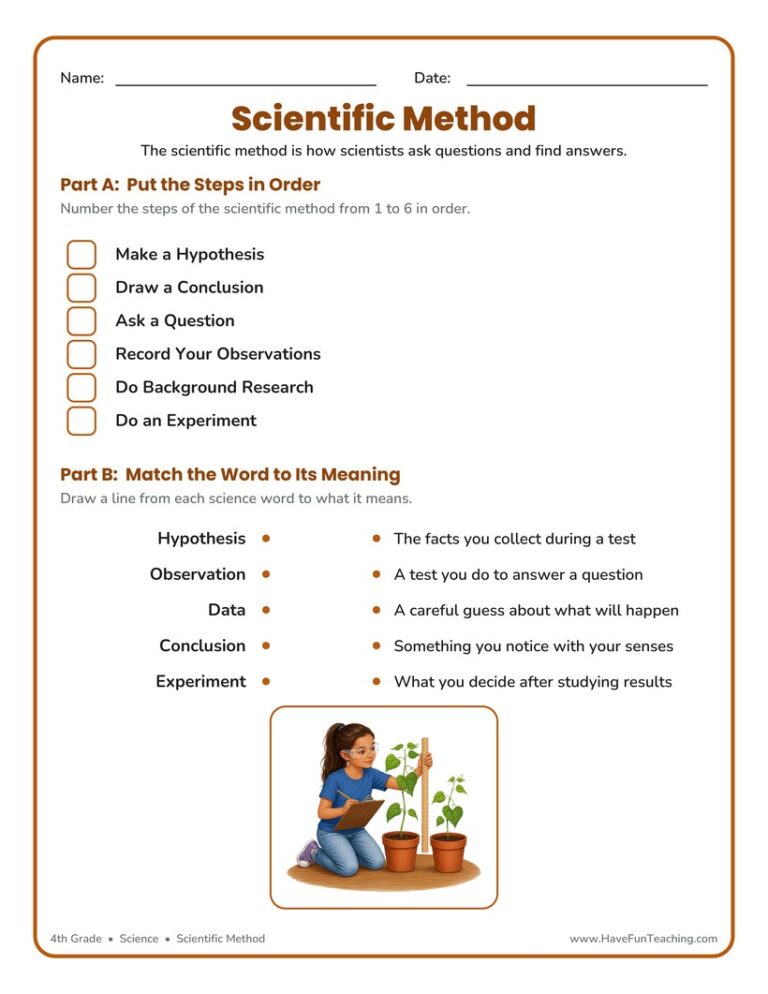
This Scientific Method Worksheet helps 4th graders order the six steps of an investigation, match key science words, and analyze a real bean-plant experiment. Answer key included — a no-prep way to build real science-thinking skills.
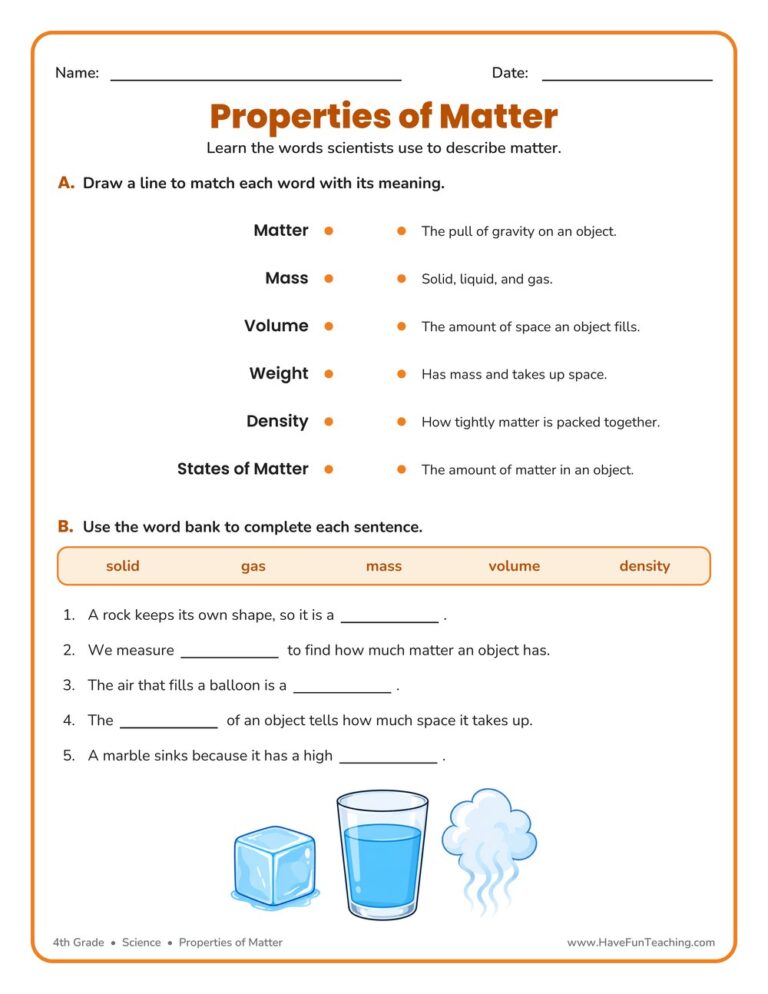
This Properties of Matter Definitions Worksheet helps 4th grade students match key science terms—matter, mass, volume, weight, and density—to their meanings and complete sentences about solids and gases. Answer key included for fast, no-prep science practice.
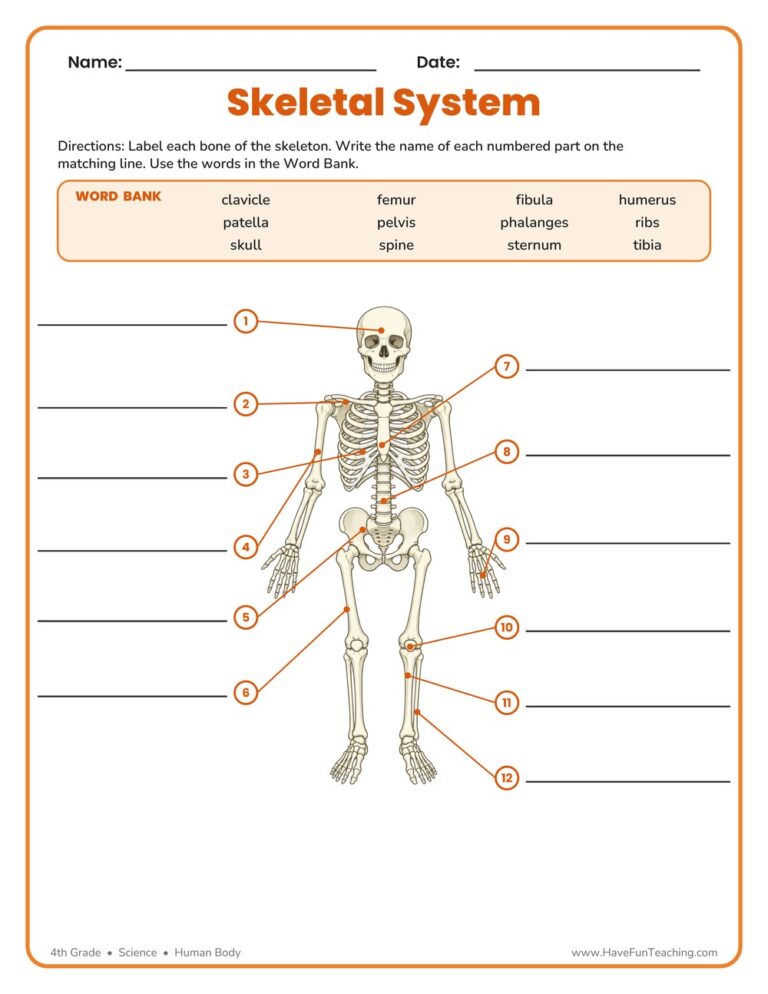
This Label Skeletal System Worksheet lets 4th grade students identify and name twelve major bones on a clear skeleton diagram using a word bank. An answer key is included for quick, no-prep human body practice.
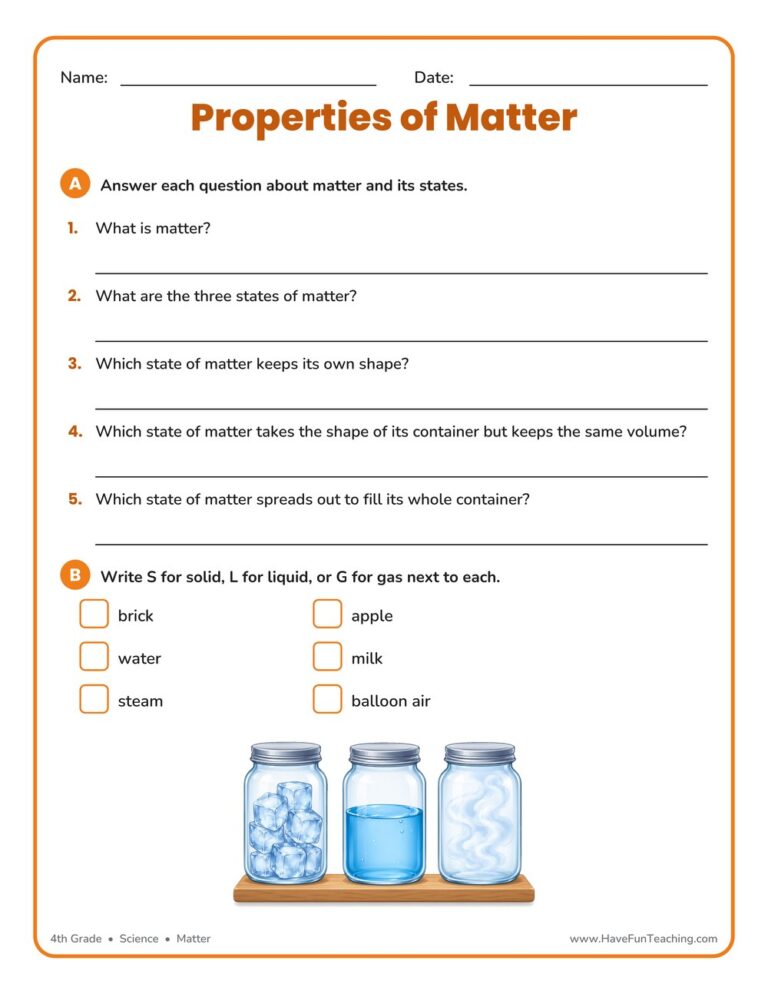
This 4th Grade Properties of Matter Review Worksheet has students answer key questions about matter and sort everyday objects as solid, liquid, or gas. Answer key included — an easy, no-prep way to review states of matter.

While listening the Scientific Method Song (Animated Music Video), students learn about seven steps of the scientific method while listening to a catchy song.

The Matter Song teaches all about matter and the states of matter. With this states of matter song, students learn about solid, liquid, and gas, as well as the phases of matter, properties of matter, physical changes, chemical changes, and so much more. Matter has mass and takes up space.…
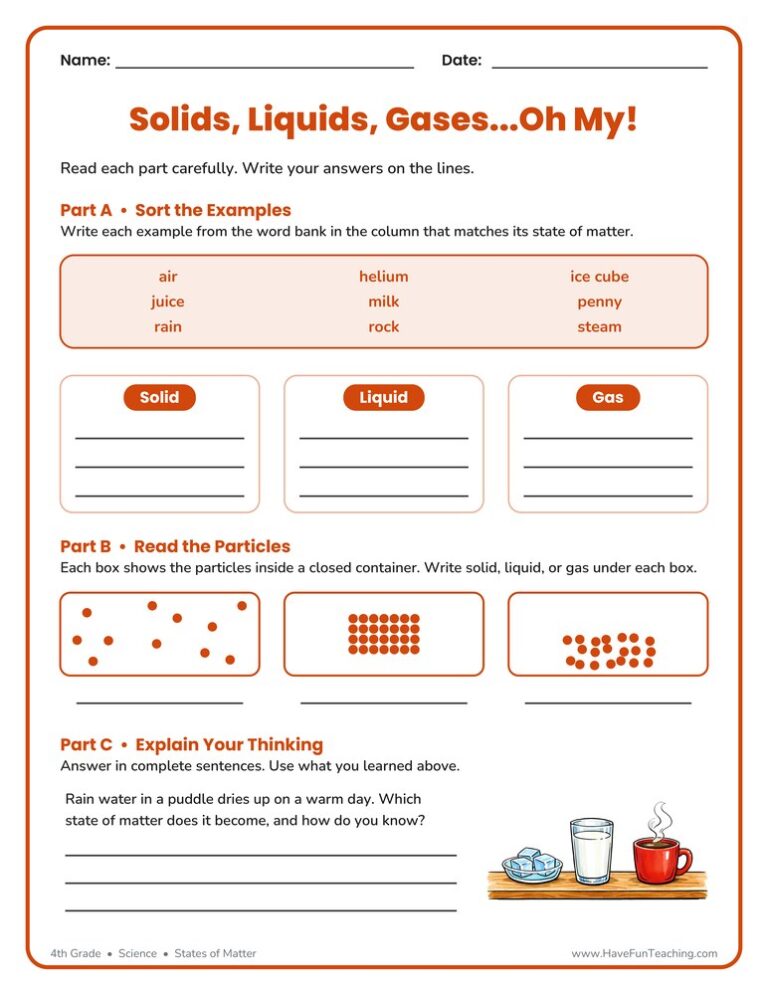
Sort nine everyday examples, label three particle diagrams, and explain a change of state with this states of matter examples worksheet for 4th grade. An answer key is included, so checking work takes seconds.

Reviews
There are no reviews yet