

You Write the Story Beaver Picture Worksheet
This you write the story beaver picture worksheet invites 2nd grade writers to name a bat-chewing beaver and tell a creative story about what happens next.
$6.97
Or free with a membership — members pay $3.33/mo for all 10,000+ resources. See plans
Want this one free?
Tell us where to send it and it’s yours — no card, no catch.
One free resource per teacher. We’ll also send free teaching ideas each week — unsubscribe anytime.
Teaching is easier with a membership
Unlimited printables, games & videos for PreK–6th — for your classroom or homeschool. Cancel anytime.
Start your 3-day free trial$0 today · cancel anytime · Instant access to 10,000+ resources
About this resource
Description
A good picture can spark a great story. This You Write the Story Beaver Picture Worksheet gives young writers a funny scene to explore: a beaver sitting on the grass happily chewing on a baseball bat, with a baseball and a glove left nearby. Children look closely at the picture, decide what is going on, and turn their ideas into a short narrative with characters, events, and an ending.
Students begin by studying the picture and asking questions. Who does the bat belong to? Why is the beaver chewing it? What will happen when the players come back? Then they give the beaver a name and write their story on the eight roomy writing lines below the picture. This 2nd grade narratives worksheet works well for writing centers, journal time, early finisher work, or homework, and every child’s story will be different.
What’s Included
- One full-color picture prompt of a beaver chewing a baseball bat
- Clear directions that ask students to name the beaver and tell what happens next
- Eight wide writing lines sized for 2nd grade handwriting
Why It Helps Kids Learn
First, a picture prompt removes the fear of the blank page, because the setting and the problem are already there. Second, children practice the parts of a narrative, including a character, a sequence of events, and an ending. Third, looking closely at details such as the wood chips and the empty glove helps students make inferences and add descriptive words to their writing.
Ideas for Teachers and Parents
Talk about the picture together before writing and list interesting words on the board, such as gnaw, crunch, and wooden. Encourage students to use time-order words like first, next, and last. When children finish the You Write the Story Beaver Picture Worksheet, invite them to read their stories aloud and compare how many different ideas came from the same picture.
Related Resources
What teachers say
Reviews
You must be logged in to post a review.
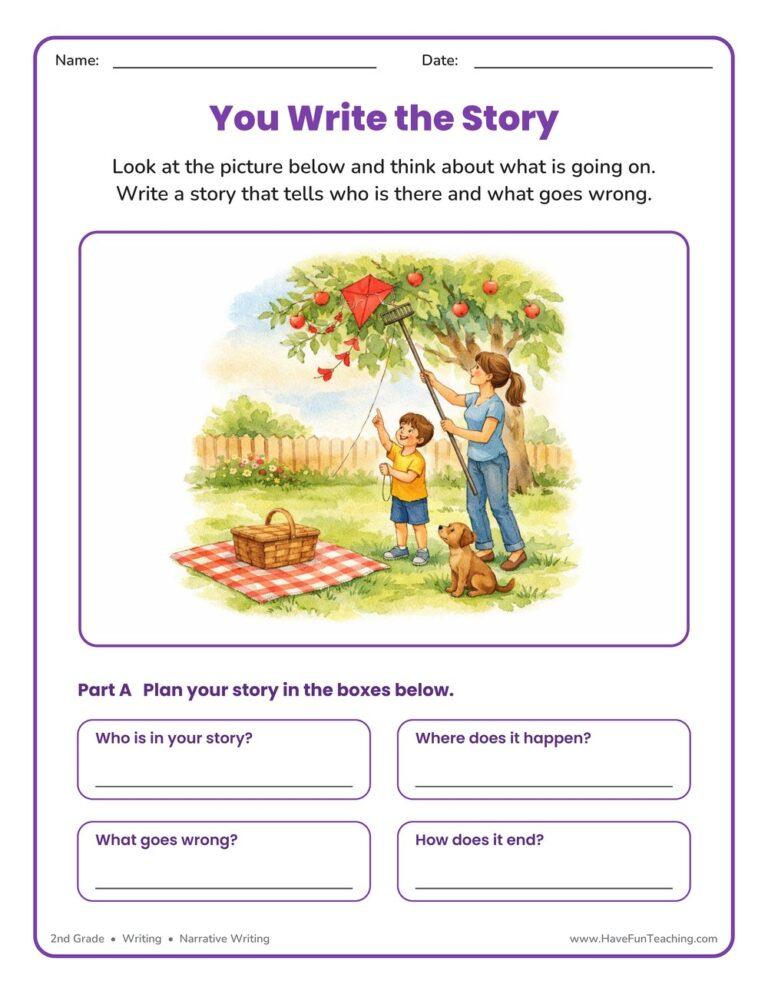
The You Write the Story Helping Picture Worksheet gives 2nd Grade writers a detailed picture, a four-box story planner, and guided beginning, middle, and end lines so every child can draft an original narrative with confidence.

Using Experience Narrative Worksheet, students dictate, write, or draw about a time in their lives to give descriptive information.
A You Write the Story Kids Picture Worksheet that gives 2nd graders a kite-stuck-in-a-tree picture prompt and eight wide lines to write their own narrative, naming the characters and telling what happens next.

This sequence writing worksheet has 2nd graders number four mixed-up pancake story events, then write the story with order words and an ending. An answer key is included for easy checking.
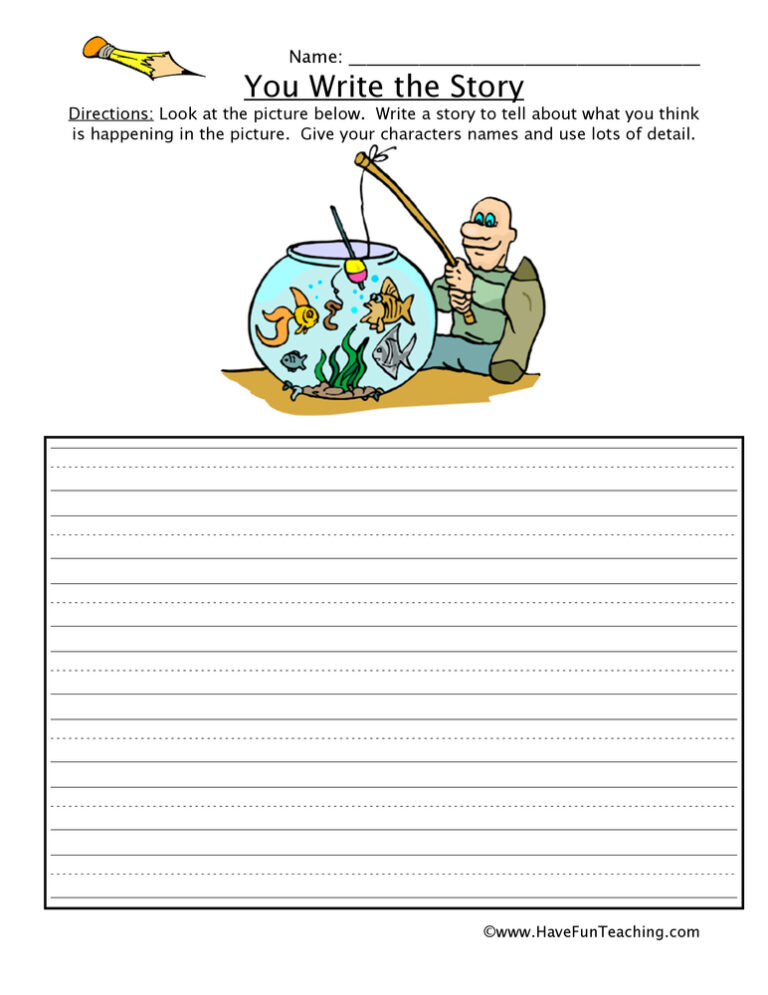
This you write the story fishing picture worksheet gives 2nd Grade students a lakeside scene and eight writing lines, so every child names the characters and tells the story their own way.
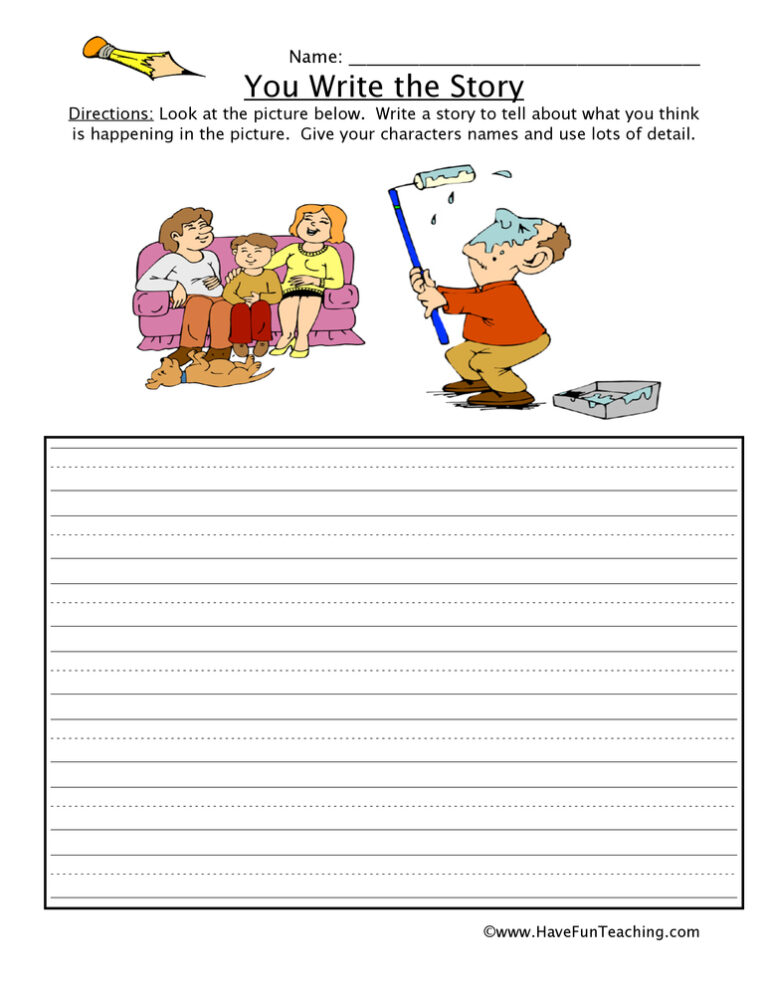
The You Write the Story Painting Picture Worksheet gives 2nd grade writers a picture prompt and eight wide lines, so every child starts a narrative without staring at a blank page.
This lesson learned worksheet helps 2nd graders plan a true story about a time they learned a lesson, with boxes for the beginning, middle, end, and the lesson itself.
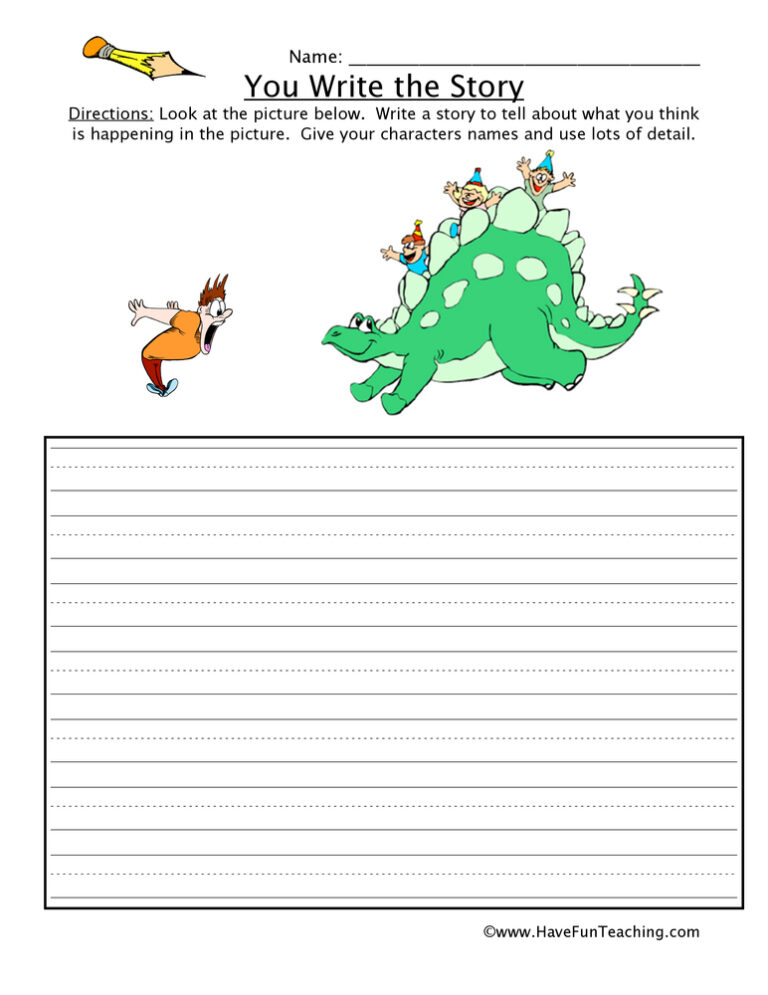
This You Write the Story Dinosaur Picture Worksheet invites 2nd graders to name two friendly party dinosaurs and write their own story on eight roomy lines. A fun, no-prep way to build narrative writing skills.
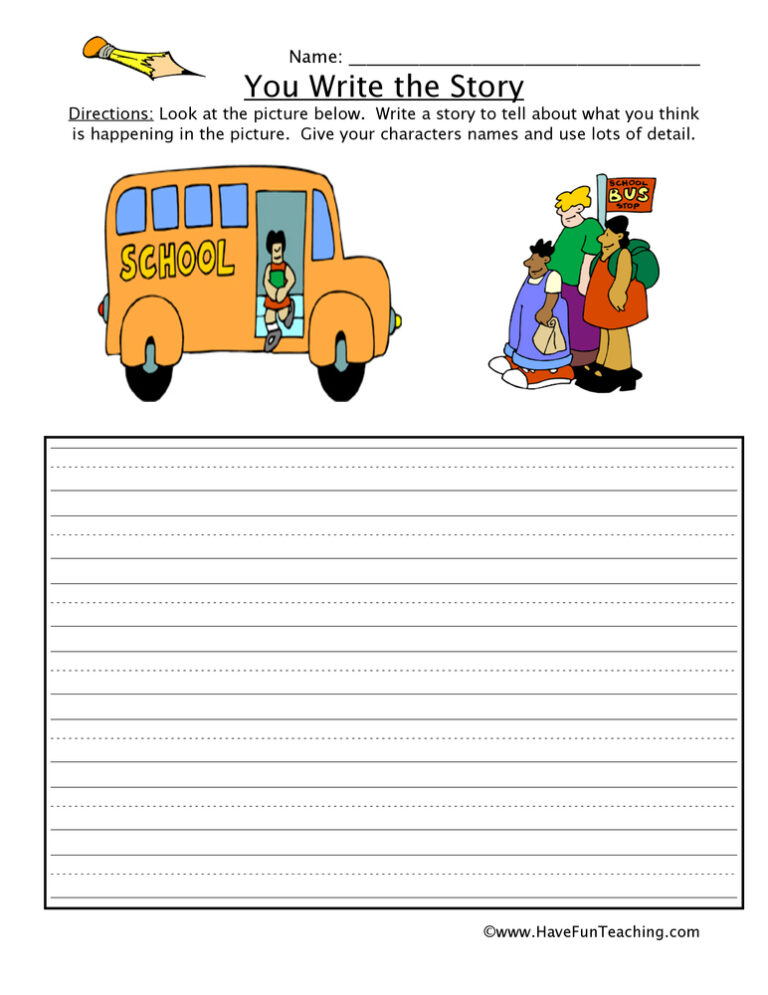
Turn one picture into a story with this you write the story school picture worksheet. 2nd graders name the characters at the bus stop and write what happens next on eight ruled lines.
Using thisApple Shape Book Activity, students will enhance their apple writing when they write in this apple shaped book.
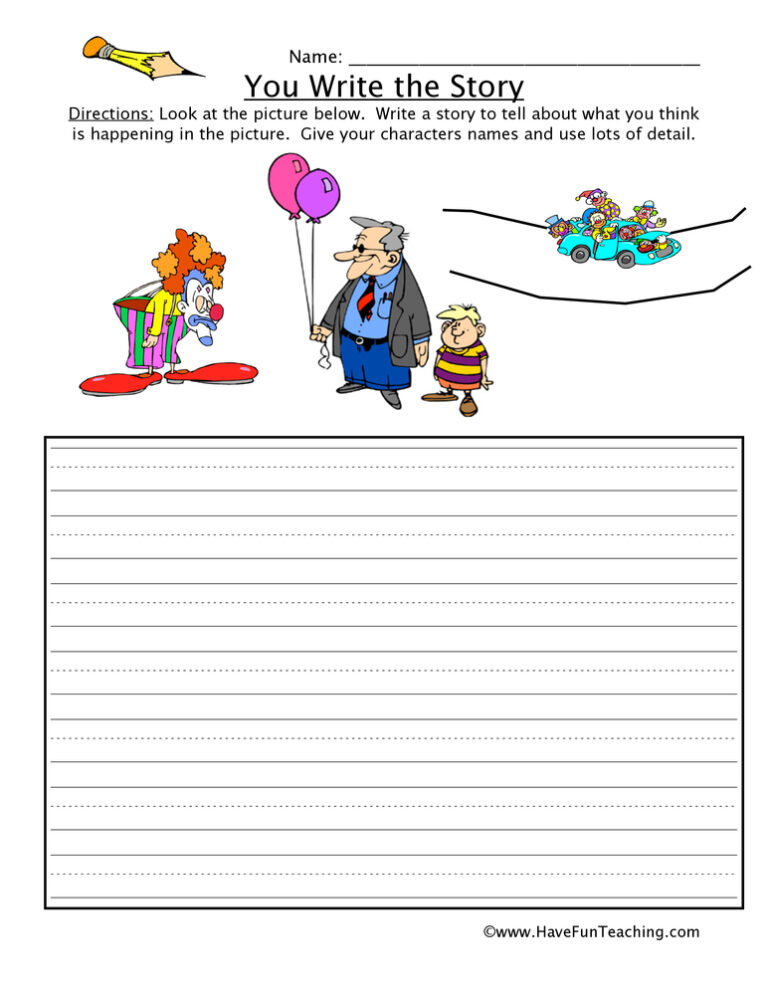
Juggle up some story ideas with this you write the story clown picture worksheet. 2nd graders name the clown and the two girls, then write what happens next on eight lines.
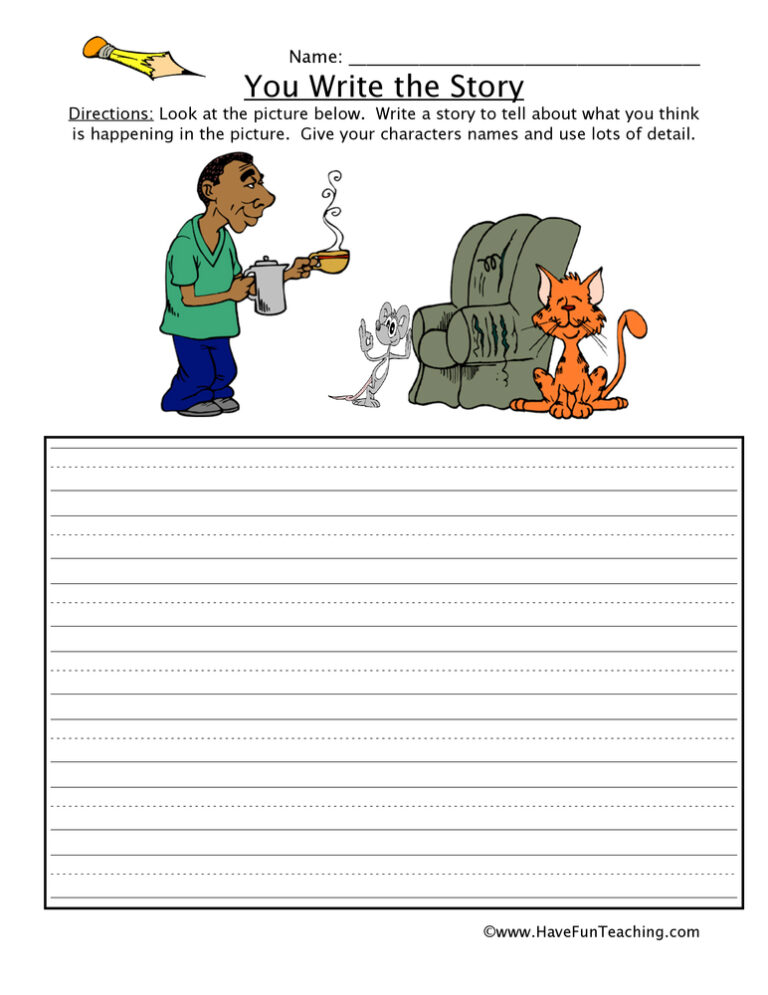
This You Write the Story Cats picture worksheet gives 2nd grade students one clear illustration of two cats and a ball of yarn, plus eight writing lines, so every child can name the characters and tell their own story.




Reviews
There are no reviews yet