
Skip to content
Start My 3 Free Days $0 today · cancel anytime

5th Grade States of Matter Resources

10 5th grade states of matter resources: 7 worksheets, 2 songs, 1 video and more. How teachers use these

5th Grade States of Matter Resources

10 5th grade states of matter resources: 7 worksheets, 2 songs, 1 video and more. How teachers use these

Worksheet
Worksheet5th GradePhysical Changes Matter Worksheet

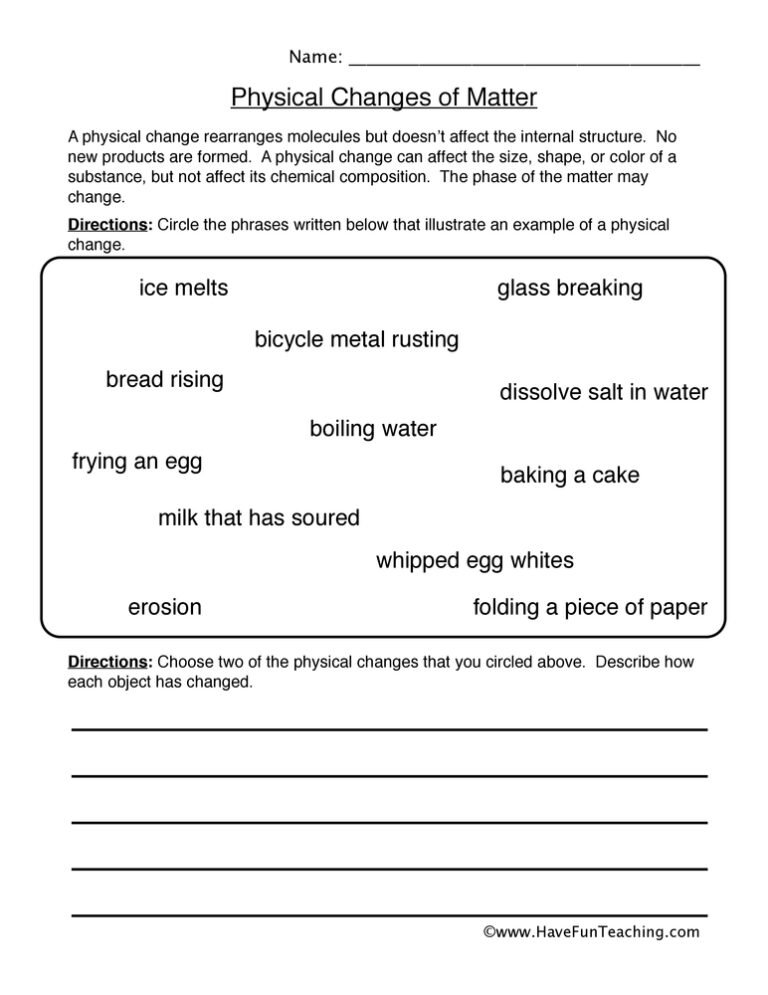
This physical changes matter worksheet asks 5th Grade students to sort eight everyday changes, label three states of matter, and explain their thinking, with an answer key included for fast grading.

Video
Video5th GradeMatter Song

The Matter Song teaches all about matter and the states of matter. With this states of matter song, students learn about solid, liquid, and gas, as well as the phases of matter, properties of matter, physical changes, chemical changes, and so much more. Matter has mass and takes up space.…

Worksheet
Worksheet5th GradeIdentifying States of Matter Worksheet

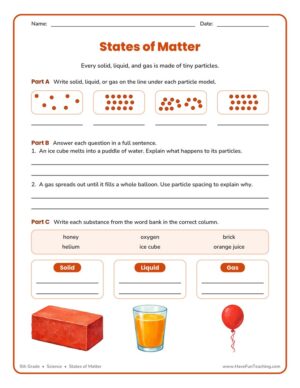
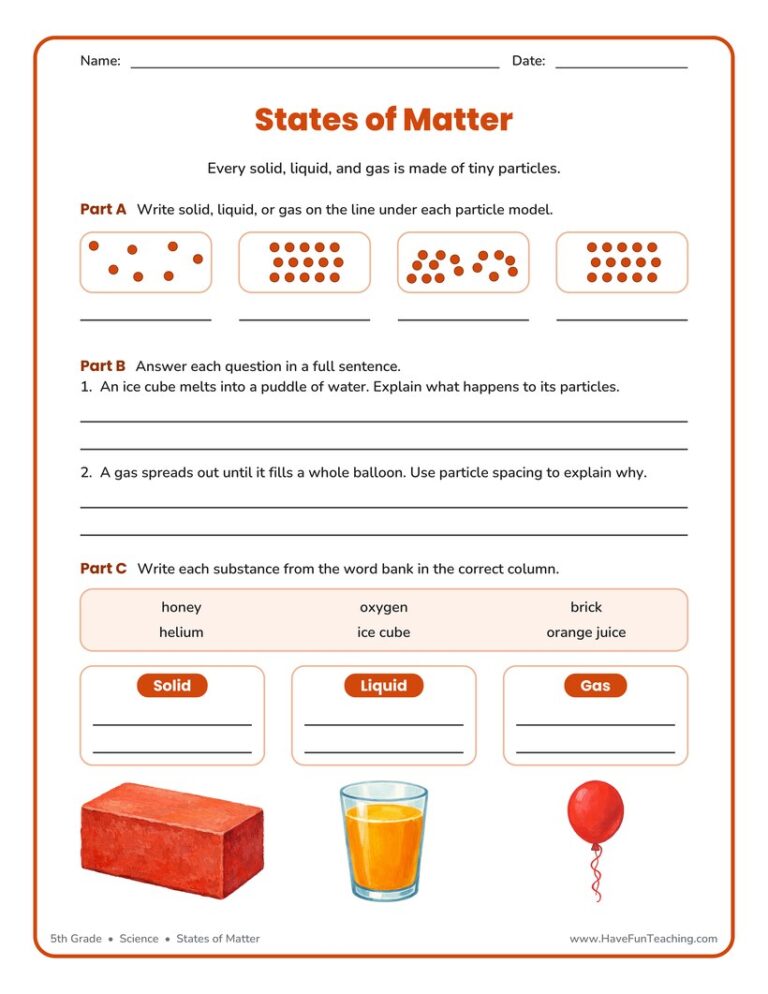
This Identifying States of Matter Worksheet has 5th graders read particle models, explain melting and gas expansion, and sort six everyday substances into solids, liquids, and gases. An answer key is included for fast, confident grading.

Worksheet
Worksheet5th GradePhysical Changes Examples Worksheet

This Physical Changes Examples Worksheet gives 5th Grade students six sorting items and two written-response questions on physical and chemical change, answer key included, so classifying matter becomes second nature.

Worksheet
Worksheet5th GradeChemical Changes Matter Worksheet

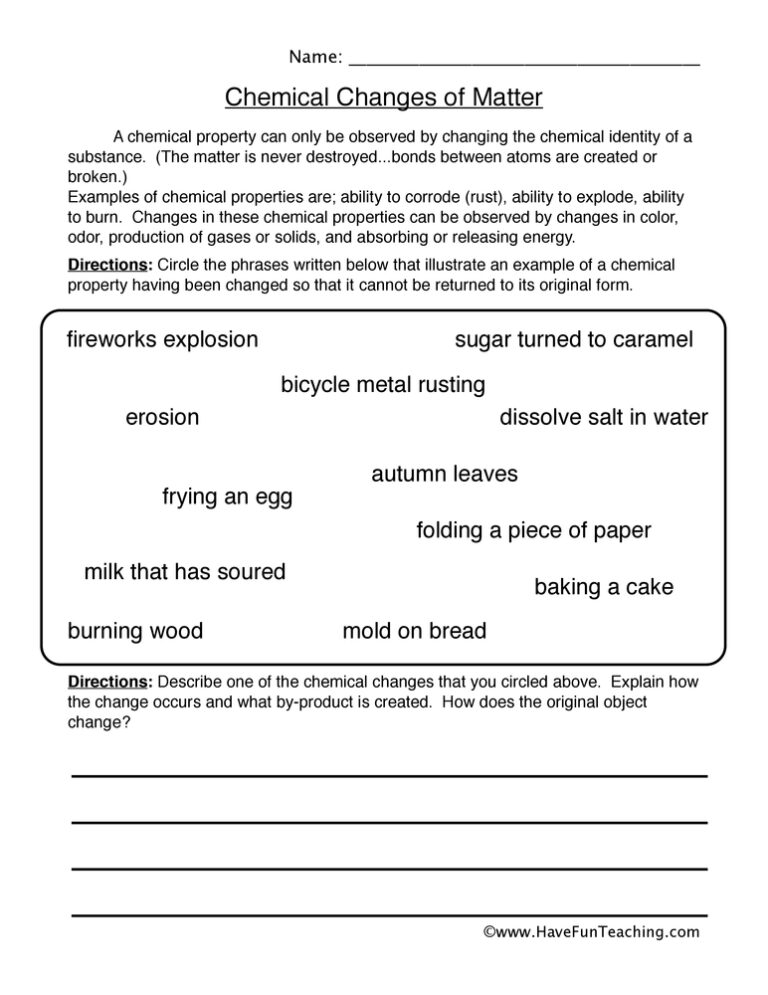
This chemical changes matter worksheet has 5th grade students name the signs of a chemical change and explain their thinking with evidence. An answer key is included for quick, easy checking.

Worksheet
Worksheet5th GradeChemical Changes Examples Worksheet

This Chemical Changes Examples Worksheet gives 5th graders vocabulary practice, picture sorting, and a written explanation task for telling physical changes from chemical ones. An answer key is included, so checking work takes seconds.

Worksheet
Worksheet5th GradeChemical Properties Matter Worksheet

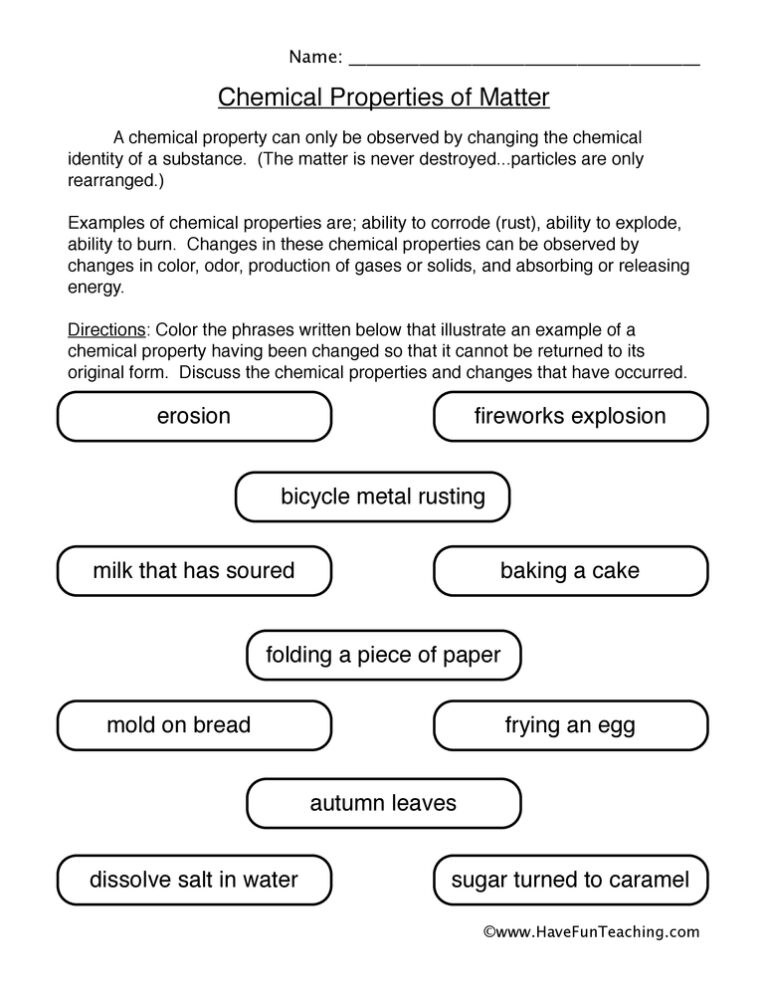
This chemical properties matter worksheet has 5th grade students sort eight everyday events into chemical and physical changes, then explain their reasoning with evidence. An answer key is included for fast, no-prep science practice.

Flash Cards
Flash Cards5th GradeMatter Word Wall

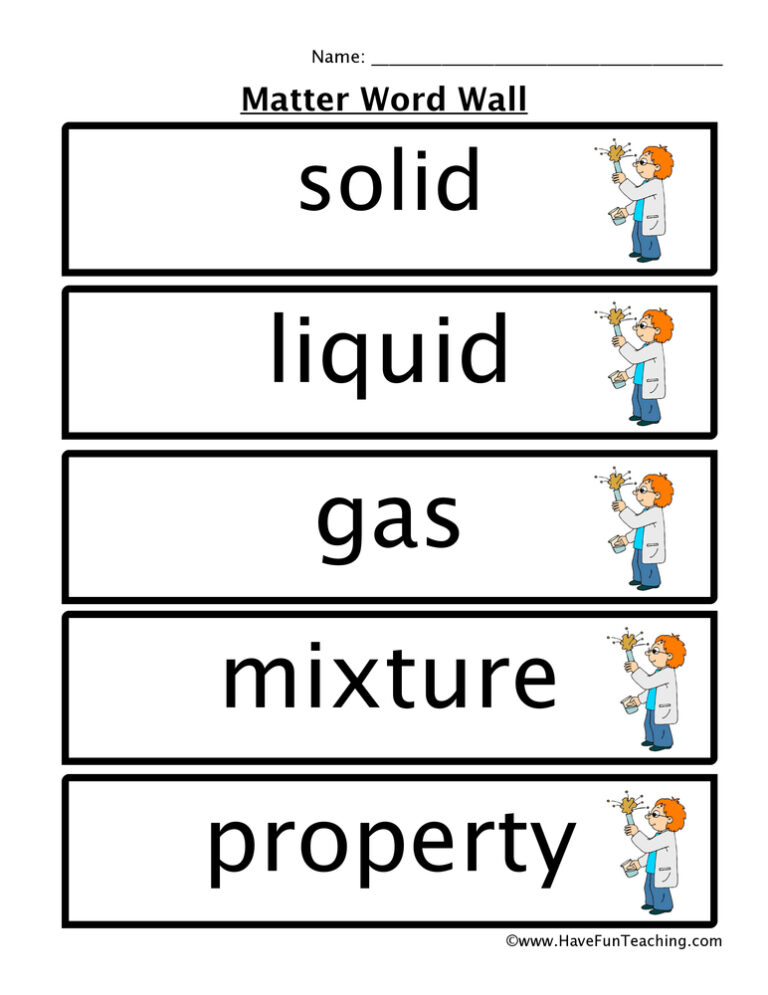
Matter word wall flash cards with 16 picture cards for solid, liquid, gas, melt, evaporate and more, for 2nd to 5th grade science. Answer key included for easy checking.

Worksheet
Worksheet5th GradeMatter Worksheet

Use this matter worksheet to help 5th grade students decide what is and is not matter and explain mass, volume, and particles in writing. A full answer key is included.

Song
Song5th GradeMatter Song (MP3)

While listening to the Matter Song (MP3), students learn about the states of matter, phases of matter, properties of matter, physical changes, chemical changes, solid, liquid, and gas and more.

From our teachers' playbook

Big questions for curious minds!

What do 5th graders learn in science?

Fifth grade science asks kids to explain why, not just name things. Students learn that matter is made of tiny particles and can change: melting ice is a physical change, but baking a cake is a chemical one. They follow how energy from the sun moves through plants and food webs, trace the water cycle, and explain why Earth has seasons. They also dig into cells, body systems and healthy habits. The click moment comes when kids use evidence from their own experiment to back up a claim.

Our favorite ways to make 5th grade science stick

Fifth graders love a challenge. These moves mix real thinking with a little fun.

Sing the cycle

Play a water cycle song, then have kids act out each stage: evaporate up, condense together, precipitate down. Singing the steps in order gives kids a memory hook they can replay on test day.

Why it works: a catchy, repeating tune gives the brain a hook to hang words on, so sung text is remembered better (Wallace, 1994).

Water Cycle Song (Animated Music Video)Try it withWater Cycle Song (Animated Music Video)SongsOpen it →

Label it from memory

Show a plant and animal cell diagram for a minute, then cover it. Kids sketch and label as much as they can, then check and add in a new color. Recalling a picture beats copying it.

Why it works: pairing a picture with each word gives kids two ways to remember it, a well-tested principle of how people learn (Mayer, 2009).

Animal and Plant Cells WorksheetTry it withAnimal and Plant Cells WorksheetWorksheetsOpen it →

Plan the investigation together

Before kids test magnets, think aloud: "What am I changing? What stays the same? How will I measure?" Then hand over the plan. Modeling a fair test once saves a lot of messy experiments later.

Why it works: handing over the work step by step, from teacher to student, is one of the most widely used teaching frameworks (Pearson and Gallagher, 1983).

Magnets Lesson PlanTry it withMagnets Lesson PlanLesson PlansOpen it →

Questions parents and teachers ask us

What topics are taught in 5th grade science?

Most 5th grade classes cover matter and its changes, energy in ecosystems and food webs, the water cycle, Earth and space (seasons, stars and the solar system), and the human body. Students also plan simple investigations and use evidence to explain results.

What is the difference between a physical and a chemical change?

A physical change alters how something looks but not what it is, like melting or cutting. A chemical change makes a new substance, like rust or baking. A clue for a chemical change is a new color, gas, smell or heat.

How can I help my 5th grader with science at home?

Cook together and talk about what changes, stargaze, or start a small plant experiment. Ask "Why do you think that happened?" and let them explain. Real questions build stronger thinking than memorizing facts.

How do I teach the scientific method to 5th graders?

Start with a question kids actually care about, like which paper towel holds the most water. Walk through predicting, testing, measuring and sharing results. Repeating the steps with new questions makes them automatic.