Skip to content
Start My 3 Free Days $0 today · cancel anytime

1st Grade Skip Counting Worksheets

13 1st grade skip counting worksheets. Teacher favorites: Ten More Ten Less Worksheet and Count Fives Fill in the Blank Worksheet. How teachers use these

1st Grade Skip Counting Worksheets

13 1st grade skip counting worksheets. Teacher favorites: Ten More Ten Less Worksheet and Count Fives Fill in the Blank Worksheet. How teachers use these

Worksheet
Worksheet1st GradeTen More Ten Less Worksheet

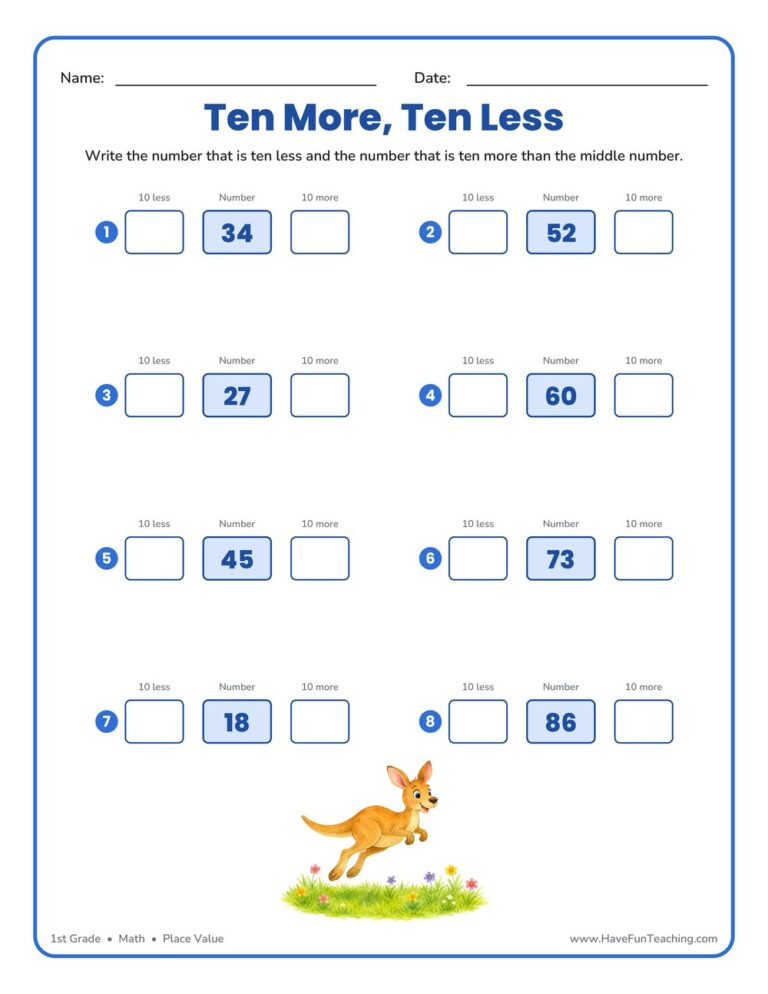
This Ten More Ten Less Worksheet gives 1st graders eight quick problems to find ten more and ten less than a two-digit number. Includes an answer key for fast, no-prep place value practice.

Worksheet
Worksheet1st GradeCount Fives Fill in the Blank Worksheet

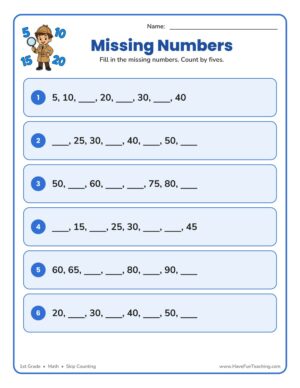
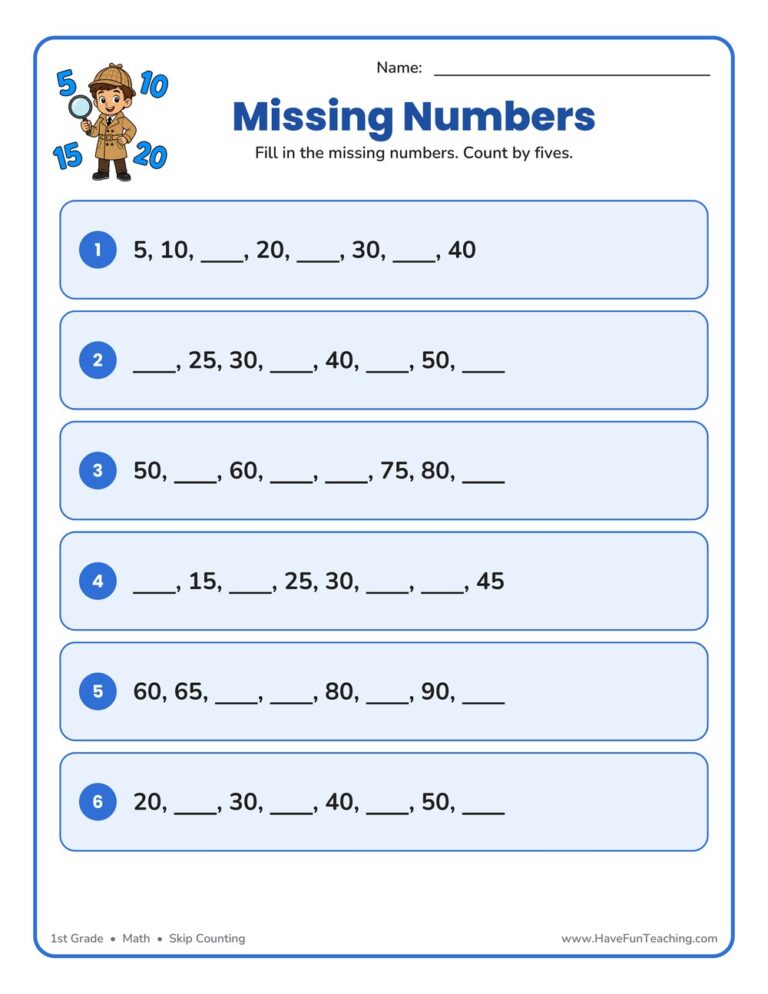
This Count Fives Fill in the Blank Worksheet gives 1st graders six number patterns to finish by skip counting by 5s. Includes an answer key for fast, no-prep counting practice at home or school.

Worksheet
Worksheet1st GradeI Can Count to 100 Worksheet

The I Can Count to 100 Worksheet gives Kindergarten students a hundred chart with 24 numbers missing to fill in. An answer key is included, so counting practice is ready in one print.

Worksheet
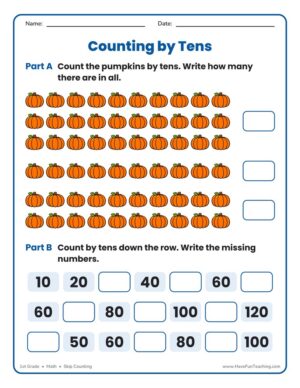
Worksheet1st GradeCounting Tens Worksheet

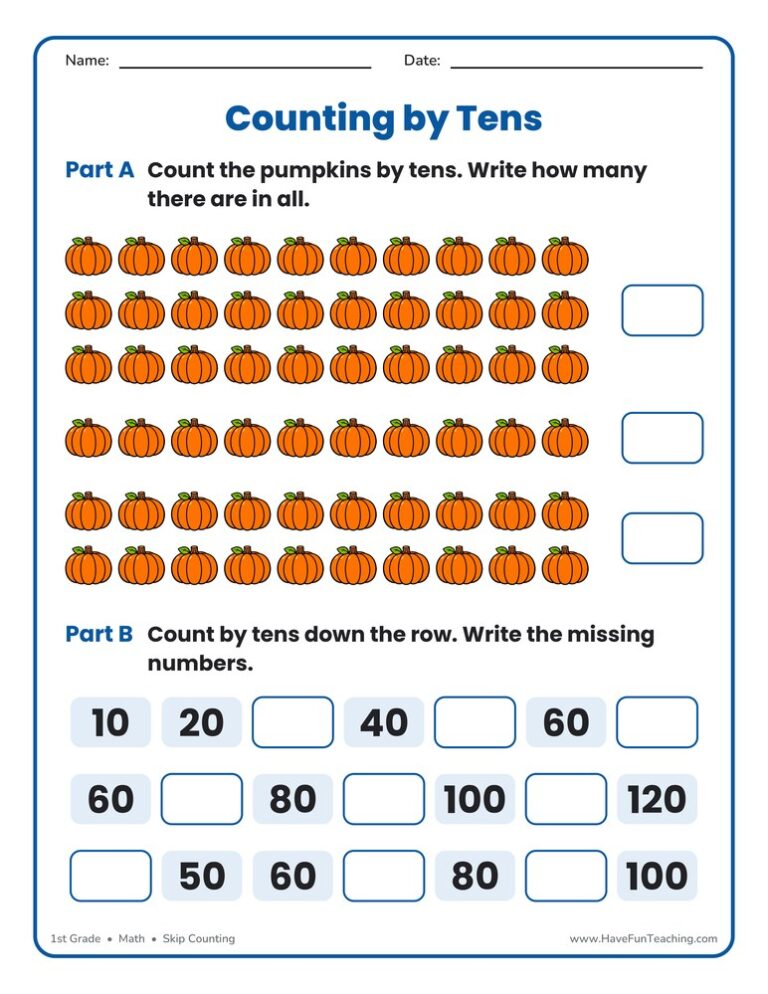
This Counting Tens Worksheet gives 1st Grade students rows of ten pictures to count and skip counting patterns to complete, with an answer key included, so counting by tens becomes quick and automatic.

Worksheet
Worksheet1st GradeTen More and Ten Less Worksheet

This ten more and ten less worksheet gives 1st Grade students eight number-chart problems and two story problems for mental math with tens. An answer key is included, so checking work takes seconds.

Worksheet
Worksheet1st GradeCount Tens Fill in the Blank Worksheet

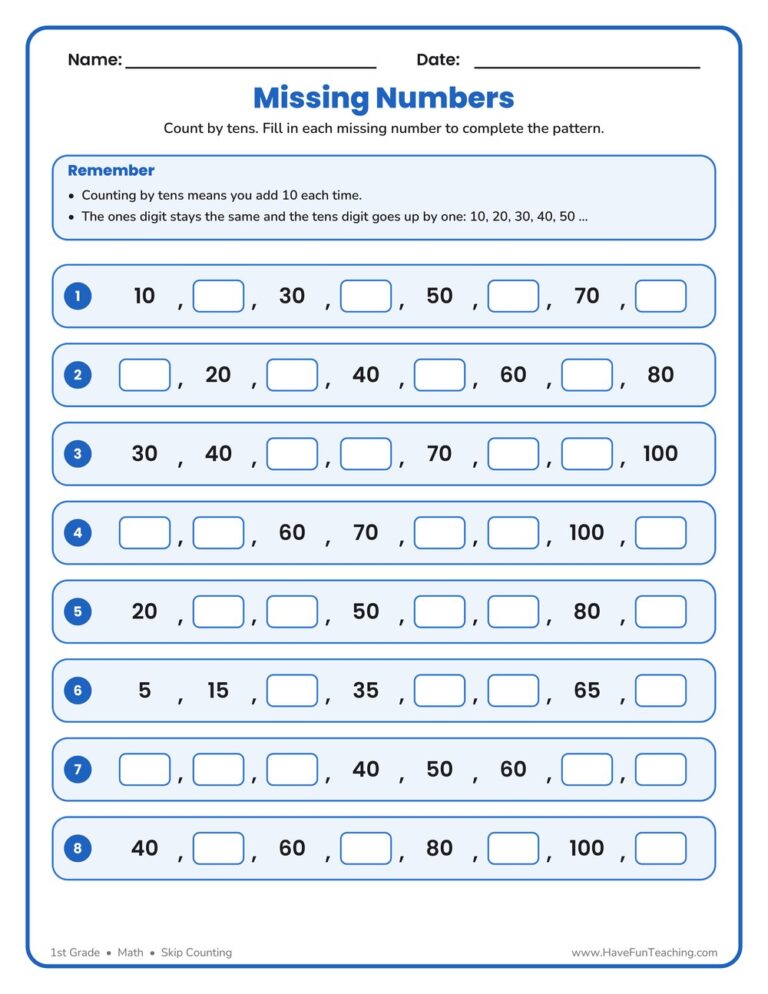
The Count Tens Fill in the Blank Worksheet gives 1st graders eight count-by-tens patterns to complete by filling in the missing numbers. Includes an answer key for fast, no-prep skip counting practice.

Worksheet
Worksheet1st GradeCounting in Sequence Assessment Worksheet

A counting in sequence assessment worksheet for 1st grade: seven number rows, counting by ones and skip counting, with 21 missing numbers to write. Answer key included, so checking takes a minute.

Worksheet
Worksheet1st GradeSubtracting by Tens Worksheet

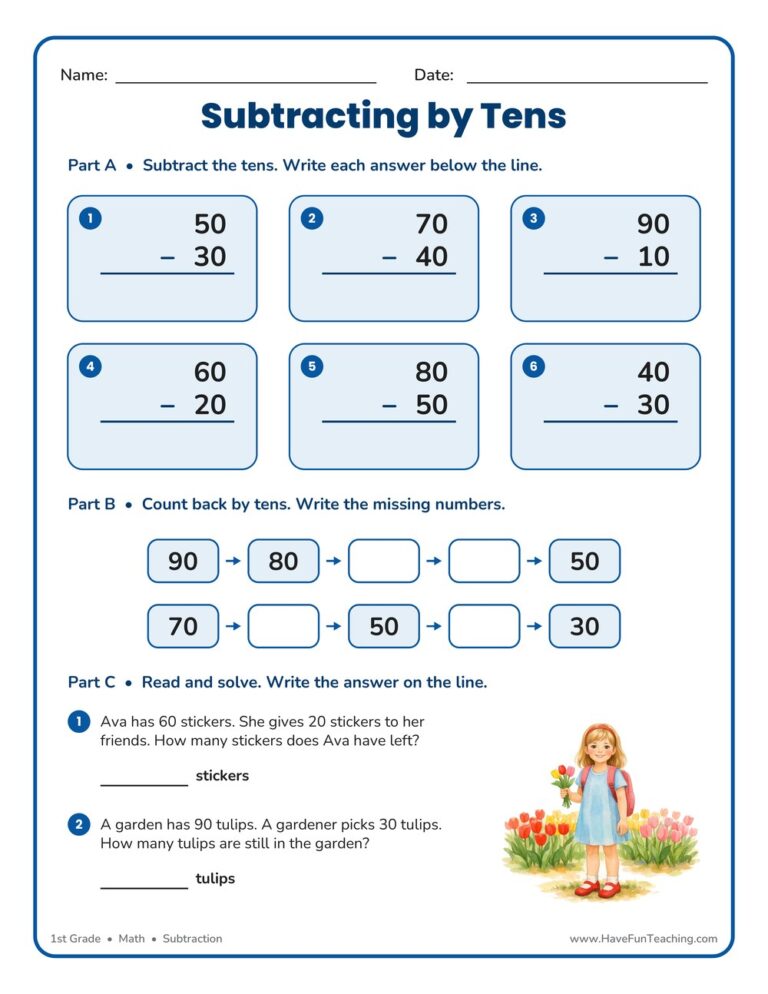
Build first grade place-value fluency with this subtracting by tens worksheet: six column problems, two count-back number strips, and two story problems, with an answer key included for fast checking.

Worksheet
Worksheet1st GradeI Can Count to One Hundred Twenty Worksheet

This i can count to one hundred twenty worksheet has 1st graders count by ones and by tens and write the missing numbers, with an answer key included for easy checking.

Worksheet
Worksheet1st GradeCounting by Tens What Comes Next Worksheet

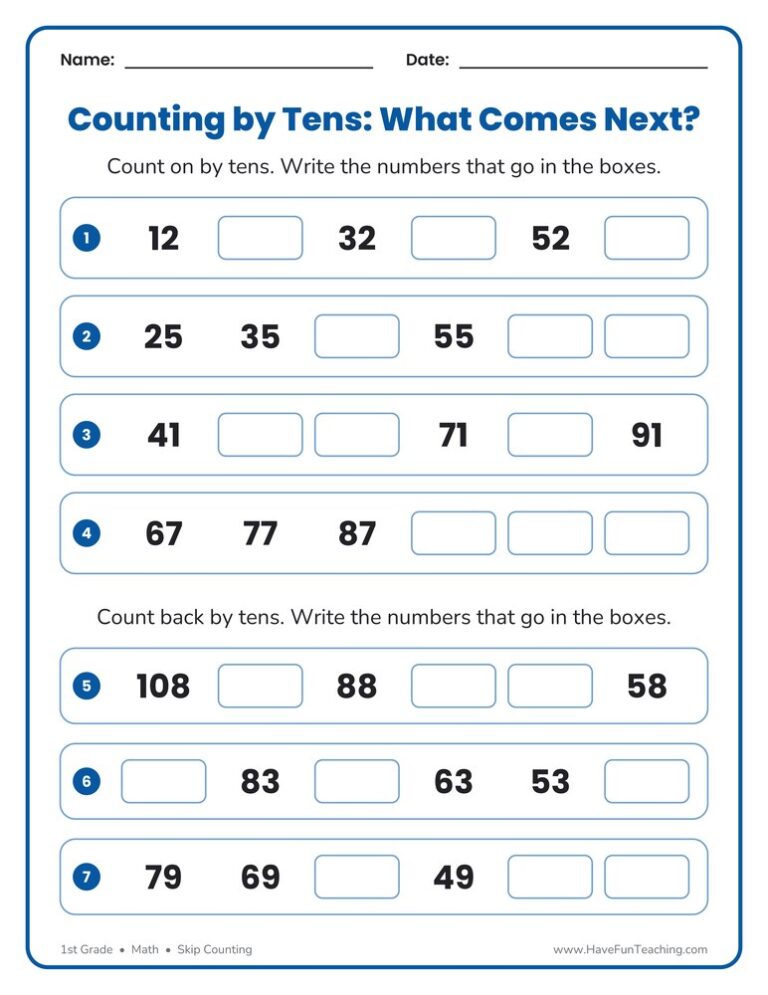
This counting by tens what comes next worksheet helps 1st graders count on and back by tens from any number. An answer key is included, making practice with ten more and ten less quick to check.

Worksheet
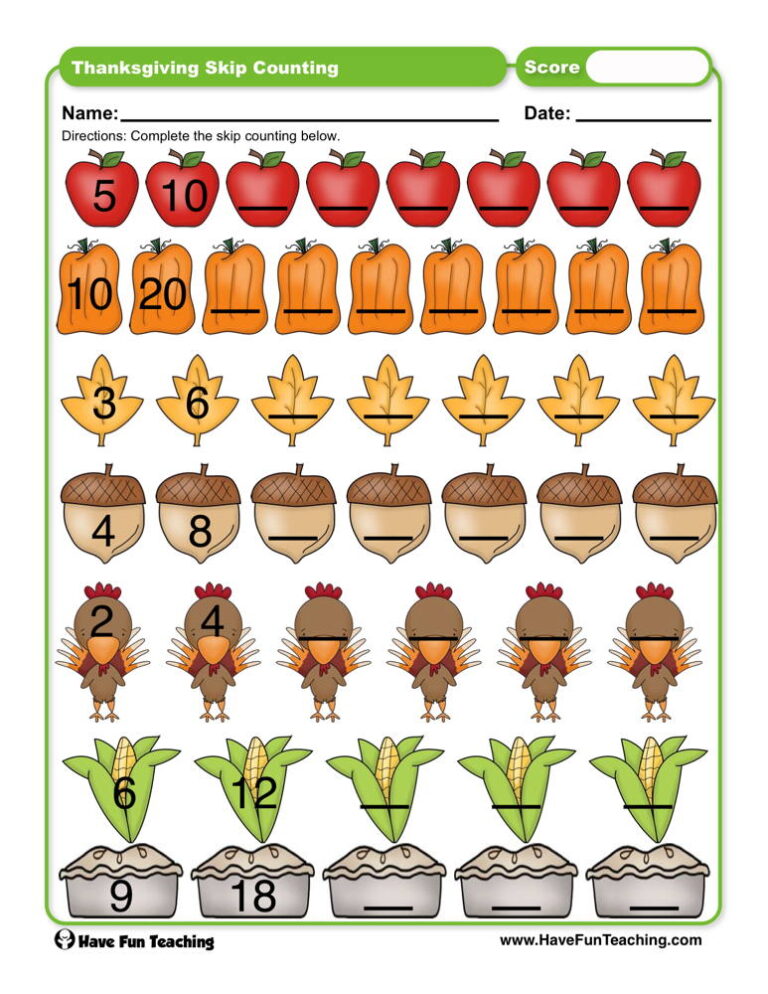
Worksheet1st GradeThanksgiving Skip Counting Worksheet

This Thanksgiving Skip Counting Worksheet gives 1st Grade students three harvest-themed strips to finish by twos, fives, and tens. An answer key is included, so a quick check takes seconds.

Worksheet
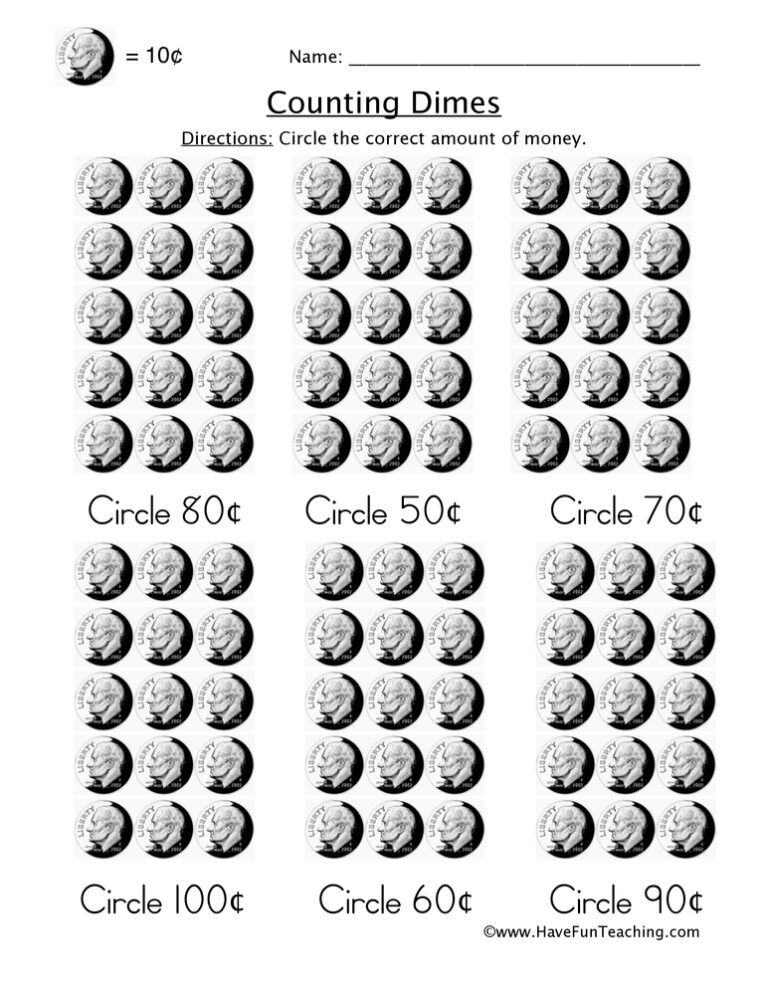
Worksheet1st GradeDimes Circle Worksheet

This dimes circle worksheet lets 1st graders circle dimes to make an amount, count dimes by tens, and solve a piggy bank story problem. An answer key is included for quick checking.

Worksheet
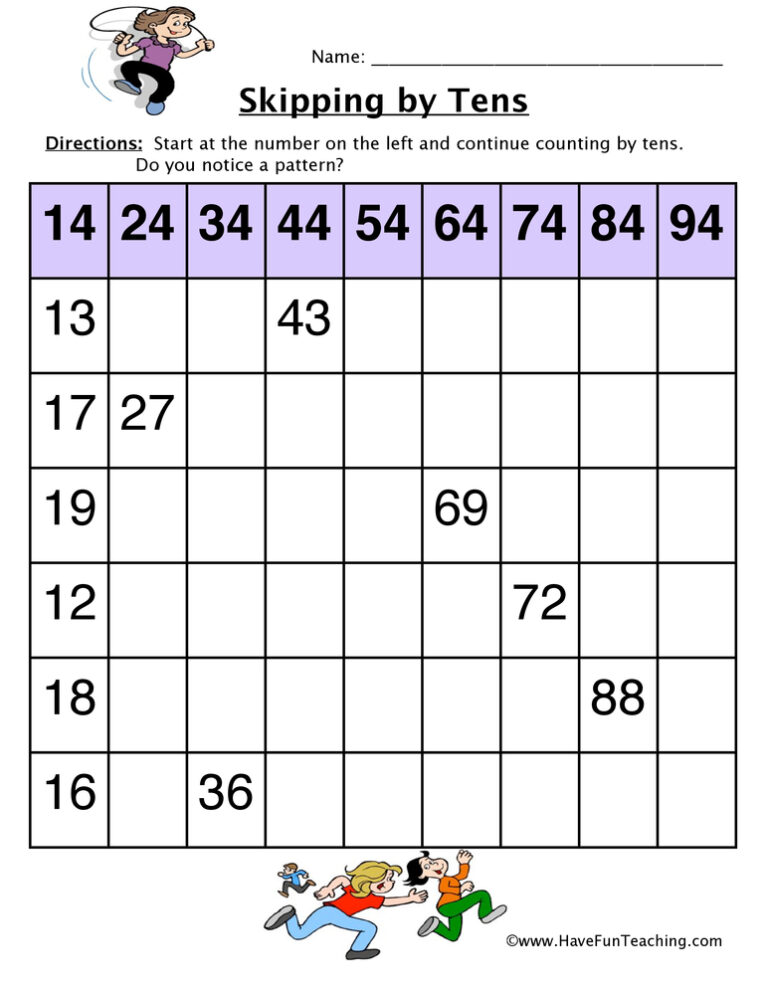
Worksheet1st GradeSkipping by Tens Worksheet

Help 1st graders count on from any number with this skipping by tens worksheet, featuring a counting table and missing-number sequences to 120. An answer key is included for easy checking.

From our teachers' playbook

Hop, skip and count to 120

What do 1st graders learn about skip counting?

First graders count to 120 by ones and start skip counting by 2s, 5s and 10s. Counting by 10s is the big one: it shows how our number system works, since 10, 20, 30 are just 1, 2, 3 tens. They also find 10 more and 10 less than a number in their heads, like 34 and 44. Skip counting by 2s helps count pairs, and by 5s helps count nickels and tally marks. The click is when a child counts a pile of craft sticks by 10s instead of one at a time.

Our favorite ways to teach skip counting

First graders need rhythm, a hundred chart and lots of things to count.

Count by twos

Play a counting-by-twos song and have partners stand back to back, tapping shoulders on each number. Then count real pairs: shoes, mittens, eyes. The song gives the pattern, the pairs give it meaning.

Why it works: words set to a repeating melody are easier to recall than the same words spoken (Wallace, 1994).

Counting By Twos Song (Original Music Video)Try it withCounting By Twos Song (Original Music Video)SongsOpen it →
See the tens

Show ten-frames or bundles of ten and count them together: 10, 20, 30. Then ask how many ones that would be. Seeing that each count is a whole ten builds place value at the same time.

Why it works: pairing a picture with each word gives kids two ways to remember it, a well-tested principle of how people learn (Mayer, 2009).

Counting Tens WorksheetTry it withCounting Tens WorksheetWorksheetsOpen it →

Color the hundred chart

Kids count to 100 on a chart and color every fifth number. What pattern do you see? Two straight columns! Then try every tenth number. Patterns on the chart make skip counting visual.

Why it works: the U.S. Department of Education's guide for teaching elementary math recommends moving from hands-on objects to drawings to numbers.

I Can Count to 100 WorksheetTry it withI Can Count to 100 WorksheetWorksheetsOpen it →

Questions parents and teachers ask

What skip counting should 1st graders know?

First graders usually learn to count by 10s to 120 and practice 2s and 5s. They also find 10 more or 10 less than a number mentally.

How do I teach skip counting to a 6-year-old?

Use songs, a hundred chart and real objects like pairs of socks or nickels. Count out loud together while you walk or climb stairs.

Why does counting by tens matter in 1st grade?

It builds place value, the idea that our numbers are made of tens and ones. That understanding makes adding and subtracting two-digit numbers much easier.

How high should a 1st grader count by 10s?

To 100 or 120 by the end of the year, starting from any number, like 23, 33, 43.