

Chemical Changes Observation Worksheet
This chemical changes observation worksheet has 4th graders study a baking soda and vinegar reaction, spot the evidence of a new substance, and explain their thinking. An answer key is included.
$6.97
Or free with a membership — members pay $3.33/mo for all 10,000+ resources. See plans
Want this one free?
Tell us where to send it and it’s yours — no card, no catch.
One free resource per teacher. We’ll also send free teaching ideas each week — unsubscribe anytime.
Teaching is easier with a membership
Unlimited printables, games & videos for PreK–6th — for your classroom or homeschool. Cancel anytime.
Start your 3-day free trial$0 today · cancel anytime · Instant access to 10,000+ resources
About this resource
Description
A chemical change happens when two materials react and make something brand new, and this chemical changes observation worksheet lets fourth graders study one of the best-known examples: baking soda mixed with vinegar. Students learn to tell the difference between an ordinary description of a material and real evidence that a new substance formed, such as gas bubbles or a change in temperature. Every question is built around the same experiment, so students can connect what they notice to the science behind it.
This 4th grade matter worksheet works well before or after a classroom demonstration, or as a stand-alone lesson on its own. In Part A, students read five lab notes and fill in Y or N to show whether each note is a clue that a chemical change took place. In Part B, they study a picture of the fizzing experiment and record three observations on the lines. In Part C, they compare two student explanations, choose the more scientific one, and write a sentence telling why. A complete answer key is included on the second page.
What’s Included
- 1 print-ready PDF worksheet
- Answer key
- 5 evidence items, 3 picture observations, and 1 compare-and-explain question
This chemical changes observation worksheet helps children in three ways. First, it teaches them to look for evidence, which is the heart of every science investigation. Second, it separates observations that describe a material from observations that prove a new substance formed, a distinction many students blur. Third, it asks students to judge and defend an explanation in writing, building the reasoning skills science standards call for in the upper elementary grades.
Teachers and parents can extend the lesson with a quick hands-on demonstration. Mix a spoonful of baking soda with a little vinegar in a cup and let students feel the outside of the cup as it fizzes. Stretch a balloon over a bottle to catch the carbon dioxide gas and watch it fill. Then compare the reaction with a physical change, such as ice melting, and ask students to list which clues appear in each one.
Related Resources
What teachers say
Reviews
You must be logged in to post a review.
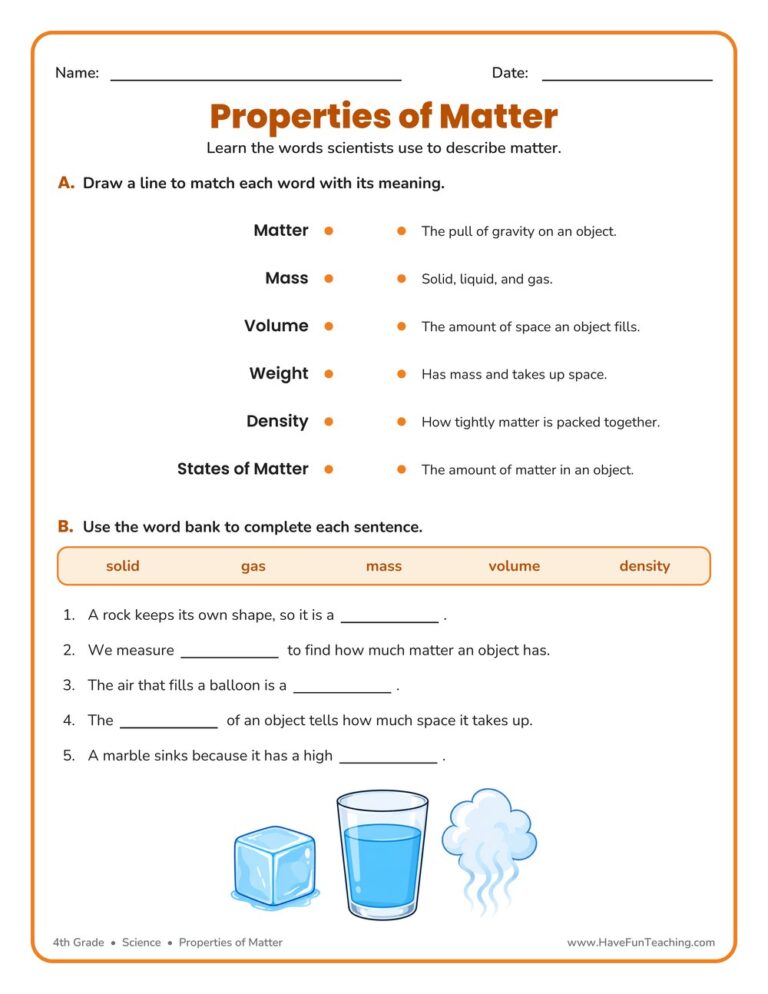
This Properties of Matter Definitions Worksheet helps 4th grade students match key science terms—matter, mass, volume, weight, and density—to their meanings and complete sentences about solids and gases. Answer key included for fast, no-prep science practice.
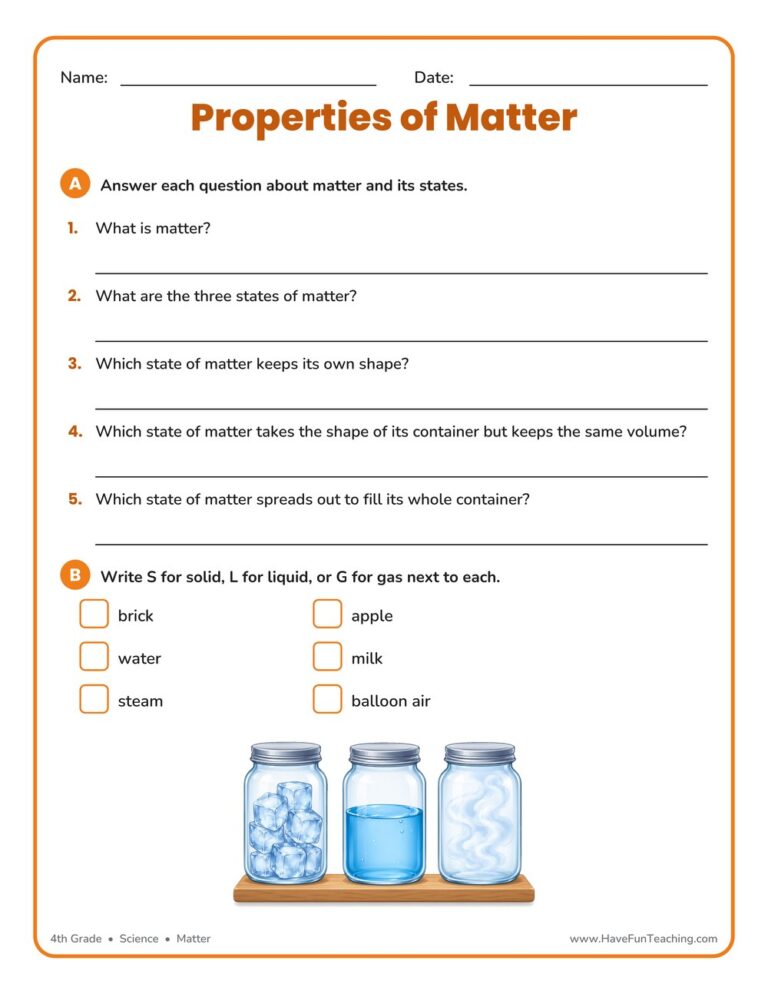
This 4th Grade Properties of Matter Review Worksheet has students answer key questions about matter and sort everyday objects as solid, liquid, or gas. Answer key included — an easy, no-prep way to review states of matter.
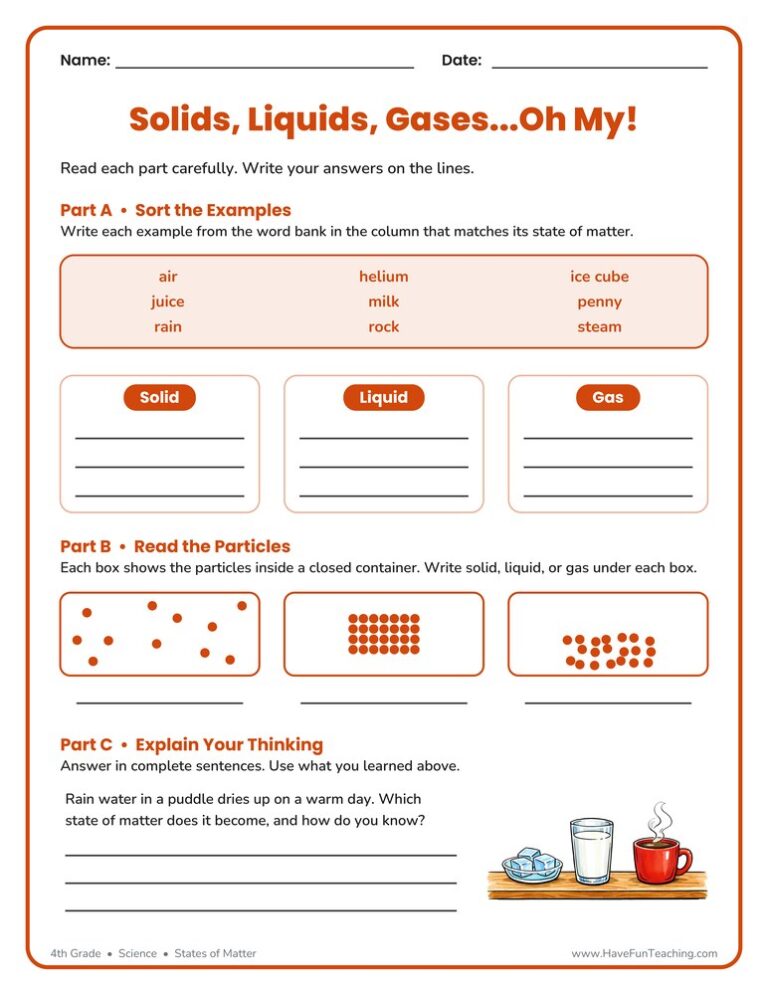
Sort nine everyday examples, label three particle diagrams, and explain a change of state with this states of matter examples worksheet for 4th grade. An answer key is included, so checking work takes seconds.

The Matter Song teaches all about matter and the states of matter. With this states of matter song, students learn about solid, liquid, and gas, as well as the phases of matter, properties of matter, physical changes, chemical changes, and so much more. Matter has mass and takes up space.…
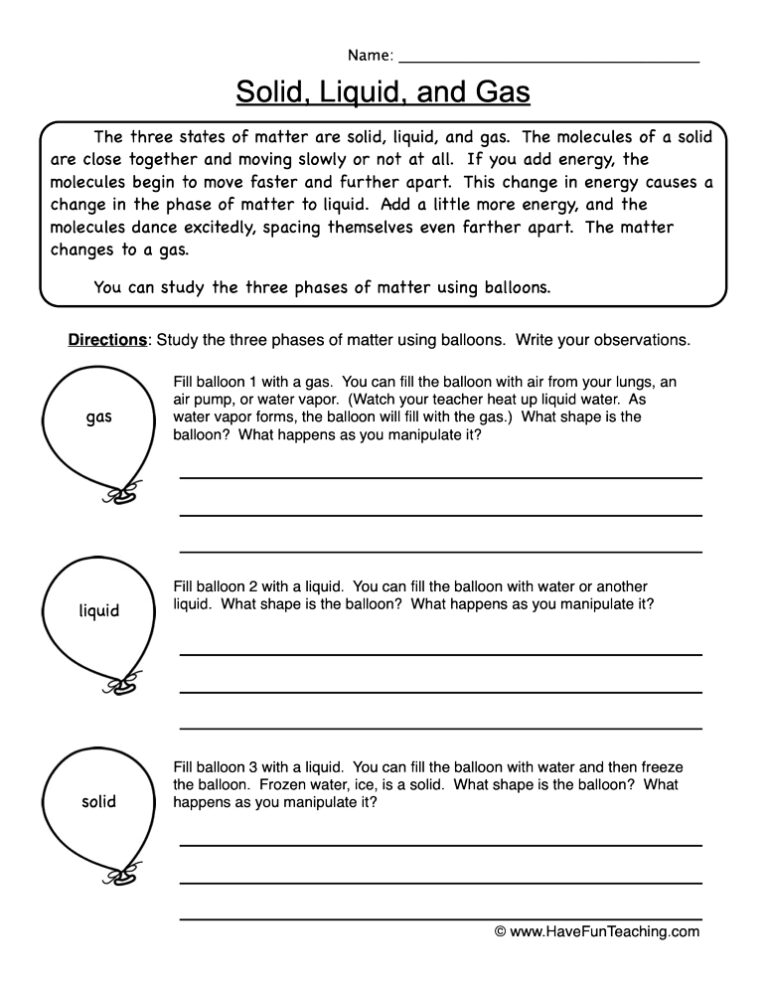
This solid liquid gas explanation worksheet has 4th graders sort nine materials into a three-column chart and name the solid and liquid in four sentences. An answer key is included.

This Electricity Worksheet pairs a short reading passage with vocabulary and explanation questions that show 4th graders how current, circuits, conductors, and insulators work. Answer key included for fast, no-prep science practice.

While listening to the Matter Song (MP3), students learn about the states of matter, phases of matter, properties of matter, physical changes, chemical changes, solid, liquid, and gas and more.
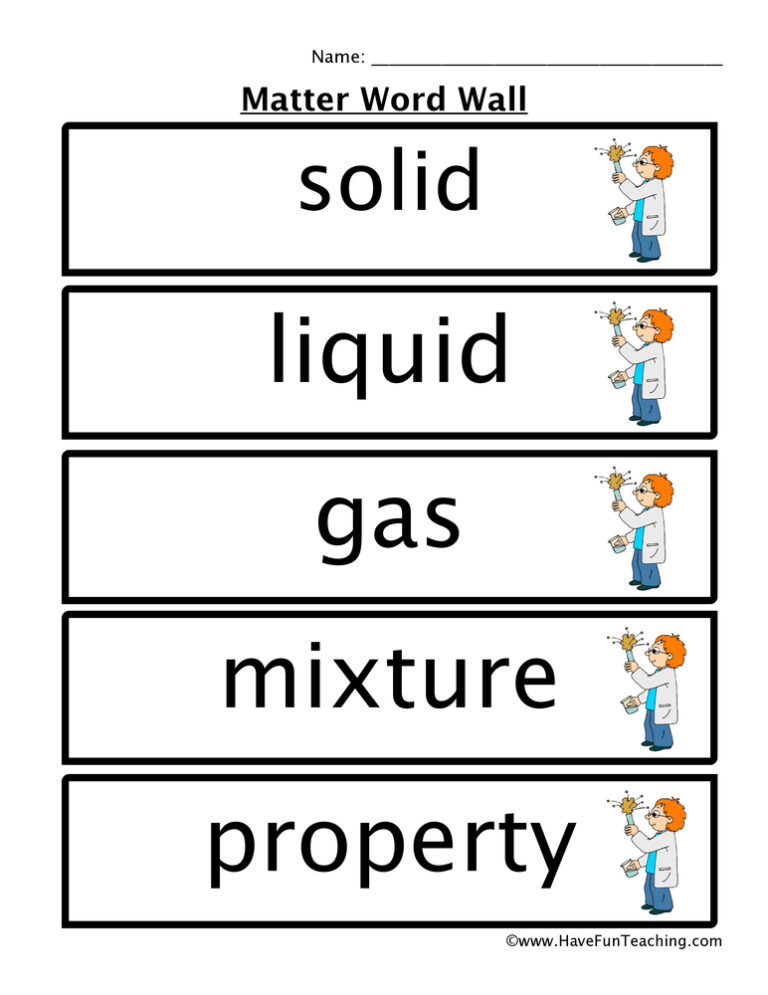
Using this Matter Word Wall, students use these common States of Matter terms in your science word wall to build their vocabulary.

This Magnetic Earth Worksheet gives 4th Grade students four magnet words and six real-life clues to match, plus an answer key, so magnetism vocabulary sticks long after the lesson ends.

Using Physical Changes Observation Worksheet, studentsobserve a physical change, then draw and write to record the changes you saw.

UsingLet's Make Some Noise Worksheet, studentswork with a partner todecipher what the items are by the sounds being made.
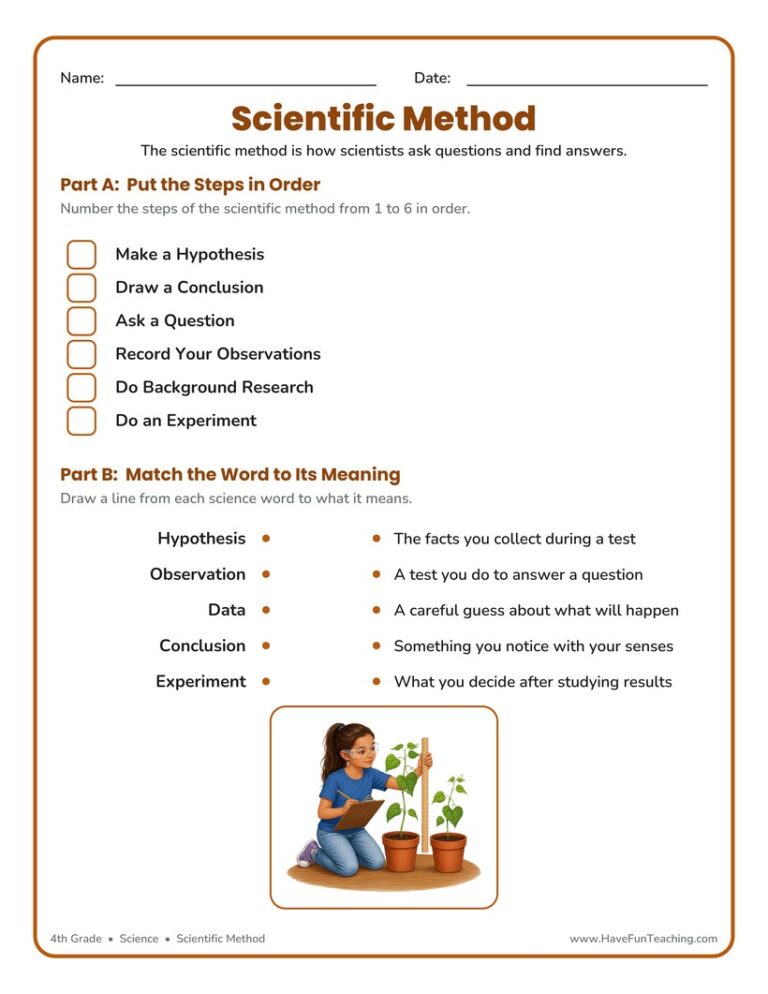
This Scientific Method Worksheet helps 4th graders order the six steps of an investigation, match key science words, and analyze a real bean-plant experiment. Answer key included — a no-prep way to build real science-thinking skills.

Reviews
There are no reviews yet