

Solid Liquid Gas Explanation Worksheet
This solid liquid gas explanation worksheet has 4th graders sort nine materials into a three-column chart and name the solid and liquid in four sentences. An answer key is included.
$6.97
Or free with a membership — members pay $3.33/mo for all 10,000+ resources. See plans
Want this one free?
Tell us where to send it and it’s yours — no card, no catch.
One free resource per teacher. We’ll also send free teaching ideas each week — unsubscribe anytime.
Teaching is easier with a membership
Unlimited printables, games & videos for PreK–6th — for your classroom or homeschool. Cancel anytime.
Start your 3-day free trial$0 today · cancel anytime · Instant access to 10,000+ resources
About this resource
Description
Almost everything a child can point to is a solid, a liquid, or a gas, and the difference comes down to how tightly the particles inside are packed and how freely they move. This solid liquid gas explanation worksheet asks fourth graders to put that idea to work twice: first by sorting nine familiar materials into the three states, then by picking the solid and the liquid out of sentences that name several things at once. Naming the three states is easy; deciding which one a real material belongs to is the part that takes thinking.
This 4th grade states of matter worksheet prints on one page and needs no preparation. Part A gives a word box of nine materials in alphabetical order and a three-column chart labeled Solid, Liquid, and Gas, with three ruled lines under each heading. The box order deliberately does not match the answer order, so a student cannot fill the chart by copying straight down. Part B moves from single words to sentences: each sentence describes an everyday moment and names more than one object, and the student writes the one solid and the one liquid on the labeled lines underneath.
What’s Included
- 1 print-ready PDF worksheet
- Answer key
- 1 nine-word sorting chart and 4 two-part sentence items
There are three reasons this solid liquid gas explanation worksheet helps children learn the skill. First, sorting forces a decision about every word rather than a general definition, so a student who thinks helium is a liquid finds out immediately. Second, the sentence items add a step: the child has to notice which nouns name materials at all before deciding what state each one is in. Third, both parts use materials from a real kitchen, yard, and classroom, so the science attaches to things the student has already touched.
Teachers and parents can build on this page in simple ways. Set three labeled trays on a table and let students sort real objects into them, then argue about the hard cases. Pour water into three differently shaped containers and ask why the shape changes while the amount does not. Freeze a cup of juice overnight and have the class describe what changed and what stayed the same. For a quick review, ask each student to find one solid, one liquid, and one gas in the room and explain how they know.
Related Resources
What teachers say
Reviews
You must be logged in to post a review.
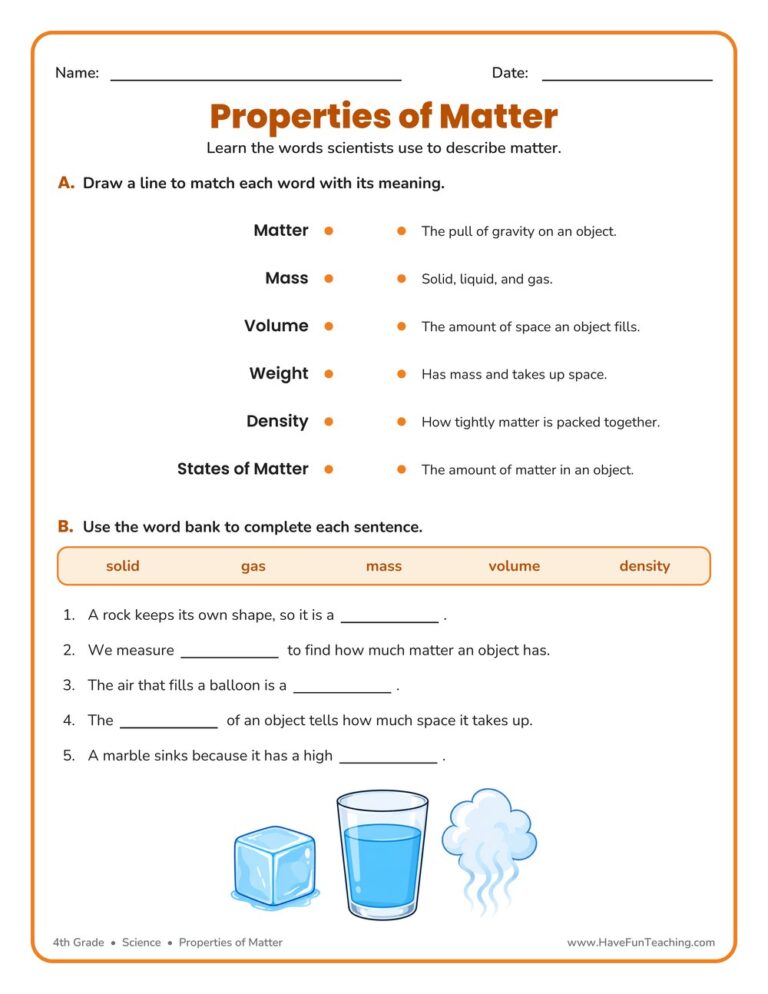
This Properties of Matter Definitions Worksheet helps 4th grade students match key science terms—matter, mass, volume, weight, and density—to their meanings and complete sentences about solids and gases. Answer key included for fast, no-prep science practice.
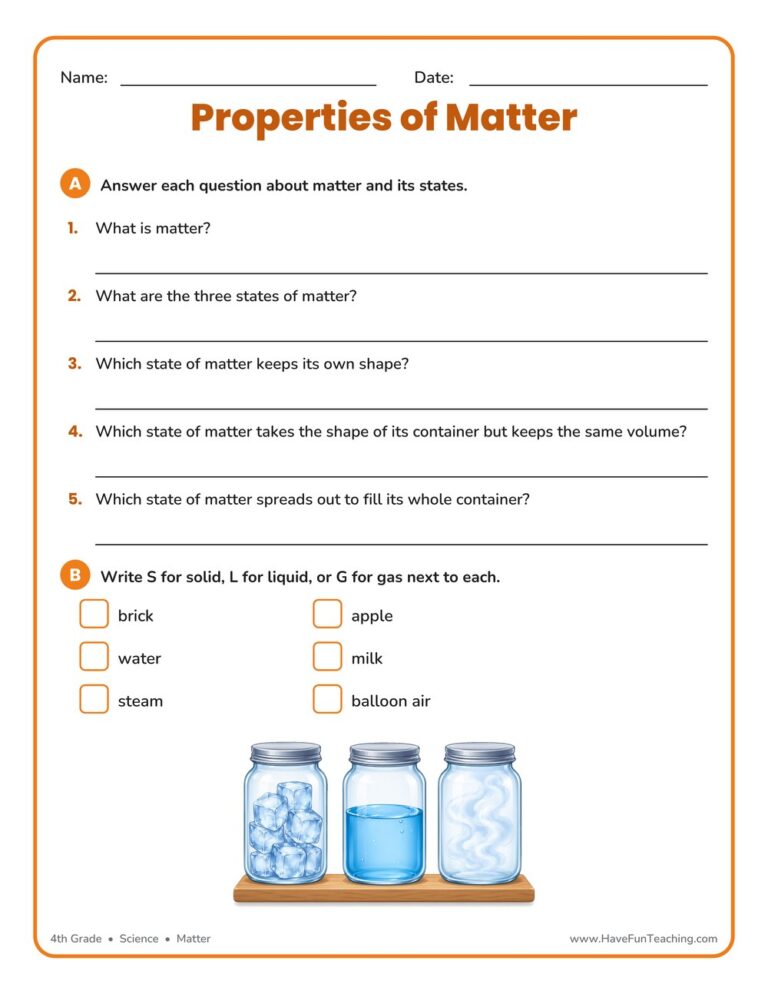
This 4th Grade Properties of Matter Review Worksheet has students answer key questions about matter and sort everyday objects as solid, liquid, or gas. Answer key included — an easy, no-prep way to review states of matter.
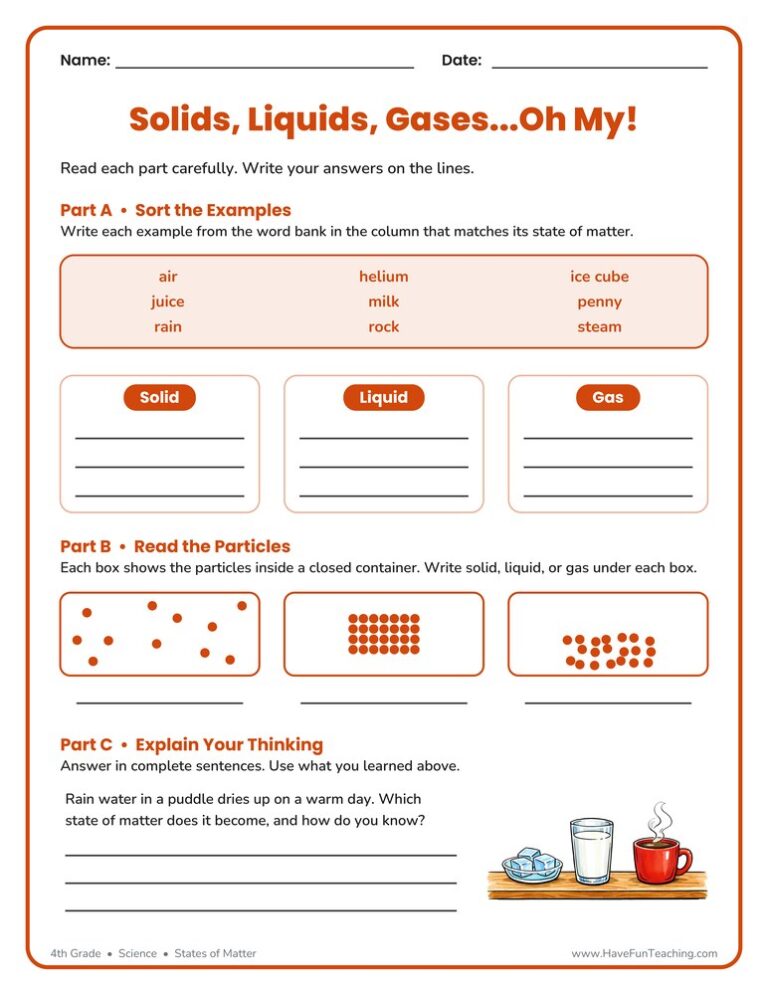
Sort nine everyday examples, label three particle diagrams, and explain a change of state with this states of matter examples worksheet for 4th grade. An answer key is included, so checking work takes seconds.

The Matter Song teaches all about matter and the states of matter. With this states of matter song, students learn about solid, liquid, and gas, as well as the phases of matter, properties of matter, physical changes, chemical changes, and so much more. Matter has mass and takes up space.…

This Electricity Worksheet pairs a short reading passage with vocabulary and explanation questions that show 4th graders how current, circuits, conductors, and insulators work. Answer key included for fast, no-prep science practice.

While listening to the Matter Song (MP3), students learn about the states of matter, phases of matter, properties of matter, physical changes, chemical changes, solid, liquid, and gas and more.
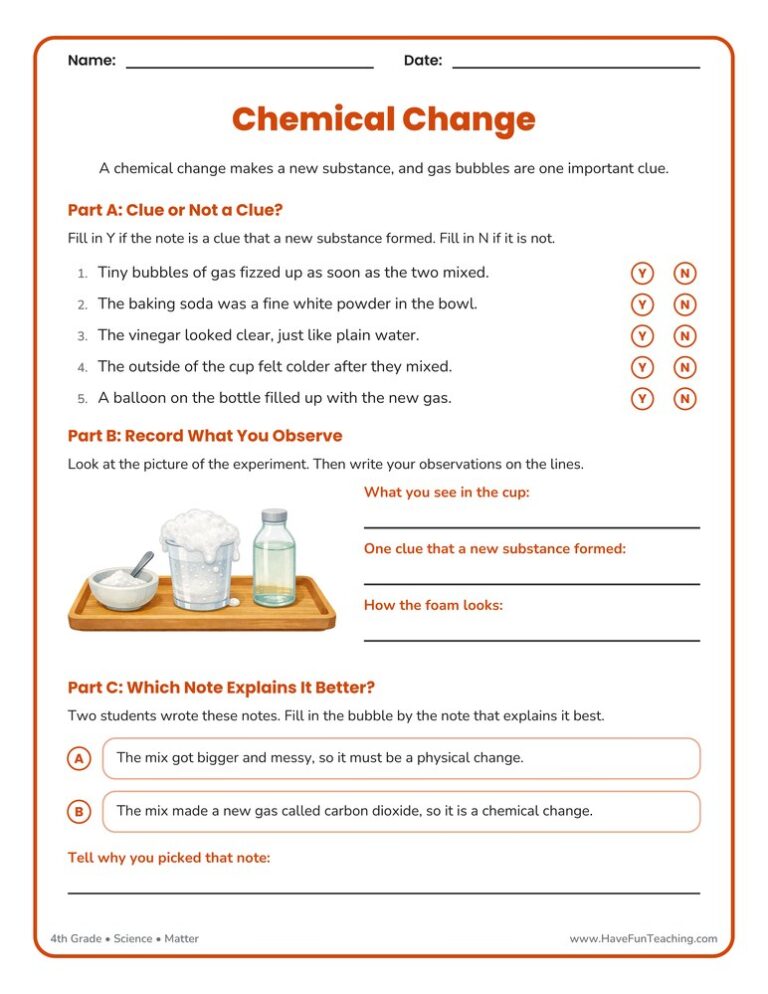
This chemical changes observation worksheet has 4th graders study a baking soda and vinegar reaction, spot the evidence of a new substance, and explain their thinking. An answer key is included.
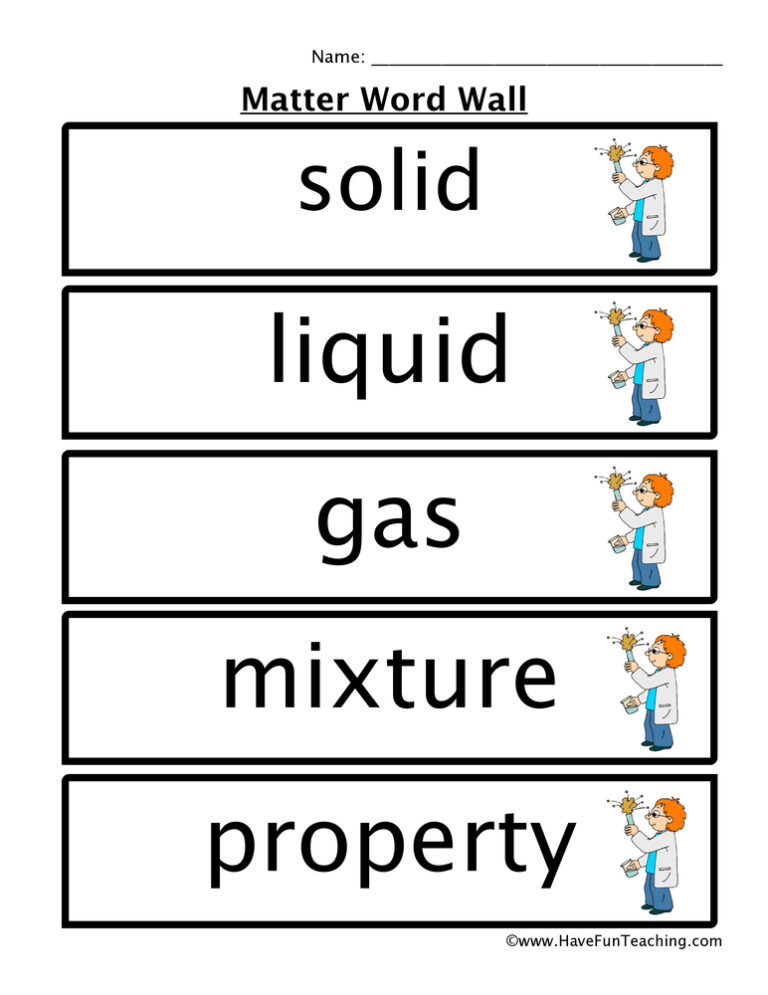
Using this Matter Word Wall, students use these common States of Matter terms in your science word wall to build their vocabulary.

This Magnetic Earth Worksheet gives 4th Grade students four magnet words and six real-life clues to match, plus an answer key, so magnetism vocabulary sticks long after the lesson ends.

Using Physical Changes Observation Worksheet, studentsobserve a physical change, then draw and write to record the changes you saw.

UsingLet's Make Some Noise Worksheet, studentswork with a partner todecipher what the items are by the sounds being made.
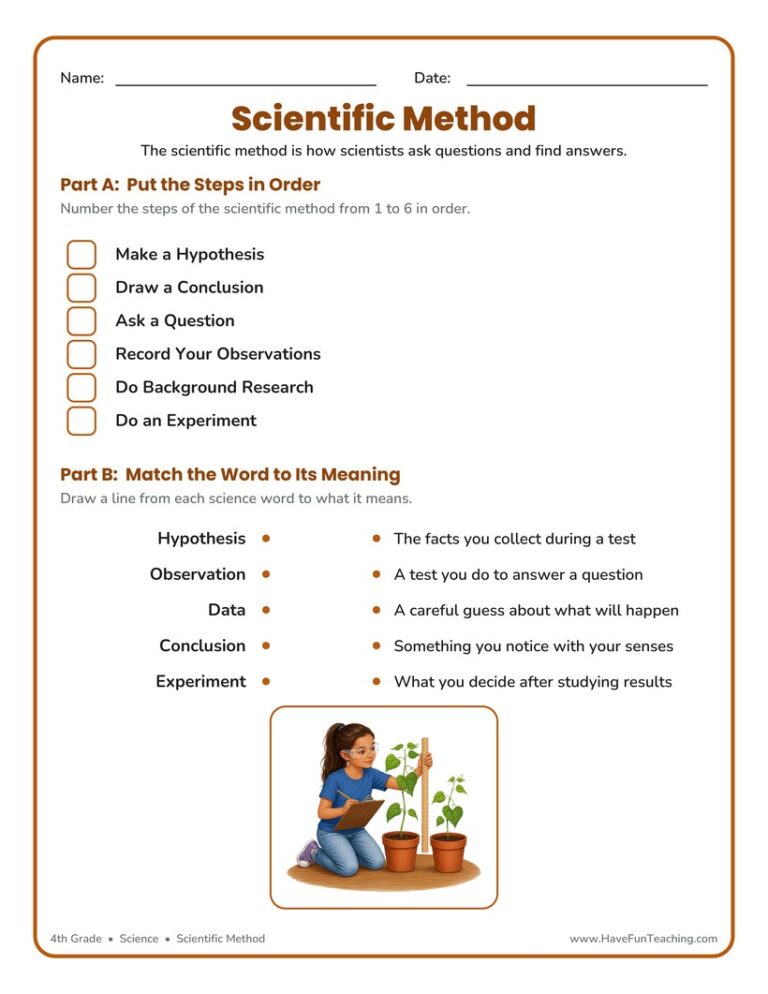
This Scientific Method Worksheet helps 4th graders order the six steps of an investigation, match key science words, and analyze a real bean-plant experiment. Answer key included — a no-prep way to build real science-thinking skills.




Reviews
There are no reviews yet