Skip to content
Start My 3 Free Days $0 today · cancel anytime

Kindergarten Life Science Resources

37 kindergarten life science resources: 15 worksheets, 14 activities, 7 songs and more. How teachers use these

Find the perfect resource in seconds

Kindergarten Life Science Resources

37 kindergarten life science resources: 15 worksheets, 14 activities, 7 songs and more. How teachers use these

Video
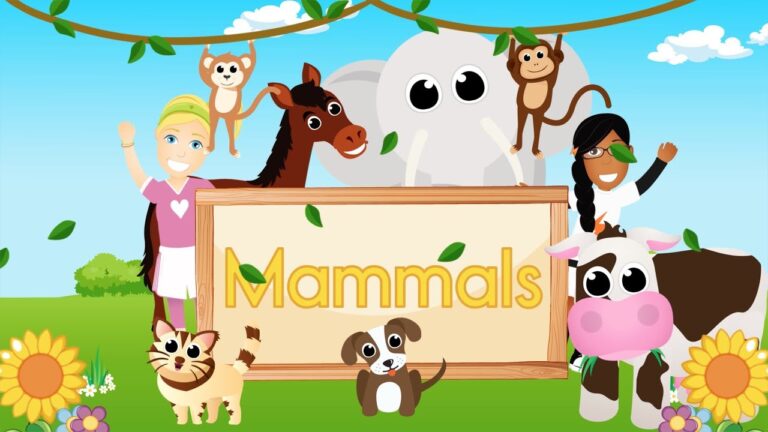
VideoKindergartenMammal Song

The Mammal Song by Have Fun Teaching is perfect for teaching and learning all about mammals. This animated music video teaches that mammals breathe air with lungs, are warm-blooded, have fur or hair, give birth to live young and feed their babies milk. While watching the Mammal Song, students learn…

Video
VideoKindergartenCreation Song

While watching the Creation Song, students learn about the days of Creation perfect for Sunday school, kid's church, and Bible lessons for kids. Bring joy and understanding into your kid's church, Sunday school, and classroom with this song about the days of Creation. Your kids will love a new way…

Worksheet
WorksheetKindergartenSenses Sight Worksheet

This senses sight worksheet asks kindergarten students to circle the objects that help their eyes see, then color four shapes. An answer key is included, so children learn what sight tells them about the world.

Worksheet
WorksheetKindergartenSenses Taste Worksheet

This Senses Taste Worksheet asks Kindergarten students to circle the things they can taste and color four shapes, with an answer key included, so the sense of taste becomes a rule a young child can use.

Worksheet
WorksheetKindergartenSenses Writing Worksheet

This senses writing worksheet has Kindergarten students look at five body parts and write the sense word that matches each one. Answer key included — an easy, no-prep way to build five senses vocabulary and handwriting at once.

Worksheet
WorksheetKindergartenAnimal Words Matching Worksheet

This animal words matching worksheet has Kindergarten students match four animal names to their pictures, then trace three more. Answer key included for fast, no-prep science and sight-word practice.

Worksheet
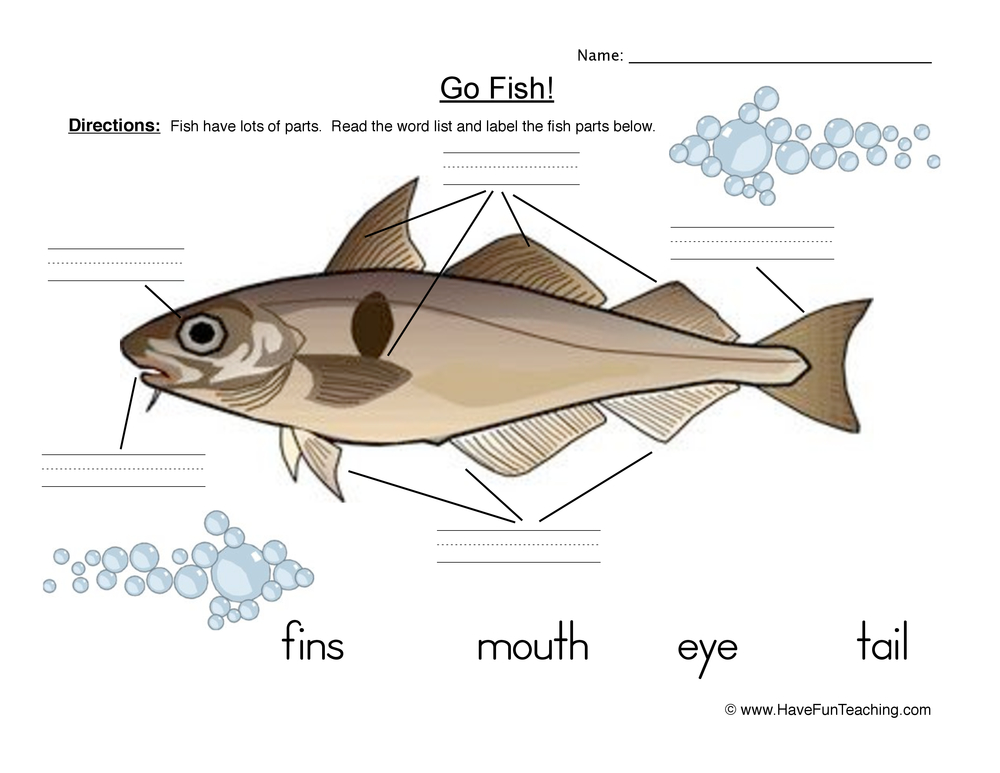
WorksheetKindergartenFish Parts Worksheet

This Fish Parts Worksheet has kindergarten students label the eye, fin, mouth, and tail on a big numbered fish using a word box. An answer key is included for fast, easy checking.

Video
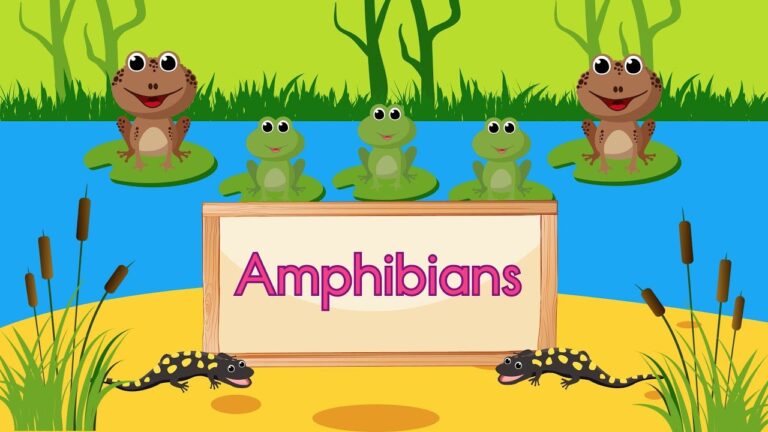
VideoKindergartenAmphibian Song

The Amphibian Song by Have Fun Teaching is perfect for teaching and learning all about amphibians. This animated music video teaches that amphibians live on land and in water, start life with gills, go through metamorphosis and have moist skin without scales. While watching the Amphibian Song, students learn the…

Video
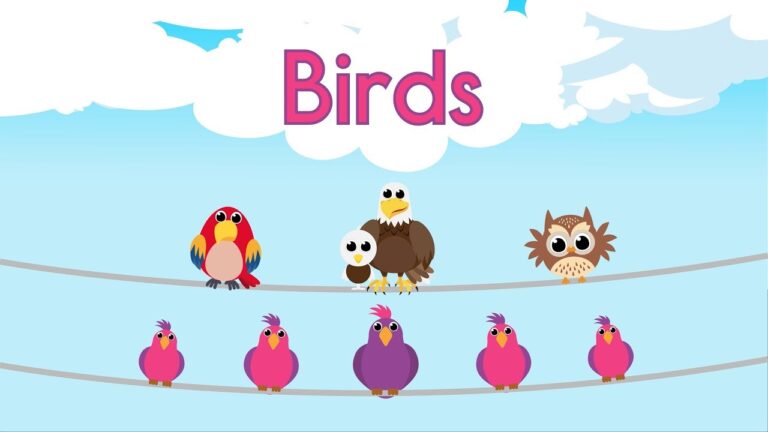
VideoKindergartenBird Song

The Bird Song by Have Fun Teaching is perfect for teaching and learning all about birds. This animated music video teaches that birds have beaks but no teeth, walk on two feet, lay eggs, are warm-blooded, have backbones and are covered with feathers. While watching the Bird Song, students learn…

Workbook
WorkbookKindergartenLife Science Reading Comprehension Workbook

UsingCharacter Reading Comprehension Workbook, students can have all of the passages about different life science topics all in one workbook.

Video
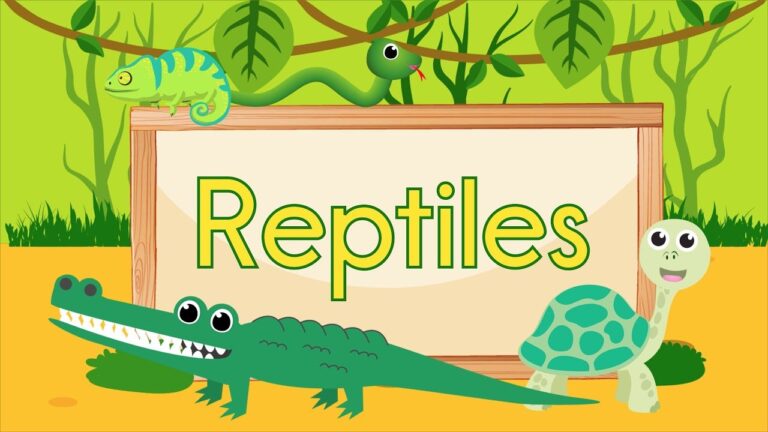
VideoKindergartenReptile Song

The Reptile Song by Have Fun Teaching is perfect for teaching and learning all about reptiles. This animated music video teaches that reptiles breathe with lungs, have claws and scales, lay eggs on land, use the sun for heat and are cold-blooded. While watching the Reptile Song, students learn the…

Video
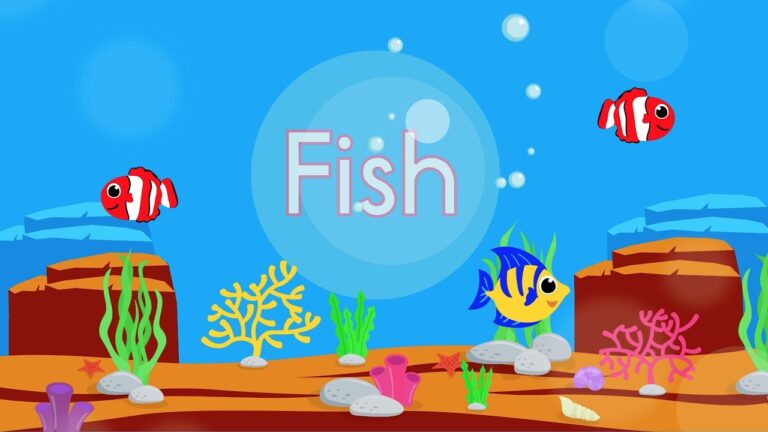
VideoKindergartenFish Song

The Fish Song by Have Fun Teaching is perfect for teaching and learning all about fish. This animated music video teaches that fish have fins and scales, swim in water, breathe with gills, have skeletons of cartilage or bone, and live in freshwater and saltwater. While watching the Fish Song,…

Worksheet
WorksheetKindergartenBasic Fish Parts Worksheet

This Basic Fish Parts Worksheet asks 1st graders to label six numbered parts on a big, friendly fish using a word box. An answer key is included, so science practice takes no prep at all.

Video
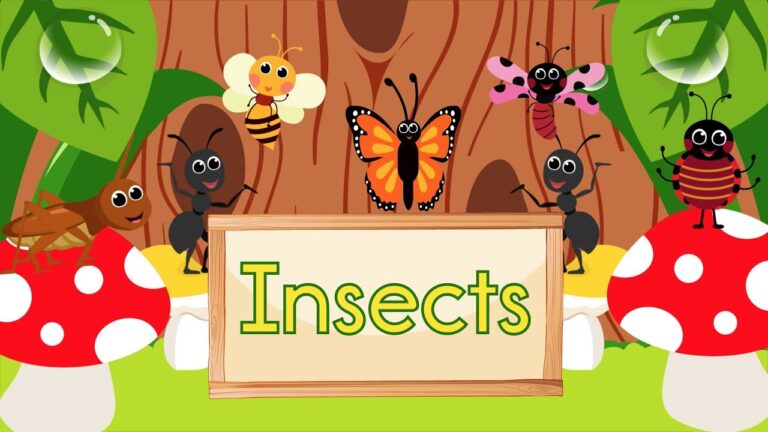
VideoKindergartenInsect Song

The Insect Song by Have Fun Teaching is perfect for teaching and learning all about insects. This animated music video teaches what makes an insect an insect: an exoskeleton, three body parts (head, thorax and abdomen), six legs and two antennae. While watching the Insect Song, students learn the traits…

Worksheet
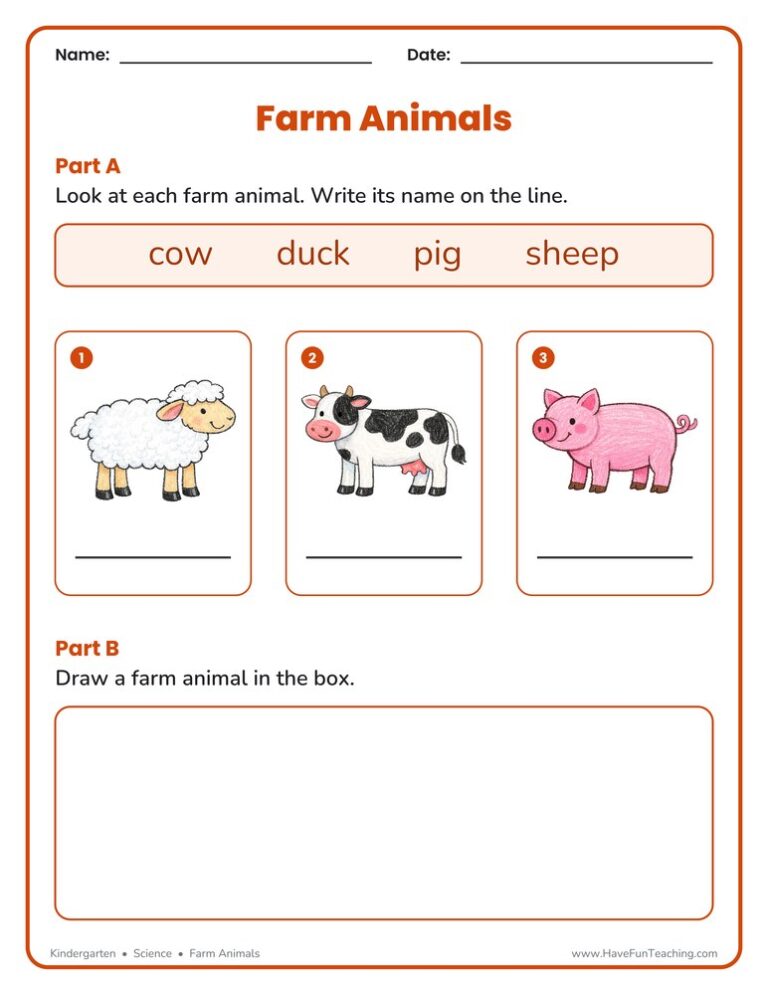
WorksheetKindergartenDrawing Farm Animals Worksheet

This Drawing Farm Animals Worksheet has Kindergarten students name a sheep, a cow, and a pig from a word box, then draw a farm animal of their own. Answer key included, so checking takes seconds.

Activity
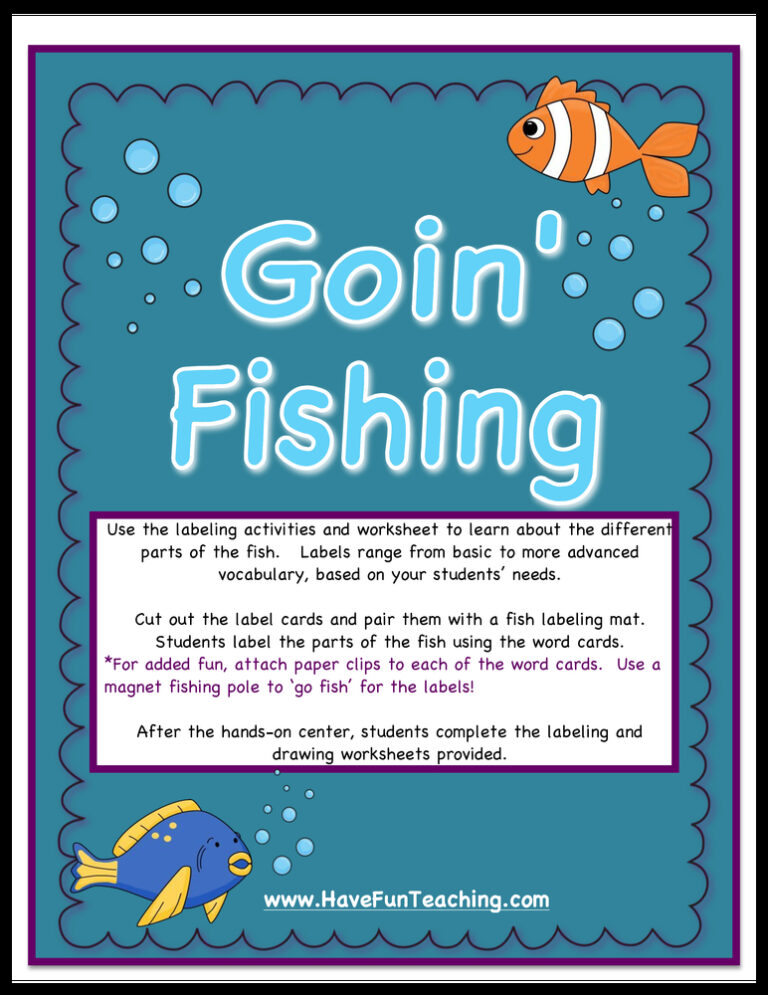
ActivityKindergartenFish Parts Activity

This fish parts activity has kindergarten and 1st grade children catch picture cards and label the eye, mouth, gills, fin, scales and tail, with an answer key included for quick checking.

Activity
ActivityKindergartenBody Parts Matching Activity

This body parts matching activity helps preschool to 1st grade children match six body part pictures to their words in a fun memory game, with a practice page. Answer key included.

Activity
ActivityKindergartenAnimal Habitats Activity - Freshwater, Grasslands, Forest, Ocean

This animal habitats activity has kindergarten to 2nd grade students sort 16 animal cards onto freshwater, grassland, forest and ocean mats. A practice page and an answer key are included.

Worksheet
WorksheetKindergartenFrog, Bird, Turtle, Polar Bear Animal Habitats Worksheet

This animal habitats worksheet asks kindergarten students to match a frog, bird, sea turtle, and polar bear to their homes and draw each habitat. An answer key is included for quick checking.

Worksheet
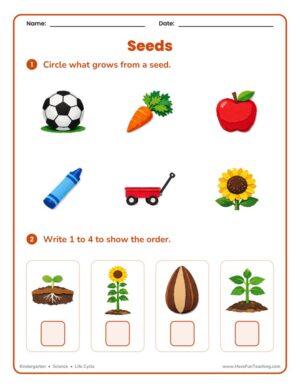
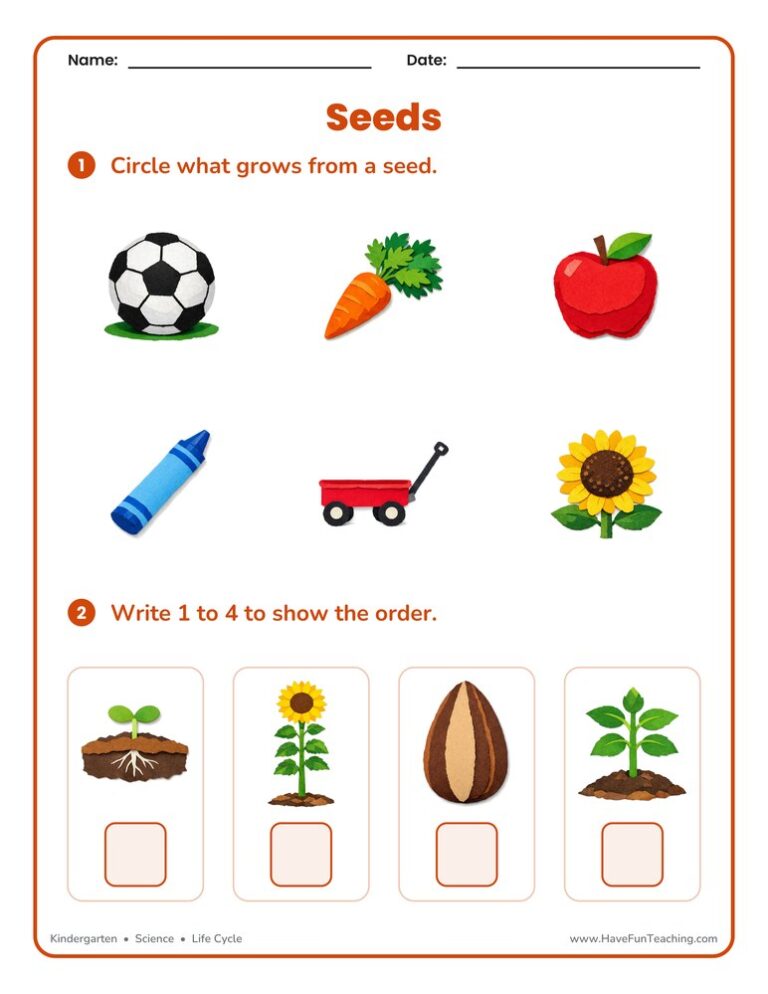
WorksheetKindergartenGrowing from Seeds Worksheet

A picture-based Growing from Seeds Worksheet that asks Kindergarten students to spot what grows from a seed and number a sunflower's four life cycle stages. Answer key included, so it is ready to print and teach.

From our teachers' playbook

Living things are everywhere

What do kindergartners learn about life science?

Kindergartners learn the difference between living and nonliving things: living things grow, need food and water, and make more of their kind. A rock doesn't grow, but a puppy does! They explore what plants and animals need to survive, watch seeds sprout, sort animals into groups like mammals and fish, and use their five senses to observe. The click is when a child looks at a plant on the windowsill and says, "It's alive, it needs water!"

Our favorite ways to teach life science

Young scientists learn best by looking closely and touching, sorting and singing.

Alive or not?

Collect a mix of things: a leaf, a rock, a toy car, a plant, a shell. Kids sort them and explain: does it grow? Does it eat? Real objects spark the best debates, especially about seeds and shells.

Why it works: kids understand an idea best when they touch it, then draw it, then write it, the order the U.S. Department of Education recommends for elementary math.
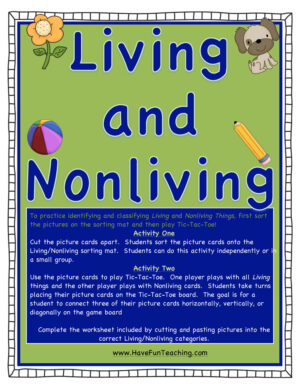
Living and Nonliving ActivityTry it withLiving and Nonliving ActivityActivitiesOpen it →
Animal group songs

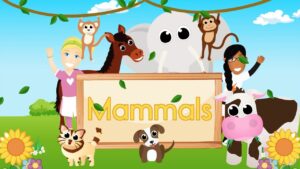
Play a mammal song and pause to list what makes a mammal: fur or hair, breathes air, babies drink milk. Next week, try amphibians or reptiles. Songs give kids the science words to describe groups.

Why it works: a catchy, repeating tune gives the brain a hook to hang words on, so sung text is remembered better (Wallace, 1994).

Mammal SongTry it withMammal SongSongsOpen it →

Observe with your senses

Give kids a fruit or a flower to explore. What do you see? Smell? Feel? They draw and label their observations. Using the senses on purpose is the first step to thinking like a scientist.

Why it works: pairing a picture with each word gives kids two ways to remember it, a well-tested principle of how people learn (Mayer, 2009).

Senses Sight WorksheetTry it withSenses Sight WorksheetWorksheetsOpen it →

Questions parents and teachers ask

What is life science in kindergarten?

It's learning about living things: plants and animals, what they need to survive, how they grow and how they're different from nonliving things.

How do I teach living and nonliving things?

Ask three questions: Does it grow? Does it need food and water? Does it make more of itself? Sort real objects from around the house or classroom.

What do plants need to grow?

Water, sunlight, air and soil (or nutrients). Kindergartners love testing this with simple seed experiments.

How can I teach science at home to my kindergartner?

Go on nature walks, plant seeds, watch birds and bugs, and ask "What do you notice?" Curiosity is the best science lesson.