
Skip to content
Start My 3 Free Days $0 today · cancel anytime

Size Worksheets

17 size worksheets. Teacher favorites: Measuring in Centimeters and Inches Worksheet and Small Smaller Smallest Worksheet. How teachers use these

Size Worksheets

17 size worksheets. Teacher favorites: Measuring in Centimeters and Inches Worksheet and Small Smaller Smallest Worksheet. How teachers use these

Worksheet
Worksheet2nd GradeMeasuring in Centimeters and Inches Worksheet

This Measuring in Centimeters and Inches Worksheet has 2nd graders measure a key, crayon, and pencil in two units on a ruler. Answer key included — a hands-on way to build ruler skills and early number sense.

Worksheet
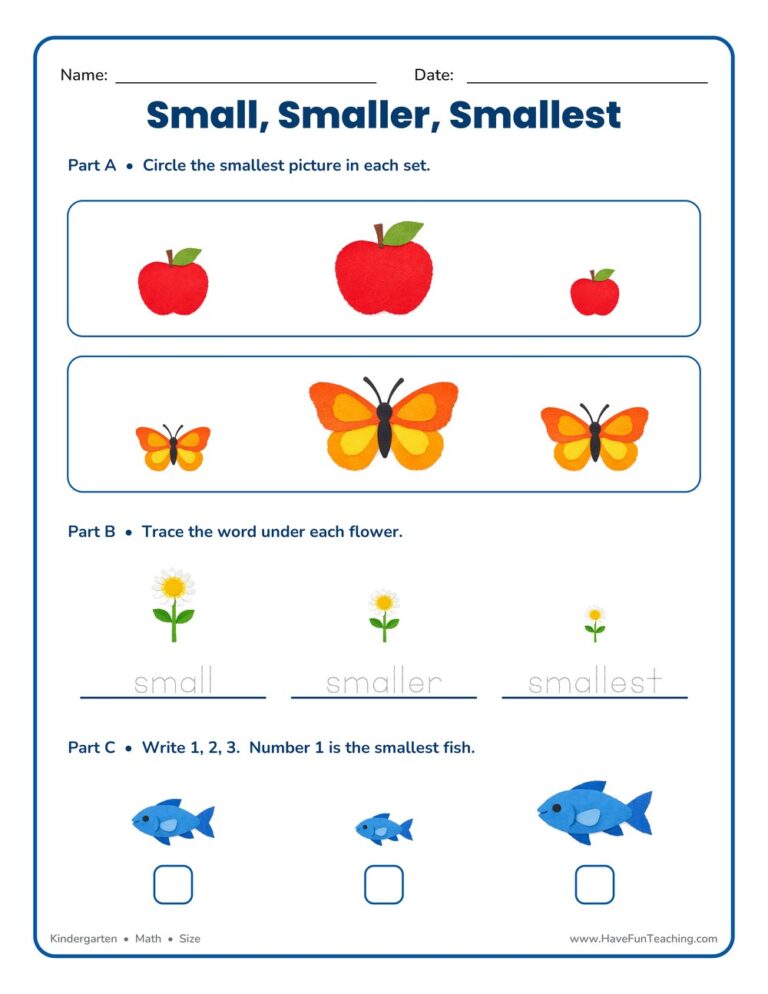
WorksheetKindergartenSmall Smaller Smallest Worksheet

This Small Smaller Smallest Worksheet helps Kindergarten students compare three objects, trace the size words, and order pictures from smallest to largest. Answer key included, so size practice is ready in minutes.

Worksheet
Worksheet2nd GradeComparing Two Measurements Worksheet

Students measure two objects with an inch ruler and find the difference on this Comparing Two Measurements Worksheet, a 2nd grade printable with an answer key included that builds real measuring confidence.

Worksheet
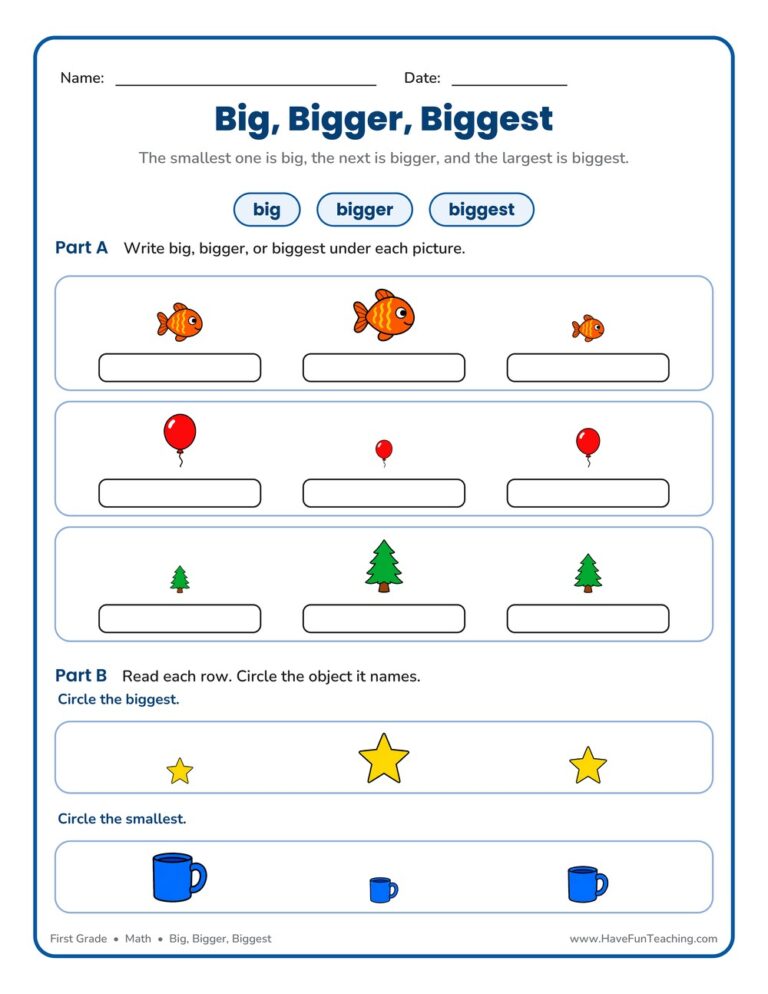
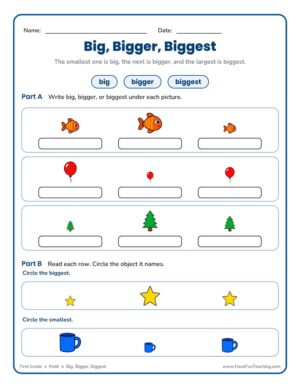
Worksheet1st GradeBig Bigger Biggest Worksheet

This Big, Bigger, Biggest Worksheet gives first grade students fun practice comparing objects by size, labeling big, bigger, and biggest and circling the biggest and smallest. An answer key is included to make learning simple.

Worksheet
Worksheet1st GradeShortest to Longest Worksheet

A picture-based Shortest to Longest Worksheet where 1st graders order pencils, snakes, crayons, and carrots by length. Includes a complete answer key for quick, no-prep measurement practice at home or school.

Worksheet
Worksheet1st GradeOrdering Objects by Length Worksheet

This Ordering Objects by Length Worksheet has 1st graders rank pencils, ribbons, and carrots from shortest to longest, then compare objects with words. An answer key is included for quick, no-prep measurement practice.

Worksheet
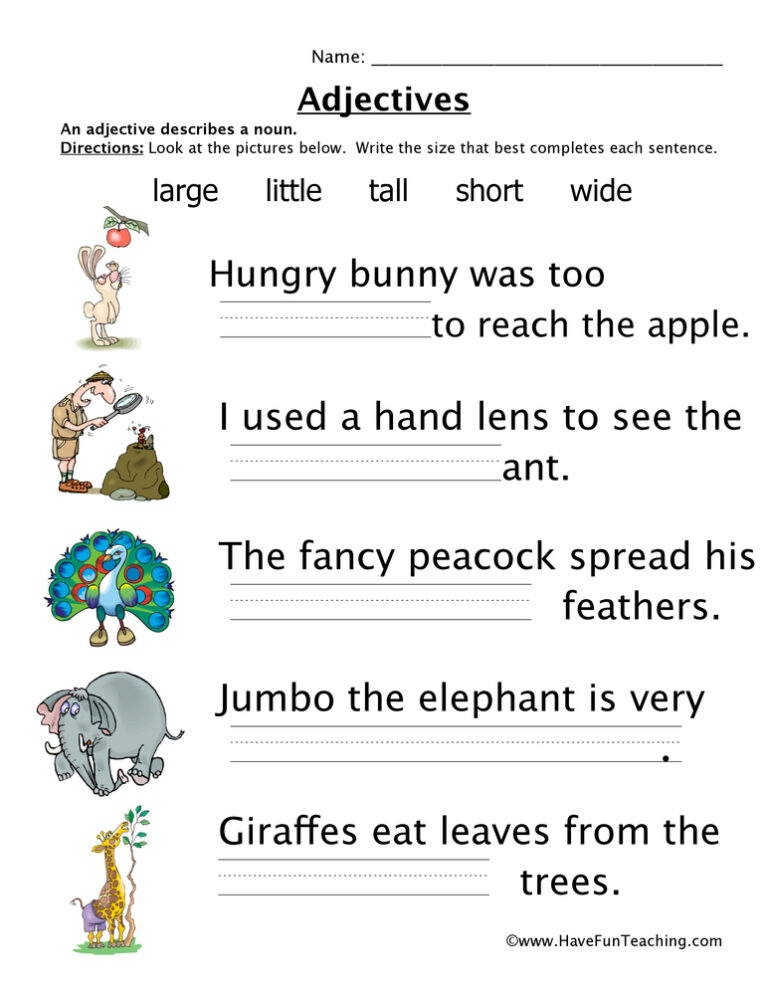
Worksheet1st GradeAdjectives Size Worksheet

Students name four pictures and circle describing words in this Adjectives Size Worksheet built for 1st Grade. An answer key is included, so size-word practice needs no prep and checks itself in seconds.

Worksheet
Worksheet2nd GradeComparing Object Lengths Worksheet

Students measure four everyday objects on an inch ruler, then use this comparing object lengths worksheet to find how many inches longer one object is than another. 2nd Grade, answer key included.

Worksheet
Worksheet1st GradeComparing Sizes Worksheet

This Comparing Sizes Worksheet has 1st graders compare pictures using taller, shorter, bigger, and smaller, then order three objects by length. An answer key is included, so it is ready for no-prep measurement practice.

Worksheet
Worksheet1st GradeUsing Length to Order Objects Worksheet

The Using Length to Order Objects Worksheet gives first graders playful, picture-based practice ordering objects from shortest to longest and spotting the longest and shortest. Includes a complete answer key for fast, no-prep measurement practice.

Worksheet
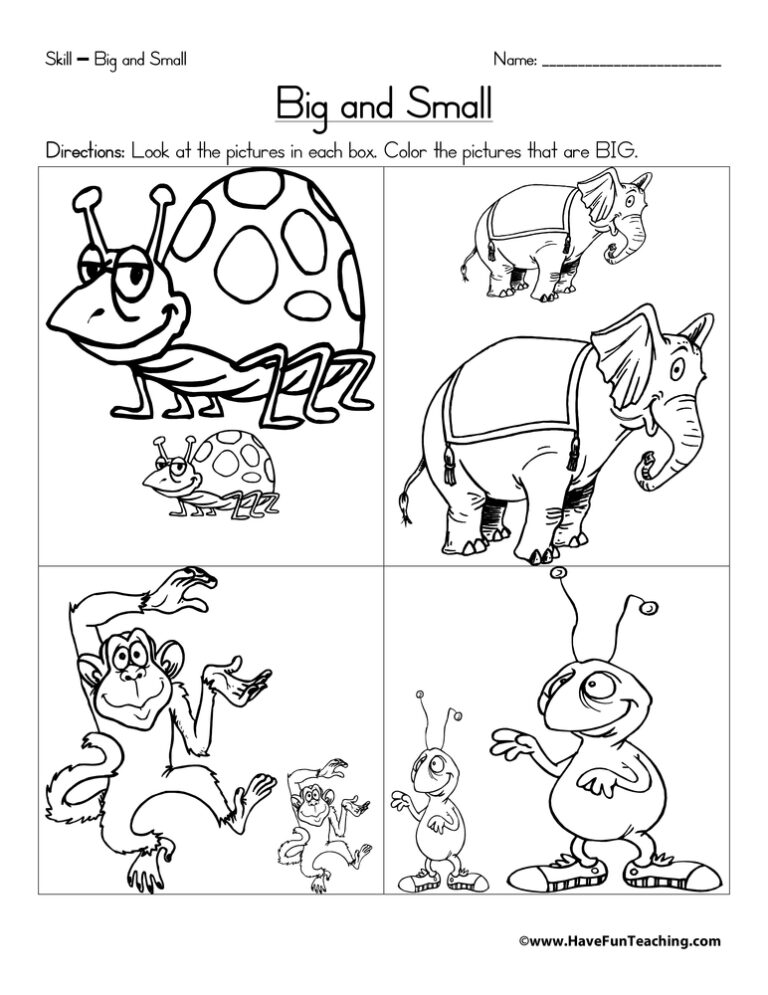
WorksheetKindergartenSize Worksheet

This Size Worksheet helps Kindergarten students compare two pictures of the same object and circle the big one or the small one. An answer key is included for quick, easy checking.

Worksheet
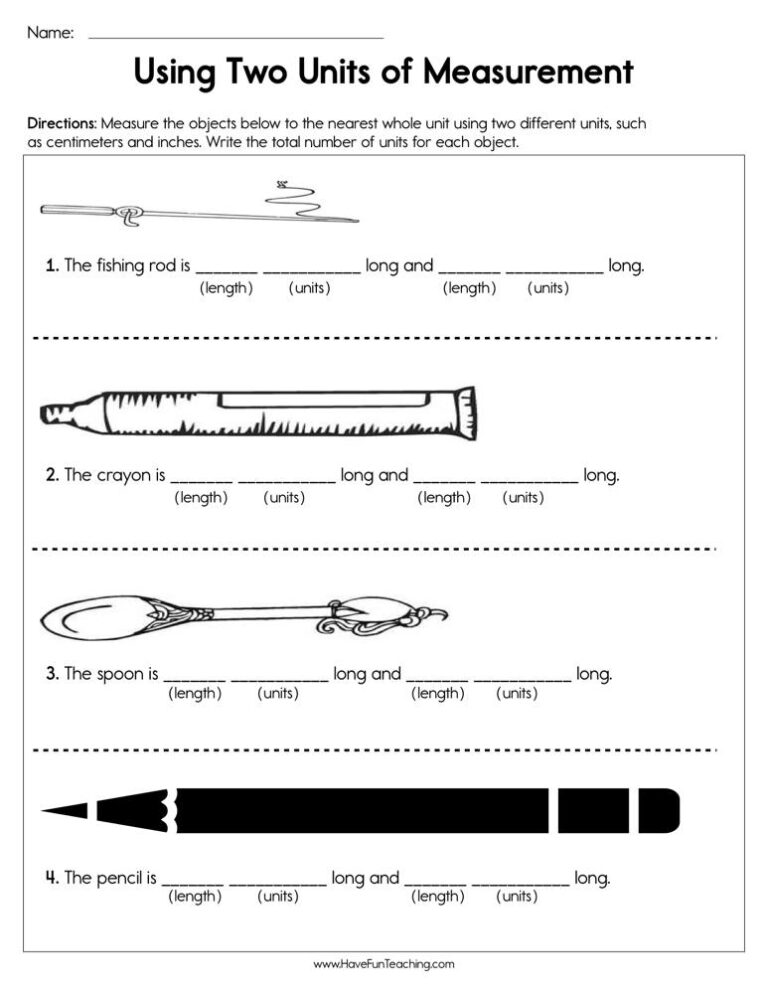
Worksheet2nd GradeUsing Two Units of Measurement Worksheet

A using two units of measurement worksheet where 2nd graders measure a crayon, a spoon, and a paintbrush in both inches and centimeters on a true-scale ruler. Answer key included for quick, no-prep practice.

Worksheet
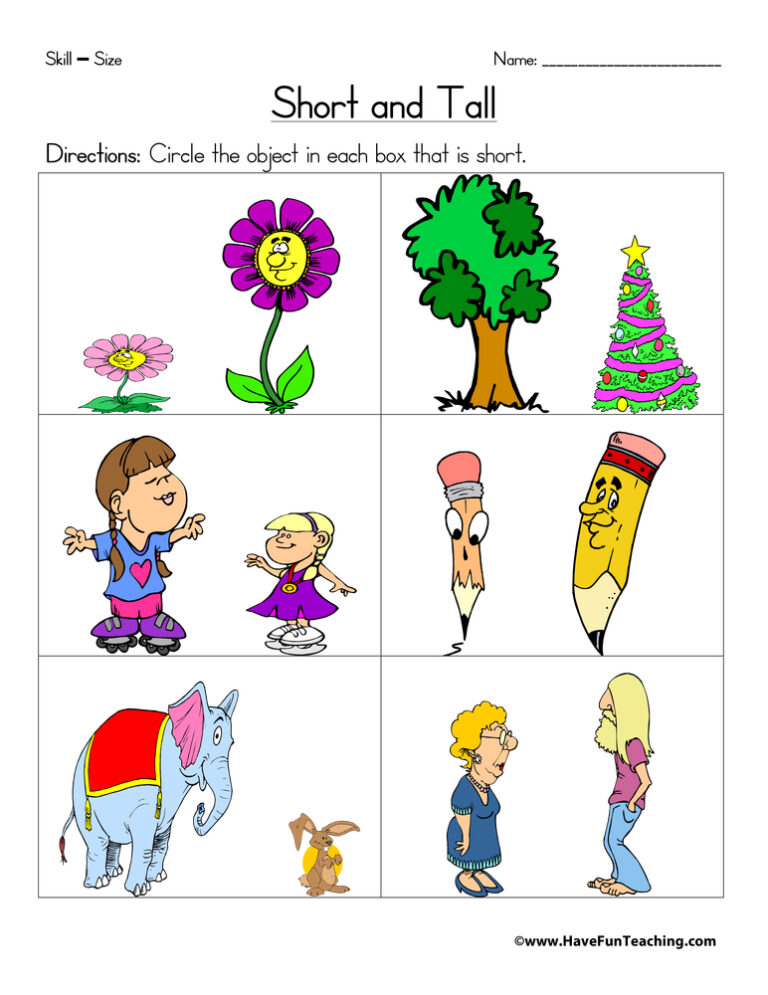
WorksheetKindergartenShort and Tall Worksheet

A picture-based short and tall worksheet for Kindergarten: circle the taller object in four boxes, then draw a short flower and a tall flower. Answer key included for quick, no-prep height practice.

Worksheet
Worksheet1st GradeComparing Two Lengths Worksheet

This comparing two lengths worksheet gives 1st Grade students four picture cards and a strip ordering task for practicing longer and shorter. An answer key is included, so children build real measurement sense in minutes.

Worksheet
WorksheetKindergartenSmallest to Biggest Worksheet

This smallest to biggest worksheet helps kindergarten students order cupcakes and everyday objects by size, writing 1, 2, and 3. An answer key is included for quick, easy checking.

Worksheet
Worksheet1st GradeComparing Measurement Worksheet

This comparing measurement worksheet gives 1st grade students four picture cards and three sentences to finish using taller, heavier, bigger and lighter. An answer key is included, so checking work takes seconds.

Worksheet
Worksheet2nd GradeSize Classification Worksheet

This size classification worksheet helps 2nd grade students sort everyday objects into small, medium, and large groups using a simple body benchmark. An answer key is included for quick, easy checking.

From our teachers' playbook

Big, bigger, biggest!

What do kids learn about size in math?

Comparing size is one of the first math skills kids learn. Preschoolers and kindergartners use words like big and small, tall and short, long and short and line things up side by side. First graders order three objects by length and learn to compare two things using a third, like a string. By second grade they measure with rulers in inches and centimeters and find how much longer one object is: 9 in − 6 in = 3 in. The click moment is when kids learn to line up the ends before deciding which is longer.

How we teach size and comparing

Size starts with real stuff kids can hold. These moves build the vocabulary and the habits of good measuring.

Line them up

Grab three stuffed animals, three shoes or three pencils and have kids line them up from smallest to biggest. Then use the words: big, bigger, biggest. Once they can do it with objects, they're ready to do it on paper.

Why it works: kids understand an idea best when they touch it, then draw it, then write it, the order the U.S. Department of Education recommends for elementary math.
Big Bigger Biggest WorksheetTry it withBig Bigger Biggest WorksheetWorksheetsOpen it →

Prove it's longer

Hold two pencils up at uneven ends and ask "Which is longer?" Kids will disagree. Have partners explain how they know and discover that the ends have to line up. That one conversation makes comparing lengths fair from then on.

Why it works: when kids say the precise math words, their understanding gets sharper, a recommendation of the U.S. Department of Education's elementary math guide.

Using Length to Order Objects WorksheetTry it withUsing Length to Order Objects WorksheetWorksheetsOpen it →

Two rulers, two units

Show the same crayon measured in inches and in centimeters. Ask why the numbers are different when the crayon didn't change. Kids learn that smaller units mean bigger numbers, a big idea for measurement.

Why it works: handing over the work step by step, from teacher to student, is one of the most widely used teaching frameworks (Pearson and Gallagher, 1983).

Measuring in Centimeters and Inches WorksheetTry it withMeasuring in Centimeters and Inches WorksheetWorksheetsOpen it →

Size questions from teachers and parents

What age do kids learn to compare sizes?

Most children start comparing sizes around age 3 or 4 with words like big and small. In kindergarten they compare lengths and heights directly, and in 1st grade they order three objects.

How do I teach big, bigger, biggest?

Use three real objects of different sizes. Show "big," then add a bigger one and the biggest one. Let your child arrange them and name each.

Why does my child think a longer object is shorter?

Often the ends aren't lined up. Show them to put both objects on the same starting line before comparing.

What comes after comparing sizes?

Measuring with non-standard units like paper clips, then with rulers in inches and centimeters in 2nd grade.



