Skip to content
Start My 3 Free Days $0 today · cancel anytime

Volume Worksheets

19 volume worksheets. Teacher favorites: Volume Rectangular Prisms Worksheet and Mass Volume Worksheet. How teachers use these

Volume Worksheets

19 volume worksheets. Teacher favorites: Volume Rectangular Prisms Worksheet and Mass Volume Worksheet. How teachers use these

Worksheet
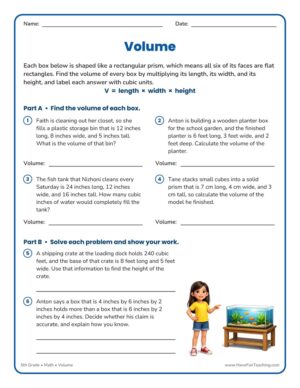
Worksheet5th GradeVolume Rectangular Prisms Worksheet

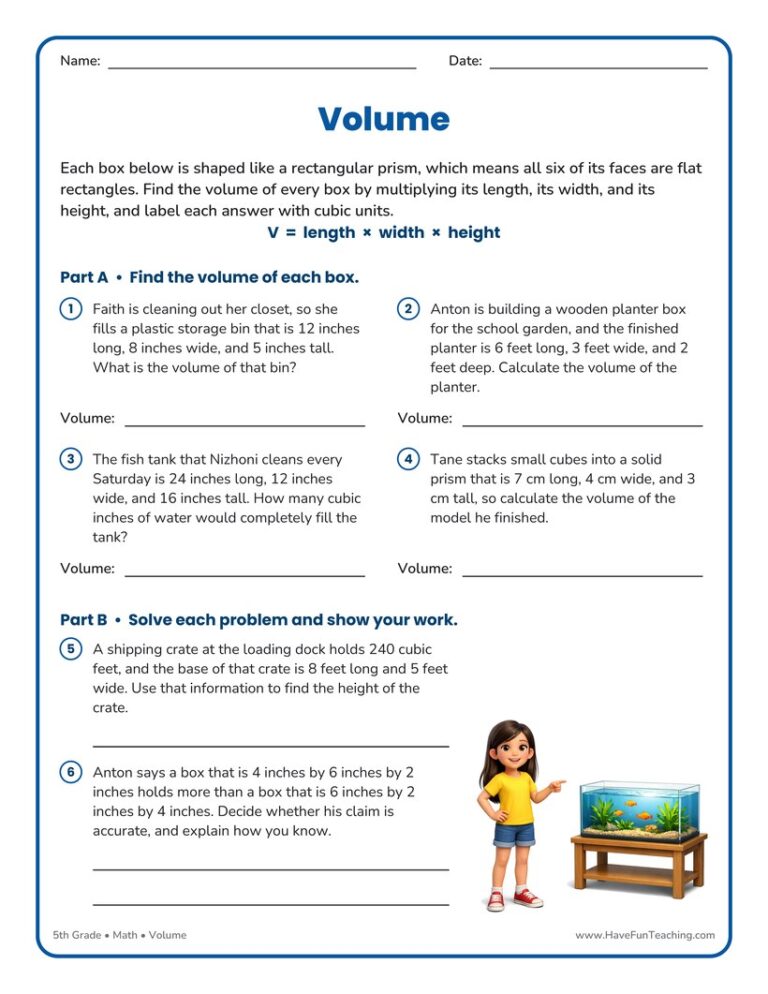
This Volume Rectangular Prisms Worksheet gives 5th graders practice multiplying length, width, and height, finding a missing edge, and solving two real-world problems. Answer key included for fast, no-prep checking.

Worksheet
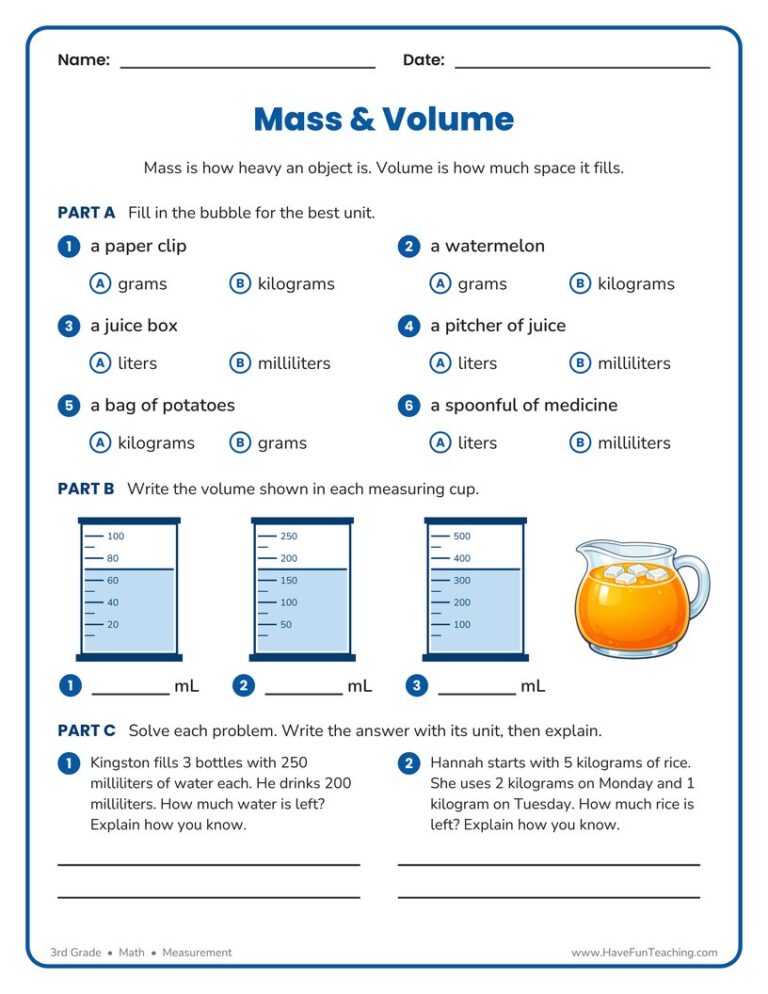
Worksheet3rd GradeMass Volume Worksheet

This mass volume worksheet gives 3rd grade students practice choosing metric units, reading measuring cups, and solving two-step word problems. An answer key is included, so checking work takes seconds.

Worksheet
Worksheet5th GradeVolume Cubes Worksheet

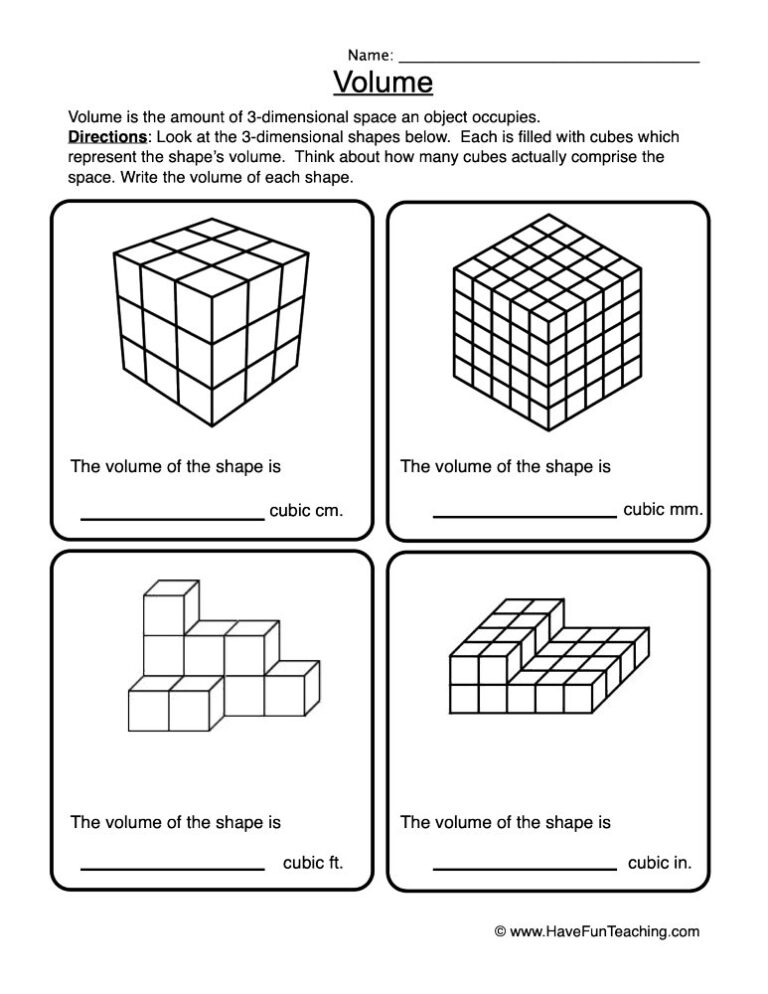
This Volume Cubes Worksheet gives 5th graders three ways to find volume: counting unit cubes, using length times width times height, and solving a packing problem. An answer key is included, so practice is quick to check.

Worksheet
Worksheet5th GradeVolume Word Problems Worksheet

Practice with this Volume Word Problems Worksheet, where 5th Grade students multiply length, width, and height to solve real container problems. An answer key is included, so checking student work takes only seconds.

Worksheet
Worksheet5th GradeVolume Worksheet

Four labeled rectangular prisms plus two multi-step word problems make this volume worksheet a quick 5th grade check on length x width x height. Answer key included, so no prep is needed.

Worksheet
Worksheet4th GradeMass and Volume Worksheet

A fourth grade mass and volume worksheet where students fill in the bubble to choose the best unit of measure for weight and capacity. Includes an answer key — perfect for quick, no-prep measurement practice at home or school.

Worksheet
Worksheet3rd GradeDensity and Volume in Metric Worksheet

This Density and Volume in Metric Worksheet asks 3rd graders to choose the best metric unit—grams, kilograms, milliliters, or liters—for ten everyday objects. Answer key included for fast, no-prep measurement practice.

Worksheet
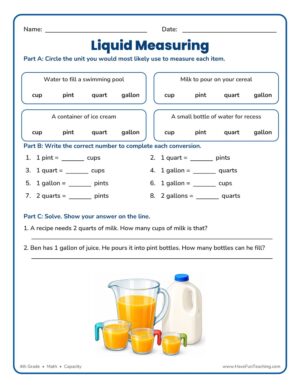
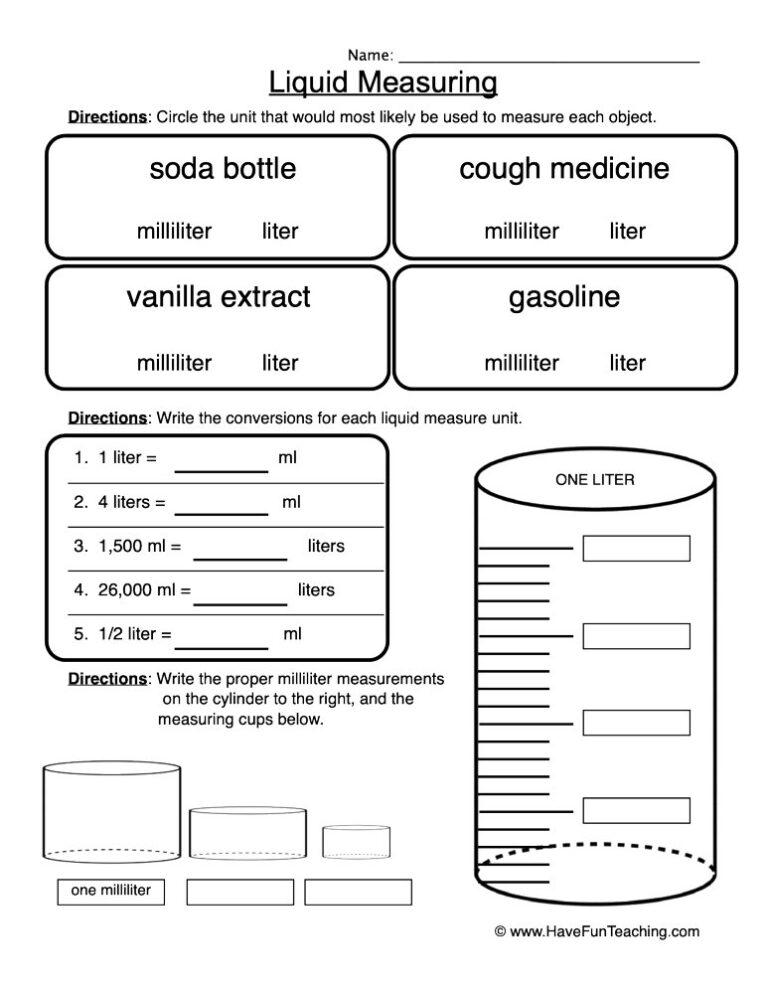
Worksheet4th GradeLiquid Measures Worksheet

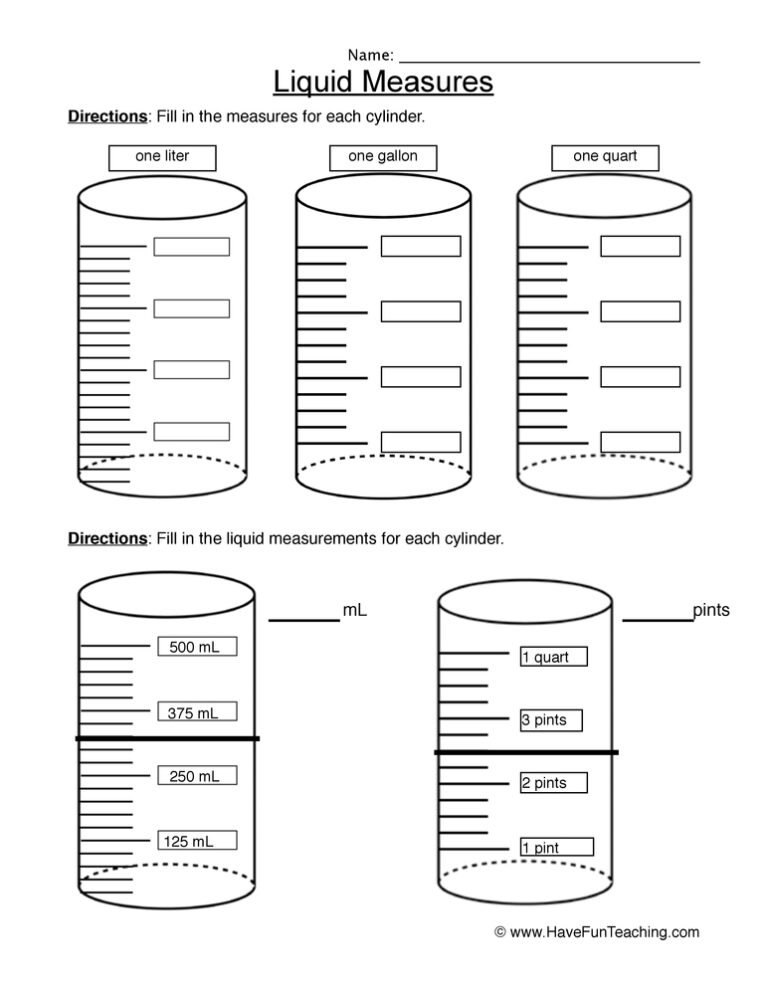
This liquid measures worksheet gives 4th grade students practice reading measuring containers and converting capacity units. An answer key is included, so children build real measurement sense with very little prep.

Worksheet
Worksheet5th GradeVolume, Surface Area Rectangular Prisms Worksheet

This Volume, Surface Area Rectangular Prisms Worksheet gives 5th Grade students four labeled prisms plus an applied box comparison, with an answer key included, so measurement practice builds real reasoning.

Worksheet
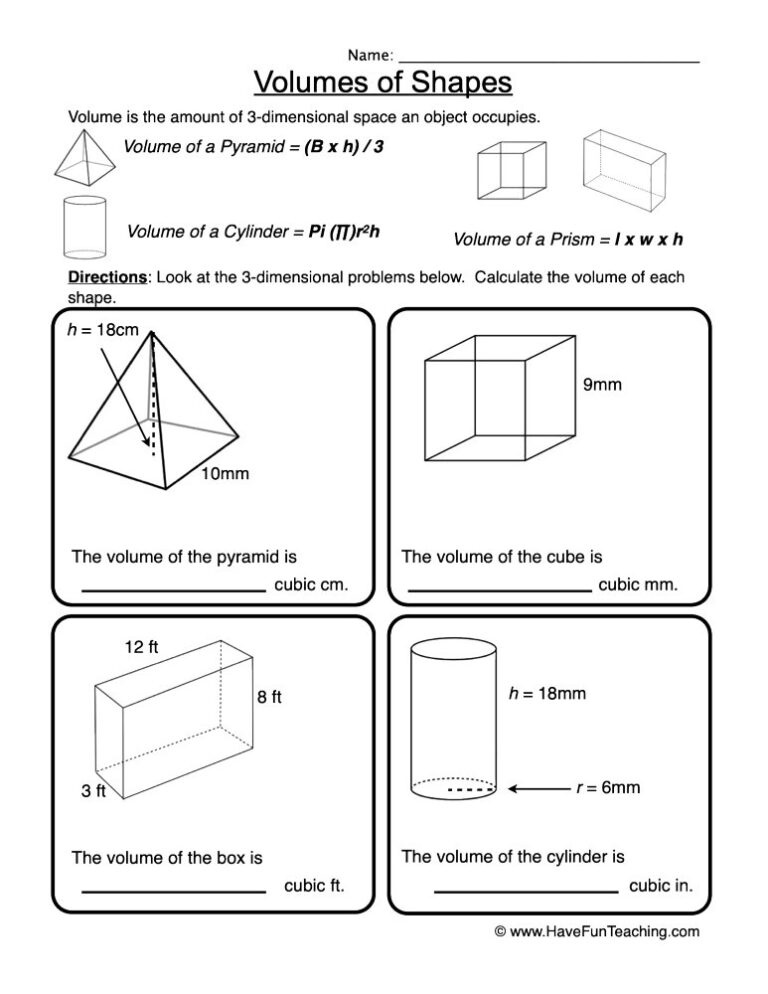
Worksheet5th GradeVolume of Shapes Worksheet

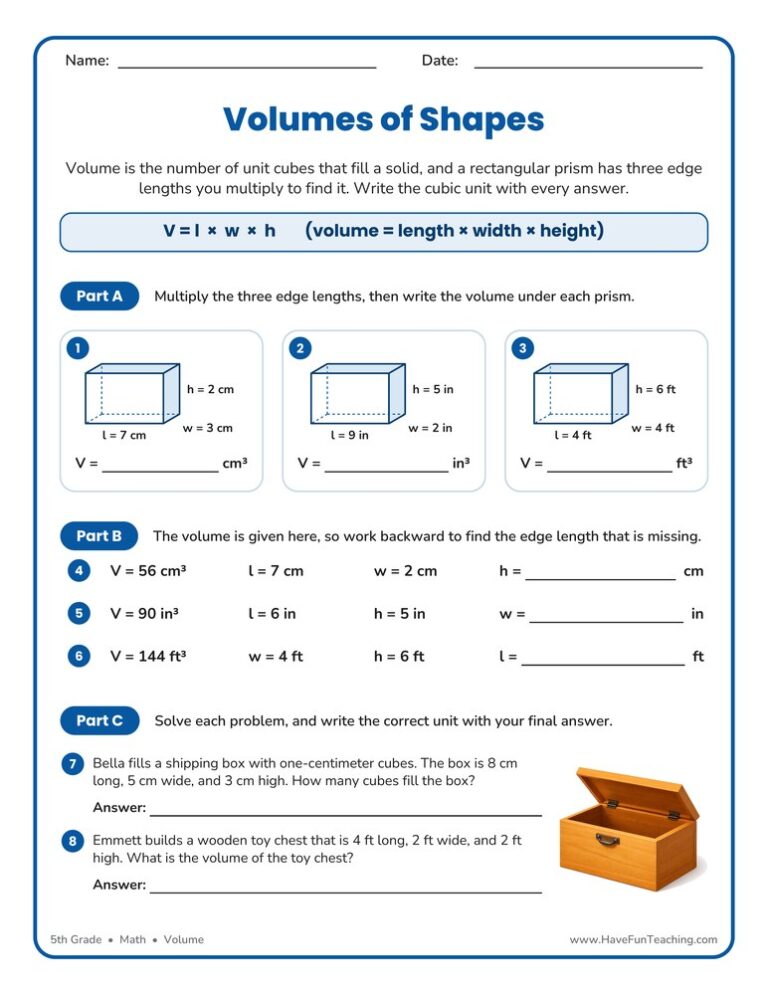
This volume of shapes worksheet asks 5th grade students to find the volume of labeled rectangular prisms, solve for a missing edge, and answer two word problems. An answer key is included.

Worksheet
Worksheet4th GradeMeasuring Metric Word Problems Worksheet

A measuring metric word problems worksheet where 4th graders solve five real-world grams, kilograms, milliliters and liters problems, including two that need a unit conversion first. Answer key included, so practice is quick and no-prep.

Worksheet
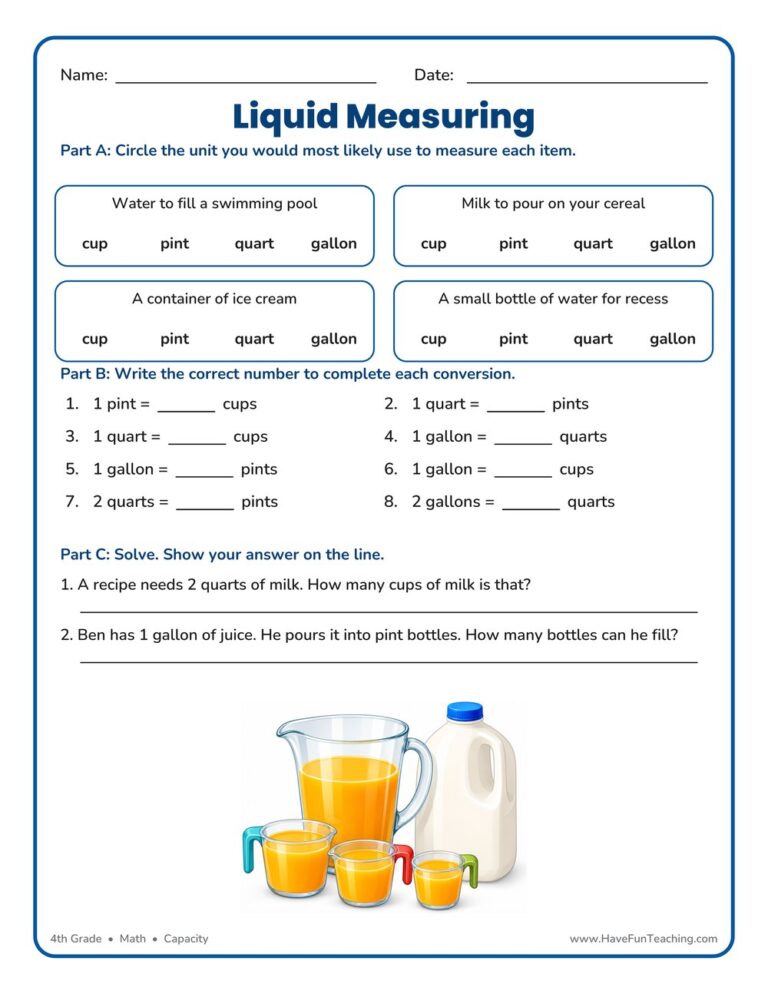
Worksheet4th GradeCup Pint Quart Gallon Worksheet

This cup pint quart gallon worksheet gives 4th graders practice choosing units and converting between cups, pints, quarts, and gallons. Includes an answer key—a no-prep way to build customary capacity skills.

Worksheet
Worksheet4th GradeChoosing Milliliter or Liter Worksheet

This Choosing Milliliter or Liter Worksheet has 4th graders pick the right metric unit for six everyday containers, convert liters and milliliters, and solve a word problem. Answer key included.

Worksheet
Worksheet5th GradeVolume of 3D Shapes Worksheet

This Volume of 3D Shapes Worksheet has 5th graders use V = l x w x h on four labeled rectangular prisms plus two real-world word problems. Answer key included for fast, no-prep geometry practice.

Worksheet
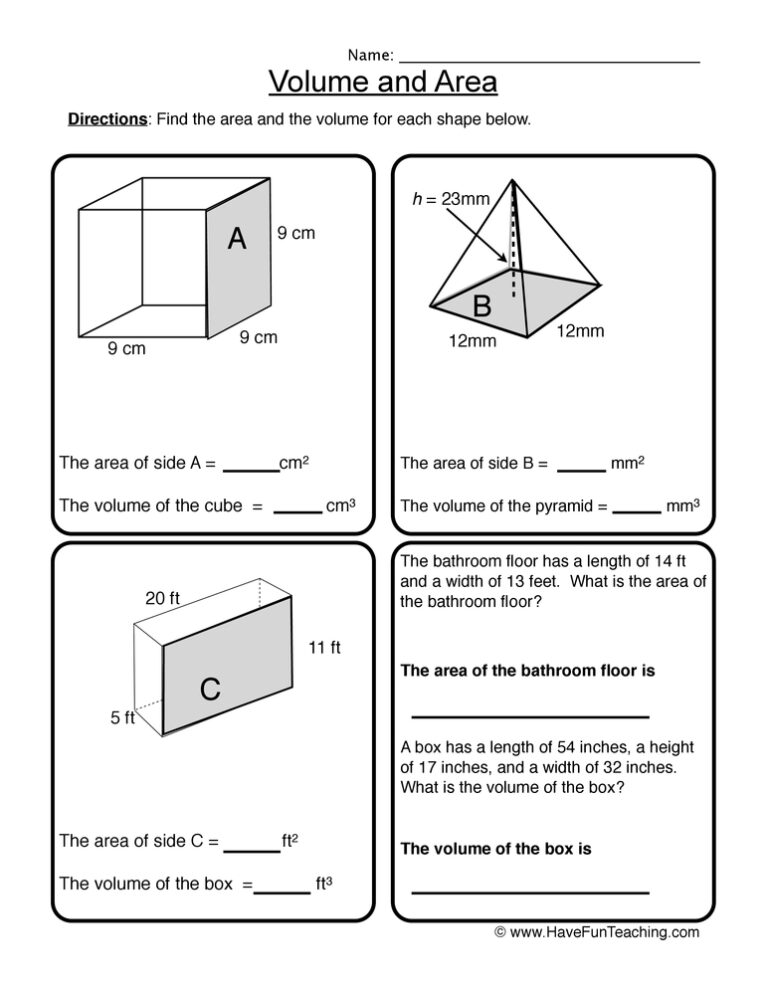
Worksheet5th GradeVolume Area Worksheet

This Volume Area Worksheet gives 5th graders four labeled prisms and an applied box problem, with the volume and face-area formulas supplied. An answer key is included for fast, no-prep marking.

Worksheet
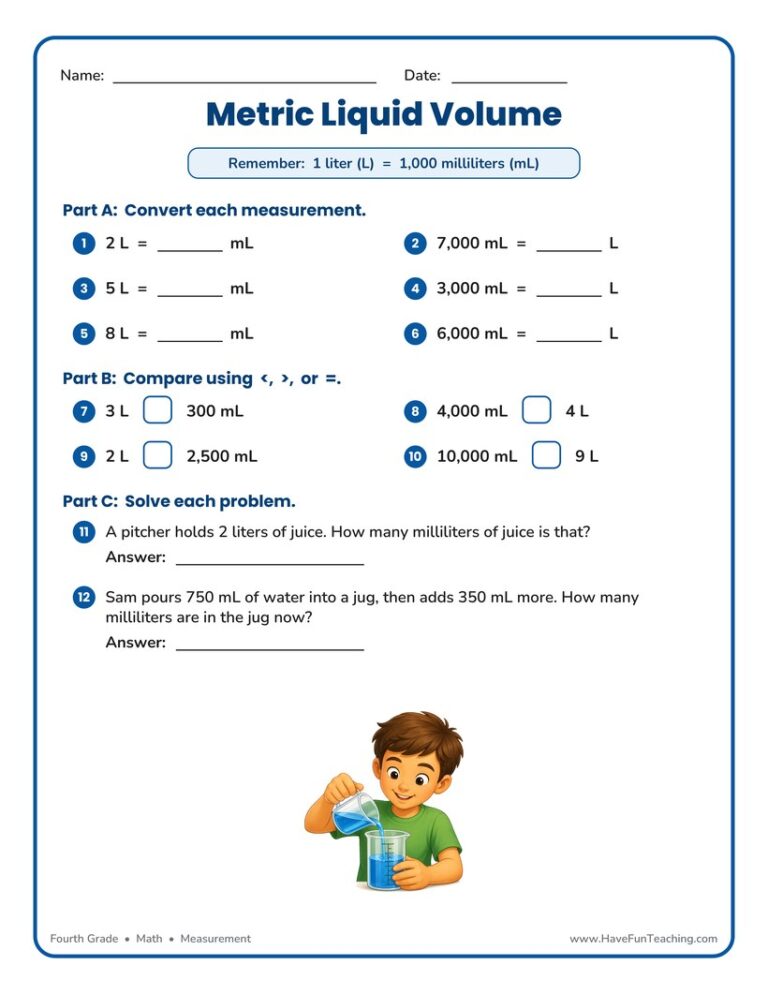
Worksheet4th GradeMetric Liquid Volume Worksheet

Practice metric liquid volume with this fourth grade worksheet. Students convert liters and milliliters, compare volumes, and solve word problems, with an answer key included to make review simple.

Worksheet
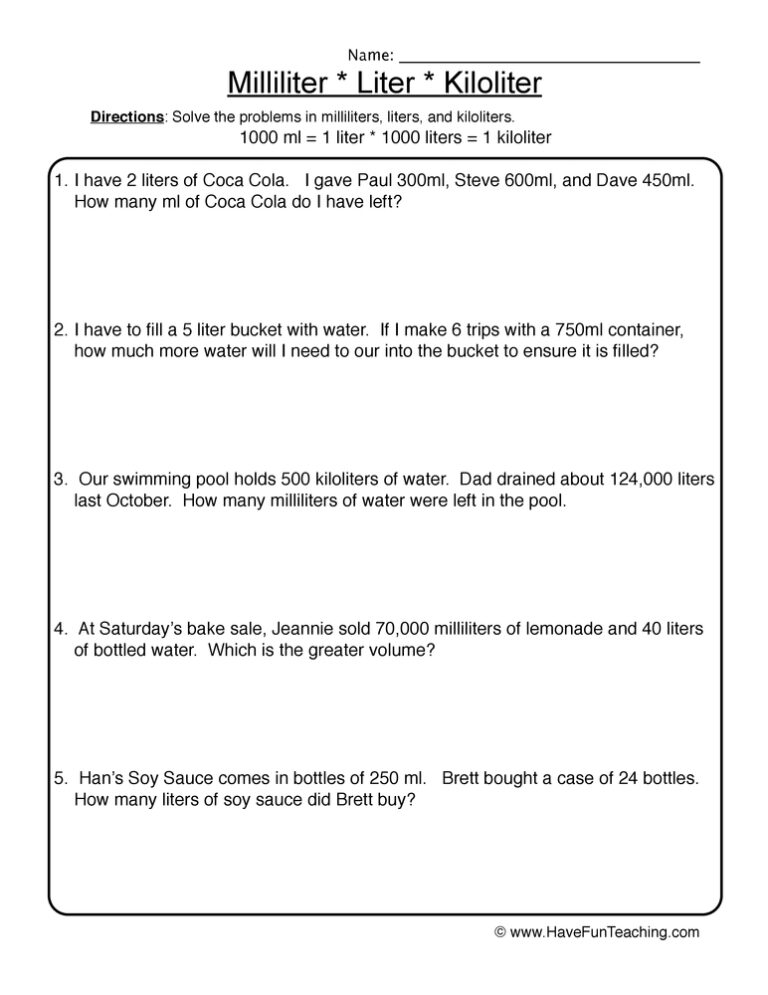
Worksheet5th GradeLiquid Measurement Scenarios Worksheet

This liquid measurement scenarios worksheet gives 5th grade students four two-step word problems that convert milliliters, liters, and kiloliters. An answer key is included, so every step is easy to check.

Worksheet
Worksheet5th GradeMeasurement Conversions Worksheet

This measurement conversions worksheet has 5th grade students scale a fruit punch recipe and solve capacity word problems with cups, pints, quarts, and gallons. An answer key is included for easy checking.

Worksheet
Worksheet4th GradeVolume Conversions Worksheet

This Volume Conversions Worksheet gives 4th grade students practice labeling a capacity chart and converting gallons, quarts, pints, and cups. An answer key is included, so measurement practice checks itself.

From our teachers' playbook

How much fits inside?

What do kids learn about volume?

Volume is how much space something takes up, or how much it can hold. Kids first meet liquid volume, also called capacity, in 3rd grade: they estimate and measure in liters and milliliters, and later compare cups, pints, quarts and gallons. In 5th grade, they find the volume of solid shapes by counting unit cubes, then discover the shortcut for rectangular prisms: V = l × w × h. A box that's 4 by 3 by 2 holds 24 cubic units. The click comes when kids see that volume is just layers of area stacked up.

Our favorite ways to teach volume

Volume makes sense when kids can fill it, stack it and build it. Here's what works in our rooms.

Stack the cubes first

Before any formula, give kids unit cubes and ask them to build a box with a bottom layer of 3 by 2. How many cubes in one layer? How many in four layers? Counting layers shows why we multiply, so the formula feels like their own idea.

Why it works: kids understand an idea best when they touch it, then draw it, then write it, the order the U.S. Department of Education recommends for elementary math.

Volume Cubes WorksheetTry it withVolume Cubes WorksheetWorksheetsOpen it →
Sing the formula

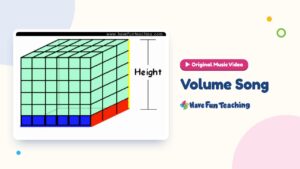
Play the Volume Song at the start of the unit and again before the quiz. Kids chant length times width times height while tapping each dimension on a box. It's a quick memory hook for a formula that's easy to mix up with area.

Why it works: words set to a repeating melody are easier to recall than the same words spoken (Wallace, 1994).

Volume Song (Original Music Video)Try it withVolume Song (Original Music Video)SongsOpen it →

Draw the word problem

Read a volume word problem aloud and sketch the box as you go, labeling each number. Say out loud which number is the length, width and height. Then have kids sketch the next problem before they solve it.

Why it works: showing first, practicing together, then letting kids try alone is the "gradual release" model teachers have relied on for decades (Pearson and Gallagher, 1983).

Volume Word Problems WorksheetTry it withVolume Word Problems WorksheetWorksheetsOpen it →

Volume questions we hear a lot

How do you find the volume of a rectangular prism?

Multiply the length times the width times the height. A box that's 5 cm long, 2 cm wide and 3 cm tall has a volume of 30 cubic centimeters. You can also multiply the area of the base by the height.

What is the difference between volume and area?

Area measures the flat space inside a shape and uses square units. Volume measures the space inside a 3D object and uses cubic units. Area covers, volume fills.

What grade learns volume?

Kids measure liquid volume in liters and milliliters in 3rd grade. They find the volume of rectangular prisms with cubes and the formula in 5th grade.

What's the difference between capacity and volume?

Capacity is how much a container can hold, often measured in liters or gallons. Volume is how much space something takes up. In elementary school, kids often use the two words together when they measure liquids.

How many cups are in a gallon?

There are 16 cups in a gallon. That's 2 cups in a pint, 2 pints in a quart and 4 quarts in a gallon.