

Volume Conversions Worksheet
This Volume Conversions Worksheet gives 4th grade students practice labeling a capacity chart and converting gallons, quarts, pints, and cups. An answer key is included, so measurement practice checks itself.
$6.97
Want this one free?
Tell us where to send it and it’s yours — no card, no catch.
One free resource per teacher. We’ll also send free teaching ideas each week — unsubscribe anytime.
Free teacher account · no credit card
Membership
Get every game, song, & printable
- Every game, on any device
- 10,000+ printables
- Assign online with HFT Classroom
Then $39.97/year · cancel anytime · See plans
- Instant digital download
- Printable PDF + answer key
- Made by real teachers
Teacher / Family membership
Teaching is easier with every resource
One membership for your whole year: 10,000+ worksheets, games, songs and videos for Preschool–6th, for your classroom or homeschool.
- Unlimited printables & downloads
- Every game, on any device
- Assign online with HFT Classroom
- Cancel anytime
Teacher / Family membership · 3 days free
Yearly
Monthly would be $119.64 a year
$3.33/month
Billed $39.97 once a year
You save $79.67 every year
Start My 3 Free Days$0 today · cancel anytime
Monthly
$9.97/month
Flexible, month to month
Yearly is just $3.33/mo. Switch and save $79.67
Start My 3 Free Days$0 today · cancel anytime
About this resource
Description
Measuring liquids is one of the first places students see that the same amount can be written in more than one way. This Volume Conversions Worksheet gives fourth grade students focused practice moving between gallons, quarts, pints, and cups so those relationships become automatic. Students begin by labeling a capacity chart, then use the chart they built to complete a set of conversions, and finish by solving a real word problem and explaining their reasoning. Because every row of the chart spans the same width, students can see at a glance that one gallon, four quarts, eight pints, and sixteen cups all describe the very same amount of liquid.
The activity is ready to print and hand out. Students work through the three parts in order, and the labeled chart at the top stays available as a reference for the rest of the page. Use it as guided practice while you introduce customary capacity, as independent seatwork once students have seen the units, or as a quick review before a measurement assessment. The included answer key makes checking a whole class fast, and it also gives you sample wording for the written explanation in Part C.
What’s Included
- A capacity chart students label with gallon, quart, pint, and cup
- Six conversion problems, including multi-step conversions across two units
- A multi-step word problem with room to show the work and justify the answer
- A full answer key on the final page
- One print-ready PDF page for students plus the key
Three Reasons This Helps Kids
- It makes the relationships visible. Equal-width rows show equivalence instead of asking students to memorize a list of facts, so the chart becomes a tool they can rebuild from memory later.
- It builds from recall to reasoning. Labeling comes first, single-step conversions come next, and multi-step problems come last, so every student has a place to start and somewhere to grow.
- It asks students to explain. Part C requires the steps and the justification, which is exactly the kind of constructed response fourth grade assessments ask for.
Ideas for Teachers and Parents
Bring in a real gallon jug, a quart carton, a pint carton, and a measuring cup, and let students pour water from one into the next before they write anything. Counting the pours turns this liquid volume conversion practice into something students can feel. In small groups, hand each student one unit and have them line up in order from largest to smallest. At home, a recipe is the perfect follow-up: ask your child to double it and tell you how many cups of milk that comes to. You can also revisit this Volume Conversions Worksheet later in the year as a warm-up, since the chart rebuilds the whole system in about a minute.
Related Resources
What teachers say
Reviews
You must be logged in to post a review.

This Solving Area Word Problems Worksheet gives 4th graders six real-world rectangle problems to solve by multiplying length and width. Includes labeled diagrams and a complete answer key — perfect for no-prep area practice at home or school.
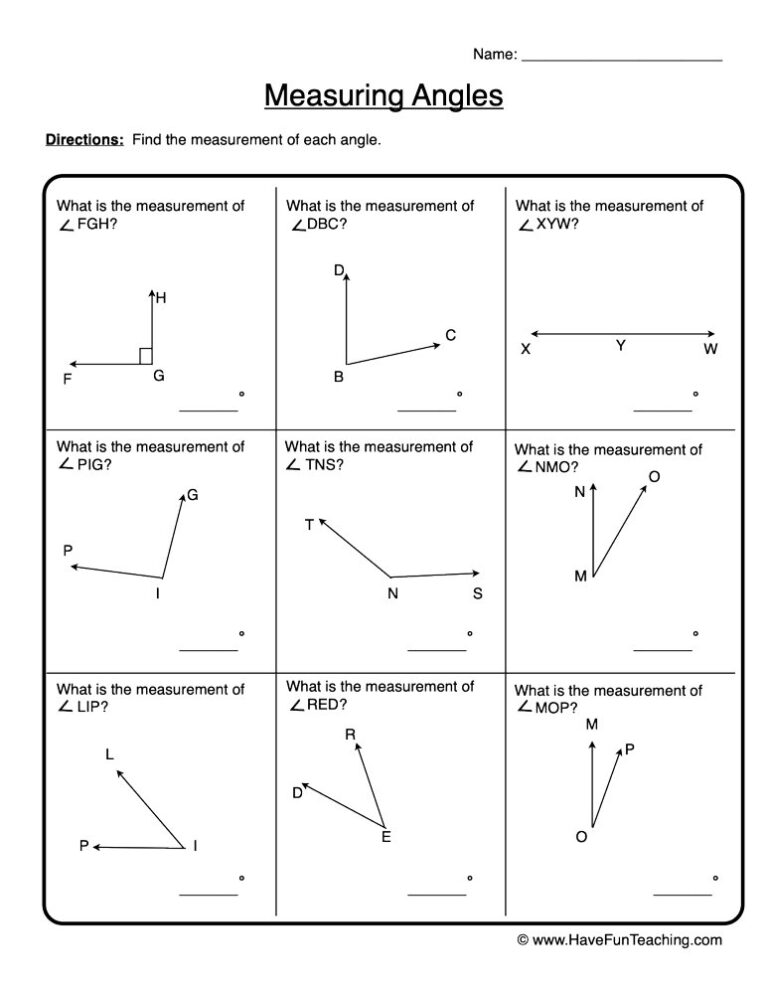
This measuring angles worksheet gives 4th graders hands-on practice using a protractor to measure angles in degrees and to name acute, right, obtuse, and straight angles. Answer key included for fast, no-prep geometry practice.

A real-world Finding Areas Word Problems Worksheet that helps 4th graders find the area of rectangles by multiplying length by width. Includes a complete answer key — perfect for no-prep area practice at home or school.
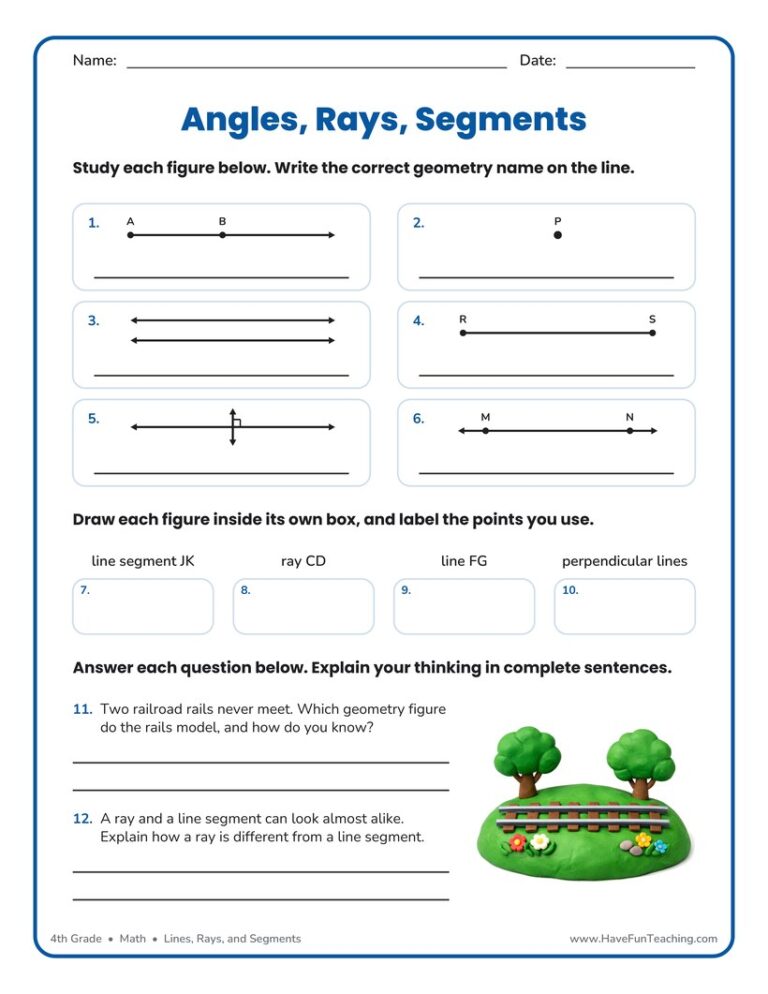
Students use this Lines Rays and Segments Worksheet to name, draw, and explain points, lines, segments, rays, and parallel and perpendicular lines. Built for 4th Grade with an answer key included, so checking takes seconds.
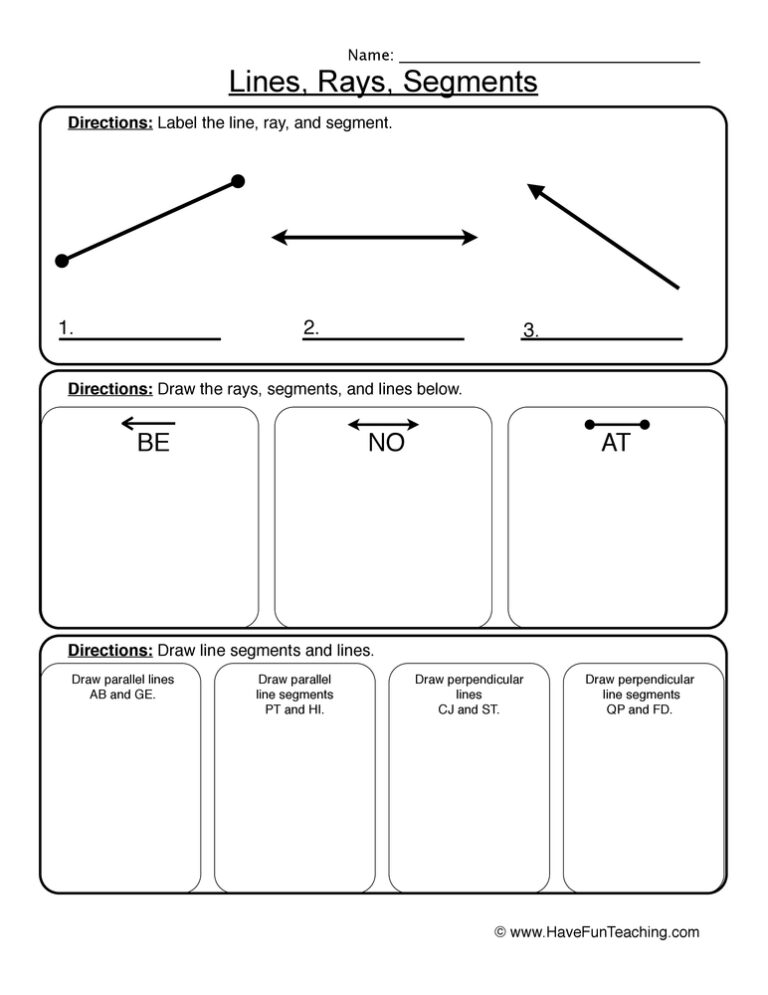
This angles rays and segments worksheet gives 4th graders practice naming and drawing lines, rays, segments, and parallel lines. An answer key is included, so checking work takes seconds.

A 4th grade Polygons Attributes Worksheet where students chart the sides, corners, and pairs of parallel sides of six polygons. Answer key included, so classifying shapes becomes quick, clear practice.

Using the Volume Song (Original Music Video), students will be able to define, give examples and find volume of 3D Shapes using the catchy and memorable lyrics.
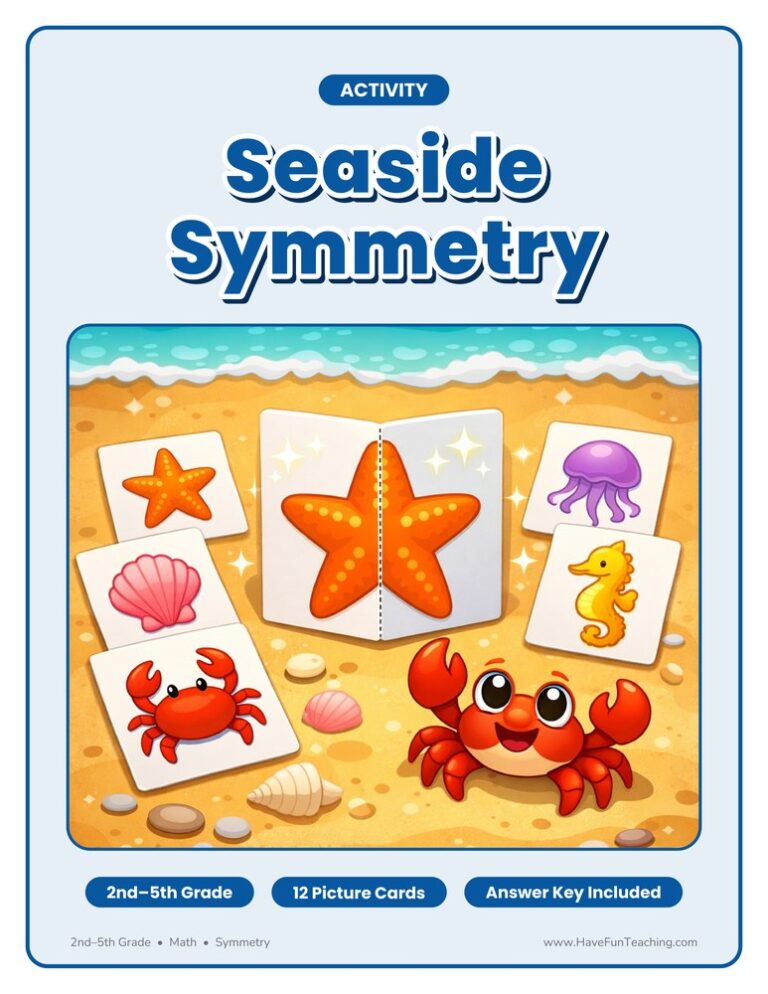
In this seaside symmetry activity, 2nd to 5th grade students find the line of symmetry in sea pictures and sort them as symmetrical or asymmetrical, with an answer key included.

This Finding the Area of Shapes Formulas Worksheet gives 4th Grade students six labeled rectangles and squares plus a two-step painting problem, with an answer key included, so applying the area formula becomes automatic.
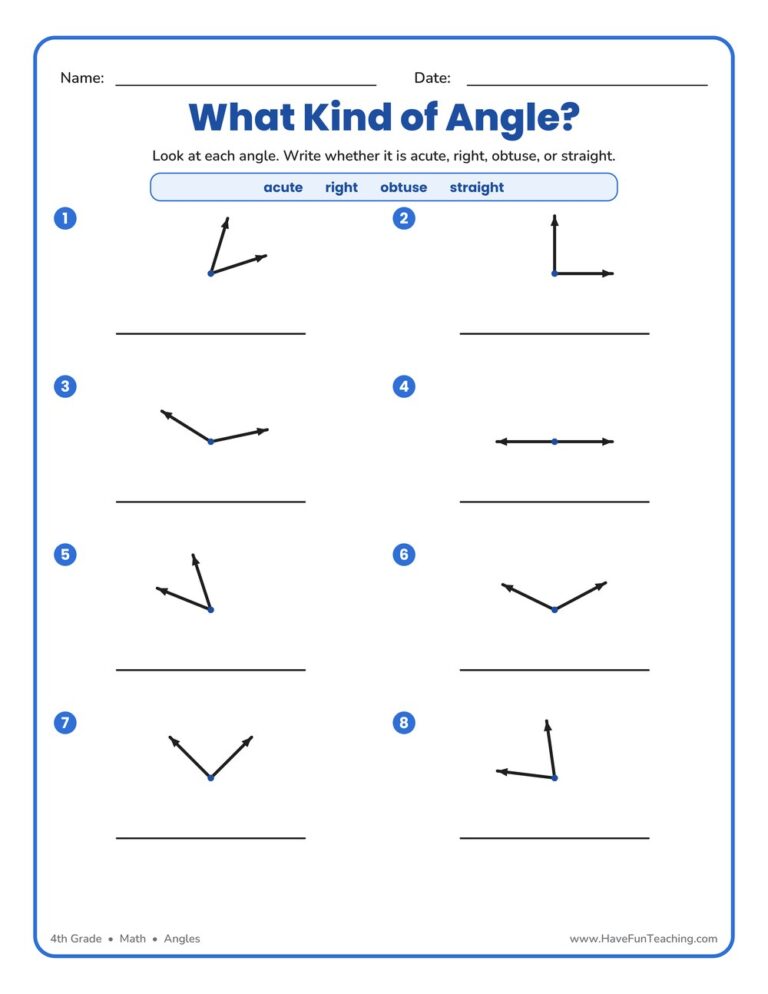
The What Kind of Angle worksheet gives 4th graders eight angles to sort as acute, right, obtuse, or straight. Answer key included for quick, no-prep geometry practice.

This angles measuring worksheet has 4th graders measure six angles with a protractor and label each one acute, obtuse, right, or straight. An answer key is included, so protractor practice checks itself in minutes.

This Creating Line Segments Worksheet has 4th graders count endpoints, draw labeled line segments from their names, and explain why MN and NM name one segment. Answer key included.




Reviews
There are no reviews yet