Skip to content
Start My 3 Free Days $0 today · cancel anytime

Pronunciation Resources

36 pronunciation resources: 27 activities, 6 worksheets, 2 games and more. How teachers use these

Pronunciation Resources

36 pronunciation resources: 27 activities, 6 worksheets, 2 games and more. How teachers use these

Game
Game3rd GradePrefixes Pre Dis Mis Game

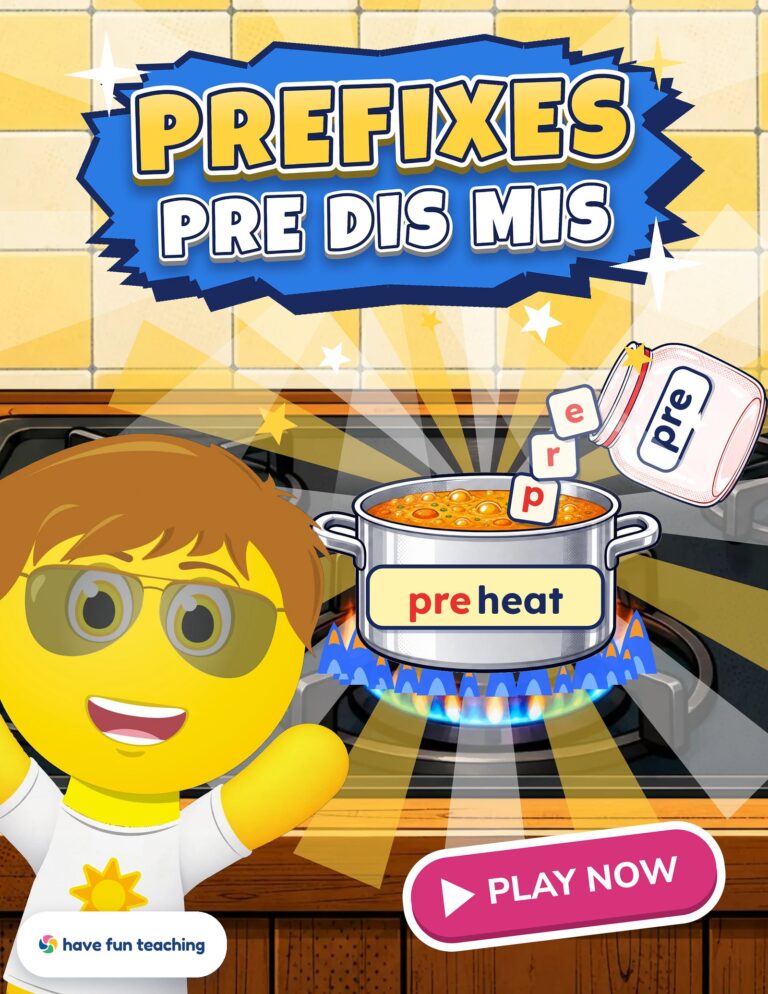
A comic-book cooking game where third grade kids read each order and pour the prefix pre, dis or mis into the pot to cook up words like preheat, dislike and misspell. Play online on any phone, tablet, Chromebook or computer.

Game
Game4th GradeGreek and Latin Roots Game

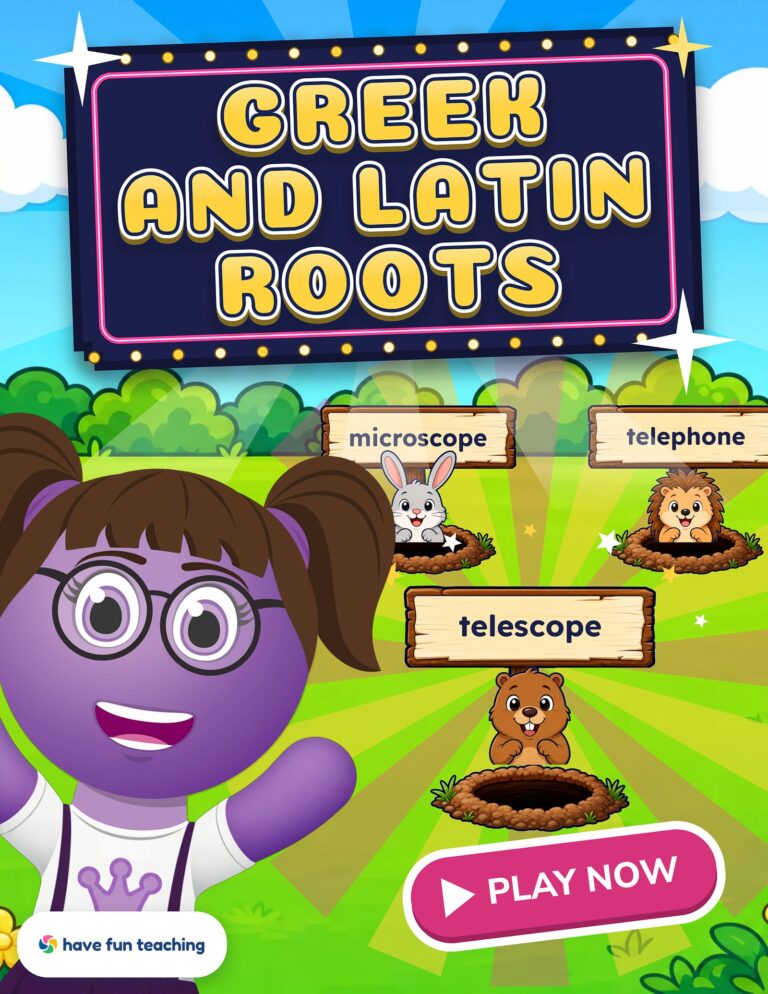
A retro arcade game where 4th grade kids read each clue and tap the critter holding the matching word, using Greek and Latin roots like tele, scope, port and graph. Play online on any phone, tablet, Chromebook or computer.

Worksheet
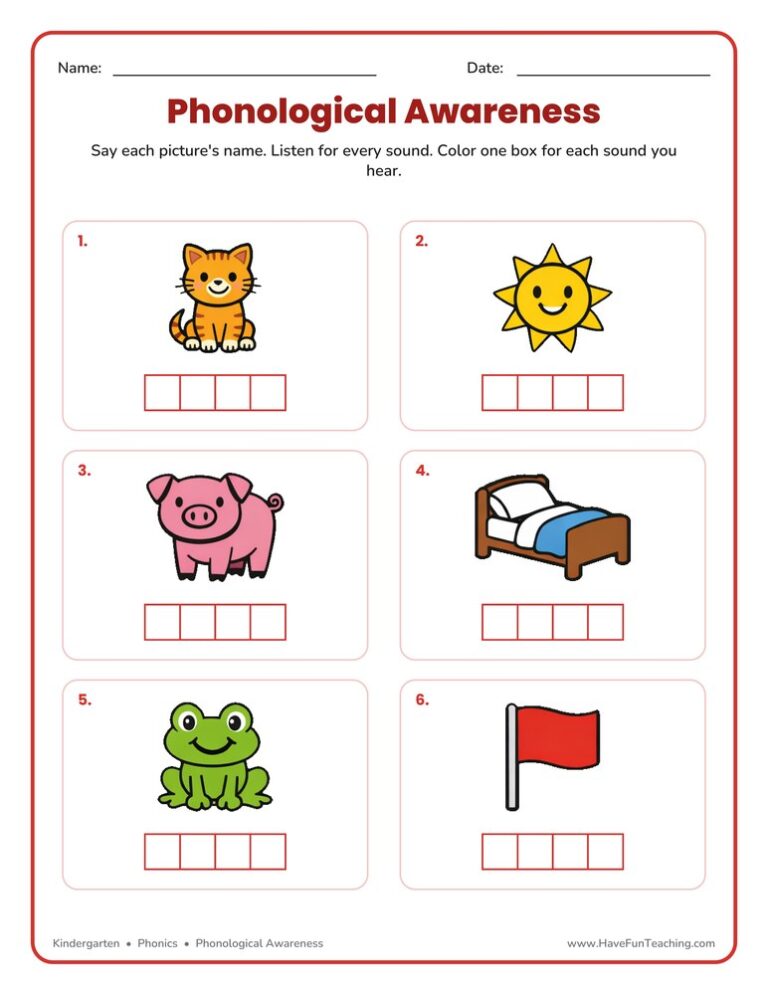
WorksheetKindergartenPhonological Awareness Worksheet

This phonological awareness worksheet helps Kindergarten students listen for each sound in a word and color one box per sound they hear. Includes a complete answer key for easy, no-prep practice of early phonics and phoneme skills.

Worksheet
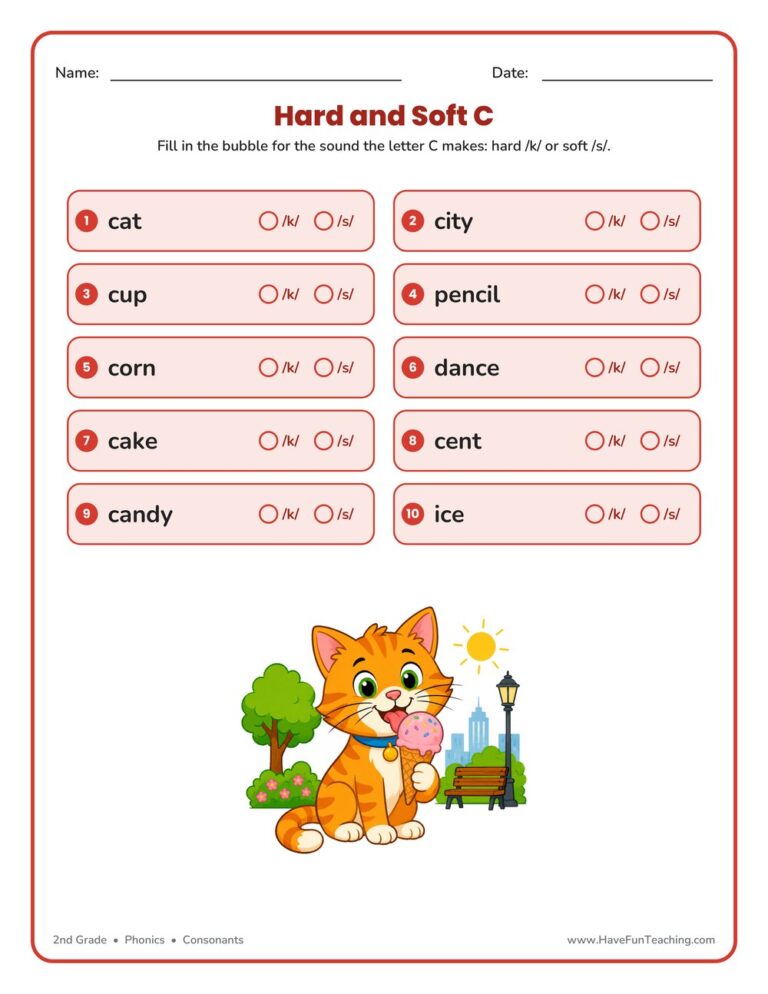
Worksheet2nd GradeCircle Hard Soft C Words Worksheet

The Circle Hard Soft C Words Worksheet gives 2nd graders ten words to read and sort by the hard /k/ or soft /s/ sound of the letter C. Answer key included — perfect for quick, no-prep phonics practice.

Worksheet
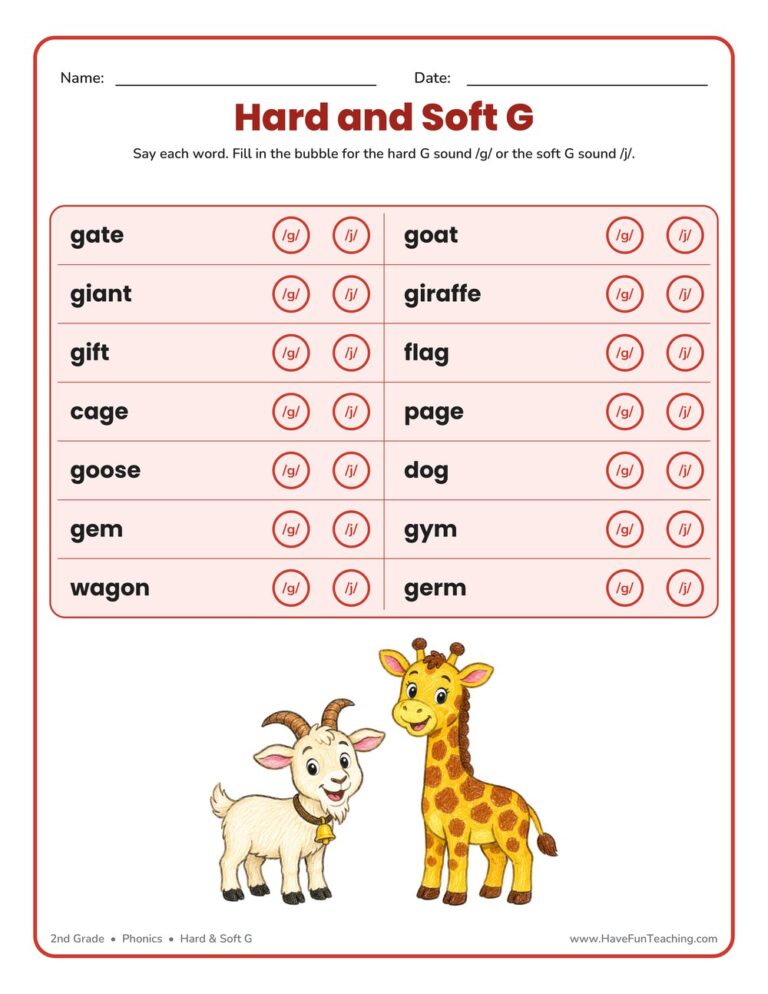
Worksheet2nd GradeCircle Hard Soft G Words Worksheet

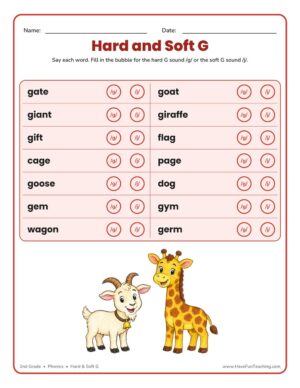
The Circle Hard Soft G Words Worksheet helps 2nd graders say each word and mark the hard G /g/ or soft G /j/ sound. Includes an answer key for fast, no-prep phonics practice.

Video
VideoPreschool44 Sounds of the English Language Video Lesson

Using 44 Sounds of the English Language Video Lesson, students sing and learn consonant sounds, vowel sounds, and vocabulary words for all 44 phonics sounds.

Activity
ActivityKindergartenShort Vowel A Word Sort Activity

This short vowel a word sort activity gives kindergarten and 1st grade readers 24 word cards to sort into the at, an, ap and ag families, plus a sort mat and practice page. Answer key included.

Worksheet
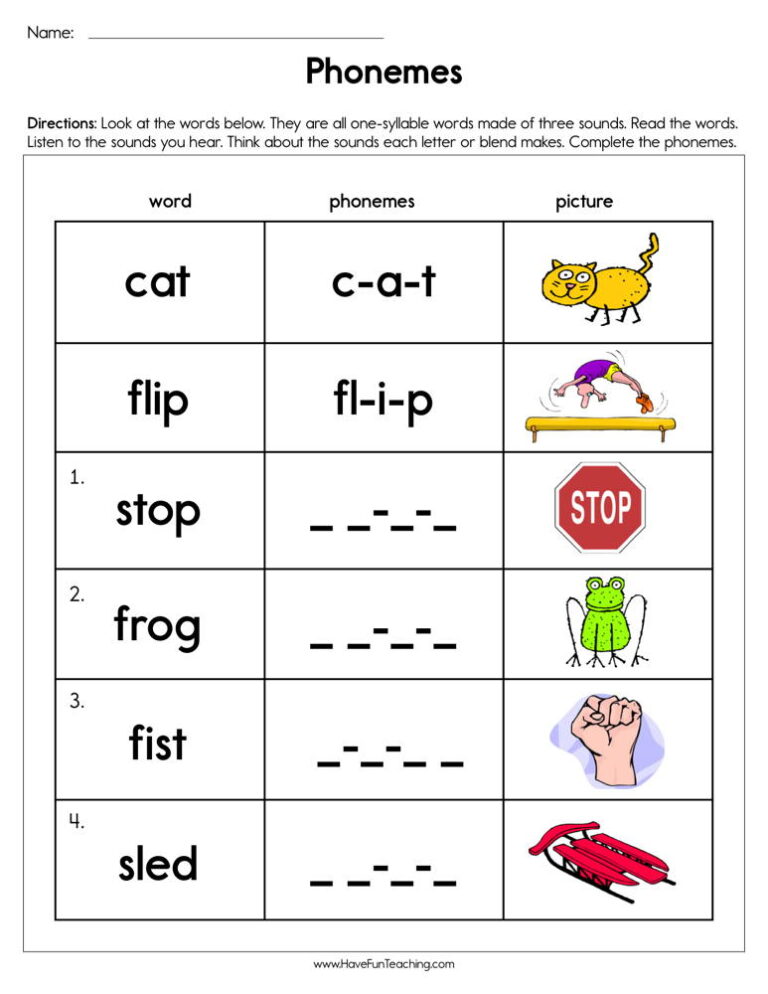
Worksheet1st GradePhonemes Worksheet

This Phonemes Worksheet gives 1st graders hands-on practice segmenting short words into their individual sounds, with picture cues and worked blend examples. Includes an answer key to build the phonemic awareness that powers reading and spelling.

Worksheet
Worksheet2nd GradeHard Soft G Worksheet - Pictures

This Hard Soft G Worksheet - Pictures asks 2nd graders to say six picture names and bubble in whether the letter g sounds hard or soft. Answer key included for fast, no-prep phonics practice.

Activity
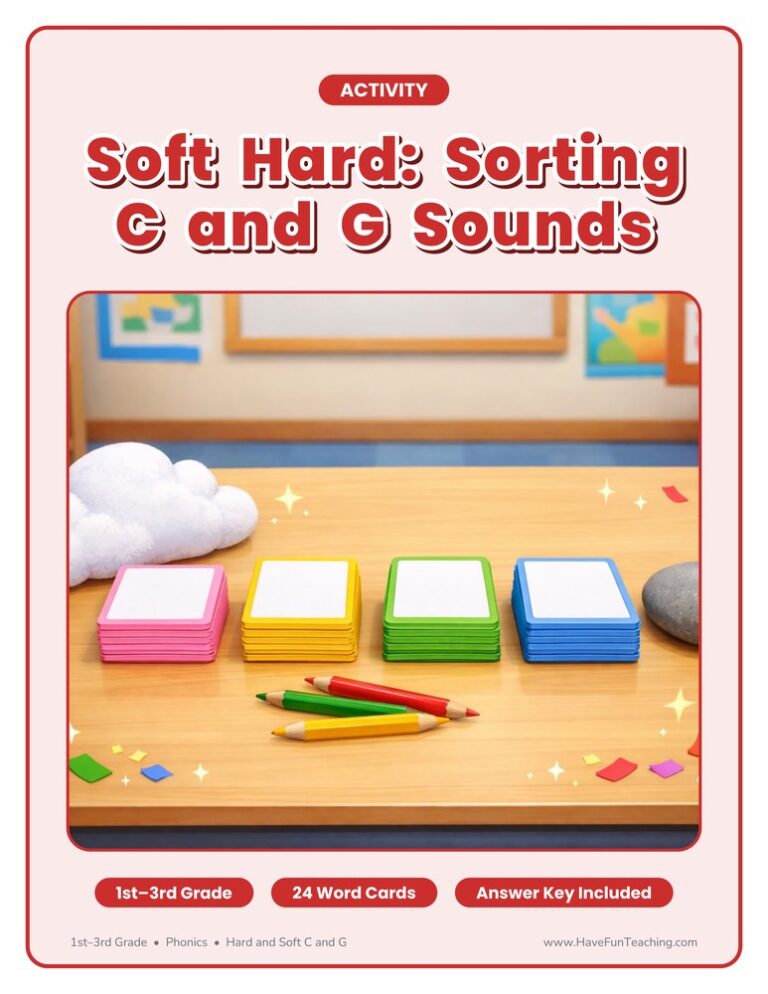
Activity1st GradeHard and Soft C and G Activity

This hard and soft c and g activity helps 1st to 3rd grade students sort words by the sound of c or g using a simple rule. A sound sort sheet, practice page and answer key are included.

Activity
ActivityKindergartenShort Vowel Garden Activity

Plant picture cards by sound in this short vowel garden activity for Kindergarten and 1st grade. Children sort pictures into a, e, i, o and u pots. Answer key included.

Activity
ActivityKindergartenShort Vowel E Word Sort Activity

This short vowel e word sort activity gives kindergarten and 1st grade readers 24 word cards to sort into the et, ed, ell and est families, plus two sort mats and a practice page. Answer key included.

Activity
Activity1st GradeShort and Long Vowel O Activity

Using this Short and Long Vowel O Activity, students sort the short and long vowel O word cards.

Activity
ActivityKindergartenShort Vowel Sounds Activity

Using this Short Vowel Sounds Activity, students sort the short vowel sound picture cards and place them under the matching vowel sound letter card.

Activity
Activity1st GradeShort and Long Vowel A Activity

Using this Short and Long Vowel A Activity, students sort the short and long vowel A word cards.

Activity
ActivityKindergartenVowel Letter I Activity

This vowel letter i activity has kindergarten to 2nd Grade children sort under-the-sea picture cards by the short i or long i sound. Sorting mat, practice page and answer key included.

Activity
Activity1st GradeShort and Long Vowel U Activity

This short and long vowel u activity has 1st and 2nd grade students read word cards and sort them by short u or long u with a silent e. Answer key included.

Activity
ActivityKindergartenShort Vowel I Word Sort Activity

This short vowel i word sort activity gives kindergarten and 1st grade readers 24 word cards to sort into the it, ig, in and ip families, plus a sort mat and practice page. Answer key included.

Activity
ActivityKindergartenShort Vowel Word Family Activity

This Short Vowel Word Family activity has kindergarten and 1st grade students sort snow globe word cards into -at, -en, -ig, -op and -ug families, with a practice page and answer key included.

Activity
Activity1st GradeSilent Night Silent Letters Activity

Using this Silent Night Silent Letters Activity, students identify and decode silent letter patterns in order to build reading accuracy and fluency.

From our teachers' playbook

Every sound counts

What do kids learn about pronunciation?

Pronunciation work helps kids hear and say every sound in a word clearly. English has about 44 sounds made with just 26 letters, so kids learn that letters can make more than one sound: short and long vowels, hard and soft c and g, and teams like ch and sh. They break words into syllables and phonemes (c-a-t has 3 sounds), and later learn how prefixes and roots change a word. Clear pronunciation helps with reading, spelling and speaking with confidence.

Our favorite ways to teach pronunciation

Sounds are learned by listening, saying and playing with them.

Count the sounds

Say a word slowly and have kids push a counter forward for each sound: s-u-n is three. Then change one sound: sun to fun. Hearing individual phonemes is the base for every other pronunciation skill.

Why it works: teaching letter sounds directly and in order is one of the best-supported findings in reading research (National Reading Panel, 2000).

Phonemes WorksheetTry it withPhonemes WorksheetWorksheetsOpen it →

Hear all 44 sounds

Play a video lesson that walks through the sounds of English and have kids echo each one. Watch mouths in a mirror: where does the tongue go for th? Seeing and feeling sounds helps kids say them clearly.

Why it works: a catchy, repeating tune gives the brain a hook to hang words on, so sung text is remembered better (Wallace, 1994).

44 Sounds of the English Language Video LessonTry it with44 Sounds of the English Language Video LessonSongsOpen it →

Hard or soft g?

Sort words like goat, gym, gum and giraffe. Kids say each one aloud and decide which sound they hear. Saying the words, not just reading them, is where the learning happens.

Why it works: pairing a picture with each word gives kids two ways to remember it, a well-tested principle of how people learn (Mayer, 2009).

Circle Hard Soft G Words WorksheetTry it withCircle Hard Soft G Words WorksheetWorksheetsOpen it →

Questions parents and teachers ask

How many sounds are in English?

About 44, depending on the accent. They're made with 26 letters, which is why many letters make more than one sound.

How can I help my child pronounce words correctly?

Model the word clearly, have them repeat it slowly, then at normal speed. Avoid making them feel corrected; just say it back the right way.

What's the difference between phonics and phonemic awareness?

Phonemic awareness is hearing and working with sounds in spoken words. Phonics connects those sounds to letters. Both support reading and pronunciation.

When should I worry about my child's pronunciation?

Some sounds, like r and th, can take until age 7 or 8 to master. If speech is hard to understand or you're concerned, ask your pediatrician or school about a speech evaluation.

Keep exploring