Skip to content
Start My 3 Free Days $0 today · cancel anytime

Genres Activities

10 genres activities. Teacher favorites: Types of Text Activity and Don't Wake the Librarian Sorting Books by Genre Activity. How teachers use these

Genres Activities

10 genres activities. Teacher favorites: Types of Text Activity and Don't Wake the Librarian Sorting Books by Genre Activity. How teachers use these

Activity
ActivityKindergartenTypes of Text Activity

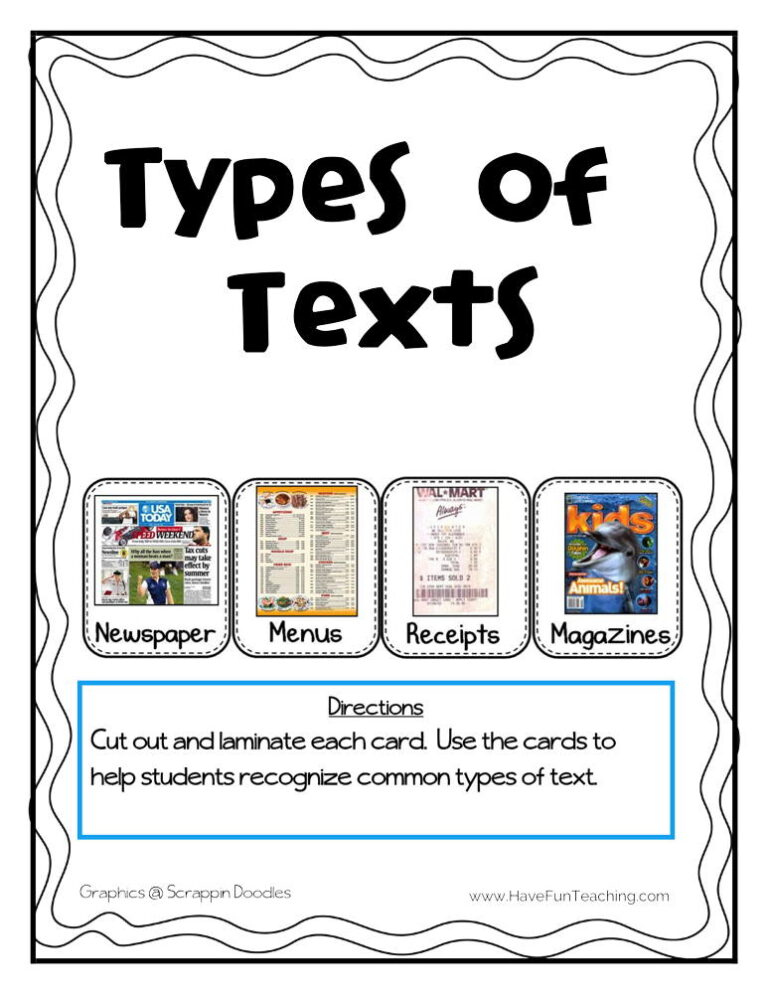
This types of text activity lets Kindergarten and 1st Grade students match clue cards to picture cards of everyday texts. Answer key included, so kids learn why we read each text.

Activity
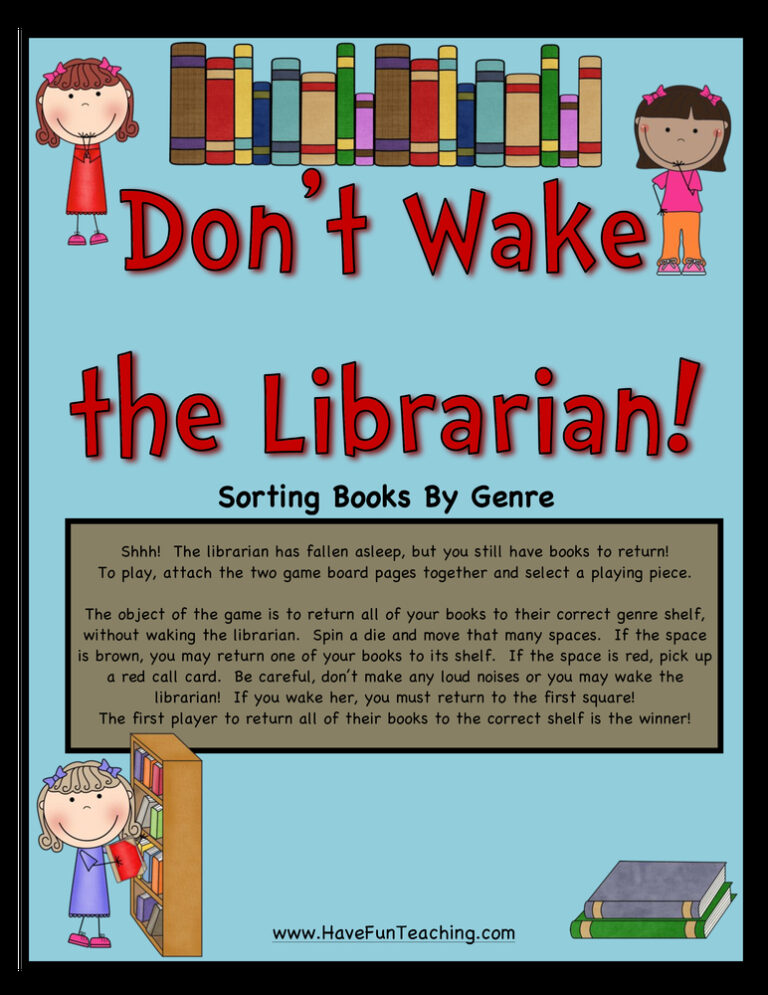
Activity1st GradeDon't Wake the Librarian Sorting Books by Genre Activity

This don't wake the librarian sorting books by genre activity is a quiet board game where 1st to 3rd grade readers sort fiction, nonfiction and poetry books. Answer key included.

Activity
Activity1st GradeFirst Grade Informational Texts Activity

This first grade informational texts activity has eight nonfiction task cards that help 1st grade readers find facts in a text and answer questions. Answer key included for quick checking.

Activity
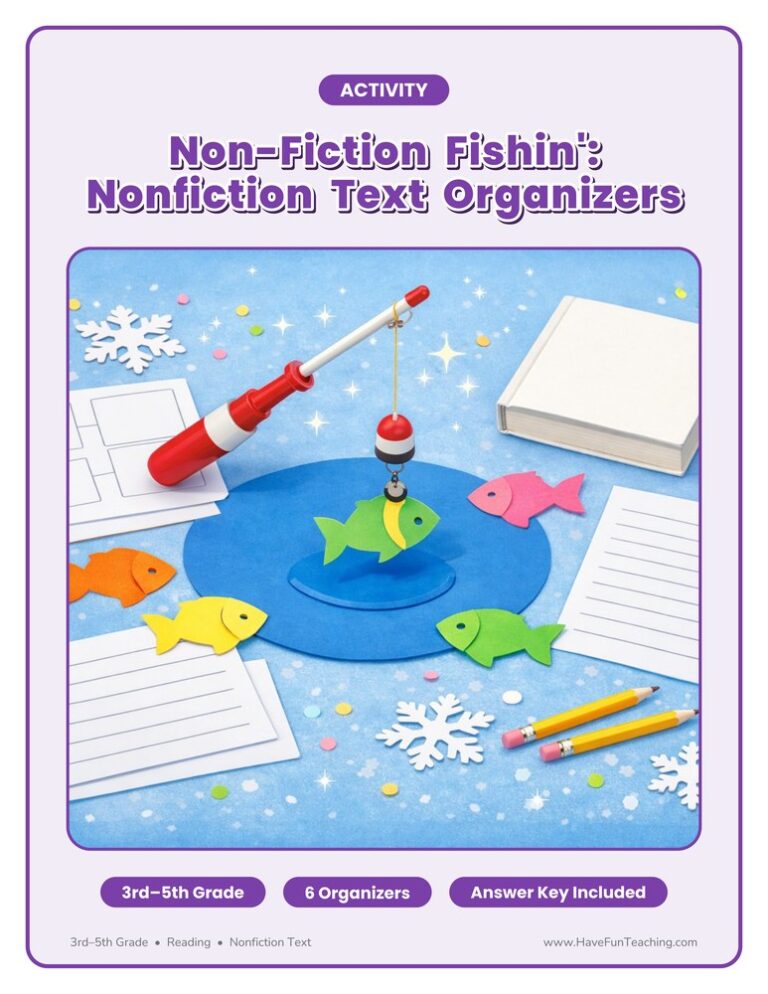
Activity3rd GradeNonfiction Fishin' Activity

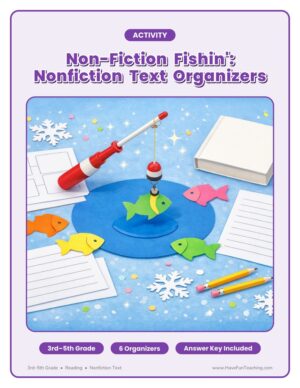
This nonfiction fishin' activity gives 3rd-5th Grade readers six graphic organizers for different kinds of nonfiction text, a model article and practice, with an answer key included.

Activity
Activity3rd GradeInformational Books Reading Log Activity

Using Informational Books Reading Log Activity, studentsread informational texts to build reading comprehension skills and their understanding of informational texts.

Activity
Activity1st GradeReading Informational Texts Book Review Activity

Using Reading Informational Texts Book Review Activity, students read and comprehend informational texts, including history/social studies, science, and technical texts.

Activity
Activity2nd GradeWhat Have You Read This Year Activity

This what have you read this year activity helps 2nd-5th grade students track genres, review each book they finish and choose their top three favorite books of the year.

Activity
Activity1st GradeThree Amigos Poetry Drama Prose Activity

Using this Three Amigos Poetry Drama Prose Activity, students sort the word cards by genre (prose, poetry, and drama). Use the sorted cards to label and fill out a Venn Diagram.

Activity
ActivityPreschoolFairy Tales and Fables Puzzle

Using Fairy Tales and Fables Puzzle, students practice problem solving and logic skills to put together this fifteen piece puzzle.

Activity
Activity3rd GradeI've Read All These Books in Third Grade Activity

The I've Read All These Books in Third Grade Activity helps students track every book they read with genre cards, a tracker and reflection pages. Made for 3rd grade independent reading.

From our teachers' playbook

Every book has a type

What do kids learn about genres?

A genre is a type of writing, and knowing the genre helps readers know what to expect. Young readers start with the big split: fiction is made up and nonfiction gives real information. Then they meet genres like fairy tales, fables, tall tales, myths, poetry, realistic fiction, fantasy, biography and informational text. Each genre has clues, like once upon a time in fairy tales or a lesson at the end of a fable. Older kids compare genres and explain how the type of text changes the way they read it.

How we teach genres

Genres make the most sense when kids sort real books. These moves bring the classroom library into the lesson.

Sort the library

Pull a stack of books from the class library and let small groups sort them into genres. They have to name a clue that proves each choice, like "it has a table of contents" or "animals talk." It is a lesson and a library cleanup in one!

Why it works: going from real objects to pictures to symbols is a core recommendation of the U.S. Department of Education's elementary math guide.

Identifying the Genre of a Story WorksheetTry it withIdentifying the Genre of a Story WorksheetWorksheetsOpen it →
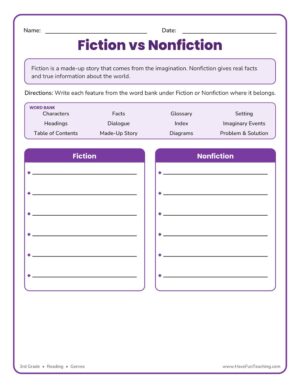
Fiction vs. nonfiction chart

Make a T-chart with features of fiction and nonfiction and add to it after every read-aloud. Kids quickly learn that headings, photos and glossaries usually mean nonfiction.

Why it works: pairing a picture with each word gives kids two ways to remember it, a well-tested principle of how people learn (Mayer, 2009).

Fiction and Nonfiction Features WorksheetTry it withFiction and Nonfiction Features WorksheetWorksheetsOpen it →

Genre clue think aloud

Read the first page of a book aloud and think through the clues: "A talking fox and a lesson coming? I think this is a fable." Then let kids try it with a new book.

Why it works: handing over the work step by step, from teacher to student, is one of the most widely used teaching frameworks (Pearson and Gallagher, 1983).

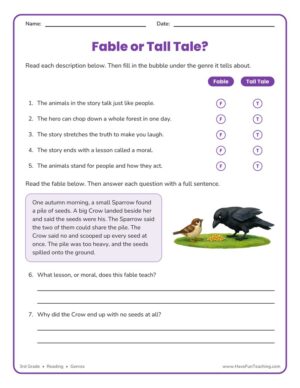
Fables Tall Tales WorksheetTry it withFables Tall Tales WorksheetWorksheetsOpen it →

Genre questions from teachers and parents

What are the main genres for kids?

Common genres include fairy tales, fables, folktales, myths, tall tales, realistic fiction, fantasy, poetry, biography and informational text.

What is the difference between fiction and nonfiction?

Fiction is made up by the author, even if it seems realistic. Nonfiction gives true information about real people, places or things.

When do kids learn about genres?

Kids start learning fiction and nonfiction in kindergarten and 1st grade. They learn more specific genres like fables, myths and biographies through 2nd to 5th grade.

How can I help my child learn genres at home?

At the library, ask "Is this real or made up?" and talk about the clues. Try reading a different genre each week to keep it fun.