

Identifying Fantasy and Realism Worksheet
The Identifying Fantasy and Realism Worksheet has 3rd graders sort eleven sentences into real and not real, then write the word that could not happen. An answer key is included for quick checking.
$6.97
Or free with a membership — members pay $3.33/mo for all 10,000+ resources. See plans
Want this one free?
Tell us where to send it and it’s yours — no card, no catch.
One free resource per teacher. We’ll also send free teaching ideas each week — unsubscribe anytime.
Teaching is easier with a membership
Unlimited printables, games & videos for PreK–6th — for your classroom or homeschool. Cancel anytime.
Start your 3-day free trial$0 today · cancel anytime · Instant access to 10,000+ resources
About this resource
Description
Before a reader can talk about genre, they have to be able to answer one plain question about a story: could this really happen? Realism describes events that fit the world we live in, and fantasy describes events that do not. The Identifying Fantasy and Realism Worksheet teaches that question directly, one sentence at a time. Third graders meet eleven short sentences and decide, for each one, whether it belongs to the real world or an imagined one. Sorting single sentences first is what makes the skill transfer later, because a whole chapter book is just a long string of these same decisions, and a student who can spot the one impossible detail in a sentence can spot it in a story.
This 3rd grade fantasy and realism worksheet is print-ready and needs no preparation. Part A gives eight sentences with a fill-in-the-bubble choice beside each one, so the student marks either Fantasy or Realism. The answers are deliberately mixed, so a child cannot fall into a pattern and stop reading. Part B raises the difficulty: every sentence there is already fantasy, and the student has to find and write the one action word that could not really happen. That step turns a yes-or-no judgment into evidence, which is exactly what a reading test asks for. Use the sheet as guided practice, as a reading center, as homework, or as a quick check before a genre unit. A full answer key is on the second page.
What’s Included
- 1 print-ready PDF worksheet
- Answer key
- 8 fill-in-the-bubble sorting sentences plus 3 write-the-evidence items
There are three reasons this resource helps children learn to tell fantasy from realism. First, the sentences are short and concrete, so the student spends their attention on the judgment instead of on decoding. Second, both answers appear about equally often and never in a repeating order, so guessing does not work. Third, the Identifying Fantasy and Realism Worksheet asks the student to name the impossible word out loud in writing, and naming the evidence is what moves a reader from a feeling to a reason they can defend in a discussion or on a test.
Teachers and parents can carry this skill into everyday reading. At bedtime, stop after a page and ask whether anything in it could really happen. Play a two-sentence game in the car where one person says something real and something impossible and the other picks. Have your child rewrite a favorite realistic moment as fantasy by changing only one verb. Sort picture books on the shelf into two stacks, real and not real, and talk about the ones that are hard to place. Ask why an author might choose fantasy for a story about kindness or courage.
Related Resources
What teachers say
Reviews
You must be logged in to post a review.
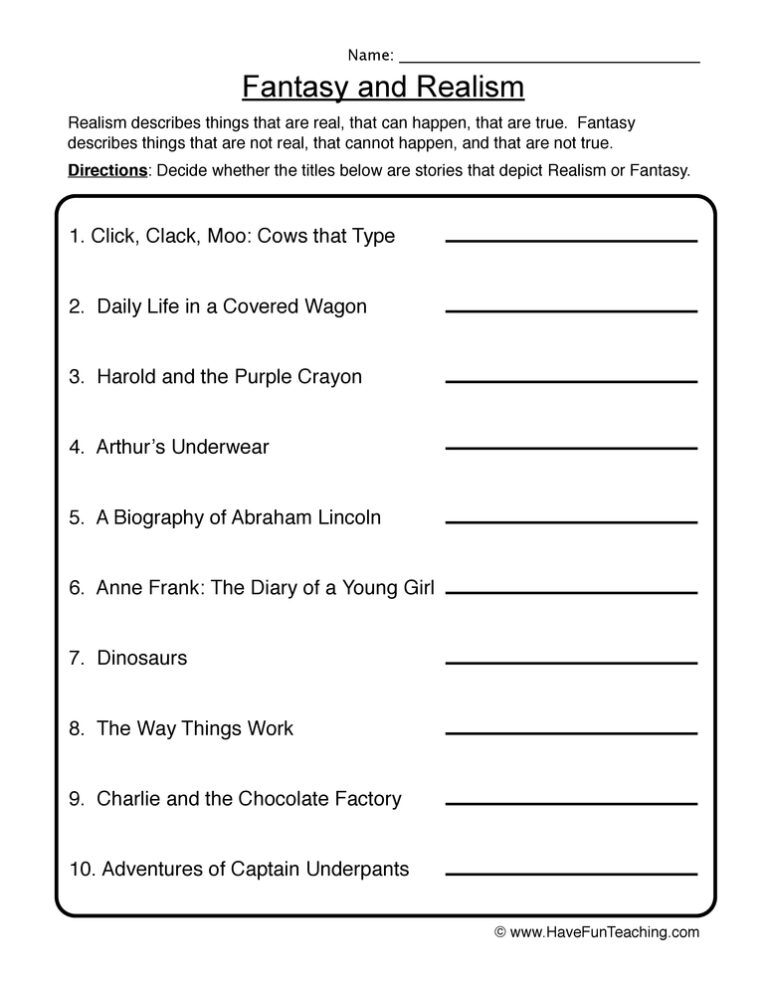
This fantasy and realism book titles worksheet has 3rd grade students sort six invented titles and explain one choice in writing. An answer key is included.

This fantasy and realism story elements worksheet has 3rd graders sort characters, settings and events into make-believe or real, then label story sentences. An answer key is included for quick checking.
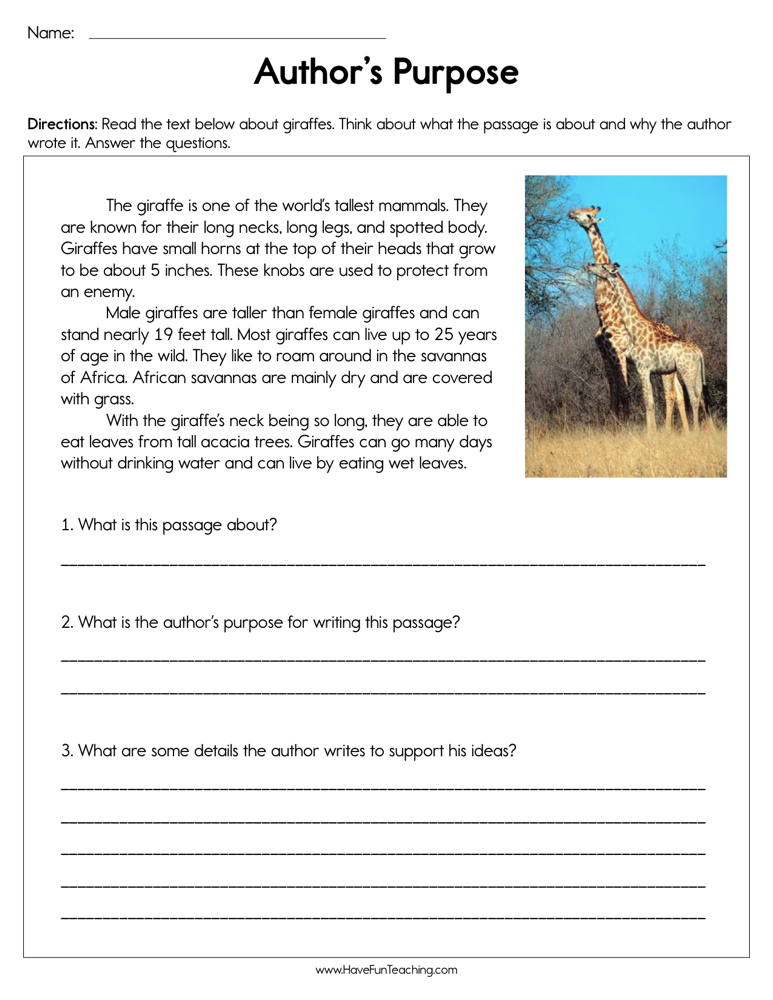
This identifying author's purpose worksheet has 3rd graders read a giraffe passage and decide whether the author wants to inform, persuade, or entertain. Answer key included for easy reading practice.
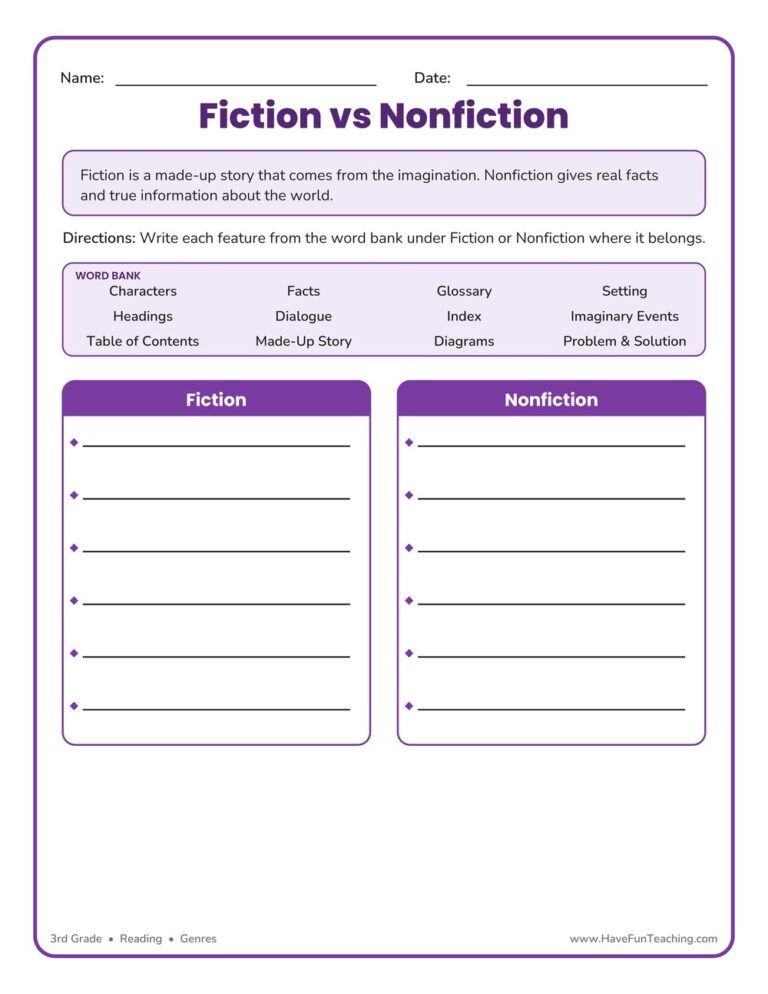
This fiction and nonfiction features worksheet has 3rd graders sort twelve text features into Fiction and Nonfiction columns. An answer key is included, making it a quick, no-prep way to build genre awareness.
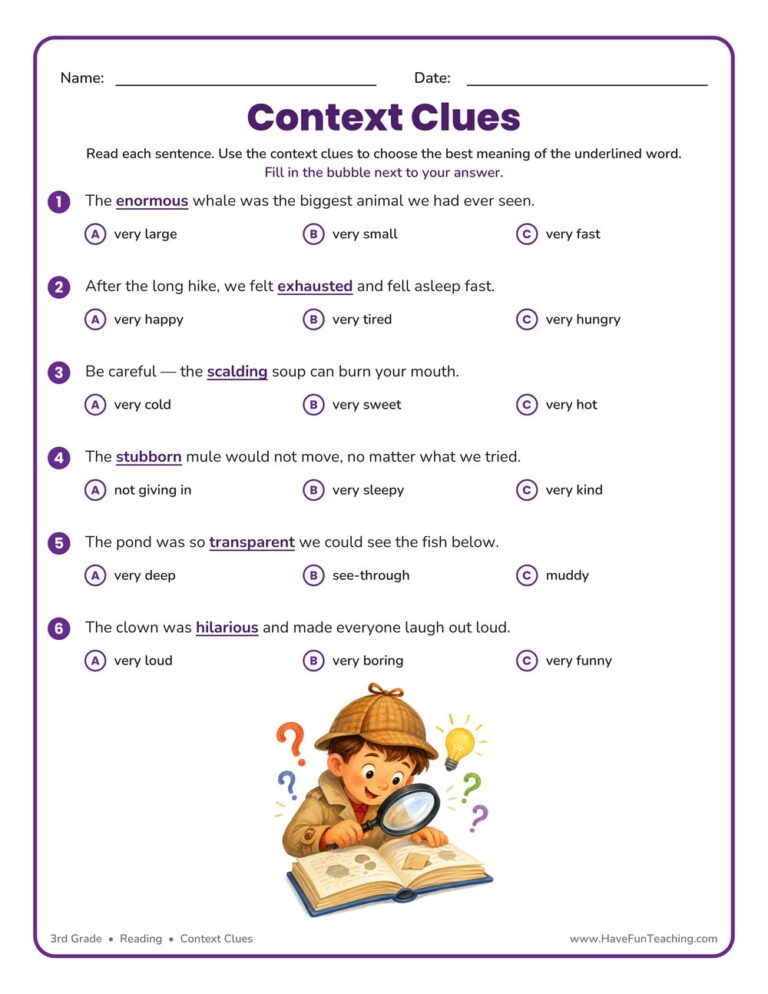
A 3rd grade Context Clues Worksheet with six multiple-choice sentences where students use the surrounding words to find the meaning of each underlined word. Answer key included for fast, no-prep vocabulary practice.
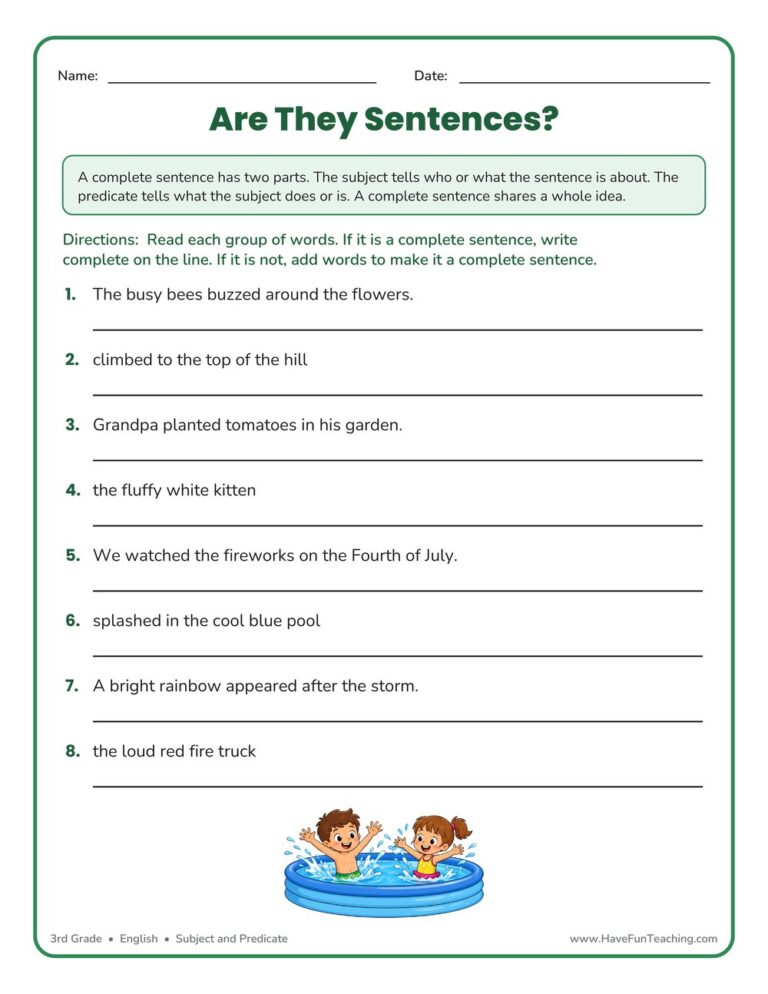
This Creating Complete Sentences Worksheet asks 3rd graders to spot complete sentences and fix fragments by adding a missing subject or predicate. Answer key included — perfect for quick, no-prep grammar practice at home or school.
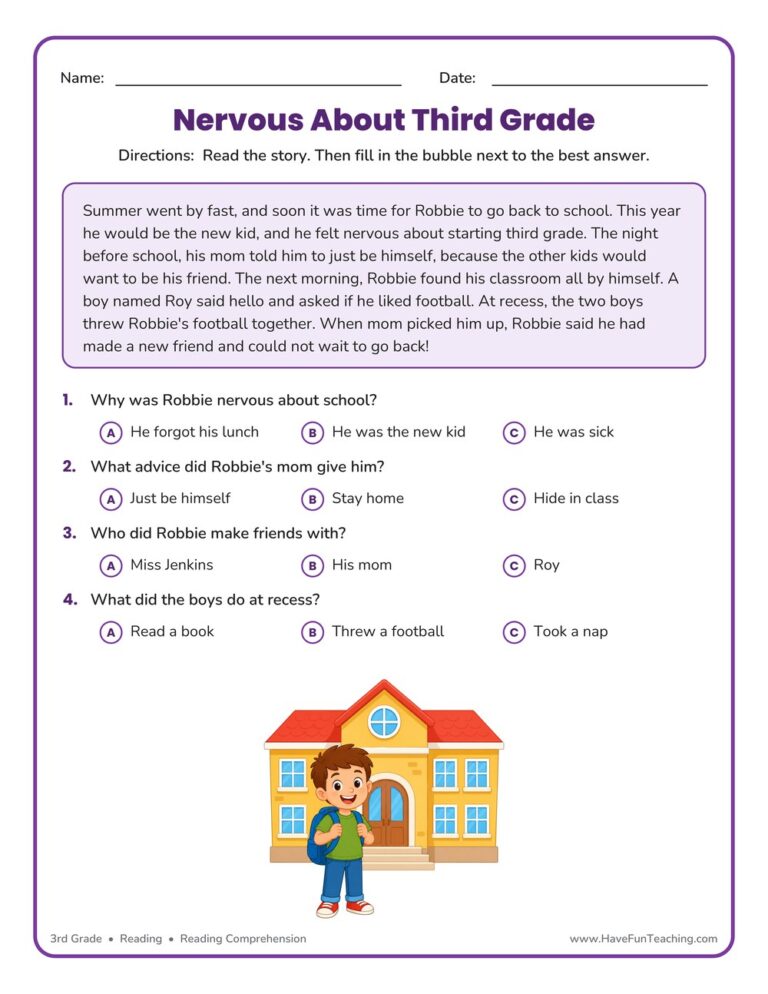
The Nervous About Third Grade Reading Comprehension Worksheet lets 3rd graders read a relatable back-to-school story about Robbie and answer multiple-choice questions. Answer key included — a no-prep way to build reading comprehension confidence.

This who what when where why graphic organizer worksheet helps 3rd graders record the five key details — who, what, when, where, and why — from any story or article. A clear, reusable note-taking template.
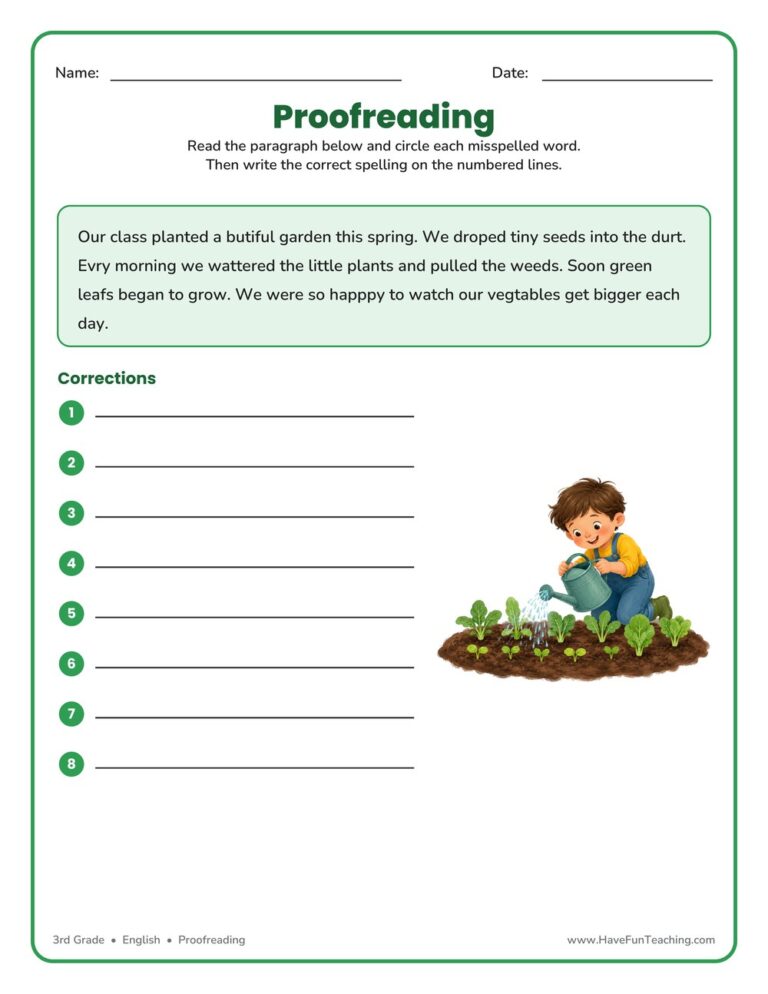
This 3rd grade proofreading worksheet has students hunt for and fix eight misspelled words in a fun garden paragraph. Answer key included — perfect for quick, no-prep spelling and editing practice at home or school.
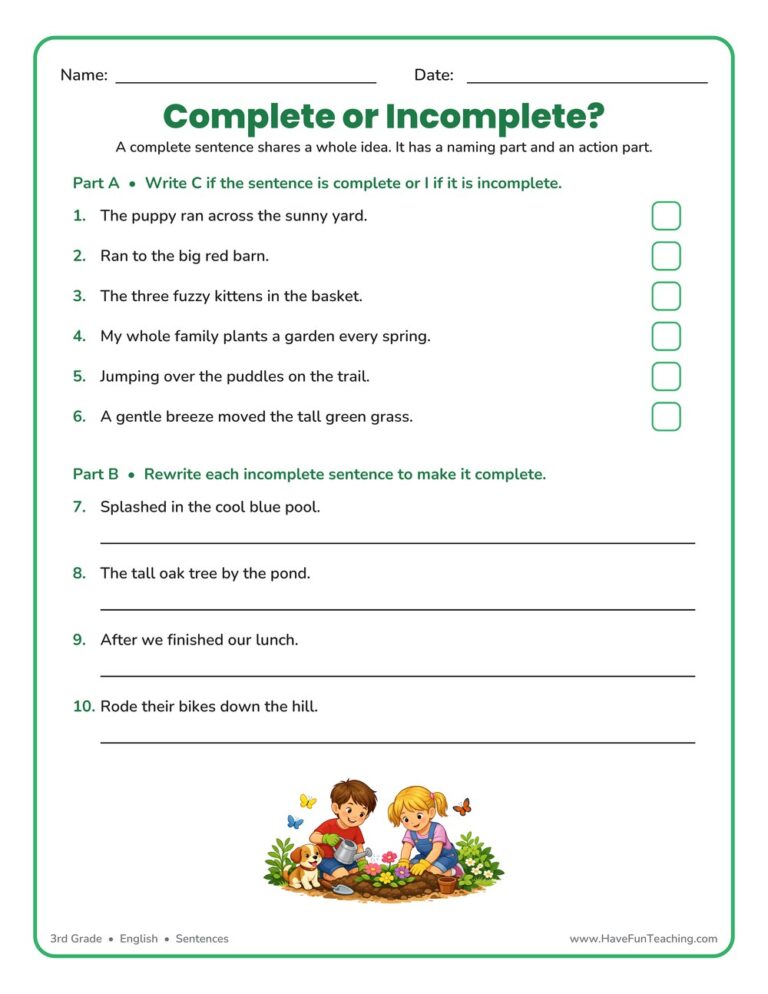
This rewriting incomplete sentences worksheet helps 3rd graders sort complete and incomplete sentences, then rewrite the fragments into full thoughts. Includes an answer key for fast, no-prep grammar practice at home or school.
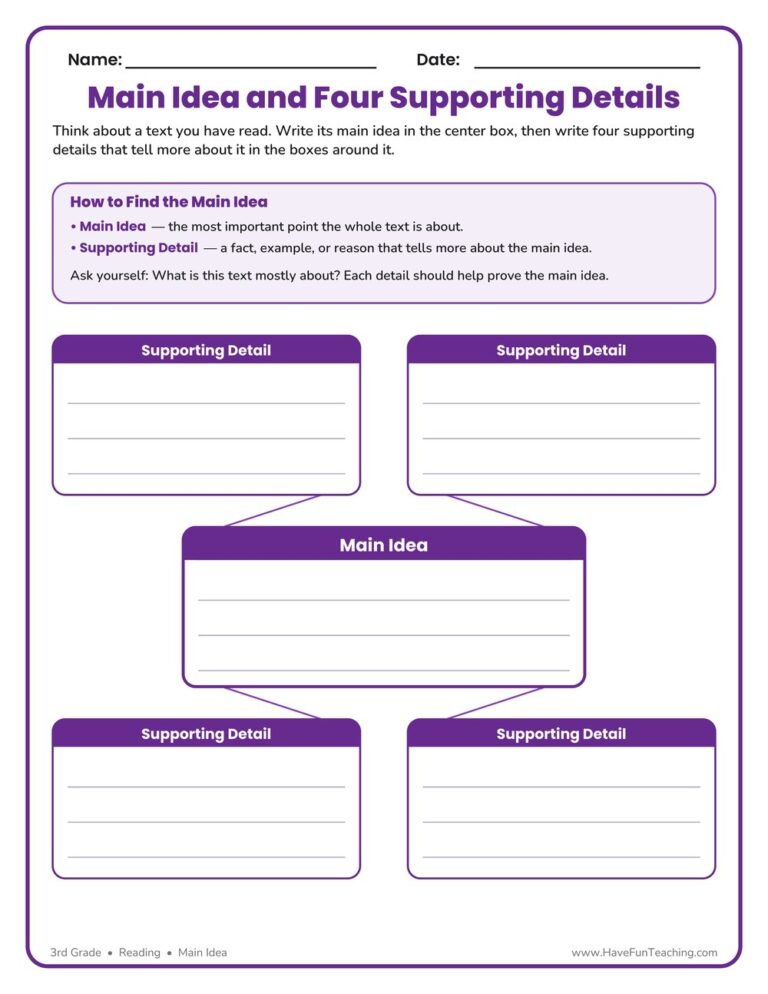
This Main Idea and Four Supporting Details Graphic Organizer Worksheet gives 3rd graders a visual way to record a text’s main idea and the four details that support it. A no-prep, reusable printable that works with any reading passage.
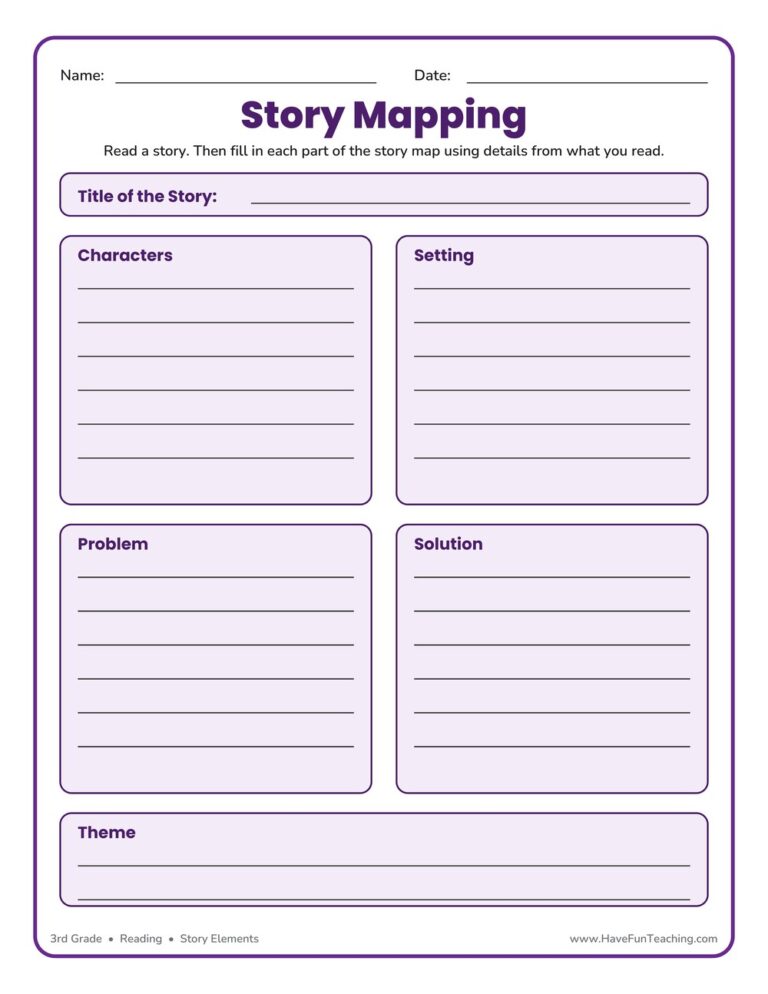
This 3rd grade Story Map Graphic Organizer Worksheet has students record a story's characters, setting, problem, solution, and theme in one clear, reusable page that strengthens reading comprehension.




Reviews
There are no reviews yet