Skip to content
Start My 3 Free Days $0 today · cancel anytime

Vocabulary Resources

101 vocabulary resources: 43 worksheets, 19 activities, 15 flash cards and more. How teachers use these

Vocabulary Resources

101 vocabulary resources: 43 worksheets, 19 activities, 15 flash cards and more. How teachers use these

Game
Game3rd GradePrefixes Pre Dis Mis Game

A comic-book cooking game where third grade kids read each order and pour the prefix pre, dis or mis into the pot to cook up words like preheat, dislike and misspell. Play online on any phone, tablet, Chromebook or computer.

Game
Game4th GradeGreek and Latin Roots Game

A retro arcade game where 4th grade kids read each clue and tap the critter holding the matching word, using Greek and Latin roots like tele, scope, port and graph. Play online on any phone, tablet, Chromebook or computer.

Worksheet
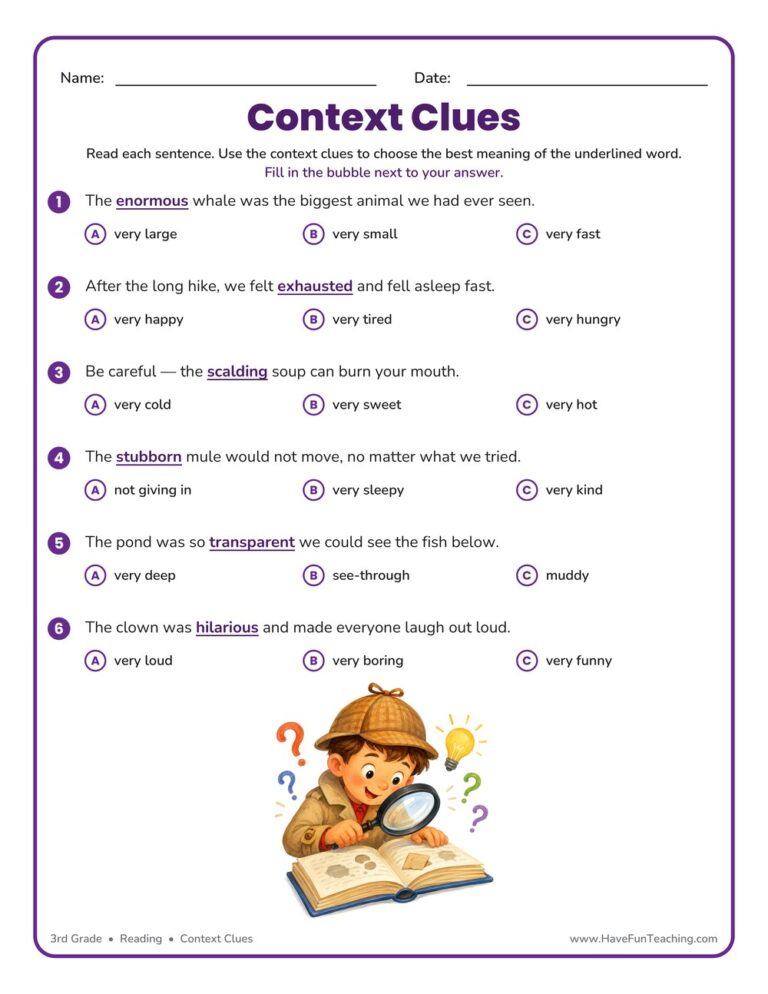
Worksheet3rd GradeContext Clues Worksheet

A 3rd grade Context Clues Worksheet with six multiple-choice sentences where students use the surrounding words to find the meaning of each underlined word. Answer key included for fast, no-prep vocabulary practice.

Worksheet
WorksheetKindergartenGrouping into Categories Worksheet

This Grouping into Categories Worksheet asks kindergarten students to sort eight pictures into fruit, animals, plants, and shapes by writing each one's category number. Includes an answer key for fast, no-prep classification practice.

Game
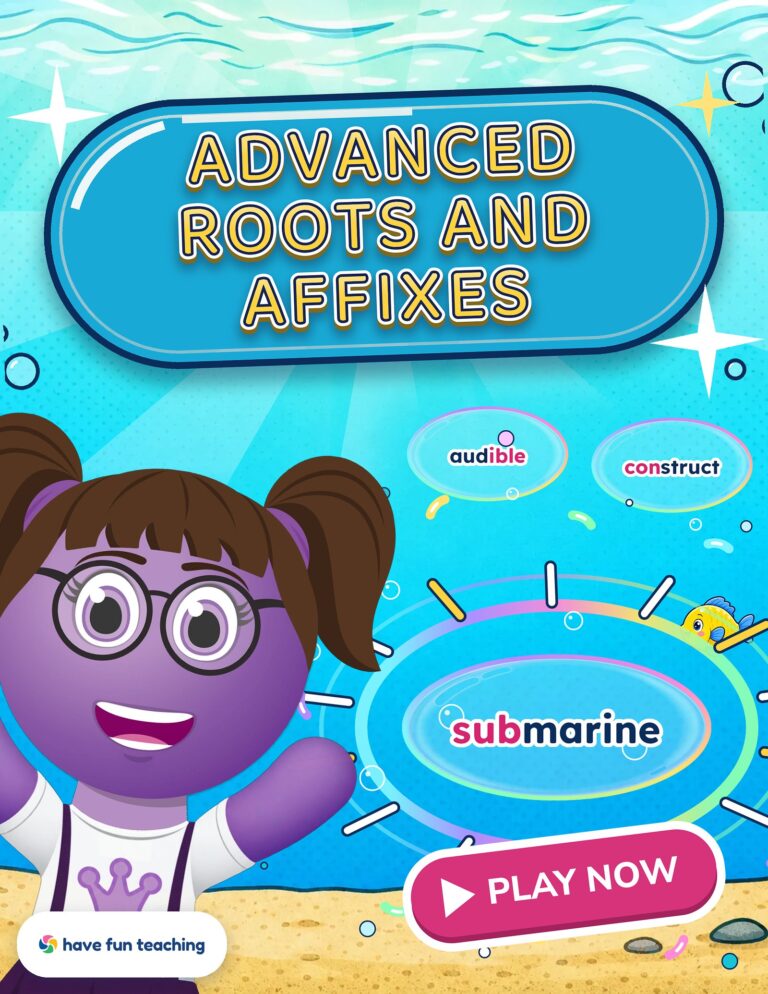
Game5th GradeAdvanced Roots and Affixes Game

An underwater bubble game where 5th grade kids read each clue and pop the bubble with the matching word, using Greek and Latin roots, prefixes and suffixes. Play online on any phone, tablet, Chromebook or computer.

Worksheet
WorksheetKindergartenSorting Objects Worksheet

This Sorting Objects Worksheet has kindergarten students sort twelve pictures into animals, plants, vehicles, and people, then count each group. Includes an answer key — a no-prep way to build classification and early counting skills.

Worksheet
Worksheet2nd GradeNonfiction Text Features Worksheet

This Nonfiction Text Features Worksheet helps 2nd graders match key text features and use a Table of Contents and Index to find information. An answer key is included for quick, no-prep reading practice.

Worksheet
Worksheet3rd GradeLocating Nonfiction Text Features Worksheet

The Locating Nonfiction Text Features Worksheet asks 3rd Grade readers to name six features cut from one nonfiction page about honey bees, then explain one choice. Answer key included for fast, confident nonfiction reading.

Worksheet
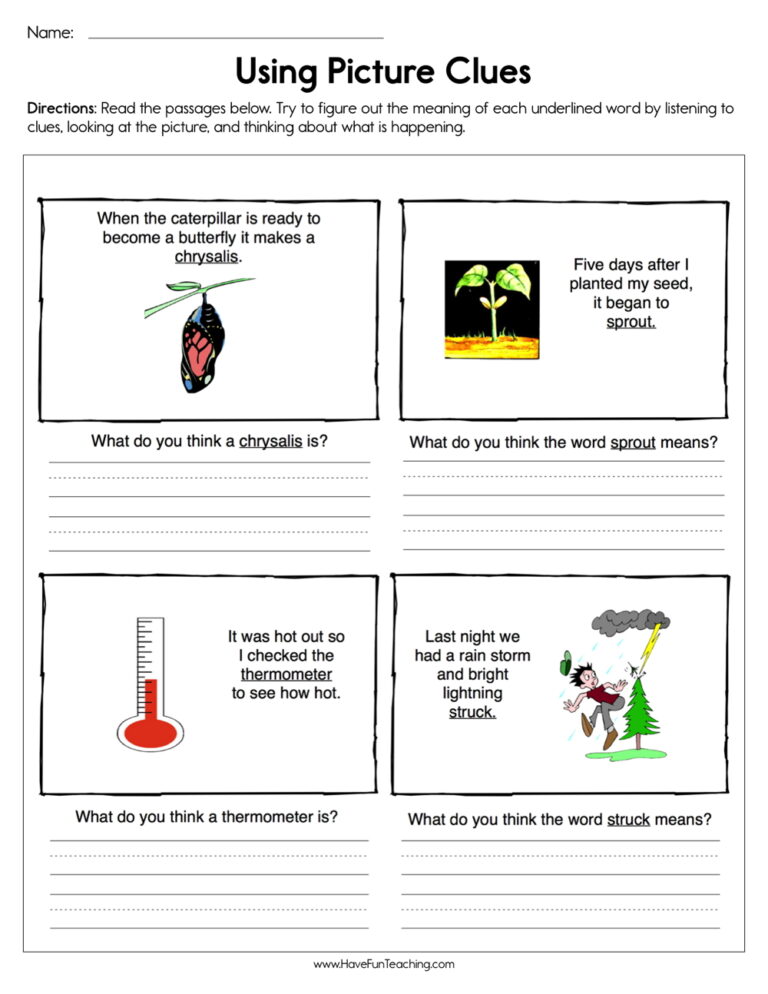
Worksheet1st GradeUsing Picture Clues Worksheet

This Using Picture Clues Worksheet gives first graders four illustrated sentences and asks them to figure out what each bold word means. An answer key is included, so it is ready for quick, no-prep reading practice.

Worksheet
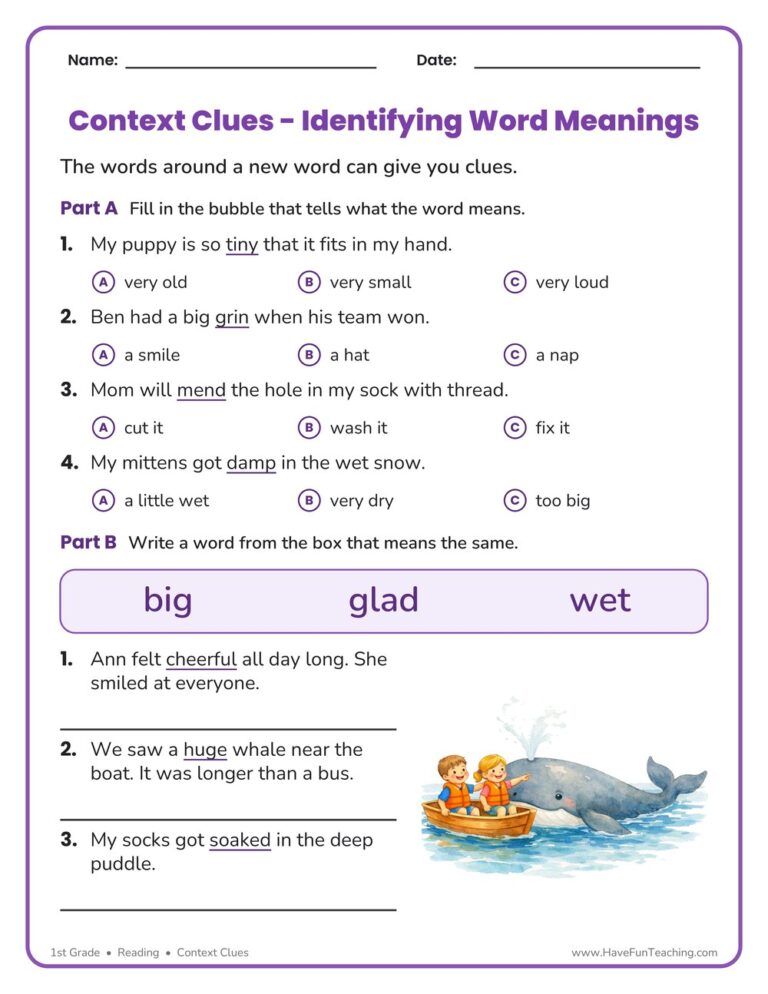
Worksheet1st GradeContext Clues Identifying Word Meaning Worksheet

This context clues identifying word meaning worksheet has 1st Grade readers use the words around an underlined word to choose or write its meaning. An answer key is included, so checking work takes seconds.

Worksheet
Worksheet1st GradeCategorizing Objects Worksheet

This Categorizing Objects Worksheet helps 1st graders read nine words and sort them into groups like animals, food, and colors. Includes a complete answer key for quick, no-prep classification practice.

Worksheet
Worksheet2nd GradeUsing Non-Fiction Text Features Worksheet

This Using Non-Fiction Text Features Worksheet helps 2nd graders spot the title, subheadings, captions, bold words, and glossary on a real nonfiction page. Answer key included for quick, no-prep reading practice.

Worksheet
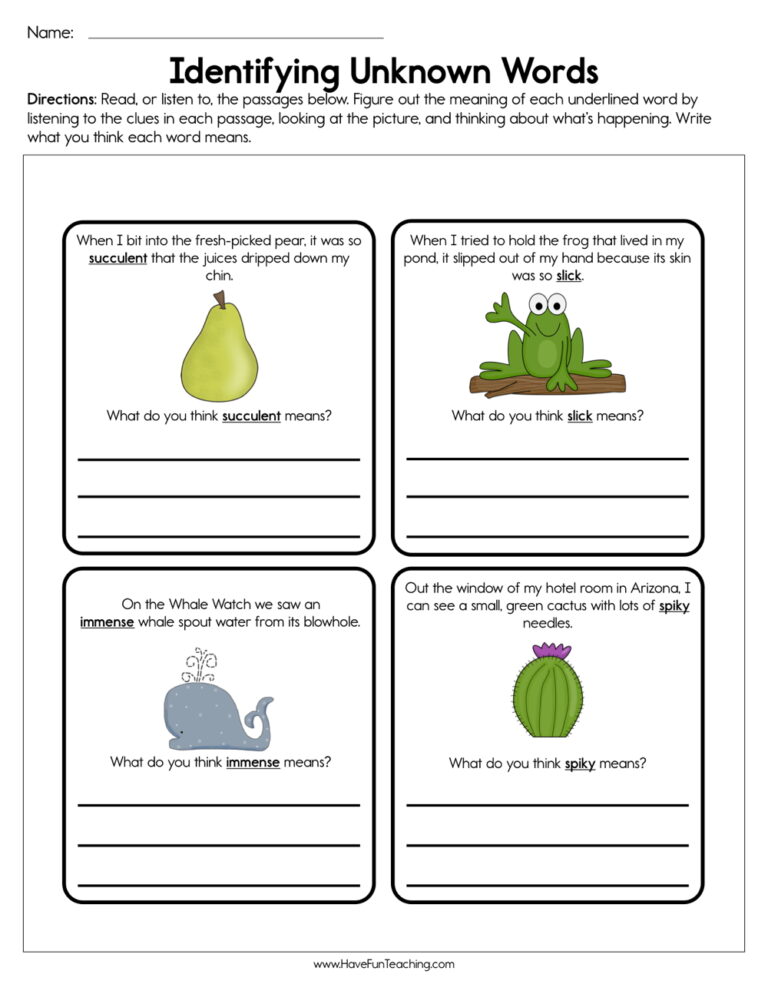
Worksheet2nd GradeIdentifying Unknown Words Worksheet

This Identifying Unknown Words Worksheet gives 2nd graders four illustrated passages and asks them to use context clues to choose what each underlined word means. Answer key included for fast, confident vocabulary practice.

Activity
ActivityPreschoolRhyming Words Matching Activity

This rhyming words matching activity lets PreK to 1st grade children match picture cards that rhyme, like cat and hat. A practice page and answer key included.

Worksheet
Worksheet2nd GradeUnderstanding Meaning Worksheet

Use this understanding meaning worksheet to help 2nd graders learn new words with context clues from a short text about the desert cactus. An answer key is included for quick checking.

Worksheet
Worksheet1st GradeUsing Text or Pictures to Find Information Worksheet

This Using Text or Pictures to Find Information Worksheet asks 2nd graders to decide whether each fact came from the words or the picture. An answer key is included, so nonfiction practice takes no prep.

Worksheet
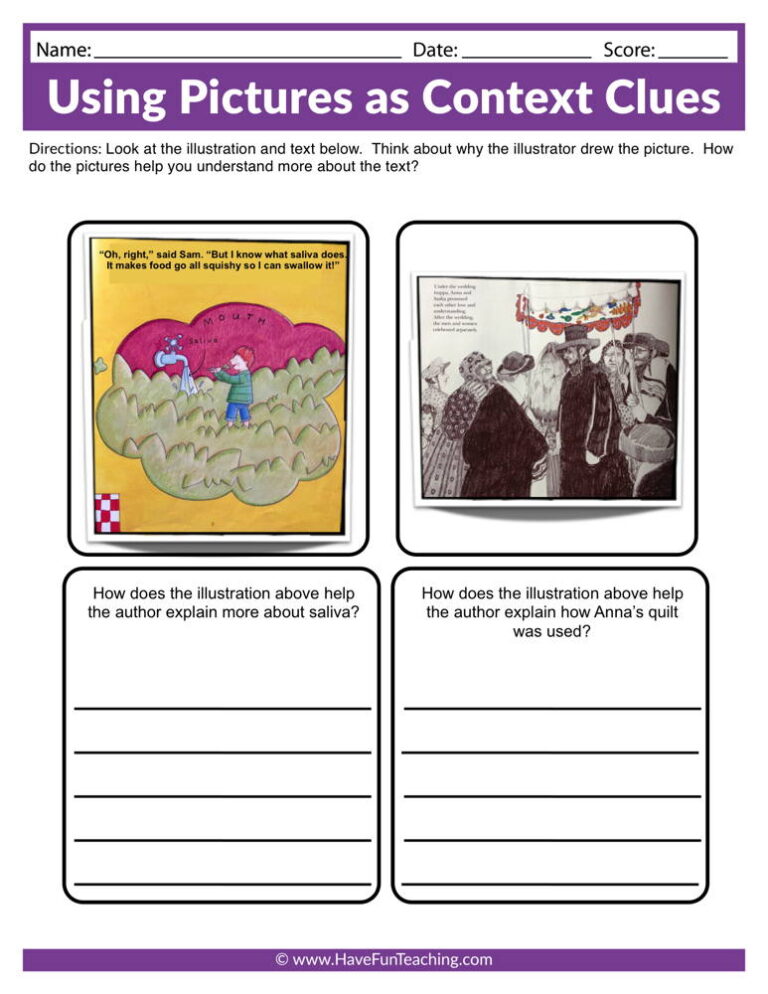
Worksheet1st GradeUsing Pictures as Context Clues Worksheet

This Using Pictures as Context Clues Worksheet helps 1st Grade readers use an illustration and the words around a new word to find its meaning, with five questions and an answer key included.

Worksheet
Worksheet2nd GradeUsing Figurative Language Worksheet

The Using Figurative Language Worksheet gives 2nd graders four word banks and twelve sentences for choosing the strongest, most precise word. Includes an answer key for quick, no-prep vocabulary practice.

Worksheet
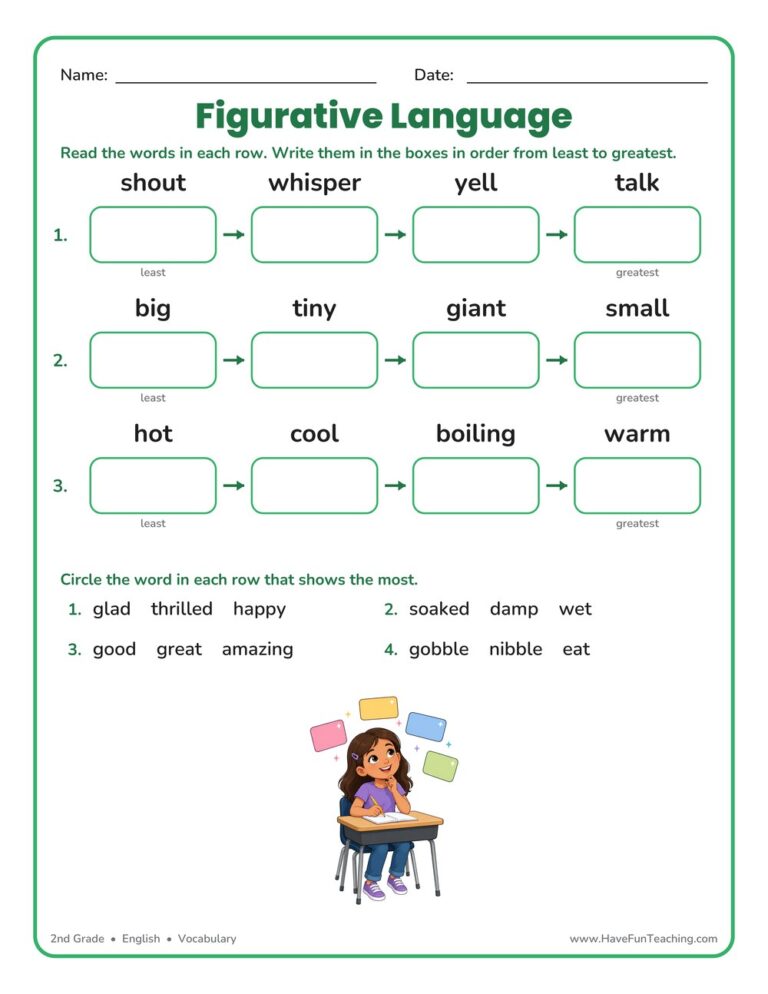
Worksheet2nd GradeFigurative Language Worksheet

This Figurative Language Worksheet gives 2nd grade students fun practice ordering words by shades of meaning and circling the strongest word. Answer key included to help build richer, more expressive vocabulary.

Worksheet
Worksheet1st GradeUnderstanding Meaning The Venus Fly Trap Worksheet

The Understanding Meaning The Venus Fly Trap Worksheet gives 1st graders a short non-fiction passage and five context clue questions. An answer key is included, so students can check their thinking and point to the sentence that proves it.

From our teachers' playbook

Big words, bigger readers

What do kids learn about vocabulary?

Vocabulary is how kids grow the number of words they understand and use. Young readers sort words into categories and use pictures to figure out meanings. Then they become word detectives: using context clues in the sentence, spotting prefixes like un- and re-, and later Greek and Latin roots like tele (far) and graph (write). They also learn that words can be playful, with figurative language like "it's raining cats and dogs." The click comes when a kid figures out a brand-new word without asking anyone.

Our favorite ways to grow vocabulary

Kids learn words best when they meet them often and get to use them. These moves build word-power that lasts.

Think aloud with context clues

Read a sentence with a tricky word and say your thinking out loud: "It says the puppy was famished and gobbled its food in seconds. So famished must mean really hungry!" Then hand kids the next sentence to try.

Why it works: handing over the work step by step, from teacher to student, is one of the most widely used teaching frameworks (Pearson and Gallagher, 1983).
Context Clues WorksheetTry it withContext Clues WorksheetWorksheetsOpen it →
Root word races

Teach one root a week and play quick rounds where kids name words with it: photo, phone, graph. Short, quick games make roots stick much better than lists.

Why it works: researchers who compared ten study methods found practice testing is one of the two that work best (Dunlosky and colleagues, 2013).

Greek and Latin Roots GameTry it withGreek and Latin Roots GameGamesOpen it →

Let the picture help

For younger readers, cover a word in a picture book and have kids guess it from the illustration. Then reveal it. Pictures give them a first clue to new words.

Why it works: children learn more from words and pictures together than from words alone (Mayer, 2009).

Using Picture Clues WorksheetTry it withUsing Picture Clues WorksheetWorksheetsOpen it →

Questions teachers and parents ask about vocabulary

How do you teach vocabulary to kids?

Introduce a few words at a time, give kid-friendly meanings, and have kids use them in talking and writing. Teaching strategies like context clues and word parts helps them figure out words on their own.

What are context clues?

They are hints in a sentence or paragraph that help you figure out an unknown word. They might be a definition, an example, a synonym or an opposite.

How can parents build a child's vocabulary at home?

Read aloud every day, especially books a little above their reading level, and talk about interesting words. Using new words in everyday conversation makes them stick.

When do kids learn Greek and Latin roots?

Most kids start with prefixes and suffixes in 2nd and 3rd grade. Greek and Latin roots usually come in 4th and 5th grade.

Keep exploring