Skip to content
Start My 3 Free Days $0 today · cancel anytime

Simple Machines Resources

6 simple machines resources: 4 worksheets, 2 flash cards and 1 assessment. How teachers use these

Simple Machines Resources

6 simple machines resources: 4 worksheets, 2 flash cards and 1 assessment. How teachers use these

Worksheet
Worksheet4th GradePulleys Worksheet

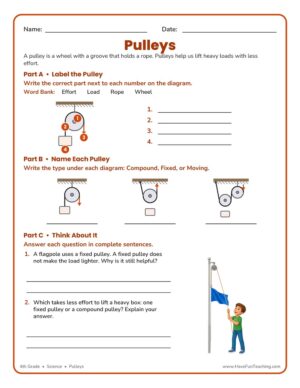
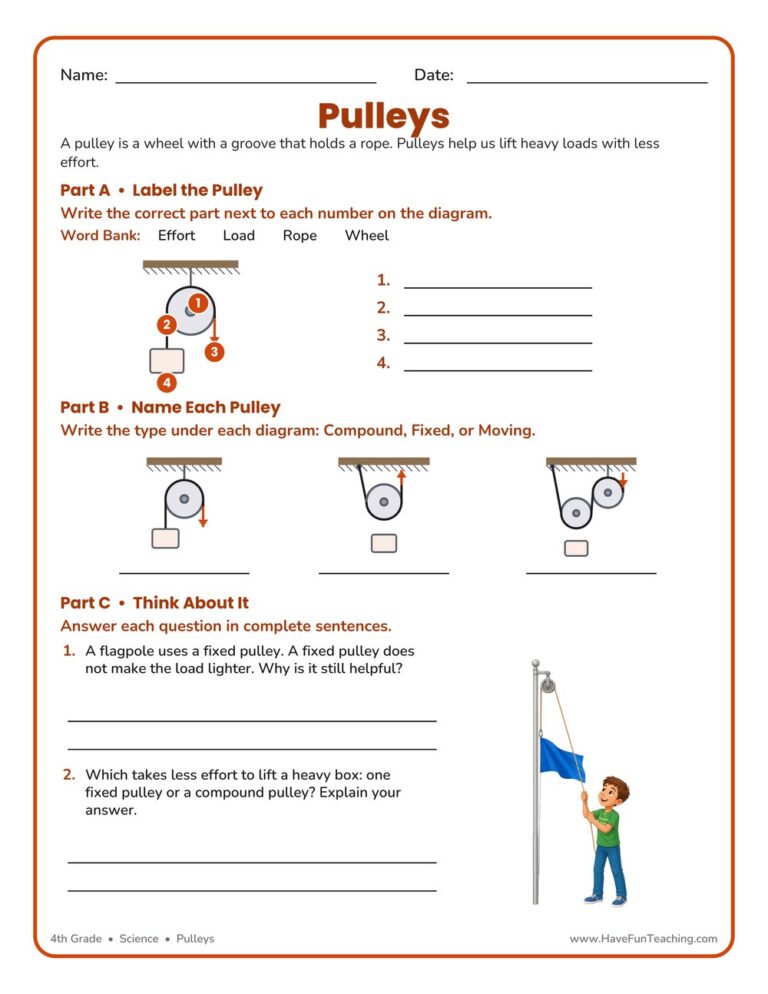
This Pulleys Worksheet helps 4th graders label a pulley, compare fixed, moving, and compound pulleys, and explain how pulleys lift heavy loads. Includes an answer key — a no-prep way to practice simple machines science.

Worksheet
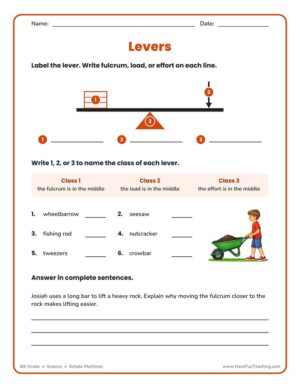
Worksheet4th GradeLevers Worksheet

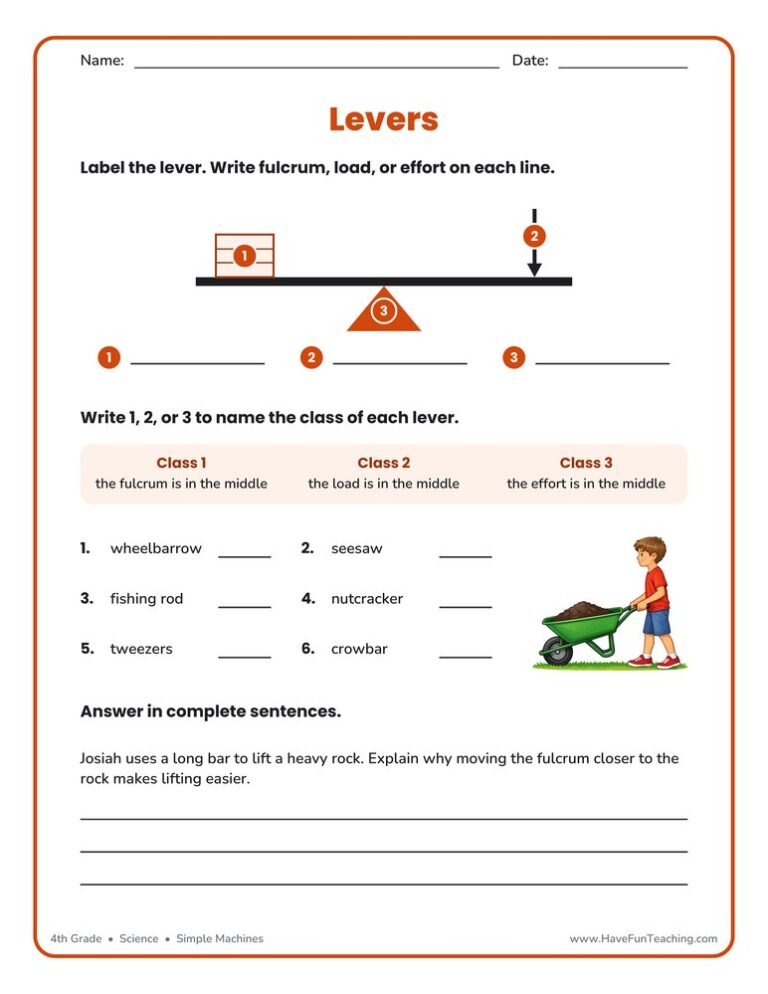
This Levers Worksheet helps 4th grade students label the fulcrum, load, and effort, then name the class of six everyday tools. An answer key is included, so practice checks fast.

Assessment
Assessment3rd GradeSimple Machines Reading Comprehension Worksheet

The Simple Machines Reading Comprehension Worksheet gives 3rd Grade readers a short science passage about levers, ramps, and pulleys, plus questions that check real understanding. An answer key is included for quick grading.

Worksheet
Worksheet2nd GradeSimple Machine ABC Order Worksheet

The Simple Machine ABC Order Worksheet helps 2nd graders put ten simple machine words in alphabetical order and compare words letter by letter. An answer key is included, making it perfect for quick, no-prep ABC order practice.

Flash Cards
Flash Cards1st GradeSimple Machines Flash Cards

These simple machines flash cards help 1st-3rd grade students learn the six simple machines with diagram cards and everyday object cards. Answer key included.

Flash Cards
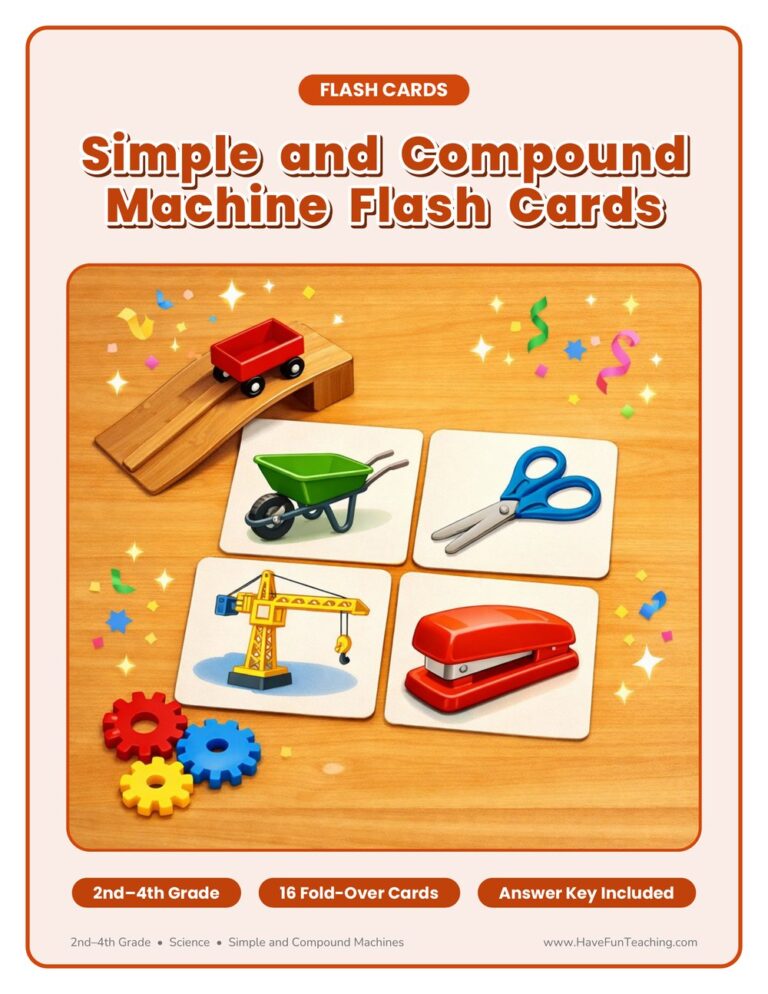
Flash Cards2nd GradeSimple and Compound Machines Flash Cards

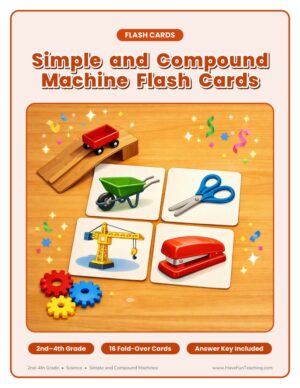
Simple and compound machines flash cards for 2nd to 4th grade: 16 fold-over picture cards, a practice page and an answer key included, so students learn to spot the simple machines inside everyday tools.

From our teachers' playbook

Push, pull, lift, and work smarter

What do kids learn about simple machines?

Simple machines are tools that make work easier by changing how much force we need or which way we push. There are six: the lever, pulley, wheel and axle, inclined plane, wedge and screw. Kids learn to spot them everywhere, like a seesaw (lever), a flagpole (pulley) and a ramp (inclined plane). Older students learn that when two or more simple machines work together, they make a compound machine, like scissors or a bike. The click moment is when a child lifts a heavy book with a ruler and a pencil and says, "Whoa, that was easy!"

Our favorite ways to teach simple machines

Simple machines are made for hands-on learning. These moves turn the room into a lab.

Build a lever

Give kids a ruler, a pencil and a small weight. Have them move the pencil closer and farther from the load and notice when lifting gets easier. Then they draw and label what they found.

Why it works: kids understand an idea best when they touch it, then draw it, then write it, the order the U.S. Department of Education recommends for elementary math.
Levers WorksheetTry it withLevers WorksheetWorksheetsOpen it →

Machine spotters

Flash a picture card and ask, "Which simple machine is hiding here?" A doorstop is a wedge, a jar lid is a screw. Then send kids on a classroom hunt to find real examples.

Why it works: children learn more from words and pictures together than from words alone (Mayer, 2009).

Simple Machines Flash CardsTry it withSimple Machines Flash CardsFlash CardsOpen it →

Read and check

Pair a short passage about simple machines with a few comprehension questions. Reading about machines builds science words, and the questions show who can explain what each one does.

Why it works: researchers who compared ten study methods found practice testing is one of the two that work best (Dunlosky and colleagues, 2013).

Simple Machines Reading Comprehension WorksheetTry it withSimple Machines Reading Comprehension WorksheetAssessmentsOpen it →

Questions parents and teachers ask

What are the 6 simple machines?

The six simple machines are the lever, pulley, wheel and axle, inclined plane, wedge and screw. Each one makes work easier by changing the force needed or its direction.

What grade learns about simple machines?

Many schools introduce simple machines in 2nd or 3rd grade and come back to them in 4th and 5th grade with force and motion. Younger kids can still enjoy spotting them in everyday life.

What is a compound machine?

A compound machine is made of two or more simple machines working together. Scissors combine two levers and two wedges, and a bicycle uses wheels and axles, levers and pulleys.

How can I teach simple machines at home?

Go on a machine hunt around the house. A doorknob is a wheel and axle, a knife is a wedge, and a jar lid is a screw. Building a ramp for toy cars is a great way to explore inclined planes.

Keep exploring