
Skip to content
Start My 3 Free Days $0 today · cancel anytime

Scientists Resources

7 scientists resources: 7 worksheets and 2 activities. How teachers use these

Scientists Resources

7 scientists resources: 7 worksheets and 2 activities. How teachers use these

Worksheet
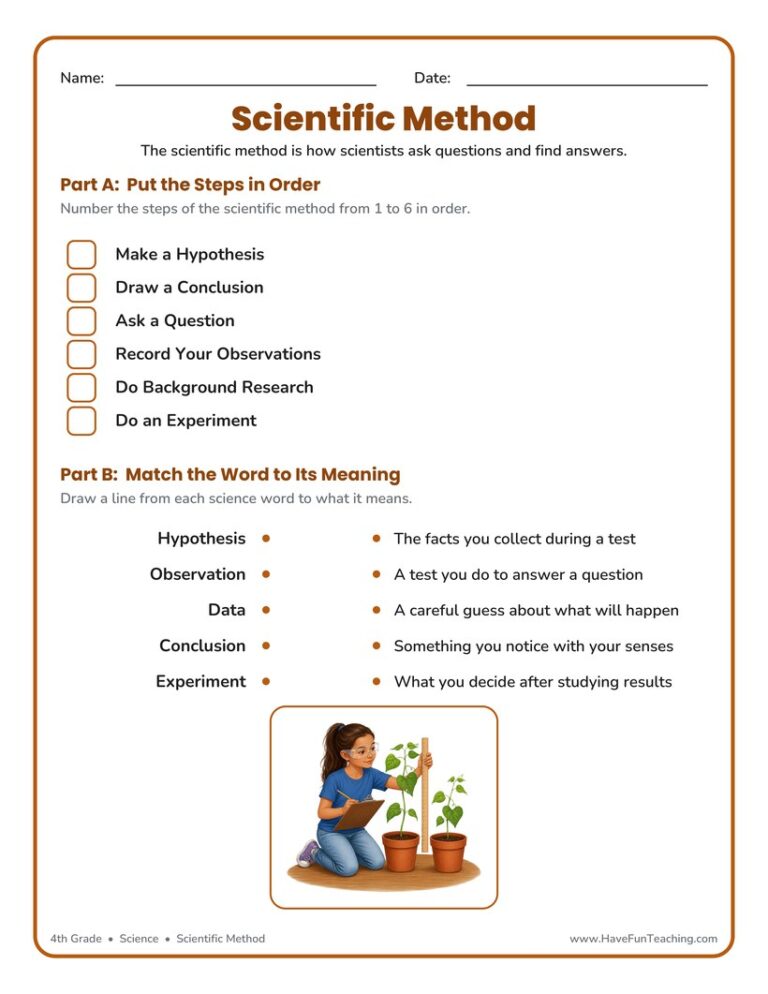
Worksheet4th GradeScientific Method Worksheet

This Scientific Method Worksheet helps 4th graders order the six steps of an investigation, match key science words, and analyze a real bean-plant experiment. Answer key included — a no-prep way to build real science-thinking skills.

Worksheet
Worksheet4th GradeScientific Observation Worksheet

This scientific observation worksheet gives 4th graders practice sorting observations from inferences, recording what they notice, and judging a science note. Answer key included for quick, no-prep science practice.

Worksheet
Worksheet4th GradeScientist Matching Worksheet

This scientist matching worksheet has 4th grade students pair six famous scientists with the work they are known for, then explain one discovery. Answer key included.

Worksheet
Worksheet3rd GradeDrawing Fossils Worksheet

This drawing fossils worksheet has 3rd graders sketch the imprint a fern leaf, seashell, fish and bird foot would leave in rock, then answer three written questions. Answer key included.

Activity
Activity3rd GradeScience Notebook Activity Booklet

This science notebook activity booklet walks 3rd graders through a real experiment, one page per step, from a focus question to claims, evidence and new questions they can test next.

Activity
Activity1st GradeScientific Method Activity Booklet

Using this Scientific Method Activity Booklet, studentsfollow the scientific method when conducting an experiment or proving a hypothesis.

Worksheet
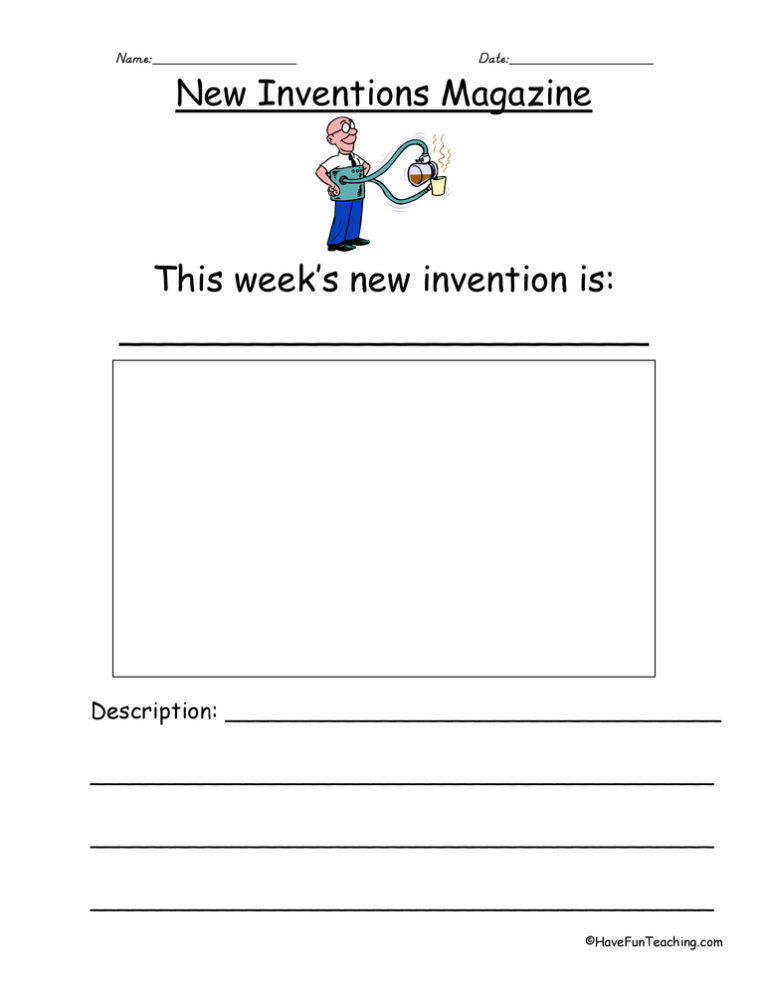
Worksheet2nd GradeNew Inventions Magazine Worksheet

The New Inventions Magazine Worksheet lets 2nd graders name, draw and describe an invention of their own. An open-ended science and writing page that turns curiosity about inventors into real explaining practice.

From our teachers' playbook

Goggles on, curious minds ready!

What do kids learn about scientists?

When kids learn about scientists, they learn two things: what scientists do, and that they can do it too! They discover that scientists ask questions, observe carefully, make predictions, test ideas and record what happens. They meet famous scientists and inventors and match them to their big discoveries. They try different kinds of science, from studying fossils to inventing something new. The click comes when a child says, "Wait, I'm being a scientist right now!"

Our favorite ways to teach about scientists

Kids understand scientists best by acting like one. These are our go-to moves.

Keep a real science notebook

Give every student a notebook just for science. Each time they observe something, they draw it, label it and write one question. Looking back through it, kids see their own thinking grow like a real scientist's.

Why it works: kids understand an idea best when they touch it, then draw it, then write it, the order the U.S. Department of Education recommends for elementary math.

Science Notebook Activity BookletTry it withScience Notebook Activity BookletActivitiesOpen it →

Walk through the scientific method

Do a tiny experiment together, like "Which paper towel holds the most water?" Name each step out loud as you go: question, prediction, test, results. Then kids run their own with a partner.

Why it works: handing over the work step by step, from teacher to student, is one of the most widely used teaching frameworks (Pearson and Gallagher, 1983).

Scientific Method Activity BookletTry it withScientific Method Activity BookletWorksheetsOpen it →

Who discovered what?

Show a picture of a discovery and have kids guess the scientist before you reveal it. Revisit the same scientists in quick rounds over the next week. Retrieval turns names into lasting knowledge.

Why it works: researchers who compared ten study methods found practice testing is one of the two that work best (Dunlosky and colleagues, 2013).

Scientist Matching WorksheetTry it withScientist Matching WorksheetWorksheetsOpen it →

Questions parents and teachers ask about teaching kids about scientists

How do I explain what a scientist is to a child?

A scientist is someone who asks questions about the world and does careful tests to find answers. Tell kids that every time they wonder why and try to find out, they're thinking like a scientist.

What are the steps of the scientific method for kids?

Ask a question, make a prediction, test it, observe what happens, and share what you learned. Younger kids can use just three steps: wonder, try, tell.

Which scientists should elementary students learn about?

Choose a mix of fields and backgrounds so every child can picture themselves in science. Inventors, astronomers, doctors and naturalists all make great starting points for young learners.

How can kids be scientists at home?

Try simple tests like which objects sink or float, or how fast ice melts in different spots. Have your child predict first, then record what happens with a drawing.

Keep exploring



