Skip to content
Start My 3 Free Days $0 today · cancel anytime

3rd Grade Beginning Sounds Resources

3 3rd grade beginning sounds resources: 3 activities. How teachers use these

3rd Grade Beginning Sounds Resources

3 3rd grade beginning sounds resources: 3 activities. How teachers use these

Activity
Activity3rd GradeHard and Soft C and G Activity

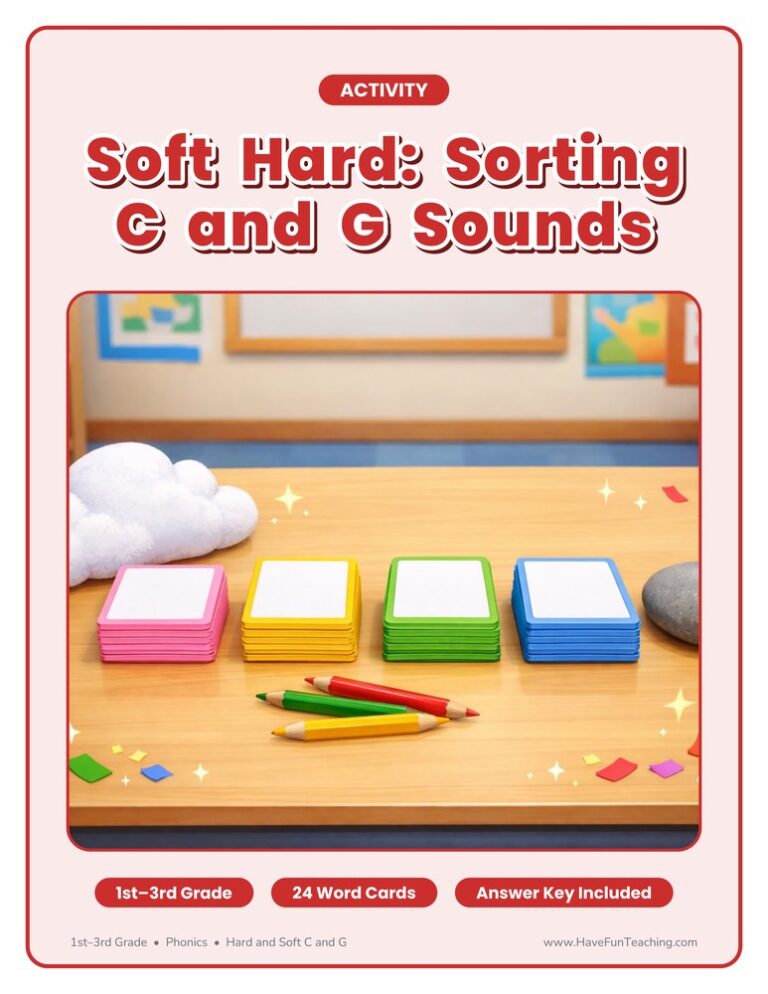
This hard and soft c and g activity helps 1st to 3rd grade students sort words by the sound of c or g using a simple rule. A sound sort sheet, practice page and answer key are included.

Activity
Activity3rd GradeConsonant Digraphs CH SH TH WH Activity

In this consonant digraphs ch sh th wh activity, Kindergarten to 3rd Grade students sort 16 picture-word cards by their first sound, with an answer key included for easy checking.

Activity
Activity3rd GradeHard and Soft C G Sounds Activity

This hard and soft c g sounds activity lets 1st to 3rd grade students sort picture cards by the sound c or g makes, with a practice page and answer key included.

From our teachers' playbook

Blends, digraphs and tricky starts

What do 3rd graders learn about beginning sounds?

By 3rd grade, beginning sounds are more than single letters. Kids work on consonant blends like br, st and spl, where you hear every letter, and digraphs like ch, sh, th and wh, where two letters make one new sound. They also learn when c and g are hard or soft: cat / city, goat / gem. These patterns help with reading longer words and spelling them right. The click moment is when a child spots "spl" in splash and reads the whole word without stopping.

How we practice beginning sounds in 3rd grade

Third graders who still mix up blends and digraphs need quick, targeted practice. These are our best moves.

Two letters, one sound

Write ch, sh, th and wh on the board and have kids touch their throat or lips while saying each one. They feel that each pair makes a single new sound. Then they sort word cards under the right digraph. It's quick and it fixes a lot of spelling mistakes.

Why it works: teaching letter sounds directly and in order is one of the best-supported findings in reading research (National Reading Panel, 2000).

Consonant Digraphs CH SH TH WH ActivityTry it withConsonant Digraphs CH SH TH WH ActivityActivitiesOpen it →
Hard or soft? Sort it

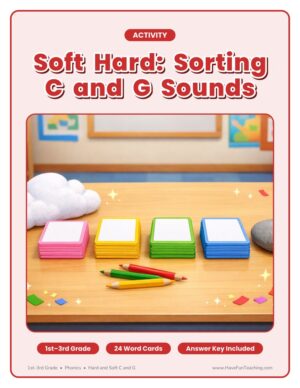
Give kids word cards with c and g and have them sort into hard and soft piles. Then ask "What letter comes after the c?" Most will notice that e, i and y make it soft. Finding the rule themselves makes it stick.

Why it works: the U.S. Department of Education's guide for teaching elementary math recommends moving from hands-on objects to drawings to numbers.

Hard and Soft C and G ActivityTry it withHard and Soft C and G ActivityActivitiesOpen it →

Break the blends

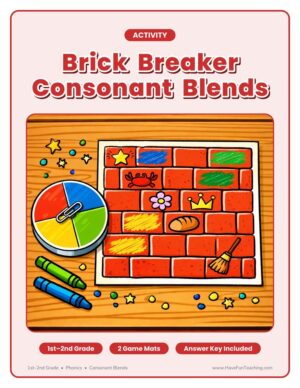
Use a brick-breaker style game where each brick has a blend. Kids read a word with that blend to knock it out. It's fast, focused practice, and even reluctant readers want another turn.

Why it works: in a well-known study, a few short sessions of a simple number board game measurably boosted young children's number skills (Ramani and Siegler, 2008).

Brick Breaker Consonant Blends ActivityTry it withBrick Breaker Consonant Blends ActivityActivitiesOpen it →

3rd grade beginning sounds questions

What is the difference between a blend and a digraph?

In a blend, you hear every letter, like the b and r in "brick." In a digraph, two letters make one new sound, like sh in "ship."

Why is my 3rd grader still struggling with beginning sounds?

Usually it's blends or digraphs, not single letters. Quick daily practice reading and sorting words with these patterns fixes most gaps within a few weeks.

What are hard and soft c and g?

Hard c sounds like /k/ in cat, and soft c sounds like /s/ in city. Hard g sounds like /g/ in goat, and soft g sounds like /j/ in gem. The letters e, i or y usually make them soft.

How can I practice blends at home?

Play "I Spy" with blend sounds, read books with lots of blend words, or have your child build words with letter tiles.