Skip to content
Start My 3 Free Days $0 today · cancel anytime

Consonants Activities

38 consonants activities. Teacher favorites: Popcorn Blends Activity and Blends, Digraphs, and Trigraphs Activity. How teachers use these

Consonants Activities

38 consonants activities. Teacher favorites: Popcorn Blends Activity and Blends, Digraphs, and Trigraphs Activity. How teachers use these

Activity
ActivityKindergartenPopcorn Blends Activity

In this popcorn blends activity, K-2nd Grade children spin a blend, sort 12 picture cards into popcorn boxes and fill in a practice page, with an answer key included for quick checking.

Activity
ActivityKindergartenBlends, Digraphs, and Trigraphs Activity

Using the Blends, Digraphs, and Trigraphs Activity, students create lists of words that have beginning and ending blends, digraphs, or trigraphs.

Activity
ActivityPreschoolConsonant Sounds Activity

Using the Consonant Sounds Activity, students use the ice cream cone letters and scoop picture cards to identify beginning consonant sounds of words.

Activity
ActivityKindergartenWord Work Activity

Using the Word Work Activity, students practice writing words by color coding consonants and vowels to build their spelling skills.

Activity
ActivityPreschoolBeginning and Ending Sounds Activity

This beginning and ending sounds activity uses 12 picture clip cards and a recording sheet so preschool to 1st grade students find first and last letters. Answer key included.

Activity
ActivityKindergartenFeeling Bright Great and Proud R Consonant Blends Activity

Using the Feeling Bright Great and Proud R Consonant Blends Activity, students sort the words into the correct blend headings to build their reading fluency skills.

Activity
Activity1st GradePlucking Blends L Blend Activity

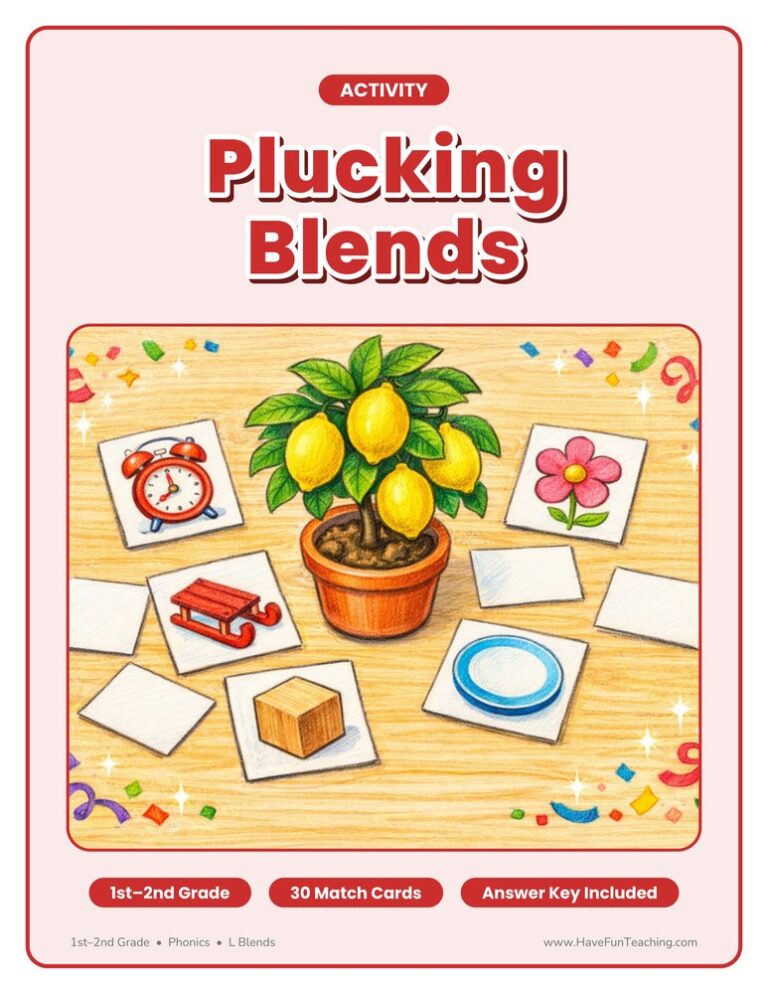
This l blend activity has 1st and 2nd grade students match picture cards to word cards and sort words by bl, cl, fl, pl and sl. Answer key included.

Activity
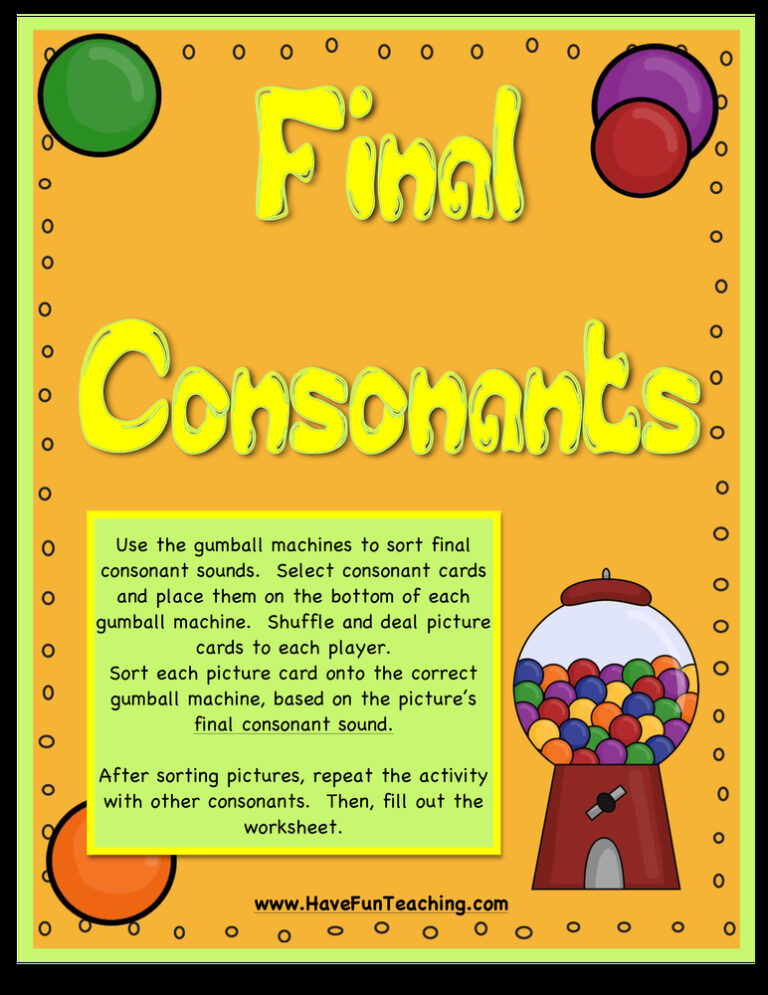
ActivityKindergartenFinal Consonants Activity

Using the Final Consonants Activity, students use the gumball machines to sort picture sounds based on final consonant sounds.

Activity
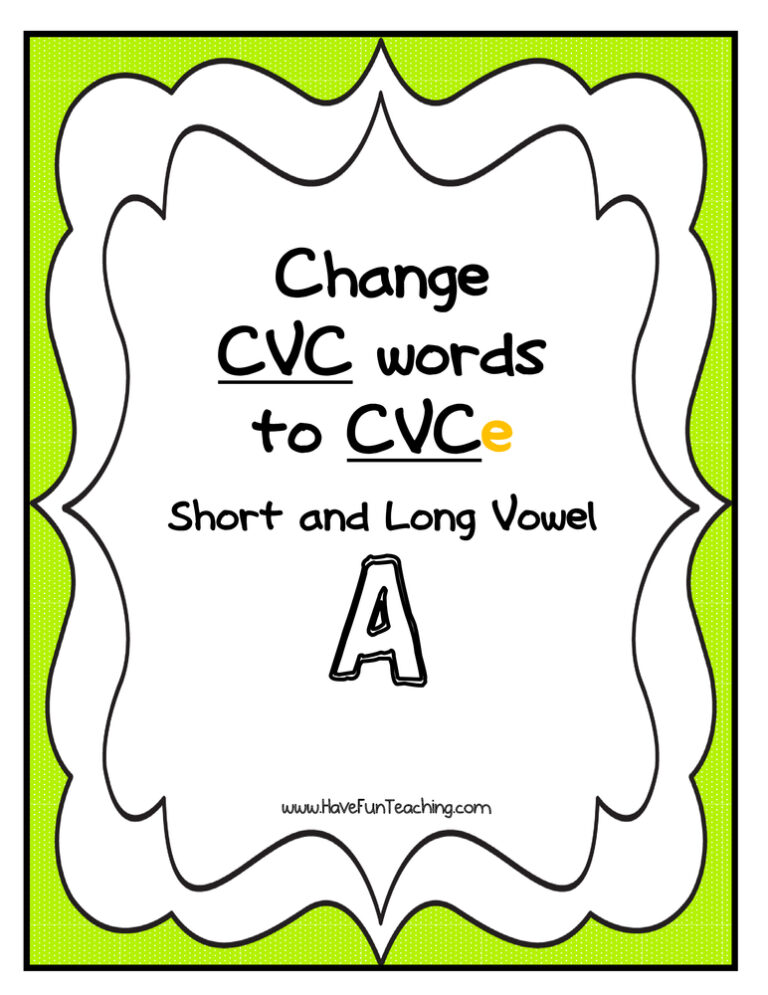
Activity1st GradeShort and Long Vowel A CVCe Activity

This short and long vowel a CVCe activity gives 1st and 2nd grade readers 24 word cards for a silent e matching game, a sort mat and a practice page. Answer key included.

Activity
ActivityPreschoolBeginning Sounds B, P Activity

Using the Beginning Sounds B, P Activity, students sort the pictures cards into two beginning sounds categories, B and P.

Activity
ActivityKindergartenCVC Short Vowel Sounds Activity

This CVC short vowel sounds activity has kindergarten and 1st grade students read CVC word cards and sort them under five snowmen by vowel. Answer key included.

Activity
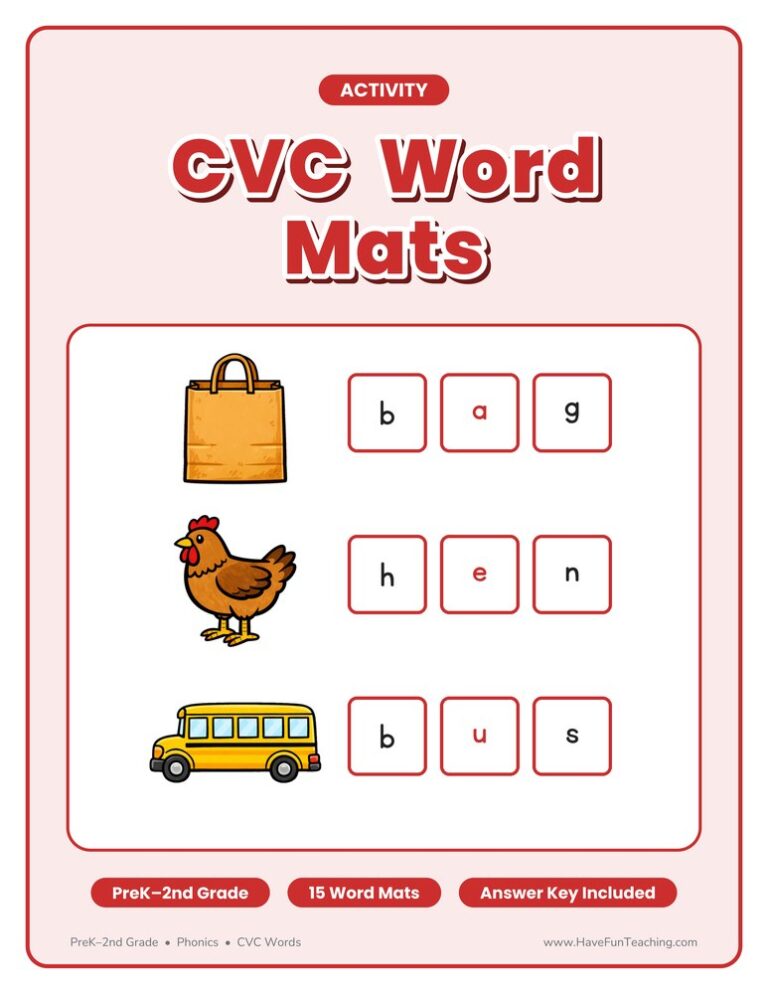
ActivityPreschoolCVC Word Mats Activity

This CVC word mats activity helps preschool to 2nd grade students build and spell short vowel words with letter tiles, with a practice page and an answer key included.

Activity
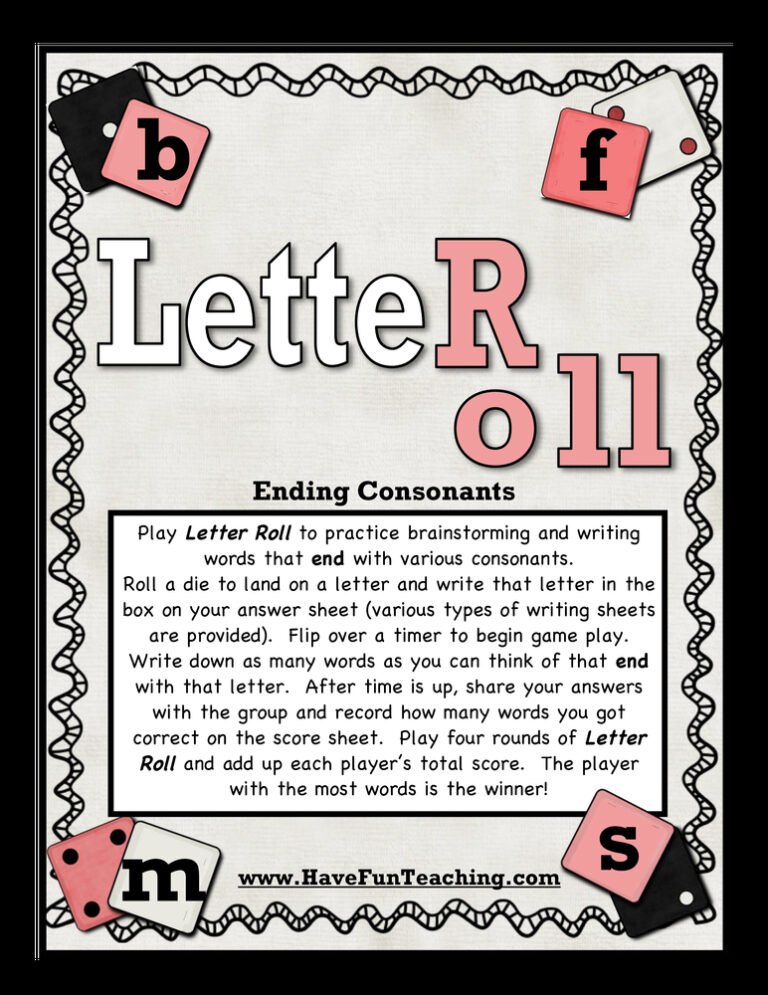
ActivityKindergartenLetter Roll Ending Sounds Activity

consonants activity, consonant sounds activity, phonics activity

Activity
ActivityKindergartenBlending S Blends Activity

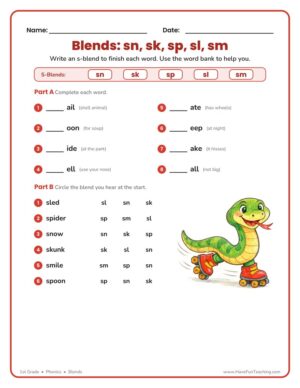
Using the Blending S Blends Activity, students sort the pictures cards into s blend categories, sn-, sk-, sl-, sm- and sp-.

Activity
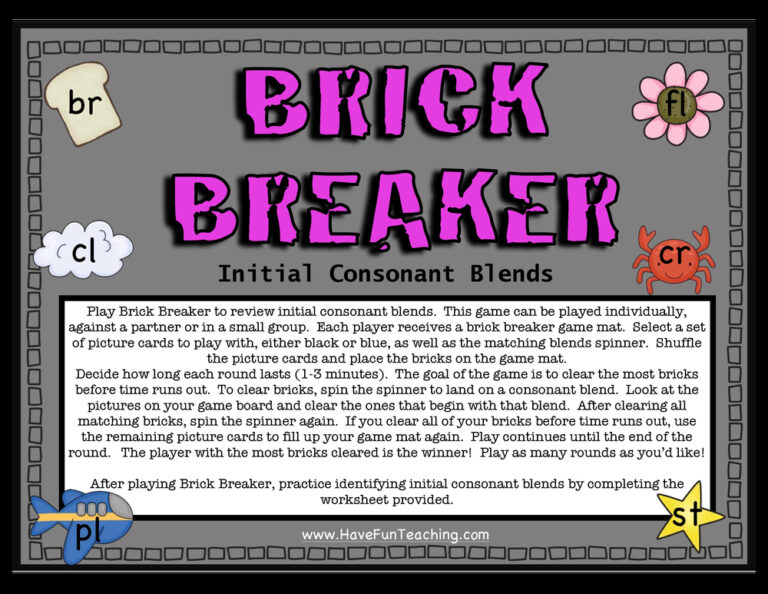
Activity1st GradeBrick Breaker Consonant Blends Activity

Using the Brick Breaker Consonant Blends Activity, students identify the beginning consonants blends in common words using picture cards.

Activity
ActivityKindergartenConsonant Digraphs CH SH TH WH Activity

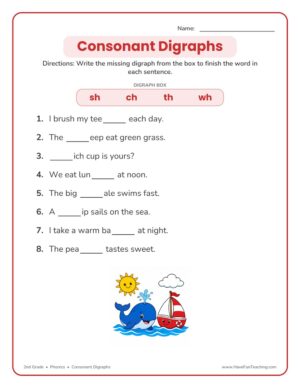
In this consonant digraphs ch sh th wh activity, Kindergarten to 3rd Grade students sort 16 picture-word cards by their first sound, with an answer key included for easy checking.

Activity
Activity1st GradeHard and Soft C G Sounds Activity

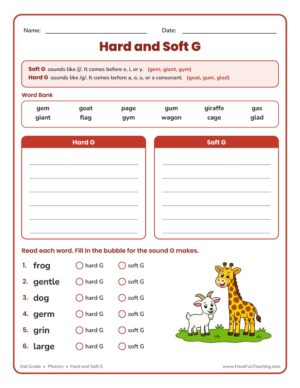
This hard and soft c g sounds activity lets 1st to 3rd grade students sort picture cards by the sound c or g makes, with a practice page and answer key included.

Activity
ActivityPreschoolCVC Vowel Activity

A CVC vowel activity for preschool to 2nd grade with 15 picture clip cards, a write-the-word sheet and a practice page. Answer key included to check every short vowel.

Activity
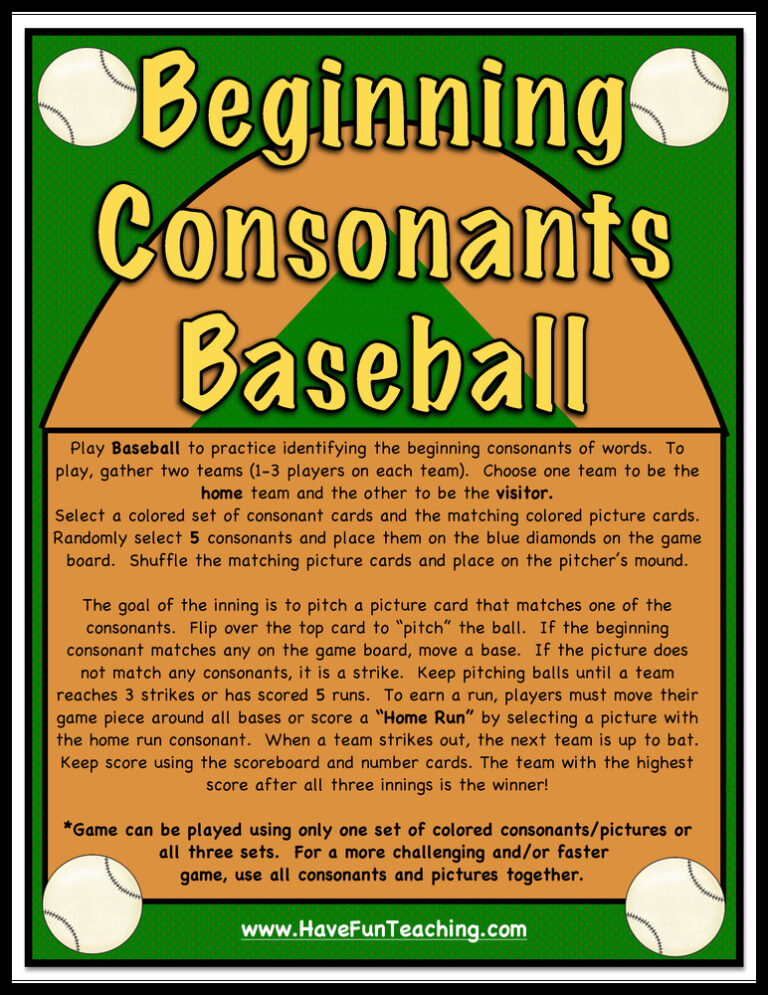
ActivityPreschoolBeginning Consonants Baseball Activity

Using the Beginning Consonants Baseball Activity, students play Baseball to practice identifying the beginning consonants of words.

Activity
ActivityKindergartenBlends Mini Book Activity

Using the Blends Mini Book Activity, students create mini books about blends to practice using words with beginning blends in sentences.

From our teachers' playbook

B, C, D and all their friends

What do kids learn about consonants?

Consonants are the 21 letters that are not vowels, and they do most of the work at the start and end of words. Kids begin by matching each consonant to its sound and hearing it at the beginning of a word: b, b, ball. Next come blends, where two sounds stay separate but slide together (st, fl, gr), and digraphs, where two letters make one new sound (sh, ch, th, wh, ph). Later they meet the tricky ones, like hard and soft c and g in cat and city. Once consonants are automatic, kids can sound out almost any short word.

How we teach consonants so they stick

Consonant sounds should be quick and crisp. These moves keep them clear and keep kids practicing.

Clip the sound short

Model each sound without an extra "uh" on the end: say /b/, not "buh". That tiny habit makes blending so much easier later, because b-a-t blends into "bat" instead of "buh-a-tuh". Have kids hold a hand under their chin and feel the sound stop fast.

Why it works: the National Reading Panel found that systematic, explicit phonics teaching clearly improves how children learn to read.
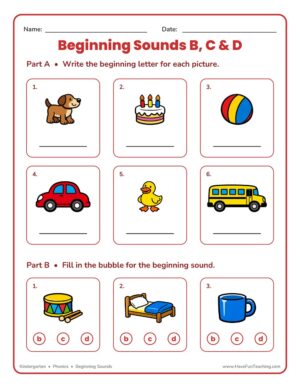
Beginning Sounds B C D Pictures WorksheetTry it withBeginning Sounds B C D Pictures WorksheetWorksheetsOpen it →

Sing the letter sounds

Start the day with an alphabet song or lesson that says the letter name, the sound and a picture word. Kids join in on the sounds after a few days. Music gives shy readers a safe way to practice out loud.

Why it works: a catchy, repeating tune gives the brain a hook to hang words on, so sung text is remembered better (Wallace, 1994).

Alphabet Micro LessonTry it withAlphabet Micro LessonVideosOpen it →

Two letters, one sound

When you reach digraphs, write sh on one hand and ch on the other. Call a word and kids point to the hand that matches the first sound. Quick, silly and moving, which is exactly how digraphs stop getting mixed up.

Why it works: in a well-known study, a few short sessions of a simple number board game measurably boosted young children's number skills (Ramani and Siegler, 2008).

Consonant Digraphs WorksheetTry it withConsonant Digraphs WorksheetWorksheetsOpen it →

Consonant questions from parents and teachers

How many consonants are in the alphabet?

There are 21 consonants in English: every letter except a, e, i, o and u. The letter y can act as a consonant (yes) or a vowel (gym, my).

What is the difference between a blend and a digraph?

In a blend, you still hear both sounds, as in st or fl. In a digraph, two letters make one brand new sound, as in sh, ch or th.

In what order should I teach consonants?

Many teachers start with high-use letters like s, m, t, p, n and c so kids can build real words right away. Blends and digraphs usually come after kids can read short vowel words like cat and sit.

When does the soft c and soft g rule come up?

Usually in 1st or 2nd grade. When c or g comes before e, i or y, it usually makes its soft sound, like in city and giant.