Skip to content
Start My 3 Free Days $0 today · cancel anytime

Earth Science Worksheets

95 Earth Science worksheets. Teacher favorites: Weather Names Worksheet and Layers of the Earth Definition Worksheet. How teachers use these

Earth Science Worksheets

95 Earth Science worksheets. Teacher favorites: Weather Names Worksheet and Layers of the Earth Definition Worksheet. How teachers use these

Worksheet
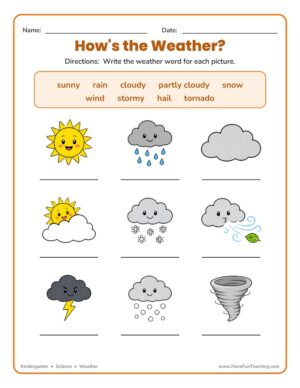
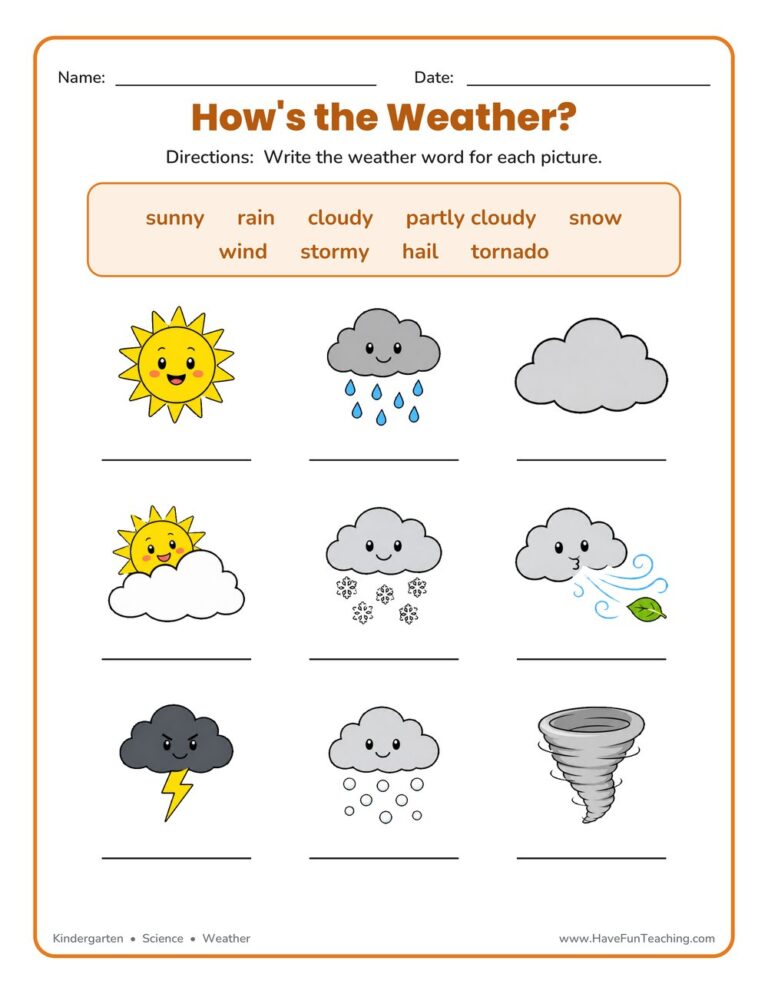
WorksheetKindergartenWeather Names Worksheet

This Weather Names Worksheet gives kindergarten kids nine weather pictures to label using a simple word bank. A complete answer key is included — an easy, no-prep way to build science vocabulary and early writing skills.

Worksheet
Worksheet4th GradeLayers of the Earth Definition Worksheet

A layers of the Earth definition worksheet for 4th grade where students match each layer to its description and label a cross-section diagram. Answer key included for quick, no-prep earth science practice.

Worksheet
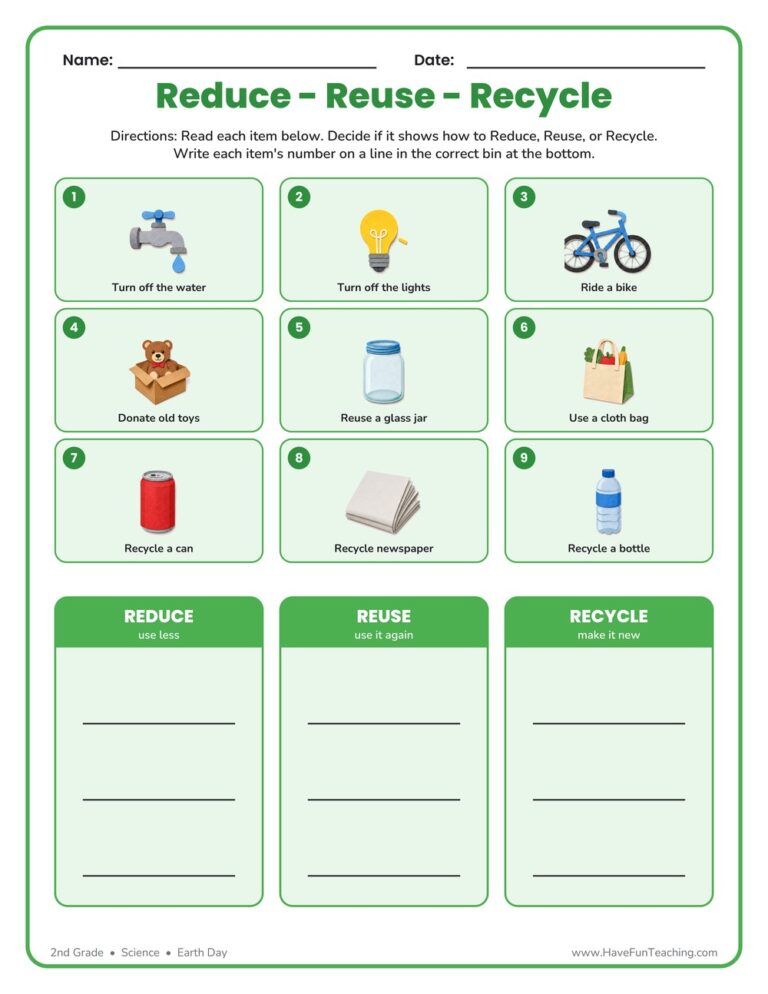
Worksheet2nd GradeReduce, Reuse, Recycle Sorting Worksheet

A second grade Reduce, Reuse, Recycle Sorting Worksheet where students sort nine everyday items into the correct earth-friendly bin. Answer key included — a quick, no-prep Earth Day activity for home or classroom.

Worksheet
Worksheet2nd GradePrintable Thermometer

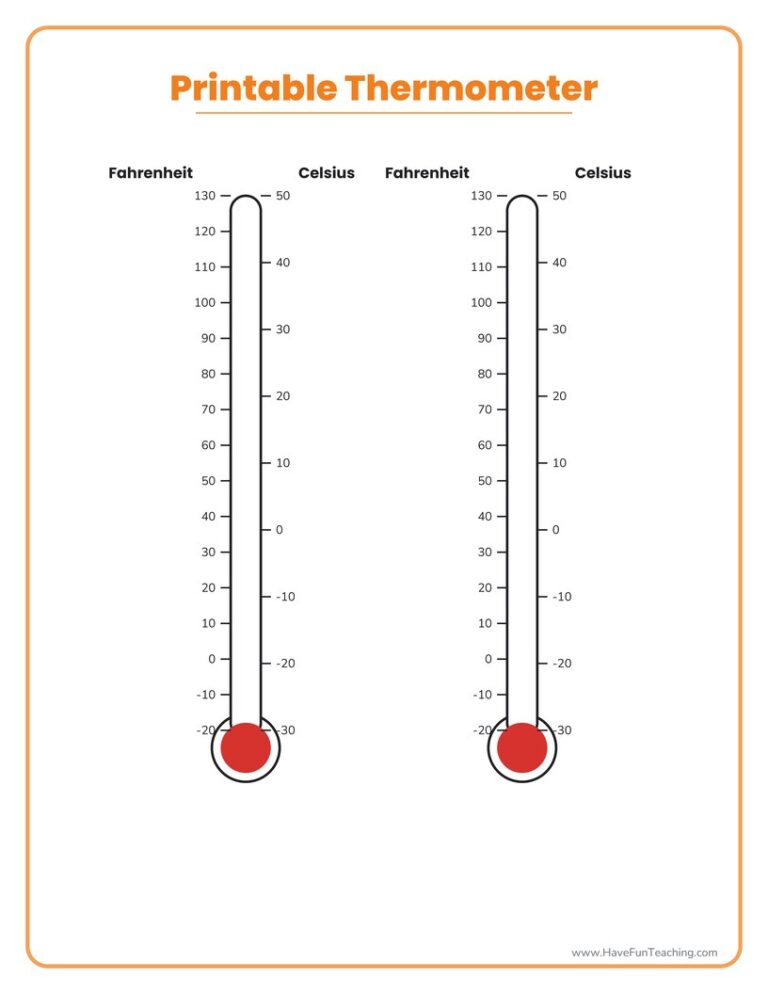
This Printable Thermometer shows Fahrenheit and Celsius scales side by side, giving 2nd grade students an easy classroom tool for tracking temperature and weather. Print, mark, and reuse all year long.

Worksheet
Worksheet2nd GradeWeather Fill in the Blank Worksheet

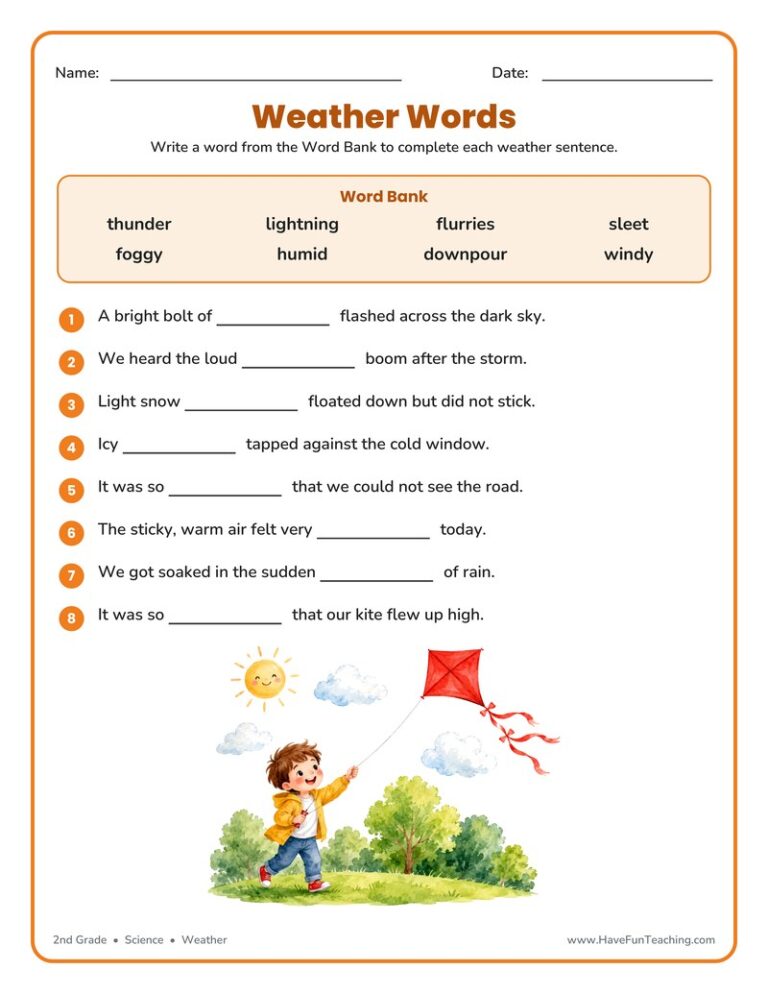
This Weather Fill in the Blank Worksheet lets 2nd graders complete eight weather sentences using a word bank of terms like thunder, sleet, and downpour. Includes an answer key for quick, no-prep science vocabulary practice.

Worksheet
Worksheet2nd GradeWeather Words Worksheet

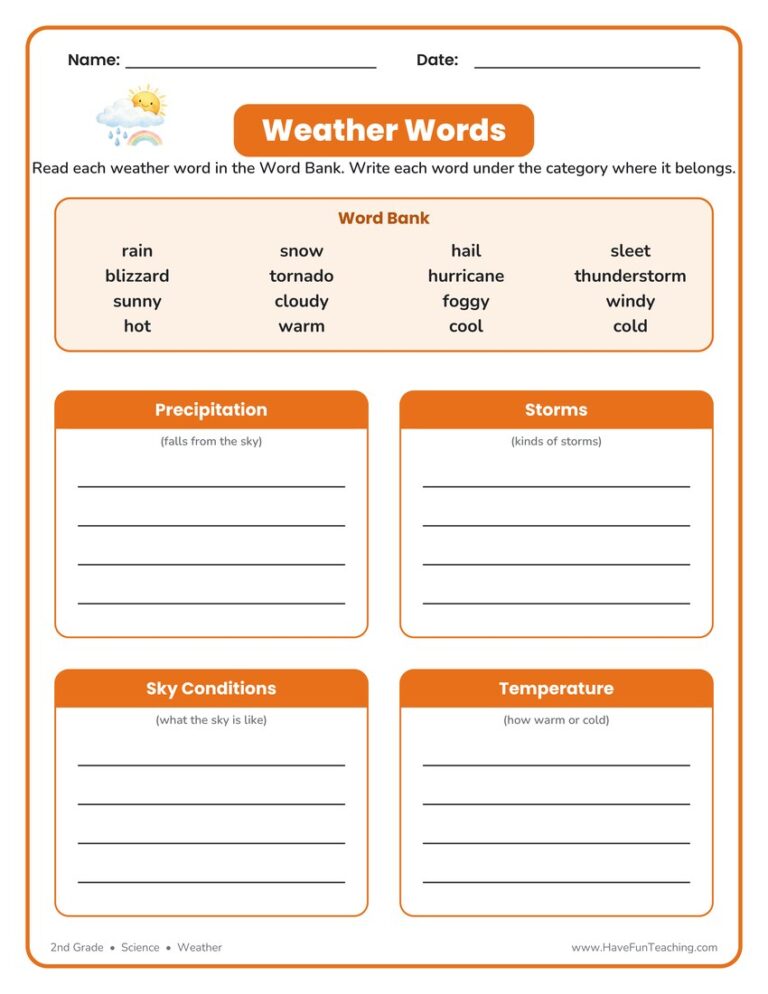
This Weather Words Worksheet helps 2nd graders sort sixteen weather terms into precipitation, storms, sky conditions, and temperature. Answer key included — a quick, no-prep way to grow earth science vocabulary.

Worksheet
Worksheet2nd GradeNatural Disasters Fill in the Blanks Worksheet

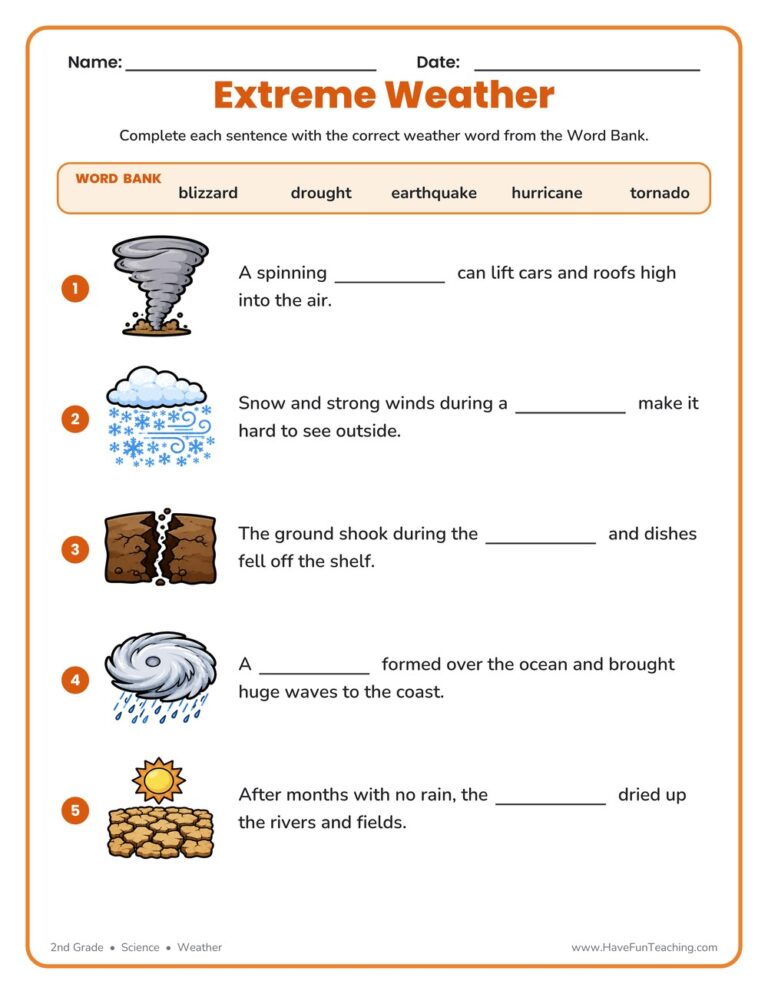
This Natural Disasters Fill in the Blanks Worksheet has 2nd graders match blizzards, droughts, earthquakes, hurricanes, and tornadoes to picture-clue sentences. Answer key included — perfect for no-prep extreme weather vocabulary practice.

Worksheet
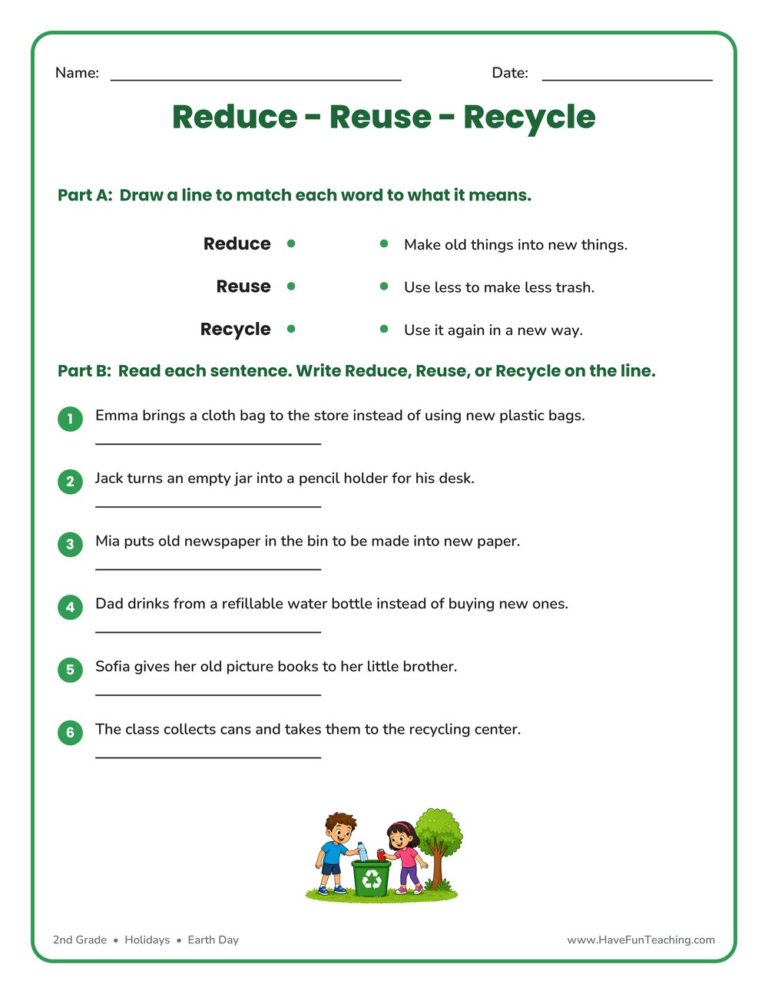
Worksheet2nd GradeReduce, Reuse, Recycle Worksheet

This Reduce, Reuse, Recycle worksheet helps 2nd grade students learn the three Rs by matching each word to its meaning and sorting Earth Day scenarios. Answer key included for quick, no-prep practice.

Worksheet
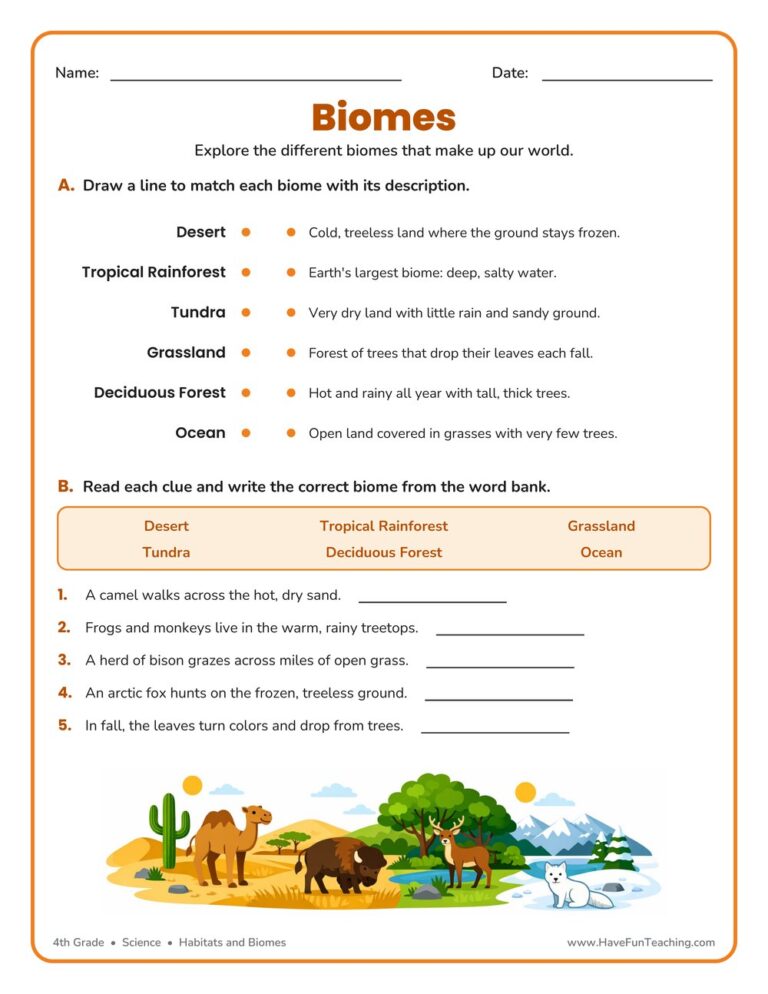
Worksheet4th GradeBiomes Worksheet

This Biomes Worksheet helps 4th grade students match major biomes to their climates and identify each one from real-world clues. Includes an answer key for fast, no-prep science practice at home or school.

Worksheet
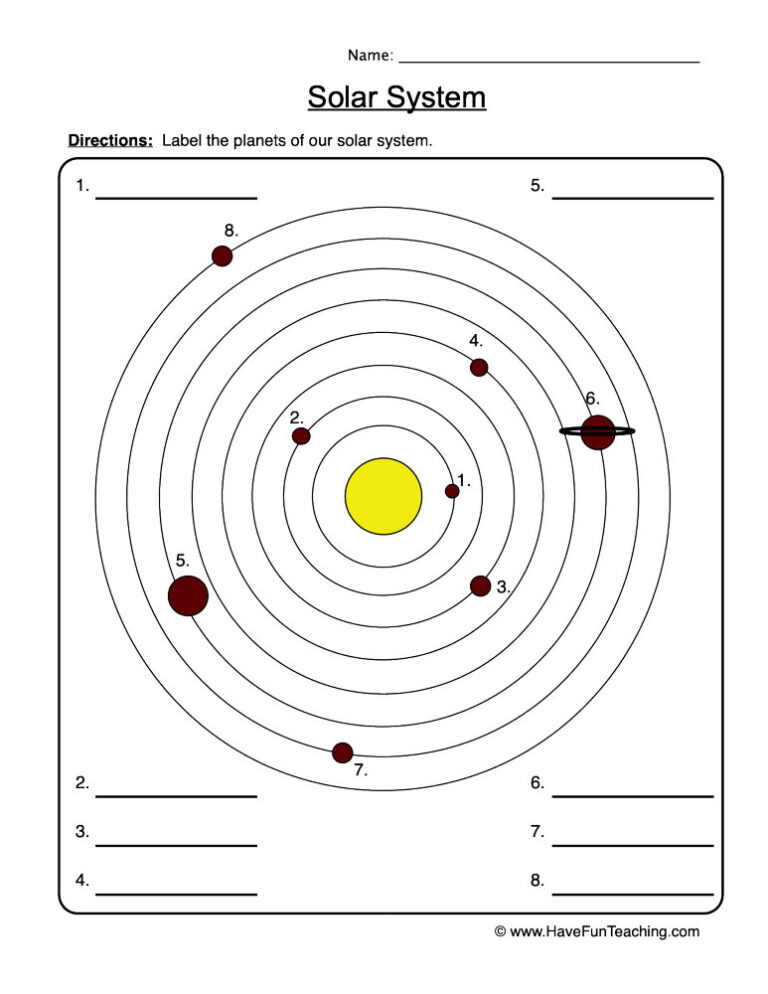
Worksheet4th GradeSolar System Diagram Worksheet

This solar system diagram worksheet has 4th graders label all eight planets in order from the Sun, then answer four questions about the diagram. An answer key is included, so review takes only minutes.

Worksheet
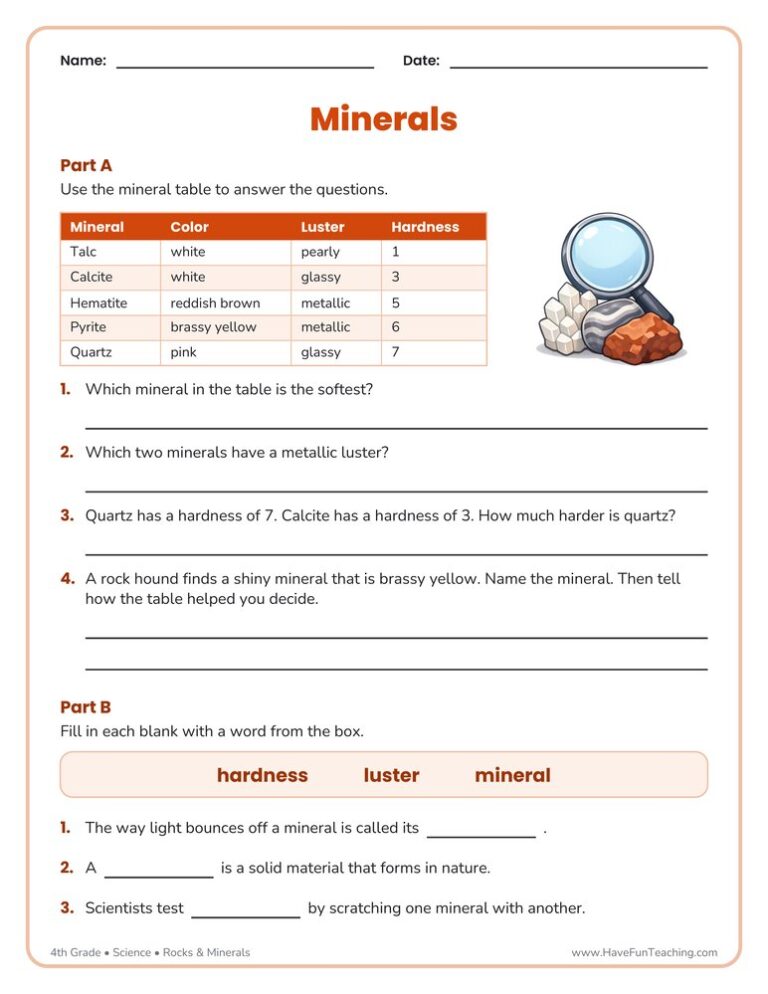
Worksheet4th GradeRocks & Minerals Worksheet

This Rocks & Minerals Worksheet gives 4th graders a real property table of talc, calcite, hematite, pyrite, and quartz to read and reason from. Answer key included, so mineral identification practice takes no prep at all.

Worksheet
Worksheet4th GradeWeathering Worksheet

A weathering worksheet that helps 4th graders sort mechanical and chemical weathering, master key earth science vocabulary, and explain their thinking. Answer key included for fast, no-prep review.

Worksheet
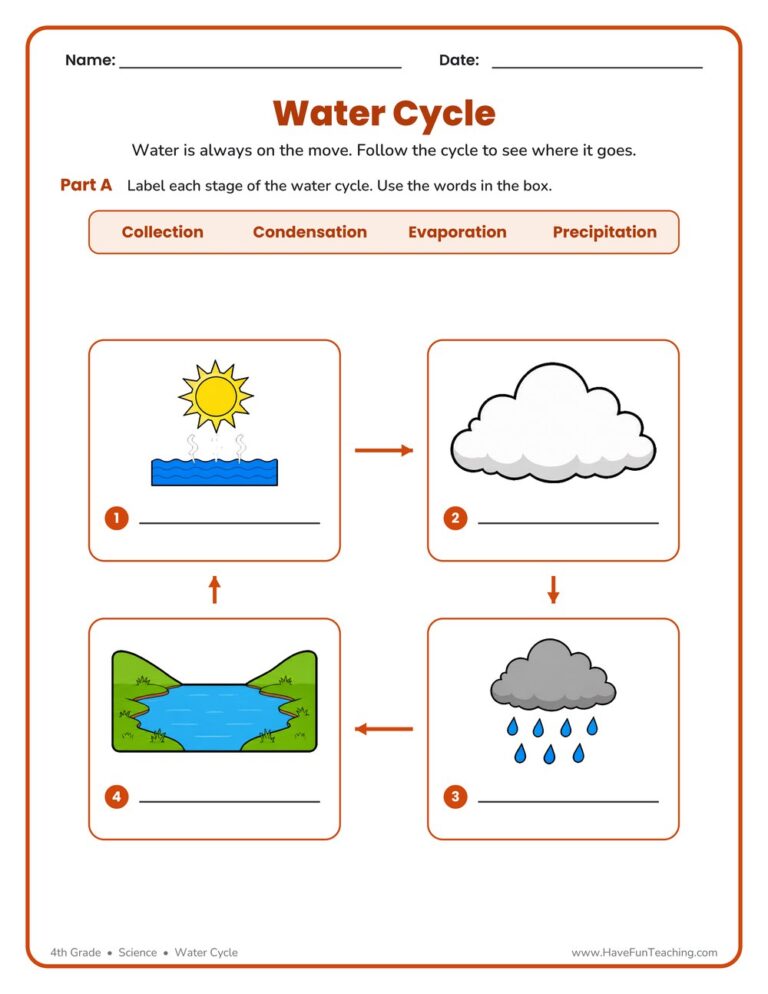
Worksheet4th GradeWater Cycle Worksheet

This Water Cycle Worksheet helps 4th graders label the stages of the water cycle, match science terms to clues, and explain the process in their own words. Includes an answer key — a no-prep way to reinforce earth science vocabulary.

Worksheet
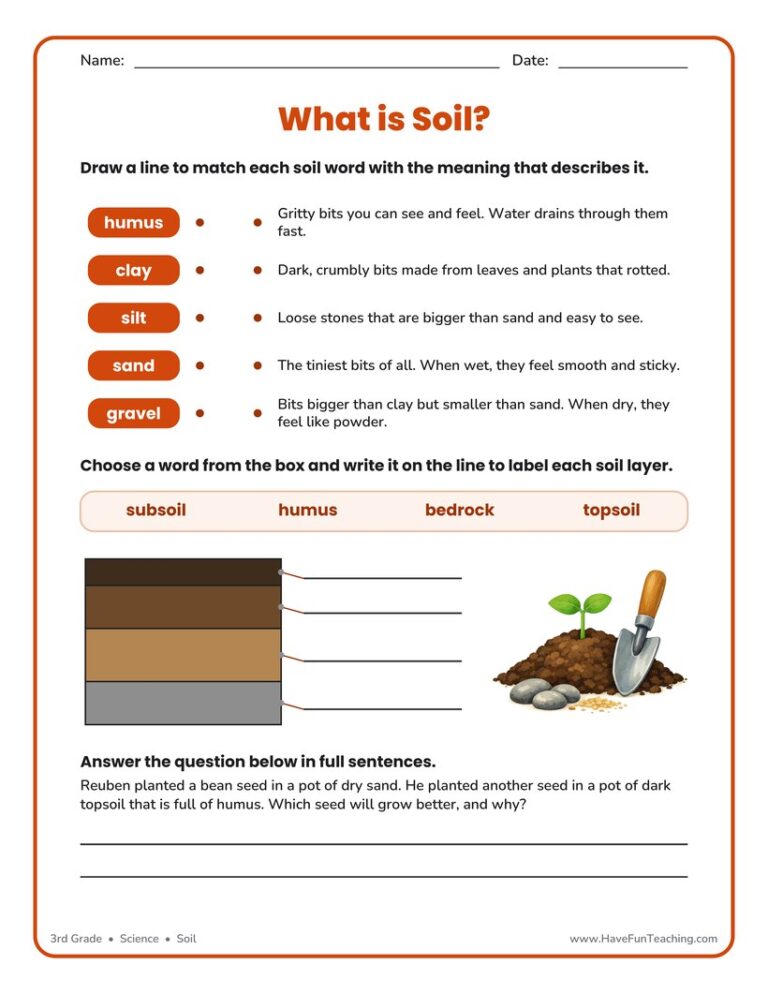
Worksheet3rd GradeSoil Matching Worksheet

This Soil Matching Worksheet gives 3rd Grade students hands-on practice matching soil words to their meanings and labeling the four soil layers. An answer key is included, so checking work takes seconds.

Worksheet
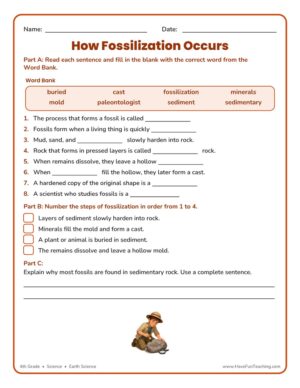
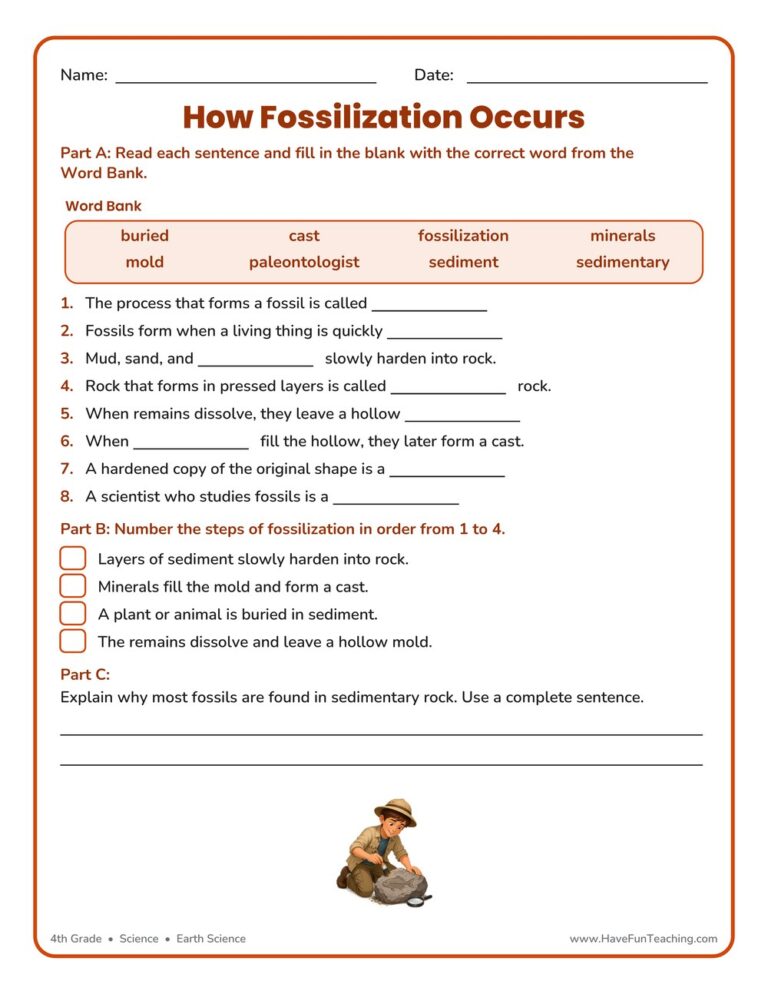
Worksheet4th GradeFossils Fill in the Blank Worksheet

This Fossils Fill in the Blank Worksheet gives 4th grade students hands-on earth science practice with fossilization, sedimentary rock, and key vocabulary. Answer key included to make review quick and easy.

Worksheet
Worksheet4th GradeOur Natural Resources Worksheet

Our Natural Resources Worksheet asks 4th graders to sort eight resources into renewable and nonrenewable columns, then explain the difference in writing. Answer key included — easy no-prep Earth Science practice.

Worksheet
Worksheet4th GradeSeasons Causes Worksheet

This seasons causes worksheet asks 4th graders to read a tilted Earth diagram, name the season in the northern half, and sort real causes from common myths. An answer key with a model response is included.

Worksheet
Worksheet4th GradeNatural Resources Sorting Worksheet

The Natural Resources Sorting Worksheet has 4th graders sort a word bank of twelve resources into renewable and non-renewable columns, then write a sentence. Answer key included for easy Earth Science practice.

Worksheet
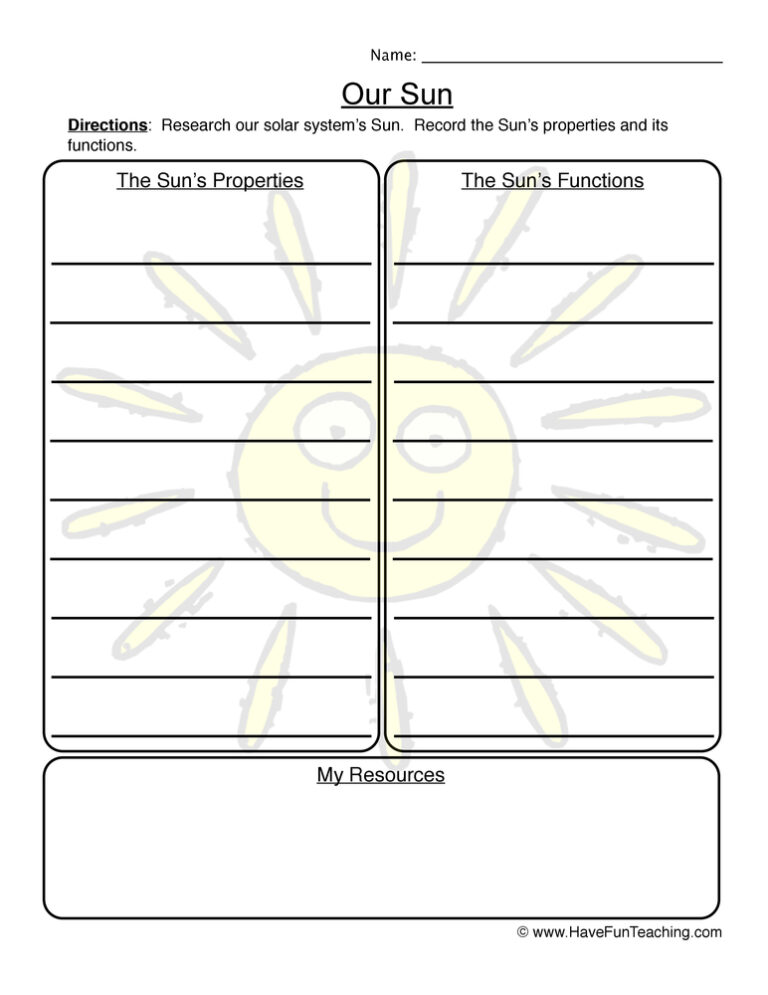
Worksheet3rd GradeOur Sun Worksheet

Our sun worksheet for 3rd grade: students sort eight facts into what the Sun is and what the Sun does, then find both inside four sentences. Answer key included for quick, no-prep science practice.

Worksheet
Worksheet3rd GradeRock Observation Worksheet

This Rock Observation Worksheet has 3rd grade students match describing words to five rock observations, name three rock types, and record one more property. An answer key is included, so it is ready to print.

From our teachers' playbook

Rocks, rain, and a planet that never sits still

What do kids learn in earth science?

Earth science is the study of our planet: what it's made of, what changes it, and its place in space. Young kids observe weather, seasons, day and night, and sort rocks by color and texture. By 3rd through 5th grade they're tracing the water cycle, learning how weathering and erosion carve the land, exploring fossils and soil, and naming the layers of the Earth from crust to inner core. They also learn why we have seasons: Earth's tilt, not its distance from the sun. The click is when kids realize the ground under their sneakers is still changing, just very, very slowly.

Our favorite ways to teach earth science

Earth science is everywhere outside your classroom door. These moves bring it inside and make it stick.

Be a rock detective

Hand each table a few rocks and a magnifying glass. Kids describe color, texture and shiny spots, then sort them their own way and explain their rule. Observing real rocks before reading about them gives the vocabulary something to hold on to.

Why it works: going from real objects to pictures to symbols is a core recommendation of the U.S. Department of Education's elementary math guide.
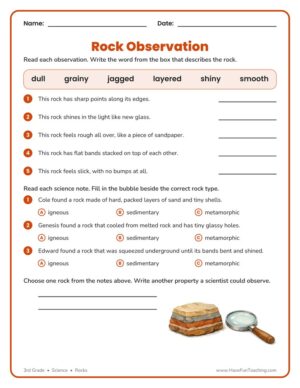
Rock Observation WorksheetTry it withRock Observation WorksheetWorksheetsOpen it →

Draw the cycle

Have kids draw the water cycle as a big circle with arrows: evaporation, condensation, precipitation, collection. Then cover one label and ask what's missing. A labeled diagram they made themselves is easier to remember than a paragraph.

Why it works: pairing a picture with each word gives kids two ways to remember it, a well-tested principle of how people learn (Mayer, 2009).

Water Cycle WorksheetTry it withWater Cycle WorksheetWorksheetsOpen it →

Sing the seasons

A catchy song makes the order of the seasons, and the reason for them, easy to recall. Play it at the start of the unit and again before the quiz. Kids will be humming it at lunch, and that's the point.

Why it works: a catchy, repeating tune gives the brain a hook to hang words on, so sung text is remembered better (Wallace, 1994).

Seasons SongTry it withSeasons SongSongsOpen it →

Earth science: your questions

What topics are in elementary earth science?

The big ones are weather and seasons, the water cycle, rocks and minerals, soil, fossils, weathering and erosion, natural resources, and the solar system. Younger grades focus on observing and describing, while older grades explain how and why things change.

What's the difference between weathering and erosion?

Weathering breaks rock into smaller pieces. Erosion carries those pieces away to a new place, usually by water, wind or ice. A simple way to remember it: weathering breaks, erosion takes.

How do I explain why we have seasons?

The Earth is tilted. As it travels around the sun, the half tipped toward the sun gets more direct sunlight and longer days, so it has summer. A flashlight and a tilted ball show this in a minute.

What are the layers of the Earth for kids?

From the outside in: the crust, which we live on, the mantle, the outer core, which is liquid, and the inner core, which is solid. Comparing them to a peach or an egg makes it easy to picture.

How can I teach earth science at home?

Start a rock collection, keep a weekly weather chart, or watch a puddle disappear over a sunny afternoon. Ask your child to explain what they see. Talking it through builds the science vocabulary.