
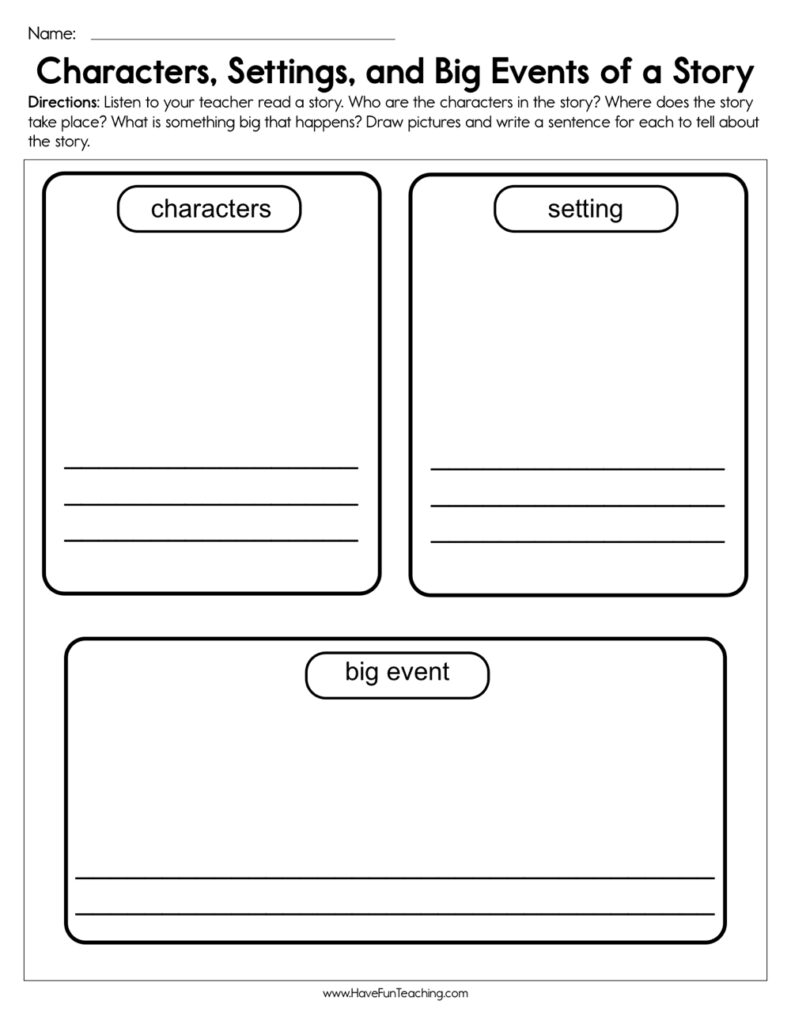
Characters, Settings, and Big Events Worksheet
A characters, settings, and big events worksheet for 1st Grade: students read a short story, then draw and write the characters, setting, and big event in a simple organizer. Answer key included for quick, no-prep story elements practice.
$6.97
Or free with a membership — members pay $3.33/mo for all 10,000+ resources. See plans
Want this one free?
Tell us where to send it and it’s yours — no card, no catch.
One free resource per teacher. We’ll also send free teaching ideas each week — unsubscribe anytime.
Teaching is easier with a membership
Unlimited printables, games & videos for PreK–6th — for your classroom or homeschool. Cancel anytime.
Start your 3-day free trial$0 today · cancel anytime · Instant access to 10,000+ resources
About this resource
Description
Every story a child reads is built from the same three parts: the characters who are in it, the setting where it happens, and the big events that move it along. First graders who can name those parts can retell a story, answer questions about it, and get ready for the comprehension work waiting for them in second grade and beyond. This characters, settings, and big events worksheet gives them a clear, picture-friendly place to do exactly that, one story part at a time.
This story elements graphic organizer worksheet opens with a short original story about two friends, a red ball, and a walk to the park. Students read the story on the first page, then turn to the organizer and fill in three labeled boxes: characters, setting, and big event. Each box has a large open space for a drawing and solid writing lines underneath for a sentence, so children show what they understood twice — once with a picture and once in their own words. Read the story aloud together the first time through, then let students work the organizer independently or with a partner.
What’s Included
- 1 print-ready PDF worksheet
- Answer key
- 1 original on-grade short story with a full-color illustration
- 3 story-element boxes — characters, setting, and big event — each with a drawing space and writing lines
There are three reasons this resource works so well for young readers. First, it separates one big job into three small ones, so a child who feels stuck on “What was the story about?” still has an easy entry point. Second, the drawing space lets children who are still building writing stamina show their thinking before they have to spell it, which keeps the focus on comprehension instead of handwriting. Third, the story on the page is short and written right at a first-grade reading level, so students practice the characters, settings, and big events worksheet skills with a text they can actually decode on their own.
Teachers and parents can stretch this activity in a few easy ways. Use the same organizer with a favorite picture book and compare the two sets of answers. Cut the finished boxes apart and have students put them back in order as they retell the story. Turn it into a partner game where one child describes a character and the other guesses who it is. You can also keep a stack of blank copies in a reading center all year, so every new book gets its own story map.
Related Resources
What teachers say
Reviews
You must be logged in to post a review.
A print-and-go Character and Settings Worksheet that helps 1st graders draw and describe the main character and the setting of any story they choose. Flexible enough for guided reading, independent reading, or a bedtime book at home.
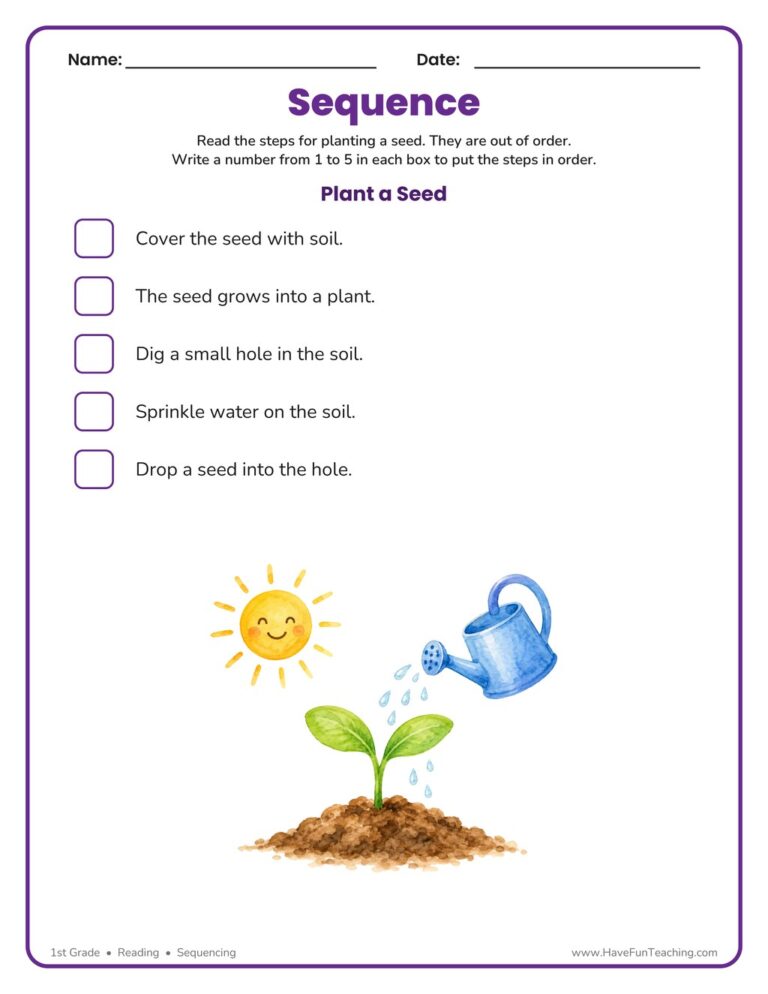
The Plant a Seed Sequence Worksheet helps 1st graders put five planting steps in order from first to last. Includes a complete answer key—perfect for quick, no-prep sequencing practice at home or school.
Plan a story from start to finish with this Sequence Writing Graphic Organizer Worksheet. First Grade writers name their story idea, then write what happens First, Next, Then, and Last on wide primary lines.
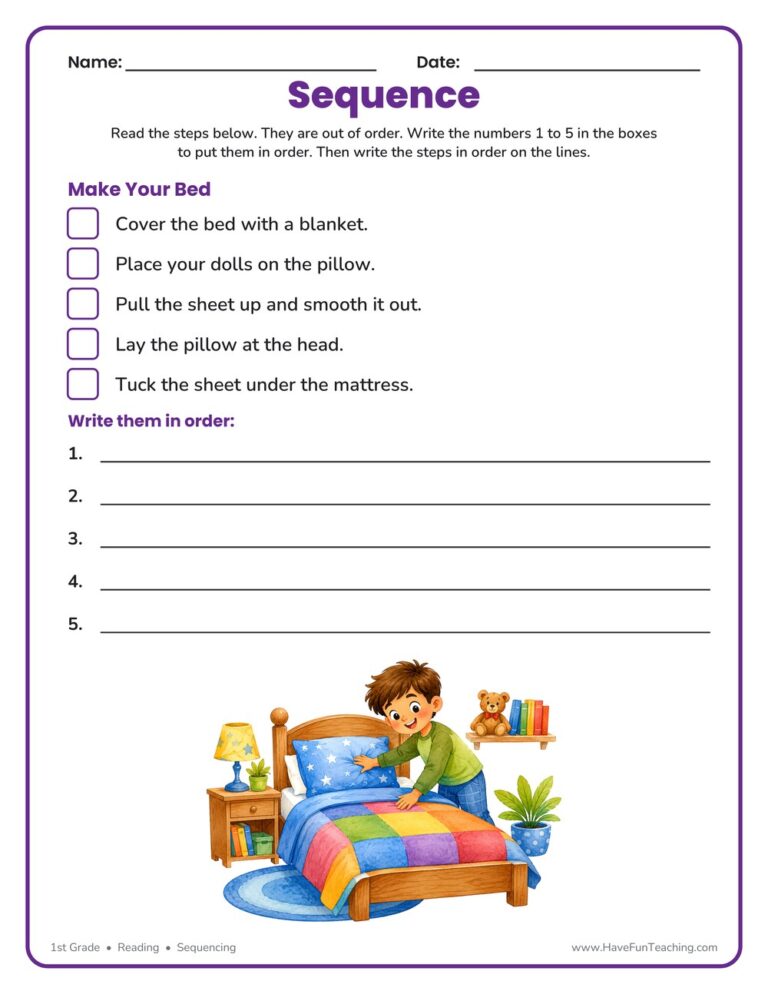
This Making a Bed Sequence Worksheet has 1st graders order five steps, number the boxes 1 to 5, and rewrite them in sequence. Answer key included — a fun, no-prep way to practice sequencing.

This Asking Questions About Pictures Worksheet gives 1st Grade students an illustrated scene, four fill-in-the-bubble questions, and room to write a question of their own. Answer key included, so checking takes seconds.
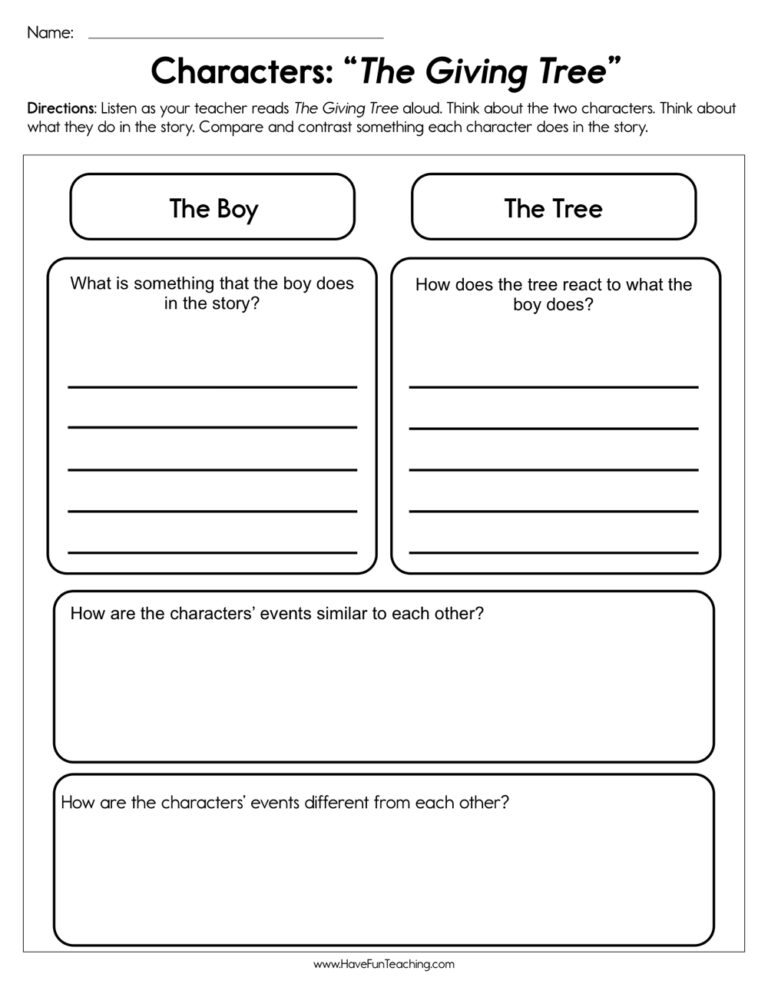
Using Characters, Settings, and Big Events Worksheet, students draw pictures and write a sentence for each to tell about the story elements in a book.
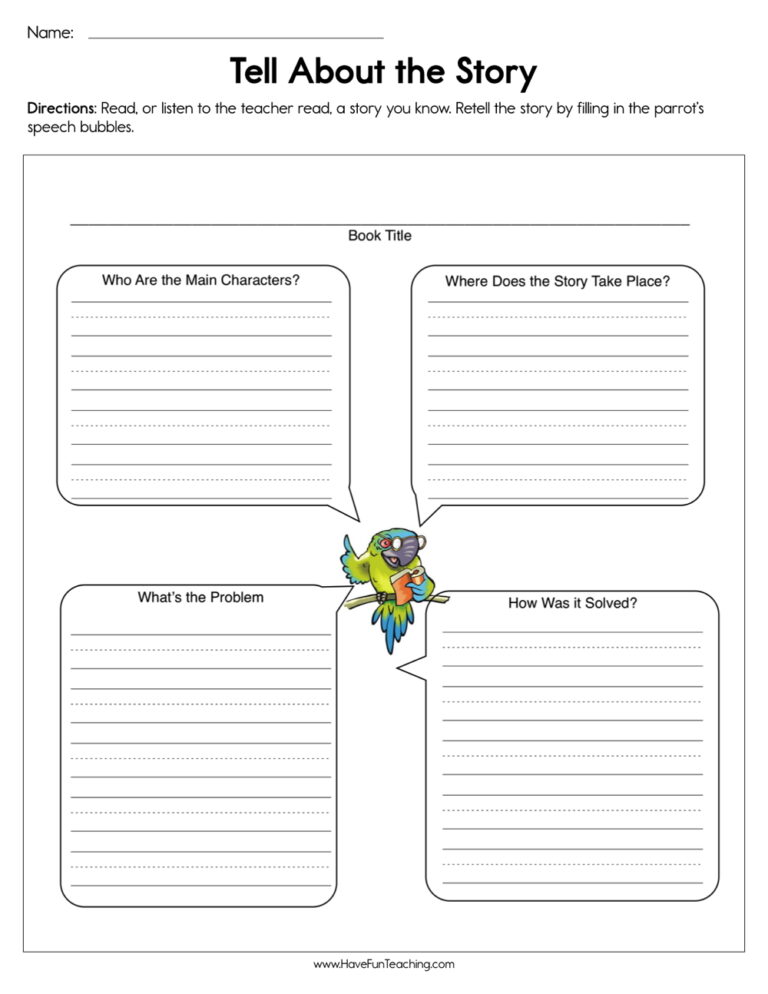
Use this Tell About the Story Worksheet after any book your 1st Grade readers choose. They write the title, then fill four boxes for characters, setting, problem, and ending to retell what they read with confidence.

Using Feeling Words Activity, students read Amy Goes to First Grade to find words and phrases that describe Amy's feelings on the first day of school.
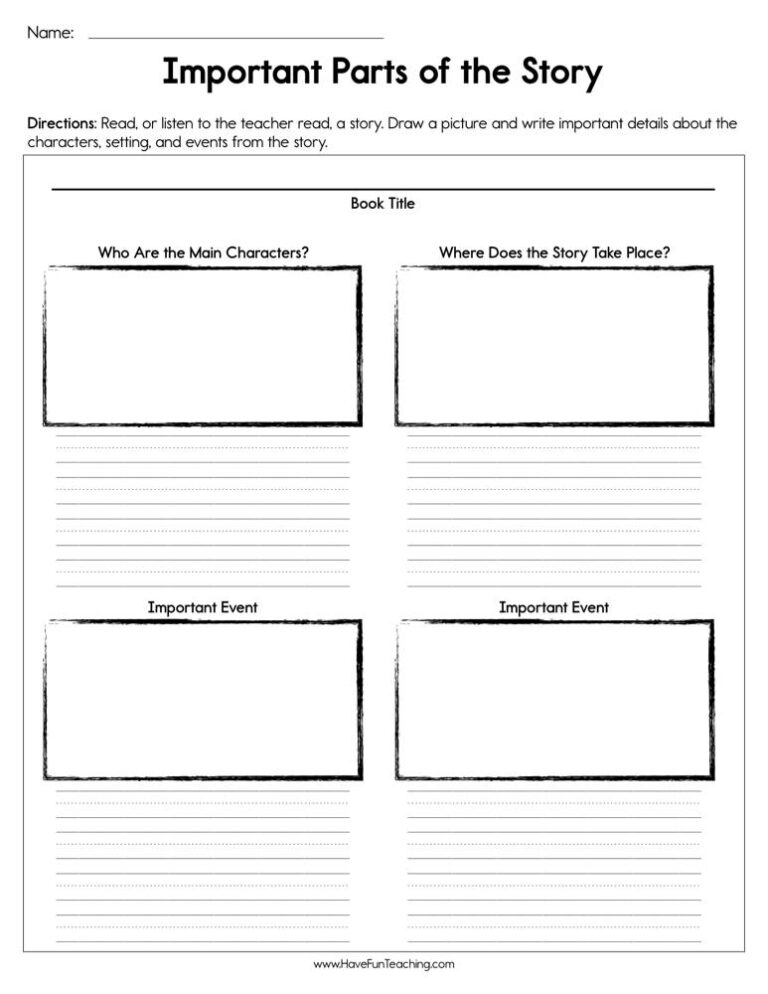
Use this Important Elements of the Story Worksheet to help first grade readers name the characters, setting, and events in an original short story. Includes five questions and an answer key.

This Telling About the Story Worksheet gives 1st graders four boxes to retell any book they read - characters, setting, problem, and solution - turning every story into clear, confident writing practice.
Using this Story Elements Song (MP3), your students learn about how to find examples of story elements in order to build comprehension as they read.
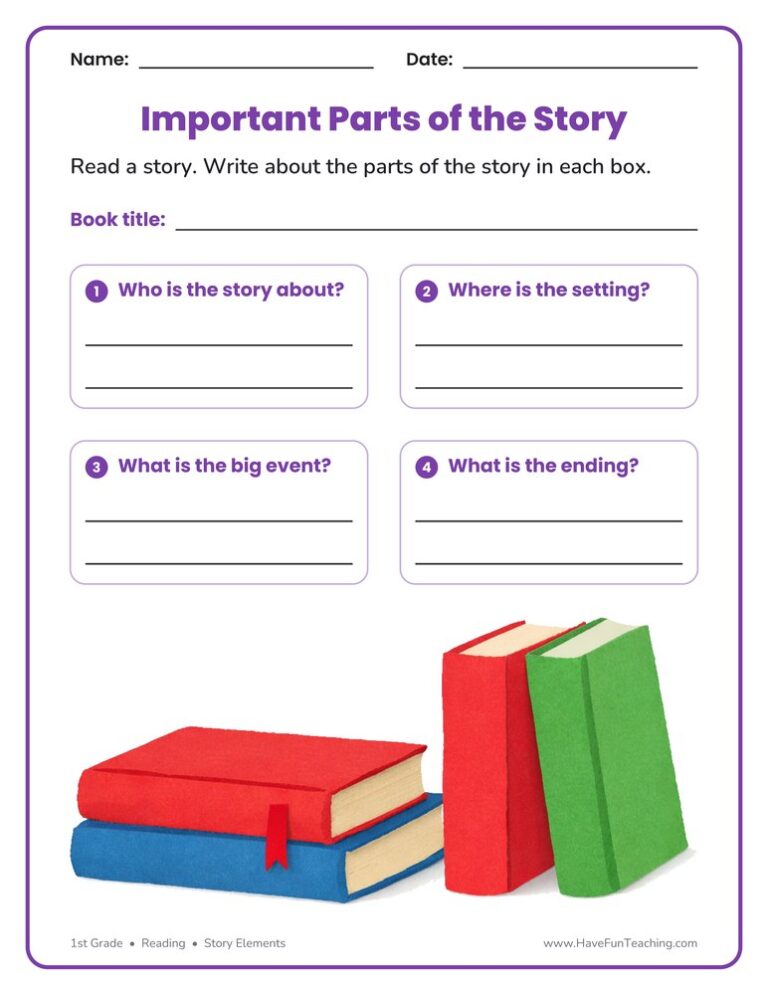
This Important Parts of the Story Worksheet gives 1st Grade students four labelled boxes, so every child names the characters, the setting, the big event, and the ending of any book they read.




Reviews
There are no reviews yet