
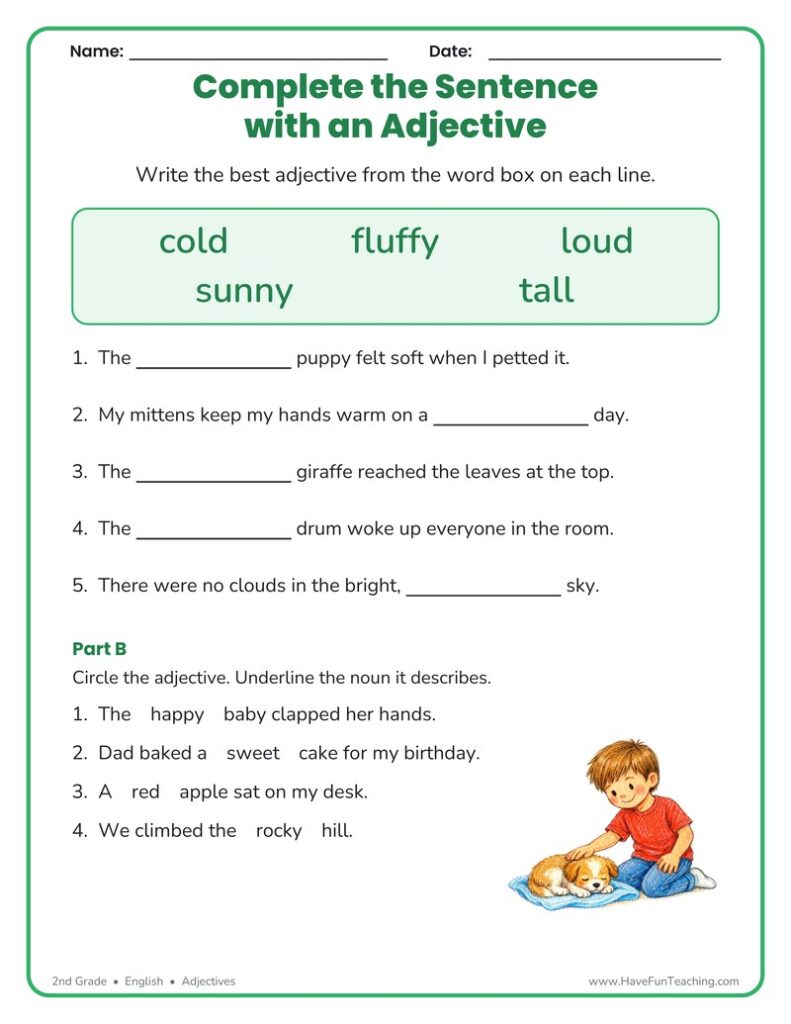
Complete the Sentence with an Adjective Worksheet
This Complete the Sentence with an Adjective Worksheet gives 2nd Grade students five word-box sentences plus four circle-and-underline sentences. An answer key is included, so describing-word practice is ready in minutes.
$6.97
Or free with a membership — members pay $3.33/mo for all 10,000+ resources. See plans
Want this one free?
Tell us where to send it and it’s yours — no card, no catch.
One free resource per teacher. We’ll also send free teaching ideas each week — unsubscribe anytime.
Teaching is easier with a membership
Unlimited printables, games & videos for PreK–6th — for your classroom or homeschool. Cancel anytime.
Start your 3-day free trial$0 today · cancel anytime · Instant access to 10,000+ resources
About this resource
Description
Adjectives are the describing words that turn a plain sentence into a picture a reader can see. Second graders who can choose the right describing word write with more detail, read with sharper comprehension, and talk more precisely about the world around them. This Complete the Sentence with an Adjective Worksheet gives students focused practice choosing the one adjective that truly fits a sentence, instead of reaching for the first word that comes to mind.
This 2nd grade adjectives worksheet is built in two short parts so students stay confident from start to finish. In Part A, learners read five sentences and write the best adjective from the word box on each line, using clues in the sentence to decide whether a puppy is fluffy, a morning is cold, or a giraffe is tall. In Part B, they circle the adjective in a sentence and underline the noun it describes, connecting the describing word back to the naming word it belongs to. Read the directions together, model the first item aloud, then let students finish independently or with a partner.
What’s Included
- 1 print-ready PDF worksheet
- Answer key
- 5 word-box sentence completions and 4 circle-the-adjective, underline-the-noun sentences
This Complete the Sentence with an Adjective Worksheet helps children in three ways. First, the word box removes spelling worry, so students can spend their thinking on meaning rather than letters. Second, every sentence has exactly one adjective that fits, so learners have to read for clues instead of guessing, which builds careful reading habits. Third, pairing each adjective with the noun it describes gives students the grammar vocabulary they need for stronger sentences in their own writing.
For more practice, keep an adjective jar on your desk and pull one describing word each morning for students to use in a sentence about the day. Play a quick guessing game where one child names an object in the room and classmates add adjectives until the object is easy to picture. During read-aloud time, pause and ask which describing word the author chose and why another word would change the meaning. At home, families can describe the weather, a meal, or a pet using three adjectives before dinner, or hunt for describing words on cereal boxes and street signs.
Related Resources
What teachers say
Reviews
You must be logged in to post a review.
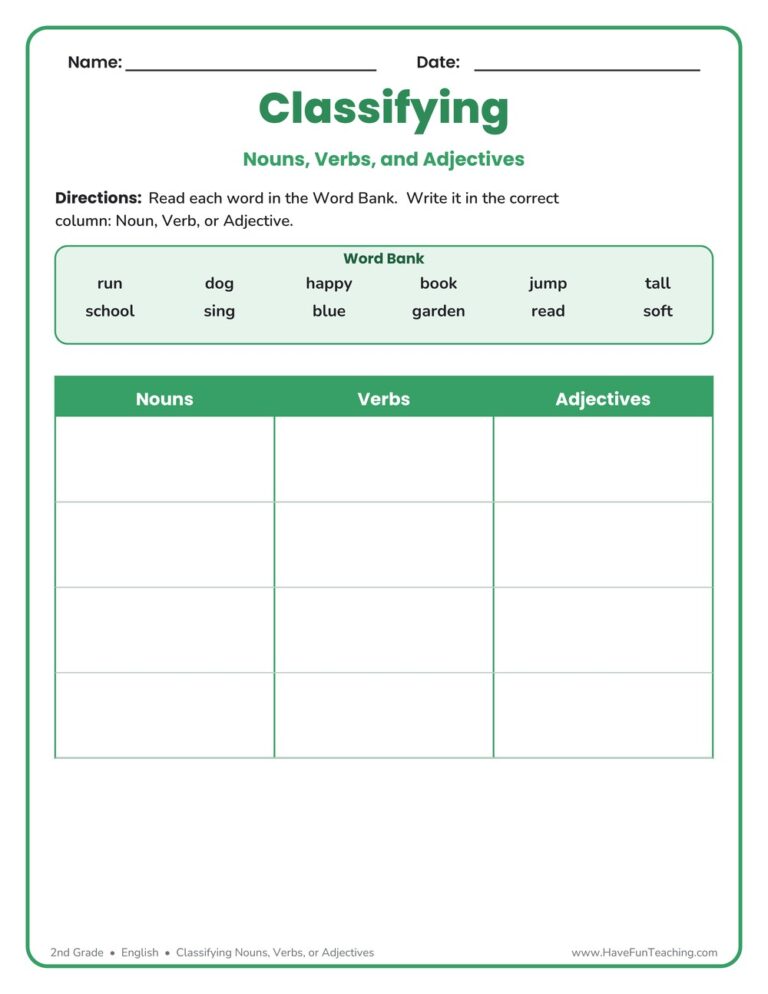
Sort twelve everyday words into nouns, verbs, and adjectives with this Classifying Nouns, Verbs, or Adjectives Worksheet for 2nd grade. Includes a complete answer key for quick, no-prep grammar practice.
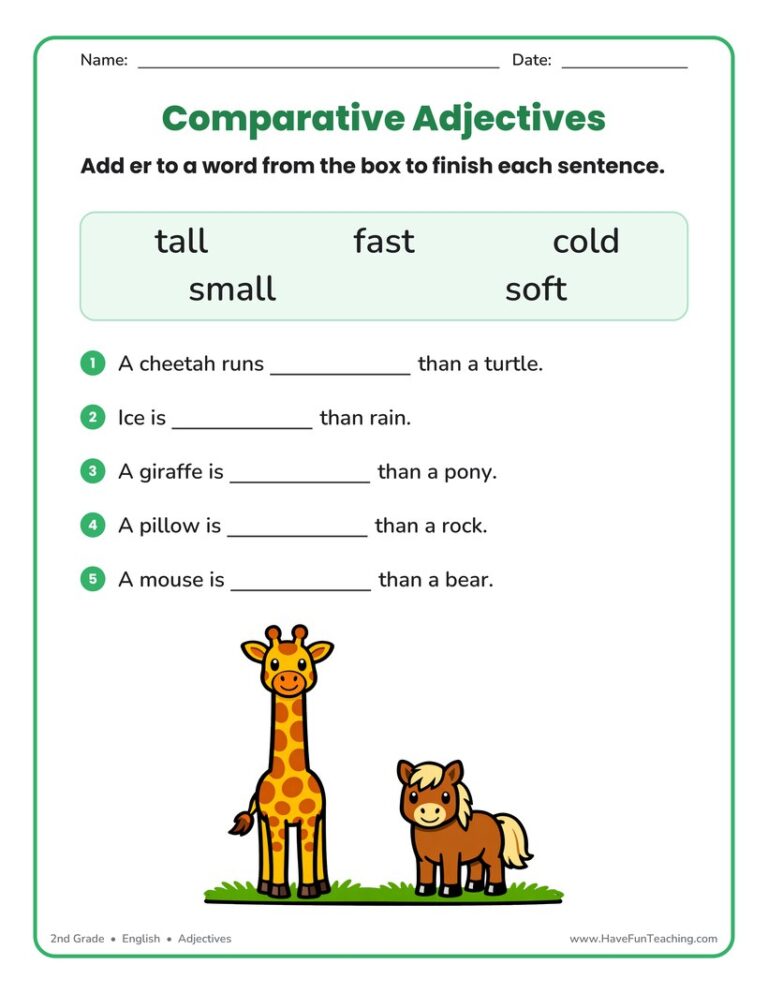
This Comparing Adjectives Fill in Blank Worksheet asks 2nd Grade students to add er to a word from the box and finish five comparing sentences. Answer key included for quick checking.

Using Experience Narrative Worksheet, students dictate, write, or draw about a time in their lives to give descriptive information.

This Adding Adjectives Worksheet gives 2nd grade students fun practice finding, choosing, and writing describing words in sentences. An answer key is included, so learning to use adjectives feels clear and rewarding.

This Adjectives Fill in the Blank Worksheet gives 2nd Grade students practice choosing, circling, and writing describing words in real sentences. An answer key is included, so checking work takes seconds.

Using Adjective Flash Cards, students describe pictures using adjectives to build vocabulary and writing skills.

This Adjectives Pictures Worksheet asks 2nd graders to choose the adjective that fits each picture, then write two describing words of their own. Answer key included, so grading takes seconds.

This Adjectives Puppy Story Worksheet has 2nd graders read a short story about a puppy, circle all 8 adjectives, then match each one to the noun it describes. Answer key included for fast, no-prep grammar practice.

This descriptive words worksheet gives 2nd grade students a word box of four adjectives to finish picture sentences, then four more sentences to hunt the adjective in. An answer key is included, so children can check their own work.

This Adjectives Sort Worksheet asks 2nd graders to file twelve describing words under Feelings, Tastes, or Sizes. Answer key included, so grammar practice is ready in one print with no prep.

Students rewrite sentences by adding a describing word in this Adjectives Sentence Rewriting Worksheet for 2nd Grade. An answer key is included, so checking work takes seconds.
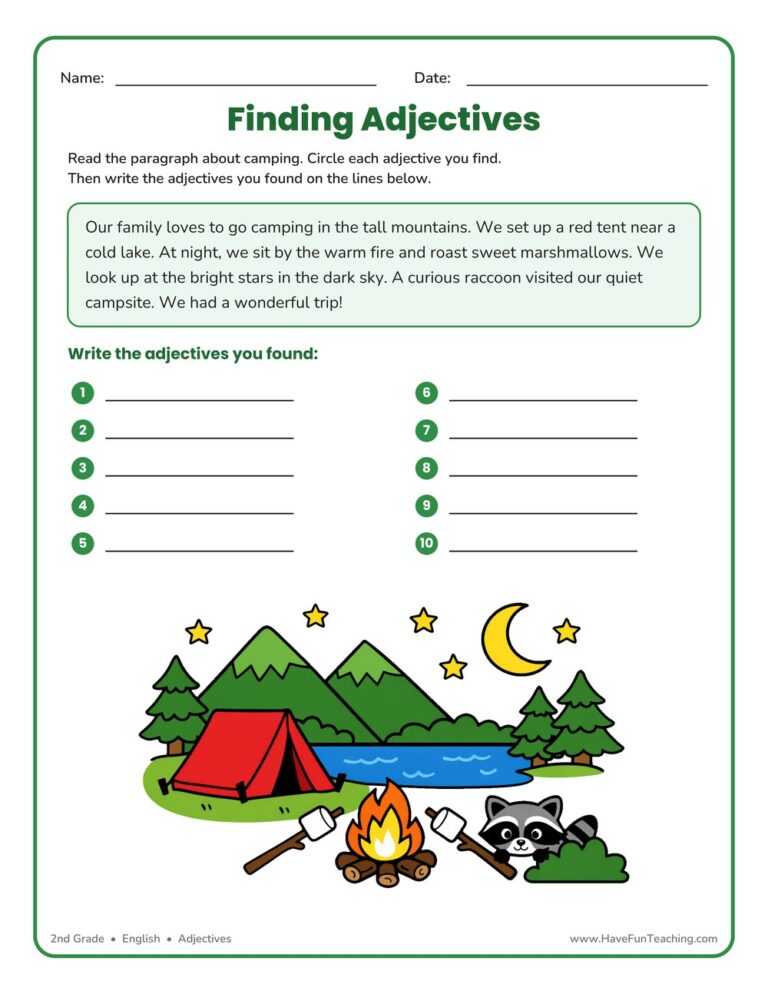
This finding adjectives camping worksheet has 2nd graders read a camping paragraph, circle every adjective, and list all ten. Answer key included for fast, no-prep grammar practice at home or school.

Reviews
There are no reviews yet