

Drawing Moon Phases Worksheet
This Drawing Moon Phases Worksheet gives 4th grade students eight circles to shade, one for every phase of the moon in order, plus two questions to explain what they see. An answer key is included.
$6.97
Or free with a membership — get this and 10,000+ resources. See plans
Want this one free?
Tell us where to send it and it’s yours — no card, no catch.
One free resource per teacher. We’ll also send free teaching ideas each week — unsubscribe anytime.
Teaching is easier with a membership
Unlimited printables, games & videos for PreK–6th — for your classroom or homeschool. Cancel anytime.
Start your 3-day free trialNo commitment · Cancel anytime · Instant access to 10,000+ resources
About this resource
Description
The Moon is the one object in the sky every child has already noticed changing, and that noticing is exactly what a drawing moon phases worksheet turns into science. Fourth graders can name a crescent long before they can explain one, and the gap between the two is the lesson: the Moon does not grow or shrink, and nothing takes a bite out of it. Sunlight lights half of it all the time, and what changes is how much of that lit half faces us as the Moon travels around Earth. Drawing the shape is what makes the pattern stick, because a student who has shaded eight circles in order has built the cycle with their own hand rather than memorised eight names.
This 4th grade earth science worksheet opens with a five-sentence fact box written at a fourth-grade reading level, covering why the Moon has no light of its own, why one half always stays dark, and what waxing and waning mean. Eight matching cards follow, one for each phase in true cycle order — New Moon, Waxing Crescent, First Quarter, Waxing Gibbous, Full Moon, Waning Gibbous, Last Quarter and Waning Crescent. Every card holds an identical empty circle, so nothing on the page hints at which answer belongs where; students shade the dark part themselves. Two written questions close the sheet, asking students to explain the difference between waxing and waning and why the Moon seems to change shape each month. The answer key shows every phase shaded correctly, with the sunlit half in pale yellow and the dark half in charcoal, so marking takes seconds.
What’s Included
- 1 print-ready PDF worksheet
- Answer key
- 1 five-fact reading box, 8 phase-drawing cards, and 2 written questions
Three things make this drawing moon phases worksheet worth the page. First, the eight circles are printed in the real order of the cycle, so the sheet teaches the sequence and the shapes at the same time instead of testing them separately. Second, shading is a low-cost answer: a student who is still shaky on the vocabulary can show what they understand with a pencil, which keeps the science visible even when the words are not there yet. Third, the two closing questions ask for an explanation rather than a label, so the sheet moves from recognising a crescent to saying why one appears.
Read the fact box aloud together first, and ask students to point at the words waxing and waning before anyone picks up a pencil. A flashlight, a foam ball and a darkened room turn the whole sheet into a demonstration: hold the ball at arm’s length, turn slowly, and the eight shapes appear one after another. Round cookies with bites taken out work just as well and take less setting up. Afterwards, send students outside for a month with a calendar and have them sketch the Moon each clear night, then lay their sketches beside this sheet and find the match. Pair it with a Moon phases calendar for a longer observation project.
Related Resources
What teachers say
Reviews
You must be logged in to post a review.

A layers of the Earth definition worksheet for 4th grade where students match each layer to its description and label a cross-section diagram. Answer key included for quick, no-prep earth science practice.
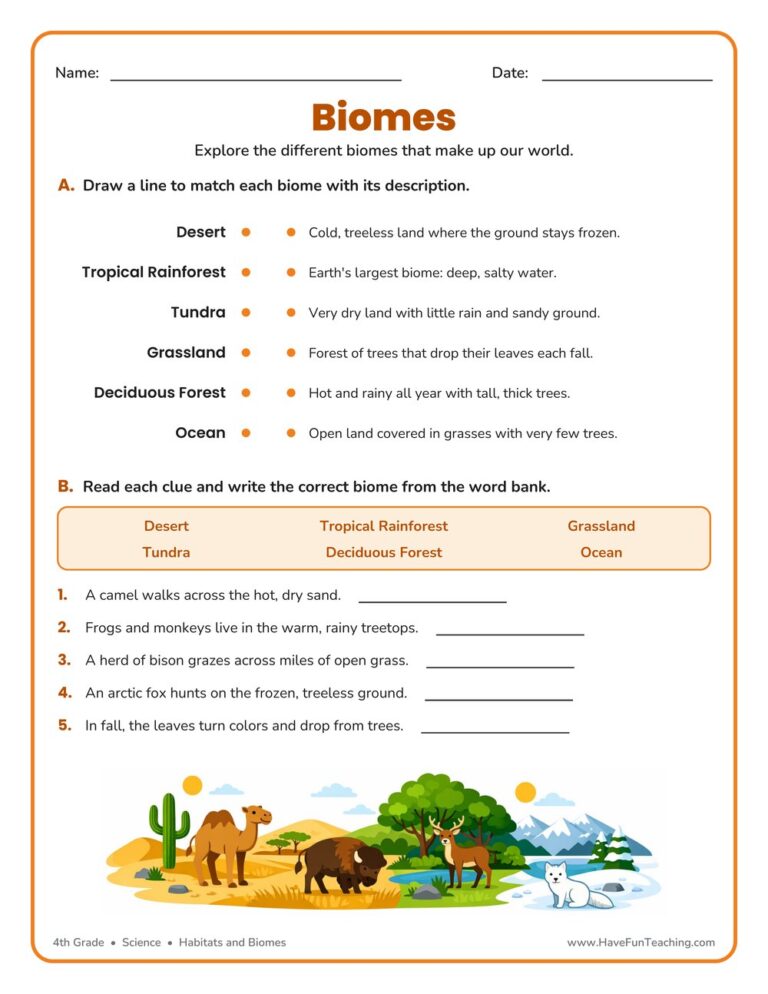
This Biomes Worksheet helps 4th grade students match major biomes to their climates and identify each one from real-world clues. Includes an answer key for fast, no-prep science practice at home or school.
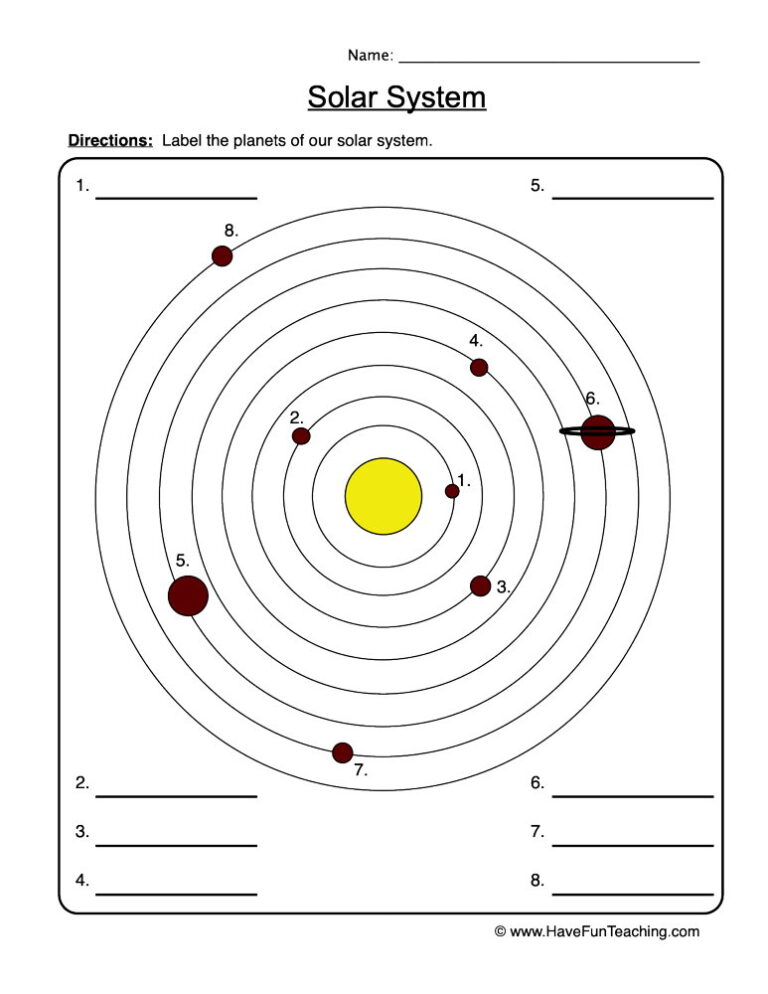
This solar system diagram worksheet has 4th graders label all eight planets in order from the Sun, then answer four questions about the diagram. An answer key is included, so review takes only minutes.
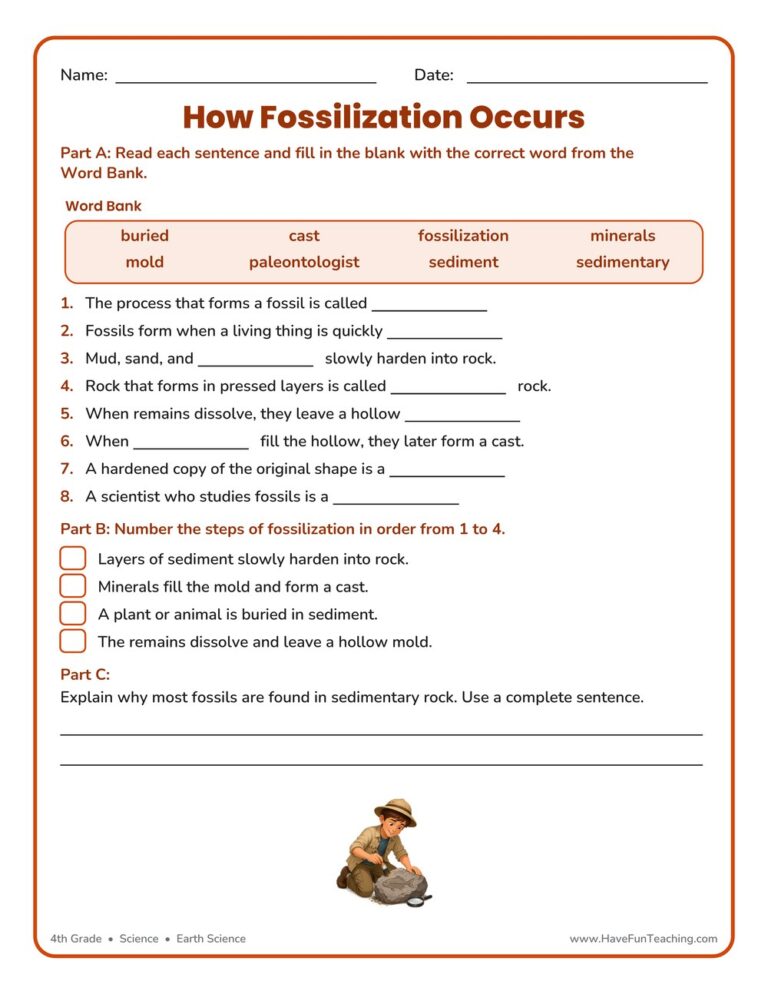
This Fossils Fill in the Blank Worksheet gives 4th grade students hands-on earth science practice with fossilization, sedimentary rock, and key vocabulary. Answer key included to make review quick and easy.

This Earth Layers Worksheet has 4th graders label a colorful cross-section of the planet, then name each layer from a short description. An answer key is included, so it is ready to print and teach today.

Our Natural Resources Worksheet asks 4th graders to sort eight resources into renewable and nonrenewable columns, then explain the difference in writing. Answer key included — easy no-prep Earth Science practice.

A weathering worksheet that helps 4th graders sort mechanical and chemical weathering, master key earth science vocabulary, and explain their thinking. Answer key included for fast, no-prep review.
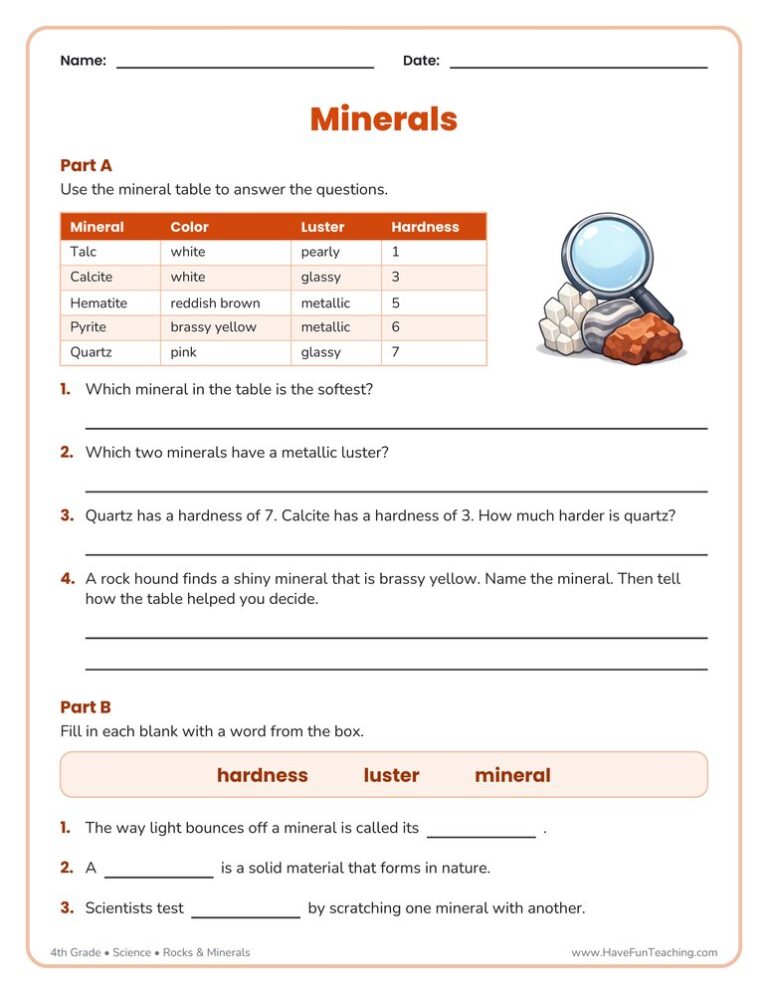
This Rocks & Minerals Worksheet gives 4th graders a real property table of talc, calcite, hematite, pyrite, and quartz to read and reason from. Answer key included, so mineral identification practice takes no prep at all.

While watching the Creation Song, students learn about the days of Creation perfect for Sunday school, kid's church, and Bible lessons for kids. Bring joy and understanding into your kid's church, Sunday school, and classroom with this song about the days of Creation. Your kids will love a new way…

The Natural Resources Sorting Worksheet has 4th graders sort a word bank of twelve resources into renewable and non-renewable columns, then write a sentence. Answer key included for easy Earth Science practice.
Using thisMoon Song (MP3), students learn about the phases of the moon through catchy, interesting lyrics.

A Weather Instruments Match Worksheet for 4th Grade: students match six weather tools to what they measure, pick the right instrument for real situations, and explain their thinking. Answer key included for fast, no-prep science practice.
Reviews
There are no reviews yet