

Matching Habitats Worksheet
This matching habitats worksheet has 3rd graders link five animals to the habitats they live in, then explain two animal adaptations in writing. Answer key included for fast, no-prep science practice.
$6.97
Or free with a membership — members pay $3.33/mo for all 10,000+ resources. See plans
Want this one free?
Tell us where to send it and it’s yours — no card, no catch.
One free resource per teacher. We’ll also send free teaching ideas each week — unsubscribe anytime.
Teaching is easier with a membership
Unlimited printables, games & videos for PreK–6th — for your classroom or homeschool. Cancel anytime.
Start your 3-day free trial$0 today · cancel anytime · Instant access to 10,000+ resources
About this resource
Description
A habitat is the place where a plant or an animal finds everything it needs to stay alive — food, water, shelter, and room to grow. Third graders who can name a habitat and describe what makes it different from the one next door are building the foundation for every later lesson on ecosystems, adaptation, and food chains. This matching habitats worksheet gives students a clear, hands-on way to practice that skill: they look at a real animal, read a short description of a habitat, and decide which place that animal calls home. Because each clue names a feature of the environment rather than the animal itself, students have to reason from evidence instead of guessing from a picture alone.
The worksheet opens with a matching activity. Five illustrated animals — a camel, a polar bear, a toucan, a clownfish, and a zebra — sit on the left, and five habitats sit on the right, each with a one-sentence clue such as “This dry, sandy land gets very little rain.” Students draw a line from each animal to the habitat that fits. The habitats are deliberately printed out of order, so the answers cannot be found by lining the columns up. Below the matching section, two written questions ask students to explain how an animal’s body helps it survive where it lives, turning this 3rd grade environments worksheet into a short writing task as well as a science review. Use it as independent practice, as a warm-up before a unit on biomes, or as a quick check for understanding.
What’s Included
- 1 print-ready PDF worksheet
- Answer key
- 5 animal-to-habitat matching items and 2 written-explanation questions
This resource helps kids learn the skill in three ways. First, it pairs a picture with a written clue, so students who are still building science vocabulary can connect a new word like tundra or coral reef to something they can actually see. Second, every clue describes the environment — rainfall, temperature, plant life, water — which trains students to sort habitats by their real features instead of memorizing animal-place pairs. Third, the two explanation questions at the bottom push past recall: a student who writes about why thick fur would be a problem in the desert is already reasoning about adaptation. Working through this matching habitats worksheet gives you a quick, honest picture of who understands habitats and who still needs support.
Teachers and parents can stretch the lesson well past the page. Ask students to pick one habitat and build a shoebox diorama with the plants, weather, and animals that belong there. Play a guessing game in which one student describes a habitat in three sentences and the rest name it. Take a walk outside and list the habitats hiding in your own neighborhood — under a log, in a pond, at the top of a tree — and talk about which animals live in each. Older students can research one animal from the worksheet and report on a single body feature that helps it survive. Each of these activities reinforces the same core idea: living things are matched to the places that meet their needs.
Related Resources
What teachers say
Reviews
You must be logged in to post a review.
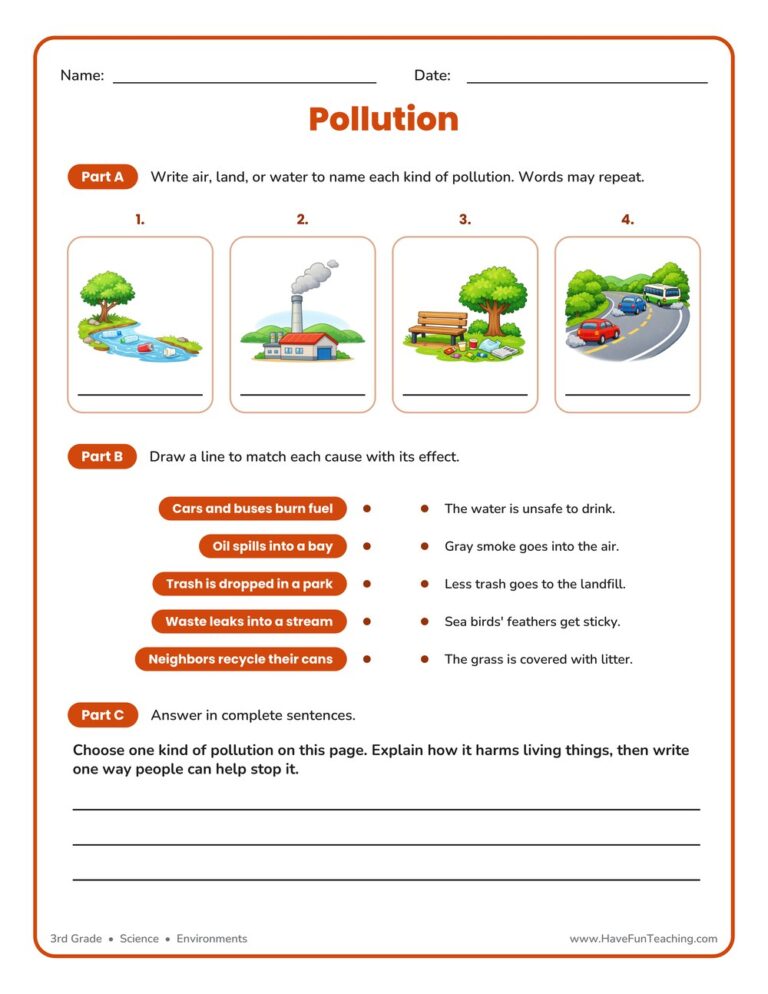
This pollution worksheet helps 3rd graders name air, land, and water pollution, match each cause with its effect, and explain one way people can help. Answer key included for no-prep science practice at school or home.
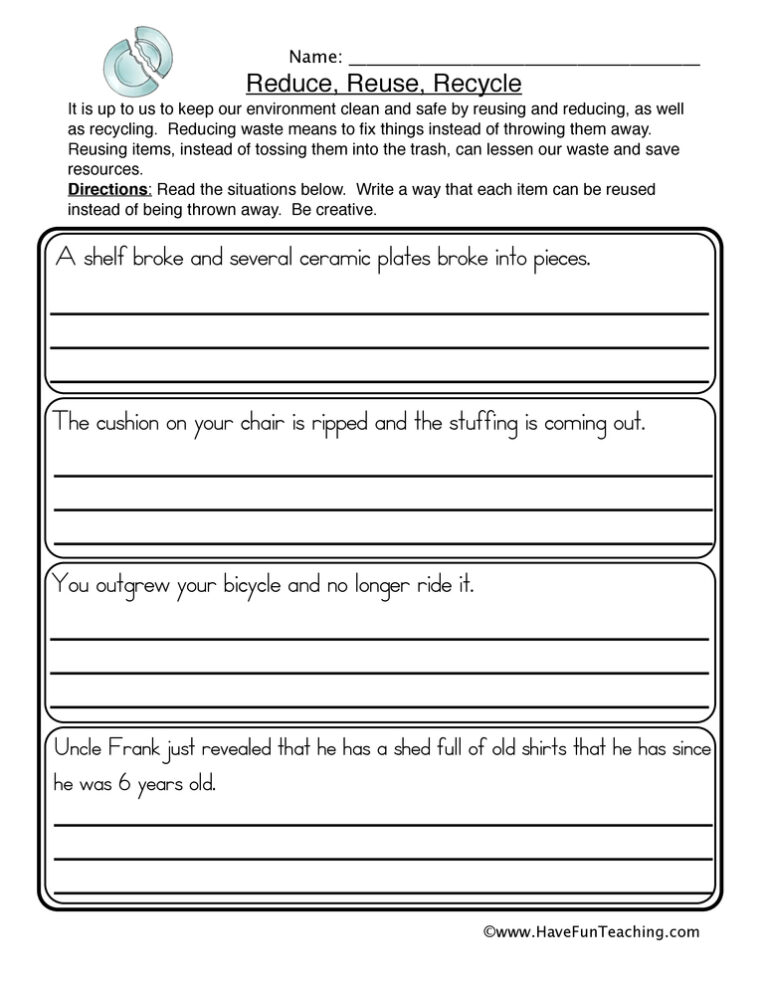
Read six real-life situations and decide whether each one shows reducing, reusing, or recycling on this reduce, reuse, recycle scenarios worksheet for 3rd grade. Answer key included, so Earth Day science practice takes no prep.
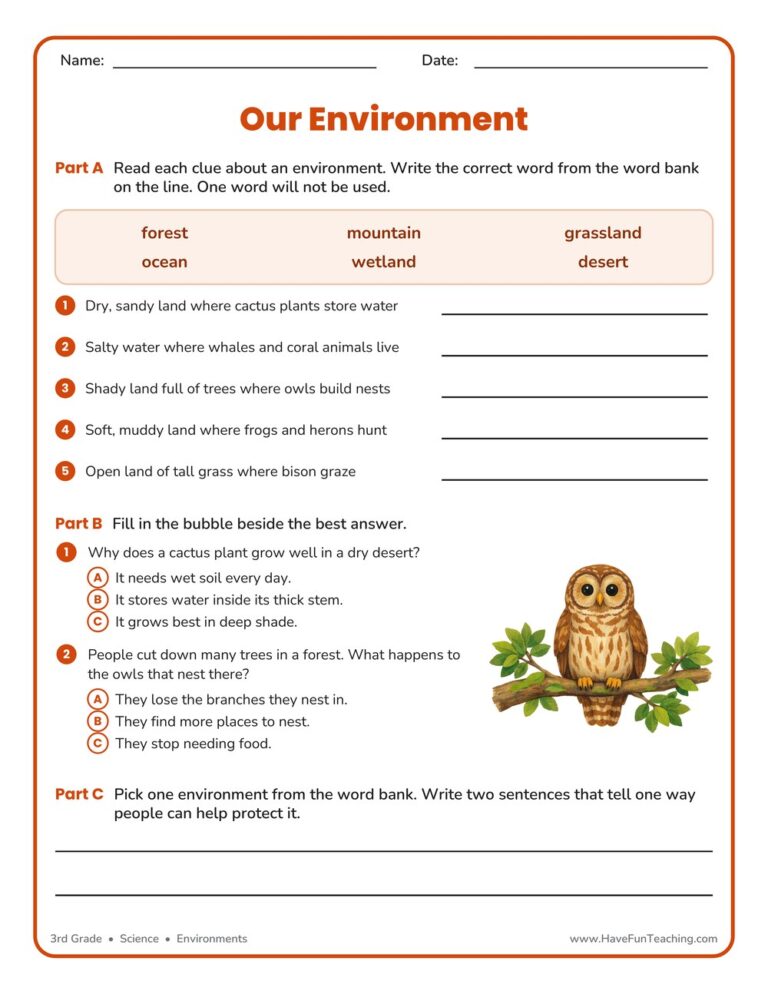
This Our Environment Worksheet asks 3rd graders to name five environments, answer two habitat questions, and write about protecting nature. An answer key is included for fast, no-prep science practice.
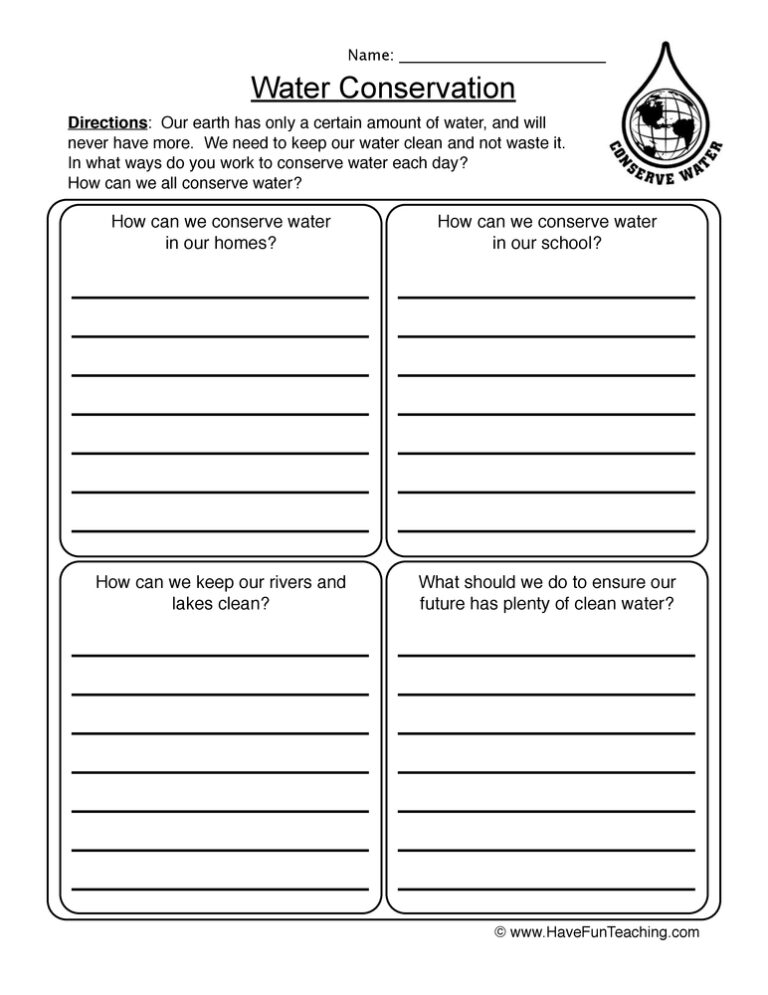
Students use this Water Conservation Worksheet to define key terms, sort water-saving habits, and solve a two-step drip problem. Built for 3rd Grade, with an answer key included for fast, no-prep science practice.
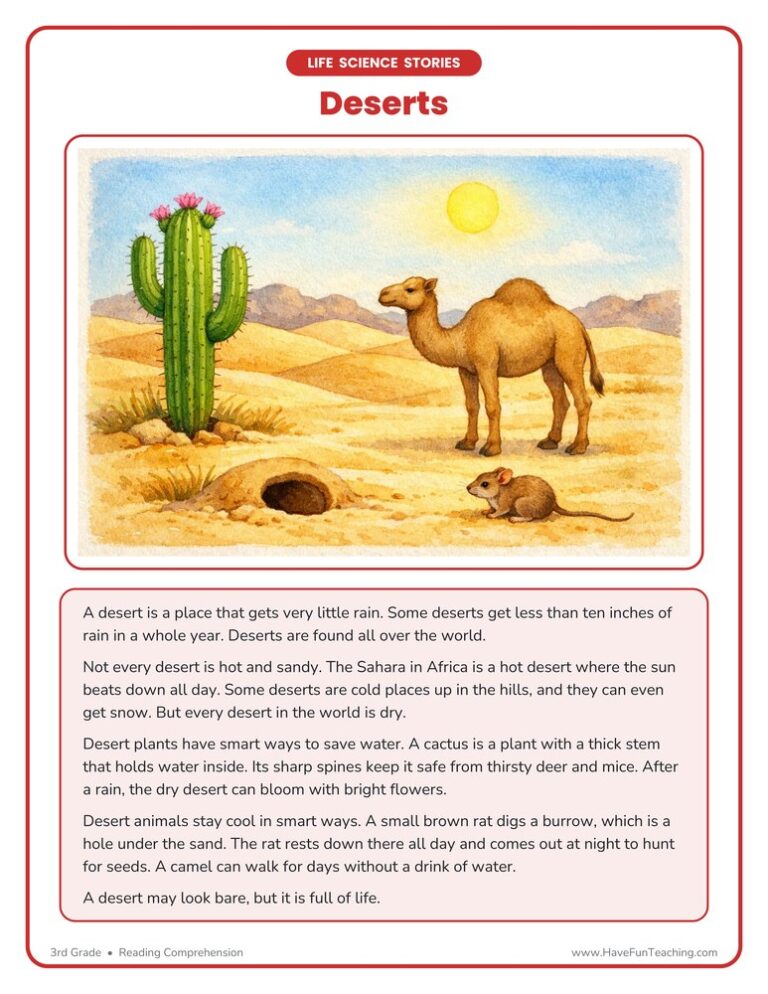
This Deserts Life Science Reading Comprehension Worksheet gives 3rd Grade readers a short nonfiction passage about hot and cold deserts, with comprehension questions and an answer key included, so science reading practice takes minutes to prep.

This animal habitats worksheet asks 3rd Grade students to match animals to their habitats, sort six animals into two environments, and explain one desert adaptation. An answer key is included for fast, no-prep science practice.
The Life Science Stories Reading Comprehension Digital Worksheet Collection has online digital worksheets for Google Classroom & online distance learning.
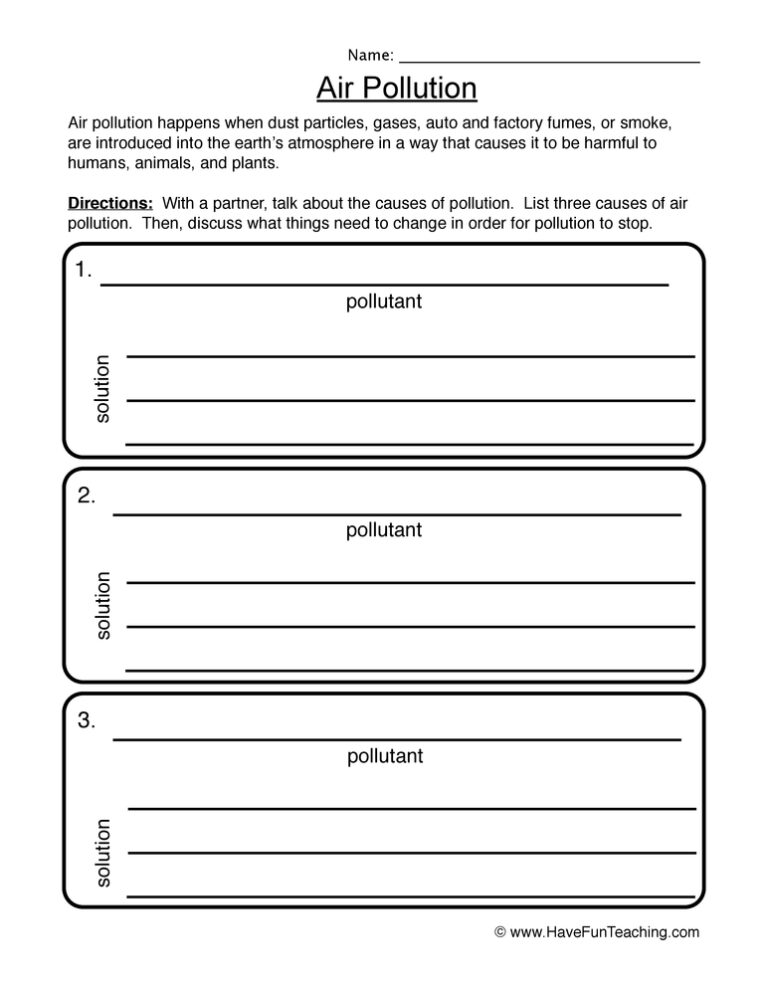
This Air Pollution Worksheet asks 3rd graders to mark six everyday actions D for dirty air or C for cleaner air, then explain one cause and plan one fix. Answer key included.

This Water Pollution Worksheet has 3rd Grade students sort pictures, finish sentences from a word box, and write about one way to keep rivers clean. Answer key included.
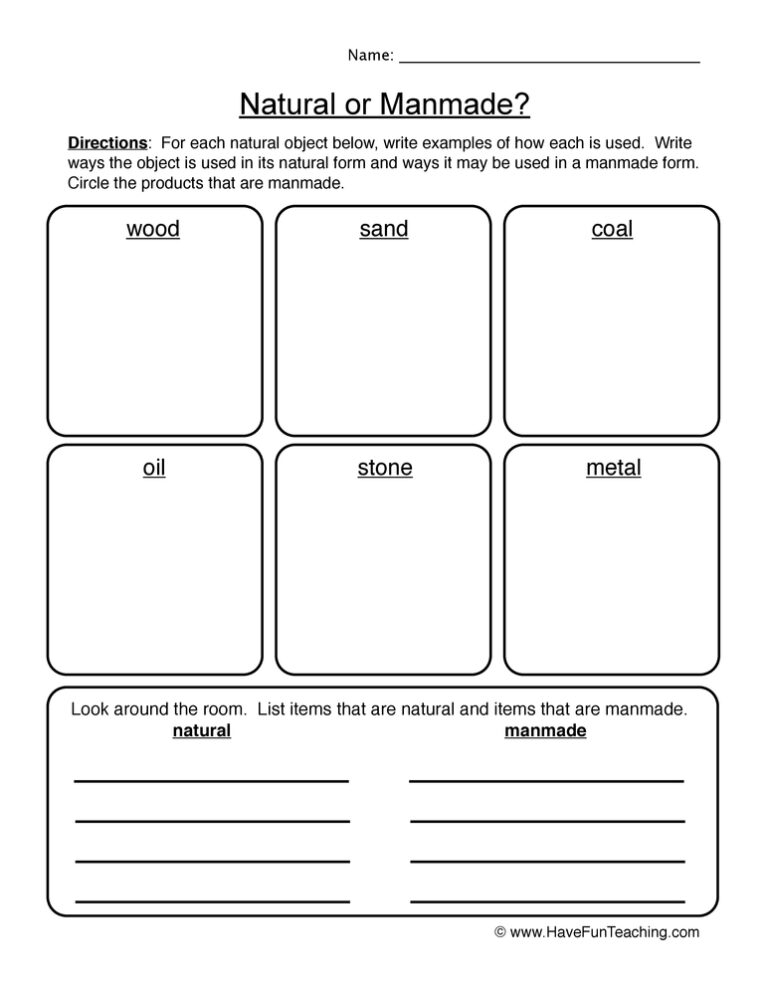
This natural man-made writing worksheet helps 3rd grade students sort everyday materials into natural and manmade groups, then find both kinds inside four short sentences. An answer key is included, so science practice is ready to print.
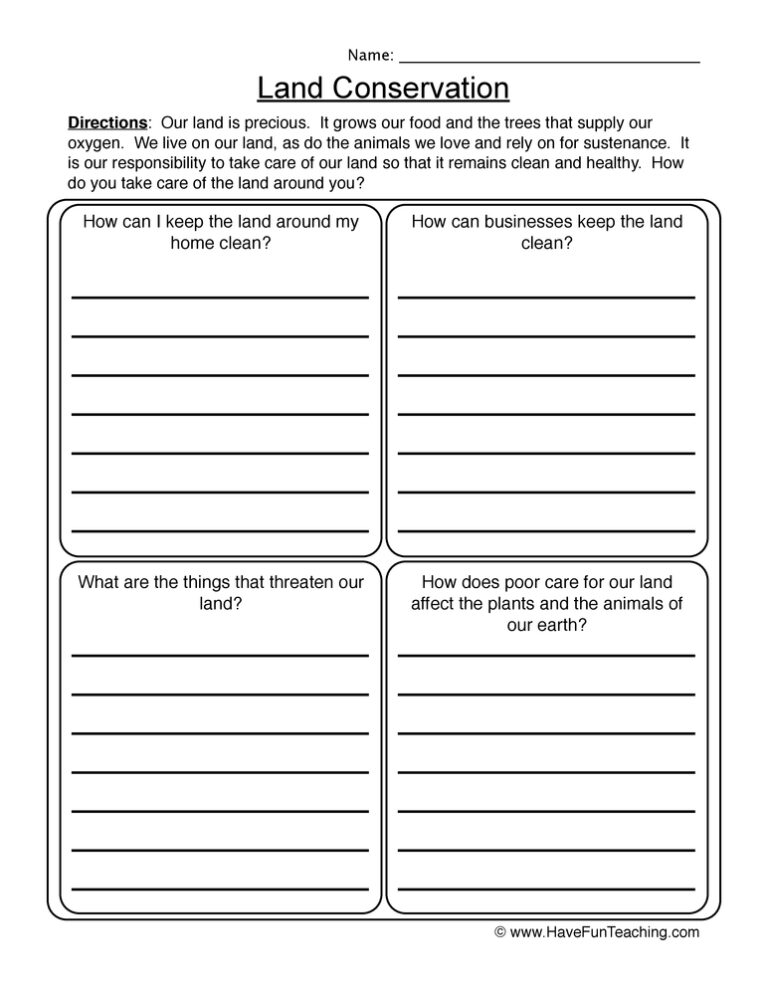
This land conservation worksheet helps 3rd graders learn earth science words, sort actions that protect or harm the land, and solve a clean-up word problem. An answer key is included for easy checking.

This desert plants worksheet asks 3rd graders to sort eight desert words into plants and animals, then find the plant and animal named in each sentence. An answer key is included for quick checking.
Reviews
There are no reviews yet