

Fantasy and Realism Story Elements Graphic Organizer
This fantasy and realism story elements worksheet has 3rd graders sort characters, settings and events into make-believe or real, then label story sentences. An answer key is included for quick checking.
$6.97
Or free with a membership — members pay $3.33/mo for all 10,000+ resources. See plans
Want this one free?
Tell us where to send it and it’s yours — no card, no catch.
One free resource per teacher. We’ll also send free teaching ideas each week — unsubscribe anytime.
Teaching is easier with a membership
Unlimited printables, games & videos for PreK–6th — for your classroom or homeschool. Cancel anytime.
Start your 3-day free trial$0 today · cancel anytime · Instant access to 10,000+ resources
About this resource
Description
This fantasy and realism story elements worksheet helps students tell the difference between make-believe and real life inside a story. Fantasy is a story part that could never happen, like a talking fox or a castle made of candy. Realism is a story part that could really happen, like a mail carrier or a trip to the city park. Readers who can sort the two understand the author’s choices and read fiction with sharper eyes.
The sheet begins with a word box of six story phrases. Students write each phrase in a chart that crosses the three big story elements, character, setting and event, with two columns labeled Fantasy and Realism. Then they read four sentences from a story and write fantasy or realism on the line for each one. This 3rd grade fantasy and realism worksheet works well as a mini-lesson check, a literacy center, homework or a quick review before a fiction unit.
What’s Included
- A word box of six story phrases
- A story elements chart with Character, Setting and Event rows and Fantasy and Realism columns
- Four story sentences to label as fantasy or realism
- An answer key on the second page
Why It Helps Kids
First, sorting each phrase twice, once by story element and once by fantasy or realism, builds careful two-step thinking. Second, naming characters, settings and events reinforces the core story elements students use in every book report. Third, judging whether an event could really happen trains readers to use what they know about the real world while they read.
Ideas for Teachers and Parents
After students finish this fantasy and realism story elements worksheet, have them read a favorite picture book and add one more fantasy and one more realism detail from it to the back of the page. You can also ask partners to invent a make-believe character and a real one, then trade and sort. For more practice, pair it with the resources below.
Related Resources
What teachers say
Reviews
You must be logged in to post a review.
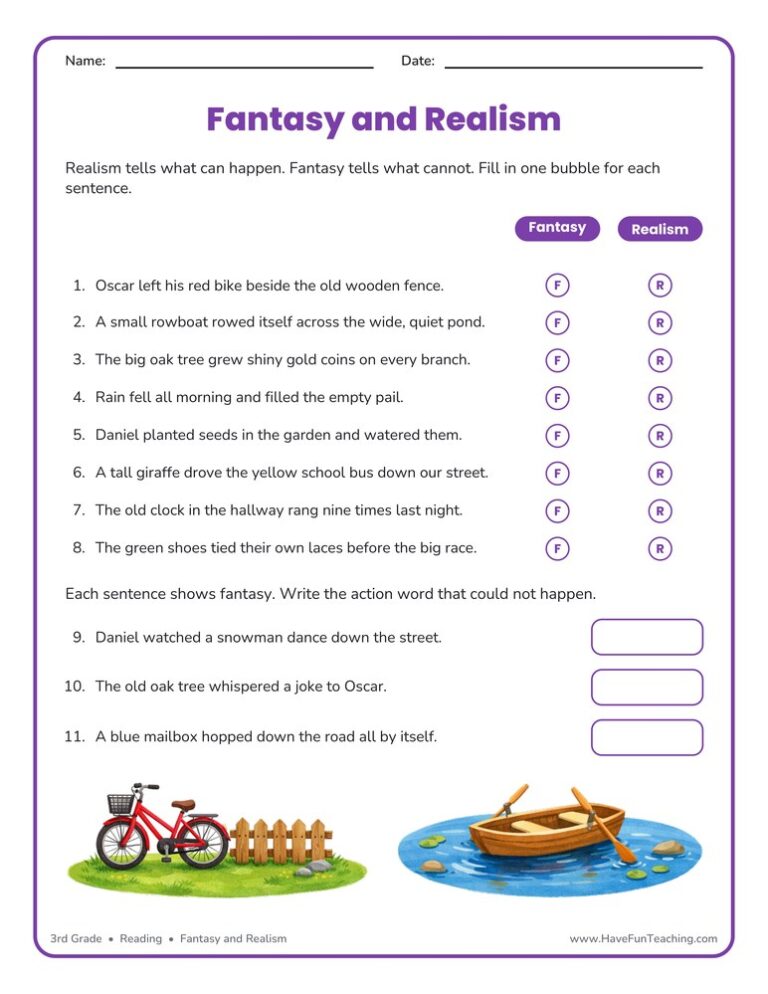
The Identifying Fantasy and Realism Worksheet has 3rd graders sort eleven sentences into real and not real, then write the word that could not happen. An answer key is included for quick checking.
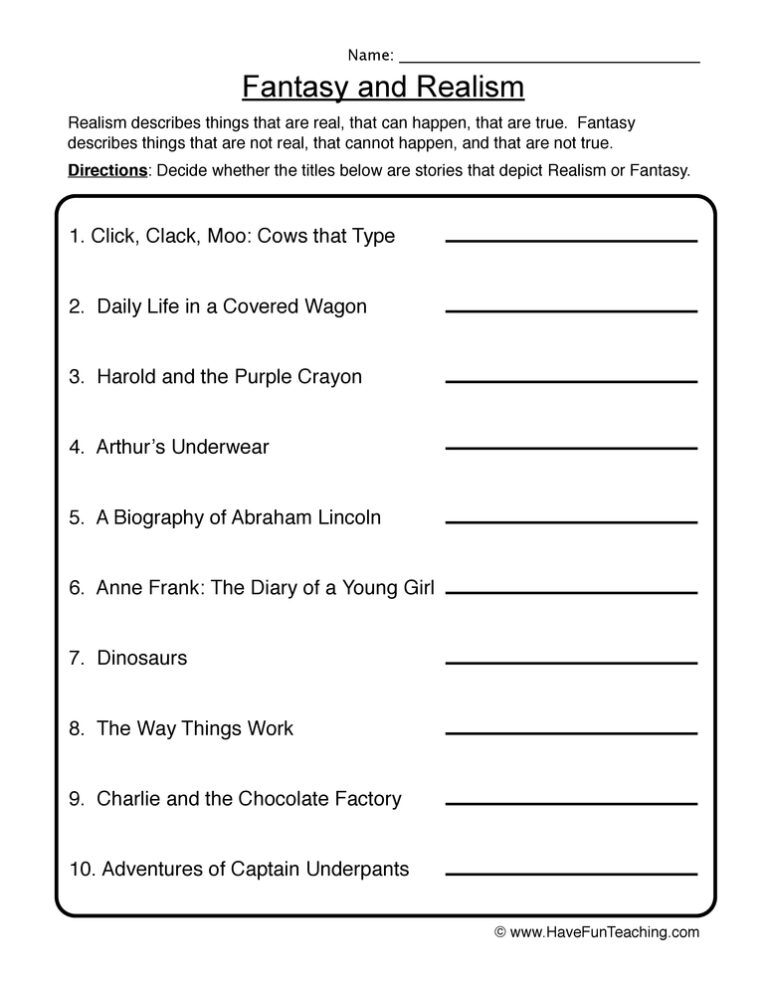
This fantasy and realism book titles worksheet has 3rd grade students sort six invented titles and explain one choice in writing. An answer key is included.
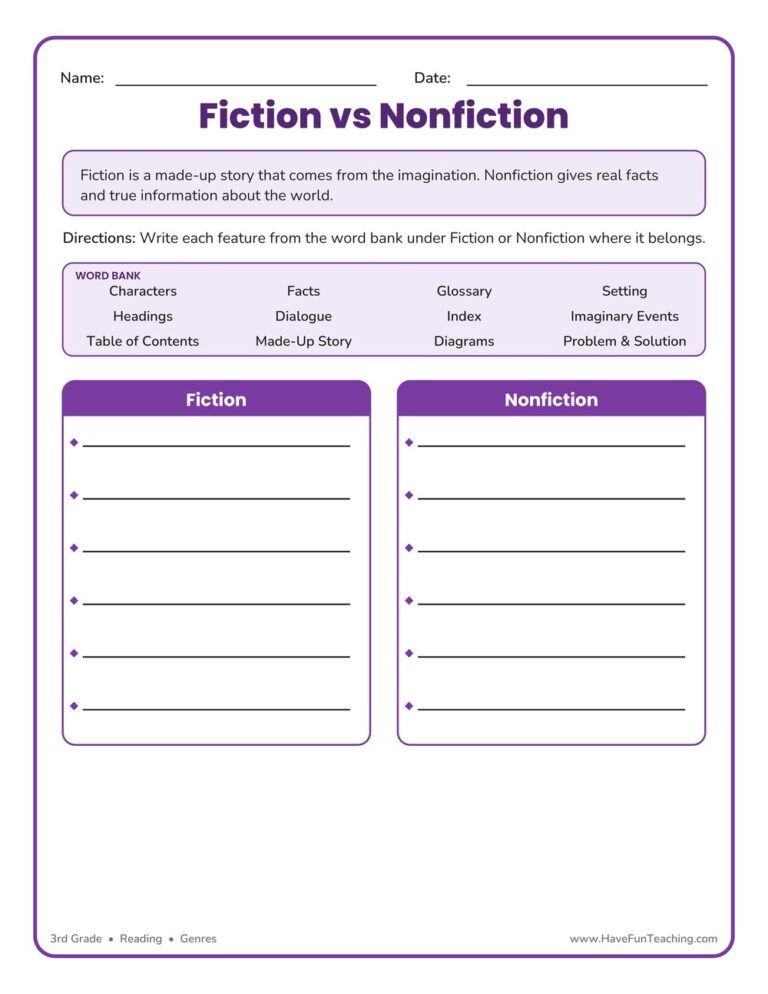
This fiction and nonfiction features worksheet has 3rd graders sort twelve text features into Fiction and Nonfiction columns. An answer key is included, making it a quick, no-prep way to build genre awareness.
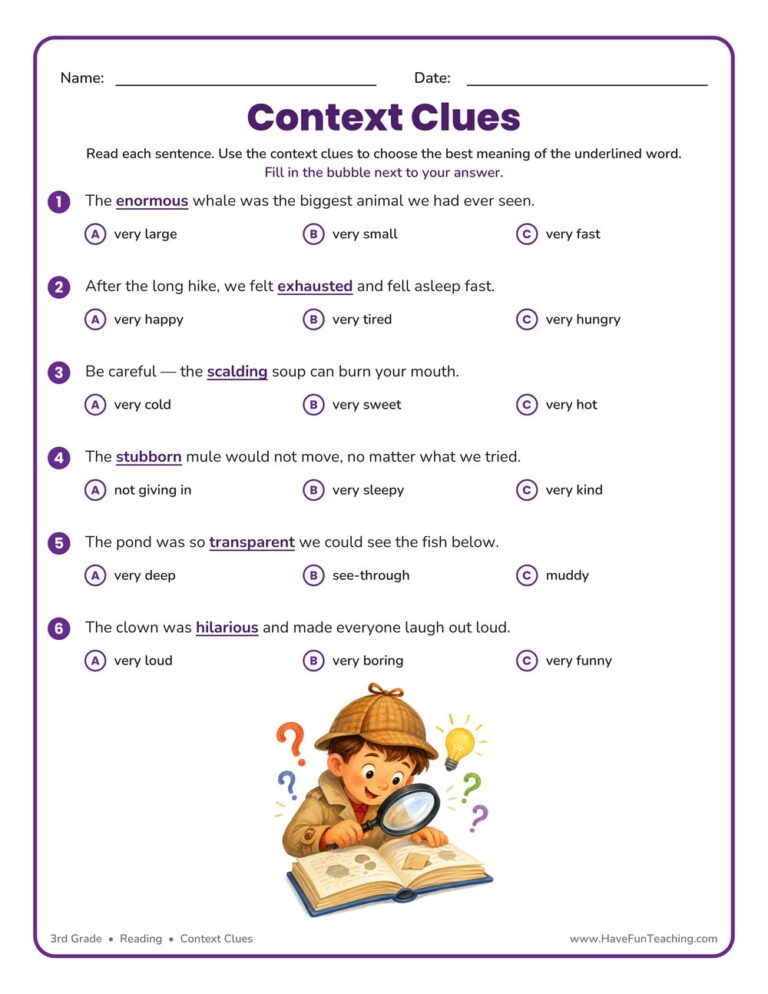
A 3rd grade Context Clues Worksheet with six multiple-choice sentences where students use the surrounding words to find the meaning of each underlined word. Answer key included for fast, no-prep vocabulary practice.
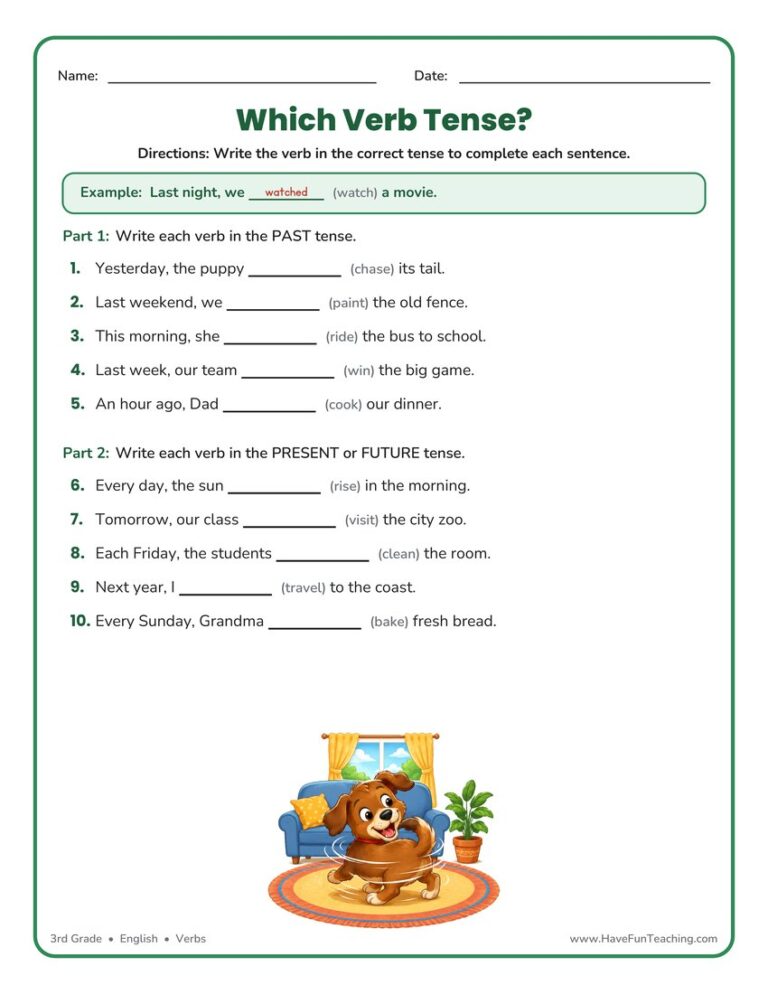
This Verb Tenses Fill in the Blank Worksheet helps 3rd graders choose the correct past, present, or future verb form using clear time clues. Answer key included—a quick, no-prep grammar practice for home or class.
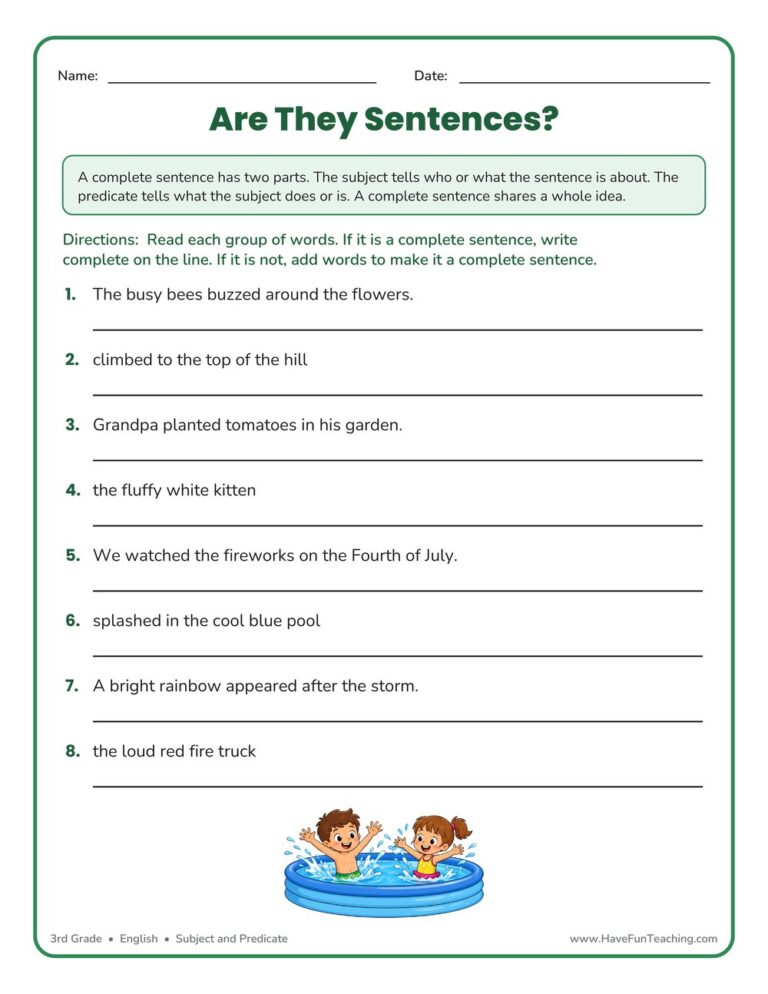
This Creating Complete Sentences Worksheet asks 3rd graders to spot complete sentences and fix fragments by adding a missing subject or predicate. Answer key included — perfect for quick, no-prep grammar practice at home or school.
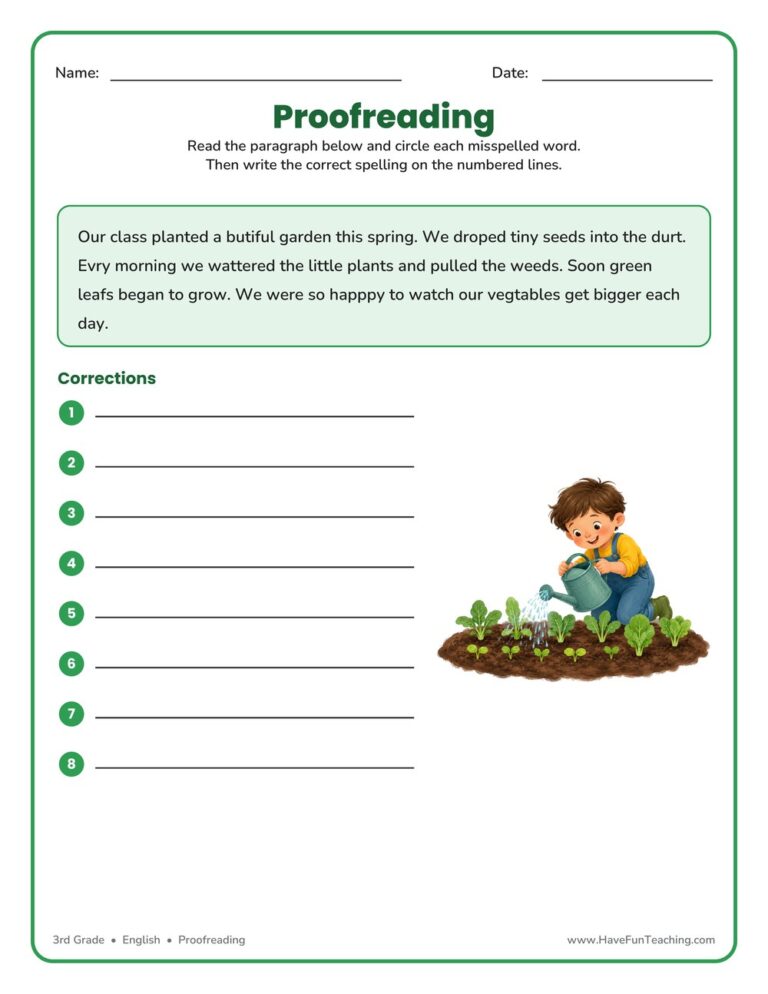
This 3rd grade proofreading worksheet has students hunt for and fix eight misspelled words in a fun garden paragraph. Answer key included — perfect for quick, no-prep spelling and editing practice at home or school.
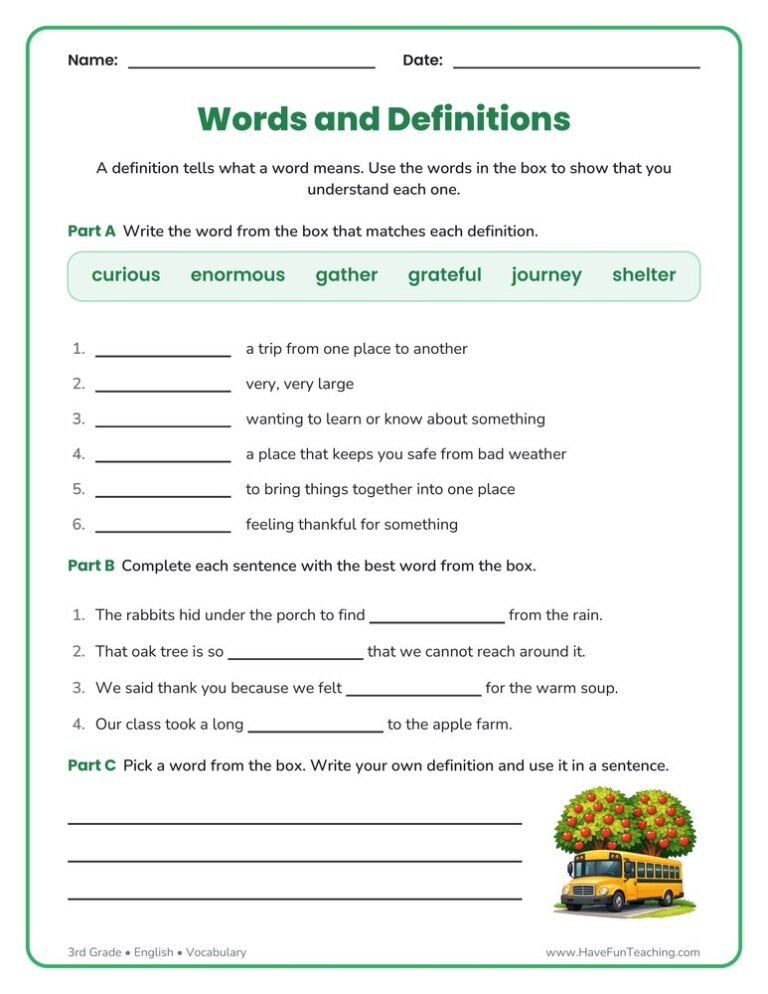
This Word and Definition Worksheet gives 3rd graders six vocabulary words to match with their meanings, use in real sentences, and define in their own words. An answer key is included, so checking takes seconds.
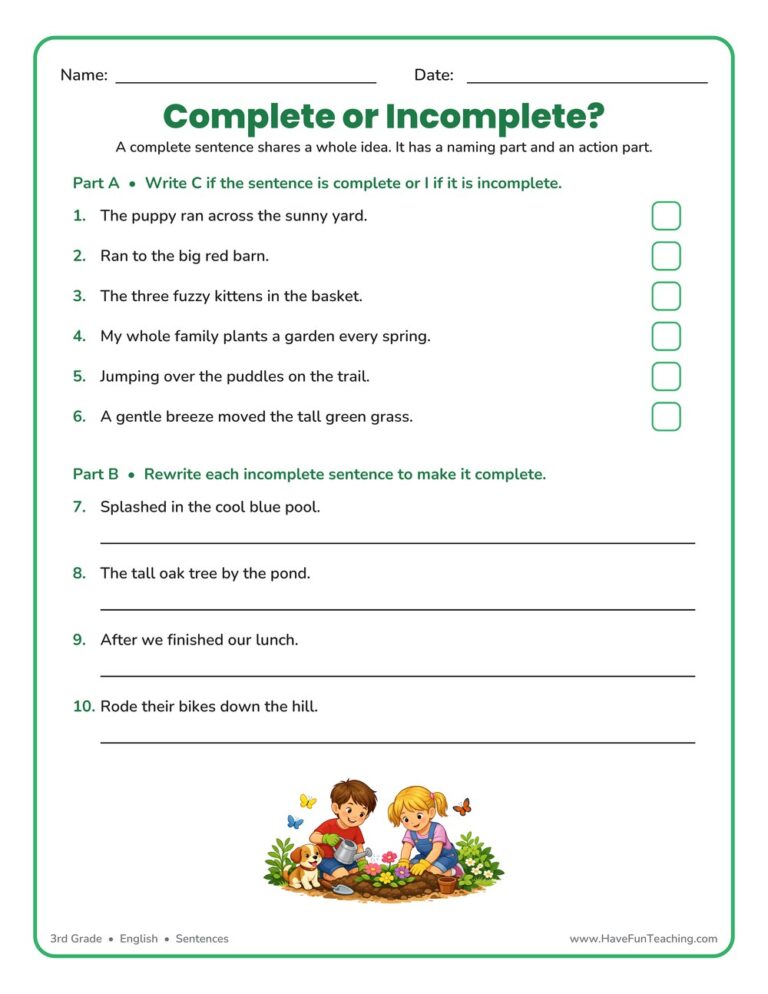
This rewriting incomplete sentences worksheet helps 3rd graders sort complete and incomplete sentences, then rewrite the fragments into full thoughts. Includes an answer key for fast, no-prep grammar practice at home or school.

This compound predicates sentences worksheet gives 3rd grade students three levels of practice: underline, combine, and write their own. An answer key is included, so it works for quick grammar review at school or at home.
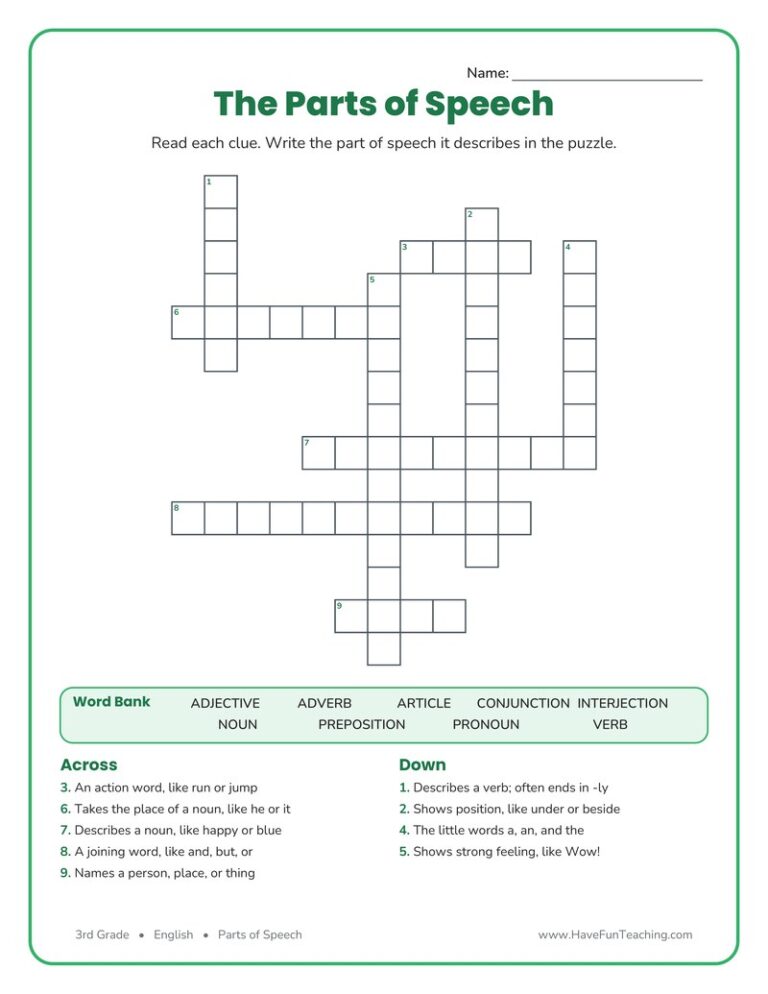
This Parts of Speech Crossword Puzzle has 3rd grade students match grammar clues to nouns, verbs, adjectives, and more, then fill in the grid. Includes an answer key and a helpful word bank for no-prep practice.
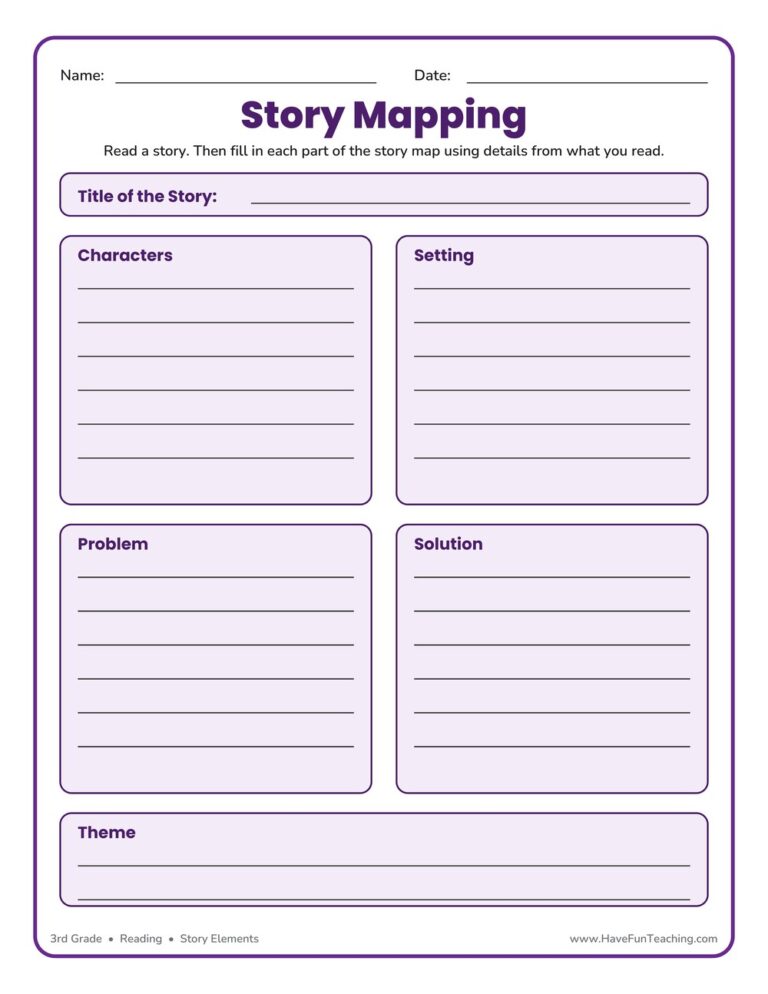
This 3rd grade Story Map Graphic Organizer Worksheet has students record a story's characters, setting, problem, solution, and theme in one clear, reusable page that strengthens reading comprehension.




Reviews
There are no reviews yet